
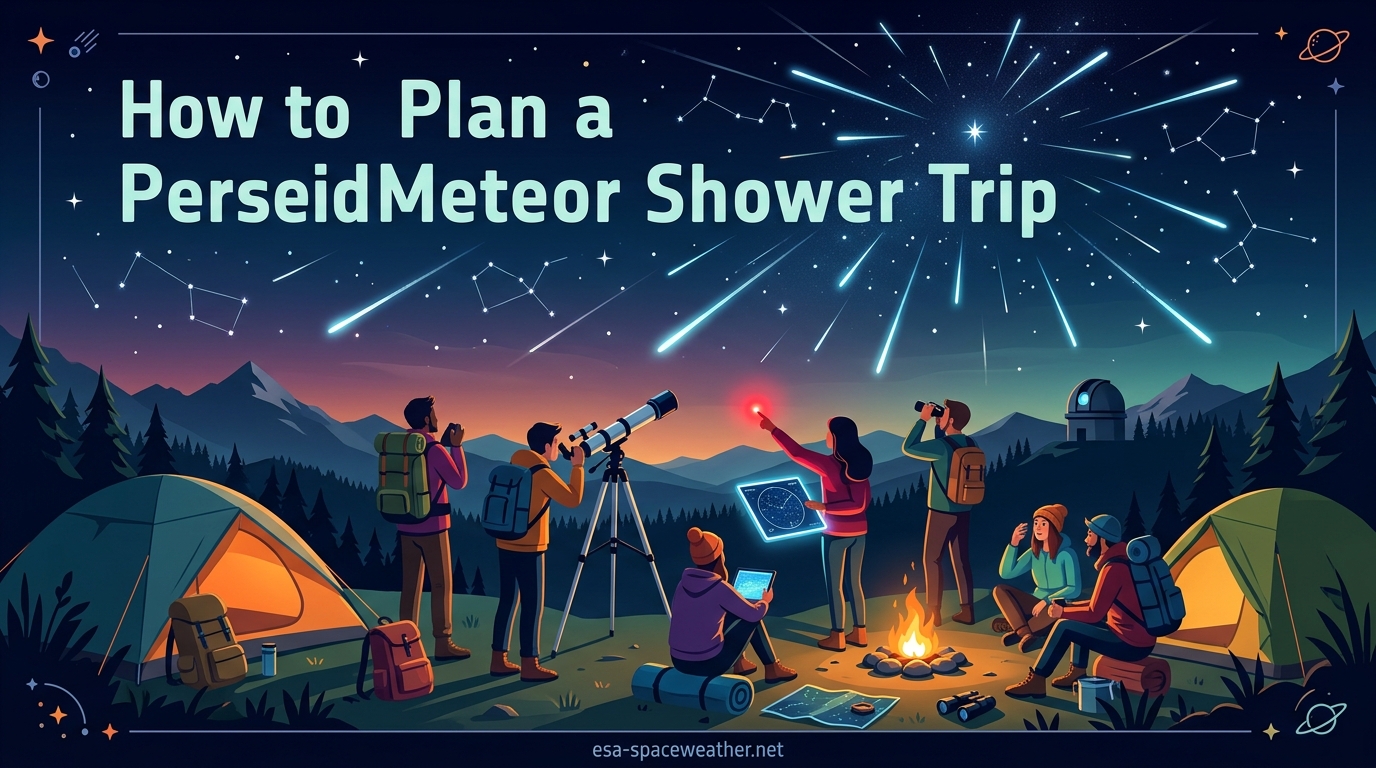
Every August, I pack up my gear and head somewhere far from city lights to watch one of nature’s most spectacular shows. The Perseid meteor shower delivers up to 100 meteors per hour at its peak, and with the right planning, you can experience it under near-perfect conditions.
But here is the catch that trips up most first-time viewers: the Moon can either be your best friend or your worst enemy during a meteor shower. A bright full Moon washes out all but the brightest fireballs, while a new Moon opens up the sky to reveal every faint shooting star.
In this guide, I will walk you through exactly how to plan a Perseid meteor shower trip around the Moon phase, from understanding the shower itself to choosing the right dates, location, and gear. The 2026 Perseids offer an especially exciting opportunity because the Moon cooperates beautifully, making it one of the best viewing years in recent memory.
Whether you are a seasoned stargazer or planning your very first meteor shower trip, this guide covers every detail you need. You will learn how the Perseids work, why Moon phase planning matters, and how to build a complete trip checklist that maximizes your chances of an unforgettable night under the stars.
Table of Contents
Understanding the Perseid Meteor Shower
The Perseid meteor shower is an annual astronomical event that occurs when Earth passes through the debris trail left by comet 109P/Swift-Tuttle. This comet orbits the Sun roughly every 133 years, and each time it swings through the inner solar system, it leaves behind a fresh stream of dust, ice, and rocky particles.
When Earth encounters this debris field every August, those tiny particles slam into our atmosphere at speeds reaching 37 miles per second (about 59 kilometers per second). The resulting friction heats the air around each particle to thousands of degrees, producing the bright streaks of light we call meteors or shooting stars.
The Perseids earned their name because these meteors appear to radiate from a point in the constellation Perseus. This point in the sky is called the radiant, and it sits near the border between Perseus and Cassiopeia. Understanding where the radiant sits helps you know where to look, but meteors can appear anywhere in the sky.
Why the Perseids Are the Most Popular Meteor Shower
Several factors make the Perseids the most anticipated meteor shower of the year. First, they produce a high hourly rate of meteors, with up to 100 visible per hour under ideal dark-sky conditions at peak. The International Meteor Organization has reported rates approaching 150 per hour in exceptional years.
Second, the Perseids are famous for producing fireballs, which are exceptionally bright meteors that can outshine even Venus. These fireballs often leave glowing vapor trails that persist for seconds after the meteor itself has burned out. If you have ever seen a shooting star so bright it made you gasp, there is a good chance it was a Perseid fireball.
Third, the Perseids occur during August in the Northern Hemisphere, which means warm summer nights. Unlike the winter Quadrantids or the chilly Geminids in December, you can comfortably watch the Perseids in a t-shirt and shorts. This makes them ideal for family outings, camping trips, and group stargazing events.
Peak Dates and Timing for 2026
For 2026, the Perseid meteor shower peak is predicted for 14:53 UTC on August 13. This means the best viewing falls on the nights of August 12-13 and the early morning hours of August 13. The shower remains active from about July 17 through August 24, so you have some flexibility if weather does not cooperate on the peak nights.
The best viewing happens in the pre-dawn hours, typically between midnight and 4:00 AM local time. During this window, the radiant point in Perseus climbs higher in the northeastern sky, and the side of Earth you are on plows directly into the debris stream. The combination means more meteors and brighter streaks.
However, the evenings can still be productive, especially in the days surrounding the peak. If you cannot stay up until dawn, try heading out after 10:00 PM when the sky is fully dark. You will see fewer meteors than at peak hours, but the ones that do appear are often bright fireballs.
How to Plan a Perseid Meteor Shower Trip Around the Moon
This is where the real planning begins. The Moon’s phase has a bigger impact on your meteor shower viewing experience than almost any other factor. A bright Moon acts like natural light pollution, filling the sky with scattered light that drowns out all but the brightest meteors.
Understanding how to plan a Perseid meteor shower trip around the Moon means knowing exactly what the Moon will be doing on your chosen nights. This involves checking the Moon phase, Moon rise and set times, and how high the Moon will be in the sky during your viewing window.
Why Moon Phase Matters for Meteor Watching
When the Moon is full, it floods the night sky with light that is roughly 400,000 times dimmer than the Sun but still bright enough to read by. Under a full Moon, you might only see 5 to 10 of the brightest meteors per hour instead of the usual 100. The faint meteors that make up the bulk of the shower become completely invisible.
A new Moon, on the other hand, means the Moon is on the same side of Earth as the Sun and is essentially absent from the night sky. This is when the sky reaches its darkest natural state, allowing your eyes to detect even the faintest meteor flashes. A new Moon during the Perseid peak is the gold standard for viewing.
The difference is staggering. Under a new Moon at a dark sky location, an experienced observer with dark-adapted eyes can see meteors streaking across the sky every few seconds at peak. Under a full Moon at the same location, you might wait several minutes between sightings.
The 2026 Moon Phase: A Rare Gift
Here is the exciting news for 2026. The new Moon falls on August 12, 2026, which aligns almost perfectly with the predicted Perseid peak on the night of August 12-13. This is exceptionally good timing, and it makes 2026 one of the best years for Perseid viewing in recent memory.
This alignment means the Moon will set around sunset on August 12 and will not rise again until after sunrise on August 13. The entire overnight viewing window, from about 9:30 PM until dawn, will be completely Moon-free. You will get maximum darkness for the entire duration of your viewing session.
If clouds or other issues prevent you from viewing on the peak night, the surrounding nights are still excellent. August 11-12 will have a very thin crescent Moon that sets shortly after sunset, and August 13-14 will have a thin waxing crescent that sets by mid-evening. Both nights offer near-ideal conditions.
How to Check Moon Rise and Set Times
Even when the Moon is not in a new phase, you can still plan around it by checking the Moon rise and set times for your location. If the Moon sets by midnight, for example, you still get several hours of dark sky in the pre-dawn window when meteor rates are highest.
I recommend using free tools like TimeandDate.com, the Moon Phase calendar on Weather.com, or dedicated astronomy apps like Stellarium and SkyView. These tools let you enter your specific location and date to get precise Moon rise, set, and illumination data.
When checking these tools, pay attention to Moon illumination percentage, not just the phase name. A 15% illuminated Moon has minimal impact on viewing, while a 70% illuminated Moon can significantly wash out fainter meteors. Aim for nights when Moon illumination is below 25% during your viewing hours.
Step-by-Step Trip Planning Checklist
Now that you understand the Perseids and the Moon phase situation, let me walk you through a complete trip planning checklist. I have developed this process over years of meteor shower trips, and it covers everything from dates to gear to safety.
Step 1: Lock In Your Dates Early
The first step is to commit to your viewing dates as early as possible. For the 2026 Perseids, circle August 12-13 on your calendar as your primary night, with August 11-12 and August 13-14 as backup nights. Having three possible nights gives you flexibility if weather or other issues arise on the primary date.
Check the weather forecast starting about a week before your trip. Cloud cover is the enemy of meteor watching, and you want clear or mostly clear skies. I use the Clear Outside app and the National Weather Service forecast, but any reliable weather source with cloud cover predictions will work.
If you live in an area prone to August clouds or thunderstorms, consider having a backup location in a different climate zone. Some meteor shower enthusiasts drive several hours to reach clear skies, and this flexibility can make the difference between a spectacular night and a washed-out one.
Step 2: Choose Your Viewing Location
Your location determines how many meteors you will actually see. The goal is to get as far from city light pollution as possible, ideally to a location classified as a Bortle Class 1 through 3 on the Bortle Dark-Sky Scale. We will cover specific location recommendations in detail in the next section.
When evaluating a potential viewing spot, look for an open area with a wide view of the sky. Hilltops, meadows, lakeshores, and desert flats all work well. Avoid locations surrounded by tall trees or buildings that block significant portions of the sky.
If you cannot travel to a dark sky location, you can still enjoy the Perseids from a suburban or even urban backyard. You will see far fewer meteors, but the bright fireballs that the Perseids are known for can punch through even significant light pollution. Every meteor you see is worth the effort.
Step 3: Book Accommodation or Secure a Campsite
If your chosen location requires an overnight stay, book your accommodation or campsite well in advance. The Perseid peak is a popular time for stargazing events, and campsites at national parks and dark sky reserves often fill up months ahead of time.
For camping, look for sites within or adjacent to designated dark sky parks. Many national and state parks host special Perseid viewing events with guided programs, telescope viewing, and astronomy talks. These events are great for beginners and families who want to learn alongside experienced observers.
If camping is not your style, look for rural bed-and-breakfasts, farm stays, or motels in small towns far from major cities. The key is to find a place where you can step outside at 2:00 AM and have reasonably dark skies without driving anywhere.
Step 4: Pack Your Gear Checklist
Packing the right gear makes the difference between a comfortable, enjoyable night and a miserable, cold, bug-bitten ordeal. Here is my essential meteor shower trip checklist, refined over many years of pre-dawn stargazing.
Comfort and warmth: A reclining lawn chair or sleeping pad, a warm sleeping bag rated for temperatures 10 degrees below your expected low, extra blankets, a beanie or warm hat, gloves, and multiple layers of warm clothing. August nights can get surprisingly cold, especially at higher elevations or in desert environments.
Lighting and navigation: A red flashlight or headlamp with a red light mode is essential. Red light preserves your night vision, while white light resets your dark adaptation and ruins it for everyone around you. Bring spare batteries and a regular white light for emergencies.
Sustenance: Plenty of water, hot beverages in a thermos, snacks, and easy meals. Watching meteors requires patience and long periods of sitting still, which means your body temperature will drop. Warm drinks help you stay comfortable through the night.
Bug protection: Insect repellent is critical for August viewing in many regions. Mosquitoes and other insects are most active at dusk and can make your first hour miserable without protection. Consider a bug net for your head if you are in a particularly insect-heavy area.
Optional extras: A star chart or astronomy app to help identify constellations, a camera and tripod if you want to try meteor photography, binoculars for general stargazing between meteors, and a portable power bank to keep your phone charged.
Step 5: Plan Your Viewing Schedule
Plan to arrive at your viewing location before sunset. This gives you time to set up your chair or blanket, let your eyes start adjusting to the darkness, and get oriented while you can still see your surroundings. Rushing to set up in the dark leads to fumbling and frustration.
Give yourself at least 20 to 30 minutes for your eyes to fully dark-adapt before you expect to see peak meteor activity. Dark adaptation is a biological process where your eyes increase their production of rhodopsin, a light-sensitive pigment that lets you see in low light. Full dark adaptation takes about 40 minutes.
Plan to stay out for at least two to three hours. Meteor activity comes in bursts followed by lulls, and you need sustained viewing time to catch the good periods. The period between 1:00 AM and 4:00 AM typically produces the highest meteor rates as the radiant rises higher in the sky.
Best Viewing Locations to Escape Light Pollution
Choosing the right location is one of the most important decisions you will make when planning your Perseid trip. Light pollution from cities, towns, and even rural developments dramatically reduces the number of meteors you can see. The darker the sky, the more spectacular the show.
International Dark Sky Parks and Reserves
The International Dark-Sky Association (IDA) certifies locations around the world that have exceptional night sky quality and commit to preserving natural darkness. These designated Dark Sky Parks, Reserves, and Sanctuaries are the gold standard for meteor shower viewing.
In the United States, standout dark sky parks include Big Bend National Park in Texas, Death Valley National Park in California, Bryce Canyon National Park in Utah, and Great Basin National Park in Nevada. Each of these locations offers Bortle Class 1 or 2 skies, meaning the Milky Way casts a visible shadow and you can see thousands of stars.
In the United Kingdom, Exmoor National Park, Brecon Beacons National Park, and Galloway Forest Park are all designated dark sky locations. For European viewers, the Pic du Midi in France, the Sierra Morena in Spain, and the La Palma Biosphere Reserve in the Canary Islands offer world-class dark skies.
Finding Dark Skies Near You
You do not need to travel to a certified dark sky park to have a great Perseid experience. The key is simply getting far enough from urban light pollution that the sky looks noticeably different. I use the website Lightpollutionmap.info to find dark areas within driving distance of home.
Look for locations that are at least 30 to 50 miles from any major city. National forests, state parks, rural lakes, and agricultural areas often provide surprisingly dark skies. Even a local park on the outskirts of a small town can work if it has a clear view of the sky and minimal surrounding lighting.
When scouting locations, pay attention to the southeastern and northeastern horizon. The Perseid radiant rises in the northeast, so you want an unobstructed view in that direction. A hill or ridge that blocks the glow of a distant city in the northeast is more valuable than a completely flat horizon with city glow.
Regional Recommendations
For viewers in the eastern United States, Acadia National Park in Maine and Cherry Springs State Park in Pennsylvania are among the darkest accessible locations. The Adirondacks in upstate New York also offer pockets of excellent dark sky.
In the western United States, you have an embarrassment of riches. Joshua Tree National Park, Grand Canyon National Park, Craters of the Moon National Monument, and Glacier National Park all provide spectacular Perseid viewing. The dry desert air of the Southwest also means clearer skies and less atmospheric haze.
For European observers, the Alps, the Scottish Highlands, and rural Scandinavia offer excellent conditions. The further north you are, the shorter the August nights become, but the Perseid radiant is also higher in the sky, partially offsetting the shorter viewing window.
Viewing Tips and Techniques
Even with perfect timing, an ideal location, and a cooperative Moon phase, your viewing technique makes a big difference in how many meteors you actually see. These tips come from years of trial and error, and they address the most common mistakes that cost people meteors.
Master Dark Adaptation
Dark adaptation is the single most important factor in how many meteors you will see. Your eyes need time to adjust to darkness, and this process cannot be rushed. It takes about 20 minutes to reach basic dark adaptation and about 40 minutes for full adaptation.
During this adaptation period and throughout your viewing session, avoid all white light. Use only red light for navigation, and even then, keep it as dim as possible. A single glance at a white flashlight, a car headlight, or a smartphone screen without a red filter can set your dark adaptation back by 20 minutes.
Most people do not realize that their phone screen is their biggest enemy during a meteor watch. Even with brightness turned down, the blue-white light from a phone screen destroys dark adaptation. If you need to check an app, apply a red screen filter or cover the screen with red cellophane.
Where to Look in the Sky
The Perseid radiant sits in the constellation Perseus, which rises in the northeast during August evenings. While meteors radiate from this point, they can appear anywhere in the sky. The best strategy is to look about 45 to 60 degrees away from the radiant, which gives you the longest meteor trails.
Lie flat on your back or recline in a chair that lets you look straight up. Looking straight up gives you the widest possible field of view and eliminates the atmospheric haze that affects views near the horizon. A reclining lawn chair or a sleeping pad on the ground is ideal.
Do not use binoculars or a telescope for meteor watching. Meteors move too fast and appear too briefly for magnified viewing. Save your binoculars for looking at interesting stars or constellations between meteor sightings. The naked eye is the best tool for meteor watching because it provides the widest field of view.
Best Time of Night for Maximum Meteors
The hours between midnight and dawn produce the highest meteor rates because that is when your location on Earth faces directly into the debris stream. Before midnight, the radiant is below or near the horizon, and meteors must skim through more atmosphere to be visible.
The absolute peak activity typically occurs between 2:00 AM and 4:00 AM local time. During this window, the radiant is high in the sky, and meteor rates can reach 60 to 100 per hour under dark skies. If you can only commit to a two-hour viewing window, choose this period.
That said, early evening viewing offers a special treat. When the radiant is near the horizon, you can occasionally see earthgrazers, which are long, slow meteors that skim along the top of the atmosphere. These are rare but spectacular, and they only appear when the radiant is low.
Be Patient and Stay Comfortable
Meteor watching requires patience. Meteors do not arrive on a schedule, and you may go 10 minutes without seeing anything, then spot five in rapid succession. Plan to stay out for at least two to three hours to give yourself the best chance of catching active periods.
Comfort is directly tied to how long you can stay out. Every degree of temperature drop and every mosquito bite erodes your patience. Dress warmer than you think you need to, bring plenty of bug repellent, and have warm drinks available. A thermos of hot chocolate or coffee can extend your viewing session by hours.
Bring friends or family if possible. Meteor watching is a social activity, and having multiple people scanning the sky increases the total number of meteors your group spots. Just make sure everyone understands the red-light rule to preserve the group’s dark adaptation.
Common Mistakes to Avoid
The most common mistake is checking phones too frequently. Even brief phone use destroys your night vision and means you will miss faint meteors for the next 20 minutes. Put your phone away, turn on do-not-disturb mode, and commit to being present in the dark.
Another frequent error is not giving enough time for the eyes to adjust. Many people step outside, look up for five minutes, see nothing, and go back inside disappointed. You need at least 20 minutes before you start seeing the full show, and 40 minutes makes an enormous difference.
Finally, do not fixate on the radiant point. Staring at one spot in the sky is tiring and counterproductive. Let your eyes wander across the sky, and use your peripheral vision, which is actually more sensitive to faint light than your central vision.
Photographing the Perseid Meteor Shower
Capturing a meteor on camera is challenging but incredibly rewarding. The good news is that you do not need professional equipment to get decent results. A basic DSLR or mirrorless camera with manual controls and a sturdy tripod can capture bright Perseid meteors.
Camera Settings for Meteor Photography
Set your camera to manual mode with a wide aperture (f/2.8 or wider if possible), a high ISO (1600 to 6400 depending on your camera), and a shutter speed of 15 to 30 seconds. Use a wide-angle lens (14mm to 24mm) to capture as much sky as possible.
The key technique is continuous shooting. Set your camera to take photos back-to-back using an intervalometer or by taping your shutter button down in continuous mode. Over the course of an hour, you will capture hundreds of frames, and a few will contain meteors.
Focus is critical and tricky at night. Use live view magnification to focus on a bright star manually. Autofocus will not work in the dark. Once you achieve focus, tape your focus ring or switch to manual focus mode to prevent accidental changes.
Smartphone Photography Tips
If you do not have a dedicated camera, your smartphone can still capture the brightest fireballs. Use a tripod or prop your phone securely against something stable. Most modern phones have a night mode that can capture stars with a few seconds of exposure.
Several apps let you take long exposures on your phone, including NightCap Camera for iOS and Camera FV-5 for Android. These apps give you manual control over ISO and shutter speed, which dramatically improves your chances of capturing a meteor trail.
Keep your expectations realistic with a phone. You will not capture the faint meteors, but the bright Perseid fireballs can produce striking images. Even if you do not capture any meteors, you will end up with beautiful Milky Way shots as a consolation prize.
FAQs
What are the best hours to see the Perseid meteor shower?
The best hours to see the Perseid meteor shower are between midnight and dawn, with peak activity typically occurring between 2:00 AM and 4:00 AM local time. During this window, the radiant point in Perseus is highest in the sky, and your location faces directly into the debris stream, producing the highest meteor rates of 60 to 100 per hour under dark skies.
What is the best direction to see the Perseid meteor shower?
The best direction to see the Perseid meteor shower is toward the northeast, where the constellation Perseus rises. However, meteors can appear anywhere in the sky, so looking about 45 to 60 degrees away from the radiant actually gives you the longest meteor trails. Lying flat on your back and looking straight up provides the widest field of view.
Can you see the Perseid meteor shower from anywhere?
You can technically see the Perseid meteor shower from anywhere in the Northern Hemisphere, but light pollution dramatically reduces visibility. Under urban skies you might see only 5 to 10 bright fireballs per hour, while under dark rural skies you can see 60 to 100 meteors per hour. Traveling at least 30 to 50 miles from major cities makes a huge difference.
Where to look in the sky for the Perseid meteor shower tonight?
Look toward the northeastern sky where the constellation Perseus rises, but do not stare directly at the radiant. Meteors radiate outward from this point, so looking 45 to 60 degrees away in any direction gives you longer meteor trails. Use your peripheral vision, which is more sensitive to faint light, and scan the entire sky rather than focusing on one spot.
Wrapping Up Your Perseid Adventure
Planning a successful Perseid meteor shower trip around the Moon comes down to a few key decisions. Pick the right dates during the new Moon window of August 12-13, 2026. Choose a location as far from light pollution as you can reach. Pack for warmth and comfort, give your eyes time to adapt, and commit to staying out for several hours.
The 2026 Perseids offer a rare gift with the new Moon aligning almost perfectly with the shower peak. With a Moon-free sky all night long, this is one of the best opportunities in years to experience the full glory of up to 100 meteors per hour streaking across a truly dark sky.
Start planning now. Book your campsite, gather your gear, and get ready for a night you will remember for the rest of your life. The Perseids are calling, and the Moon is stepping aside to let the show shine.