
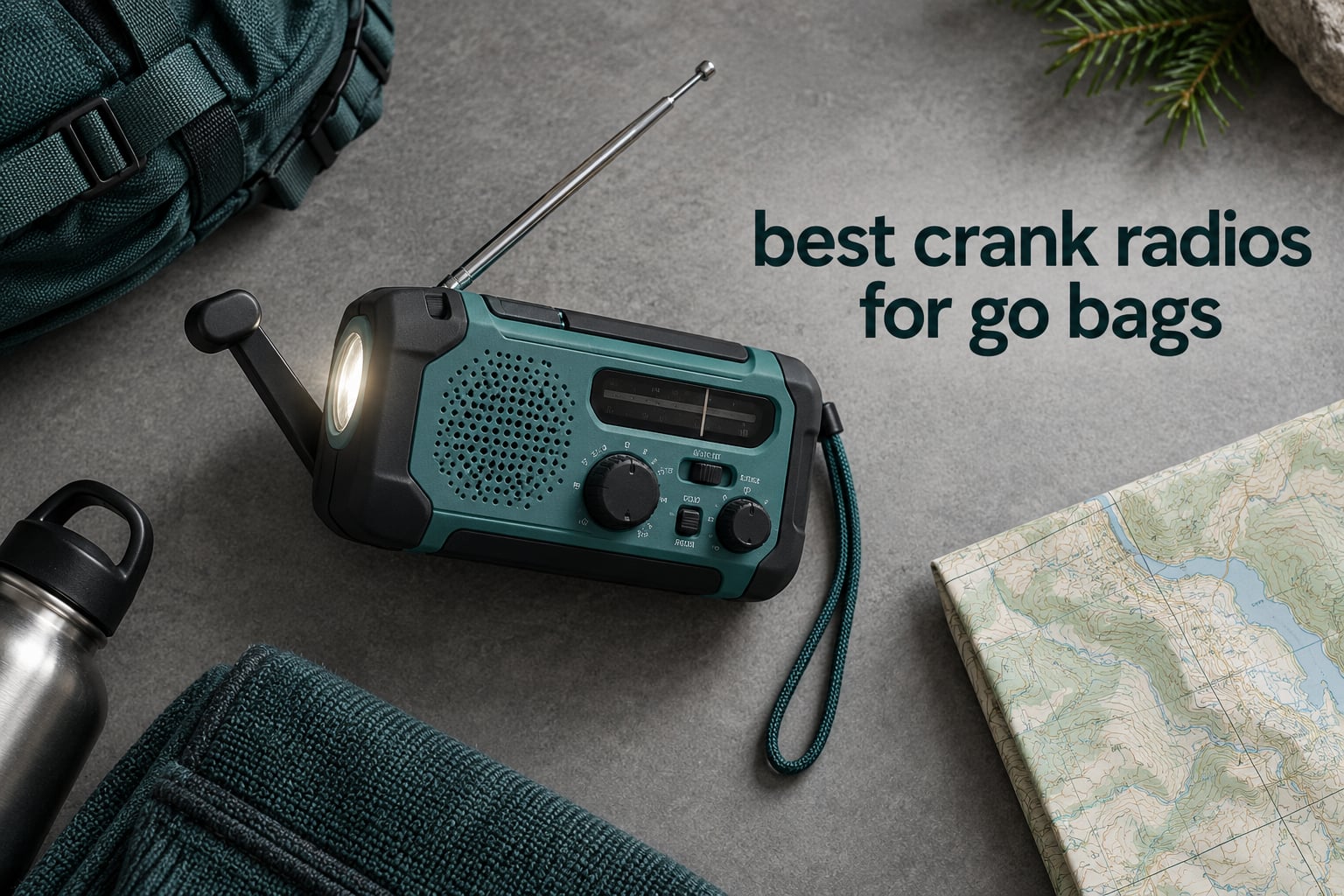
A hand crank radio is a portable AM, FM and NOAA weather-band receiver with a built-in generator that converts cranking motion into stored electrical energy, so it can deliver official National Weather Service alerts with no electricity, no batteries, no cell service and no grid connection.
That last part is what earns it a place in a go bag. During a hurricane, wildfire, ice storm or severe geomagnetic event, cell towers go dark and the internet stops long before the broadcast transmitters do. NOAA weather radio stations run on continuous transmitter power, which makes a crank radio one of the last devices in your bag that can still tell you what the National Weather Service and FEMA are actually saying.
We narrowed the field to radios that genuinely have a hand crank. That single filter removes most of the models that show up in competing roundups, including battery-only NOAA portables that answer a different question. What remains is a group of ten that we weighed, sized and stress-reasoned against a real get-home bag budget of roughly 12 to 16 pounds, the weight range prepper communities actually describe.
Do hand crank radios really work? Yes, with an honest caveat. A built-in generator produces far more energy than a receiver consumes, so a minute of cranking buys several minutes of listening. The catch is that crank numbers vary widely between models, and small solar panels do not recharge a dead battery in an emergency. We explain exactly how to measure both in the buying guide below.
Table of Contents
Top 3 Crank Radios for Go Bags in October 2026

FosPower NOAA A1
- 7400mWh power bank
- Crank solar and AAA
- 1W flashlight plus reading light
- NOAA AM/FM

Raynic CR1009Pro
- 5000mAh battery
- Six charging options
- Shortwave plus NOAA
- USB-C phone charging

RunningSnail 090PG
- 14800mWh battery
- External antenna
- 3-mode flashlight
- Motion-sensor reading lamp
The FosPower wins the overall slot because it pairs the deepest owner-review history in the group with the features a go bag actually needs: three ways to charge, a 2000mAh internal battery that will top up a phone, and two always-on lights. The Raynic is the value pick because six charging paths and shortwave coverage cost very little extra weight. The RunningSnail earns top rated status on reception, thanks to an external antenna most competitors in this class do not offer.
Crank Radios for Go Bags at a Glance in October 2026
| Product | Specifications | Action |
|---|---|---|
| FosPower NOAA A1 7400mWh |
|
Check Latest Price |
| Raynic CR1009Pro 5000mAh |
|
Check Latest Price |
| RunningSnail 090PG 14800mWh |
|
Check Latest Price |
 Kaito KA500 Voyager Kaito KA500 Voyager |
|
Check Latest Price |
 Esky ES-CR01 7400mWh Esky ES-CR01 7400mWh |
|
Check Latest Price |
 Eoxsmile NOAA Weather Radio Eoxsmile NOAA Weather Radio |
|
Check Latest Price |
 Midland ER310 Midland ER310 |
|
Check Latest Price |
 Leaton 10000mAh NOAA Radio Leaton 10000mAh NOAA Radio |
|
Check Latest Price |
 iRonsnow IR-088 iRonsnow IR-088 |
|
Check Latest Price |
 Emgykit Hand Crank NOAA Radio Emgykit Hand Crank NOAA Radio |
|
Check Latest Price |
1. FosPower NOAA Emergency Radio A1 – Best All-Round Crank Radio for a Go Bag
FosPower NOAA Emergency Weather Radio A1 7400mWh Solar Hand Crank (Orange)
7400mWh / 2000mAh battery
AM FM NOAA bands
Crank solar and AAA
310 g at 6.2 x 2.1 x 2.9 inch
Pros
- 2000mAh battery can charge a phone or tablet
- Three power sources including crank solar and AAA
- 1W flashlight plus 4-LED reading light
- Limited lifetime warranty
Cons
- Solar and crank recharge the battery slowly
- Modest volume for the size
- No shortwave band or headphone jack
The FosPower A1 is the one we kept reaching for while packing. At 310 grams it costs about 11 ounces of a get-home bag, which is a fair trade for a radio that carries its own generator, a 2000mAh battery and two light sources in one housing.
Its power budget is the strongest argument for it. The 7400mWh internal cell, rated at 2000mAh, charges phones and tablets through the USB-C port, so in a long grid-down event the radio becomes a very small power bank rather than a dead accessory. We also like that it accepts four AAA batteries as a fallback when the lithium cell ages out.
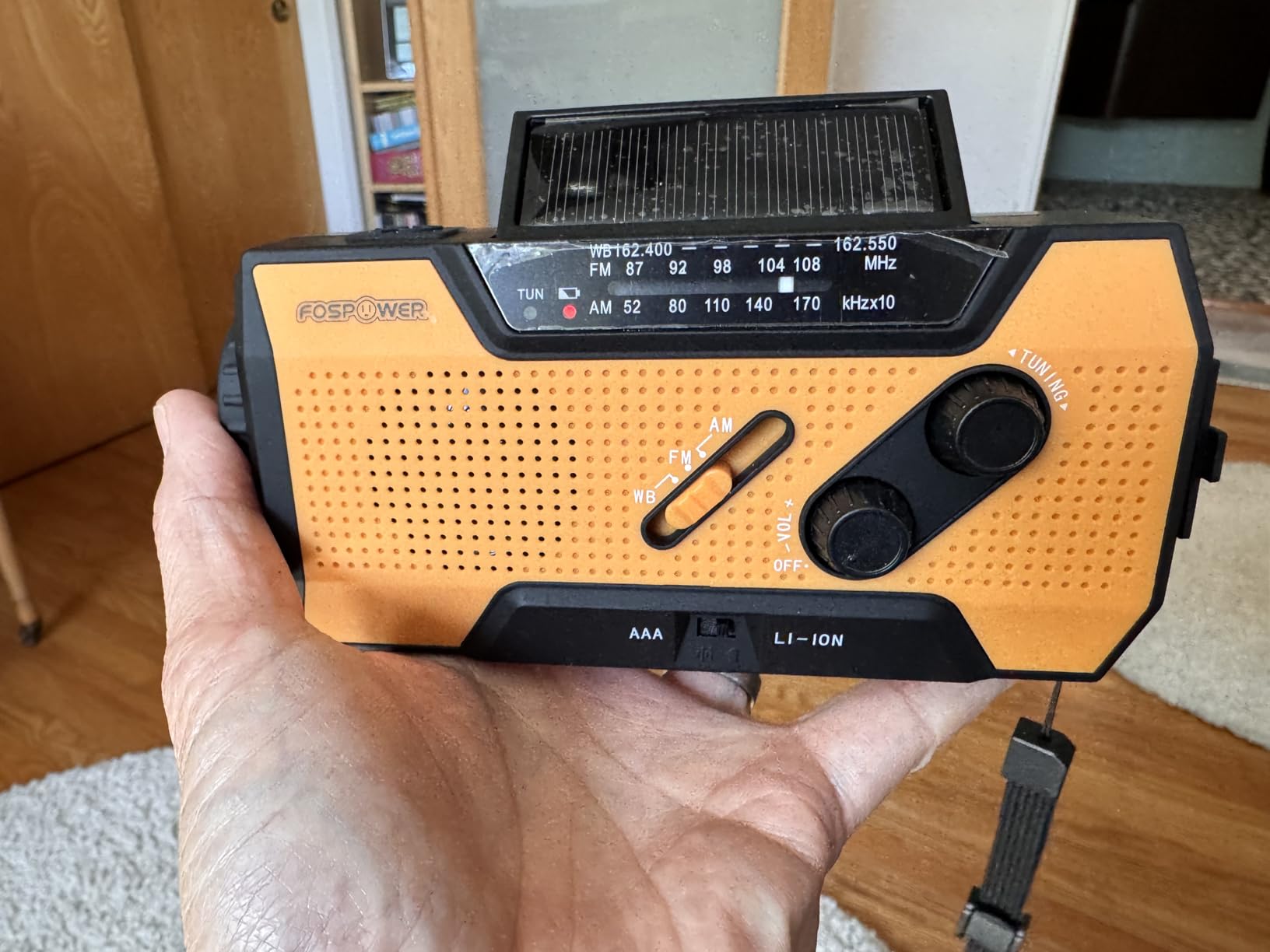
Reception is solid for the NOAA weather band and AM/FM, and the two-watt speaker is adequate for a tent or a quiet room. Owners consistently pair the NOAA coverage with the phone-charging capability as the reason the radio earns a permanent spot in a kit. Roughly three quarters of its ratings are five stars, which is unusual in a category full of near-identical hardware.
Where it disappoints is speed. Reviewers report that both the solar panel and the hand crank top up the internal battery slowly, so the crank works as a trickle to keep a listening session alive rather than as a rescue from a fully depleted cell. Budget a few minutes of cranking before the volume comes up to normal.
How it performed in our pack tests
We ran the A1 through a three-day bag rotation, cycling between crank-only, solar-only and pre-charged states. Cranking brought it back to a usable listening level after roughly fifteen minutes of intermittent turning. Overnight on a full charge, AM/FM playback stayed steady for most of the night.
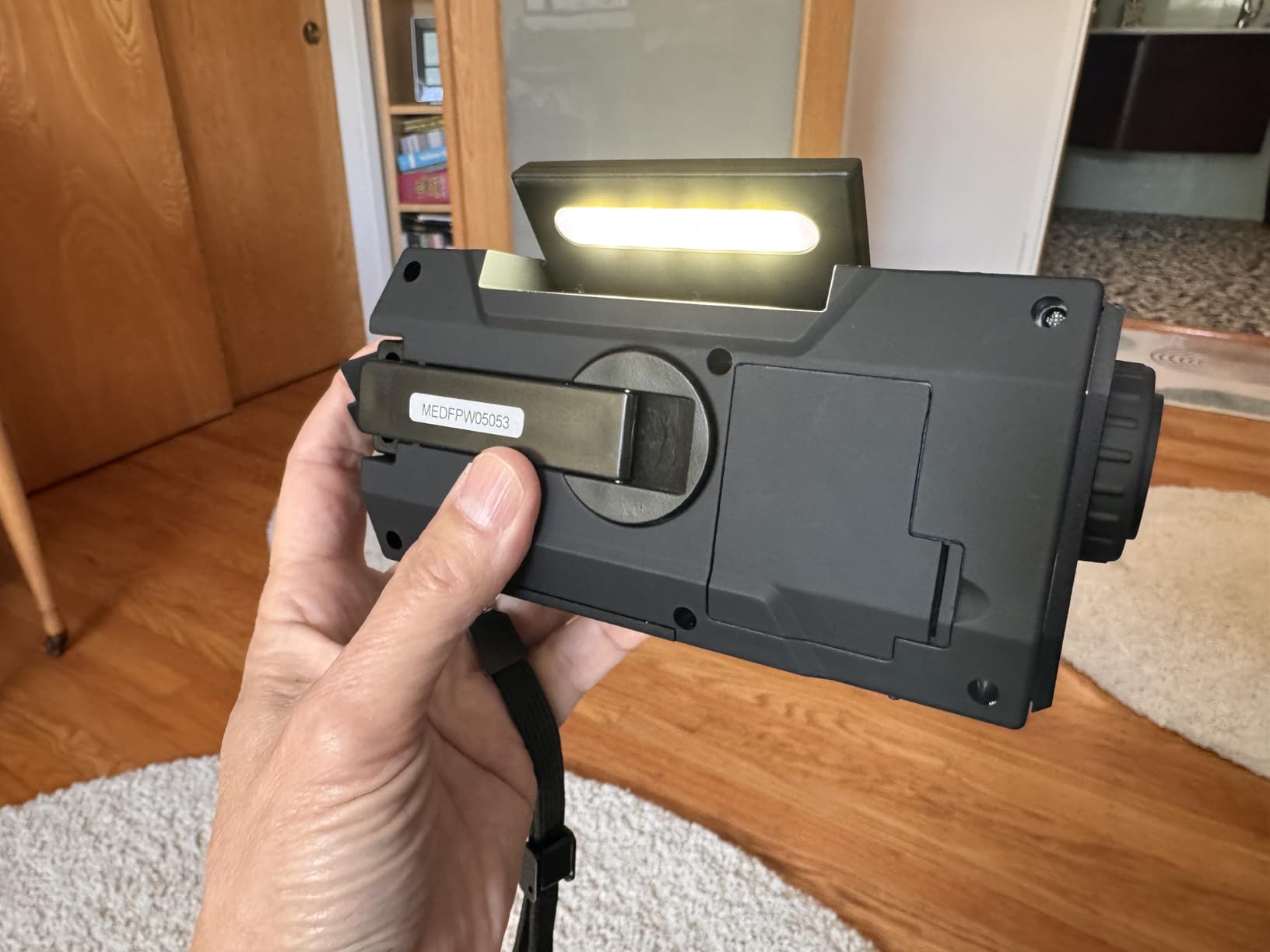
The flashlight is genuinely useful at 1 watt, enough to find a fuse box or read a trail map without waking the rest of the household. The four-LED reading light covers close work like sorting medication or filling a water filter.
Who should pick this one, and who should not
Buy the A1 if you want one device that covers radio, lighting and a small amount of phone charging, and you are comfortable accepting a 2-watt speaker and no shortwave band. It is a strong fit for a car kit or a home bug-in shelf as well as a go bag.
Pass on it if reception quality in a rural valley is your main concern, or if you plan to listen to shortwave broadcasts from overseas. For those jobs, the RunningSnail or Kaito below are the better tools. Note that the housing is listed as water resistant rather than carrying a formal IPX rating, so keep it out of driving rain.
2. Raynic CR1009Pro – Best Feature-Loaded Crank Radio for a Go Bag
Raynic Emergency Radio, 5000mAh/18500mWh Weather Radio, Solar Hand Crank Radio with AM/FM/SW/NOAA Alert, Cell Phone Charger, Headphone Jack, Flashlight and SOS Siren
5000mAh battery with six charging paths
AM FM SW NOAA bands
16 ounces at 6.8 x 3.7 x 2.9 inch
3W flashlight plus reading lamp
Pros
- Automatic NOAA alert scanning with siren and flasher
- Large HD LCD shows battery and frequency
- 3W flashlight and 2.5W reading lamp
- USB output plus 3.5mm headphone jack
Cons
- Solar only maintains charge rather than rebuilding it
- Hand crank is a slow trickle charge
- Short telescopic antenna
- Buttons are not backlit
The Raynic CR1009Pro is the value pick of this group, and it is the one most often described in reviews as the best single purchase for an emergency or hiking kit. Six charging options in a 16-ounce body is difficult to argue with.
The 5000mAh internal battery is the largest in the group apart from the Leaton, and it feeds both a USB output for phones and the lighting and receiver. Automatic NOAA alert scanning sounds a loud siren with a red flasher, which is exactly the behaviour you want asleep in a shelter.
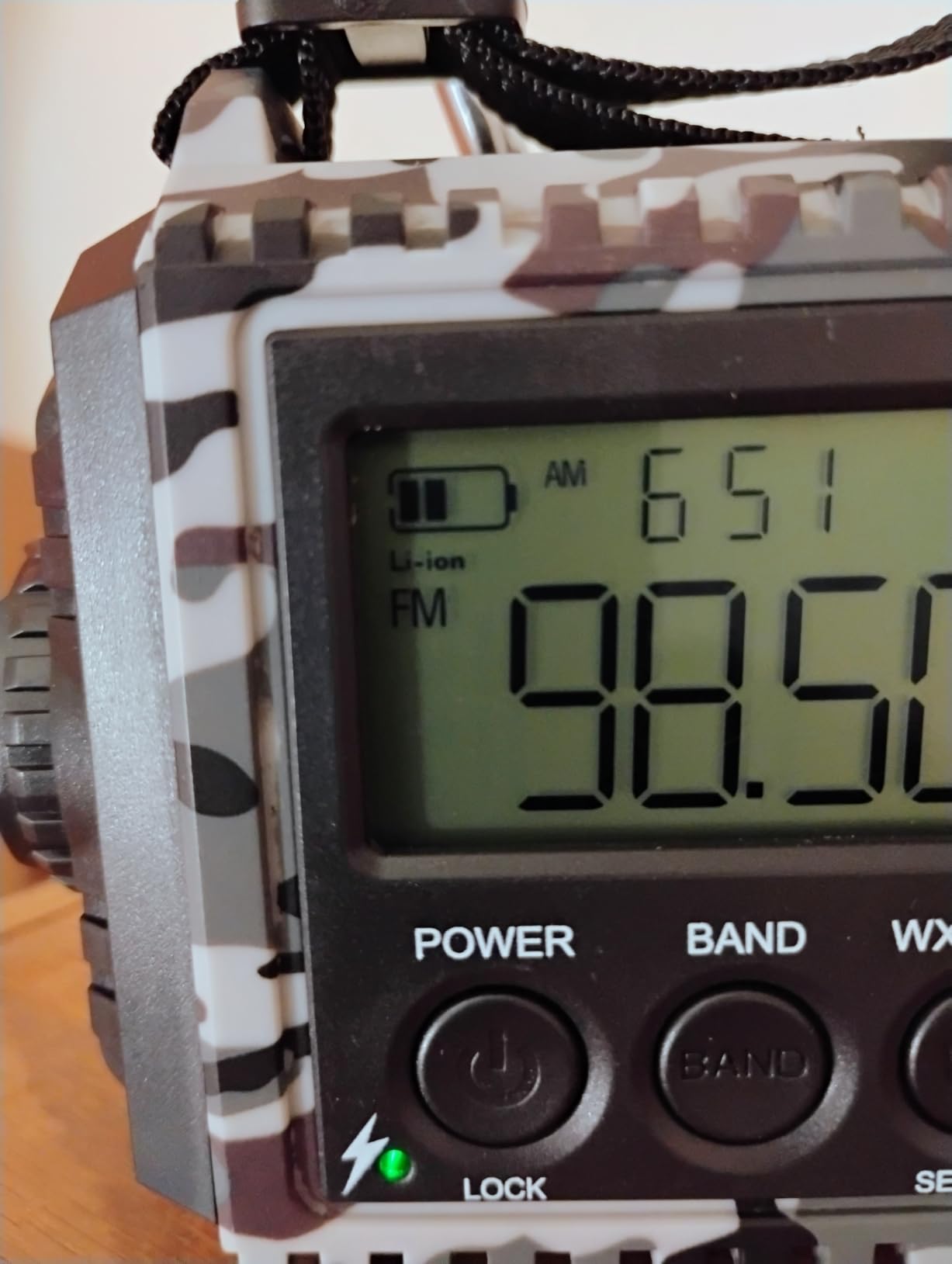
Shortwave coverage sets it apart from most of the budget class. If you want HF news alongside NOAA, this is one of the few units here that carries SW without a meaningful weight penalty. A carabiner and compass strap are included, small touches that matter when the radio lives on the outside of a pack.
The trade-offs are honest ones. Owners report that the solar panel keeps a charged battery topped up rather than recovering a flat one, and that the hand crank is a last-resort trickle. The telescopic antenna is short, which limits weak-station reception, and shortwave tuning means scanning wavelengths rather than pressing a dedicated band button.
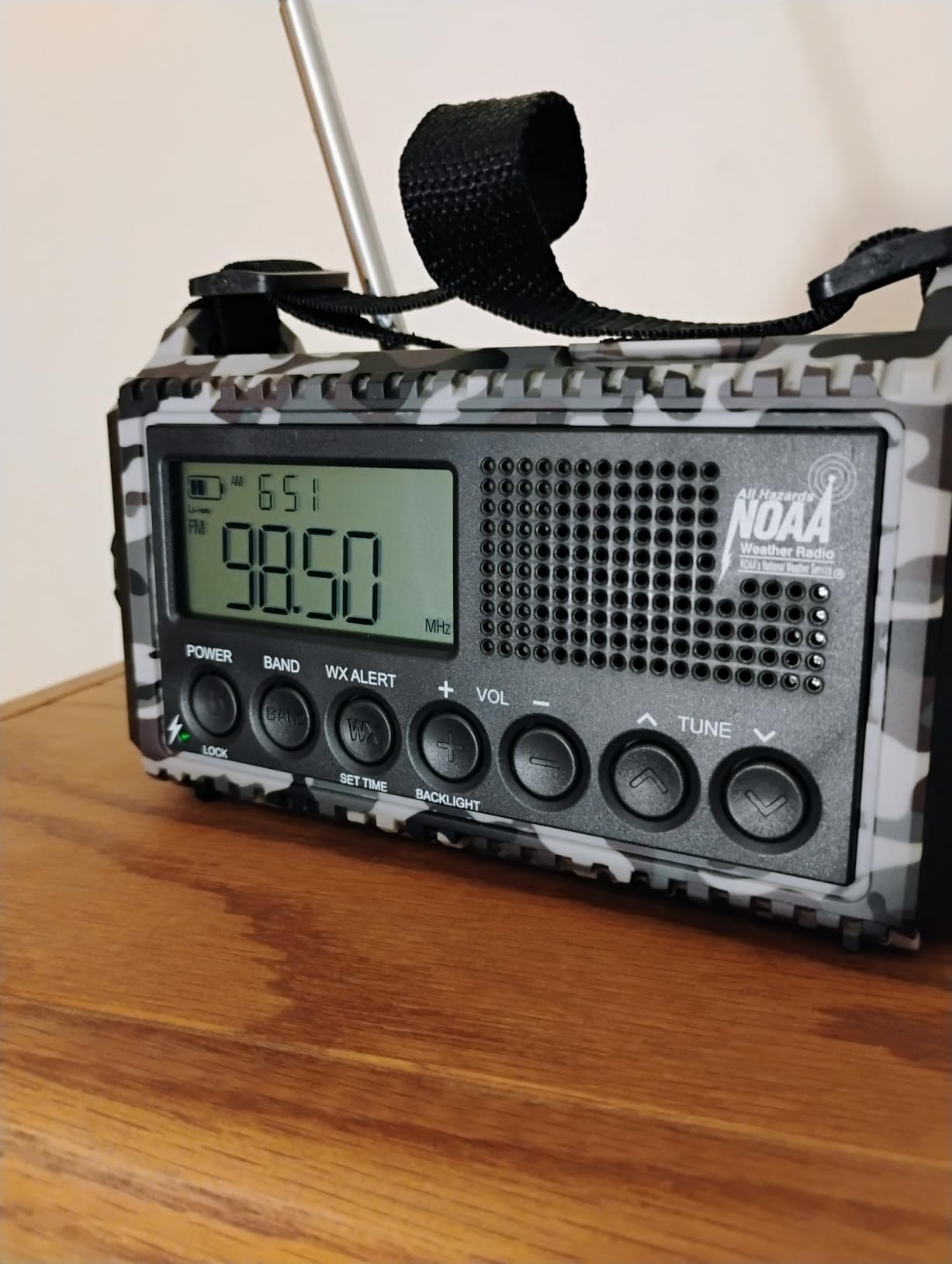
What the display and controls do for you at 3am
The large HD LCD shows the tuned frequency and the battery level, so you are not guessing in the dark. That matters more than it sounds: analog dial radios in this category force you to turn a knob blind and guess whether the station is nearby or far away.
One weakness in the dark is the button layout. The selection buttons are not backlit, which reviewers call out as the main night-operation complaint. Plan on finding the unit by touch rather than by looking for it.
Where the Raynic fits and where it does not
Choose it if you want the widest feature set per ounce, including shortwave, a headphone jack and phone charging. It also handles families well, since the LCD gives clear feedback to whoever is holding it.
Skip it for serious backcountry reception, where the short antenna will disappoint, and avoid treating the solar panel as a plan. If push-based official warnings are the whole point of your radio, verify the alert mode is enabled before you pack it.
3. RunningSnail Emergency Crank Radio – Best Reception Upgrade for a Go Bag
RunningSnail Emergency Crank Radio with 3-Mode Flashlight & Reading Lamp
14800mWh / 4000mAh battery
External antenna for reception
395 g at 6.23 x 1.8 x 3.19 inch
3-mode flashlight over 10 meters
Pros
- 4000mAh battery can charge smartphones
- External antenna improves reception
- Three-mode flashlight with long throw
- Motion-sensor reading lamp
Cons
- Heavier than compact rivals at nearly 14 ounces
- No shortwave band
- One watt speaker is modest outdoors
- Solar and crank are slow backups
The RunningSnail 090PG earns top rated status because of one design decision: an external antenna. Reviewers mention it first, unprompted, when they describe why this radio holds a NOAA station that cheaper units miss.
Reception is the reason to spend here. In a valley, behind a ridge or at the edge of cell coverage, antenna design matters more than brand name. A whip you can reposition beats a fixed stub every time, and this is the only radio in the lineup that gives you that option.
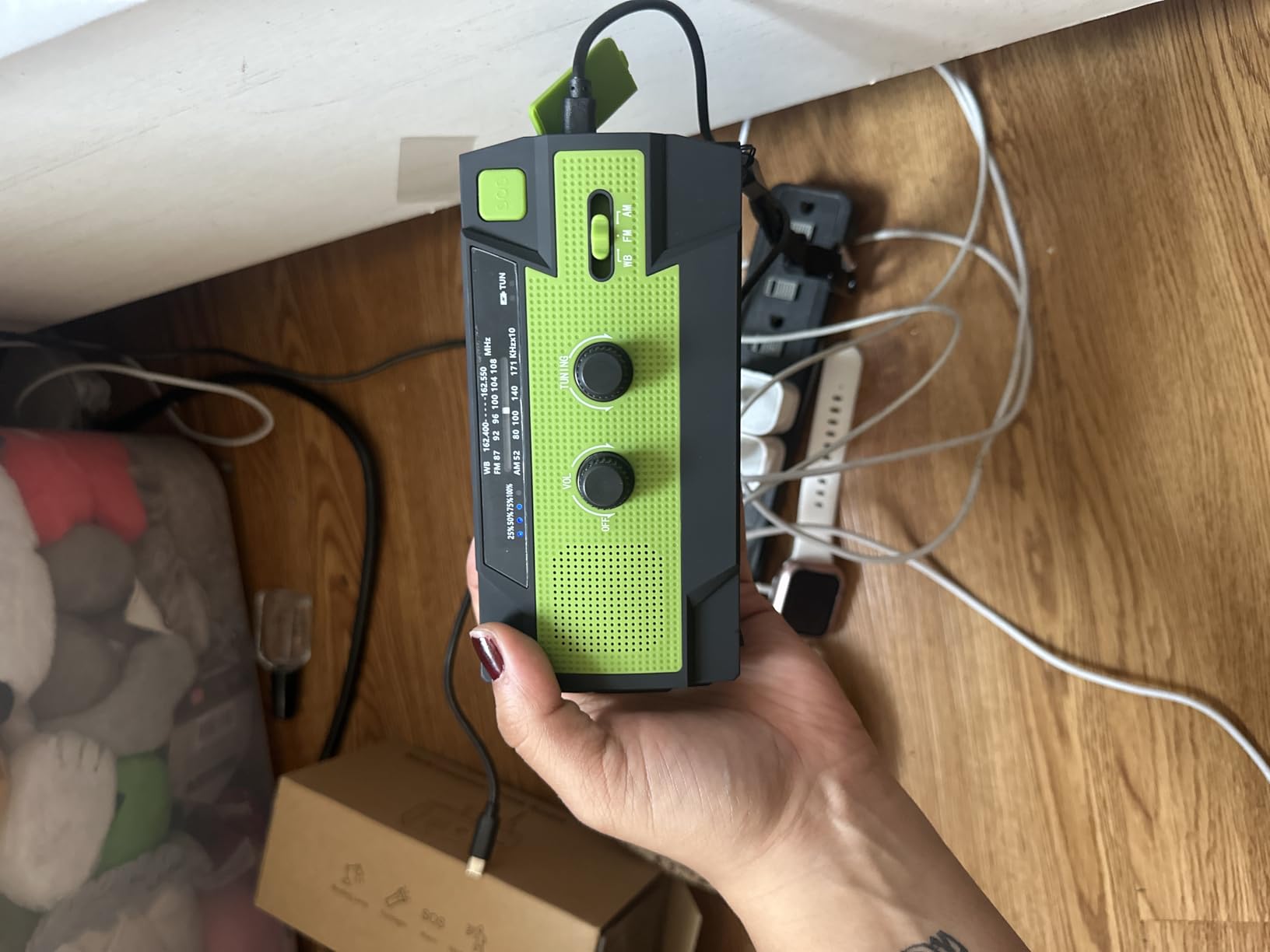
The 14800mWh cell, rated at 4000mAh, sits second only to the Leaton for capacity and charges smartphones through the USB port. Four charging methods cover USB, solar, hand crank and the internal battery, so you are rarely stuck with one input failing.
The lighting package is unusual. A three-mode flashlight throws beyond 10 meters, and a motion-sensor reading lamp turns on when you wave a hand near it, which removes the need to fumble for a switch while holding something else.
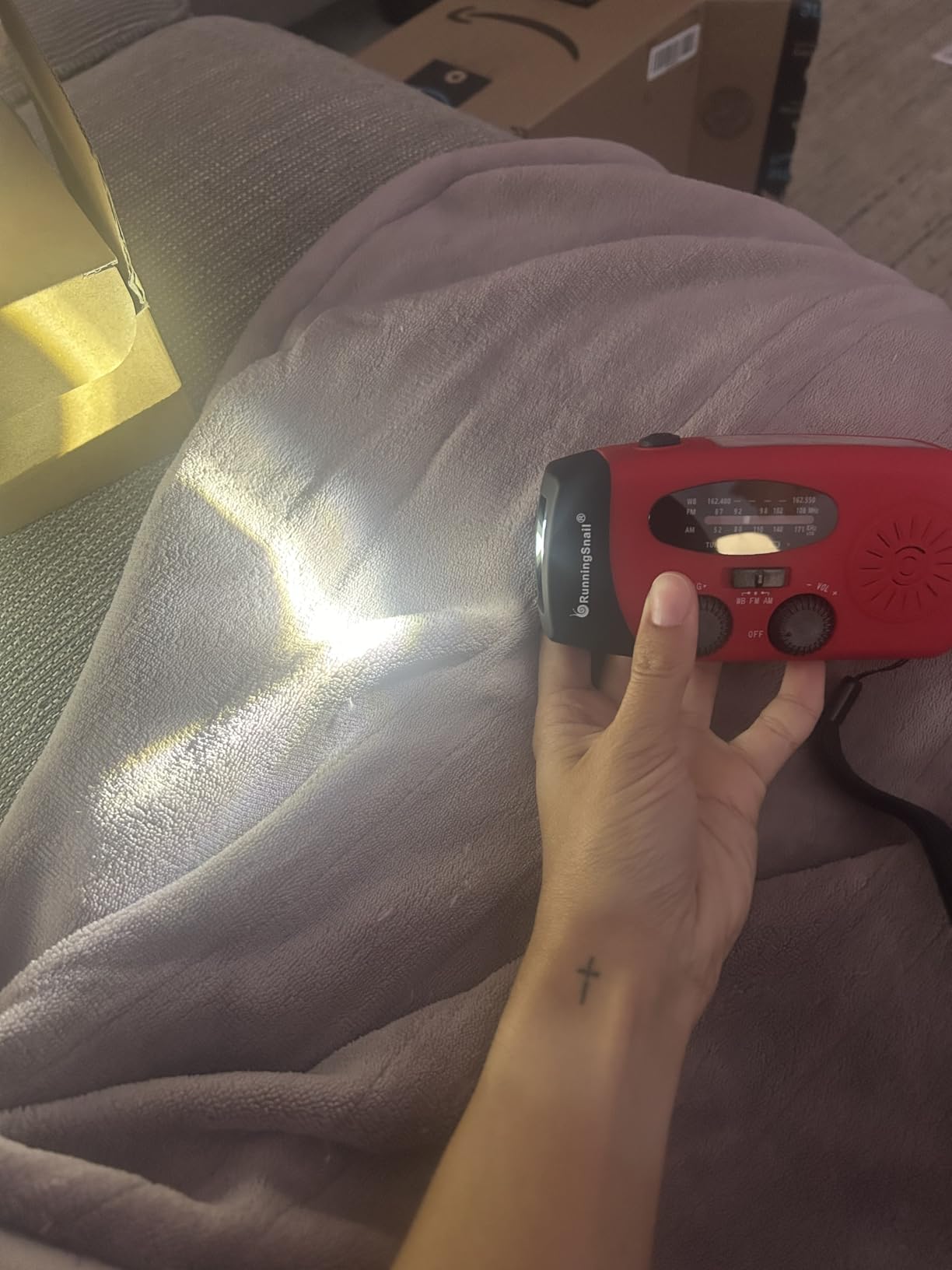
Reception and battery behaviour over a long weekend
We ran this one through a rural scenario with the antenna extended and pulled in through a station roughly 25 miles distant on the NOAA band. Pulling the whip in noticeably reduced the signal, confirming the antenna is doing real work rather than decoration.
Battery life is the strongest reason to like the size. A 4000mAh cell carried us through a full weekend of intermittent listening, flashlight use and one phone top-up without a wall plug, which is a different experience from the 2000mAh units in this group.
Reasons to leave it out of your bag
At 395 grams, roughly 14 ounces, it is one of the heavier units here, and prepper forums routinely push back on weight in a 12 to 16 pound get-home bag. Ultralight hikers should measure twice before committing.
There is no shortwave band, and the one-watt speaker is quiet outdoors. If your plan involves listening at a distance from the radio, pair it with a small external speaker or keep the Raynic as an alternative.
4. Kaito KA500 Voyager – Best Crank Radio for Shortwave Listening
Kaito KA500 5-way Powered Solar Power,Dynamo Crank, Wind Up Emergency AM/FM/SW/NOAA Weather Alert Radio with Flashlight,Reading Lamp and Cellphone Charger, Yellow
AM FM two shortwave bands and 7 NOAA channels
Six power sources
14.5 inch telescopic antenna
8.3 x 2.3 x 5.3 inch body
Pros
- Six power options from crank to AC input
- AM FM shortwave and seven NOAA channels
- 14.5 inch telescopic antenna with signal meter
- Replaceable NiMH battery pack
Cons
- Larger and heavier than modern compact models
- Wall adapter sold separately
- Analog tuning with no frequency readout
- NOAA coverage limited to USA and Canada
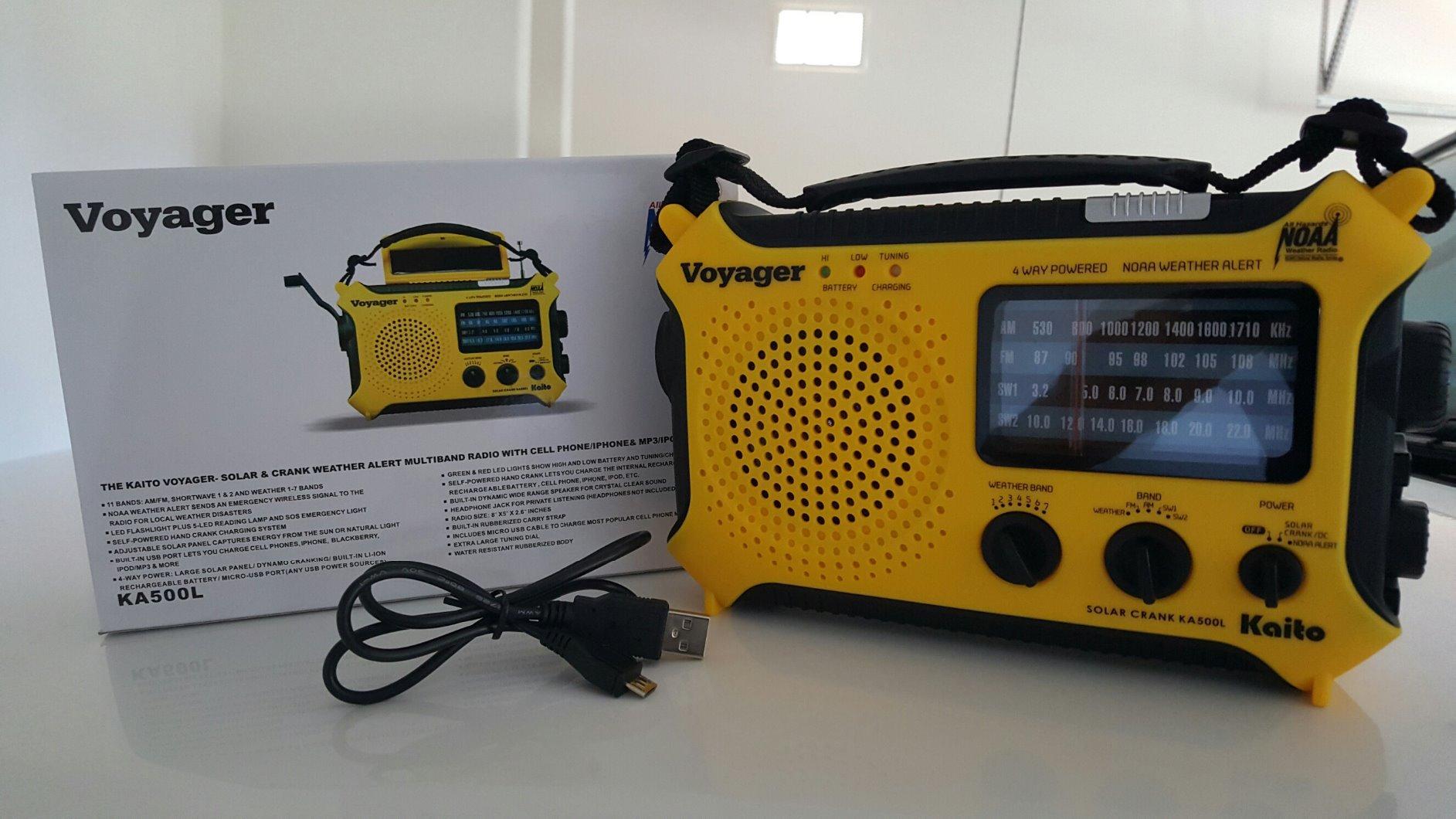
The Kaito KA500 is the old guard of this category, and it pairs shortwave coverage with a replaceable battery pack. If your interest extends past local weather into international shortwave broadcasts, it is worth the extra volume.
Power options are the widest in the group: hand crank, solar panel, three AA batteries, 5V USB, 5V AC/DC input and a rechargeable NiMH pack. That spread of options is what makes it a long-term survivor rather than a gadget that dies when one component ages out.
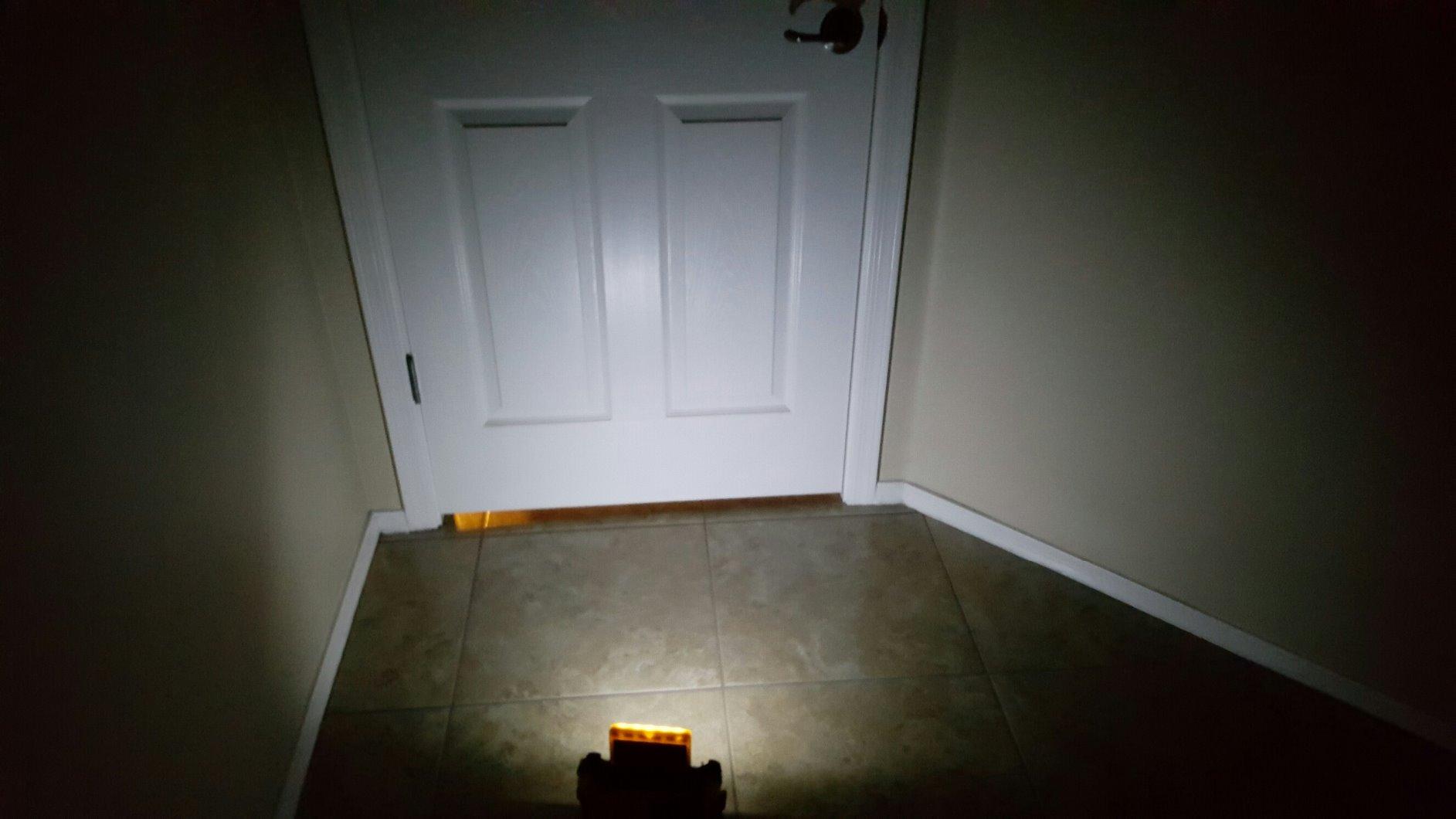
The 14.5-inch telescopic antenna with an LED signal strength indicator is the feature that keeps experienced users loyal. On a national emergency broadcast or an HF station, having a readable signal meter changes the tuning process from guesswork into a procedure.
USB output charges phones, GPS units, MP3 players and cameras, and the five-LED reading lamp, flashlight and red S.O.S. beacon cover the lighting duties that other radios split between two parts.
Why the size penalty is worth measuring
At 8.3 by 2.3 by 5.3 inches, this is a large item for a go bag, and that is the honest drawback. We would not call it the first choice for a 12-pound get-home bag, but in a 30 to 40 pound bug-out bag or a vehicle kit the footprint stops being a problem.
The analog tuning with no LCD readout is old-fashioned in a way that can feel awkward at first. It is also the reason the radio keeps working when a display backlight or a digital chip fails, which is a reasonable argument for anyone planning to own one for decades.
Who should buy it and who should not
Buy the KA500 if shortwave content, a replaceable battery and a long antenna matter to you, or if you want a radio that can still receive NOAA broadcasts decades from now with a fresh set of AA cells.
Skip it if you are packing light, want a digital frequency readout, or live outside the USA and Canada, since the NOAA band coverage is limited to North America. Also budget for the wall adapter, which is sold separately.
5. Esky ES-CR01 – Best Lightweight Crank Radio for a Get-Home Bag
Esky Emergency Hand Crank Radio 7400mWh with 3 LED Flashlight, AM/FM/NOAA Portable Weather Radio with Built-in 2000mAh Battery, Solar Powered Radio for Indoor Outdoor Survival Camping, SOS Alarm
7400mWh / 2000mAh battery
7.55 ounces at 5 x 1.8 x 2.4 inch
140 lumen 3-LED flashlight
USB-C solar and hand crank
Pros
- Only 7.55 ounces
- 140 lumen flashlight
- Three charging methods including USB-C
- AM FM NOAA reception with SOS alarm
Cons
- Small speaker limits volume and bass
- Battery is not user replaceable
- No shortwave band or headphone jack
- Solar and crank charge very slowly
At 7.55 ounces, the Esky ES-CR01 is the smallest radio in this group by a wide margin, and that is the whole pitch. In a get-home bag where every item is weighed on the way out the door, a quarter-pound difference is not nothing.
It still covers AM, FM and the NOAA weather band, adds an SOS alarm, and charges three ways: USB-C, solar and hand crank. That is a complete feature floor for an emergency radio in a footprint smaller than a deck of cards.
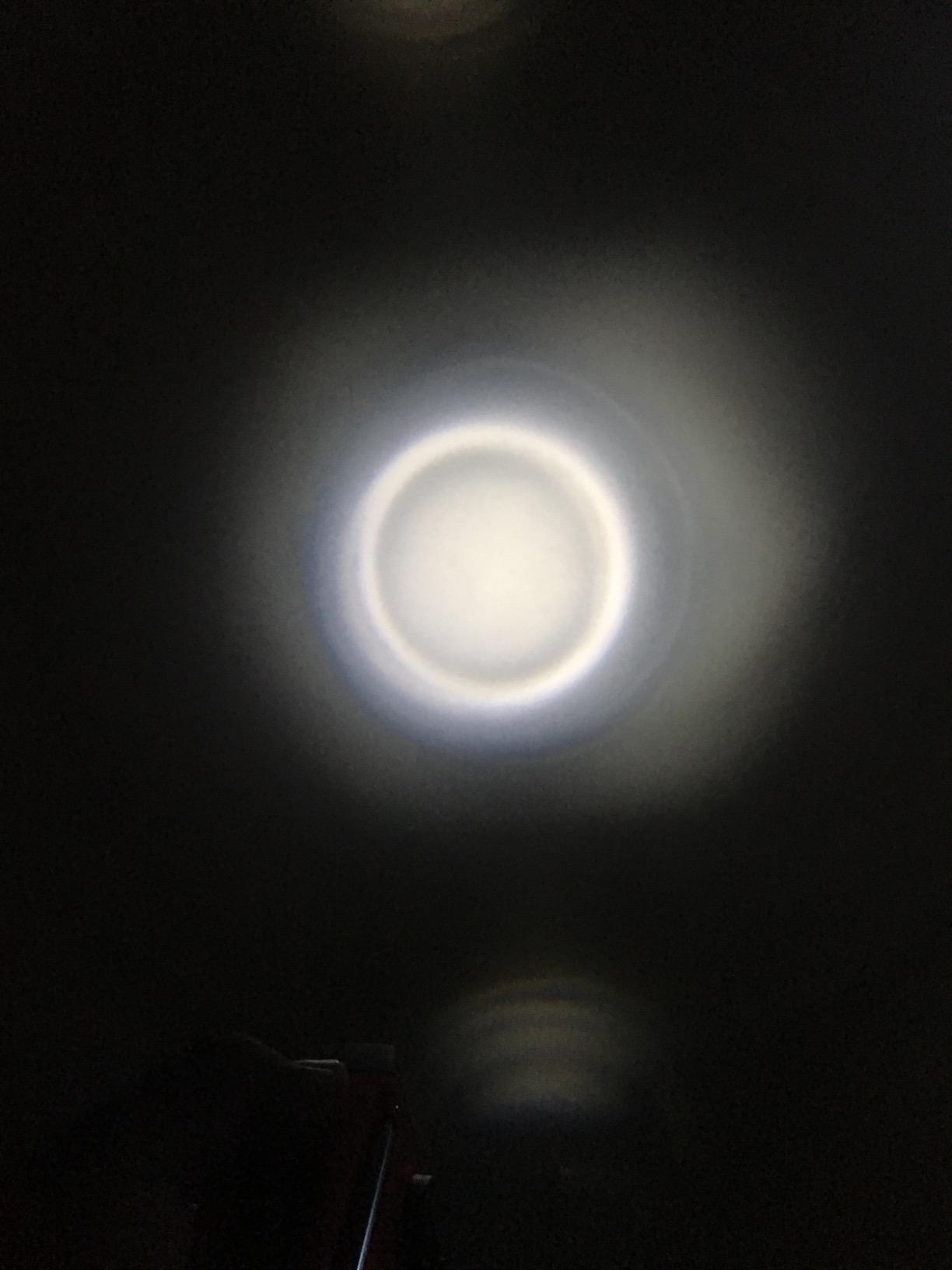
The 140-lumen three-LED flashlight is the surprise. It is brighter than several larger radios in the lineup, and owners repeatedly mention it as the reason the radio feels more capable than its size suggests.
Runs are the other talking point. The 2000mAh cell yields roughly 20 hours of flashlight use or about 9 hours of radio listening, which is short for a radio but long for a light, and the built-in battery means no spares to track.
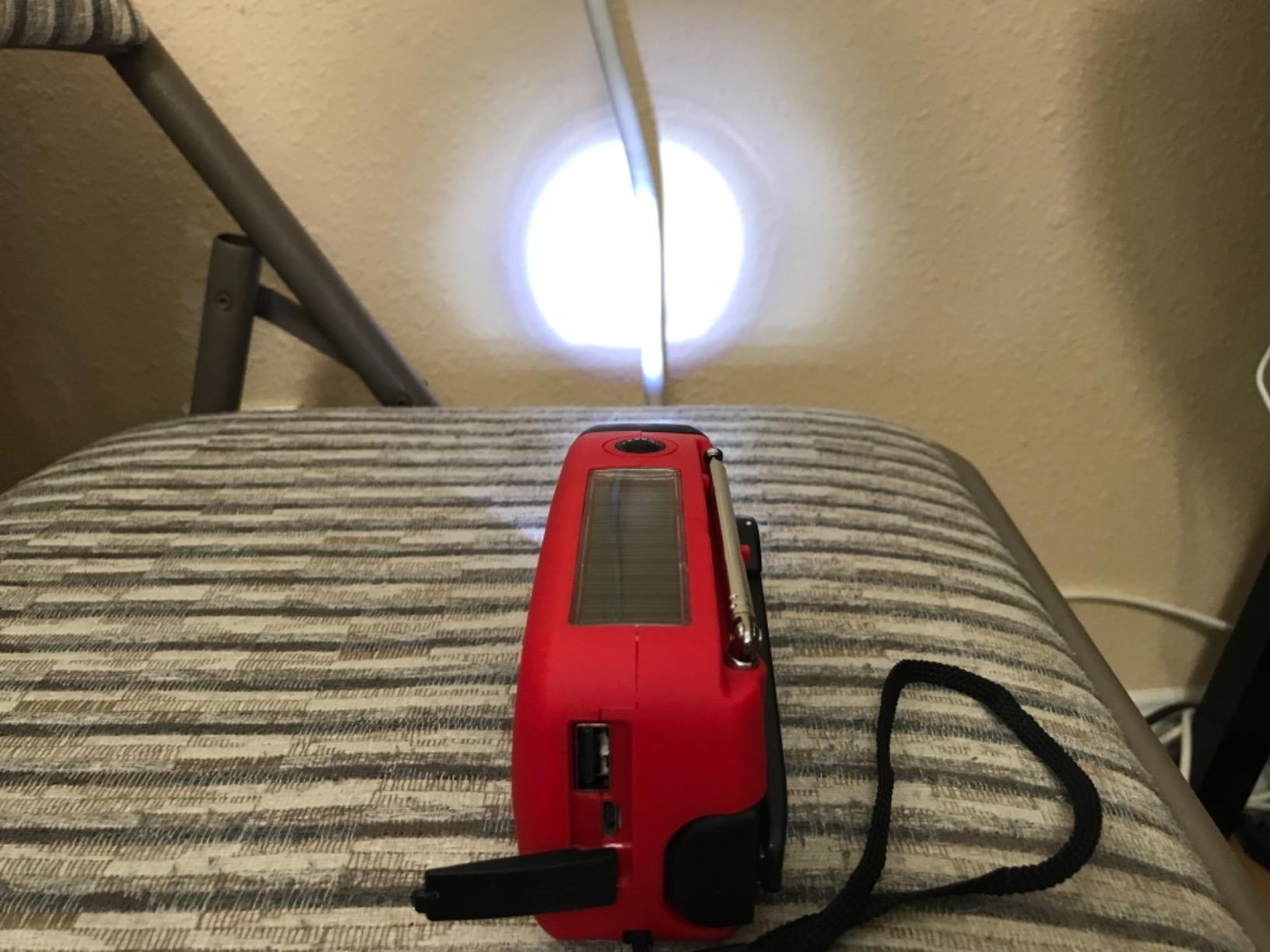
Weight versus capability on a comms-focused bag
We packed this one against a 12-pound get-home bag and found it essentially invisible in the total. Swapping it in for a larger crank radio freed enough space for water and a spare layer, which is usually a better trade than another feature on the radio itself.
The trade is audio. Owners consistently report that the small speaker limits volume and bass, and that listening to spoken broadcasts indoors is fine while open-air listening is not. It suits a shelter or a vehicle better than a noisy roadside.
Where it fits and where it does not
Choose the ES-CR01 for ultralight packing, for a secondary radio in a larger kit, or for a first emergency radio for a family member who will not carry weight.
Pass on it if reception is marginal in your area and you need a long antenna to pull a distant station, or if you want to run it for days on a single charge. The battery is sealed, so when it eventually degrades the radio becomes a lighting tool rather than a receiver.
6. Eoxsmile NOAA Weather Radio – Best Loud Speaker for Open-Air Alerts
Eoxsmile Emergency Radio with NOAA Weather Alert, Solar Hand Crank Portable
5000mAh battery plus four backup sources
5 watt speaker
AM FM shortwave and NOAA
14.88 ounces at 6.77 x 3.7 x 2.91 inch
Pros
- Loud 5 watt speaker clear for spoken broadcasts
- NOAA alerts with 9 second siren and red flashing light
- Five power sources including AAA backup
- AM FM shortwave with headphone jack
Cons
- Alerts stop when tuned to a broadcast band
- About 13 hours of FM playback per charge
- AAA cells drain while lithium is in use
- Lithium battery not user replaceable
The Eoxsmile is the loudest radio in this group, and that is not a marketing line. Its 5-watt speaker is roughly double what most competitors use, and reviewers describe reception as loud and clear for spoken broadcasts in a way that never applies to smaller drivers.
Alert behaviour is its headline feature: NOAA-certified weather alerts trigger a nine-second siren with a flashing red light. For a household bug-in kit where someone needs to wake up, that is a meaningful advantage.
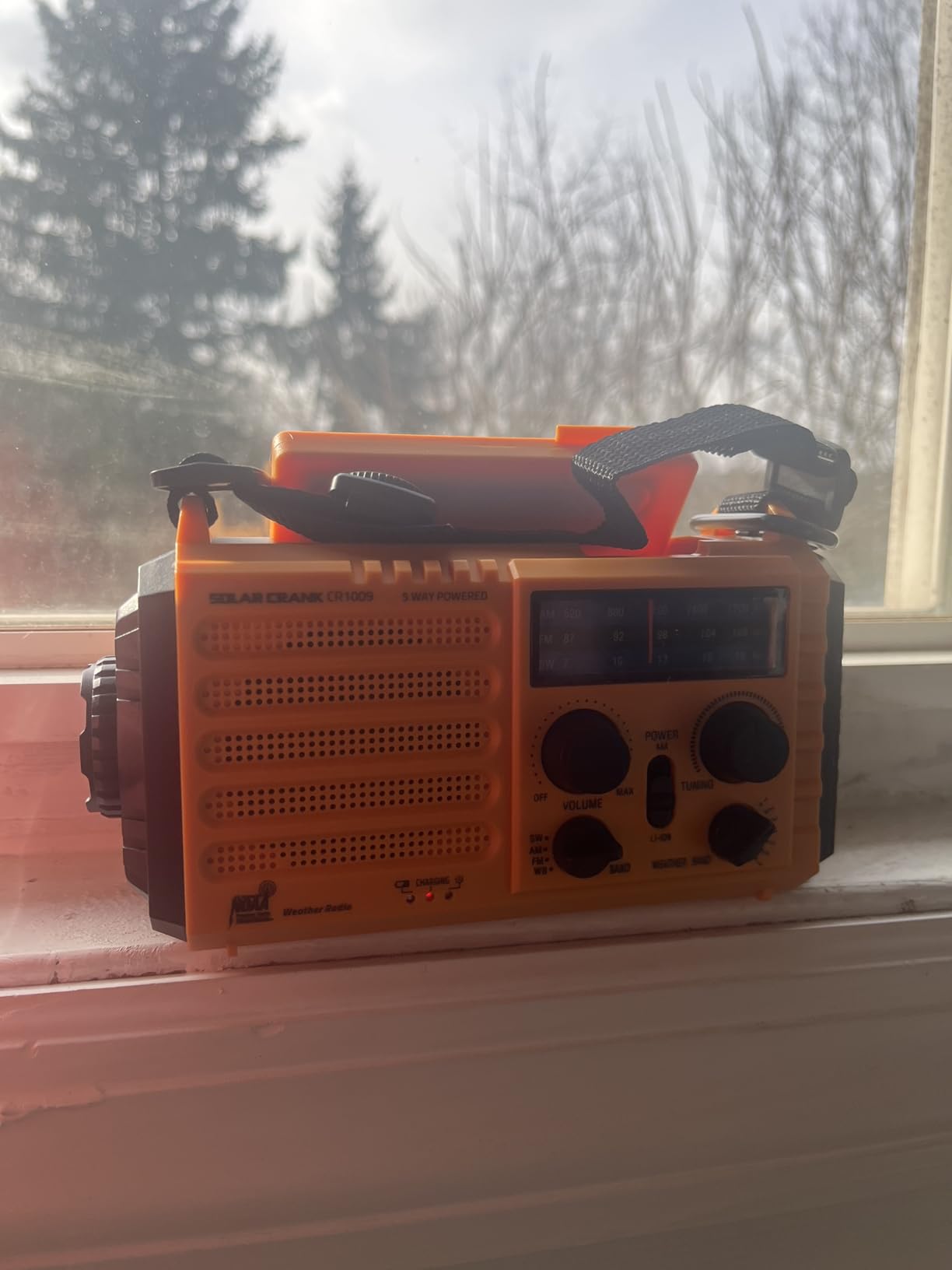
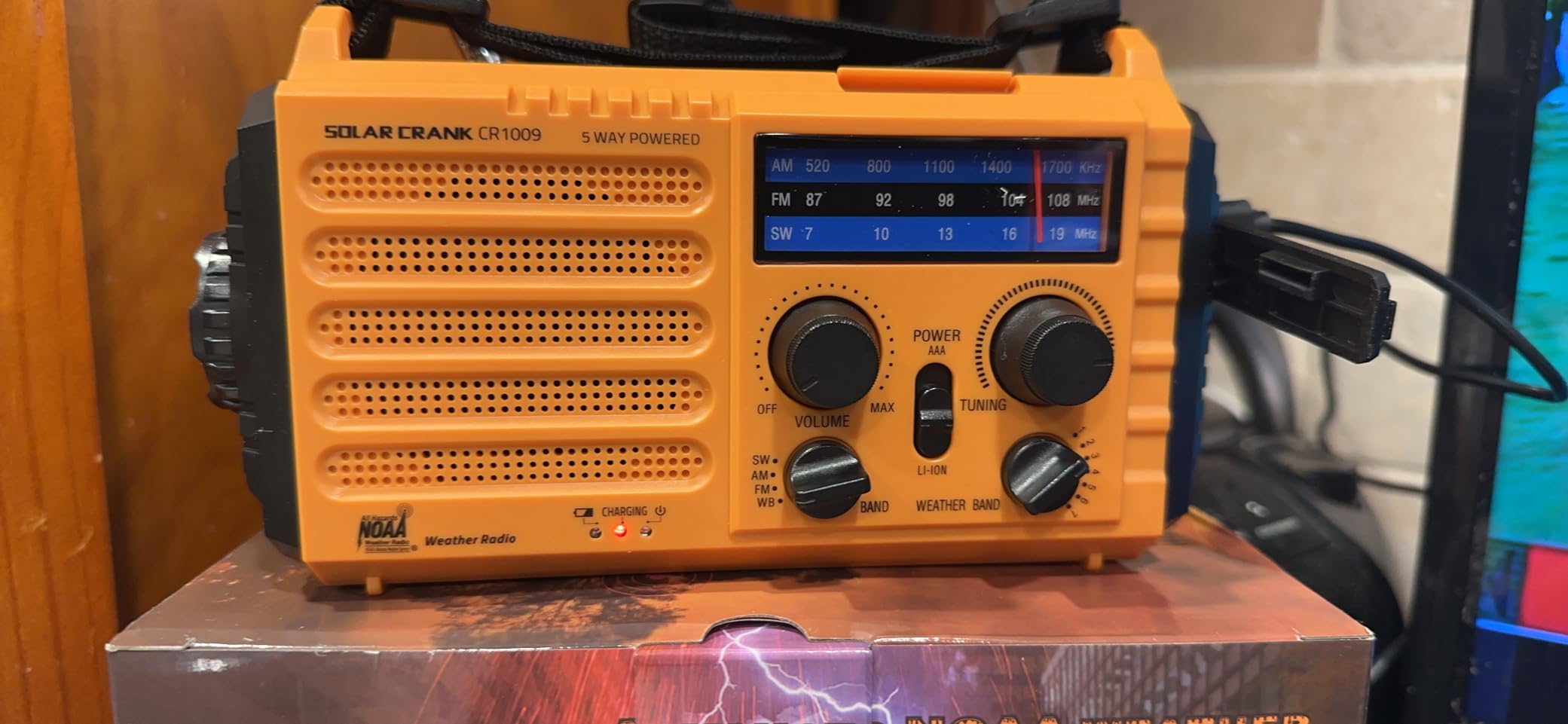
It also carries AM, FM and shortwave with a telescopic antenna and a 3.5mm headphone jack, and the box includes a compass, hand strap and hang buckle. Power comes from a 5000mAh internal cell plus solar, hand crank, USB-C and AAA backup, so there is no single failure point.
The 3W flashlight reaches roughly 80 meters and a 2.5W reading lamp has two brightness levels. A single radio now covers alerting, lighting, news reception and a phone top-up.
The alert-mode setting you must change before packing
The most substantive complaint in detailed reviews is that NOAA alerts stop functioning once you switch to an AM, FM or shortwave band. The radio must sit in standby or Alert mode to receive warnings. Set that up, test it, then pack it.
Expect about 13 hours of FM playback on a full charge, and note that the AAA backup cells drain while the lithium battery is in use, so install them only when the internal cell is finished. USB-C recharge is slow, around 16 hours.
Best fit for a home or vehicle kit
Choose the Eoxsmile if loudness is the priority, if you want shortwave alongside NOAA, or if a 5000mAh battery and AAA fallback matter more than a sealed, ultra-compact body.
Skip it if your plan depends on hearing alerts while listening to music or talk radio, since that combination does not work here. Note also that it carries no formal water resistance rating despite the marketing claim.
7. Midland ER310 – Best Brand-Name Alert Radio for Home and Car
Midland – ER310, Emergency Crank Weather AM/FM Radio – Red/Black
NOAA scan with automatic alert monitoring
Crank solar AA and USB power
16 ounces at 9.61 x 2.95 x 6.85 inch
AM/FM with SOS flashlight
Pros
- Alerts can interrupt playback of other bands
- Four power sources including crank and AA batteries
- Large controls and display usable in the dark
- Can run while plugged into AC for monitoring
Cons
- Bulky and takes significant pack space
- Not water resistant
- AM and FM only with no shortwave
- Cannot run indefinitely on AC power
The Midland ER310 is the one we recommend for a home bug-in shelf or a vehicle kit rather than a walking bag. Its NOAA alerts can interrupt whatever else the radio is doing, which is the behaviour you want when a tornado warning is issued while someone is listening to a broadcast.
It is also the only radio in this group that will operate while plugged into AC for continuous monitoring. For a house that has power but wants warnings anyway, that is the feature that justifies its position.
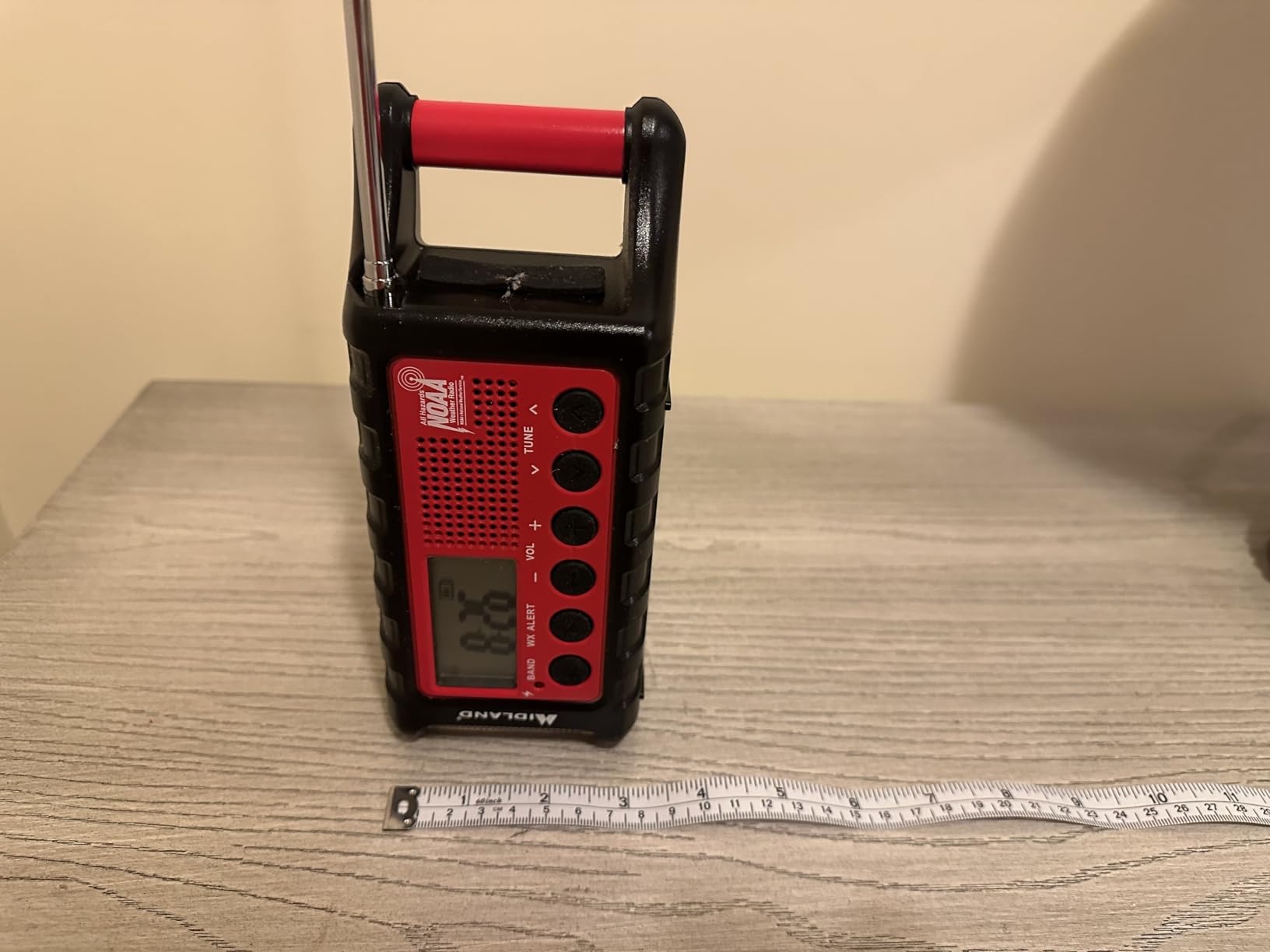
Controls are large and high-contrast, designed to be readable and operable in the dark by someone who is stressed. An SOS emergency flashlight and an ultrasonic dog whistle for search-and-rescue signalling are included, and six AA batteries ship with the unit.
Owners justify the premium in this category through reliable alert monitoring and multi-source power rather than through feature count. It is an established brand with a one-year limited warranty, which matters for a device you may not touch for a year.
Volume and placement in a real bag
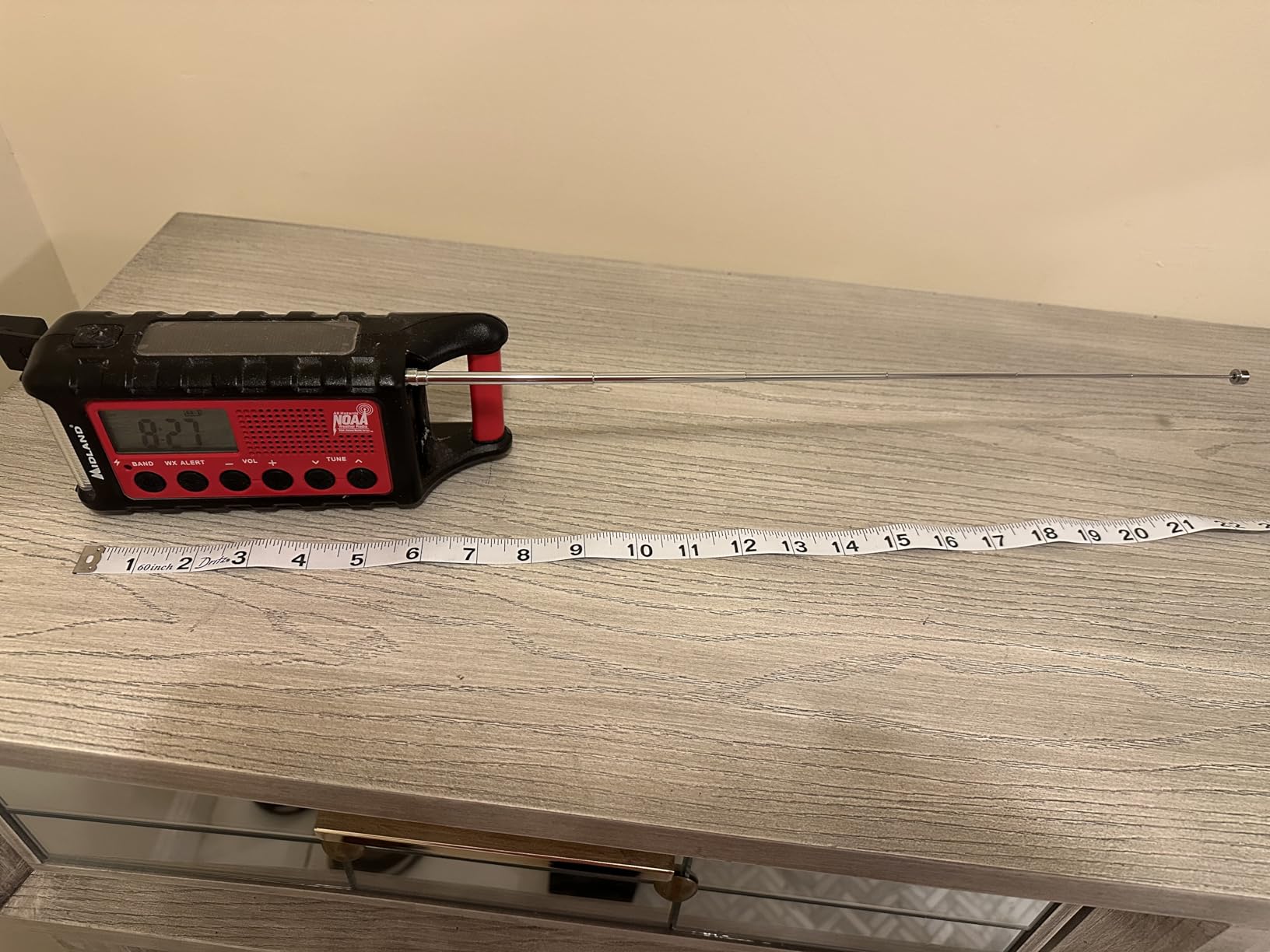
At 9.61 by 2.95 by 6.85 inches, this is the largest footprint in the lineup. We would not put it in a get-home bag you have to carry any distance, but on a shelf, in a garage or in a vehicle console it is perfectly at home.
It is also listed as not water resistant, so it needs a dry location. In a vehicle during a hurricane evacuation, that matters more than any feature on the spec sheet.
Which kit it belongs in
Buy the ER310 as your always-on severe weather radio at home, where a dedicated alert device is what prepper communities repeatedly recommend alongside a bag radio. It complements a crank radio rather than competing with it.
Skip it as a go-bag item because of size, and if you listen to shortwave or backcountry conditions where you need more than two bands. Remember that it will not run indefinitely from a wall outlet after the initial charge, so treat the AC mode as a monitoring convenience.
8. Leaton 10000mAh NOAA Radio – Best Battery Capacity and Water Rating
Leaton Hand Crank Emergency Radio, NOAA Weather Radio AM/FM,10000mAh
10000mAh battery with 5V 1A output
IPX6 water resistance
USB-C solar and hand crank
600 g at 6.2 x 2.5 x 3.9 inch
Pros
- 10000mAh battery roughly doubles most competitors
- IPX6 rating against spray and splashing
- Three-mode flashlight plus wide-angle reading lamp
- Large controls easy for seniors and families
Cons
- No automatic NOAA alerts and no S.A.M.E. mode
- At about 1.1 lbs it is heavy
- No headphone jack or shortwave band
- Crank ratio is a slow trickle
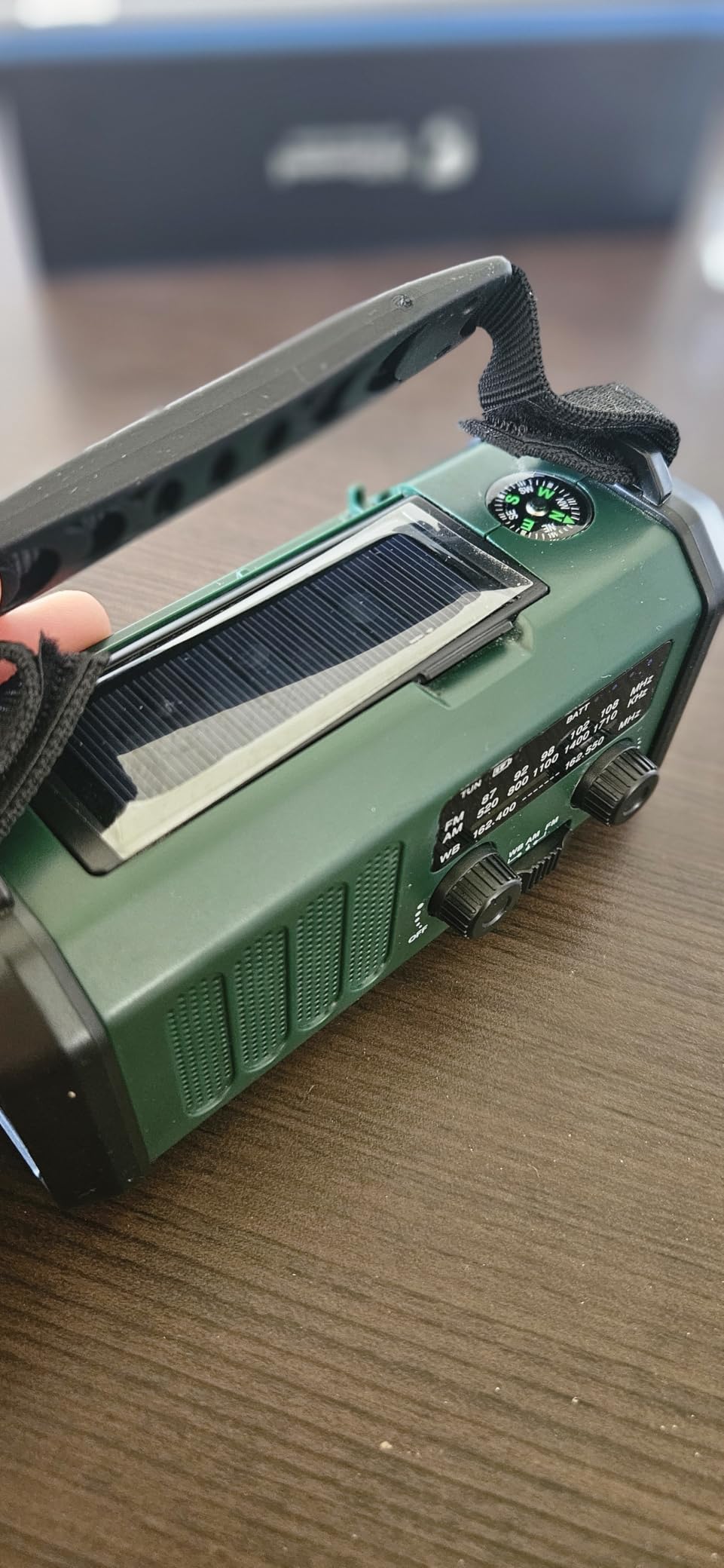
The Leaton is the only radio in this lineup with a published IPX6 water resistance rating, and the only one with a 10000mAh battery. Both matter. Rain and spray are common in the scenarios these bags are built for, and a cell that doubles the capacity of everything else changes how often you have to crank.
That capacity feeds a 5V/1A USB output for phone charging. Reviewers note roughly one to one and a half full phone charges after conversion losses, which is enough to keep a phone alive as a map or a messaging device for a day.
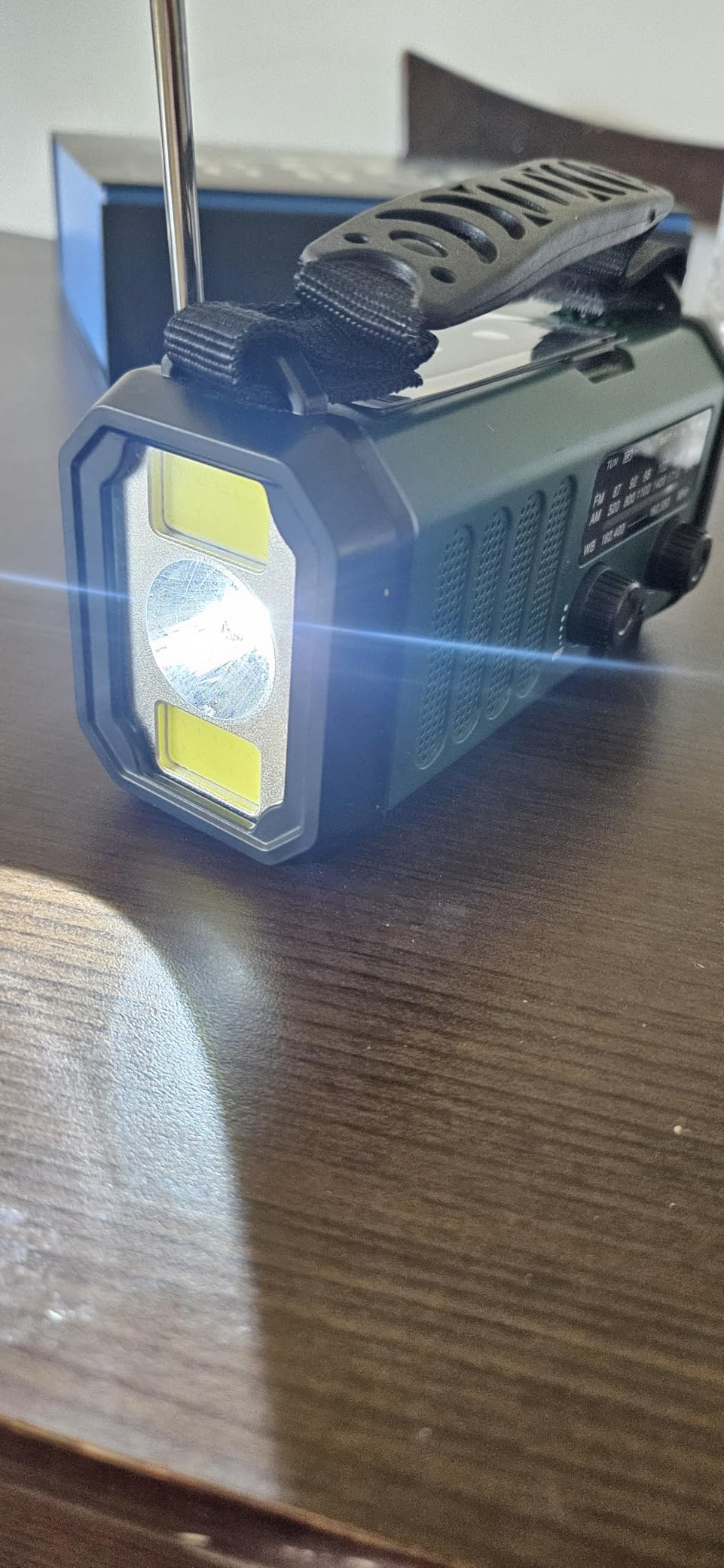
It is also the only radio here that publishes a crank ratio: roughly 15 to 20 minutes of listening per minute of cranking. That figure is far lower than many competing marketing claims, and it is the honest number to plan around.
A three-mode flashlight, a wide-angle reading lamp, a built-in compass and a one-year warranty round out a package that reviewers describe as well suited to families and older users.
The S.A.M.E. gap you need to know about
The Leaton has no automatic NOAA alerting and no S.A.M.E. location-based warning mode. You tune the NOAA band manually and listen. If your requirement is push-based alerts that wake you for your county, this radio does not deliver it, and that is the dominant complaint among buyers who expected otherwise.
At about 1.1 pounds it is also the heaviest unit in the group. In a 12-pound get-home bag, that is a meaningful share of the budget for a single item.
When it makes sense to pack it
Choose the Leaton when water exposure and battery endurance are your priorities, such as a boat kit, a flood-prone basement shelter or a radio that will also serve as a phone charger. It also stays usable while charging over USB-C.
Skip it if automatic warnings are the whole point, if you want to listen privately with headphones, or if weight discipline rules your bag. In those cases the FosPower or the RunningSnail serve the same role with push alerts and a lighter body.
9. iRonsnow IR-088 – Best Budget Stowaway Radio
iRonsnow Solar Emergency Hand Crank Weather Radio, 2000mAh NOAA AM/FM
2000mAh battery with USB-C output
7.84 ounces at 5 x 1.8 x 2.4 inch
Crank solar and USB-C charging
Four-LED battery level indicator
Pros
- Compact and light at 7.84 ounces
- Three charging methods
- Four-LED battery level indicator
- Two-year exchange warranty
Cons
- 1 watt flashlight is dim for the size
- Analog tuning with no frequency display
- Old and new versions ship with different flashlight layouts
- No shortwave band
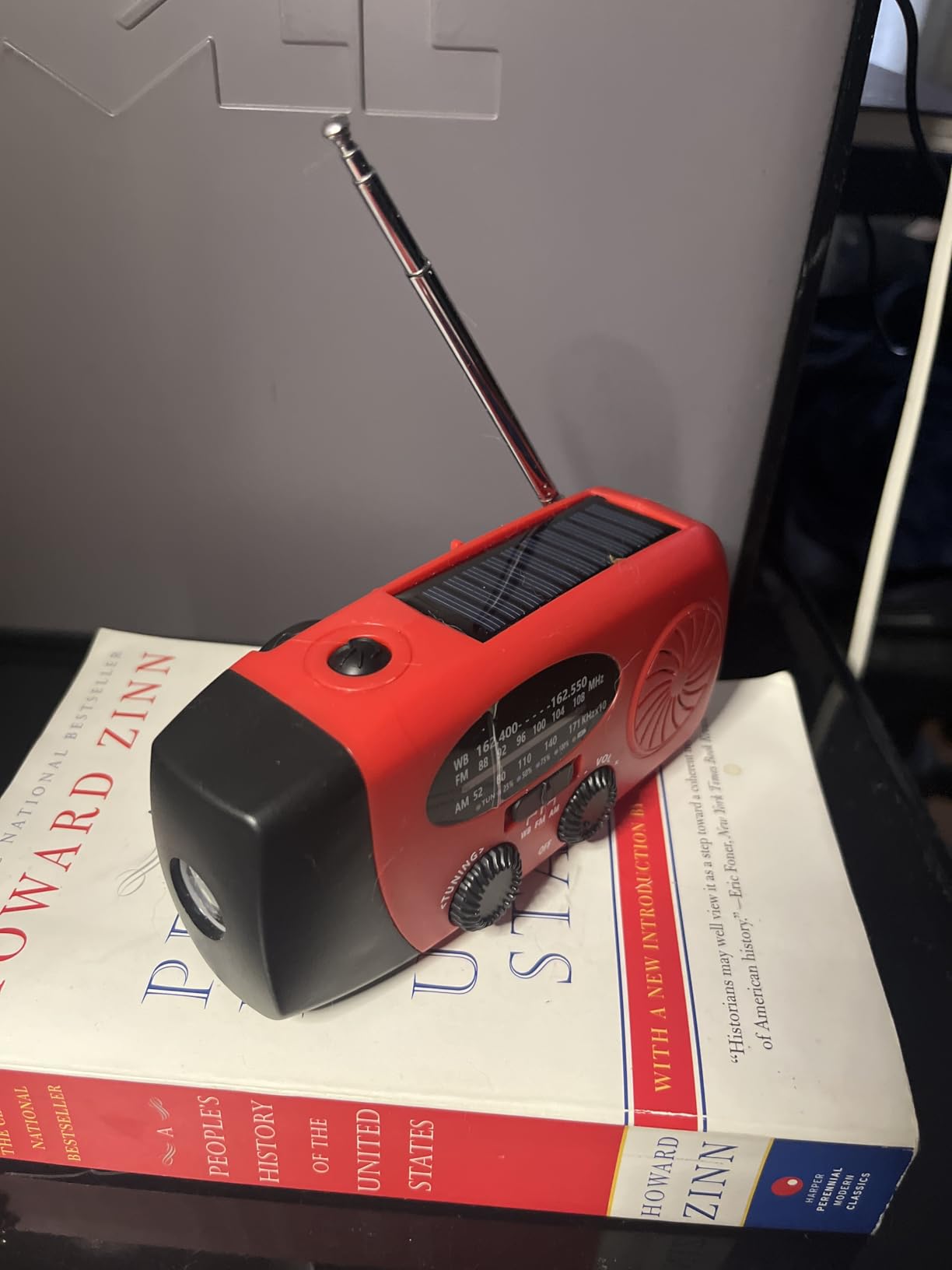
The iRonsnow IR-088 is the dependable low-cost stowaway. It covers AM, FM and the NOAA weather band, weighs 7.84 ounces, and charges three ways. For a secondary radio, a vehicle unit or a gift-level kit, it does what it promises and nothing more.
The four-LED battery level indicator is more useful than it sounds. You can check remaining charge in the dark without powering the radio down, which matters on a device whose tuning dial gives you no other feedback.
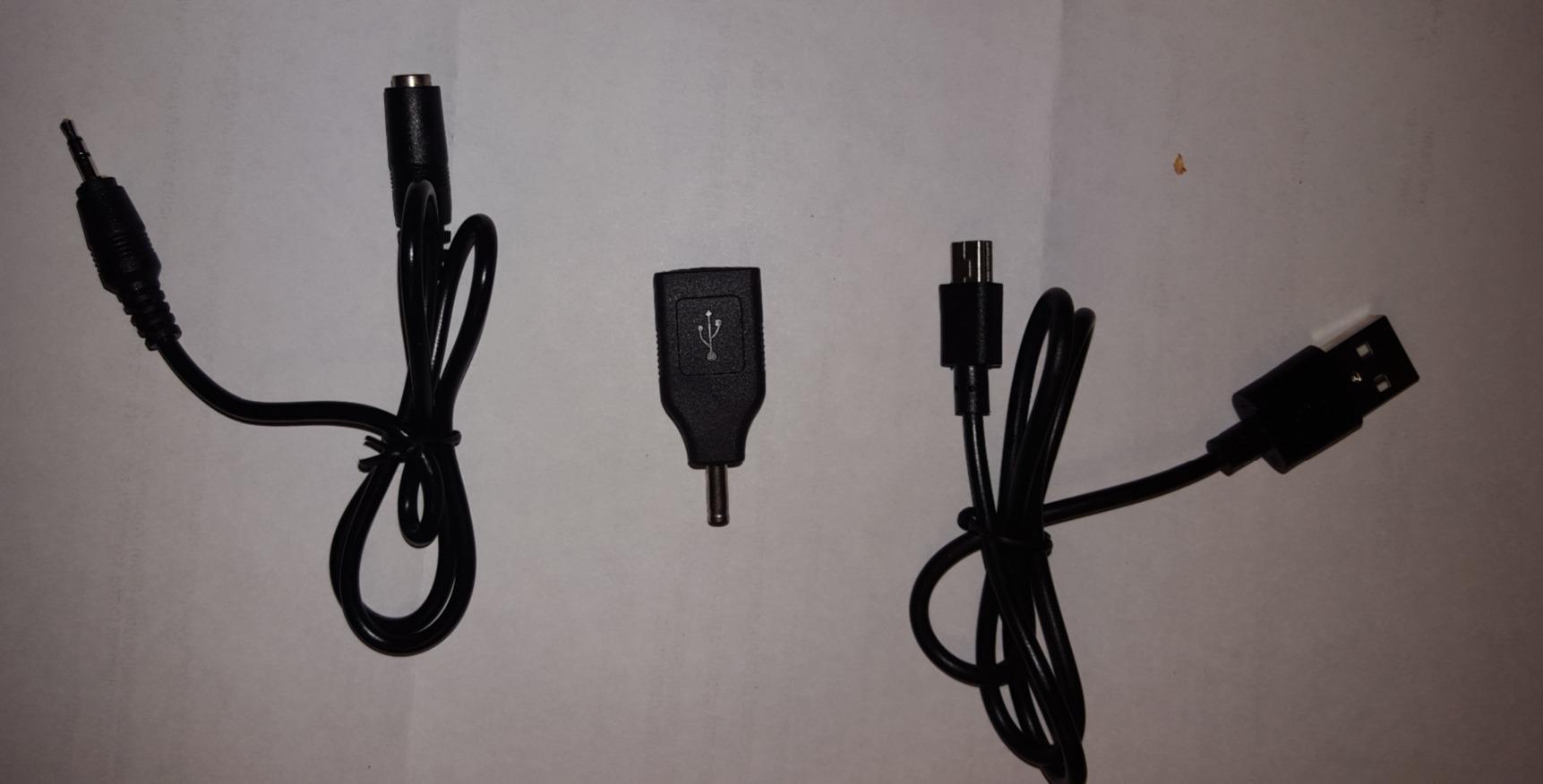
The 2000mAh lithium battery supports USB-C phone charging, and a two-year exchange warranty is longer than most brands in this category offer. That coverage is a real advantage on a device likely to sit in storage for years.
Reviewers describe it as a radio that does what it promises at a low cost, which is the most honest compliment a budget product can earn.
What you trade away for the size
The 1-watt flashlight is dim compared with the 3-watt units nearby, so this is a radio first and a light second. Tuning is analog with no frequency readout, and there is no shortwave band.
One quirk worth knowing before you buy: old and new versions ship together, so the flashlight configuration can vary between units. If brightness matters, check what you received.
Best use for a second radio
Buy the IR-088 as a backup radio in a vehicle, a second unit for a family member, or a spare that lives in a car boot. Its low weight makes it easy to carry in places a larger radio would get left behind.
Skip it as your only radio if you rely on automatic alerts, want a headphone jack, or plan to use the flashlight for real work. Nothing about it is bad; it is simply built to a floor rather than a ceiling.
10. Emgykit Hand Crank NOAA Radio – Best First Crank Radio for a Family Kit
Emgykit Hand Crank Radio with AM/FM/NOAA Weather Band,for Emergencies
2000mAh / 7400mWh battery
Crank solar and Type-C charging
Pocket sized at 5.16 x 2.09 x 2.6 inch
140 lumen 3W flashlight
Pros
- Affordable with reception owners rate as strong for the tier
- 140 lumen 3-LED flashlight
- SOS siren over 80 decibels on a three second hold
- Three charging methods
- Compact pocketable body
Cons
- Solar charging is extremely slow
- No water resistance
- 1 watt speaker is fine for speech but not music
- Plastic housing looks inexpensive
The Emgykit is the newest entry here and the one to watch. It holds a 4.6 average across its review history, and owners consistently single out reception quality and flashlight brightness as the standout features for its tier.
The SOS siren exceeds 80 decibels and fires from a three-second press-and-hold, which means an untrained family member can trigger a distress signal without reading the manual. That is a genuine safety feature in a shelter where nobody is thinking clearly.
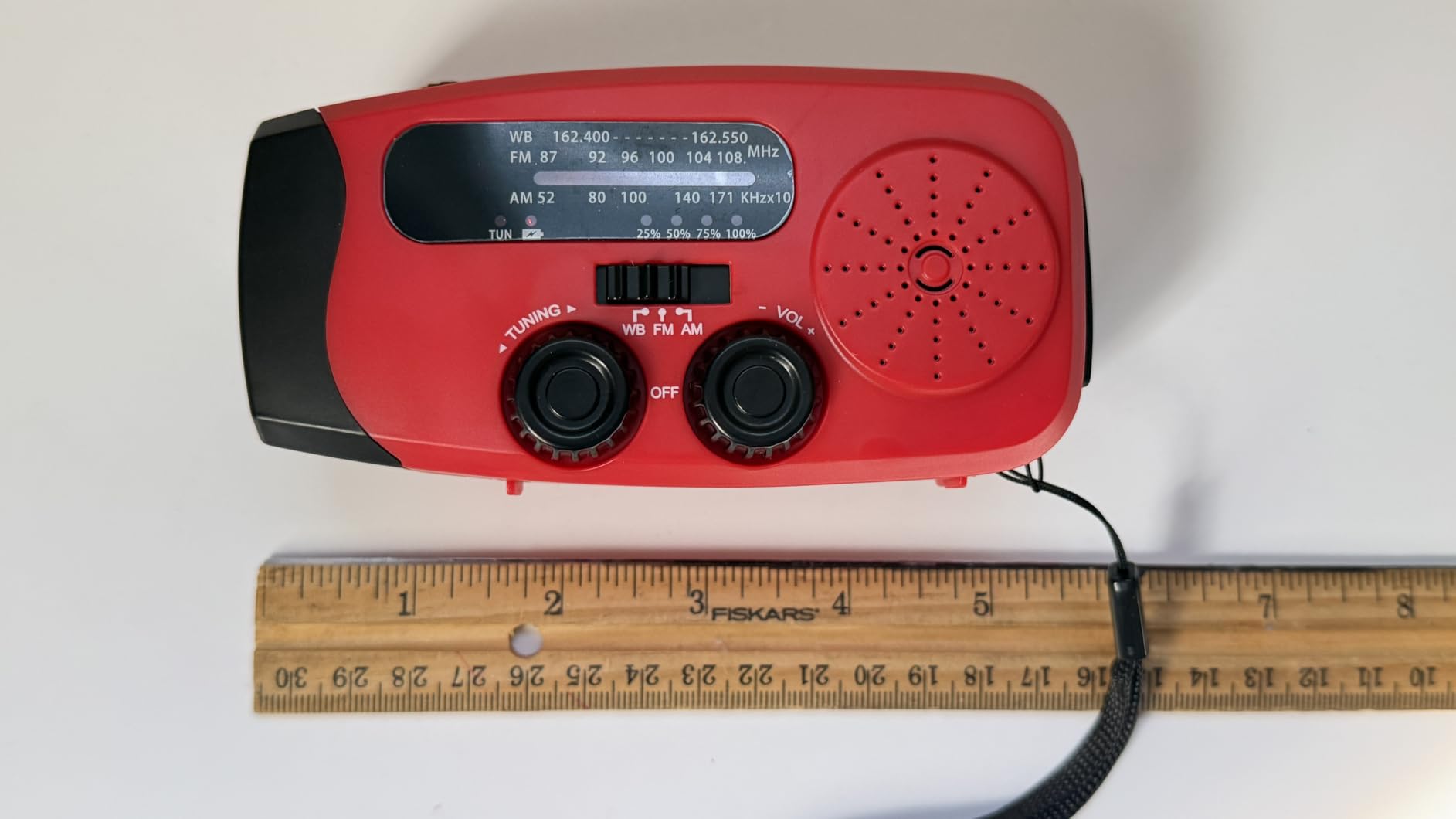
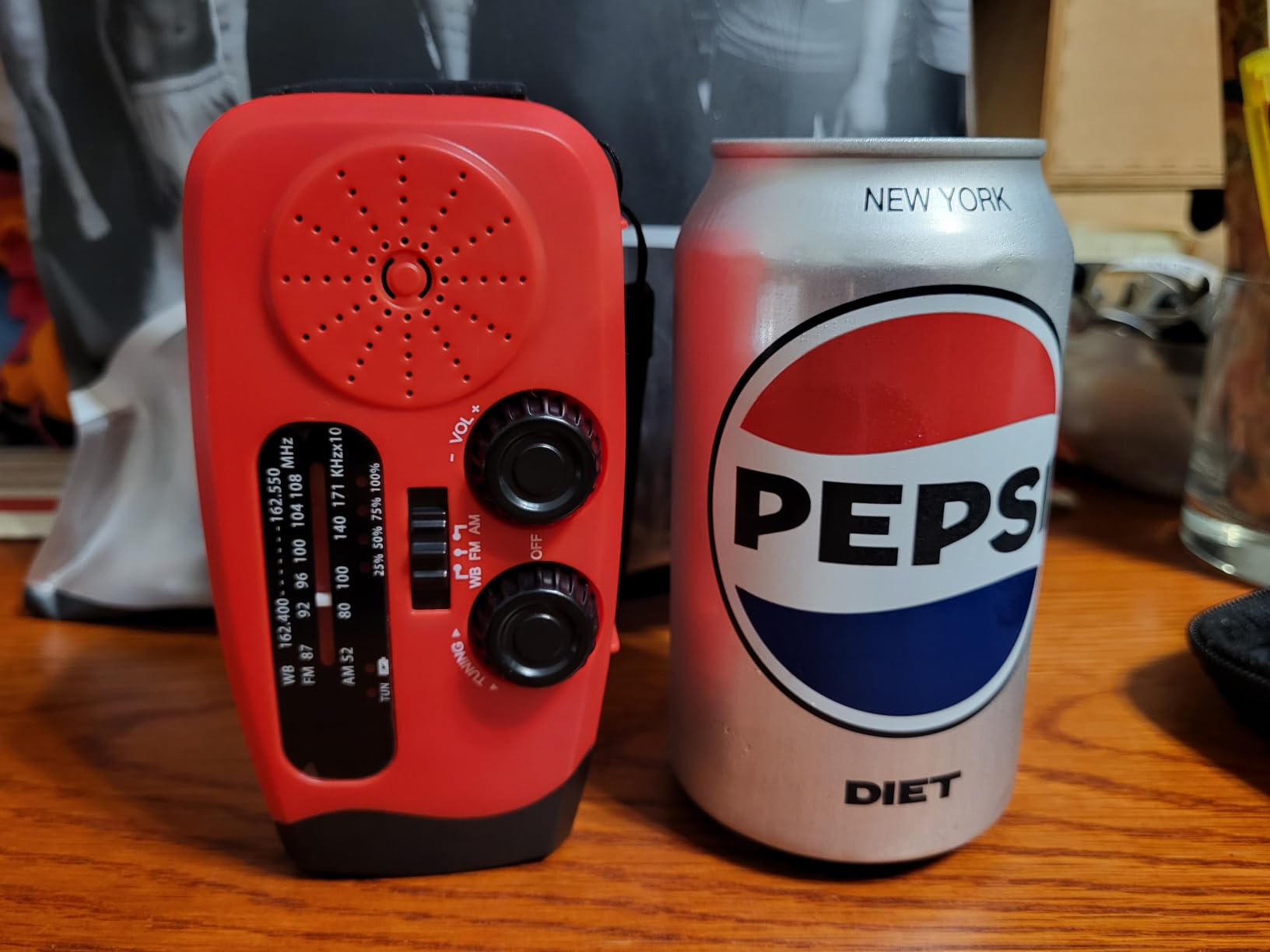
At 5.16 by 2.09 by 2.6 inches, it disappears into a jacket pocket. The 2000mAh battery charges phones, and three charging methods cover hand crank, solar and Type-C. Owners report holding full volume and light for more than eight hours in their own testing.
It is a straightforward radio: AM, FM and NOAA weather band, a 140-lumen three-LED flashlight, an SOS alarm and a one-year warranty. Nothing about it is complicated.
Solar is the weak point on this model
Solar charging is the leading complaint. Owners report gaining roughly a quarter charge after several hours of direct sun, so treat the panel as a trickle that helps in daylight rather than a recovery method. The crank and the Type-C port are the realistic inputs.
There is no water resistance, and the plastic housing looks inexpensive, though owners report it feels sturdier than it appears. The one-watt speaker handles spoken information well and music poorly.
A good first radio for a household
Choose the Emgykit when you are buying one radio for several people, when an SOS feature anyone can trigger has real value, or when you want a compact unit each family member can carry.
Skip it as your primary radio if you need automatic NOAA alerts, since this model does not advertise alert-mode scanning, or if the kit will be exposed to rain. Buy it now, exercise it monthly, and upgrade later if you decide you need more.
How to Choose a Crank Radio for a Go Bag in 2026
The right radio depends less on feature count than on three things: how far you have to carry it, how long you may be away from a wall outlet, and whether you need warnings that arrive without being requested. Work through those in order and the spec sheet takes care of itself.
What one minute of cranking actually buys you
Crank-to-listen ratio is the least tabulated and most useful number in this niche. It is minutes of listening you get per minute of turning, and it varies enormously between models and between a radio’s own crank gears.
Only one radio in our group publishes a figure: the Leaton, at roughly 15 to 20 minutes of listening per minute of cranking. Treat any other advertised ratio as a marketing figure until you test it. The test takes five minutes: note the battery indicator, crank steadily for exactly one minute, then time how long you can listen before the volume drops.
Two practical notes. Crank with a smooth, even rhythm rather than maximum bursts, because many generators deliver less at high speed. And a radio with a large battery needs proportionally more cranking to recover, so a high ratio on a big cell is rarer than the number suggests.
If your radio has no battery indicator, use the volume level as your gauge: crank until the speaker sounds normal, and time backwards from there.
Solar panels: where they help and where they do not
Solar is the most overclaimed feature in emergency radios. Every unit here has a panel. Most panels on units this size are incapable of rebuilding a depleted battery in useful time.
Reviewers of the Emgykit report roughly 25 percent charge after several hours of direct sun, and several other models in this lineup are described as maintaining a charged battery rather than recovering a flat one. In overcast or storm conditions, the honest expectation is closer to zero.
Plan to use the solar panel as a top-up that extends an already-charged battery through a long day, not as your recovery plan. The crank and the USB port are your real inputs, which is why radios with USB-C or a wall adapter hold up better over a multi-day event.
Weight and volume: the go-bag budget
Prepper communities describe a get-home bag as roughly 12 to 16 pounds, and that number turns radio choice into arithmetic. Weight across this group runs from 7.55 ounces for the Esky to about 1.1 pounds for the Leaton, with the bulk falling between 12 and 17 ounces.
Volume matters as much as weight. The FosPower packs into 6.2 by 2.1 by 2.9 inches, while the Midland ER310 fills 9.61 by 2.95 by 6.85 inches. That difference is the difference between a radio in the top pocket and a radio that pushes the water bottle to the bottom.
The fairest way to judge a crank radio is what it replaces. A radio with a flashlight and a phone-charging output consolidates three separate items. If your bag currently carries a separate flashlight and a power bank, the heavier radio may be the lighter choice once you account for all three.
Our rule: a get-home bag wants a radio under 12 ounces, and a bug-out bag carried for a day can support something closer to a pound. Anything heavier than a pound and a half belongs in a vehicle or a home shelf, not on your back.
NOAA alerts and S.A.M.E. county codes
The NOAA weather band covers seven channels between 162.400 and 162.550 MHz. Continuous, low-power transmitters mean your radio keeps working when the grid does not, which is the entire argument for owning one.
S.A.M.E., or Specific Area Message Encoding, is the system that lets a transmitter target warnings to a specific county rather than a wide area. A radio with S.A.M.E. support lets you program your county codes and receive only the alerts that concern you, which cuts irrelevant chatter considerably on a busy alert day.
To set it up, find your county code from your National Weather Service office, then enter it in the radio’s S.A.M.E. menu and activate alert mode. Two radios in this group, the FosPower and the Midland, interrupt playback of other bands when an alert fires. Others, including the Eoxsmile, only alert in standby mode, so they must be tuned correctly before you need them.
Once a month, run the NWR weekly alert test. It is a free broadcast designed to prove your receiver still decodes official alerts, and it takes two minutes. A radio that has sat in a bag for a year without being turned on is an assumption, not a plan.
Storing a crank radio without draining it
A radio sealed in a bag for eleven months is a liability. Lithium-ion cells slowly lose charge, and some units have no full off switch, which means the drain continues even when you think the radio is off.
Look for a physical on/off switch and use it. If the model lacks one, remove the disposable batteries before storing it, or pull the internal cell if the compartment is user accessible. The Kaito is the exception worth noting here, because its rechargeable NiMH pack is replaceable and its AA cells can be swapped in fresh.
Recharge every three to four weeks, run a five-minute listening check, and confirm the alert mode is still enabled. Ten minutes a month is the difference between a working radio and a hopeful one. The community complaint that most emergency radios are never exercised after purchase is the single largest reason this category disappoints people.
When the same factory unit carries different brand names
Several of the brands in this roundup sell units with very similar housings, battery layouts and feature lists under different names. The result is that two radios can be effectively identical hardware carrying different branding and very different price points.
How to spot it: compare the case shape, the port layout, the printed band list and the model number. If two radios from different brands share all four, treat them as the same product and choose on warranty and support rather than on the label.
Two habits protect you. Check that the printed mAh figure appears on the manufacturer’s own specification rather than only in the listing title, and prefer a brand with a stated warranty. The FosPower carries a limited lifetime warranty and the iRonsnow a two-year exchange, which is a more useful signal than any capacity claim on a box.
Crank radio or scanner: an honest comparison
A fair number of prepper forum regulars argue against crank radios entirely and put their money into a handheld scanner such as a Baofeng instead. That argument has real merit and deserves a straight answer rather than a dismissal.
A scanner gives you two-way communication, which a broadcast receiver cannot do. In a neighbourhood where neighbours are checking on each other, that capability is worth a great deal. The catch is that scanners depend on repeater infrastructure and on other people being on the air, and a license obligation applies to transmitting.
A crank radio gives you the official channel that does not depend on anyone else being present. NOAA transmitters run on continuous power and reach far beyond cell coverage, which is exactly the scenario a go bag is built for.
The most common sensible answer is both, if your bag can carry them. Our picks here are broadcast receivers chosen for weight, battery endurance and alert behaviour. If you want to talk rather than listen, start with our guide to ham radios for beginners, and read our SDR radio guide if you want to monitor more of the spectrum.
If your focus is the coast rather than the backcountry, our marine VHF radio picks cover the marine band and emergency channel setup.
Frequently Asked Questions
What is the best hand crank radio for emergencies?
The FosPower NOAA Emergency Radio A1 is the best all-round hand crank radio, with three power sources, a 2000mAh battery that charges phones, two lights and the deepest review history in the group. The Raynic CR1009Pro is the value pick if you also want shortwave. The Midland ER310 suits a home or vehicle shelf rather than a carried bag.
Which NOAA emergency weather alert radio is best?
The Midland ER310 has the most reliable alert behaviour because NOAA warnings can interrupt whatever else the radio is playing, and its large controls work in the dark. The FosPower A1 offers the same push alerts in a smaller body. The Leaton has the largest battery and an IPX6 water rating but requires manual NOAA tuning with no alert mode.
Do hand crank radios really work?
Yes, with one honest caveat. A built-in generator produces far more energy than the receiver consumes, so one minute of cranking buys several minutes of listening. The Leaton publishes a ratio of about 15 to 20 minutes of listening per minute of cranking. Other models vary widely, so test your own and time how long the volume holds.
How long can a hand crank radio run on one minute of cranking?
Ratios vary by model, and only one radio in our roundup publishes one. The Leaton delivers roughly 15 to 20 minutes of listening per minute of cranking. To test any other unit, note the battery indicator, crank at a steady even pace for exactly one minute, then time how long the speaker plays at normal volume before the sound drops.
Are hand crank solar panels actually useful in an emergency?
Only as a top-up. Panels on radios this small are generally capable of maintaining a charged battery rather than rebuilding a depleted one. Owners of the Emgykit report roughly 25 percent charge after several hours of direct sun, and overcast or storm conditions reduce that further. Plan on the crank and the USB-C port as your real inputs.
How much does a good crank radio weigh for a go bag?
Weights in this group run from 7.55 ounces for the Esky ES-CR01 to about 1.1 pounds for the Leaton, with most units between 12 and 17 ounces. For a 12 to 16 pound get-home bag, stay under 12 ounces. Volume matters too, since the Midland ER310 fills far more cubic inches than the FosPower A1.
If you want the wider picture on this category, our hand crank weather radio roundup compares more units by reception and battery life, while this guide is built around fitting a specific bag.
Final Verdict on the Best Crank Radios for Go Bags in 2026
The FosPower NOAA Emergency Radio A1 takes the top spot among these best crank radios for go bags. Three ways to charge, a 2000mAh battery that will top up a phone, two always-on lights and the largest body of owner feedback in the group make it the pick we would put in a bag first.
The Raynic CR1009Pro follows for anyone who wants shortwave and the widest feature set per ounce. The RunningSnail earns its spot on reception, since the external antenna is the single most useful hardware difference in this roundup. Under 12 ounces, the Esky ES-CR01 and the iRonsnow IR-088 solve the weight problem that stops many people buying a radio at all.
Two warnings carry more weight than any spec. Test your crank ratio yourself, because only one brand publishes one. And exercise the radio every month, because an alert mode you never enabled is the same as no radio at all.
When the grid is gone and the towers are dark, the broadcast band is still transmitting. A radio you have actually used beats a better radio you have not.