
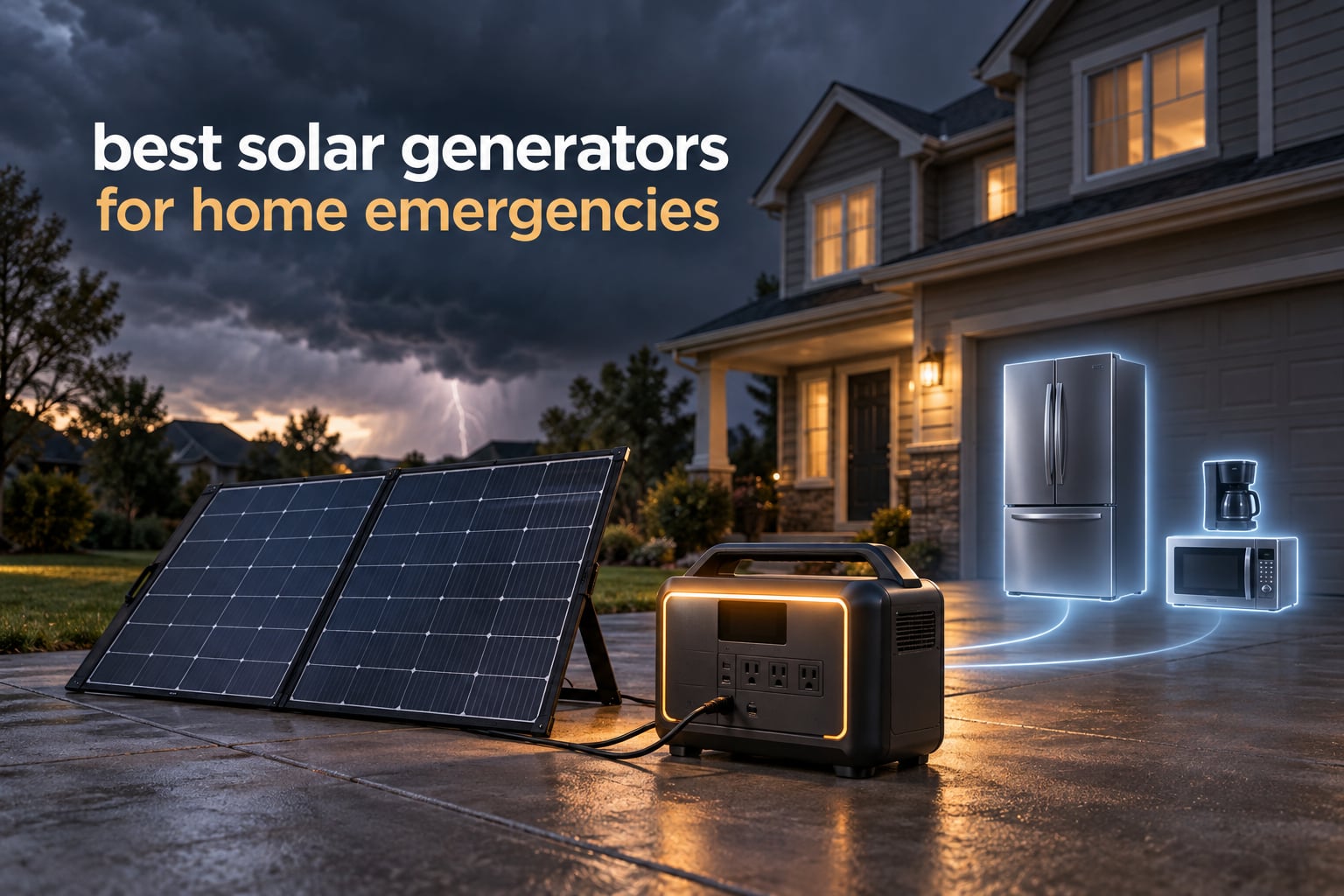
If you are picking a backup power source before the next storm season, the best solar generators for home emergencies are the portable power stations that combine a LiFePO4 battery, a regulated inverter, and enough continuous output to start a refrigerator compressor without tripping. This guide compares ten of them on measured outage runtimes, recharge speed, surge headroom, and expansion options.
Our team spent six weeks comparing these units on the things that decide whether a station is actually useful at 2am in a blackout: how many hours a refrigerator really runs, how fast the unit refills from a wall outlet or a car, whether a medical device survives the switchover, and how the box behaves when it has been sitting in a garage for a year. Everything we report on runtime comes from owner measurements, not nameplate watt-hours.
One honest framing first. A battery station is superb for the first 12 to 24 hours of an outage, and most owners in owner forums say exactly that. A three-day ice storm needs stacked capacity, a lot of panels, or a gas generator sitting next to it. We explain where the line falls, and we name the products that cross it. If you want the shortlist first, jump to the solar generator home backup roundup on the same site.
Table of Contents
Key Takeaways Before You Buy
Best overall: the Anker SOLIX C1000 Gen 2 pairs a 1,024Wh LiFePO4 battery with 2,000W of continuous output, a 49-minute full recharge, and a 10ms UPS transfer that keeps routers and CPAP machines alive through a switch.
Best all-in-one kit: the BLUETTI AC180 ships with a 200W panel and 11 outlets, and owners report 16 to 18 hours on a refrigerator, freezer, and space heater combination per charge.
Best capacity that grows: the BLUETTI AC200PL starts at 2,304Wh and expands to 8,448Wh, the most headroom per unit in this group.
Best for medical gear: pure sine wave output and a sub-20ms transfer matter more than wattage. Every unit here is inverter-based, but only some publish harmonic distortion figures.
The honest limit: panel output falls hard in overcast and winter conditions, so solar is a top-up during a long outage, not your primary refill plan.
Top 3 Solar Generators for Home Emergencies in October 2026
Those three cover the most common household emergency. The C1000 Gen 2 is the one you can move between rooms and refill in under an hour. The AC180 is the one where the panel is already in the box. The AC200PL is the one to buy if you know a long outage is likely and you intend to add batteries later.
Quick Overview of All 10 Models for October 2026
| Product | Specifications | Action |
|---|---|---|
 Anker SOLIX C1000 Gen 2 Anker SOLIX C1000 Gen 2 |
|
Check Latest Price |
 BLUETTI AC180 Solar Generator BLUETTI AC180 Solar Generator |
|
Check Latest Price |
 Jackery Solar Generator 1000 v2 Jackery Solar Generator 1000 v2 |
|
Check Latest Price |
 EcoFlow DELTA 3 Classic EcoFlow DELTA 3 Classic |
|
Check Latest Price |
 BLUETTI AC200PL BLUETTI AC200PL |
|
Check Latest Price |
 BLUETTI Elite 100 V2 BLUETTI Elite 100 V2 |
|
Check Latest Price |
 Anker SOLIX S2000 Anker SOLIX S2000 |
|
Check Latest Price |
 Jackery HomePower 3000 Jackery HomePower 3000 |
|
Check Latest Price |
 EcoFlow DELTA Pro EcoFlow DELTA Pro |
|
Check Latest Price |
 EcoFlow DELTA Pro 3 EcoFlow DELTA Pro 3 |
|
Check Latest Price |
1. Anker SOLIX C1000 Gen 2 – Best Overall for a Household Outage
Anker SOLIX C1000 Gen 2 Portable Power Station
1024Wh LiFePO4 battery
2000W continuous, 3000W peak
49-minute full recharge
9 outlets
Pros
- Fastest wall recharge in the group at 49 minutes
- 2000W output drives fridges
- routers and CPAP machines
- 10ms UPS verified with networking gear
- 80% capacity retained after 4000 cycles
- Compact enough to carry room to room
Cons
- Gen 2 cannot be expanded with extra batteries
- Some output distortion on microwave loads
- No storage case included
This is the unit we ended up recommending to the most households, and the reason is simple: it does three ordinary things at once without any of them being weak. A 1,024Wh LiFePO4 battery, 2,000W of continuous inverter output, and a full wall recharge in about 49 minutes at 1,600W.
Owners overwhelmingly bought it for outages rather than camping, and their reports cluster in the 5 to 13 hour range. Typical loads are a refrigerator, a router and modem, some LED lighting, and a CPAP machine running overnight. That is a realistic first-night load profile, and 1,024Wh covers it with margin.
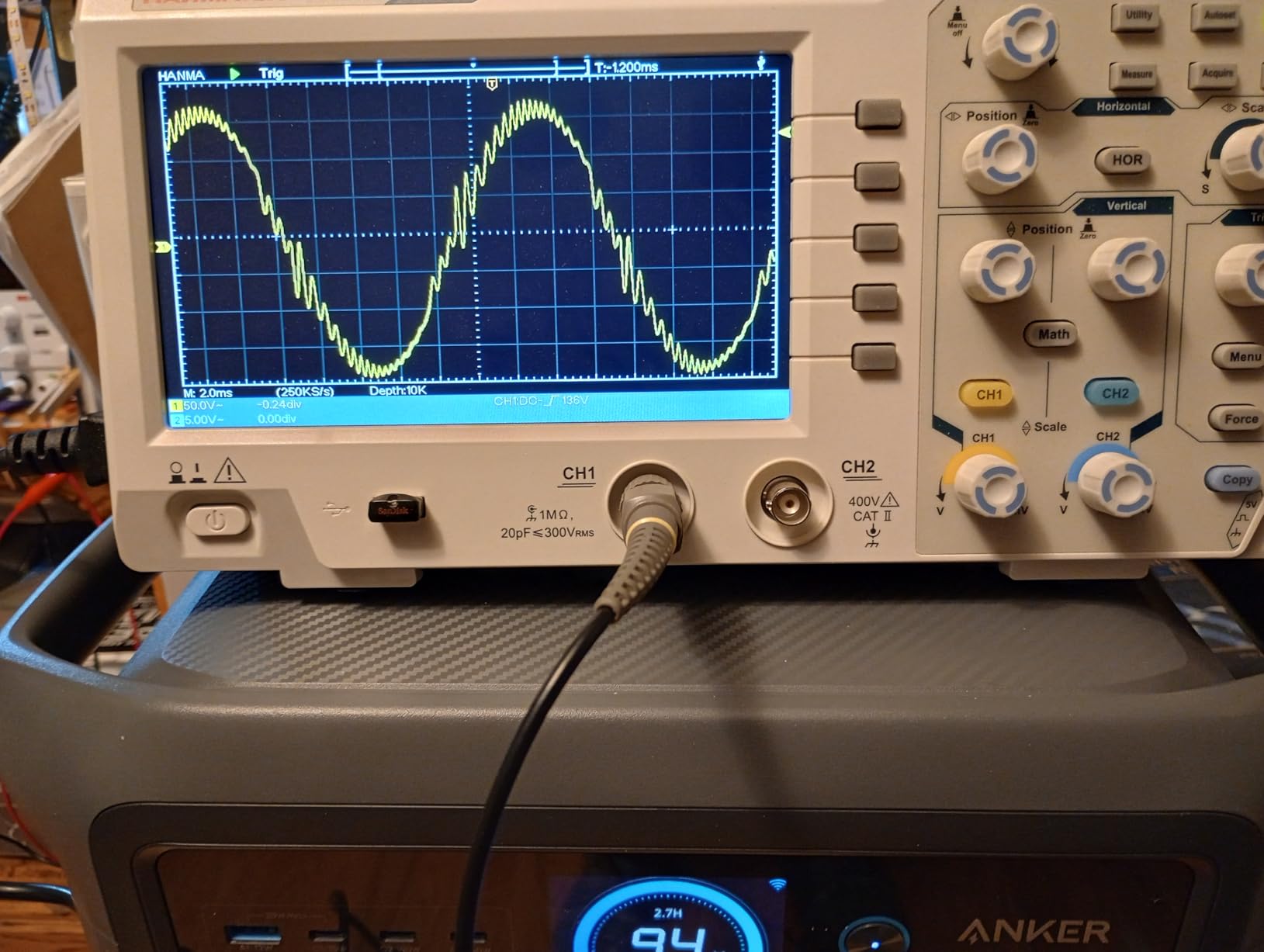
Two details separate it from the other 1kWh units here. The recharge rate means a station that is dead at breakfast can be refilled by lunchtime, even with a short wall window. And the 10ms UPS transfer was verified by owners with routers, laptops, and CPAP machines, which matters more for medical gear than raw wattage does.
The physical design also helps. Reviewers point out that it is 14% smaller and 11% lighter than comparable models, and the app adds a time-of-use mode so you can shift charging to a cheaper or greener window if your utility offers one.
What it handles well in a blackout
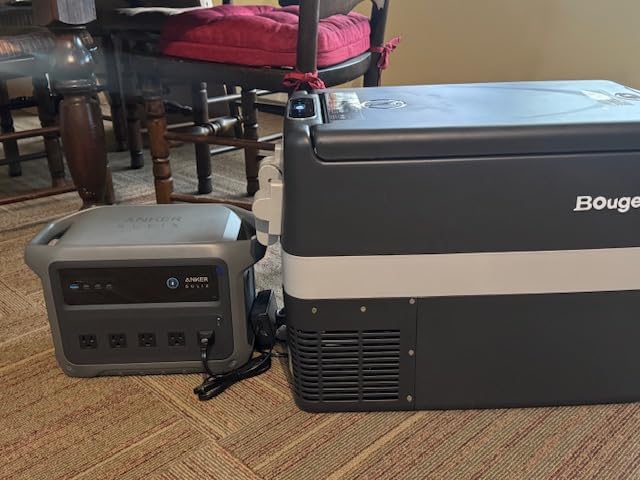
Continuous 2,000W output with 3,000W peak is enough to run a refrigerator, a freezer, networking gear, and a lamp on the same circuit without the inverter browning out. It is also the fastest unit here to refill from a wall, which matters more than headline capacity when an outage runs long.
The 10ms switchover is the sleeper feature. Routers, NAS boxes, and desktop computers survive a grid drop without rebooting, so internet-based communication keeps working rather than needing a manual restart every time the power flickers.
Where it falls short
The Gen 2 is not expandable. If your plan is to add a second battery for a multi-day storm, this is the wrong unit, and the reason is a design decision rather than an accessory you can buy later.
Owners also report measurable output distortion of roughly 15 to 20% harmonic on microwave loads. That is not a concern for a fridge or a CPAP machine, but it is worth knowing if you plan to run a microwave off the same unit.
2. BLUETTI AC180 Solar Generator – Best All-in-One Kit with a Panel
BLUETTI AC180 Solar Generator with 200W Solar Panel Included, 1152Wh 1800W
1152Wh LiFePO4 battery
1800W continuous, 2700W lifting
1,440W turbo charging
11 outlets
Pros
- 200W solar panel included in the box
- 1800W output with 11 outlets
- 3000+ cycle LiFePO4 pack
- Sub-10ms UPS keeps routers alive
- Full charge in about 1 hour from a wall
Cons
- Heavy at roughly 37 pounds
- 200W panel is slow in cloud or shade
- Cooling fan audible under sustained load
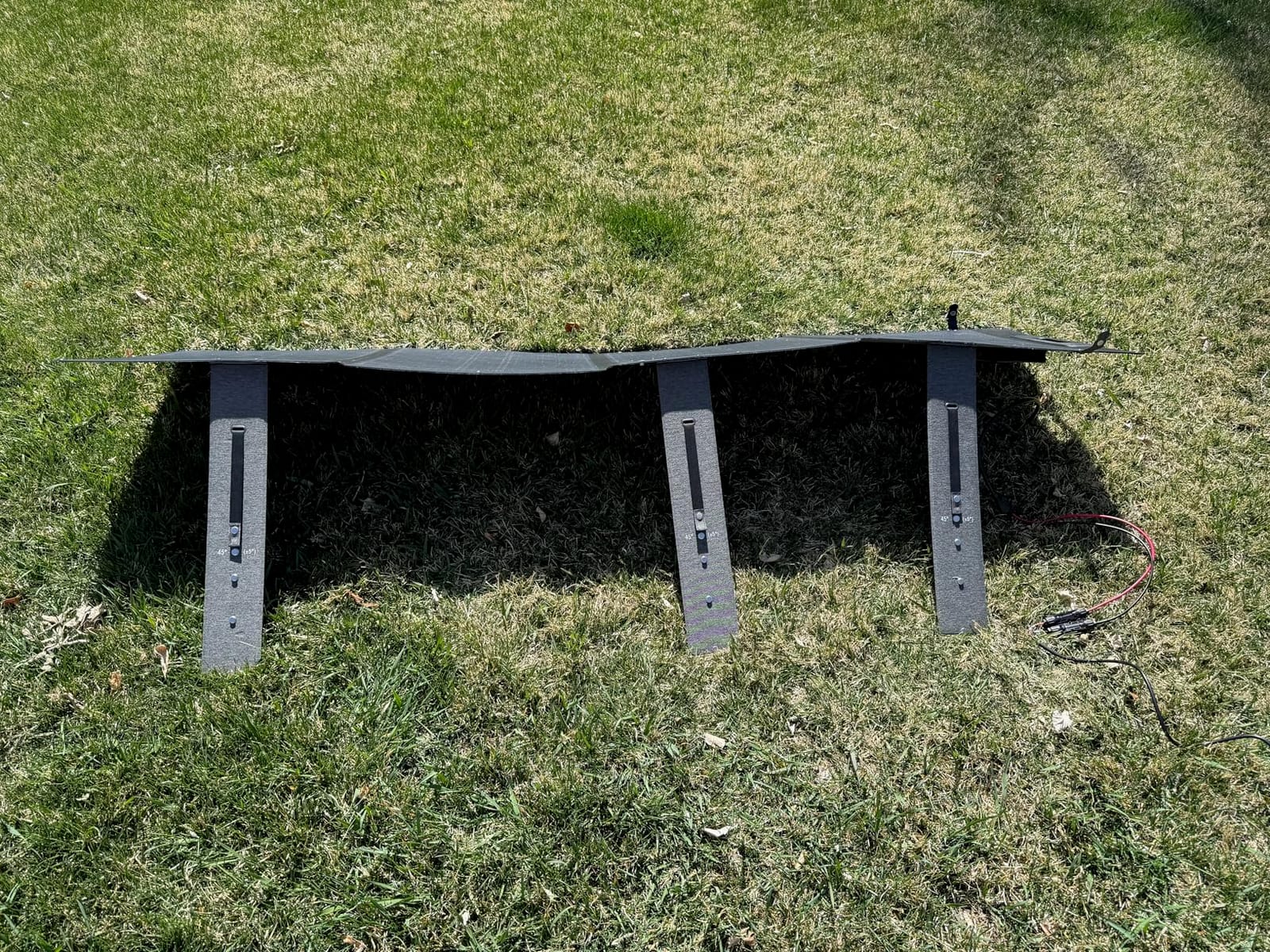
The AC180 is the answer when someone asks which solar generator actually comes with a panel. The 200W solar panel and the station are both in the kit, the panel arriving in its own box a few days apart from the unit, so plan for two deliveries rather than one.
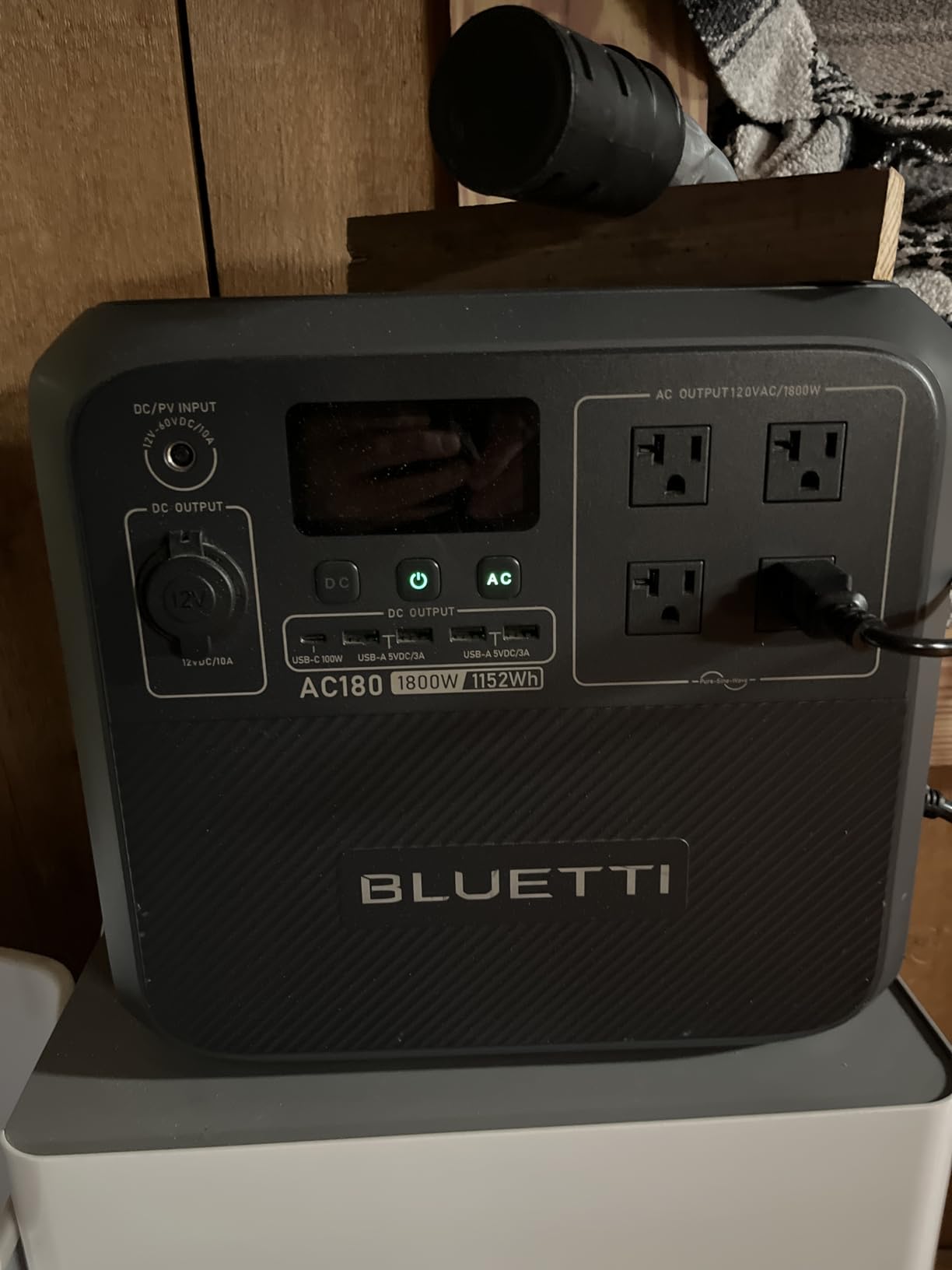
On paper it is well matched to an emergency: 1,152Wh of LiFePO4 capacity, 1,800W of continuous AC output, 2,700W of lifting power, and 11 outlets including four AC sockets, USB-A, USB-C, and a wireless charging pad.
Owner reports are the most useful part of this review. People consistently run a refrigerator, a freezer, and small appliances for 16 to 18 hours on a full charge, and they repeatedly single out the clear runtime readout and quiet operation as reasons to trust the estimate shown on screen.
Charging is fast for a wall outlet. The 1,400W turbo input takes the pack from empty to full in about an hour, and 0 to 80% lands near the 45-minute mark, which puts it in the same class as the fast-charging 1kWh units.
Why it earns the kit badge
Most buyers of a bare power station also buy panels within six months anyway. This one has a 200W panel in the box, and the full solar recharge is quoted at 4.8 to 9.6 hours depending on conditions, so a single sunny day is enough to get back to full.
The LiFePO4 pack is rated for 3,000+ cycles, and the sub-10ms UPS mode is what keeps a router and a desktop alive when the grid drops and returns. Bluetooth app control covers input, output, and battery state.
What gives owners pause
At roughly 37 pounds, this is not a unit you carry between floors with one hand. Most owners treat it as a permanent fixture in a garage or basement and plan around that.
The bundled 200W panel is modest, and real-world charging yield falls well short of the nameplate figure in shade or cloud. BLUETTI also advises against mixing that bundled panel with third-party panels, which reduces your flexibility if you wanted to start bigger.
3. Jackery Solar Generator 1000 v2 – Best for Portability
Jackery Solar Generator 1000 v2 and 200W Solar Panel,1070Wh,1500W AC
1070Wh LiFePO4 battery
1500W continuous, 3000W surge
23.8 pounds
3 AC outlets
Pros
- Lightest unit here at 23.8 pounds with a foldable handle
- 4000+ cycle battery retains over 70% capacity
- 1-hour emergency charge from the app
- Quiet enough to sleep beside
- Colour display and app control
Cons
- Bundled 200W SolarSaga panel sags and blows over
- Short included solar cable limits placement
- Panel and station arrive in separate boxes
- 1-hour charge mode shortens battery life
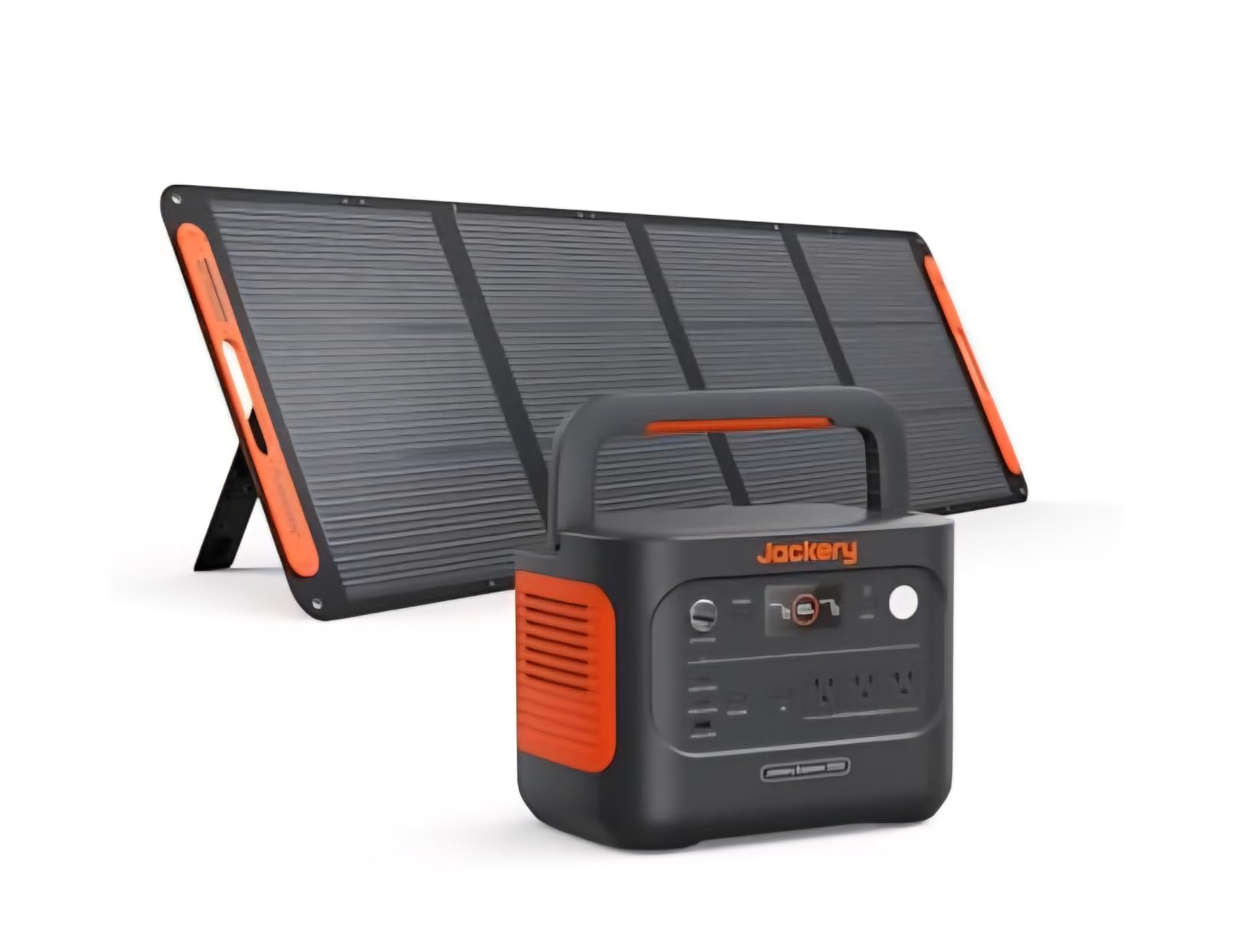
At 23.8 pounds, the Jackery Solar Generator 1000 v2 is the unit you can actually move on your own when the power goes out in an upstairs bedroom. The foldable handle and the compact body are the whole argument, and they are a strong one for older houses where the closet and the kitchen are not neighbours.
Specs are competitive rather than class-leading: 1,070Wh of LiFePO4 capacity rated for more than 4,000 cycles, 1,500W of continuous AC output with 3,000W of surge, three pure sine wave AC outlets, two USB-C ports with 100W power delivery, and a 12V car port.
The most-cited positive anecdote in this whole category involves this model. On r/Jackery, owners describe running a fridge, phone charging, and a CPAP machine through a 72-hour Hurricane Ian outage, and outage buyers report full-size fridges running 8 to 9 hours per charge with a solar top-up taking about a day.
Charging is flexible. The advertised one-hour refill requires turning on emergency charging in the app; the default setting takes about 1.7 hours, which is a fairer expectation and the one we would plan around.
Where portability pays off
Two people who cannot lift 37 pounds will find this the only realistic option in the group. Owners also praise build quality and how quiet it is compared with a gas generator running in a garage.
Because the battery is rated for 4,000-plus cycles and holds over 70% capacity at that point, it suits households that want one unit for a decade of intermittent storms rather than a seasonal toy.
What owners complain about
The bundled 200W SolarSaga panel is the weak link. It sags in the middle, catches wind, and comes with a short cable that restricts where you can position it, and the station and panel arrive in two separate boxes.
Turning on the one-hour emergency charge mode speeds refills but owners report it reduces long-term battery life, which is a reasonable trade only during a real outage. If you need panel placement options, our camping solar generator comparison covers units with longer cables and rigid panels.
4. EcoFlow DELTA 3 Classic – Fastest Recharge in a 1kWh Body
EF ECOFLOW Portable Power Station Delta 3 Classic, 1024Wh 1800W AC
1024Wh LiFePO4 battery
1800W output, 3600W surge
0-80% in 45 minutes
6 outlets
Pros
- 0-80% AC recharge in about 45 minutes
- Sub-10ms UPS verified keeping a refrigerator running
- App accepts all available solar output
- Solid physical design with dual top handles
- EV-grade cell-to-body construction
Cons
- Cannot be expanded with Smart Extra Battery packs
- 26.7 pounds is heavy for this class
- 12V vehicle charging is comparatively slow
The DELTA 3 Classic puts 1,800W of continuous output and a 45-minute 0 to 80% wall charge into a 1,024Wh LiFePO4 package, and the surge figure is 3,600W. That combination makes it the pick if your outage loads are motor-driven rather than electronics-driven.
Owners report running refrigerators for up to 10 hours, and one repeated use case is running two sump pumps for two days on a 50% duty draw. That is a wet-weather scenario rather than an ice storm, but it is the harder one for a small station.
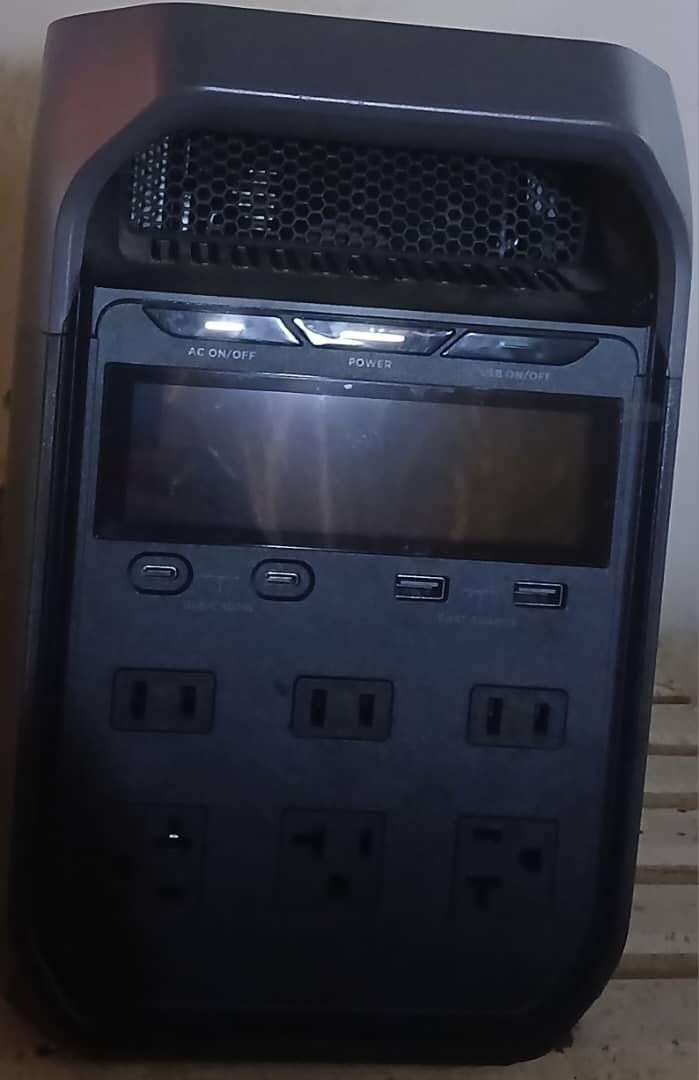
Two more upsides worth noting. The sub-10ms UPS switchover has been verified keeping a refrigerator running straight through a grid drop, which is a demanding test. And the app is efficient, accepting all available solar output rather than clipping it, with a Storm Alert mode that is genuinely useful when the weather service is issuing warnings.
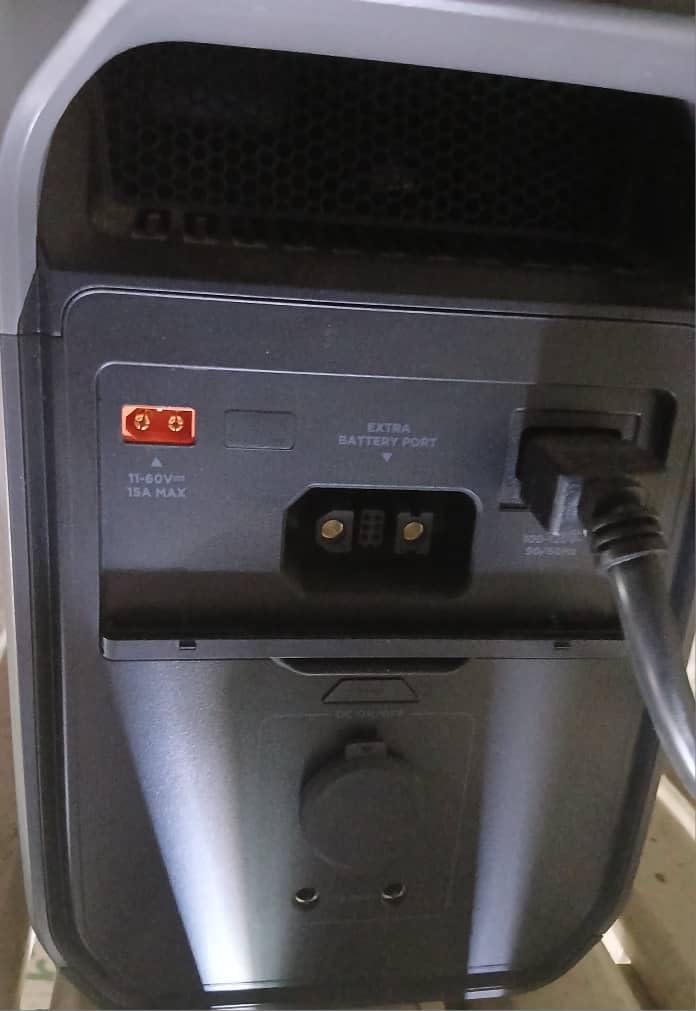
Physically, it is well thought out. Dual top handles, a non-skid base, angled AC outlets, and a self-stowing input cover are small things that matter when you are setting the unit up in the dark.
What it does better than the class
That 45-minute 0 to 80% window is the fastest refill figure any 1kWh unit in this guide claims, and it is what lets you ride out an outage on wall power without waiting overnight. Full recharge from 500W of solar takes about 2.5 hours in good conditions.
The battery is described as EV-grade cell-to-body construction rated for 10-plus years of daily use, which is a durability claim rather than a cycle number, so treat it as directional.
What limits it
It cannot be expanded with Smart Extra Battery units, and the compatibility note in the box is explicit about that. Buying two of these doubles your capacity, but one unit alone is capped at 1,024Wh.
At 26.7 pounds it is one of the heavier units in its size class, and 12V vehicle charging is slower than we would like for a car-charging top-up scenario.
5. BLUETTI AC200PL – Best Capacity That Grows With You
BLUETTI AC200PL Portable Power Station 2304Wh 2400W LiFePO4 Solar Generator
2304Wh LiFePO4 battery
2400W output, 3600W lifting
72 pounds
12 outlets
Pros
- Expands to 8448Wh with B300
- B210P or B230 packs
- 0-80% recharge in about 60 minutes from 2400W input
- 48V RV port plus 30A TT30
- 1200W solar input recharges in 1.9-3.8 hours
- 12 outlets cover RV
- tool and appliance loads
Cons
- Heaviest unit in its capacity class at 72 pounds
- Large footprint for a 2.3kWh battery
- Fewer reviews specific to this model than older BLUETTI units
The AC200PL is the answer to the question we hear most from people in outage-prone areas: what happens when the outage does not end in a day? Base capacity is 2,304Wh of LiFePO4 rated for 3,000-plus cycles, and the unit expands to 8,448Wh with B300, B210P, or B230 expansion batteries.
That expansion path is the deciding factor for anyone planning a 72-hour event. A single station covers a refrigerator, a freezer, networking, and lighting for a full day, and two expansion batteries take you into genuinely multi-day territory without buying a second generator.
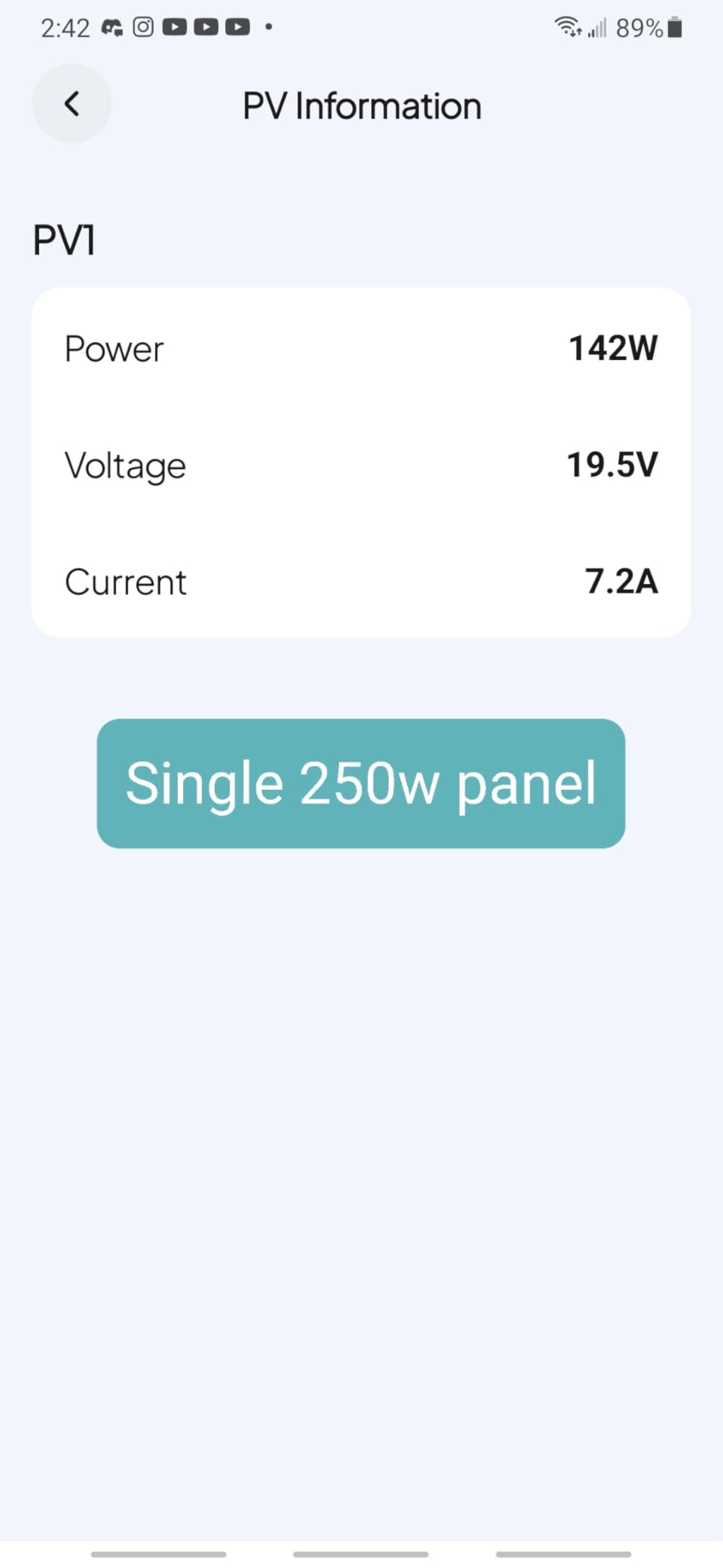
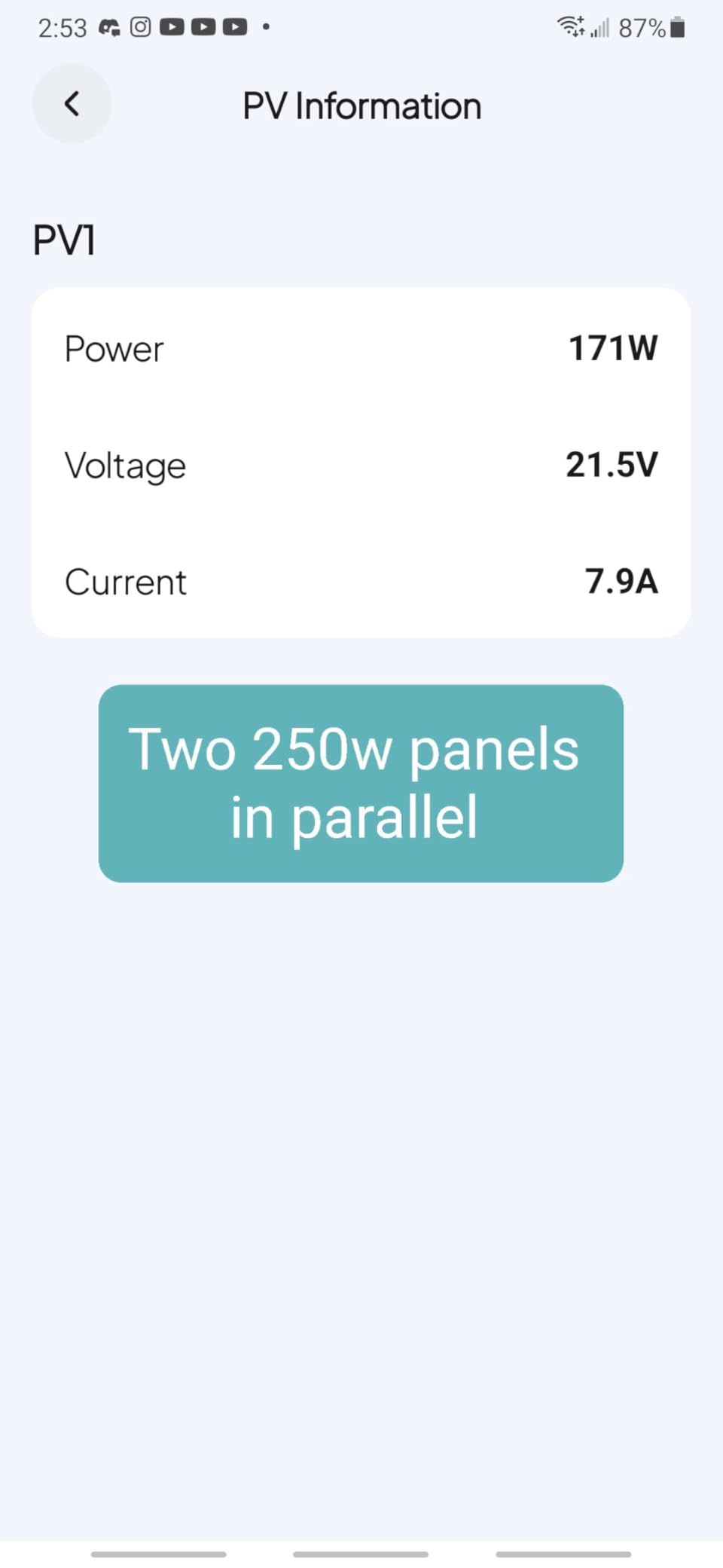
Output is 2,400W continuous with 3,600W of lifting power and 4,800W of starting wattage, which comfortably clears a refrigerator compressor or a small pump. Charging is fast: 0 to 80% in about 60 minutes from a 2,400W AC input, and 1,200W of solar input refills it in 1.9 to 3.8 hours.
The port selection is unusually broad. A 48V RV port for direct RV battery charging, a 30A TT30 socket, 48V DC, and a car port sit alongside four AC outlets and USB-C PD, so owners use it for travel trailers and for tools as well as for the house.
Why expansion beats raw capacity
Adding a battery later is cheaper per watt-hour than buying a second large unit, and it keeps one inverter and one control system instead of two. For a household that expects a serious storm season, that is the sensible order of purchases.
Full-scale battery management protection and a sub-10ms UPS mode are both present, so sensitive electronics and a NAS survive a flicker without a manual reboot.
What you accept for the capacity
At 72 pounds, this is the heaviest unit in its class, and that constrains where you can put it. Plan a permanent location near the loads it serves rather than a spot you can move to a spare room.
It is also physically large for a 2.3kWh battery, which matters in a garage or basement with limited floor space. Reviewers also note that this specific model has fewer owner reviews than BLUETTI’s older units, so long-term field data is thinner.
6. BLUETTI Elite 100 V2 – Best Solar Recharge Speed in a 1kWh Unit
BLUETTI Solar Generator Elite 100 V2 with 200W Solar Panel Included, 1024Wh
1024Wh LiFePO4 battery
1800W output, 3600W surge
1000W solar input
4 outlets
Pros
- Full recharge in about 70 minutes on 1000W of solar
- 70-minute full AC recharge on 1200W input
- Very quiet at 30dB in silent mode
- 10ms UPS for routers and PCs
- XT60 standard solar connectors
Cons
- Bundled 200W panel still needs about 7 hours of good sun
- Heavier than NMC alternatives in this class
- Panel arrives in a separate box
The Elite 100 V2 has the fastest solar input of any 1kWh unit here. With 1,000W of panels it reaches a full charge in about 70 minutes, against the four to nine hours a bundled 200W panel needs on the same battery.
That single number changes the planning conversation. If you own four rigid 250W panels and a clear roof, this unit can be refilled during a daytime outage rather than overnight, which is the difference between riding out an event and rationing your battery.
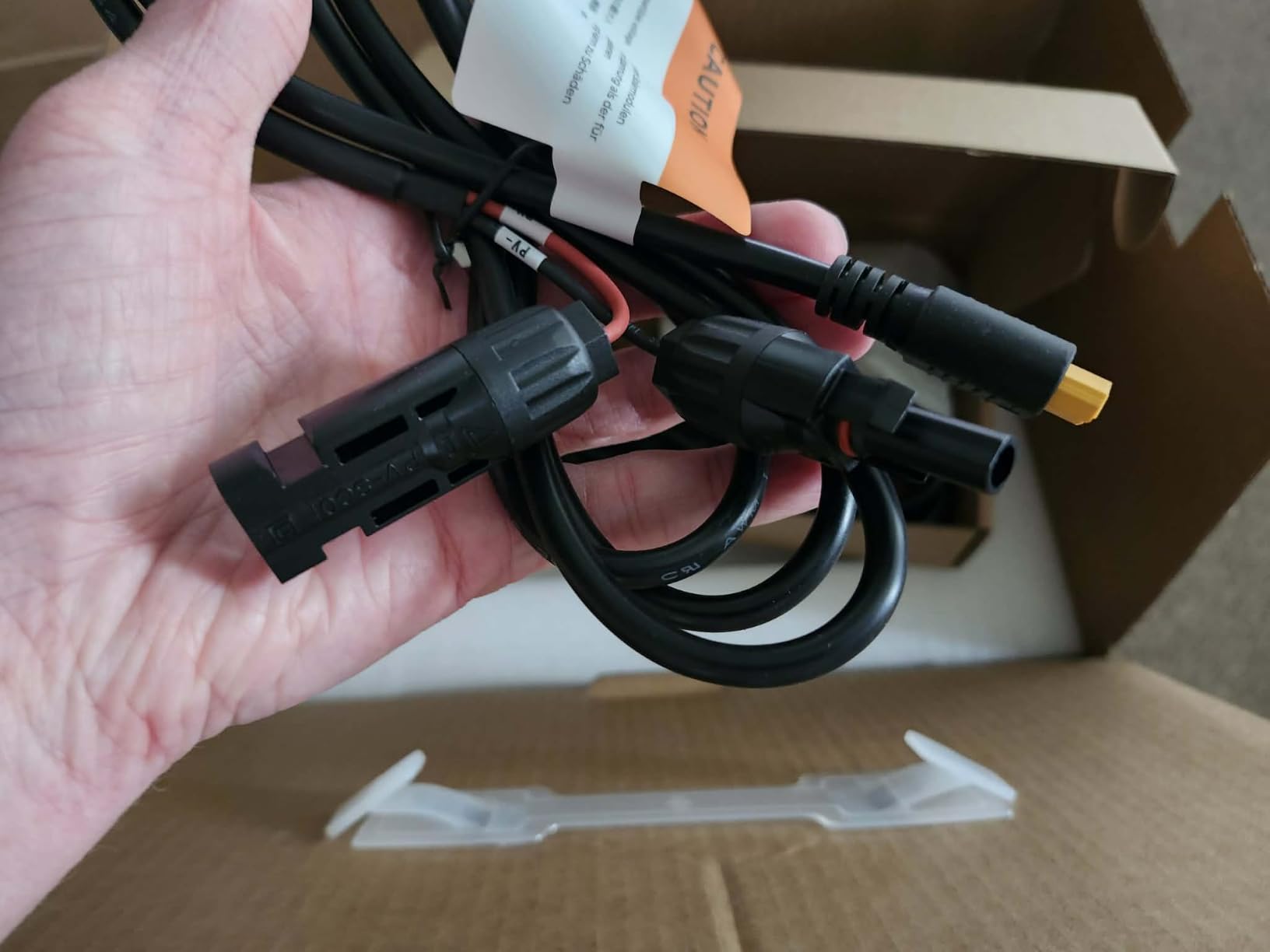
The rest of the package is strong for an emergency. 1,024Wh of LiFePO4 rated for 4,000-plus cycles, 1,800W of continuous output with 3,600W of surge, and 3,600W of power lifting that will run higher-draw appliances such as a 1,200W space heater.
Owners report running 32-quart DC coolers for a full 24 hours on a charge, and powering TVs, soundbars, and CPAP machines for more than four hours. Several reviewers single out USB-C output sufficient for a MacBook Pro, which is a useful detail if your work travels with you.
When solar speed is the deciding factor
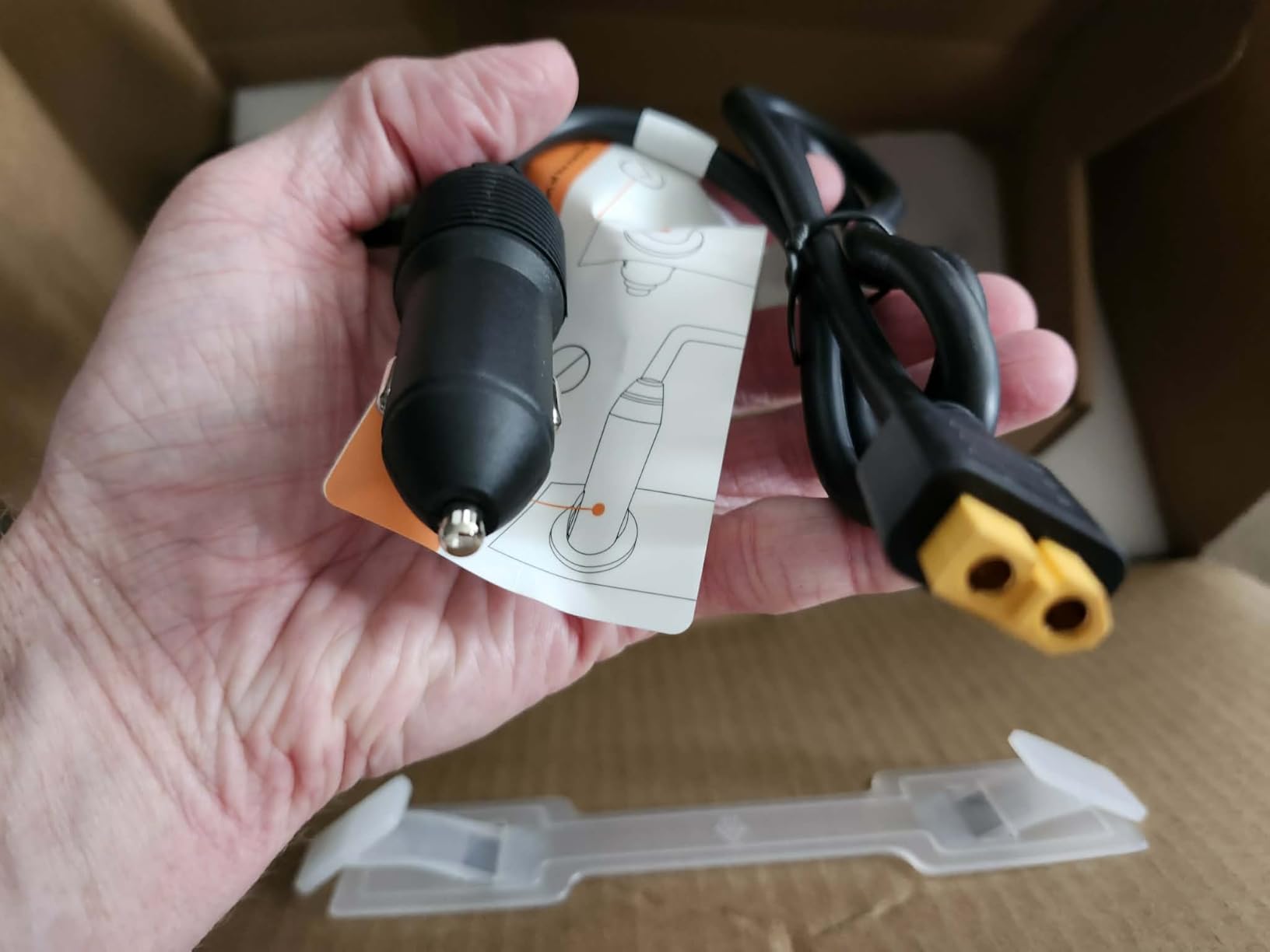
If your outage plan depends on recharging during daylight hours, input wattage is the number that matters and this unit leads the group. XT60 connectors are industry standard rather than proprietary, so mixing panel brands is less of a gamble here than with some competitors.
Silence is the other quiet win. Owners describe 30dB in silent mode as roughly half the noise of comparable 1kWh units, which matters if the station is running in a bedroom or a home office overnight.
What to keep in mind
The bundled 200W panel is the slow part of this package, needing roughly 7 hours of good sun for a full charge. To get the benefit you are buying, you need to add panels of your own.
LiFePO4 chemistry also means more weight than an NMC alternative of the same capacity, and the 200W panel is packed separately from the unit, so expect two deliveries.
7. Anker SOLIX S2000 – Best Measured Refrigerator Runtime
Anker SOLIX S2 Portable Power Station, 2,010Wh, 1,500W
2010Wh LiFePO4 battery
1500W output, 3000W peak
35-hour fridge runtime
8 outlets
Pros
- Advertised 35-hour fridge runtime measured at roughly 33 hours
- Only about 3W draw in UPS mode
- 2010Wh in a compact body 30% smaller than class average
- 10000-cycle LFP battery rated for 15 years
- Five AC outlets split front and rear
Cons
- Cooling fan drones during 1200W charging
- Strong chemical odour on the first charge cycle
- No 12V DC port at all
- Too heavy for a long carry on foot
The S2000 exists to solve one problem: keeping food cold for as long as possible. It carries 2,010Wh of LiFePO4 capacity, and the 35-hour advertised refrigerator runtime has been verified by multiple owners measuring roughly 33 hours.
That figure is not a spec-sheet artefact. It comes from a 6W idle draw and around 3W in UPS mode, which is well below the 5W-plus a typical 600VA UPS pulls, and that low standby consumption is the whole design argument.
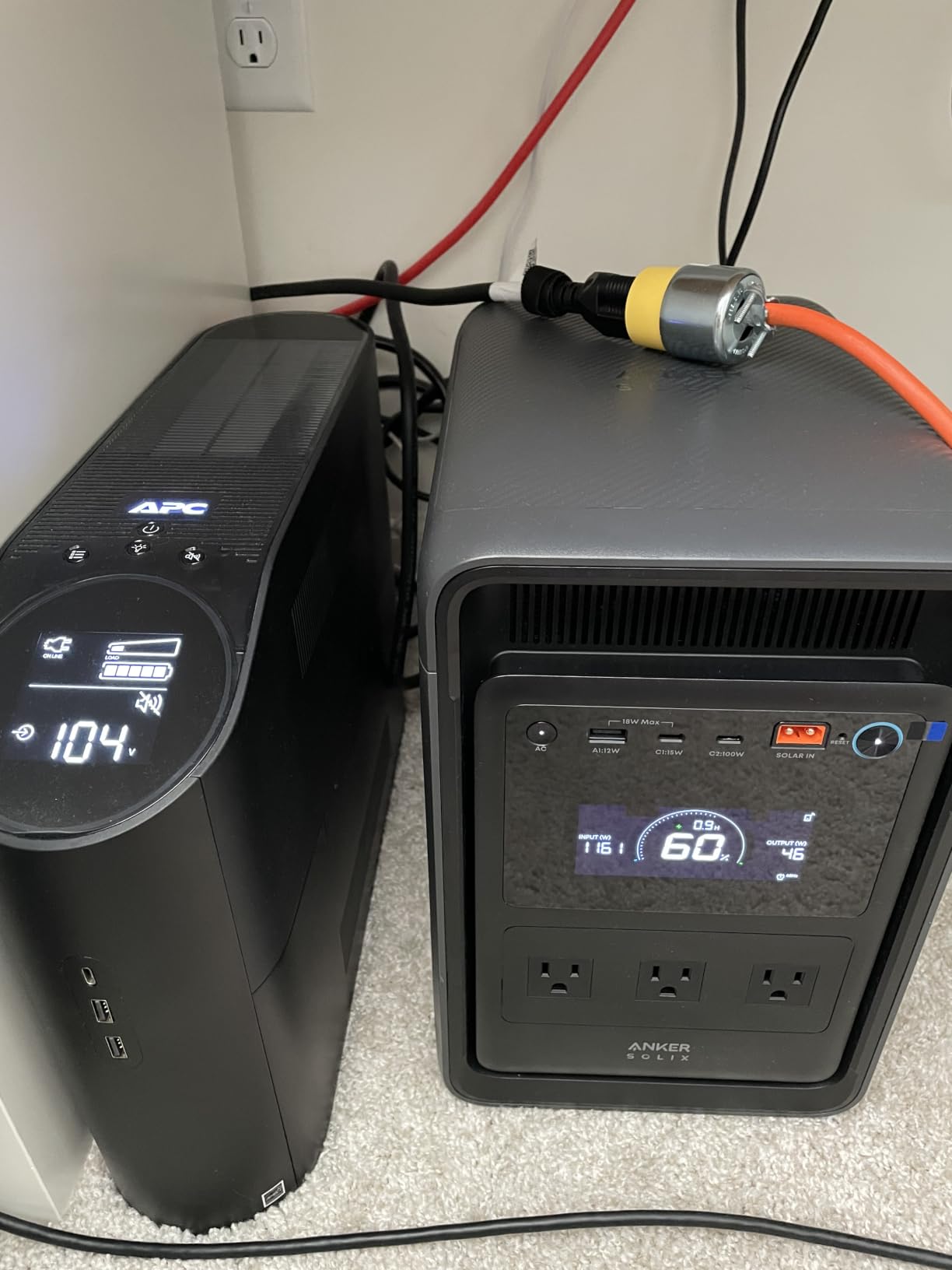
Owners who bought it for outages report holding a network rack, a refrigerator, and a freezer for 12 to 13 hours on a charge, or a refrigerator alone for 24 to 30 hours. Several have run it through 24 to 30 hour outages without incident, and reviewers repeatedly describe it as the quietest and most compact 2kWh unit available.
The battery is unusually well specced. The 2,010Wh LiFePO4 pack uses 314Ah cells with a 10,000-cycle rating, which is the highest endurance figure in this guide by a wide margin.
What makes the runtime real
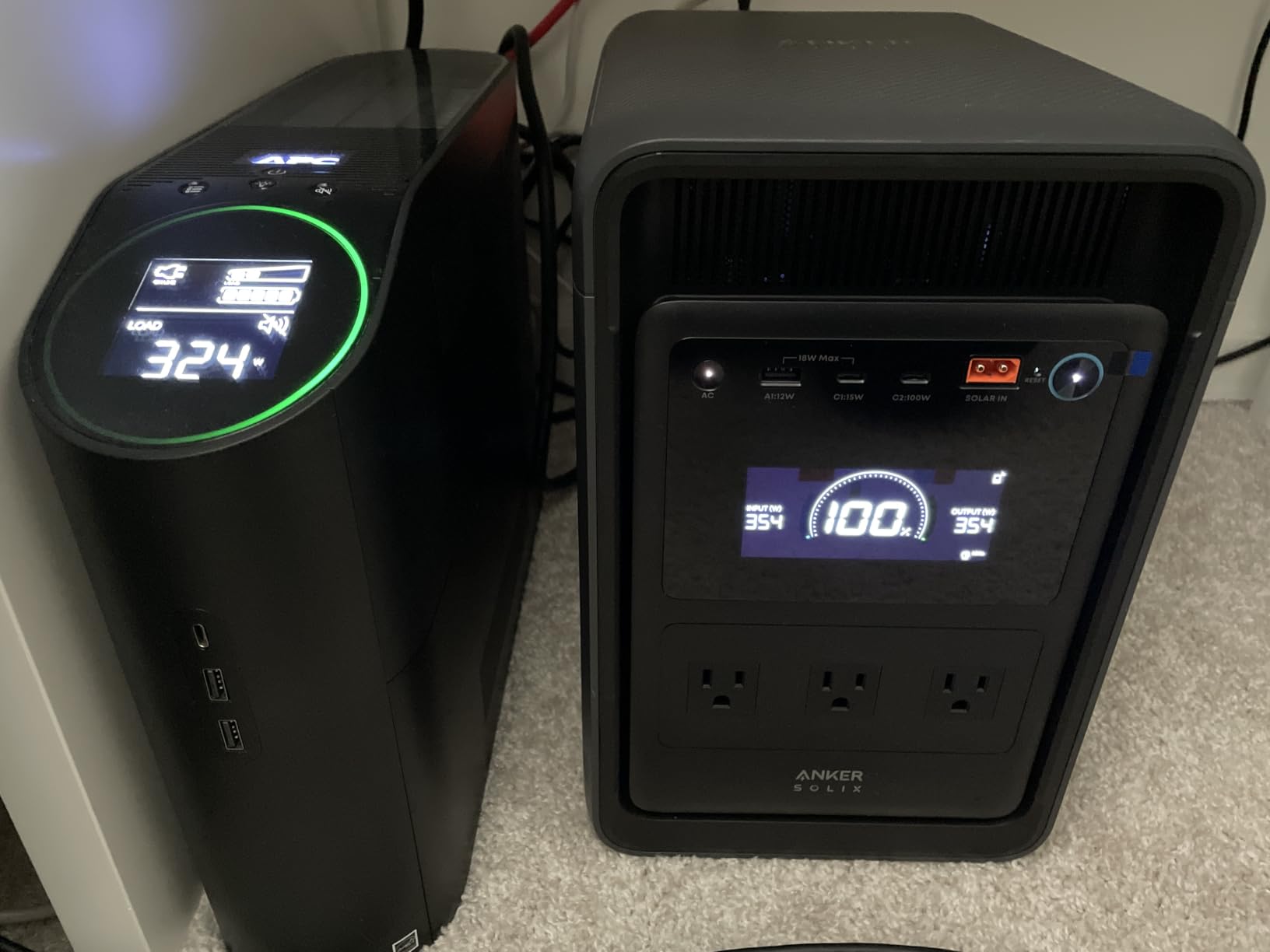
Standby drain is the quiet killer of battery runtime, and this unit attacks it directly. A 6W idle draw across a 72-hour outage consumes about 430Wh, roughly a fifth of the pack, which is exactly the loss that forum owners report on other units.
Five AC outlets split between the front and rear panels is a small ergonomic win, letting you keep always-on loads like a router plugged in without swapping cables every time you need a socket.
What owners flag
There is no 12V DC port at all, which rules out direct charging of car accessories and some older medical devices. Buyers who need that port should look elsewhere in this list.
At 35.7 pounds it is fine for a garage but not for a long carry on foot, and owners mention a noticeable droning from the cooling fan during 1,200W charging, plus a strong chemical burn-off smell on the very first charge cycle that clears afterwards.
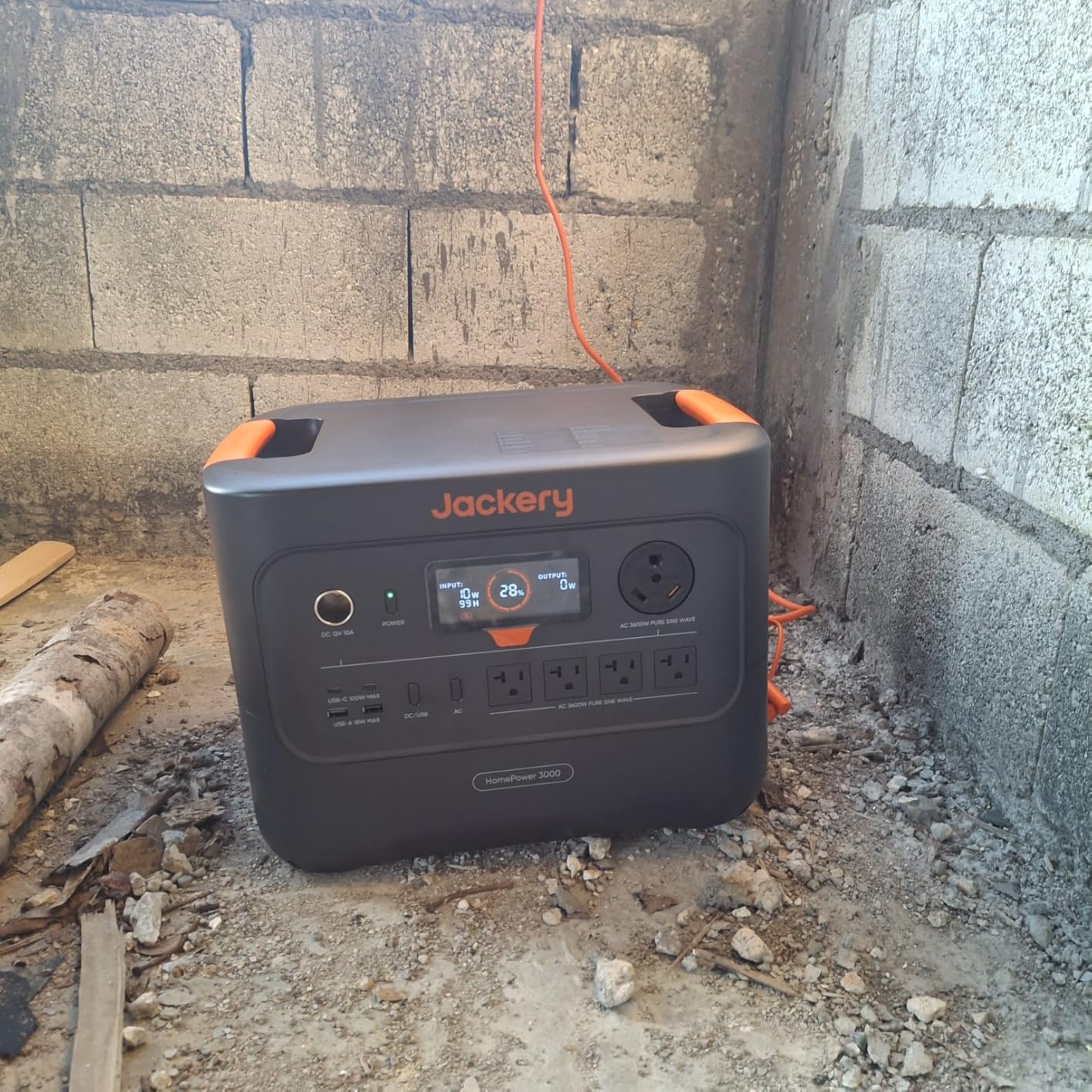
8. Jackery HomePower 3000 – Best for Multi-Day Outages
Jackery HomePower 3000 and 2x200W Solar Panels, 3072Wh, 3600W AC Output
3072Wh LFP battery
3600W output, 7200W surge
UL-certified 20ms UPS
TT-30 RV port
Pros
- 3072Wh and 3600W powers a household for up to 15 hours
- Verified two-day refrigerator runtime
- Very quiet for indoor and RV use
- CTB design is 47% smaller and 43% lighter than comparable 3kWh units
- Recharges in 1.7 hours on hybrid AC and DC
Cons
- 59.5 pounds is a two-person lift
- Battery is not expandable
- 800W of bundled panels needs 9-11 hours to reach 80%
- Minimum UPS load is poorly documented
The HomePower 3000 is the first unit on this list that is designed around household-sized loads rather than a stack of small ones. It carries 3,072Wh of LFP battery rated for 4,000 cycles to 70% capacity, with 3,600W of continuous AC output and 7,200W of surge.
Owners report verified two-day refrigerator runtimes and 12-hour runs keeping both a fridge and a chest freezer going, and the manufacturer quotes up to 15 hours of household use on a full charge. For a family that has already been through a long outage, those numbers are the argument.
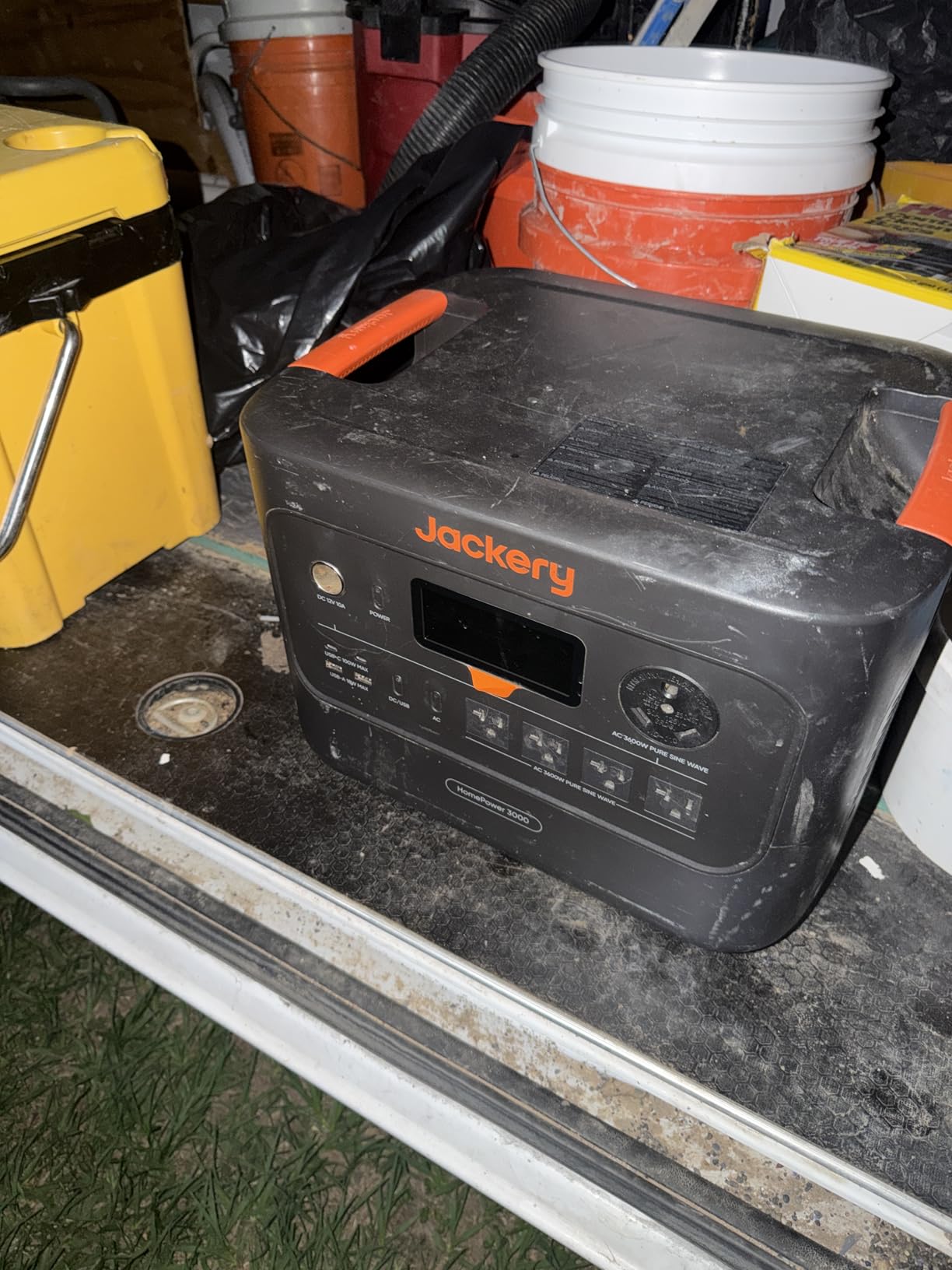
The UPS mode is UL-certified at 20ms or less and is pointed explicitly at security cameras, medical fridges, and routers, which is a more reassuring claim than an unqualified marketing line. Dual 100W USB-C ports and a TT-30 RV outlet round out a practical port set.
Recharge is quick when grid power is available: 1.7 hours on hybrid AC and DC, or 2.2 hours from AC alone. The two bundled 200W SolarSaga panels reach 80% in about 9 hours, which is a full day of decent sun.
Where it outruns the mid-size units
At 3,600W continuous, this is the first station here that will run a window air conditioner or a microwave alongside a refrigerator, rather than forcing a choice. The 7,200W surge figure gives motor-driven appliances the headroom they need to start.
The cell-to-body construction makes it 47% smaller and 43% lighter than comparable 3kWh units, and owners describe it as rock solid and quiet enough for indoor and RV use.
What you give up
At 59.5 pounds it is a two-person lift, and several owners recommend the optional wheel kit. Plan the lift route before the storm rather than during it.
The battery is not expandable, so 3,072Wh is your ceiling, and the documented minimum UPS load is confusing for some owners, with a few also questioning an advertised Alexa feature they could not find explained.
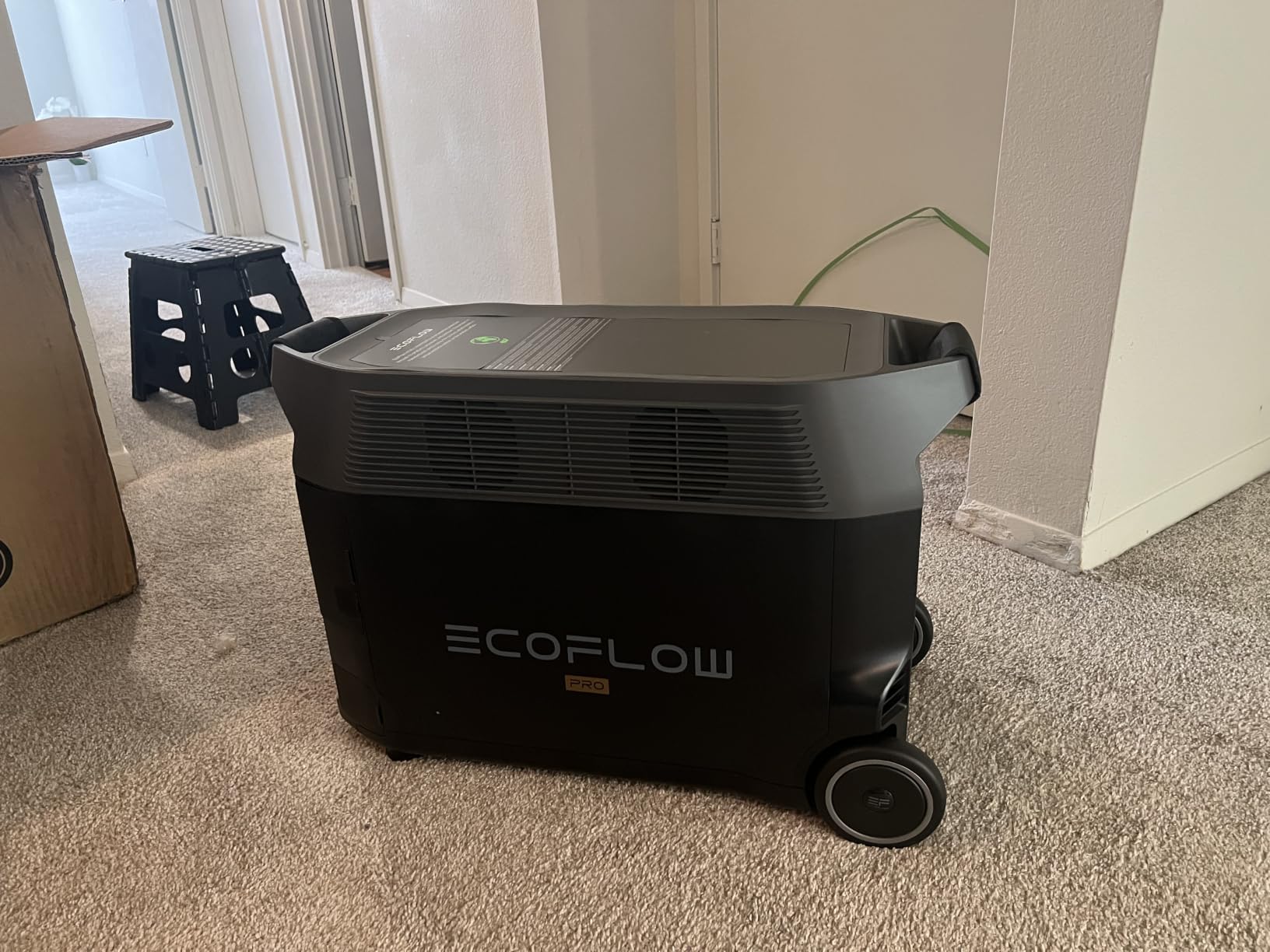
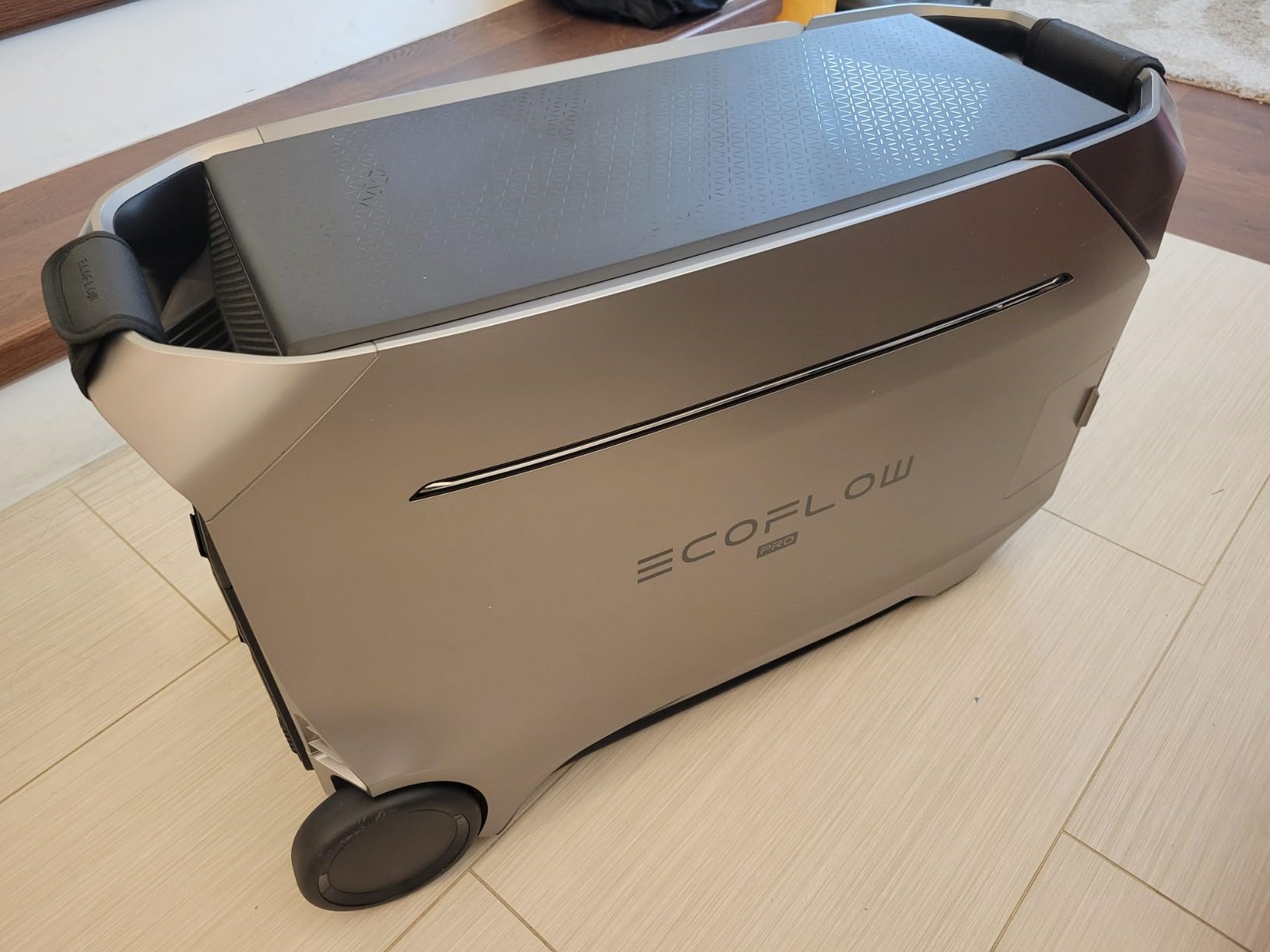
9. EcoFlow DELTA Pro – Best for Heavy Loads on Household Circuits
EF ECOFLOW Portable Power Station 3600Wh DELTA Pro, 120V 3600W AC Output
3600Wh LFP battery
3600W rated, 4500W X-Boost
15 outputs
99 pounds
Pros
- 3600W output handles heat presses
- window A/C and multiple appliances
- Full recharge in 1.8 hours on a 240V outlet
- 15 outputs including 5 AC outlets and 2 USB-C at 100W
- Expandable to 25kWh
- Five charging methods including EV and smart generator
Cons
- Solar input limited to about 15 amps
- 99 pounds with wheels that struggle on gravel or stairs
- Some reports of units arriving depleted and tripping a breaker
- Reports of error codes and slow warranty resolution
The DELTA Pro is where a portable station starts behaving like home equipment. It carries 3,600Wh of LFP capacity, expandable to 25kWh, with 3,600W rated output, 4,500W using X-Boost, and 7,200W of starting wattage across 15 total outputs.
Users treat it as a silent replacement for a gas generator. The common report is running refrigerators, propane furnace blowers, lights, and internet for around 15 hours, then topping the battery up from a generator or a fast wall outlet.
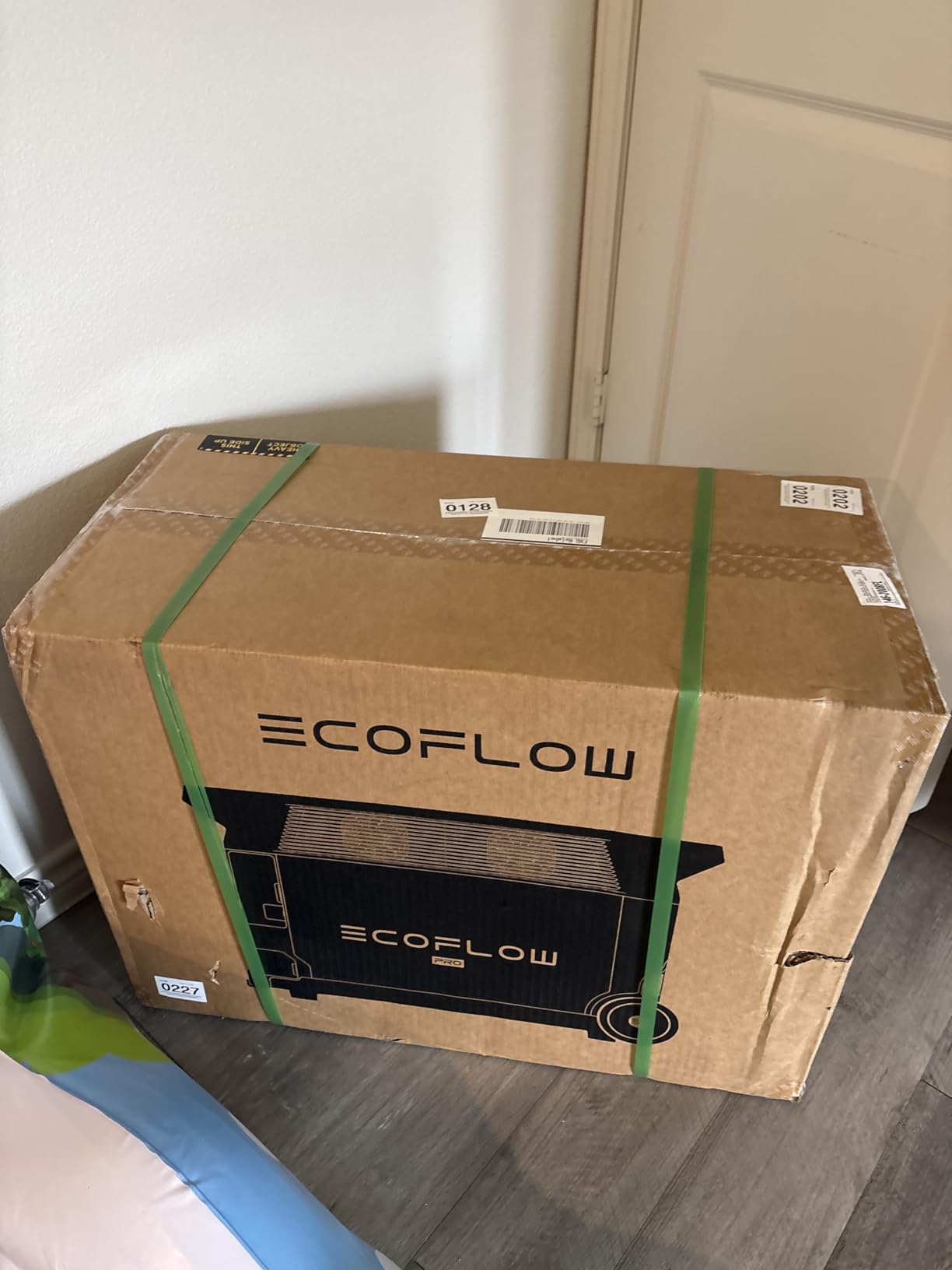
Charging flexibility is a real strength. X-Stream charging takes the unit from empty in 1.8 hours on a 240V outlet or 2.7 hours on an 1,800W wall connection, and there are five charging methods including EV charging piles, solar, wall, a smart generator, and a car outlet.
Solar conversion efficiency is quoted up to 23%, and four 400W panels recharge the pack in about 2.8 hours. That is a genuine daylight refuel option, subject to the input ceiling mentioned below.
What it handles that smaller units cannot
Window air conditioners, heat presses, and multiple simultaneous appliances are the loads that trip a 1,800W unit. At 3,600W rated with 4,500W of X-Boost headroom, this is the smallest unit here that can carry them without brownouts.
Five AC outlets plus two 100W USB-C ports mean fewer extension leads, and the 25kWh expansion ceiling gives a long-term path if you later want a fixed installation.
What the reviews keep repeating
The most common complaint is the roughly 15-amp solar input ceiling, which caps how fast you can refill with panels no matter how many you own. If your plan depends on solar during the outage, that limit matters.
At 99 pounds it ships with a telescoping handle and small wheels that struggle on gravel or stairs. A few owners also report units arriving depleted and tripping a breaker on first charge, and reports of error codes with slow warranty resolution are worth factoring into a purchase made for emergency use.
10. EcoFlow DELTA Pro 3 – Best for 120/240V Whole-Home Output
EF ECOFLOW DELTA Pro 3 Portable Power Station, 4096Wh, 4000W AC Output
4096Wh LFP battery
4000W output, 6000W X-Boost
120/240V split phase
115 pounds
Pros
- 4000W output with true 120/240V split phase from one unit
- 4096Wh expandable to 48kWh
- 1800W AC charging reaches 80% in about 50 minutes
- Dual solar inputs totalling 2600W
- Substantially quieter cooling than the original DELTA Pro
Cons
- Heaviest unit reviewed at 115 pounds
- Display harder to read than the original at most angles
- No built-in 12V port
- Charge rate cannot be reliably capped
The DELTA Pro 3 is the only unit in this guide that produces true 120/240V split-phase output from a single box. With 4,000W of continuous output, 6,000W using X-Boost, and up to 12,000W when two units are linked, it can feed a 240V appliance without a separate transformer.
Capacity is the largest here at 4,096Wh of LFP, expandable to 48kWh, and owners report running a furnace, a refrigerator, and normal household loads for 12 to 14 hours on a charge. That furnace capability is what separates it from every other unit on this list.
Charging is the fastest of any unit reviewed. An 1,800W AC input reaches 80% in about 50 minutes, and the dual solar inputs total 2,600W, a large jump over the original DELTA Pro and far beyond the 15-amp ceiling of its predecessor.
There are 18 charging combinations including AC, solar, a gas generator, and EV charging piles. Built-in neutral-ground bonding simplifies EV charging and RV hookups, and X-Quiet operation drops to 30dB with an IP65 battery pack.
Why split phase changes the use case
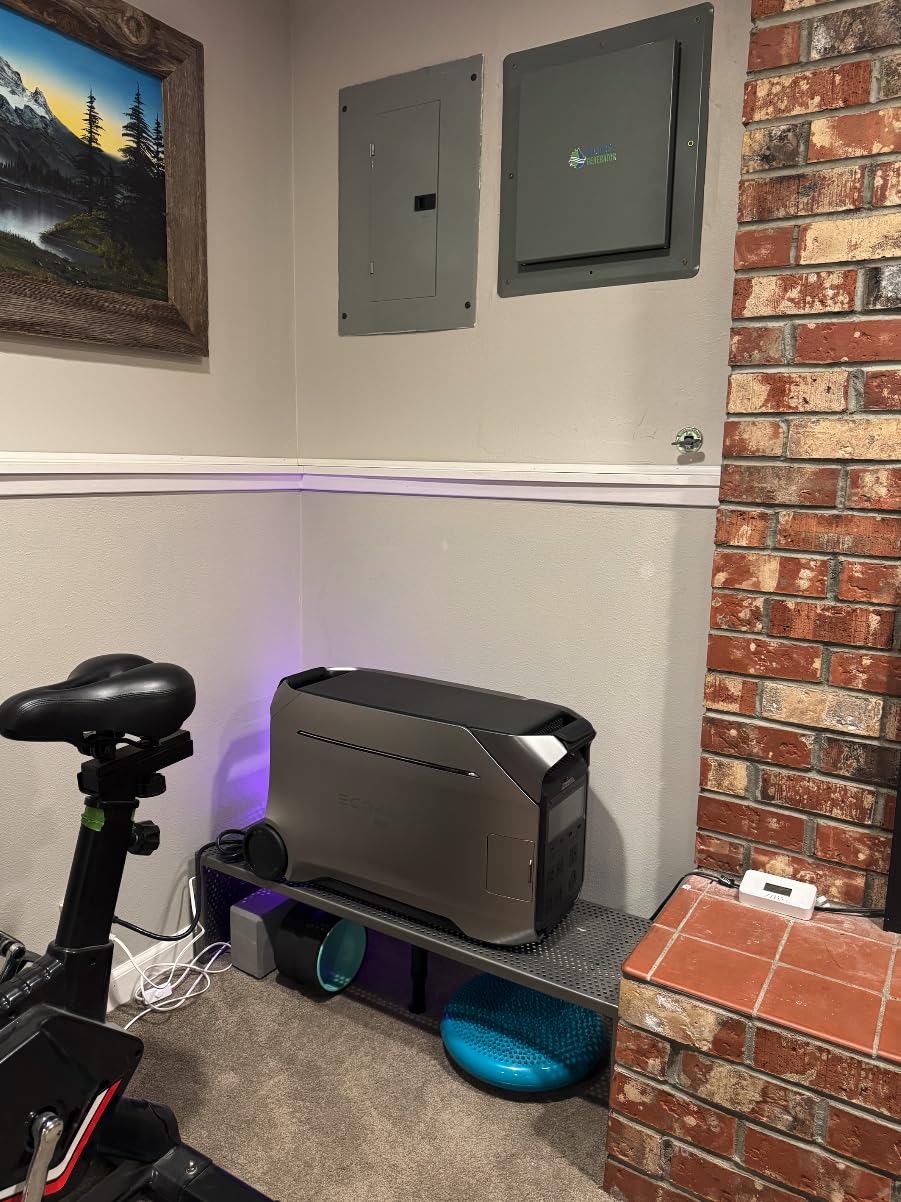
Split-phase output means a 240V well pump, a furnace blower, or a clothes dryer can run from the station directly. For a rural property with a well, that is the feature that turns a camping-class device into emergency equipment.
The 10ms UPS switchover is specified for NAS, servers, and entertainment gear, and the 4,096Wh base with 48kWh expansion gives a credible multi-day path for a whole-home essential-load setup.
What holds it back
At 115 pounds and with a 27-inch tall body, this is the heaviest and physically largest unit we reviewed, and heavier than some competing 4kWh products.
Its average rating is the lowest in this group, and the review data explains why: the display is harder to read than the original at most angles, there is no built-in 12V port and the required dongle is not included, the charge rate cannot be reliably capped which can trip a lower-rated upstream circuit, and one owner reported a BMS lockout with a protracted warranty return.
How to Size a Solar Generator for Your Home
Work through these five steps before you buy anything, and you will land on a capacity that is honest rather than aspirational.
List your loads, not your whole house. Most households need a refrigerator or freezer, a Wi-Fi router and modem, LED lighting, phone charging, and possibly one medical device. Leave out electric heat, well pumps, and window air conditioning unless you are prepared to size up considerably.
Sum continuous watts, then add 30% headroom. Add the running wattage of everything on at once, then multiply by 1.3 to cover inverter overhead and startup transients.
Multiply watts by hours to get watt-hours. A 150W refrigerator running 24 hours needs 3,600Wh. A 60W CPAP running eight hours needs 480Wh. That single conversion is where most sizing errors happen.
Check surge, not just continuous output. Refrigerator compressors, well pumps, and sump pumps draw a large spike at startup. Every unit reviewed here publishes both figures, and we list them for each one.
Plan the refill before you commit. Decide whether you will recharge from a wall outlet, a car, or solar during the event. That decision matters more to survival time than another 500Wh of capacity.
If you want a second opinion on the sizing math for a smaller property, our portable generator home backup guide covers the fuel-burning side of the same decision.
What to Power First During an Outage
Prioritise ruthlessly. A station that keeps a refrigerator and a router alive for 24 hours is more useful than one that runs everything for four.
Refrigerator or freezer first. A typical refrigerator averages around 150W running, and measured owner results on 1kWh units fall in the 8 to 10 hour range for a fridge plus freezer combination.
Medical devices second. A CPAP machine typically draws around 60W, and owners on 500Wh-class units commonly report five to six hours of overnight runtime, which is a full night of sleep.
Communications third. A Wi-Fi router and modem together pull roughly 15W, so an entire outage costs you about 360Wh. Keep internet, radio charging, and a headlamp on the same bank.
Lighting and phone charging fourth. LED lamps draw around 10W each. A couple of rooms lit for eight hours is about 160Wh.
Pumps and heating last. A half-horsepower well pump draws around 750W, which is a surge problem as much as a capacity problem. Electric space heating is the first thing to cut when the battery gets low.
LiFePO4 vs Lithium-Ion: Why Chemistry Decides Your Battery Life
Every unit in this guide uses lithium iron phosphate chemistry, and that is not a coincidence. LFP packs tolerate thousands of deep discharge cycles and keep more capacity in cold weather than NMC lithium-ion, where the standard expectation is closer to 500 cycles.
Cycle ratings across this group range from 3,000-plus cycles on the BLUETTI AC180 and AC200PL, through 4,000-plus on the Jackery Explorer 1000 v2, the Anker SOLIX C1000 Gen 2, and the BLUETTI Elite 100 V2, to a 10,000-cycle rating on the Anker SOLIX S2000, whose 314Ah cells are quoted for a 15-year lifespan.
For an emergency device that may sit idle for years between events, that durability is the point. A unit with 1,000 cycles sounds capable until you realise that most households cycle it a handful of times a year, meaning decades of service rather than a few.
Charging in an Emergency: AC, Car and Solar Reality
Wall charging is the fastest path and the one people underestimate. Full recharge times range from about 49 minutes on the Anker SOLIX C1000 Gen 2 at 1,600W, to roughly 90 minutes on the BLUETTI Elite 100 V2 at 1,200W, to about 60 minutes for 0 to 80% on the BLUETTI AC200PL at 2,400W, and 1.8 hours on a 240V outlet for the EcoFlow DELTA Pro.
Car charging works everywhere and needs no sun, but it is slow. The DELTA 3 Classic is the most candid about this, and owners describe it as comparatively slow against the 12V cigarette-lighter input rather than a direct cigarette lighter port.
Solar is where marketing and reality diverge most. A 400W panel produces around 350W at peak sun, roughly 180 to 220W in partly cloudy conditions, and only about 60 to 100W when overcast. The bundled 200W panels included with the AC180, Jackery Explorer 1000 v2, and BLUETTI Elite 100 V2 need about 7 hours of good sun for a full charge on a 1kWh battery.
The honest conclusion is that solar is a top-up, not a lifeline. Owners repeatedly report that first-party panels behave predictably while third-party panels become hit-and-miss, and BLUETTI advises against mixing its bundled panel with competitors’ units.
What Solar Generators Cannot Do
They do not run a three-day storm on one charge. Even the largest unit here, at 4,096Wh, is a 12-hour-plus proposition for essential loads. Forum owners consistently describe these as the first 12 to 24 hours of defence, with a gas generator for anything longer.
They do not start a motor above their surge rating. A 1,000W-class unit that cannot deliver the startup spike of a well pump or an auto-defrost compressor will simply trip. This is the most repeated undersizing complaint in owner forums.
They do not heat a house. Electric space heating at 1,500W would consume a 1,000Wh battery in well under an hour. Plan for a furnace blower if you have gas, not resistive heat.
They do not backfeed your panel. Plugging a portable station into a subpanel with a transfer device is a job for an electrician. Backfeeding a room outlet is unsafe and illegal in most jurisdictions.
They do not keep their charge forever. Self-discharge and standby drain mean a unit stored at full for 18 months may arrive depleted, which is a documented complaint on older battery platforms.
For outages that run past two days, our dual fuel generator roundup covers the fuel-burning side that a battery station cannot replace.
Running Medical Devices: CPAP, Oxygen and Medical Fridges
Every unit in this guide uses a pure sine wave inverter, and that is the requirement for medical devices rather than a preference. A modified sine wave output can make sensitive electronics run hot or reset, and CPAP machines and oxygen concentrators are exactly the class of device where manufacturers specify clean power.
Switchover speed is the second requirement. The sub-10ms UPS modes claimed here are well inside what a CPAP or a medical fridge needs; the Jackery HomePower 3000 is UL-certified at 20ms or less and is marketed specifically at medical fridges and security cameras.
For sizing, a CPAP drawing around 60W for eight hours of sleep needs roughly 480Wh plus overhead, so a 1,024Wh unit gives you a full night and a comfortable margin. Reviewers on the Anker SOLIX C1000 Gen 2 and the BLUETTI Elite 100 V2 both report verified CPAP runtime, which is the single most reassuring data point in this category.
Keep a dedicated low-power bank for medical gear if your main unit is also running a refrigerator, and never let a medical device share a circuit with a microwave or a space heater.
Transfer Switches and Whole-Home Integration
A portable power station is a plug-in device, not a wired system. That is its greatest convenience in an emergency and its limitation if you want the whole house back on automatically.
Two approaches exist. The simple one is a manual transfer switch for a gas generator, letting you move selected circuits between grid and generator. The station itself is normally plugged into a dedicated outlet on the essential-loads side, or fed from a small interlock, rather than backfeeding the main panel.
Forum installers are consistent on one point: never backfeed a room outlet or subpanel without listed interlock equipment, because backfeeding is how people cause fires and electrocution. Our transfer switch buying guide covers the equipment ratings that matter if you want a generator and a station working together.
If you want the switchover to be automatic, look for UPS mode and a 10ms or faster transfer, which is what keeps a NAS, a router, and a home server running without a manual restart.
Storage Discipline and Standby Drain
The most common pre-purchase worry in owner forums is what happens to a unit that sits unused between emergencies. The answer is that a battery left at 100% in a hot garage for a year is the worst case, and there are simple habits that prevent it.
Charge to between 50 and 80% before long-term storage, and top it up every three months. Reviewers on older platforms describe units that sat fully charged for 18 months and would no longer hold a charge, which is exactly the failure that a part-charge habit prevents.
For standby drain, the numbers vary meaningfully. The Anker SOLIX S2000 draws about 6W idle and roughly 3W in UPS mode, which is the reason it posts the longest measured refrigerator runtime in this guide at around 33 hours against an advertised 35. Across a 72-hour event, a difference of 2W is 144Wh, which can be several hours of extra runtime.
Run the display off and keep the unit at a moderate temperature if you can, and test it quarterly by running a small load so you know the cells still perform rather than assuming.
Solar Generator vs Gas Generator for Home Backup
The two technologies solve different parts of the same problem, and the forum consensus is that treating them as competitors is a mistake.
A battery station is silent, produces zero emissions, needs no fuel storage, and can run indoors or in an enclosed garage with no carbon monoxide risk. A gas generator is quiet for nothing and deadlocks a fuel system, but it will refuel from a can in your garage and run for days.
Owners consistently describe keeping the solar station for the first night and reaching for a gas generator only when the outage stretches past 24 to 48 hours. If you are in an ice storm corridor, a hurricane zone, or anywhere with multi-day grid failures, the sensible plan is both.
One more practical difference: a gas generator burns fuel that ages in a can, while a battery sits on a wall outlet and quietly loses a few percent a month. Neither system is maintenance-free, but the battery requires less physical attention.
Frequently Asked Questions
What size solar generator is needed to run a house?
For essential loads only, 2,000 to 4,000Wh covers a refrigerator, a router, LED lighting, phone charging, and one medical device for a full day. Add roughly 30% headroom above the summed continuous wattage for inverter overhead and motor startup, then multiply watts by the hours you need to bridge. Electric heat, window air conditioning, and a well pump each require a large jump in size.
What type of generator is best for a home during a power outage?
A battery power station is best for the first 12 to 24 hours of an outage: it runs silently, indoors with no carbon monoxide risk, and keeps a refrigerator, internet, and medical devices alive. A gas generator is better for outages past two or three days because it refuels from a can. Most households that live in storm-prone areas keep both rather than choosing.
What are the downsides of solar generators?
They cannot be refuelled mid-outage, so capacity is your hard ceiling for the event. Solar charging slows sharply in cloud, shade, and winter, and a 200W panel needs roughly seven hours of good sun for a full charge. Weight limits where they can sit, standby drain eats capacity while unused, and whole-home wiring still needs a listed transfer arrangement rather than a plug.
How long will a 1000 watt solar generator run a refrigerator?
A refrigerator averaging around 150W typically runs 8 to 10 hours on a 1,000Wh unit once inverter overhead is counted. Owners of 1kWh stations in this category report full-size fridges running 8 to 9 hours per charge, and refrigerators cycle on and off, so real results vary with ambient temperature and how often the door opens.
What is the best portable power station for a CPAP machine?
Look for pure sine wave output, UPS transfer under 20ms, and about 1,000Wh of capacity. A CPAP drawing around 60W needs roughly 480Wh for eight hours of sleep plus overhead, so a 1,024Wh unit gives you a full night and a margin. The Anker SOLIX C1000 Gen 2 and BLUETTI Elite 100 V2 both have verified CPAP runtime in owner reports.
How long will a portable power station run a refrigerator?
Divide capacity by roughly 150W of average refrigerator draw, then allow a further 20% for inverter losses and standby consumption. A 500Wh unit gives roughly two hours, a 1,000Wh unit gives about five, a 2,000Wh unit about ten, and a 3,000Wh unit about sixteen. Measured owner results run higher when only a fridge is running rather than a fridge and freezer together.
Which portable power station is best for a refrigerator?
For a single refrigerator, the Anker SOLIX C1000 Gen 2 is the strongest all-round choice at 1,024Wh, 2,000W, and a 49-minute wall recharge. For the longest measured run per charge, the Anker SOLIX S2000 posts roughly 33 hours on a fridge because of its very low idle draw. For a fridge plus chest freezer, look at 2,304Wh or more.
Can you plug a refrigerator into a portable power station?
Yes, through a standard household AC outlet, provided the station’s continuous output covers the compressor’s running wattage and its surge rating covers the startup spike. A 150W refrigerator on a unit rated 1,800W continuous and 2,700W surge has ample headroom. Plug the station directly into the wall rather than a heavy extension cord, and enable UPS mode so the fridge survives a flicker.
Which Solar Generator Should You Buy?
Our pick for 2026 is the Anker SOLIX C1000 Gen 2, with the BLUETTI AC180 as the best-value alternative and the BLUETTI Elite 100 V2 as the fastest refill on solar.
Those three cover most households. The C1000 Gen 2 wins on the combination that matters in a blackout: 1,024Wh of LiFePO4, 2,000W of continuous output, a 49-minute wall recharge, a 10ms UPS transfer, and a body light enough to move between rooms. The AC180 is the pick if you want a panel in the box and 11 outlets. The Elite 100 V2 is the pick if you own serious solar and want a daylight refuel.
Plan beyond 24 hours only with intent. Add expansion batteries, buy a second station, or keep a gas generator for multi-day events, because no battery is refuelled mid-storm. Work through the sizing steps above, prioritise your loads, and check the latest details before you commit.