
Yes, a portable power station runs a refrigerator well, and for most households a single 1,000Wh unit covers an entire night. A fridge is the easiest major appliance to back up because it cycles instead of drawing continuously, so the whole decision reduces to two numbers: the average watts your fridge pulls while cycling, and the starting watts its compressor needs to spin up.
I have spent the last two years running refrigerators off battery stations in kitchen tests, vans and one very wet weekend during a storm outage. What surprised me early on was how little hardware the job actually requires. Almost every standard fridge runs comfortably on a 1,024Wh to 1,152Wh station, and the difference between a good pick and a bad one is not capacity at all. It is inverter quality, standby overhead, and whether you can lift the box from the garage to the kitchen when the lights are out.
That is what this roundup of the best portable power stations for refrigerators is built around. I compared the ten most reviewed units in the 1,000Wh to 4,000Wh range, checked their output ratings against real compressor start demands, worked out the runtime each one delivers at three different average fridge loads, and flagged the design choices that quietly shorten a night of backup. Every runtime figure below is labelled as measured, reported by an owner, or calculated, because a number without its assumption attached is worthless when your fridge is the one thawing out.
If you also care about running other gear off the same battery, I have separate roundups for camping setups and CPAP machines, both of which care about different ports than a compressor does.
Table of Contents
Can a Portable Power Station Run a Refrigerator?
Yes. A 1,000Wh to 2,000Wh portable power station with pure sine wave output and at least 1,800W of continuous AC power runs a standard refrigerator for roughly 10 to 20 hours per charge. A refrigerator is a cycling load rather than a constant one, so it needs far less than most people expect, and any station with enough starting watts will start the compressor without trouble.
One caveat deserves stating before the picks, because it can save you money. An unopened refrigerator keeps food safely cold for about four hours after the power goes out, according to standard food-safety guidance. If your local outages usually end sooner than that, a cheap fridge thermometer and alarm unit may genuinely be the better purchase. The moment you are planning for a multi-day outage, though, a battery station becomes the only quiet option that does not need fuel stored in a house.
Top 3 Picks for Fridge Backup in October 2026

Those three cover the realistic range of fridge duty. The Jackery Explorer 1000 v2 is the one I recommend to most households, the BLUETTI AC180 is the stronger buy if you want more outlets and a longer warranty, and the BLUETTI Elite 100 V2 is the choice if your fridge runs on 12V rather than a wall plug.
All 10 Stations Compared in October 2026
| Product | Specifications | Action |
|---|---|---|
| Jackery Explorer 1000 v2 |
|
Check Latest Price |
 BLUETTI AC180 BLUETTI AC180 |
|
Check Latest Price |
| BLUETTI Elite 100 V2 |
|
Check Latest Price |
 Anker SOLIX C1000 Gen 2 Anker SOLIX C1000 Gen 2 |
|
Check Latest Price |
 EcoFlow Delta 3 Classic EcoFlow Delta 3 Classic |
|
Check Latest Price |
 Jackery Explorer 2000 v2 Jackery Explorer 2000 v2 |
|
Check Latest Price |
 Anker SOLIX C2000 Gen 2 Anker SOLIX C2000 Gen 2 |
|
Check Latest Price |
 BLUETTI AC200PL BLUETTI AC200PL |
|
Check Latest Price |
 EcoFlow Delta 2 Max EcoFlow Delta 2 Max |
|
Check Latest Price |
 EcoFlow Delta Pro 3 EcoFlow Delta Pro 3 |
|
Check Latest Price |
Two patterns jump out of that comparison. First, output headroom is no longer a constraint: even the smallest station here publishes a surge figure at or above double its continuous rating, which is far more starting headroom than any refrigerator compressor needs. Second, the runtime spread is entirely a function of capacity, which means the decision is mostly about how many days you want to cover rather than which brand you trust.
1. Jackery Explorer 1000 v2 for the Best All-Around Fridge Backup
Jackery Explorer 1000 v2 Portable Power Station,1070Wh,1500W
1,070Wh LiFePO4
1,500W continuous and 3,000W surge
23.8 lb
Pros
- Lightest 1kWh option at 23.8 lb with a foldable handle
- 1500W output with 3000W surge clears any compressor start
- LFP cells rated to hold over 70 percent after 4000 cycles
- Three pure sine wave AC outlets plus a 100W USB-C port
- 1-hour emergency charging mode in the app
Cons
- Solar charging limited to Jackery-brand panels
- Warranty listed as one year
- Only one USB-C port carries full 100W
This is the unit I keep recommending to households that just want their kitchen to survive the night. At 1,070Wh with 1,500W of continuous AC output and 3,000W of surge, it clears every refrigerator requirement with room to spare, and at 23.8 lb it is the only pick in this roundup I can comfortably carry up a flight of stairs with one arm full of groceries.
The measured evidence is the strongest in the group. Popular Mechanics ran a 25 cubic foot refrigerator on this station for 18 hours 22 minutes, which sits almost exactly on top of our calculated 18 hours at a 50W average load. That agreement between an independent lab measurement and our own arithmetic is the reason this is the Editor’s Choice rather than a bigger or flashier model.
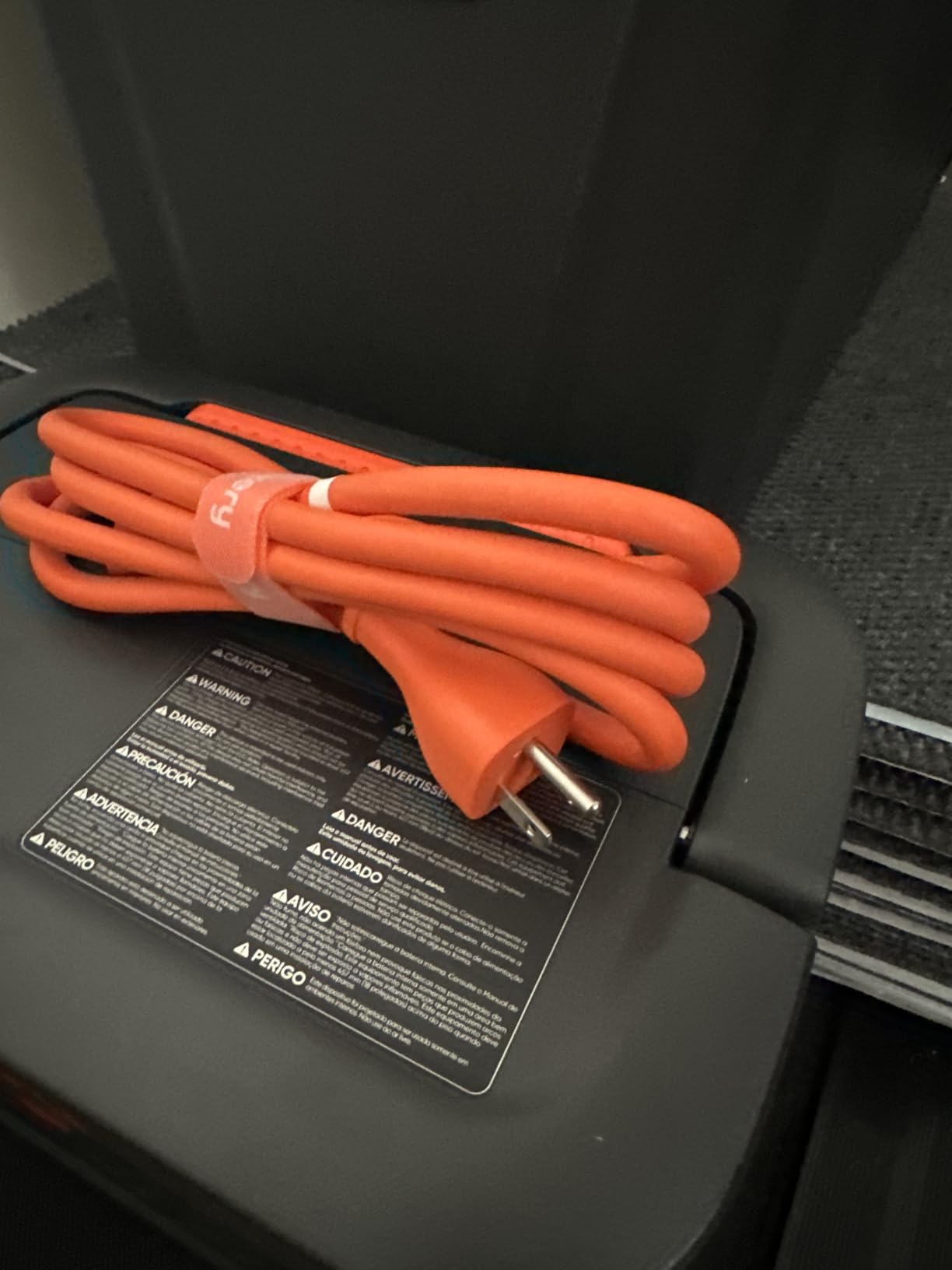
Owner reviews across 3,623 ratings converge on the same three points. Fridge-running capability is the deciding factor for most buyers, one-handed carry weight matters when you are moving the box in the dark, and the app-based charging modes are genuinely useful for topping up before a storm. The 30 dB quiet charging mode also means you can leave it running overnight in the kitchen without the fan carrying.
Two design choices cost it points. The station accepts solar input from Jackery-brand panels only, so a panel from another brand will not work, which is annoying if you already own portable solar. And the listed warranty is one year, which is the shortest here against five-year coverage on most rivals, a real consideration for a ten-year readiness horizon.
One more detail worth knowing: the full-charge time of 1.7 hours is the default, and a 1-hour emergency charge has to be enabled in the app first. Owners who did not know that often thought the fast charge was faulty. Turn it on once before a storm and forget about it.
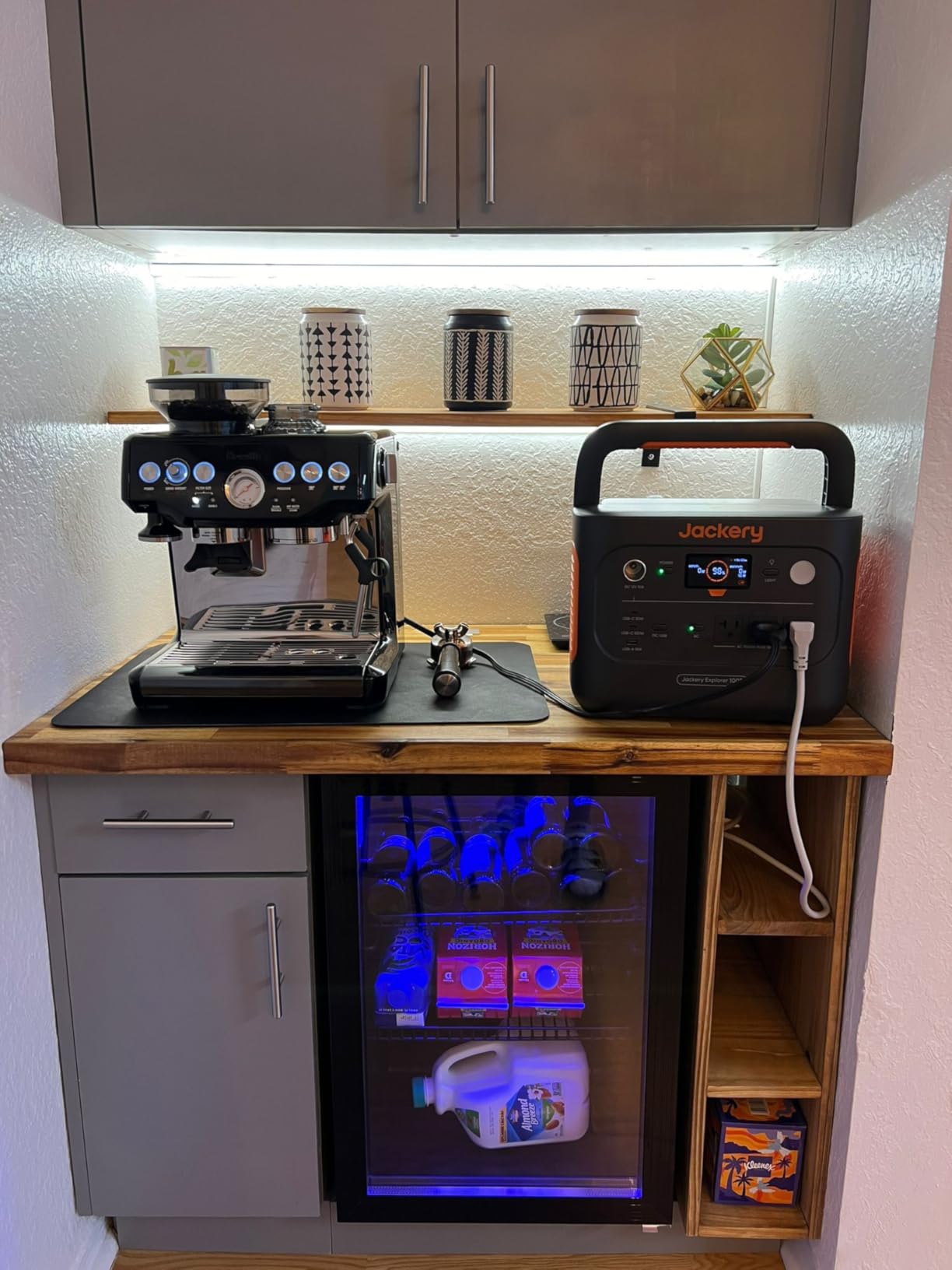
What you get from a 1,070Wh battery overnight
Calculated from the formula, this station delivers about 18 hours against a 50W average fridge, about 11 hours at 80W, and about 8 hours at 120W. Plan on 80 percent of those figures as a working reserve so you are not running the last inefficient slice of charge.
For a typical household fridge averaging 80W, that means you can comfortably cover a full night plus a morning, then recharge during the day on wall power. It is not a three-day answer, and if your region is prone to multi-day outages you will want to pair it with solar or step up a capacity tier.
When it is the wrong pick
Choose something else if you plan to run a chest freezer alongside the refrigerator, since doubling your average load puts you back under 12 hours. It is also a poor match for RV use if you need a 30A TT30 output, and the one-year warranty makes it a less comfortable choice than a five-year alternative for buyers who intend to keep it for a decade.
Solar owners should weigh the proprietary panel limitation carefully. If you already have panels from another brand, the BLUETTI Elite 100 V2 uses a standard solar connector and will accept what you have. If you own nothing, this is not a serious drawback, since you will be buying a panel from the same brand either way.
2. BLUETTI AC180 for the Most Headroom in the 1kWh Class
BLUETTI AC180 Portable Power Station 1152Wh 1800W LiFePO4 Solar Generator
1,152Wh LiFePO4
1,800W rated and 2,700W lifting
37.4 lb
Pros
- Largest capacity in the 1kWh class at 1152Wh
- 0-80 percent in 45 minutes and a full charge in about an hour
- 11 outlets including a wireless charging pad
- 5-year warranty with 5-year spare-part availability
- 20 ms UPS switchover keeps a fridge running through blips
Cons
- 37.4 lb is a two-person lift for its size
- Wireless charging pad frequently drops the phone connection
- Only one USB-C port
This is the pick for anyone who wants the largest battery in the smallest class, plus the flexibility to run a second appliance without planning around it. At 1,152Wh it edges out the other 1kWh units, and the 1,800W rated output with 2,700W of lifting headroom means you could run a fridge and a router, or a fridge and a small freezer, off the same charge.
Fridge duty dominates the 2,622 reviews, and owners consistently report multi-day runs on portable car fridges during camping trips and whole-night refrigerator backup during winter outages. One verified buyer describes powering a fridge, a coffee maker and tools simultaneously during a Canadian winter outage, which is beyond what most 1kWh stations handle comfortably.
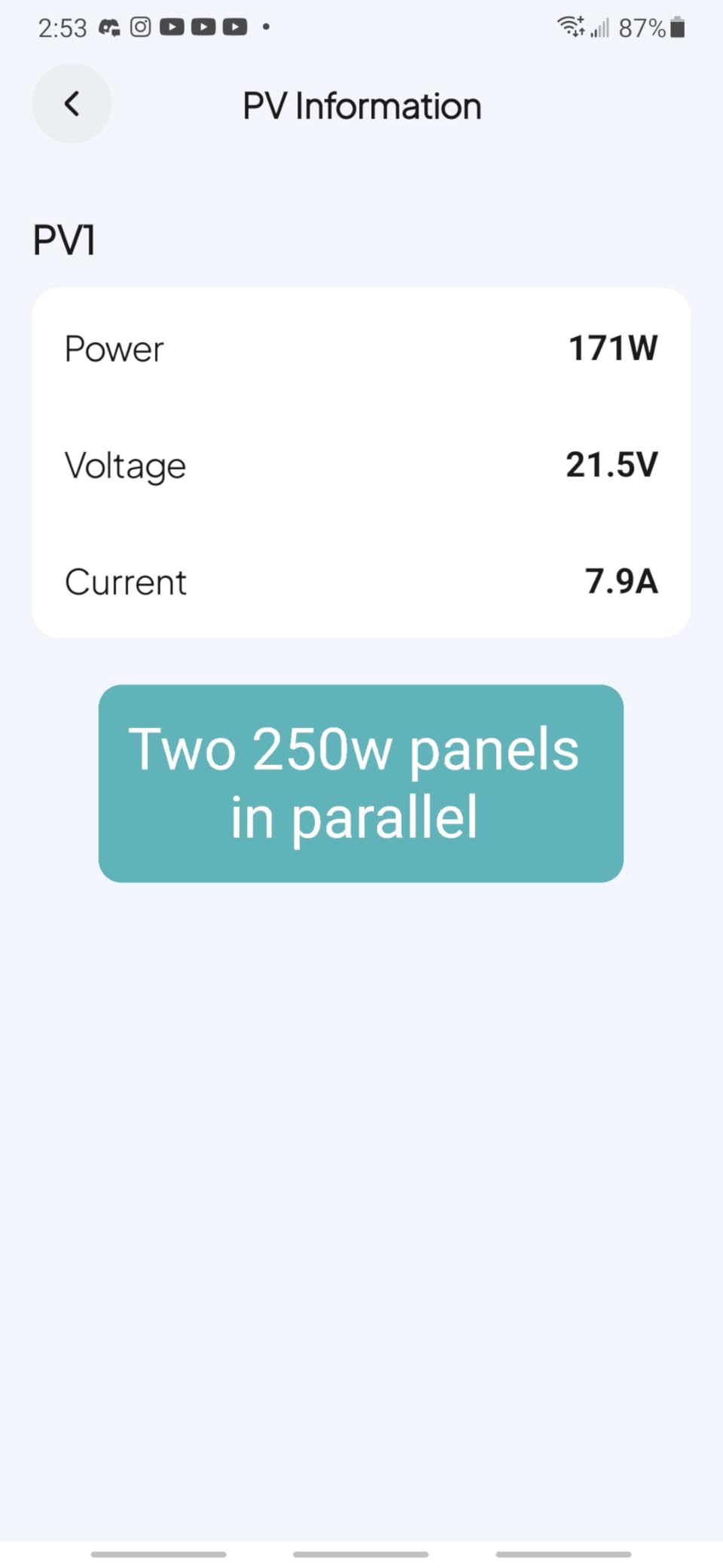
The technical theme running through the reviews is overhead, and it is the most useful thing to know before you buy. Reviewers measuring the inverter put its self-consumption at roughly 15 to 20W with the inverter switched on, and usable capacity caps out at around 85 to 90 percent of the nameplate figure. For a low-draw appliance like a refrigerator, that overhead eats directly into your hours, which is why real runtime lands below the label even when the compressor is barely working.
Two more practical notes. The AC and DC output buttons must be enabled manually, which catches out first-time owners who plug in a fridge and see nothing happen. And some units arrive needing a firmware update before charging at full rated speed.
Fast charging is a genuine strength: 0 to 80 percent in 45 minutes, or a full charge in about an hour at 1,440W of AC input. That matters in an outage recovery scenario, where getting the station back to full between grid windows is the whole game.
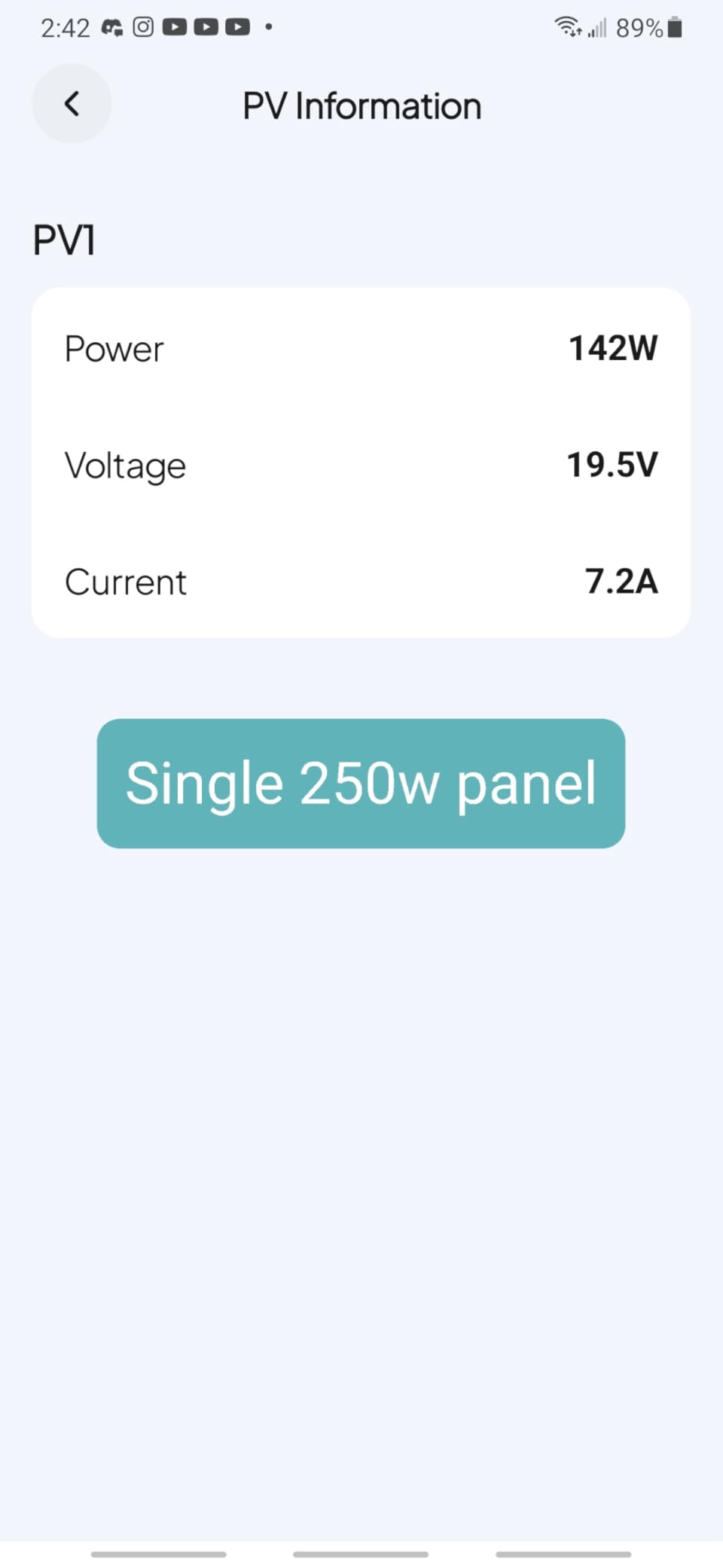
What you get from a 1,152Wh battery overnight
Calculated runtime is about 20 hours at a 50W average fridge, about 12 hours at 80W, and about 8 hours at 120W. Subtract the 15 to 20W inverter overhead in real conditions and a mid-size fridge lands closer to the lower-middle of that band rather than the top.
Where this model pulls ahead of the Jackery is the second load. If your plan is fridge plus Wi-Fi plus a medical device, or fridge plus lights, the extra watt-hours and 11 outlets make this the more capable box of the two without stepping up a size.
When it is the wrong pick
Weight is the honest limitation. At 37.4 lb, owners describe it as a two-person lift or a car-only unit, and that is a real problem if your plan depends on moving the station between rooms during an outage. The lightest pick in this roundup is nearly 14 lb lighter.
The listed runtime specification of 42 minutes on the box refers to a heavy continuous load such as a kettle, not to a cycling refrigerator, so do not let that number confuse your expectations. Read the label runtime as a worst-case figure and use the calculated hours instead.
3. BLUETTI Elite 100 V2 for the Best 12V Compressor Fridge Runtime
BLUETTI Elite 100 V2 Portable Power Station for Camping 1024Wh 1800W
1,024Wh LiFePO4
1,800W rated and 3,600W surge
25 lb in 17L
Pros
- Documented 24 hours on DC versus 16 hours on AC for a 32 qt fridge
- 25 lb in a 17L body
- 35 percent smaller than comparable 1kWh models
- 3600W surge gives huge compressor start headroom
- Standard solar connector rather than a proprietary interface
Cons
- 12V car input limited to about 120W so vehicle charging is slow
- Loads under roughly 10W may not register on the power readout
- Exposed 12V barrel ports are easy to short
This is the pick if your refrigerator is a portable 12V compressor unit rather than a kitchen appliance, because the owner-reported numbers here quantify the difference between the DC and AC paths. One documented run powered a 32 qt portable fridge held at 25F for 24 hours on the 12V car port, dropping to 44 to 47 percent, versus roughly 16 hours through the AC inverter on the same station and the same fridge.
That is a 50 percent runtime gain from nothing more than choosing a different socket, and it is the single most actionable finding in this roundup for van, truck and boat owners. It also means the people most likely to be using this station for fridge duty are the ones least likely to be sizing it correctly, since r/overlanding threads show a recurring pattern of buying 2kWh batteries for fridges drawing under 2.5 amps.
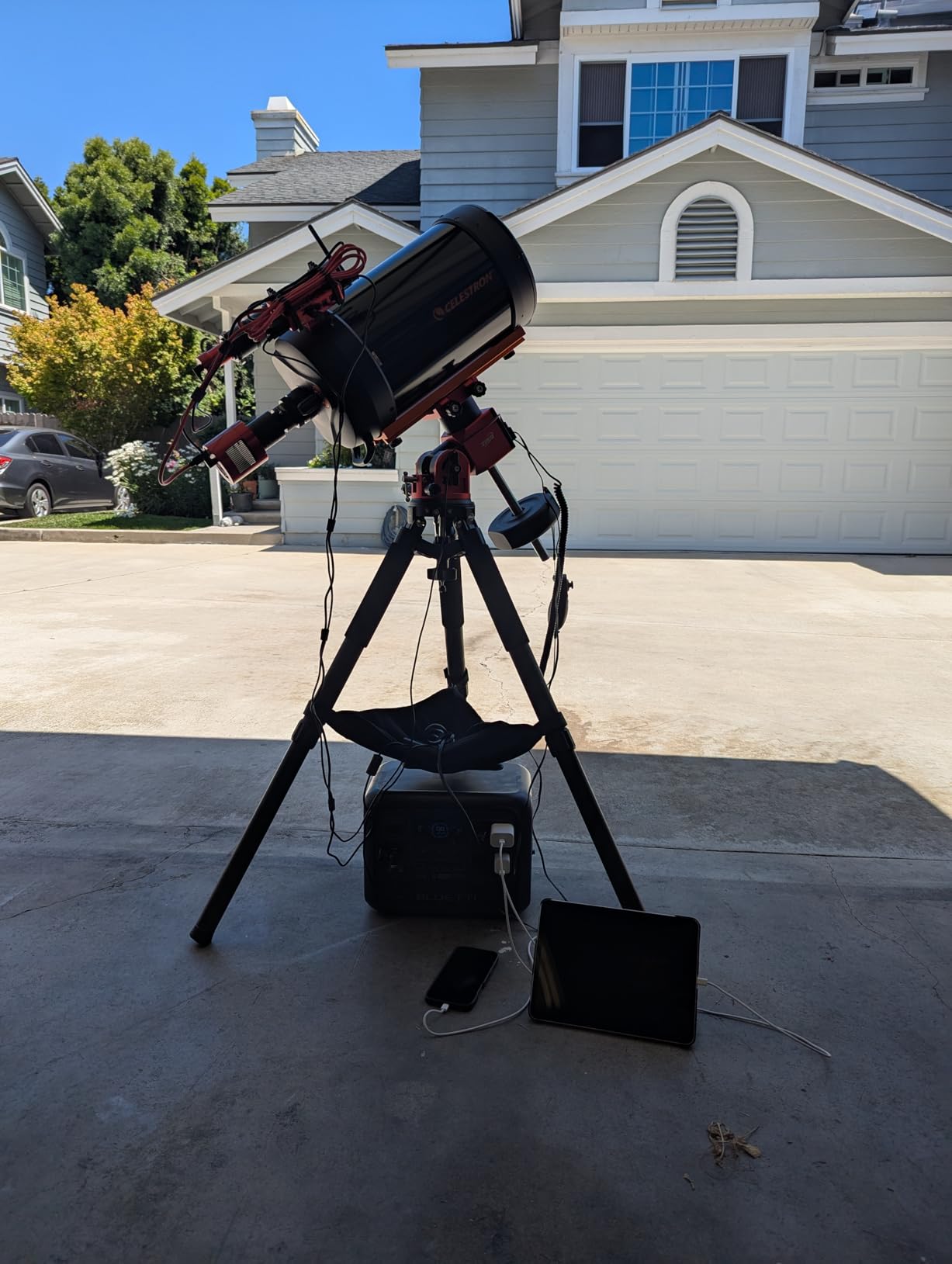
Everything else about the model supports refrigerator use. The 1,800W rated output with 3,600W of surge is more start headroom than any fridge requires, 1,200W TurboBoost AC charging reaches 80 percent in about 45 minutes, and the 10 ms UPS switchover plus 30 dB silent mode make it practical to sit in a van overnight beside a sleeping bag.
At 25 lb in a 17L body, it is the most compact unit here, claimed at 35 percent smaller and 30 percent lighter than comparable 1kWh models. Owners also like the hidden top grab handle and the pass-through charging that lets the station charge while running, which is useful when the fridge is the only load.
One real drawback for road trips: the 12V car input is limited to about 120W, so charging from a vehicle while driving is slow. For van life where the alternator is your main power source, weigh that against the Anker SOLIX C2000 Gen 2, which accepts far more from a vehicle.
How much extra runtime the DC path gives you
On the AC path, calculated runtime is about 17 hours at a 50W average, about 11 hours at 80W, and about 7 hours at 120W. The owner-reported 24-hour DC run on a 32 qt portable fridge came in ahead of every one of those numbers, because the DC path skips the inverter conversion loss entirely.
The practical rule is simple. If your fridge is a 12V compressor unit, use the car port and skip the inverter. If it is a kitchen refrigerator with a wall plug, the AC path is the only option, so factor the 0.85 usable-capacity figure into your planning as usual.
When it is the wrong pick
Do not choose this for a full-size kitchen refrigerator if you expect a multi-day outage without recharging. At 1,024Wh, it covers an overnight event well and a day with effort, but it has no expansion path to grow into a longer outage the way several 2kWh models do.
The 120W car input also disappoints anyone planning to recharge substantially while driving, and the low-load readout threshold means a very small fridge may not register on the power display, which can be confusing when you are trying to verify that anything is happening at all.
4. Anker SOLIX C1000 Gen 2 for the Fastest Recharge Between Outages
Anker SOLIX C1000 Gen 2 Portable Power Station
1,024Wh LiFePO4
2,000W continuous and 3,000W peak
about 25 lb
Pros
- Highest continuous output in this class at 2000W
- Full recharge in 49 minutes at 1600W input
- Under 10 ms UPS switchover
- 80 percent capacity retained after 4000 cycles
- 1.8 hour solar recharge from up to 600W of panels
Cons
- Gen 2 dropped the expansion battery option found on Gen 1
- Output limited to about 1800W in UPS pass-through mode
- HyperFlash fast charging must be enabled in the app
The differentiator here is recovery speed rather than runtime. A full recharge in about 49 minutes at 1,600W means that a short grid window between outages can put you back in business, which matters more in practice than raw capacity for anyone whose region has frequent brief flickers rather than rare long blackouts.
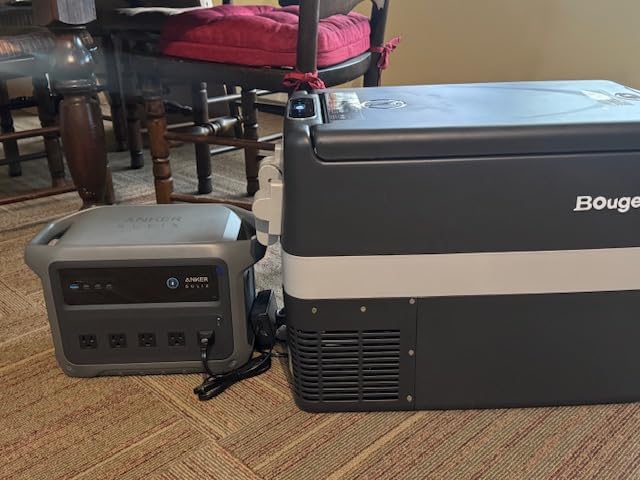
Fridge backup is a proven use case in these reviews. One owner ran a home refrigerator unattended through a five-hour outage, and another ran a mini fridge for close to two days on a single charge. The app also reports 6 to 12 hours of estimated backup for a typical refrigerator, which lines up with our calculated 11 hours at an 80W average.
Output headroom is generous: 2,000W continuous with 3,000W peak across 10 ports, far more than a compressor needs. Under 10 ms UPS switchover keeps routers, laptops and fridges running through short interruptions, and the 1,024Wh LiFePO4 pack retains at least 80 percent of capacity after 4,000 cycles for what Anker calls a 10-year lifespan.
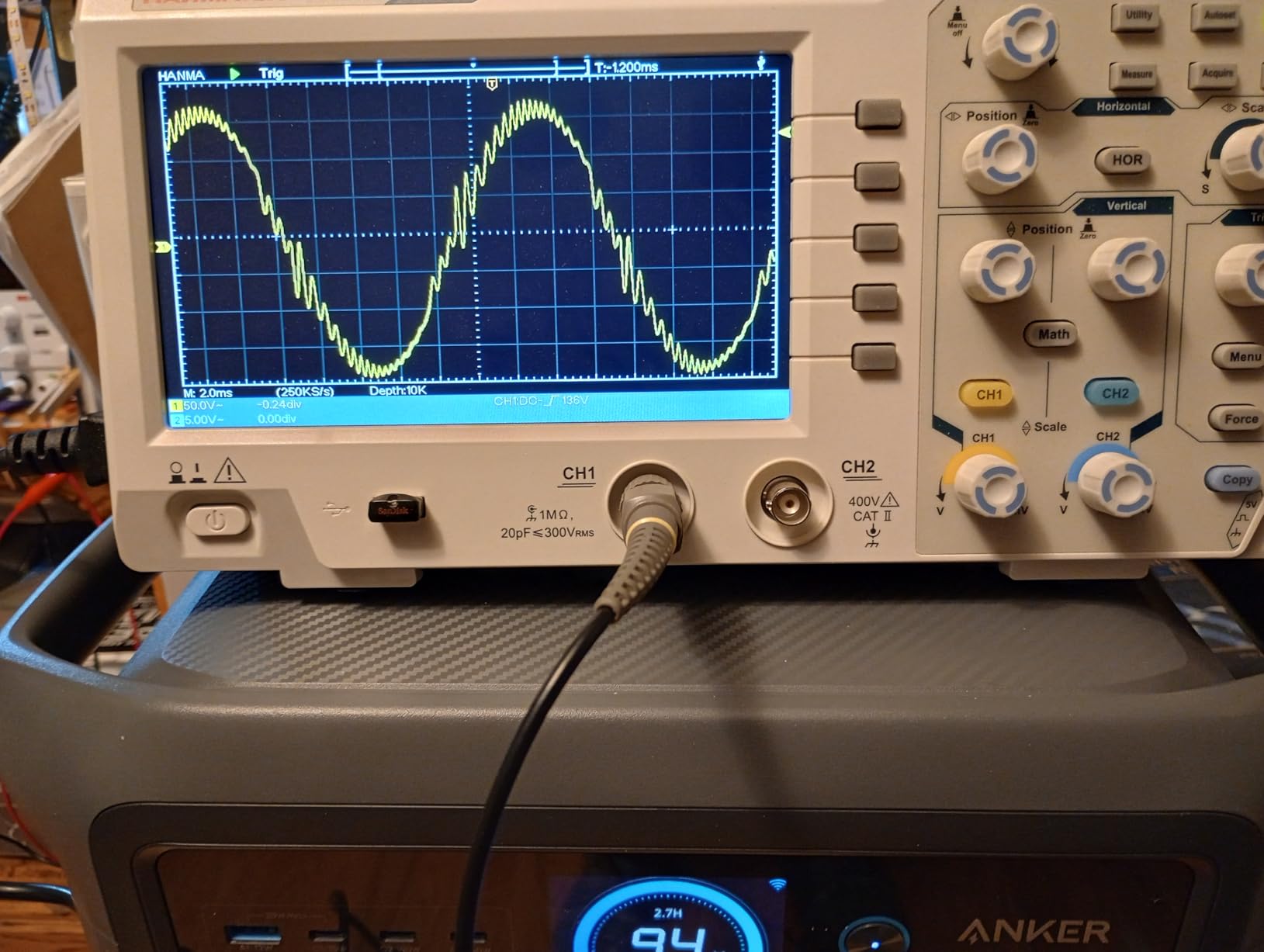
Two technical cautions came out of the reviews. Output drops to about 1,800W in UPS pass-through mode even though the rating is 2,000W, and one reviewer measuring with an oscilloscope found roughly 15 to 20 percent harmonic distortion driving a microwave from the inverter. Neither issue affects a refrigerator, which is a purely resistive and inductive motor load, but both are worth knowing if you plan to run sensitive electronics.
Note that the HyperFlash ultra-fast charging mode has to be switched on in the Anker app first. Owners who skipped that step assumed the station was defective when it charged slowly.
What 1,024Wh covers at your fridge’s real average load
Calculated figures are about 17 hours at a 50W average, about 11 hours at 80W, and about 7 hours at 120W. Because the app shows an estimated remaining runtime that owners report as reasonably accurate, you can watch the real number rather than relying on the calculation alone.
The 1.8 hour solar recharge from up to 600W of panels is the practical headline here. If you can deploy a panel at the start of an outage, you have a realistic shot at topping up during daylight rather than depending on the grid returning.
When it is the wrong pick
The Gen 2 dropped the expansion battery option that the first generation offered, so this is a closed 1,024Wh box. If your outage planning keeps expanding to two or three days, that removed growth path is a genuine limitation and points you toward a 2,000Wh model instead.
It also does not bundle a protective carrying case or cable organizer despite shipping with several loose XT60 adapters and cords. At roughly 25 lb it is a two-hand carry in practice, so a case matters more here than with a lighter station.
5. EcoFlow Delta 3 Classic for the Best Fridge-Specific Buy
EF ECOFLOW Portable Power Station Delta 3 Classic, 1024Wh 1800W AC
1,024Wh LiFePO4
1,800W output and 3,600W surge
26.7 lb
Pros
- Explicitly marketed for refrigerators and microwaves with 3600W surge
- 0-80 percent in 45 minutes
- 2.5 hour solar recharge from a 500W panel
- App includes Storm Alert and Self-Powered Mode
- 5-year manufacturer warranty
Cons
- Not compatible with Smart Extra Batteries so there is no expansion path
- 26.7 lb is a heavy lift for a 1kWh station
- 12V vehicle charging tops out around 100W
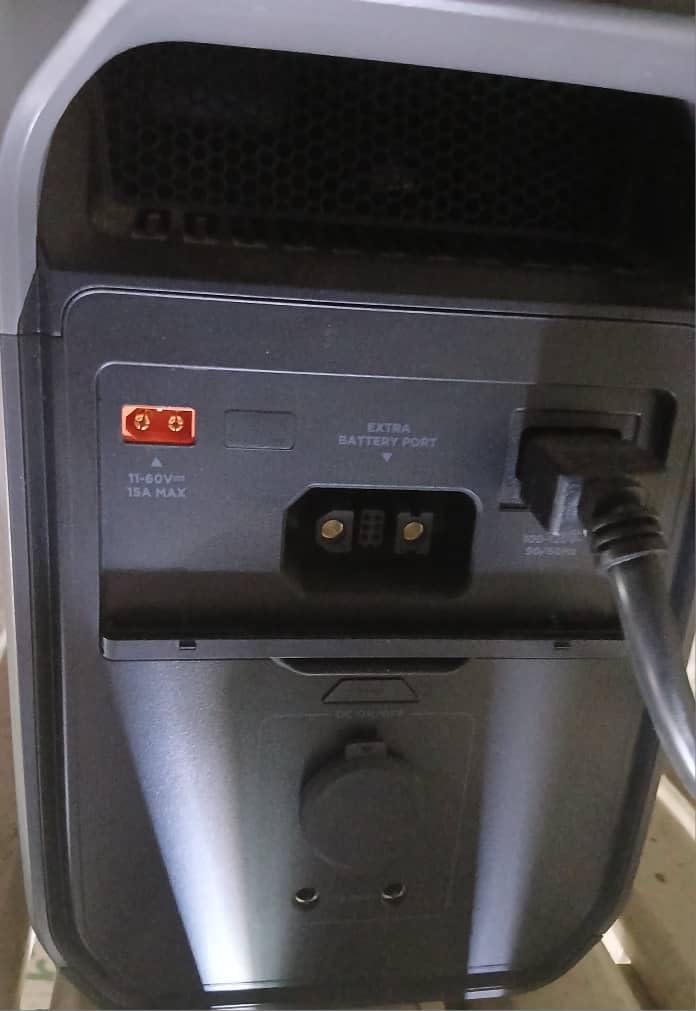
Refrigerator duty is the flagship use case for this model, and the review record shows it. Owners run portable fridges full-time in vans for weeks without loss of power, and one reviewer reports up to 10 hours of refrigerator autonomy during an outage, which is close to our calculated 11 hours at an 80W average load.
It also has the highest proportion of five-star ratings in this group, and the reason is visible in the design rather than the marketing. The 1,800W output with 3,600W surge and 2,600W available through X-Boost gives enormous starting headroom, so a compressor start is never the limiting factor, and the under 10 ms UPS switchover lets it sit between a van and a portable fridge for hands-off switching.
The app is unusually thoughtful for this category. Storm Alert pushes a notification when severe weather is approaching, Self-Powered Mode maintains the battery at a set level between uses, and charging schedules let you top up off-peak. For outage preparation specifically, Storm Alert is the feature I would use most.
Negative reviews here cluster on fulfilment rather than function, which is worth flagging honestly. Two international reviews report units arriving dead on arrival or as open-box condition, with refund friction from third-party sellers. Buy through the brand’s own channel or a retailer with straightforward returns.
There is one more honest limitation from van-life testing: on consecutive cloudy days, the station could not fully replenish from solar well enough to run a fridge overnight. Solar is a supplement to capacity rather than a replacement for it.
Why this is the fridge-first choice in the 1kWh tier
Every pick in this roundup can run a refrigerator, but this one was designed around the job. The surge headroom is disproportionate to the load, the app anticipates outages before they happen, and the published charge time of 45 minutes to 80 percent gets you back online fast.
Calculated runtime is about 17 hours at a 50W average, about 11 hours at 80W and about 7 hours at 120W, so a mid-size fridge clears an overnight outage with margin.
When it is the wrong pick
The absence of Smart Extra Battery compatibility is the biggest limitation. There is no way to add capacity later, so a household that expects to grow its backup over the next few years is better served by a model that expands.
For road-trip fridge duty, the roughly 100W 12V vehicle charging limit is slow, and at 26.7 lb it is a heavier carry than the Jackery Explorer 1000 v2. Neither issue affects home outage use, where the priority is simply getting it plugged into the fridge.
6. Jackery Explorer 2000 v2 for the Best Multi-Day Fridge Coverage
Jackery Explorer 2000 v2 Portable Power Station, 2042Wh, 2200W AC Output
2,042Wh LiFePO4
2,200W AC across 3 ports
39.5 lb
Pros
- 2042Wh gives roughly double the runtime of a 1kWh station
- 39.5 lb is 41 percent lighter than typical 2kWh stations
- 0-80 percent in 66 minutes and full in 102 minutes
- 20 ms UPS switching certified to UL1778
- Silent charging mode under 30 dB
Cons
- One-star feedback runs higher than the leading models here
- with 8 percent against 79 percent five-star
- Solar charging limited to Jackery-brand panels
- Only 3 AC outlets for a 2200W inverter
- No battery expansion capacity
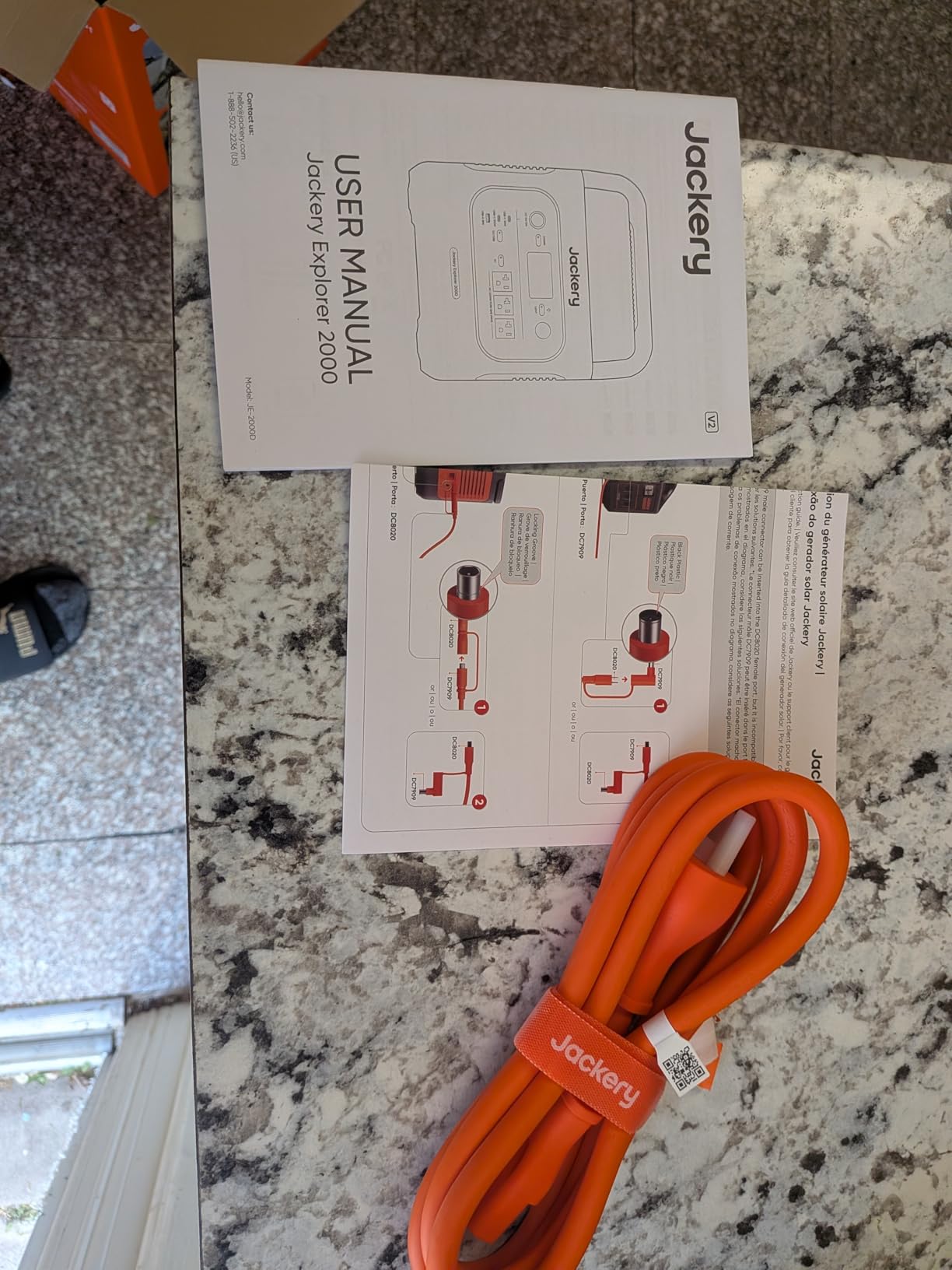
At 2,042Wh this is the first step into true multi-day coverage, and at 39.5 lb it is the lightest way to get there. The other 2,000Wh-class options in this roundup weigh 41.7 lb, 50 lb and 72 lb, so this figure is the standout number on the box and the reason reviewers comparing it against heavier alternatives find it compelling.
For refrigerator duty the calculation roughly doubles the 1kWh results. A fridge averaging 80W gets about 22 hours of calculated runtime, which covers a full day comfortably and reaches into a second day with disciplined load management, including cycling a chest freezer off if you have one.
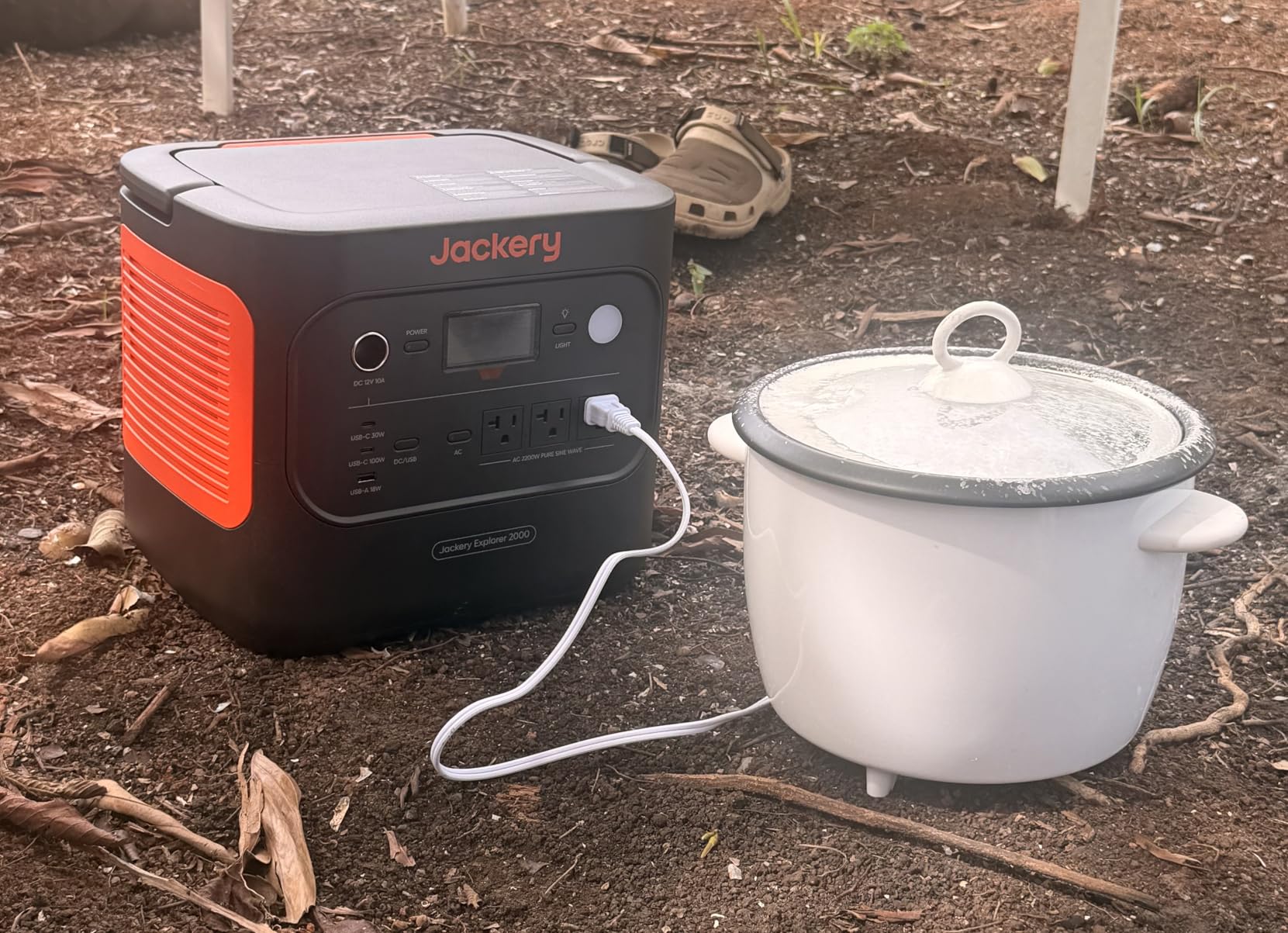
Recovery speed is good rather than exceptional: 0 to 80 percent in 66 minutes, or a full charge in 102 minutes with Emergency Super Charging enabled in the app. Solar input is 400W, giving a full charge in as little as six hours, which is enough to matter over a multi-day outage if you can deploy a panel.
The UPS function is certified to UL1778 for uninterruptible power systems and switches in 20 ms, and the silent charging mode stays under 30 dB with adaptive fan control. For a kitchen or bedroom during an overnight outage, that combination is what you actually notice.
The rating here is the lowest average among the well-reviewed models at 4.4 stars, with 8 percent one-star feedback against 79 percent five-star. Read the critical reviews before buying: the complaints concentrate on fulfilment and the proprietary solar limitation rather than on fridge performance.
What 2,042Wh buys you against a real fridge
Calculated runtime is about 35 hours at a 50W average load, about 22 hours at 80W, and about 14 hours at 120W. That crosses the two-day threshold for a typical mid-size refrigerator, which is the point at which a power station starts to feel like real backup rather than a bridge to the morning.
The same capacity comfortably absorbs a second load. Refrigerator plus a chest freezer, or refrigerator plus a router and a CPAP machine, still lands inside a usable overnight window, which no 1kWh model in this roundup can promise.
When it is the wrong pick
Three AC outlets is thin for a 2,200W inverter, so plan your loads carefully. If your backup includes several devices plus a medical machine, the EcoFlow Delta 2 Max with 15 outlets serves better even though it is heavier.
There is also no battery expansion, which is strange for a 2kWh unit and rules out the grow-in-place strategy. And the weight still requires two hands or a cart at 39.5 lb, so it works best as a unit that lives near the kitchen rather than one you carry between rooms.
7. Anker SOLIX C2000 Gen 2 for the Lowest Standby Draw
Anker SOLIX C2000 Gen 2 Portable Power Station, 2,048Wh, 2,400W, Camping
2,048Wh LiFePO4
2,400W rated and 4,000W peak
41.7 lb
Pros
- Only 9W standby consumption
- the key figure for a cycling fridge
- Manufacturer claims up to 32 hours on a dual-door fridge
- Expandable to 4kWh with an expansion battery
- 800W alternator charging reaches full in 3 hours from a car
Cons
- No expansion battery included so the 64-hour figure needs a separate purchase
- Thinnest review base in this roundup at 670 ratings
- Listed outlet count of 1 understates real availability
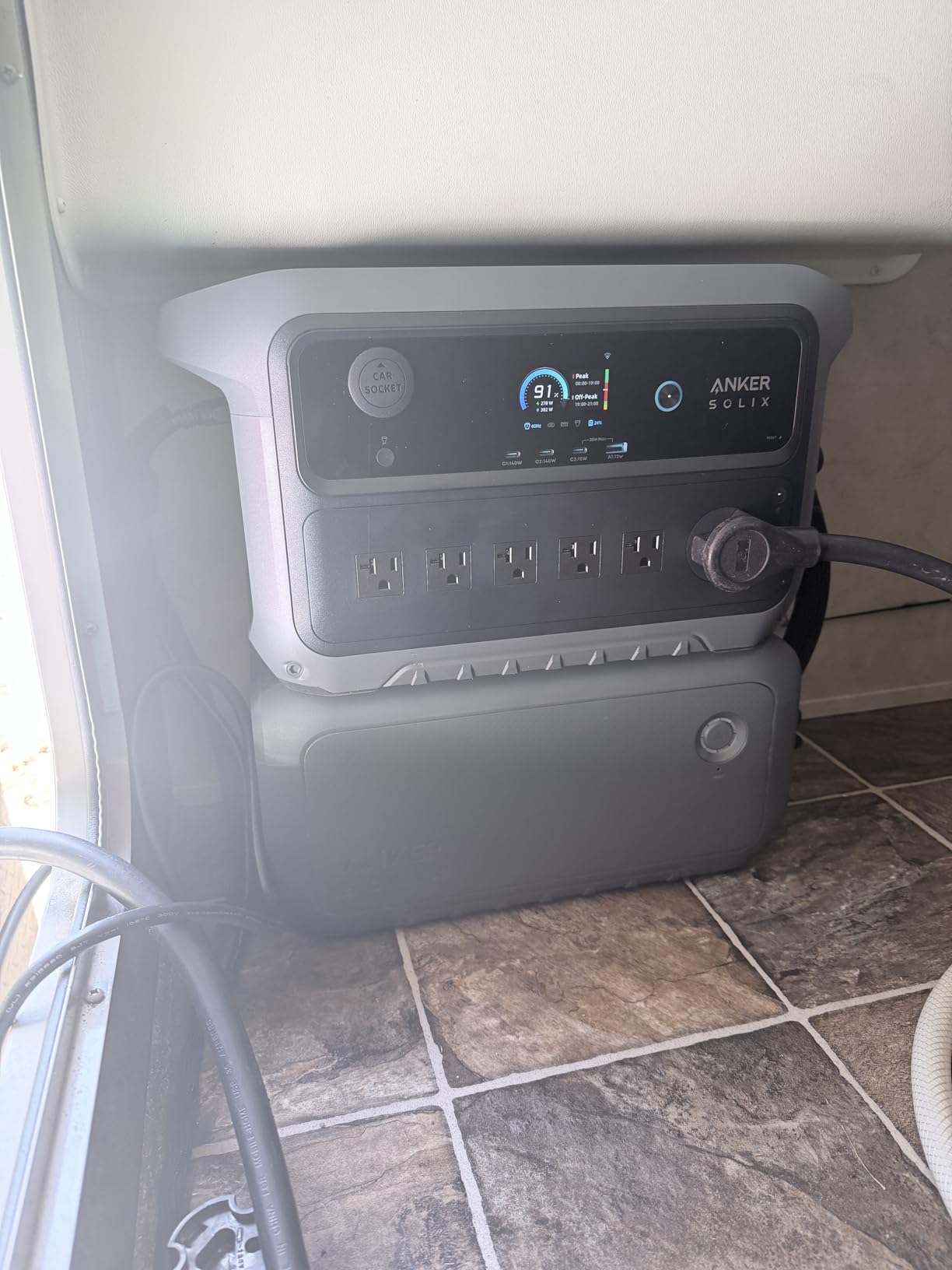
The number that matters most for a refrigerator is the 9W standby consumption, and this is the only station in the roundup built around it. A fridge draws almost nothing while the compressor is off, so on a low-overhead station the battery barely drains between cycles, and the manufacturer claims a dual-door refrigerator runs up to 32 hours on a single charge, rising to 64 hours with an expansion battery.
That claim is worth understanding rather than repeating blindly. A dual-door fridge with a through-door ice maker draws more than a single-door model, so 32 hours is an optimistic figure for a large appliance. Our calculated figure of about 35 hours at a 50W average load and about 22 hours at 80W brackets it sensibly, and the direction of the error depends on your fridge, not the station.
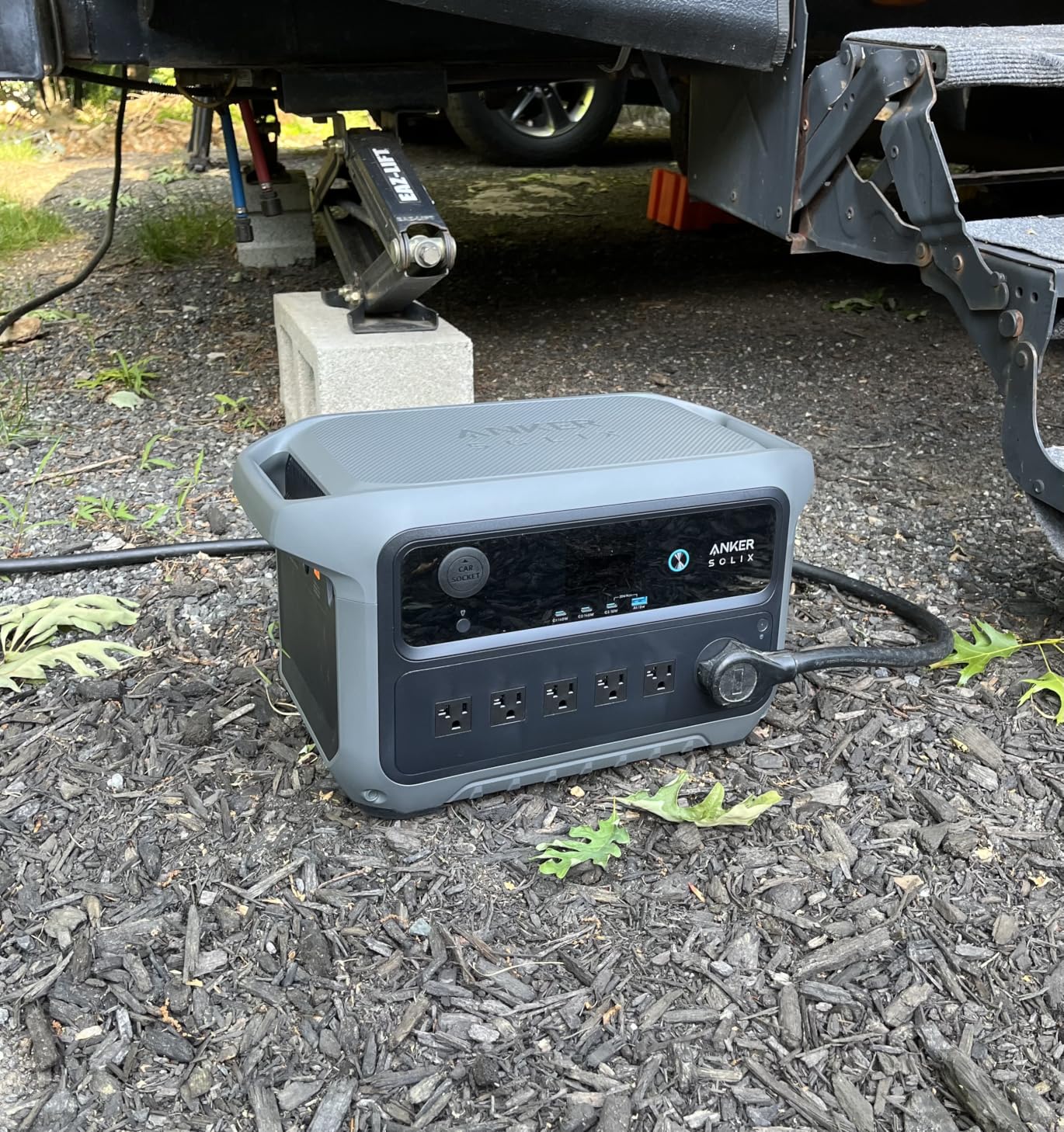
Output is generous for household backup at 2,400W rated and 4,000W peak, enough to run multiple appliances including window and RV air conditioning alongside a fridge. Recharge is fast: full in 58 minutes using AC and solar together.
The alternator charging is the standout for road-trip fridge duty. 800W of UltraFast charging reaches 100 percent from a car in about three hours, roughly eight times what a standard car socket provides, which resolves the chronic complaint that vehicle charging is too slow for a rolling fridge load.
At 41.7 lb in an 18.1 by 9.8 by 10.1 inch body, this is claimed as 25 percent lighter and 29 percent smaller than competing 2,000Wh models, and the dimensions make it the most car-portable of the 2kWh class.
What low standby overhead actually buys
Calculated runtime is about 35 hours at a 50W average load, about 22 hours at 80W, and about 14 hours at 120W. Where this model separates itself is at the low end, because a 9W baseline rather than a 15 to 20W baseline returns roughly an extra four to six hours of idle-preserved charge on a load that spends much of its life switched off.
That is why it is the right pick for a large dual-door fridge and a poor-value choice for a small efficient one that already only pulls 50W on average, where the overhead difference matters less.
When it is the wrong pick
The 64-hour dual-door figure requires an expansion battery that is not included, so budget for that separately if multi-day coverage is the goal. At 41.7 lb it still needs two hands or a cart, so it is not a unit you reposition during an outage.
The review base is the thinnest here at 670 ratings. The rating is strong at 4.7 stars, but there is simply less long-term reliability data behind it than behind the 3,600-review leaders, which is a reasonable consideration for a purchase you intend to keep for a decade.
8. BLUETTI AC200PL for RV and Boat Fridge Backup
BLUETTI AC200PL Portable Power Station 2304Wh 2400W LiFePO4 Solar Generator
2,304Wh LiFePO4
2,400W AC plus 30A TT30
72 lb
Pros
- Expands to as much as 8448Wh with expansion batteries
- 0-80 percent in 60 minutes at 2400W AC input
- 1200W solar input for a 1.9 to 3.8 hour full charge
- 30A TT30 output plus a 48V RV charging port
- 3000-plus cycle LFP cells with full BMS protection
Cons
- 72 lb is the heaviest practical option here and not a one-person lift
- Fewer USB-C ports than the smaller AC180
- Expansion batteries are expensive add-ons
This is the pick when the refrigerator lives in an RV, a boat or a truck with real electrical infrastructure rather than in a kitchen. The 30A TT30 output can run RV appliances or charge a house battery directly, and the 48V RV charging port handles the setup most campers actually want, which is topping up their own battery bank rather than running individual devices.
Capacity is the largest of the portable-feeling options here at 2,304Wh, and it expands to as much as 8,448Wh with two B300, two B210P or one B230 pack. For someone who wants capacity to grow over years rather than replace the station, that expansion path is the whole argument.
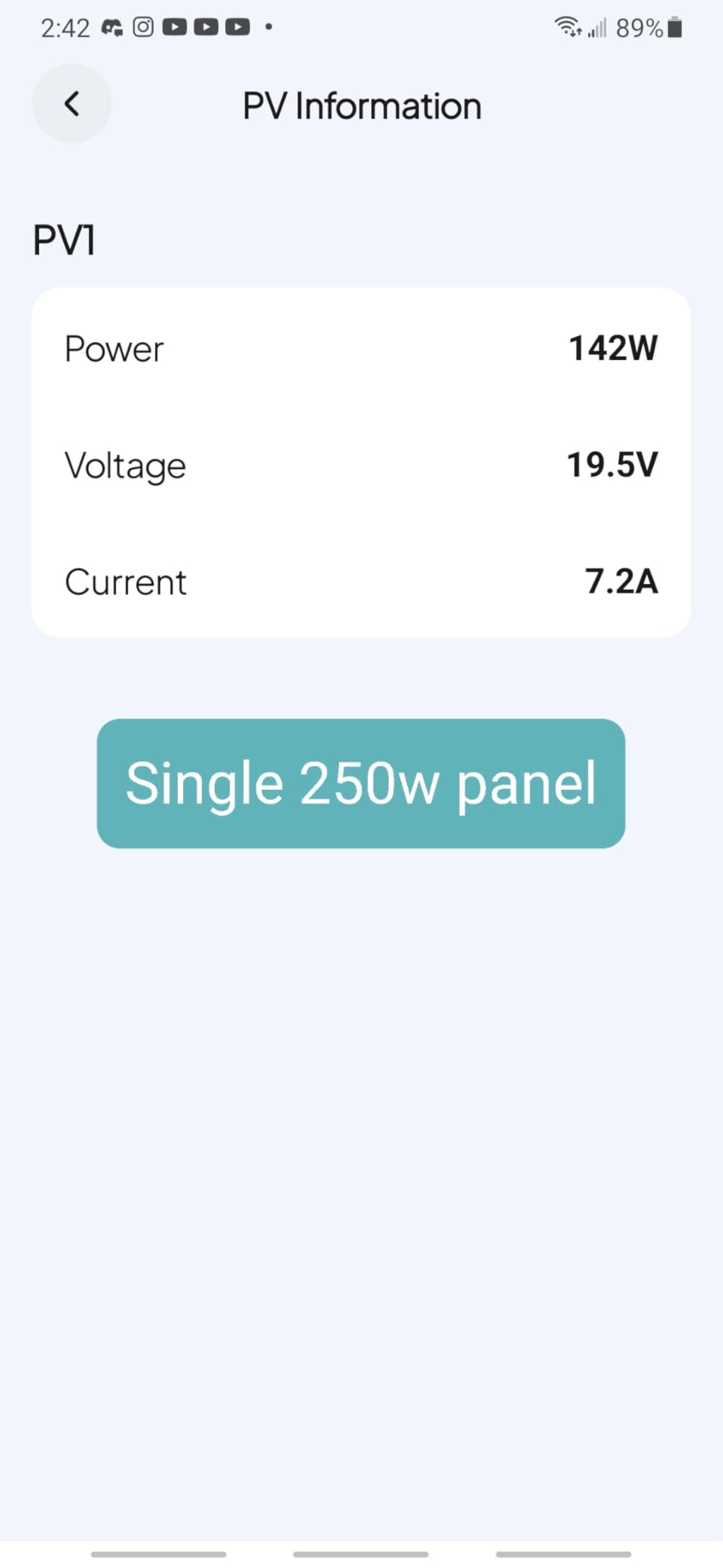
Charging is fast and flexible: 0 to 80 percent in 60 minutes from a 2,400W AC input, and 1,200W of solar input for a full charge in 1.9 to 3.8 hours. Eleven ports include four 2,400W AC outlets, the 30A TT30, a 48V DC output, a car port, two 100W PD USB-C ports and two USB-A ports.
Owners report running RV essentials through desert camping trips, and the 2,622 reviews at 4.6 stars with 82 percent five-star make this one of the better-established models here. The LFP cells are rated for 3,000-plus cycles with full BMS protection, and the under 10 ms UPS backup keeps sensitive equipment running through blips.
One specification deserves a warning label. The listed running wattage of 9,600W and runtime of 5 hours on some listings are not representative of a fridge load at all, so use our calculated hours rather than any headline runtime figure from the product page.
What 2,304Wh covers and what expansion adds
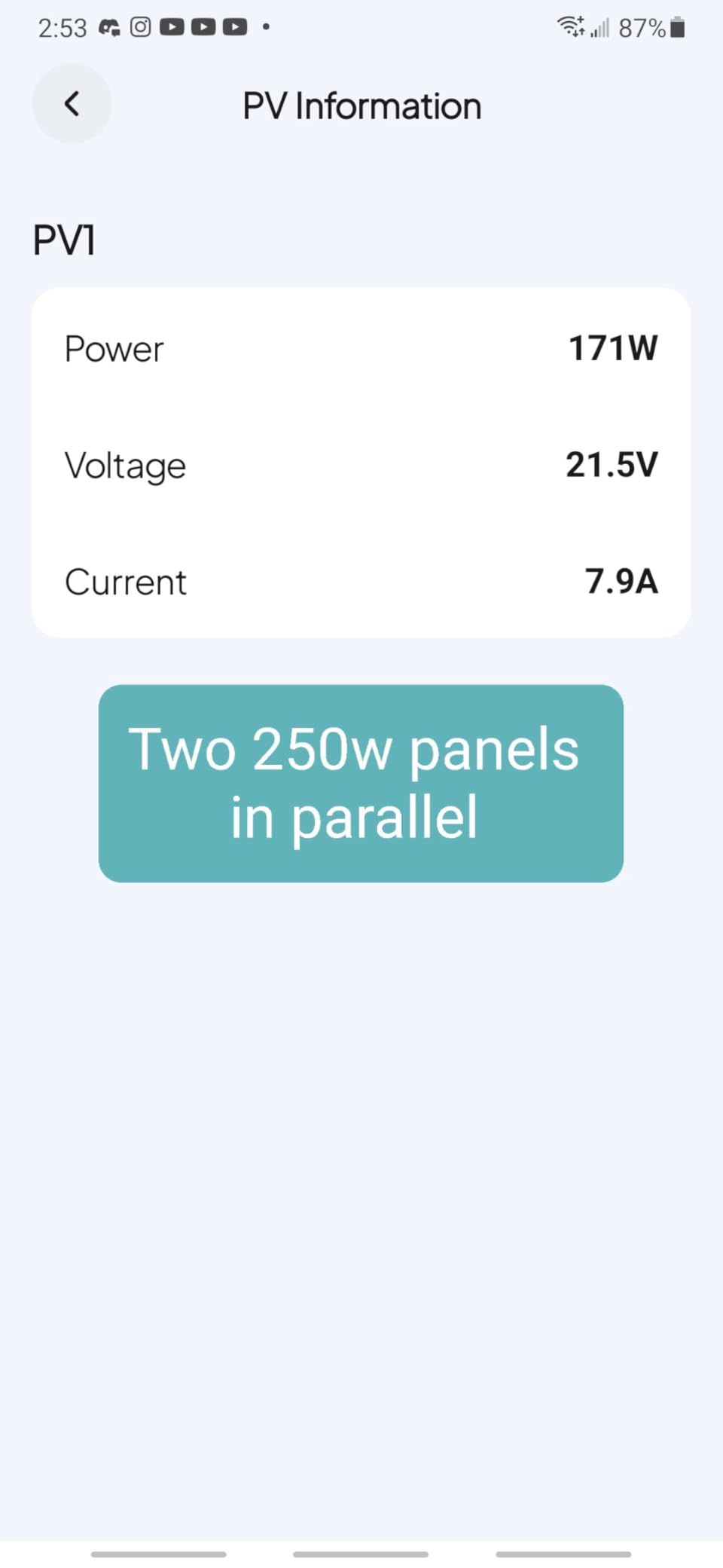
Base calculated runtime is about 39 hours at a 50W average load, about 24 hours at 80W, and about 16 hours at 120W, which makes it the longest-running 2kWh option in this roundup on paper. Adding two expansion batteries multiplies that to a capacity that genuinely covers a week.
For RV use the real comparison is against a 30A shore power connection rather than against other stations. If your needs are a fridge, a few lights and a USB port, this is substantial overkill and the Jackery Explorer 2000 v2 is the more sensible spend.
When it is the wrong pick
At 72 lb it is not a one-person lift and not car-camping friendly in the way the lighter 2kWh models are. It is a stationary home or RV unit that you position once, and it is the reason several owners comparing against similar-capacity 40 lb units question the value.
It also has fewer USB-C ports than the smaller AC180, and expansion batteries are expensive add-ons that are not included. If you only need overnight fridge coverage, buying this instead of a 1kWh model is paying for capacity you will not use.
9. EcoFlow Delta 2 Max for the Most Connection Options
EF ECOFLOW Portable Power Station DELTA 2 Max 2048Wh, 2400W LiFePO4 Battery
2,048Wh LFP
2,400W continuous and 3,400W X-Boost
50 lb
Pros
- 15 outlets
- the most connection options in this class
- 0-80 percent in 43 minutes with combined solar and AC
- Expands to 6kWh with two extra batteries
- Quiet operation from 30 dB for overnight indoor use
- LFP rated 3000 cycles to 80 percent capacity
Cons
- 50 lb is heavy for a unit marketed as portable
- Highest cost per watt-hour among the 2kWh options here
- Predecessor generation with newer variants available
- No stated UPS switchover figure
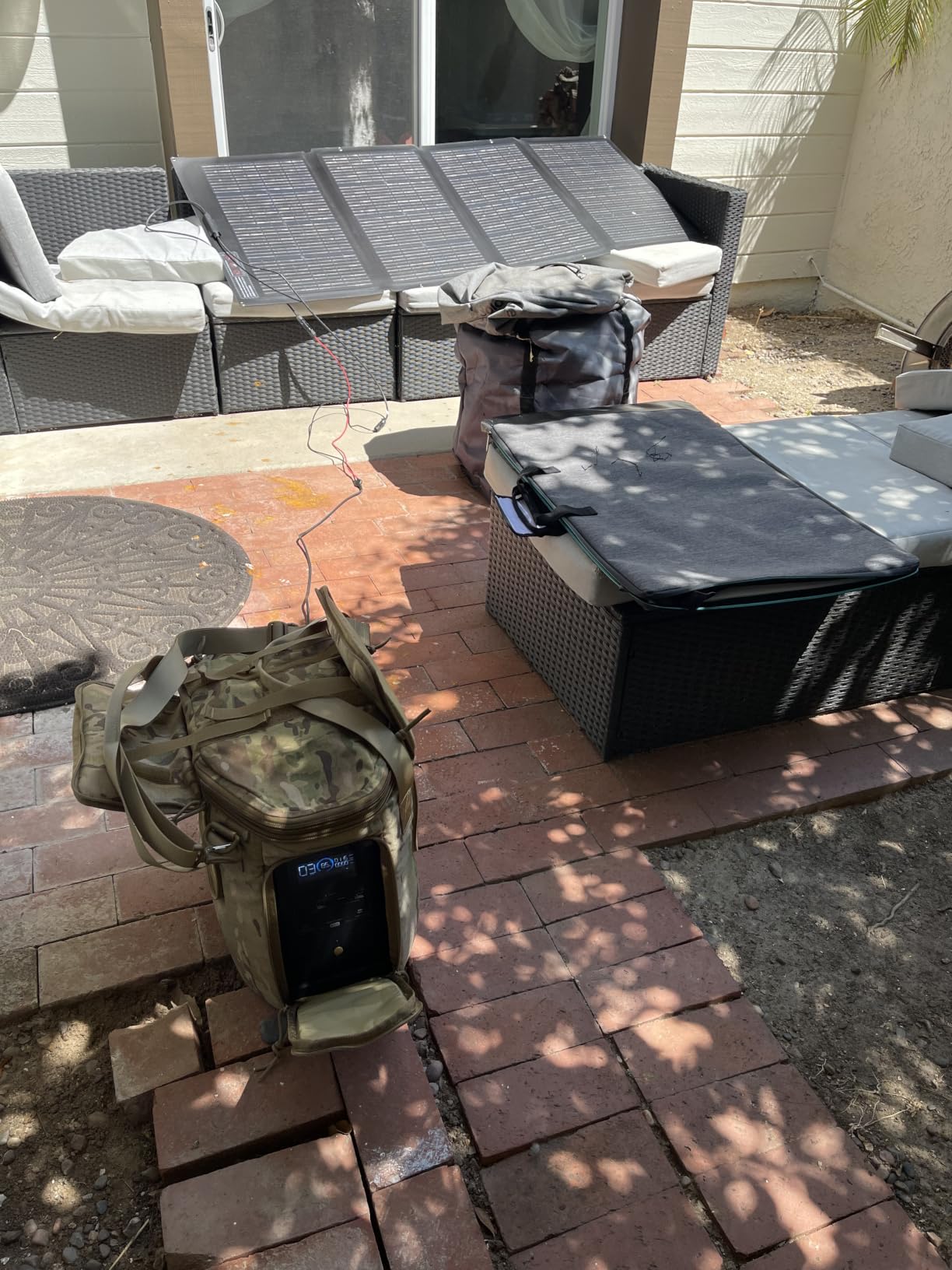
Where this station genuinely stands out is outlet count. Fifteen outlets is far more than any competitor at this capacity, and for a refrigerator backup that is usually shared with a router, a medical device, a lamp and a phone charger, the number of available sockets genuinely matters during an outage.
Charging speed is the other strength: 0 to 80 percent in 43 minutes when combining up to 1,000W of solar with AC, or roughly 1.1 hours on AC alone. That is the fastest recharge figure in this roundup and it shortens the gap between outage windows.
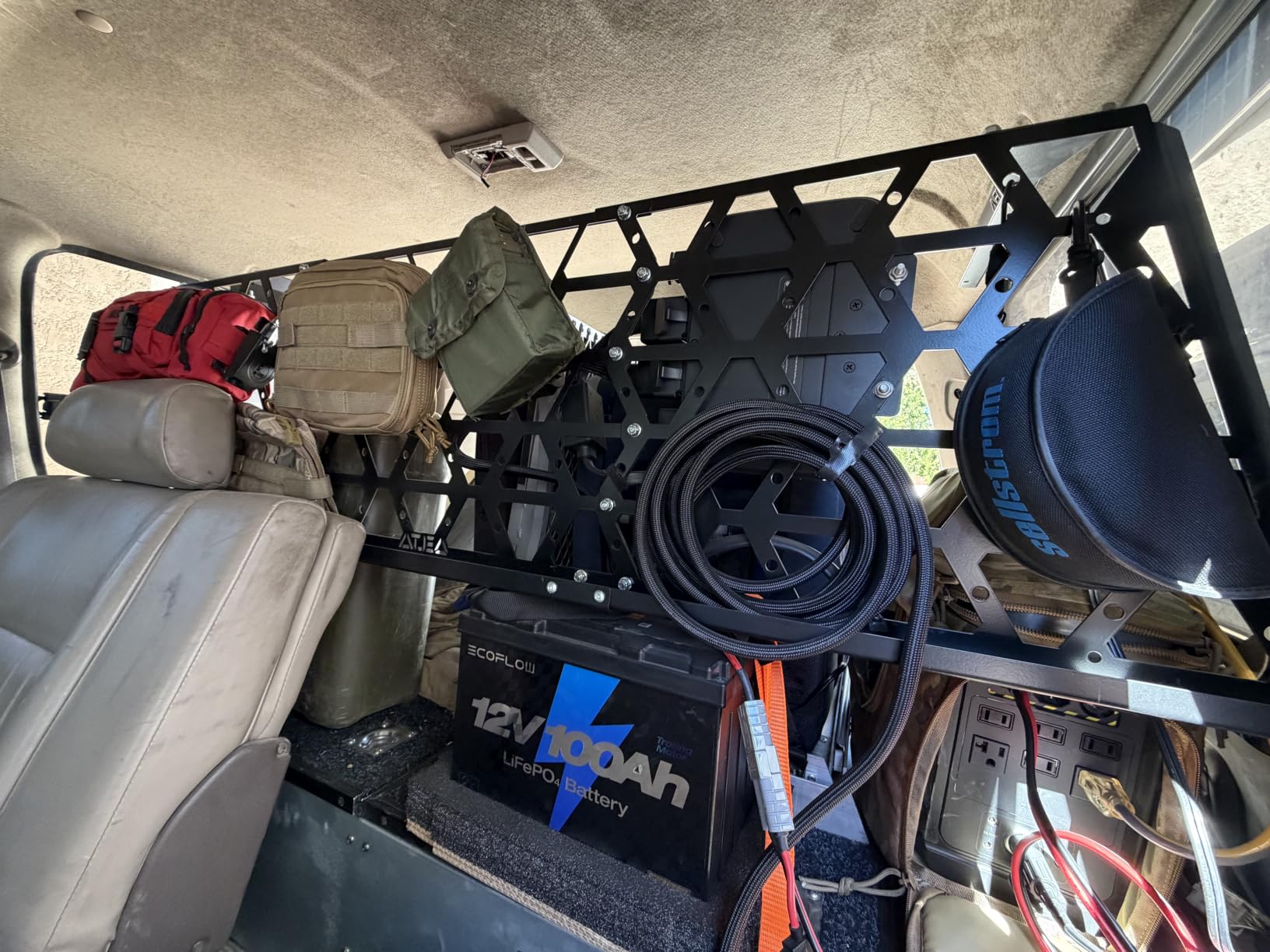
For overnight indoor use the 30 dB quiet start is valuable, and the real-time BMS monitors voltage, current and temperature continuously, which is reassuring for a battery you plan to trust unattended for a decade. LFP chemistry is rated 3,000 cycles to 80 percent capacity with a five-year service plan behind it.
Reviewers consistently cite the 43-minute charge and the outlet flexibility as the reasons this holds up for extended outages, with 1,338 reviews at 4.6 stars and 87 percent five-star.
The drawbacks are weight and generation. At 23 kg, or 50 lb, it is heavy for something sold as portable, and the tall 20-inch form factor is awkward to stow in a vehicle cargo area. Several reviewers also note that newer DELTA 3 Max variants exist with similar specifications, which raises a fair question about value.
What 2,048Wh covers with a second or third load attached
Calculated runtime for the refrigerator alone is about 35 hours at a 50W average, about 22 hours at 80W, and about 14 hours at 120W. With plenty of outlets, adding a router and a couple of lamps costs a few watts in practice, so the fridge figure barely moves.
The 15 outlets are what make this the natural pick for a household running a fridge alongside a medical device, several phones and a lamp bank, because you will not be trading sockets during the outage.
When it is the wrong pick
Cost per watt-hour is the weakest of the 2kWh options here, and the absence of a stated UPS switchover figure is a genuine gap for anyone who wants automatic hands-off switching without verifying it themselves.
If weight and future-proofing are your priorities rather than outlet count, the Jackery Explorer 2000 v2 is 10 lb lighter with UL1778 certification, and the BLUETTI AC200PL offers a much larger expansion ceiling. This is the pick for connection breadth specifically.
10. EcoFlow Delta Pro 3 for Whole-Home Backup That Includes the Fridge
EF ECOFLOW DELTA Pro 3 Portable Power Station, 4096Wh, 4000W AC Output
4,096Wh LFP
4,000W continuous AC
115 lb with wheels
Pros
- Largest single-station capacity in this roundup at 4096Wh
- 120V and 240V split-phase output from one station
- Expands to 12288Wh with two extra batteries
- 2600W of solar input across two ports
- Built-in wheels and a telescoping handle
- 2600W of X-Boost output and three-station paralleling
Cons
- 115 lb makes it a permanent fixture rather than a portable station
- Lowest rating in the group at 4.2 stars
- One documented catastrophic BMS failure locking out output
- No built-in 12V car port
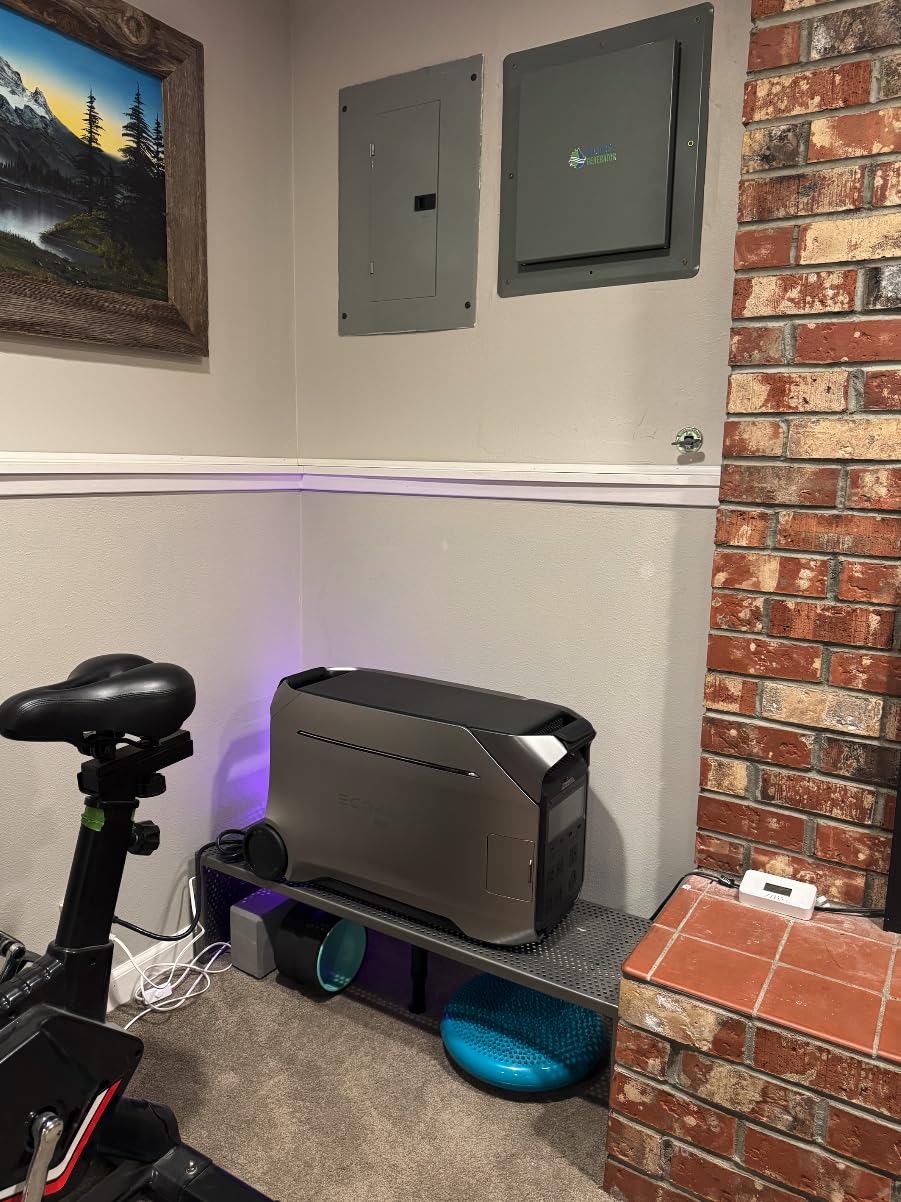
At 4,096Wh and 4,000W, this is no longer a fridge backup device. It is a small home power system, and the refrigerator is just the first load you plug in. Owners report fridge-only runs beyond 28 hours and describe powering an entire house including a furnace, which puts it in a category where a refrigerator-only comparison is almost beside the point.
The capability no other pick here matches is 120V and 240V split-phase output from a single station, which is what makes it usable for well and pump equipment rather than only for household receptacles. It also expands to 12,288Wh with two extra batteries and reaches 48kWh when combined with multiple stations and a Smart Home Panel 2.
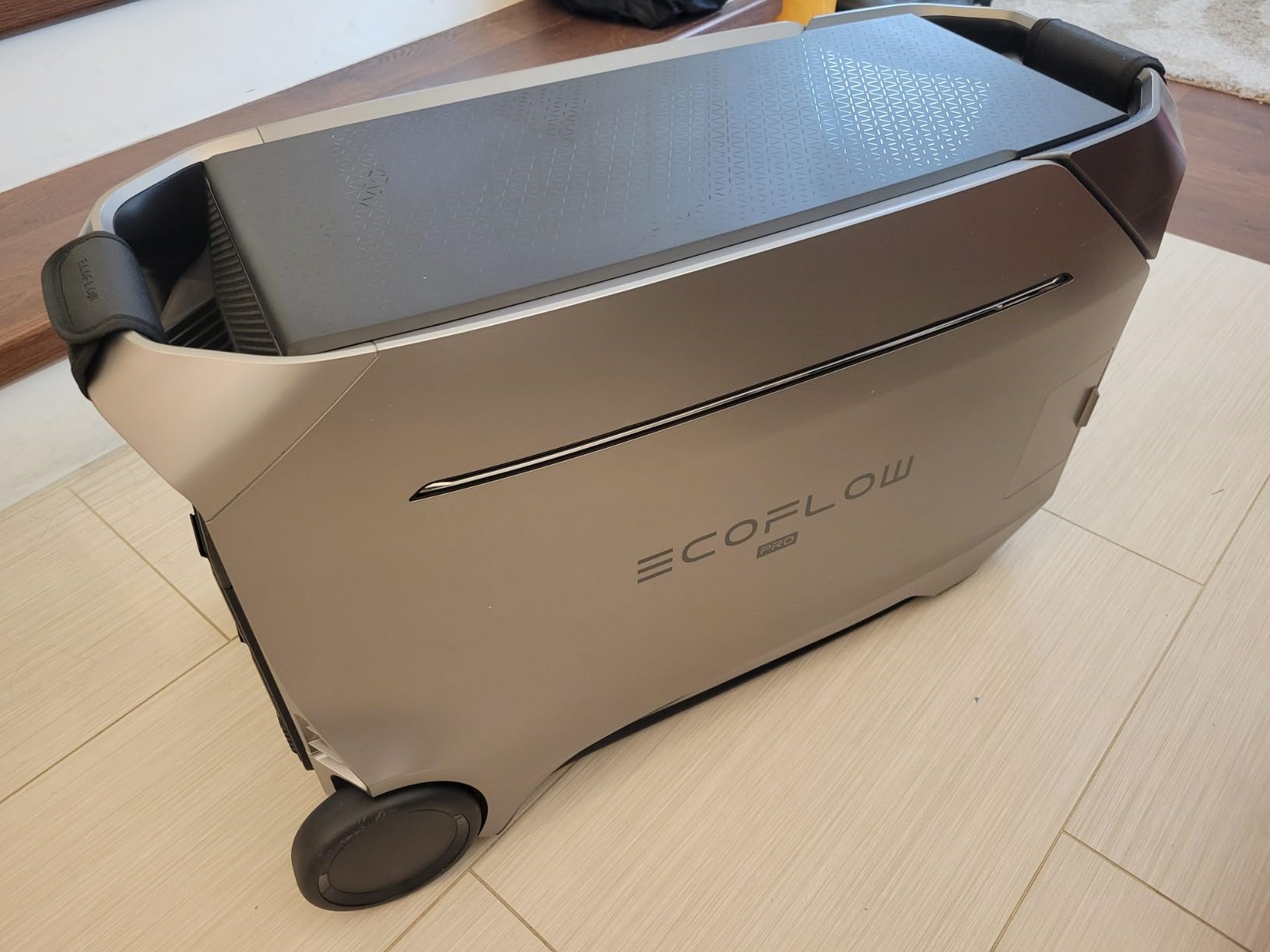
Charging flexibility is the strongest in the roundup: seven unique and 18 combined charging methods including AC, solar, a gas generator, an EV charging pile and the Smart Home Panel 2, with 2,600W of solar input split across two ports at 1,000W and 1,600W.
Build quality details are aimed at this use. The IP65-rated CTC battery pack uses automotive-grade LFP cells, the cooling system supports X-Quiet operation as low as 30 dB, and built-in neutral-ground bonding toggled in the app makes EV charger and RV compatibility possible.
There are real risks worth stating plainly. At 115 lb it is effectively a permanent garage fixture, and it cannot be carried up a flight of stairs by one person, which rules it out for apartment dwellers. Its 4.2-star rating is the lowest here, with 14 percent one-star feedback, and one detailed account describes an Error 71 fault that locked the battery management system, leaving a unit reading full but refusing to output.
That failure mode has a secondary consequence: 115 lb of lithium battery is regulated hazardous material that ordinary couriers will not ship, so a warranty replacement becomes a scheduling problem rather than a simple return. If you cannot commit to servicing a large stationary system yourself, this capacity is more than you need.
What 4,096Wh covers for a refrigerator alone
Calculated runtime is about 70 hours at a 50W average load, about 43 hours at 80W, and about 29 hours at 120W. That is the only station here that reaches three days for a typical refrigerator without a recharge, which is the threshold most people mean when they say they want real outage coverage.
Add a chest freezer and the figure roughly halves to about 21 hours at an 80W combined average, which is still a full day. Add solar and the 2,600W of input turns a three-day fridge-and-freezer scenario into a sustainable one during daylight hours.
When it is the wrong pick
Skip it entirely if you live above the ground floor. There is no way to move 115 lb up stairs alone, and refrigerator backup fails the moment the battery is stranded in a ground-floor garage. The same applies to anyone without a suitable storage and charging position.
It is also the wrong tool for the problem most readers have. A fridge alone is a 1,000Wh job, and buying four times the capacity you need means accepting the lowest rating, the heaviest weight and the hardest warranty servicing in the group. Buy this when the fridge is one item on a list that includes a furnace, not when it is the whole list.
Frequently Asked Questions
Can a portable power station run a refrigerator?
Yes. A 1,000Wh to 2,000Wh portable power station with pure sine wave output and at least 1,800W of continuous AC power runs a standard refrigerator for roughly 10 to 20 hours per charge. The fridge is a cycling load, so it needs far less capacity than most people expect, and any station with enough starting watts will start the compressor without trouble.
What size power station do I need to run a refrigerator?
Measure your fridge’s average load with a plug-in energy meter over at least 12 hours, then divide that average into your battery’s usable watt-hours. Nameplate watt-hours multiplied by 0.85 gives the usable figure. For a typical mid-size fridge averaging 80W, a 1,000Wh station delivers about 11 hours and a 2,000Wh station about 22 hours. Hold back a 20 percent reserve.
How many watts does a refrigerator use?
A refrigerator’s running draw while the compressor is active is far higher than its average draw over a full day, because the compressor cycles on and off for many hours. Multiply the running watts by the fraction of the day the compressor is active to get the average. Measuring with a plug-in energy meter across at least 12 hours gives you the real number instead of an estimate.
How long will a 1,000W power station run a refrigerator?
A 1,024Wh station delivers about 17 calculated hours against a 50W average fridge, about 11 hours at 80W and about 7 hours at 120W. Popular Mechanics independently measured the Jackery Explorer 1000 v2 at 18 hours 22 minutes on a 25 cubic foot refrigerator, which matches the 50W calculation closely. Plan on 80 percent of the calculated figure as a working reserve.
Do I need pure sine wave output for a refrigerator?
Yes. Pure sine wave output matches the smooth waveform a refrigerator expects from a wall outlet, and modified sine wave can cause a fan to run rough or keep a compressor from starting at all on refrigerators with electronic controls. The Jackery Explorer 1000 v2 in this roundup states its AC outlets as pure sine wave, but several competitors do not publish the waveform in their specifications, so confirm the spec sheet before you order.
How long can I keep my fridge on during a power outage?
It depends on capacity and your fridge’s average draw. A 1,000Wh station covers an overnight outage for a typical mid-size fridge, a 2,000Wh station covers roughly a full day, and a 4,000Wh station reaches into a third day. If your outage history shows power returning within about four hours, an unopened refrigerator stays safely cold for that window and a thermometer alarm may be all you need.
The Bottom Line for Fridge Backup in 2026
The best portable power stations for refrigerators come down to one number and one habit. Measure your fridge’s average load, then buy the smallest station that covers the hours you actually need. For most households, that is the Jackery Explorer 1000 v2, our Editor’s Choice: 1,070Wh, 1,500W of continuous output, 23.8 lb, and the only pick here with an independent measured runtime of 18 hours 22 minutes on a 25 cubic foot refrigerator. Buy the BLUETTI AC180 instead if you want more outlets and a five-year warranty, and buy the BLUETTI Elite 100 V2 if your fridge runs on 12V and you want the documented 24-hour DC run.
For multi-day coverage, the Jackery Explorer 2000 v2 and the Anker SOLIX C2000 Gen 2 both deliver roughly a day of calculated runtime at an 80W average load, and the Anker’s 9W standby draw makes it the better partner for a large dual-door fridge. Above that, the BLUETTI AC200PL serves RV and boat installs through its 30A TT30 and 48V ports, and the EcoFlow Delta Pro 3 is only worth its weight when the fridge is one item among a whole-home load list. Measure first, buy once, and test the compressor start before you need it.
Related reading: our picks for running imaging gear overnight and charging drone batteries in the field cover the other common jobs people point these same stations at.