Why Shortwave Signals Travel Farther at Solar Maximum (September 2026)
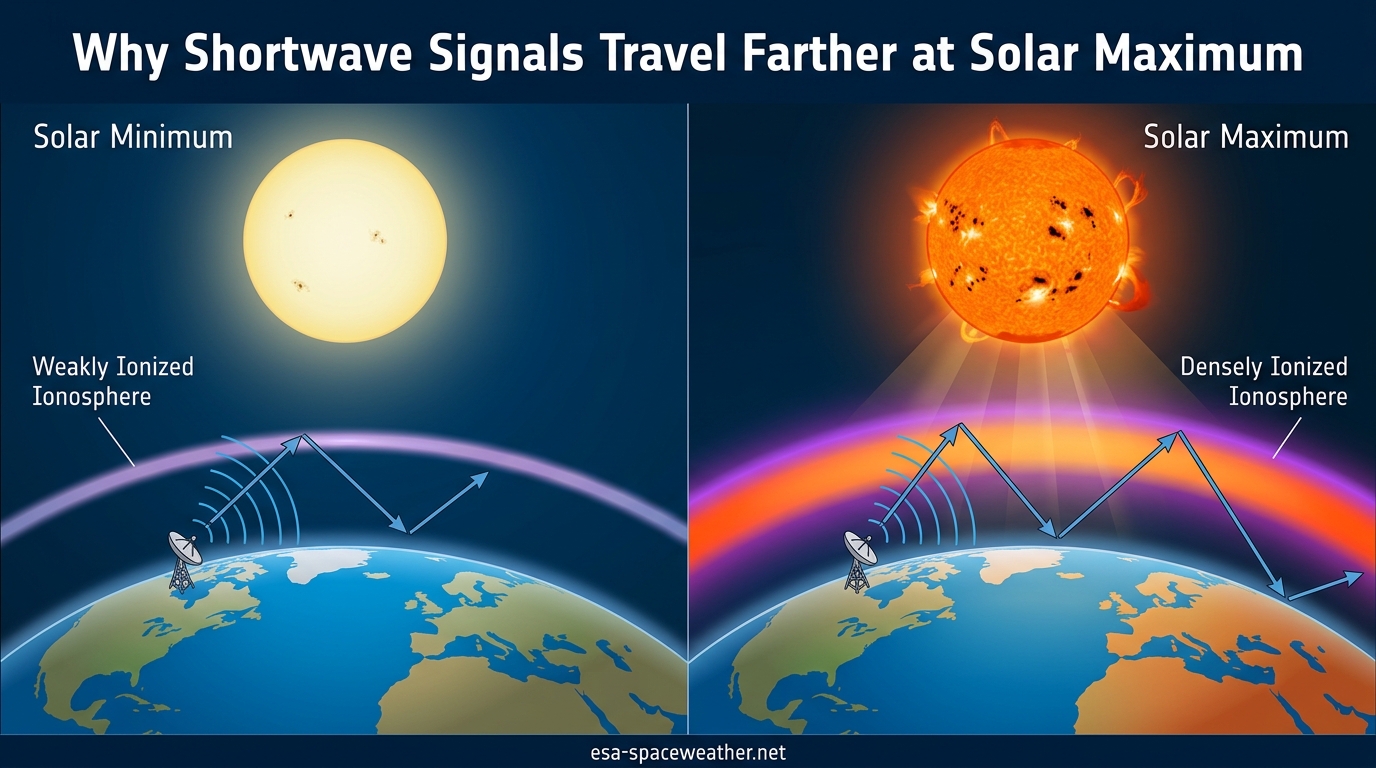
Why Shortwave Signals Travel Farther at Solar Maximum

Shortwave radio signals can travel thousands of miles, bouncing between the ionosphere and the Earth’s surface to cross entire oceans. During solar maximum, that distance increases dramatically. Understanding why shortwave signals travel farther at solar maximum comes down to one chain of events: more sunspots produce more radiation, which ionizes the upper atmosphere more intensely, … Read more

How to Read Solar Data to Predict HF Radio Propagation (September 2026)

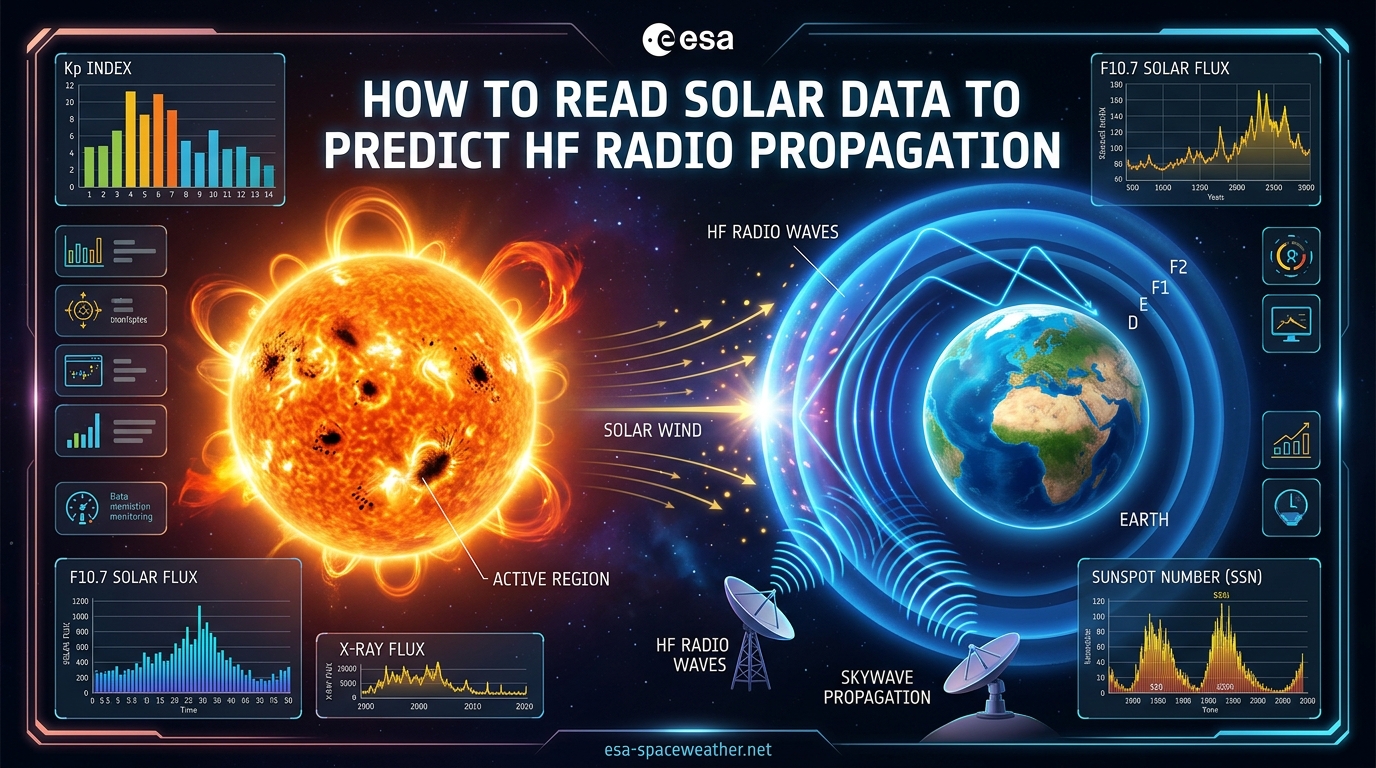
How to Read Solar Data to Predict HF Radio Propagation

Every time you turn on your HF transceiver, an invisible battle is happening 200 miles above your head. Solar radiation is slamming into Earth’s atmosphere, ionizing gas molecules, and creating the reflective layers that bounce your radio signals across continents. Learning how to read solar data to predict HF radio propagation transforms those numbers on … Read more

Why Geomagnetic Storms Make Satellites Fall Faster (September 2026)

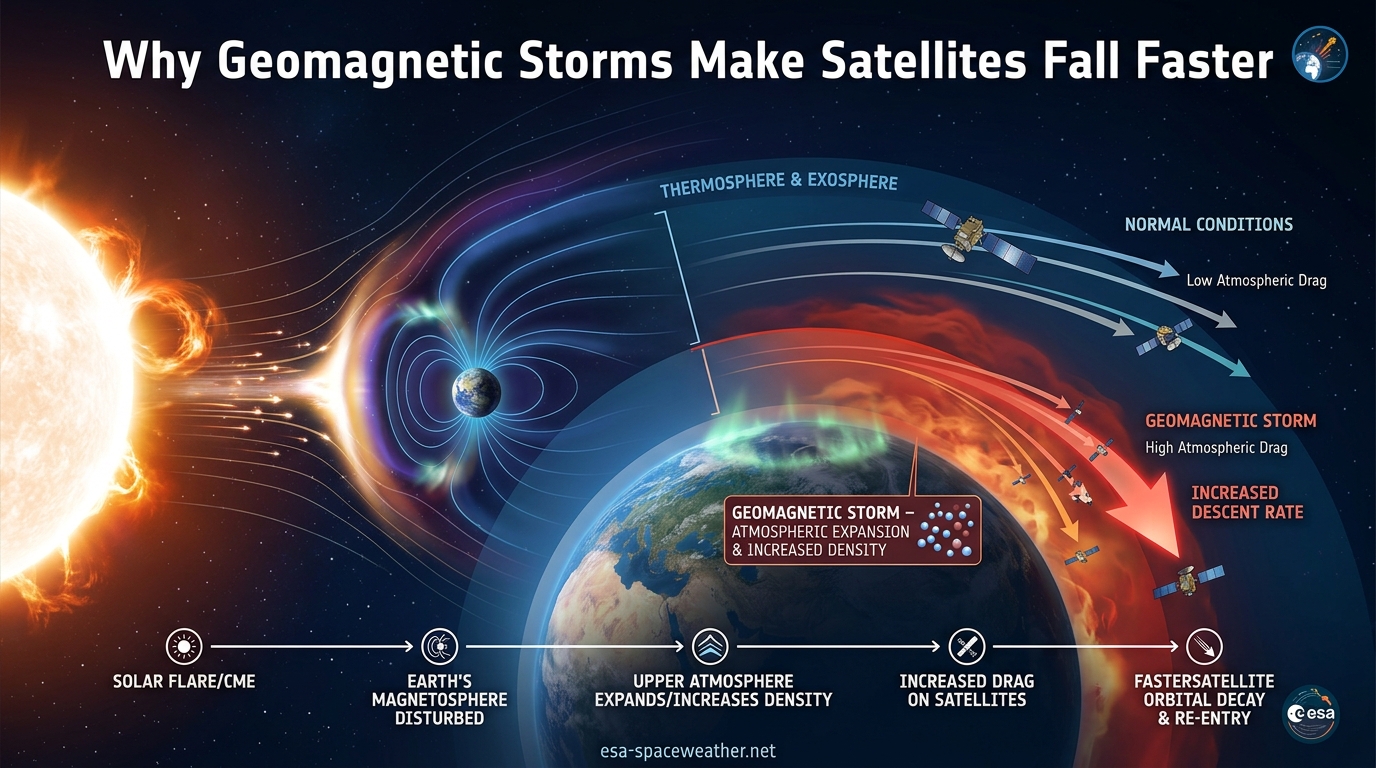
Why Geomagnetic Storms Make Satellites Fall Faster

Every time the Sun erupts in our direction, something invisible happens 200 miles above your head. Earth’s upper atmosphere puffs up like a balloon, and the satellites circling our planet suddenly find themselves flying through thicker air. This is why geomagnetic storms make low-orbit satellites fall faster, and the consequences are real. In February 2022, … Read more

6 Ways Atmospheric Drag From Solar Activity Shortens Satellite Lifespans (September 2026)

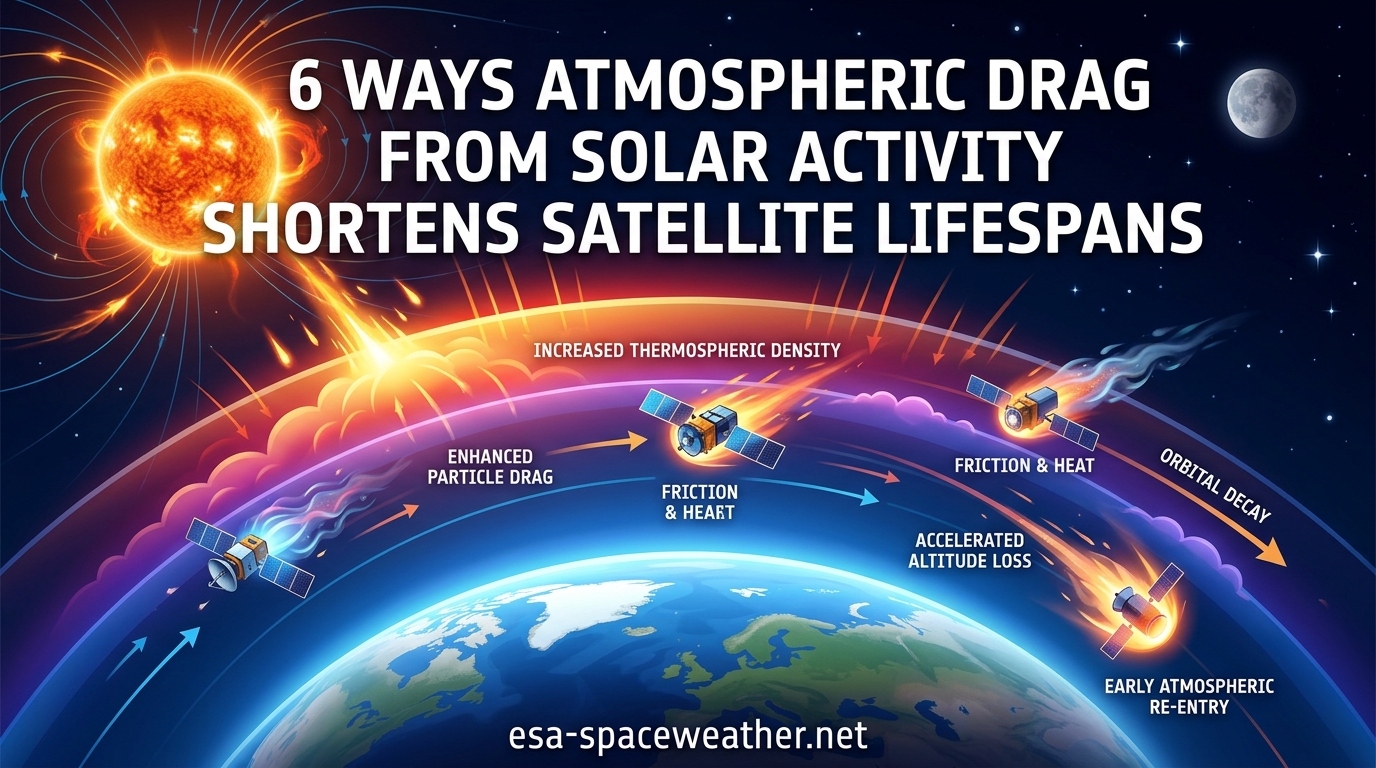
Ways Atmospheric Drag From Solar Activity Shortens Satellite Lifespans

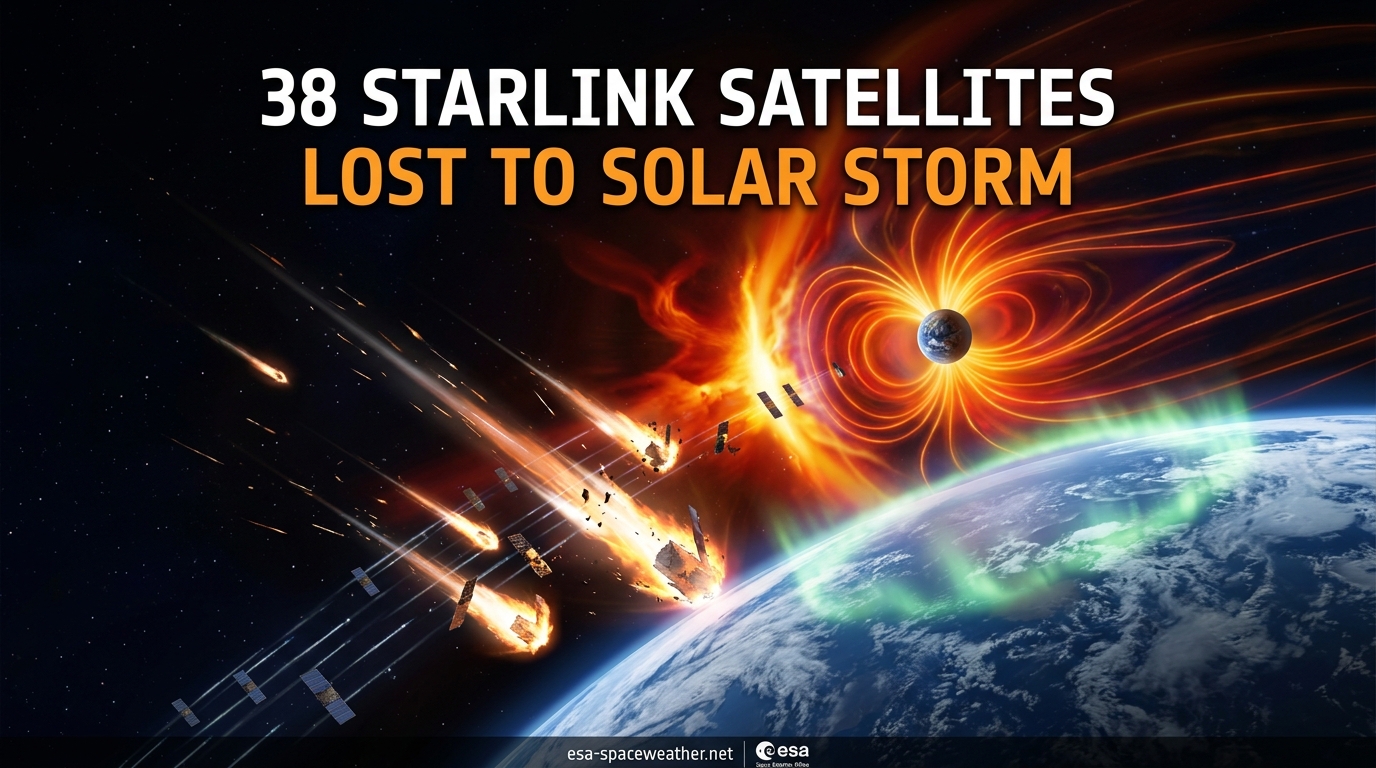
In February 2022, SpaceX watched helplessly as up to 40 brand-new Starlink satellites failed to reach their target orbits after a geomagnetic storm. The cause was not a rocket malfunction or a software bug. It was something far more fundamental: the Sun had heated and expanded Earth’s upper atmosphere, increasing atmospheric drag on the satellites … Read more