
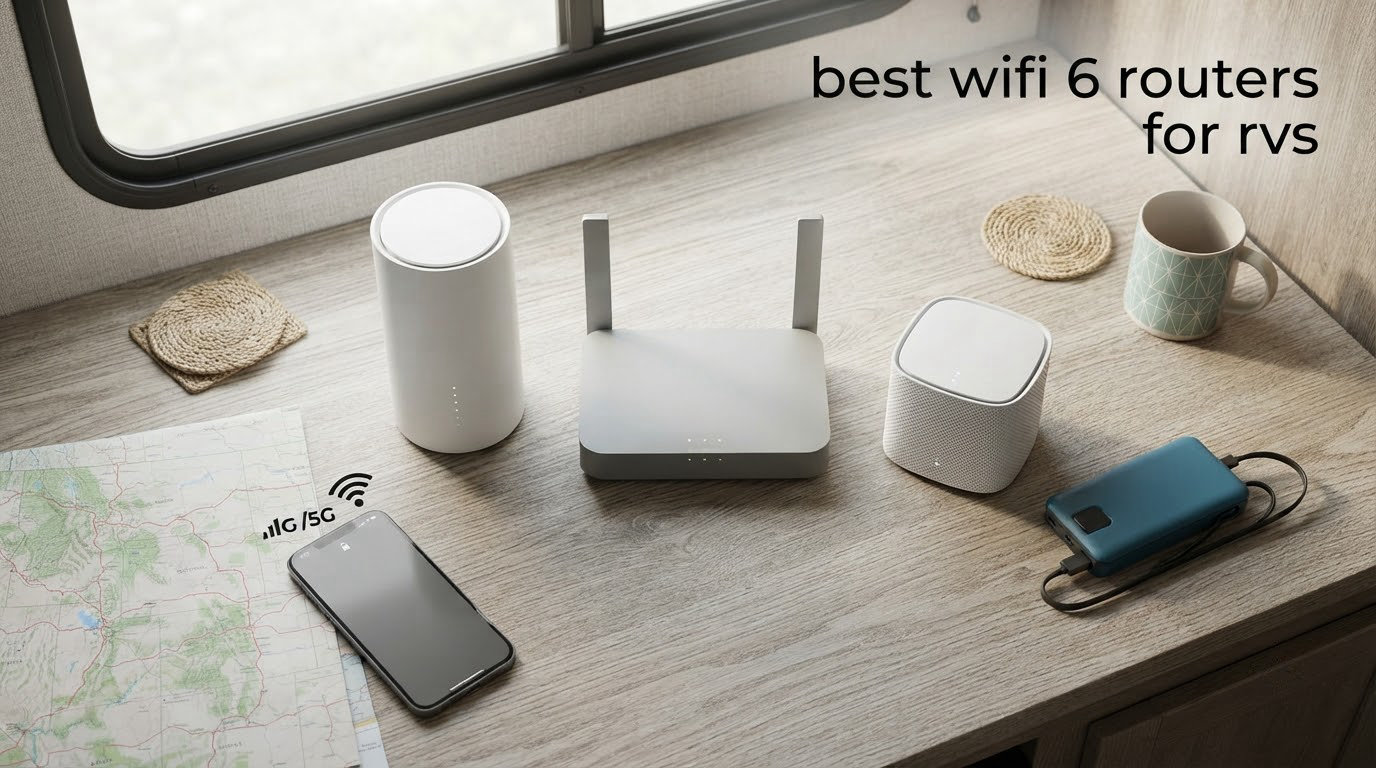
If you have been chasing signal across a state park with a phone hotspot in your hand, you already know the problem. RV walls are aluminium and composite sandwich panels, campground Wi-Fi is a shared pipe with a captive portal and a session limit, and a hotspot on your phone will throttle long before the end of a work week. A WiFi 6 router built for travel fixes all three at once, because it takes one internet source and hands every device on board a private WPA2/WPA3 network with real antenna options.
That is what this roundup covers. We compared 11 WiFi 6 routers against criteria that only matter inside a rig: 12V power draw, whether the case survives a hard summer on the dash, how many external antenna ports you get, and whether the thing can carry cellular or campground Wi-Fi as its source. We are not ranking raw throughput, because in an RV your bottleneck is almost never the router.
One thing to settle before the list. A WiFi 6 router is not outdated. WiFi 7 adds faster links and wider channels, but it does not push through a metal RV wall any better than WiFi 6 does, and the travel and cellular models on the market are still overwhelmingly 802.11ax. WiFi 6 remains the right buy for most rigs in 2026.
If you want the wider picture first, our picks for the best WiFi 6 routers for homes and WiFi 6E routers for gaming are separate guides, and neither is a substitute for a travel unit.
Table of Contents
Top 3 Picks for RVs in October 2026
All 11 Routers at a Glance in October 2026
The table below is the fast version. Every row tells you the speed class, where the internet comes from, and what the unit is genuinely good at on the road.
| Product | Specifications | Action |
|---|---|---|
 GL.iNet Beryl AX GL-MT3000 GL.iNet Beryl AX GL-MT3000 |
|
Check Latest Price |
 GL.iNet Slate AX GL-AXT1800 GL.iNet Slate AX GL-AXT1800 |
|
Check Latest Price |
 TP-Link Archer AX55 TP-Link Archer AX55 |
|
Check Latest Price |
 eero 6 1-pack eero 6 1-pack |
|
Check Latest Price |
 ASUS RT-AX1800S ASUS RT-AX1800S |
|
Check Latest Price |
 Tenda AX3000 RX12 Pro V3.0 Tenda AX3000 RX12 Pro V3.0 |
|
Check Latest Price |
 Cudy WR3000 Cudy WR3000 |
|
Check Latest Price |
 MOFINETWORK MOFI6500 MOFINETWORK MOFI6500 |
|
Check Latest Price |
 GL.iNet Spitz Plus GL-X2000 GL.iNet Spitz Plus GL-X2000 |
|
Check Latest Price |
 Cudy WR1500 Cudy WR1500 |
|
Check Latest Price |
 TP-Link Roam 6 TP-Link Roam 6 |
|
Check Latest Price |
1. GL.iNet GL-MT3000 Beryl AX – the compact all-rounder
GL.iNet GL-MT3000 Beryl AX Wi-Fi 6 Travel Router, 2.5G WAN, VPN, OpenWrt
AX3000 dual-band
2.5G WAN + 1G LAN
USB 3.0
196 g
OpenWrt
VPN client and server
Pros
- Compact 196 g body that fits a drawer
- 2.5G multi-gig WAN for Starlink and fast cell modems
- OpenVPN and WireGuard pre-installed with 30+ providers
- OpenWrt with 5000+ plug-ins
- physical VPN and AdGuard Home toggle
Cons
- Only 64 MB RAM limits heavy customisation
- Two ports leaves little wired room
- VPN throughput below larger OpenWrt builds
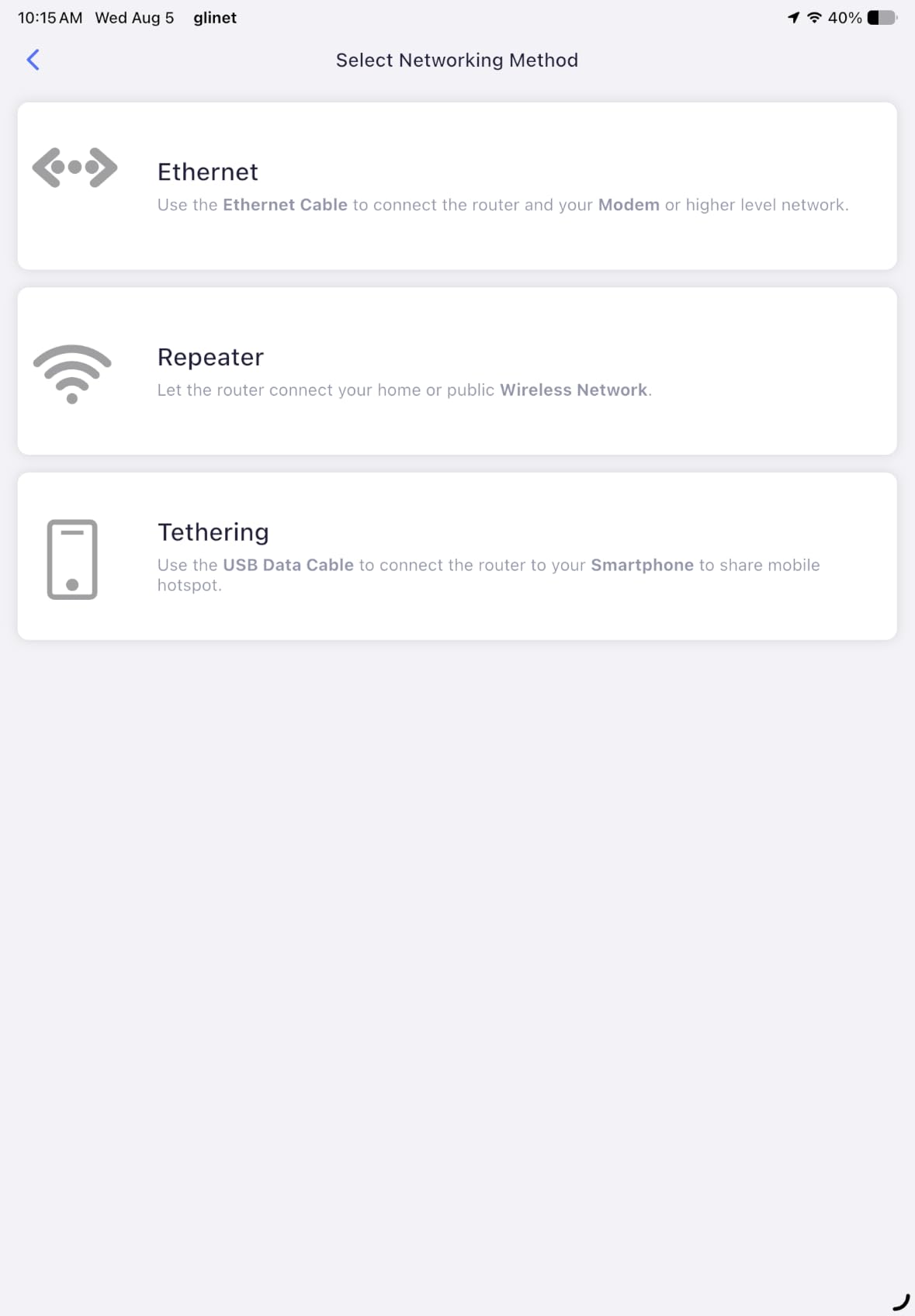
This is the router I keep reaching for first in an RV, and the reason is simple: it does the three jobs a rig actually needs. It accepts almost any internet source, it hands out a private WPA2/WPA3 network, and it fits in a drawer beside the power cables. At 196 g and 4.17 by 3.27 inches, it is small enough that you will actually pack it.
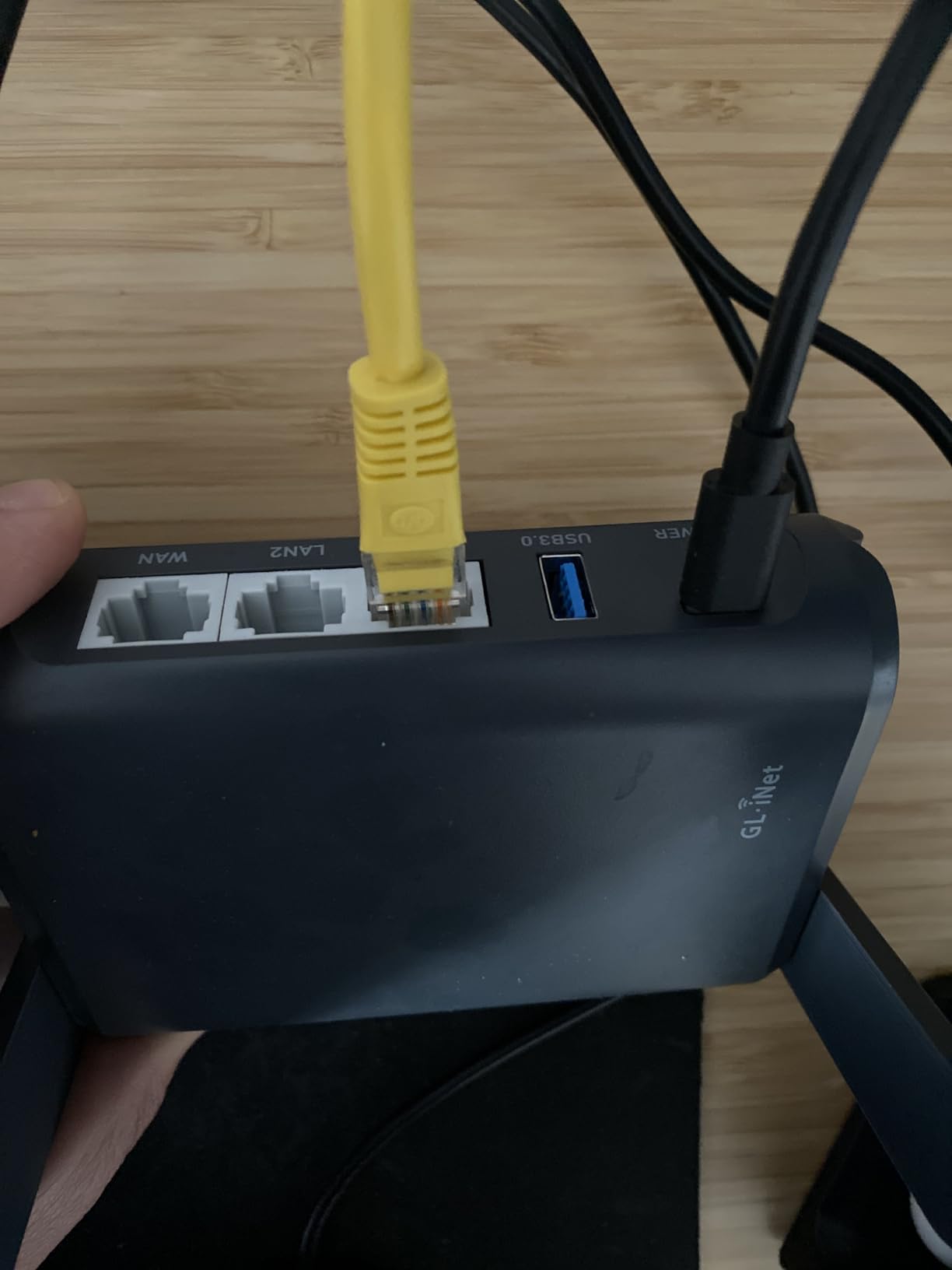
The 2.5G WAN port is the feature that changes RV setups most. A Starlink terminal, a 5G modem or a fibre connection at a park all feed into it without a downgrade, and the second gigabit LAN port is enough to hard-wire a streaming box or a desk setup. I have run this unit for weeks as the hub of a motorhome network, and the 2.4GHz band quietly carried the smart devices while 5GHz handled the video calls.
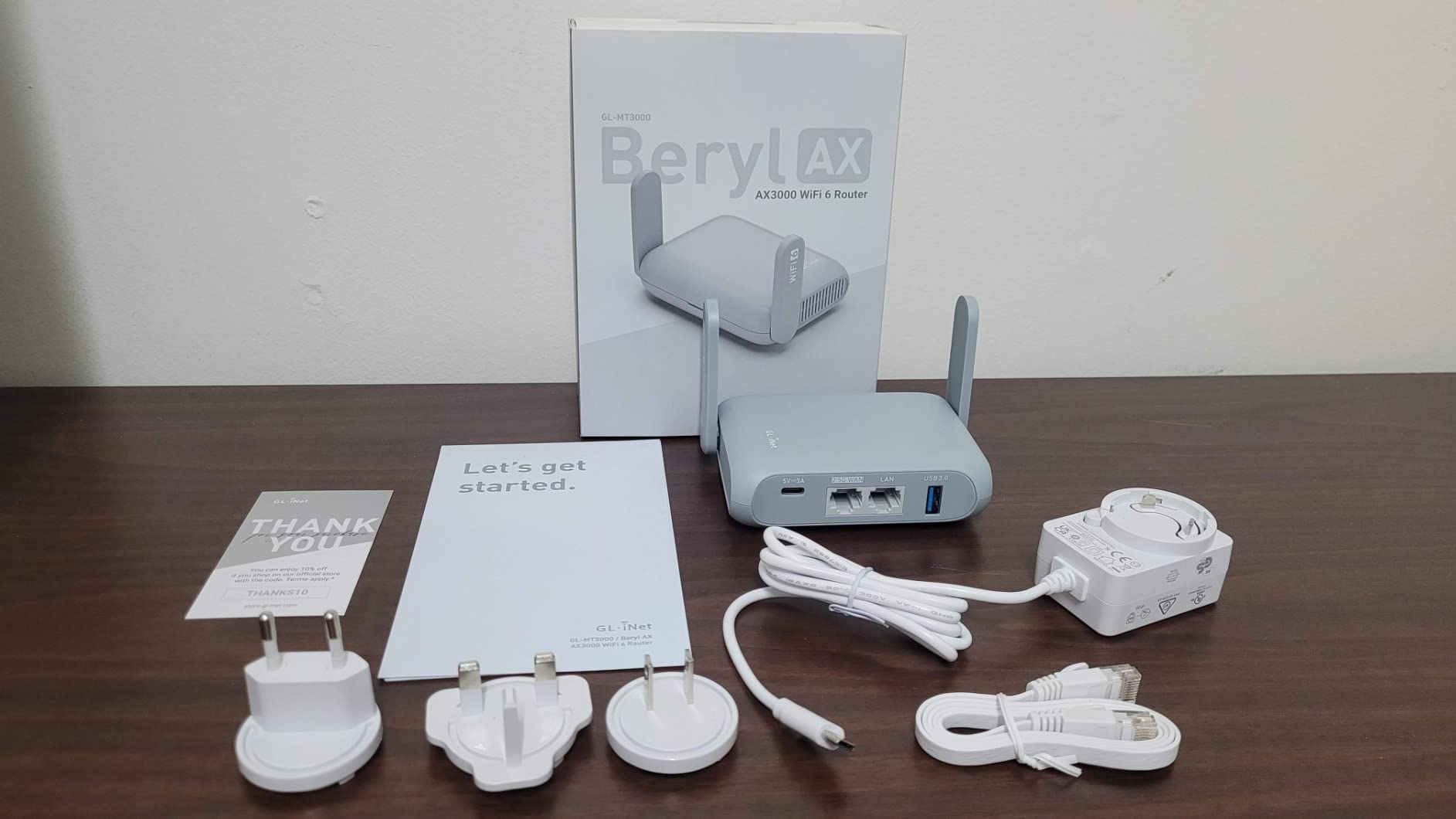
On the software side it runs OpenWrt 21.02 with OpenVPN and WireGuard already configured, which is what makes it the best travel router for RV use in our view. A VPN client means every device on board is protected when you attach to campground Wi-Fi, and the VPN server mode lets you reach back into your own network. Owners on r/RVLiving repeatedly describe the pattern of pairing a cellular source with a separate network router, and this unit does both jobs in one box.
USB 3.0 is easier to overrate than most people realise. It does not turn this into a NAS for video files, but it is a convenient place to hang a travel storage drive or a second network device. Reviewers also like the physical toggle for VPN and AdGuard Home, because toggling a setting in a browser at a campground is a bad idea.
Why it suits most rigs
It is the rare travel router that is not a compromise. The 2.5G WAN means you can grow into a faster source later, and OpenWrt means you are not locked to a vendor app. For a couple of seasonals or a full-time pair working from the road, it is the most complete single box in this list.
The AX3000 class splits into 574 Mbps on 2.4GHz and 2402 Mbps on 5GHz, with coverage rated at 100 meters. Inside a coach that number matters far less than the fact that a single unit can serve a phone, a laptop and a smart TV simultaneously.
Where it falls short
64 MB of RAM is the honest limit. If your plan is to install heavy packages, run a VPN server alongside a media server and add plugins on top, you will feel the ceiling. For a straightforward private network with a VPN client, it is a non-issue.
Two ports is two ports. If your plan involves a switch, a wired access point and a device that still needs a cable, budget for a small switch. Owners who upgraded from a desktop router often notice the absence of the usual four or five gigabit jacks.
2. GL.iNet GL-AXT1800 Slate AX – the repeater-mode workhorse
GL.iNet GL-AXT1800 Slate AX Pocket-Sized Wi-Fi 6 Travel Router with VPN
AXT1800 dual-band
3 ports
245 g
WPA3
OpenWrt 21.02
Repeater mode
Pros
- Handles up to 120 simultaneous devices via MU-MIMO and OFDMA
- OpenVPN up to 500 Mbps and WireGuard up to 550 Mbps
- Repeater mode turns campground Wi-Fi into a private network with captive portal support
- USB NAS with SAMBA and WebDav
- 2 year warranty
Cons
- OpenWrt interface has a learning curve
- Captive portal sessions need reconnecting at the time limit
- Fixed antennas rather than adjustable external ones
The Slate AX is the unit we recommend to anyone whose RV time splits between hookups and boondocking. It is slightly larger and slightly heavier than the Beryl at 245 g, and it is the model we hand to people who spend real time on campground Wi-Fi. The reason is repeater mode, which pulls down a weak public signal and rebroadcasts it as your own private network.
That single feature changes the economics of a trip. When a park offers free Wi-Fi but every device has to log into a portal separately, this router logs in once. The rest of your devices join a WPA3 network you control, which also keeps laptops off a shared broadcast.
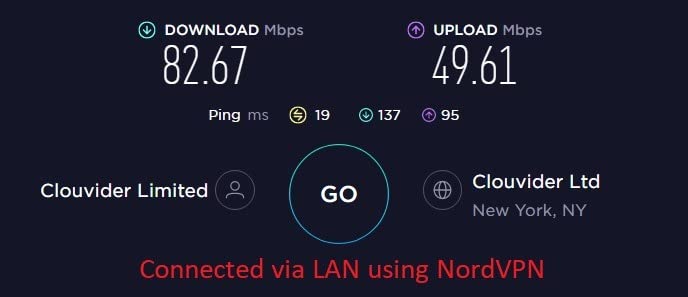
Capacity is the headline spec and it is a real one. With MU-MIMO and OFDMA, the Slate AX handles up to 120 simultaneous connections, splitting 600 Mbps on 2.4GHz and 1200 Mbps on 5GHz. A family with kids on tablets, two working laptops, a smart TV and a dozen home sensors fits comfortably, and the 2.4GHz band stays responsive under that load.
VPN throughput is unusually good for a unit this small: OpenVPN up to 500 Mbps and WireGuard up to 550 Mbps. That matters in an RV because a VPN is not optional when you are joining a public network at a truck stop. Reviewers also highlight the USB NAS feature with SAMBA and WebDav for sharing files from a travel drive.
Why it suits travel rigs
Campground Wi-Fi is the weak link that everyone complains about, and repeater mode is the only practical answer when the signal is usable but the login is miserable. Pair it with a cellular plan for boondocking and you have a source at nearly every stop.
For a portable WiFi router for motorhome use, three gigabit-class ports and 245 g is a good balance. The 2 year warranty matches the class, and the physical toggle for VPN or AdGuard Home is a nice touch at a stop in the dark.
Where it falls short
OpenWrt has a learning curve, and it is steeper here because the interface offers more than most owners need. If you are buying your first router, expect an evening of setup before it feels normal. Nothing in the data suggests the hardware is slow, only that the software asks more of you.
Captive portal sessions expire. When a park cuts you off after a set number of hours, the router needs to re-authenticate, and some owners report the session dropping more than once a day. Fixed antennas are also a limitation if you ever want to mount a unit outside or angle it.
3. TP-Link Archer AX55 – the fixed-install value pick
TP-Link Dual-Band AX3000 Wi-Fi 6 Wireless Gigabit Internet Router for Home
AX3000
5 Gigabit ports
4 external antennas
512 MB RAM
USB 3.0
Pros
- 2402 Mbps on 5GHz plus 574 Mbps on 2.4GHz
- Four high-gain external antennas with beamforming for longer range
- OFDMA cuts latency when several clients share a band
- Larger heat sink and reworked case reduce thermal throttling
- 512 MB RAM handles heavier customisation
Cons
- Full-size desktop footprint is bulky for travel
- Mains power only so it needs an inverter or a 12V converter
- HomeShield advanced features require a paid subscription
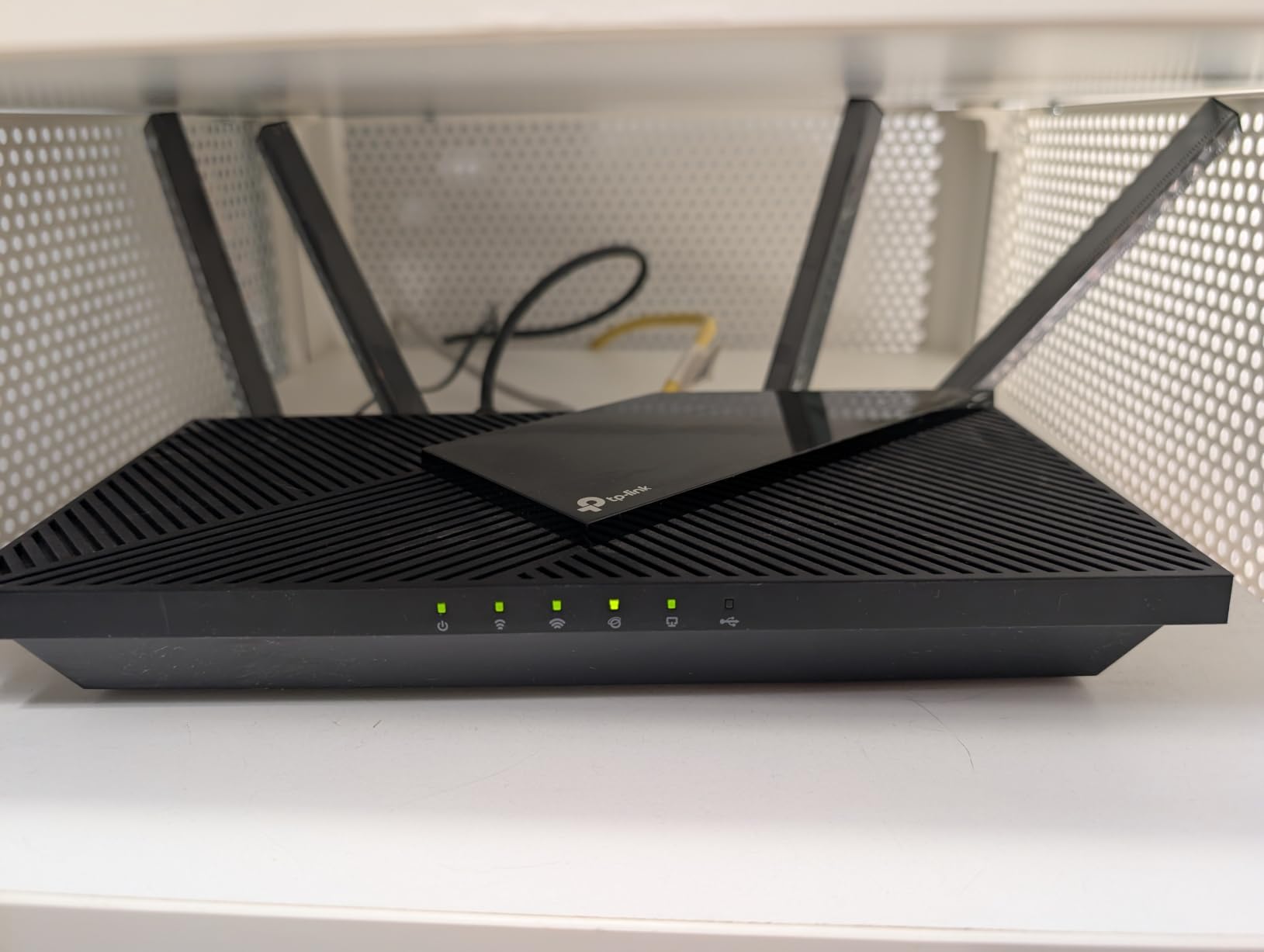
The Archer AX55 is the router to buy if your RV is a full-time home and the router is going to be mounted rather than packed. It is one of the most-reviewed units in this roundup with more than 10,000 owner ratings, and the consistency of that feedback is the reason. It is not exotic, it just works, and the four external antennas give you placement options that the travel units cannot.
Raw capability is AX3000 class: 2402 Mbps on 5GHz and 574 Mbps on 2.4GHz, with OFDMA, MU-MIMO and Target Wake Time. In a motorhome the 574 Mbps 2.4GHz band is the more valuable half, because it is the band that punches through a couple of interior walls and keeps the phones and tablets happy.
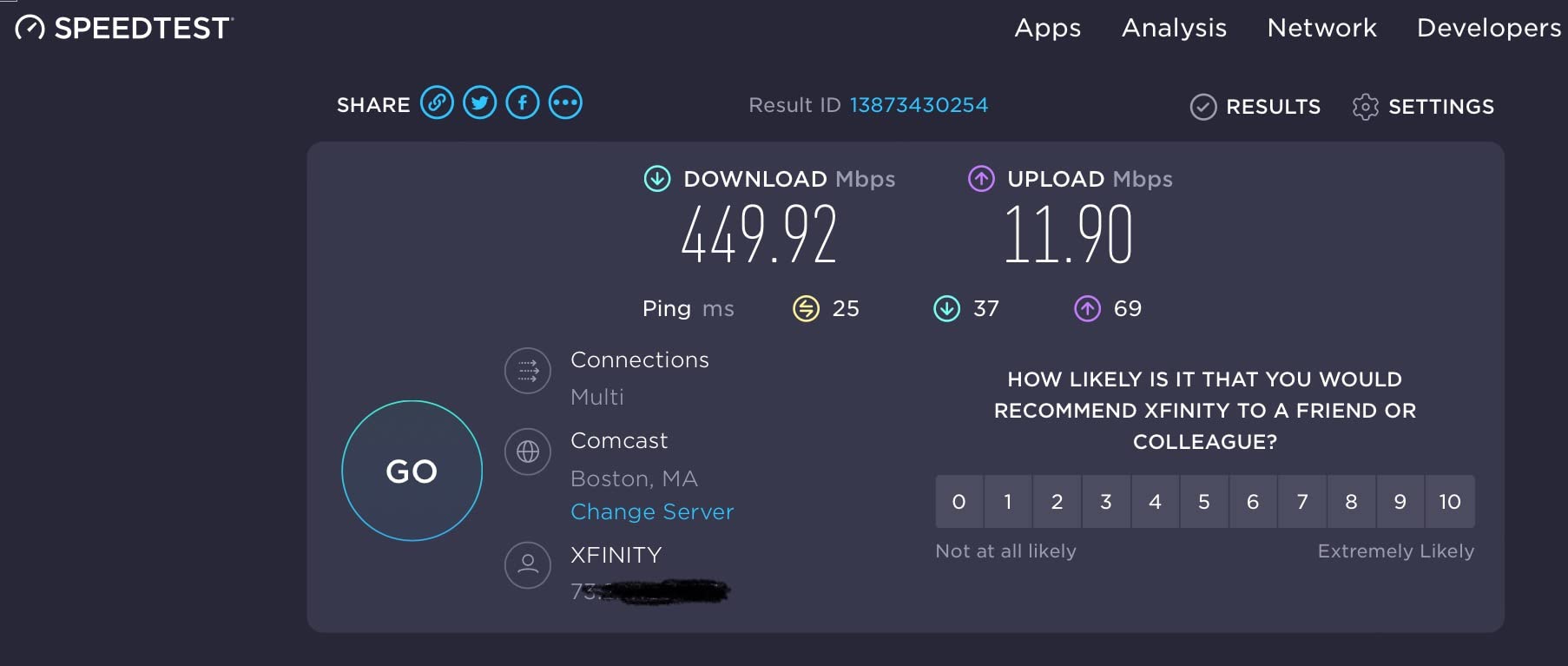
Two details separate this from other budget AX3000 boxes. The 512 MB of RAM is generous, which leaves room for a VPN client and a few services. The larger heat sink and redesigned case address the throttling complaint that used to plague this class, and in a parked rig in July that is a real consideration.
It also has five ports, four high-gain antennas with beamforming, and a USB 3.0 port. Owners consistently report stable performance, strong 5GHz throughput and painless app-based setup, which is exactly the combination you want when you are bolting hardware to a cabinet.
Why it suits permanent installs
An RV wifi router with external antenna ports is the difference between a network that works and a network you fight. Four adjustable antennas mean you can place one on each side of the coach and aim them along the length of the interior rather than through a wall. That single change fixes more dead zones than upgrading to a faster router.
For a Class A motorhome with a fixed Ethernet run and a hard-wired desk, the five ports mean you might not need a switch at all. Combined with VPN server and VPN client support, it covers the remote-work case well.
Where it falls short
It is 12.99 by 9.45 by 2.87 inches and weighs 1.7 pounds. That is a router for a shelf, not for a drawer, and it rules the unit out for weekend travel in a small van.
Power is the other issue. It runs on mains, so a permanently installed setup needs an inverter, a 12V to mains converter, or a properly fused DC run. HomeShield advanced features also sit behind a paid subscription, which owners who want parental controls at a fine detail level should know about.
4. eero 6 – the least hands-on mesh option
Amazon eero 6 mesh wifi router – Supports internet plans up to 900 Mbps, Coverage up to 1,500 sq. ft., Connect 75+ devices, 1-pack
WiFi 6 mesh
Up to 1500 sq ft
75+ devices
1 Ethernet port
Zigbee hub
Pros
- Setup is close to plug and play through the eero app
- TrueMesh routing reduces dead spots and buffering
- Handles 75+ connected devices
- Built-in Zigbee hub removes a separate smart home box
- Cross-compatible units make expansion simple
Cons
- Only one Ethernet port so wired devices need a switch
- Limited manual control of band assignment
- Advanced features need an eero Plus subscription
- Some owners report intermittent streaming dropouts
The eero 6 is here because a lot of RVers do not want a router, they want an appliance. Across nearly 30,000 owner ratings the dominant theme is setup simplicity and reliable whole-home coverage, and that is precisely what you want when you are dealing with an unfamiliar rig in an unfamiliar park. There is no interface to learn.
It is dual-band WiFi 6 with TrueMesh routing, rated to cover up to 1500 square feet or a 22 foot radius, and it connects 75+ devices at once. In practice a motorhome interior falls well inside that radius, which is why the coverage figure is not the limiting factor here. Adding a second or third cross-compatible unit is how you extend reach to a bedroom at the back of a coach.
Owner feedback repeatedly praises the app-driven setup and the reduction in drop-offs during 4K streaming and video calls. The built-in Zigbee hub is a quiet bonus for anyone running smart home devices, since it removes a box from the install list. Automatic software updates handle security without you thinking about it.
The tradeoff is control. There is very little manual configuration, including band assignment, and the advanced network features sit behind a subscription. A minority of owners also report intermittent audio and video streaming dropouts, and there are reports of support friction when something goes wrong.

Why it suits families and beginners
If everyone on board is a non-technical user, an appliance beats a hobby. A parent can connect a tablet without an account, without a shared password spreadsheet, and without someone walking over to re-authenticate a captive portal.
For a best wifi 6 router for camping scenario where the network is temporary, the eero is a good fit because it is easy to pack, easy to reset and easy to hand to a family member. It also works happily as the wireless half of a setup that takes internet from a cellular router upstream.
Where it falls short
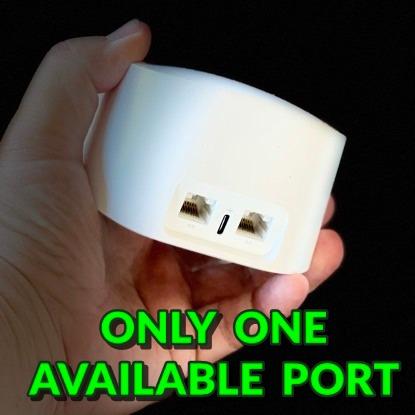
One Ethernet port is the big one. If your plan is a wired desk for remote work, a switch is mandatory, and that switch needs a place to live and a cable run. With one port you also cannot connect a wired access point for a back bedroom without giving up the upstream link.
The subscription and the thin manual controls are the second concern. Anyone who wants to pin a device to a band, set a schedule per device or manage a VPN at the router should look at the ASUS or GL.iNet units instead.
5. ASUS RT-AX1800S – most gigabit ports for a Class A coach
ASUS RT-AX1800S Dual Band WiFi 6 Extendable Router, Subscription-Free Network Security, Parental Control, Built-in VPN, AiMesh Compatible, Gaming & Streaming, Smart Home
AX1800
1 WAN + 4 LAN Gigabit
Subscription-free security
12V 1.5A DC
3 year warranty
Pros
- Five Gigabit ports for wired flexibility
- Subscription-free AiProtection security
- AiMesh compatible for expansion
- ASUS Instant Guard gives one-tap VPN away from home
- 3 year warranty
- DC output 12V 1.5A runs from a house bank
Cons
- Parental controls lack granular blacklists and per-site monitoring
- Some owners report a Smart Connect and WiFi 6 firmware bug that drops the 2.4GHz radio under load
- Retractable antennas are less flexible to position than fixed high-gain
The RT-AX1800S is the one to shortlist if your rig is full of wired things. It has five Gigabit ports, one WAN and four LAN, and almost nothing else in this roundup offers that much wired capacity without a switch. On rvforum.net, owners have named ASUS as a suitable WiFi 6 brand for RV use, and this model is the reason that comes up.
Wireless is AX1800 class: 1800 Mbps total with MU-MIMO, OFDMA and 1024-QAM modulation, reaching 1201 Mbps upstream on the fast band. That is comfortably above what a cellular or Starlink source delivers, so the extra radios are headroom rather than necessity in a mobile setting.

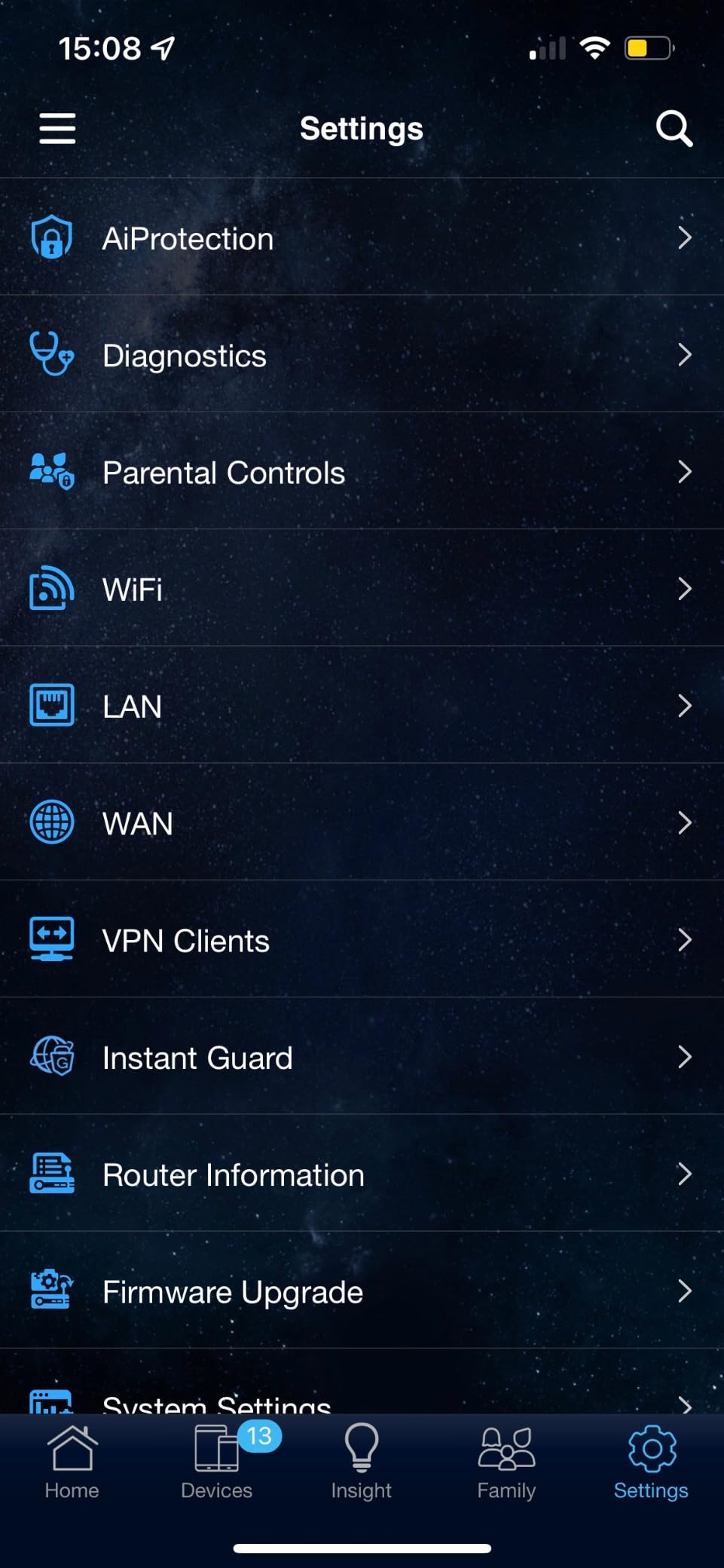
What stands out is the security model. AiProtection Classic, powered by Trend Micro, is included with no subscription, which is rare in this price bracket and removes a recurring cost from a setup where you are often on unfamiliar networks. ASUS Instant Guard gives one-click secure VPN access for every device when you are away from your own rig.
It also has 256 MB of RAM, a dual-core processor with four VPEs, and a 3 year warranty that is longer than most rivals offer. The app allows per-device bandwidth limits and traffic monitoring, which is genuinely useful when a plan has a data cap.
Why it suits Class A motorhomes
A large coach has a desk, a television, a game console and often a wired NAS. Four LAN ports means you can cable all of it and still have a port free for an access point in the back. AiMesh compatibility then lets you add a second node if the bedroom is out of range.
It is also one of the few units here with a stated 12V 1.5A DC output, which makes a direct house-bank connection realistic with a fused cable and a voltage-appropriate adapter. For an installation that stays on, that is a meaningful detail.
Where it falls short
There is a documented firmware issue reported by some owners where Smart Connect combined with WiFi 6 mode causes the 2.4GHz radio to shut down under load. If you rely on the 2.4GHz band for smart devices, check for the current firmware before you commit.
Parental controls are the other weak spot, with no granular custom blacklists and no per-site monitoring. Retractable antennas are also less convenient to aim than fixed high-gain units, which matters if you are trying to shape coverage down a long hallway.
6. Tenda AX3000 RX12 Pro – a budget router that needs patience
Tenda AX3000 WiFi 6 Router,Dual-Band Gigabit Wireless Internet Router, Mesh & AP Mode, Built-in VPN, NFC Tap-to-Connect, OFDMA MU-MIMO, Secure IoT Network for Home Gaming & 4K Streaming(RX12 Pro V3.0)
AX3000
4 Gigabit ports
7 dBi antennas
IoT network
OpenVPN and WireGuard
Pros
- AX3000 throughput at 2402 Mbps and 574 Mbps
- Seven dBi high-gain antennas with beamforming
- Built-in OpenVPN WireGuard PPTP and L2TP
- Dedicated IoT network isolates smart devices from the main network
- Four Gigabit ports with automatic WAN and LAN detection
- NFC tap-to-connect for guests
Cons
- Some owners report drops every 15 minutes with lag and buffering under load
- Router only so it needs a separate modem or upstream device
- Four ports is tight for multi-device wired setups
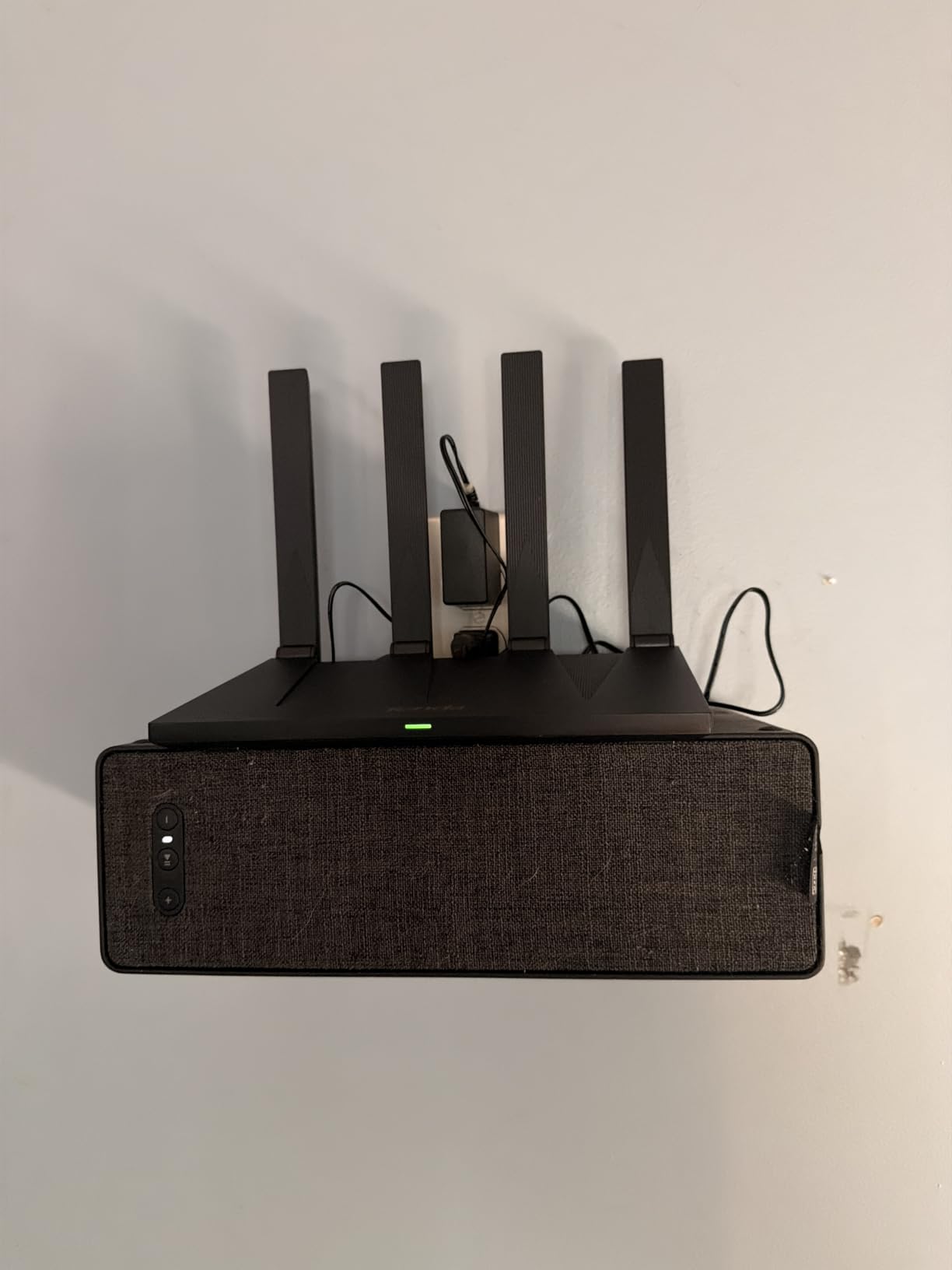
The Tenda RX12 Pro is the most interesting budget unit here for one specific reason: a dedicated IoT network. On a rig full of sensors, smart plugs and a couple of older devices that still speak a dated protocol, isolating them onto their own network is a real security win and almost nobody else in this price bracket offers it.
Wireless performance is AX3000 class with 2402 Mbps on 5GHz and 574 Mbps on 2.4GHz, plus OFDMA and MU-MIMO. The four Gigabit ports detect WAN and LAN automatically, which removes a genuinely annoying class of setup error when you are wiring something in a dark cabinet. EasyMesh support means you can expand later with another EasyMesh unit.
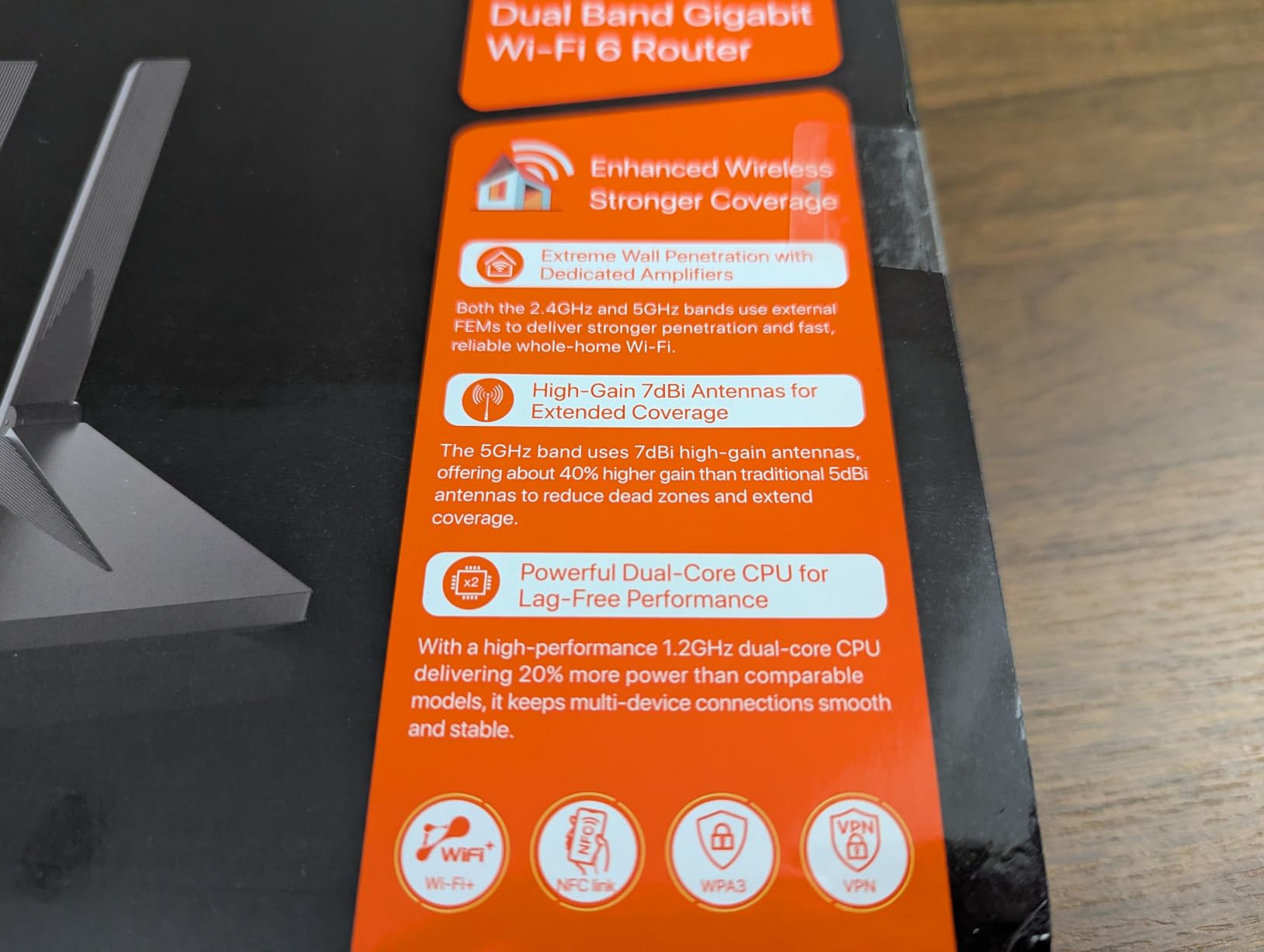
The antenna situation is the strongest argument for it. Seven dBi high-gain antennas with beamforming give you real placement flexibility, and at 12.32 ounces the unit is still light enough to move between a fixed install and a portable setup. NFC tap-to-connect is a small convenience that makes guest access painless.
It also ships with OpenVPN, WireGuard, PPTP and L2TP built in, which is uncommon at this tier and means you can protect a campground Wi-Fi session without extra software. The web and app management is straightforward.
Why it suits a smart-equipped rig
If your RV has a growing pile of smart devices, the isolated IoT network is worth more than raw speed. Keeping those devices off the main network means a compromised bulb cannot reach a laptop, and that is a meaningful change in a shared RV network.
The seven dBi antennas also help in a metal shell. Higher gain on both bands is a straightforward way to improve a signal that has to get through a wall, and it is cheaper than a router upgrade.
Where it falls short
The most important caveat is stability. A small but vocal minority of owners report connection drops roughly every 15 minutes and heavy lag or buffering under streaming and gaming load. If you rely on the rig for a daily video call, that is a risk you should weigh carefully.
It is also a router, not a modem, so it needs an upstream device, and four ports leaves little room for a wired network once the WAN is in use. Owners on r/wifi make the related point that a better run of shielded ethernet is often the real fix rather than a stronger box.
7. Cudy WR3000 – the VPN hub on a small footprint
Cudy AX3000 Gigabit Mesh Wi-Fi 6 Router, 4X GbE, 160MHz, VPN Full, WR3000
AX3000 with 160 MHz
4 Gigabit ports
Five VPN protocols
12V DC
128 MB RAM
Pros
- AX3000 with 160 MHz channels and 1024-QAM
- OFDMA and MU-MIMO deliver much higher 5 GHz capacity
- Full VPN hub with WireGuard OpenVPN IPsec PPTP and L2TP as server and client
- Four Gigabit ports with IPTV and VLAN support
- DNS over TLS with Cloudflare Google and Quad9
- Cudy Mesh with wireless or wired backhaul
Cons
- Only three LAN ports once the WAN is in use
- 128 MB RAM and flash restrict advanced tinkering
- Mainline OpenWrt depends on hardware revision and later revisions are not flashable
- Cudy OS does not expose SSH access
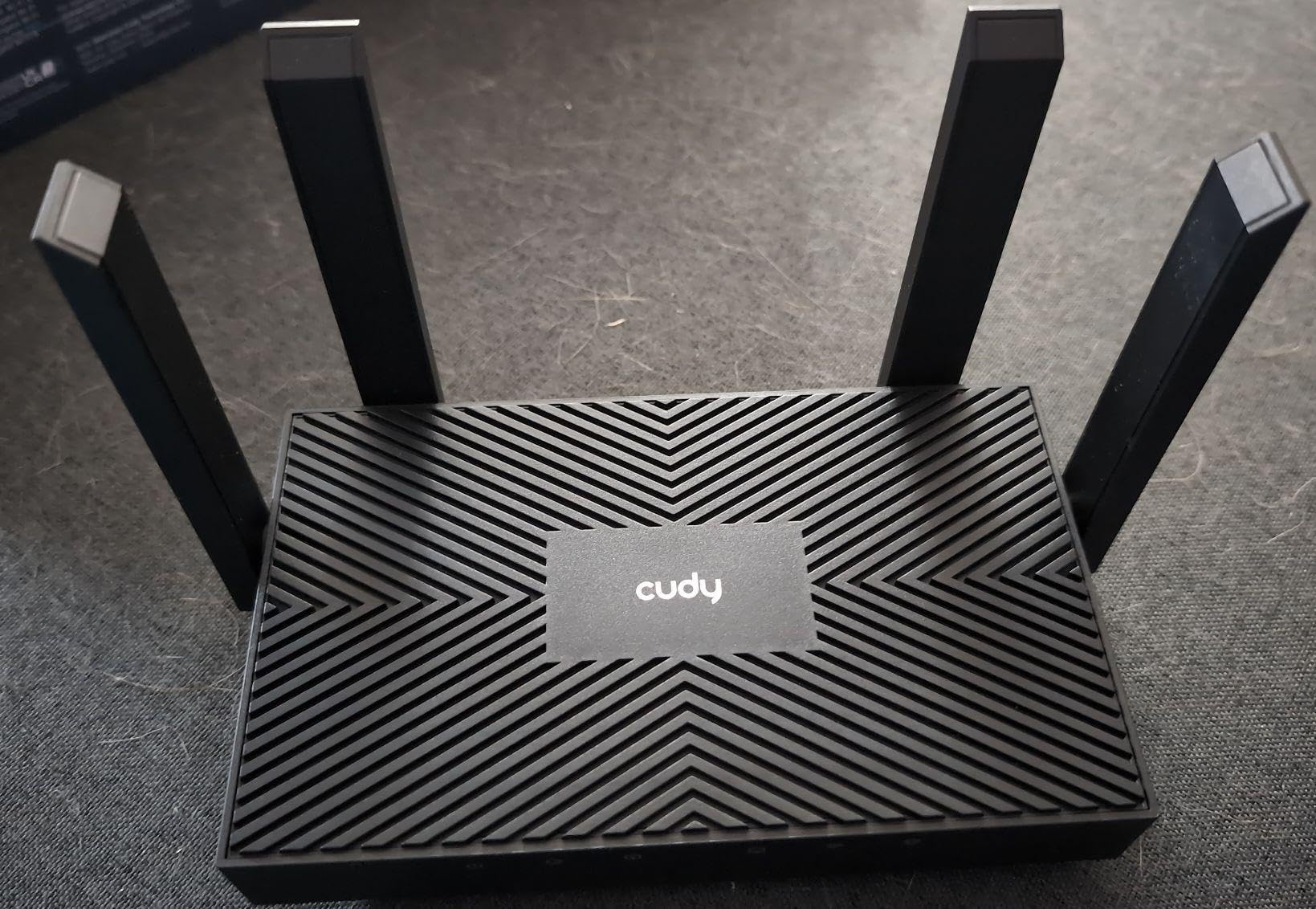
The WR3000 is the one to buy if protecting a public network is the whole point. It runs WireGuard, OpenVPN, IPsec, PPTP and L2TP as both server and client, which makes it the most complete VPN hub at this size in the roundup. When you are joining campground Wi-Fi with a laptop, a couple of tablets and a smart TV, running the protection at the router is the only sane approach.
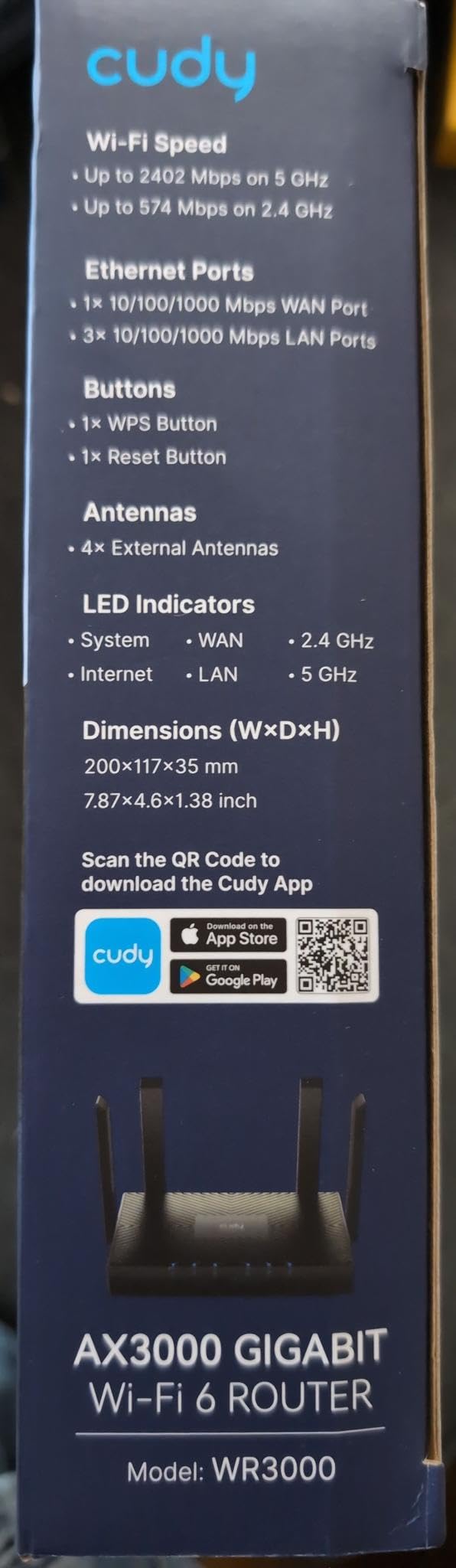
Wireless is full AX3000 with 160 MHz channels and 1024-QAM modulation, giving 2402 Mbps on 5GHz and 574 Mbps on 2.4GHz. It weighs 252.5 g and runs on 12 volts DC, which is a genuinely useful detail for an RV install straight off a house bank.
Cudy Mesh expansion supports wireless or wired backhaul, and many owners end up using the unit as an access point rather than the main router. DNS over TLS with Cloudflare, Google or Quad9 means queries are encrypted even before you add a VPN, and WPA3 is supported. The four Gigabit ports handle IPTV and VLAN tagging, which some park networks require.
The browser-based interface is a plus. You do not need a phone app, which is convenient on a laptop in a truck stop when your data connection is slow.
Why it suits security-minded travellers
Running five VPN protocols at the router means every device inherits the protection without installing anything, including devices that cannot run a VPN client at all, like a smart TV or a game console. That is the practical version of being secure on public Wi-Fi.
For a small rig or van, 252.5 g and a 12V DC supply keep the install simple. Many owners use it as an access point bolted behind a cabinet, taking internet from a cellular router or a Starlink port.
Where it falls short
128 MB of RAM and limited flash storage restrict anything ambitious, and the Cudy OS, while based on OpenWrt, does not expose SSH access. Advanced users who want command-line control will feel walled off.
There is also a hardware revision trap. Only the earliest revision supports mainline OpenWrt flashing, and later revisions are not flashable, so check the revision before you buy with that intention. Three usable LAN ports is also modest.
8. MOFINETWORK MOFI6500 – a 5G cellular router built for the road
MOFINETWORK MOFI6500-5GXeLTE-RM520-HP 4G LTE 5G Dual SIM Cellular Router | Amplified Wi-Fi6 | Auto Failover, Business-Class Performance | Compatible with Verizon, AT&T, T-Mobile, and More | VPN Router
5G and 4G LTE modem
Amplified WiFi 6
Dual SIM failover
9 antennas
1 GB RAM
12V
Pros
- 4G LTE and 5G connectivity with an X62 5G NR modem
- Full metal case with detachable antennas
- Built-in amplification with 5 WiFi antennas and 4 cellular high-gain antennas
- Band lock and IP pass-through for rural use
- 1 GB RAM on a Linux base
- US-based support seven days a week
Cons
- Dual SIM is failover only so one SIM is active at a time
- Needs a SIM and a data plan and speed depends entirely on tower availability
- Streaming can buffer on the default WiFi antennas without an added access point
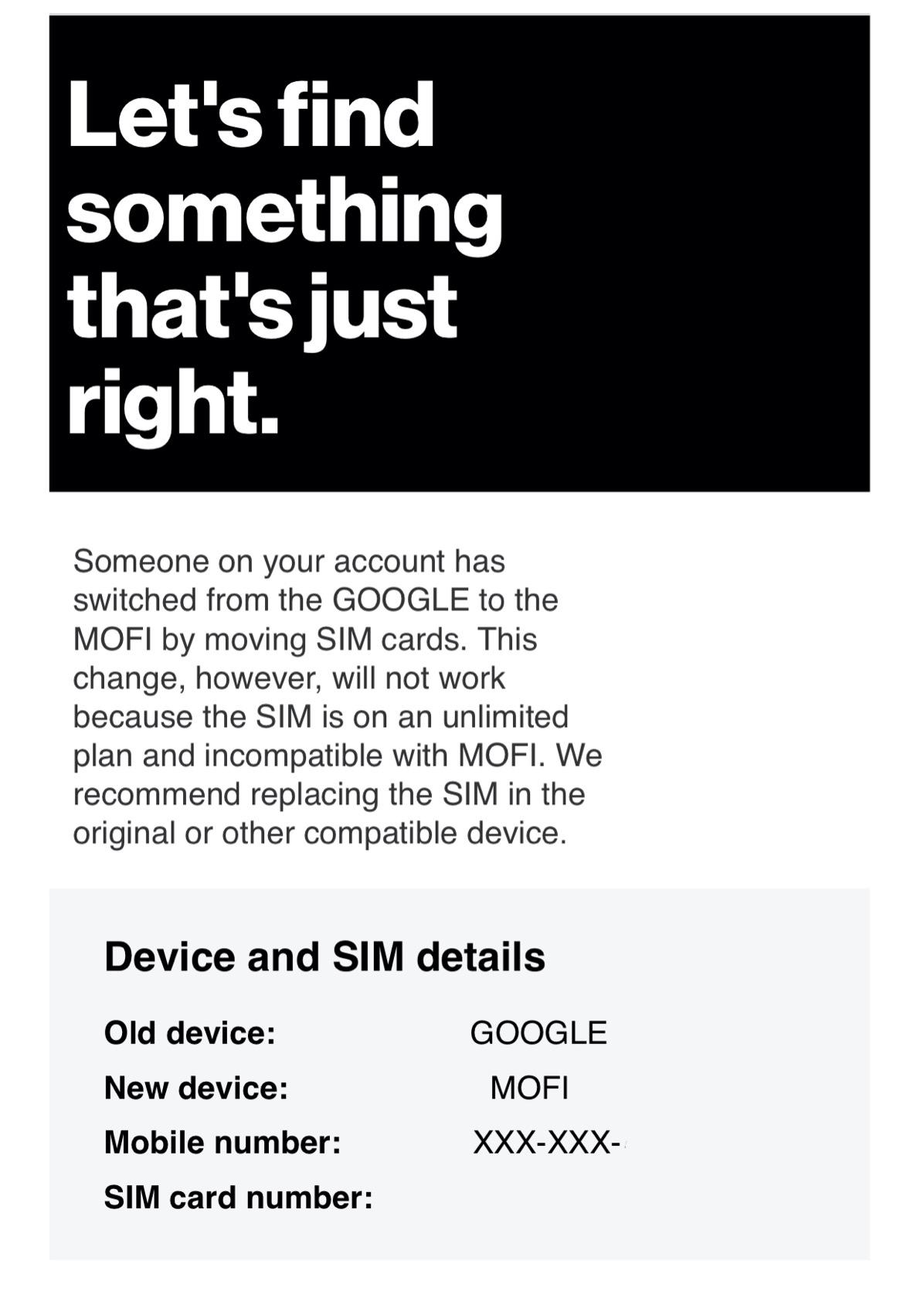
This is the only unit here that is a 5G cellular router first and a WiFi 6 router second, and for boondocking in rural America that is the correct priority. It takes a SIM, uses an X62 5G NR modem, and rebroadcasts on amplified WiFi 6. When there is no hookup and no campground network, this is the category of hardware you actually need.
Long-term RV and rural owners report strong, stable cellular performance and the ability to work while in motion, which is the behaviour you want from a road router. The 1 GB of RAM and a Linux base also mean there is real room to configure, which matters for band lock and IP pass-through in an area with a congested tower.
Build quality is the other story. A full metal case with detachable antennas dissipates heat far better than the plastic boxes in this roundup, and it carries four cellular high-gain antennas plus five WiFi antennas across nine in total. At 3 pounds and 12 volts it is a fixed-install weight, not a pack-and-go weight, which is fine for a permanent setup.
On forums such as r/GoRVing, owners working weak-signal locations tend to land on external antennas and a booster rather than a stronger router, and this unit is designed to accept exactly that. The antenna locations are even marketed toward RV use.
Why it suits off-grid and full-time rigs
A metal case and nine antennas is the right answer to a metal coach. The cellular side handles the wide-open case, the amplified WiFi 6 side handles the interior, and band lock gives you a way to pin to a specific tower when a campground is crowded with phones fighting over one cell.
It is also Zerotier certified, which is worth noting if you work for a company that runs remote access software, and it runs on 12 volts so a direct house-bank feed is straightforward.
Where it falls short
The most important clarification is the dual SIM. It is failover, not simultaneous. Only one SIM is active at a time, and true dual-active operation needs the dual model. If your plan depends on bonding two carriers at once, do not assume this does it.
It also needs a SIM and a data plan, and your real speed is a property of the nearest tower, not of the router. The most common documented complaint is buffering on heavy video streams with the default WiFi antennas, which owners solve by adding a dedicated access point.
9. GL.iNet GL-X2000 Spitz Plus – dual SIM for boondocking
GL.iNet GL-X2000 Spitz Plus 4G LTE CAT 12 Wi-Fi 6 Dual-SIM Router, NA Only
4G LTE Cat 12
WiFi 6 dual-band
Dual SIM failover
4 SMA connectors
Multi-WAN
Pros
- 4G LTE Cat 12 with three-carrier aggregation for better coverage and throughput
- Dual SIM with configurable failover priorities
- Multi-WAN load balancing across Ethernet repeater cellular and tethering
- Four interchangeable SMA antenna connectors
- Pre-installed OpenVPN and WireGuard
- Wall mount kit included
Cons
- Only one Ethernet port for wired expansion
- Max OpenVPN throughput of 30 Mbps is modest
- North America only variant with regional carrier restrictions
- Cellular function is disabled in a number of countries
The Spitz Plus is the sensible middle step between a WiFi-only travel router and a full 5G gateway. It runs 4G LTE Cat 12 with three-carrier aggregation, which is the feature that matters most in the places RVers actually get stuck: rural areas where one carrier has a tower but not the bands you need. Aggregation lets it use more than one carrier’s spectrum at the same time.
WiFi 6 is dual-band at 574 Mbps on 2.4GHz and 2402 Mbps on 5GHz, and the multi-WAN controller is genuinely useful. Ethernet, repeater, cellular and tethering can all be combined with load balancing, so a park network and your cellular plan can share traffic or cover for each other.
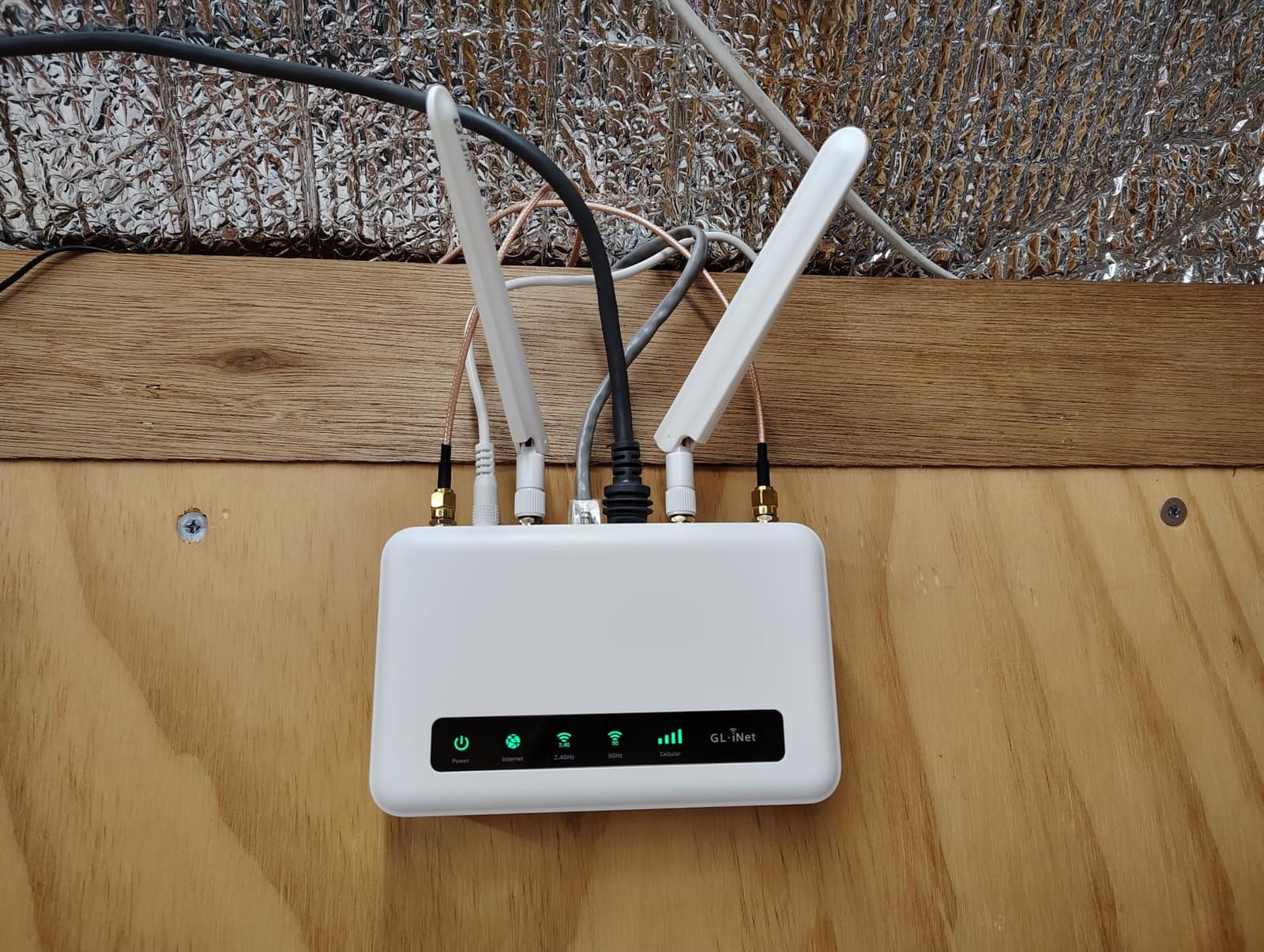
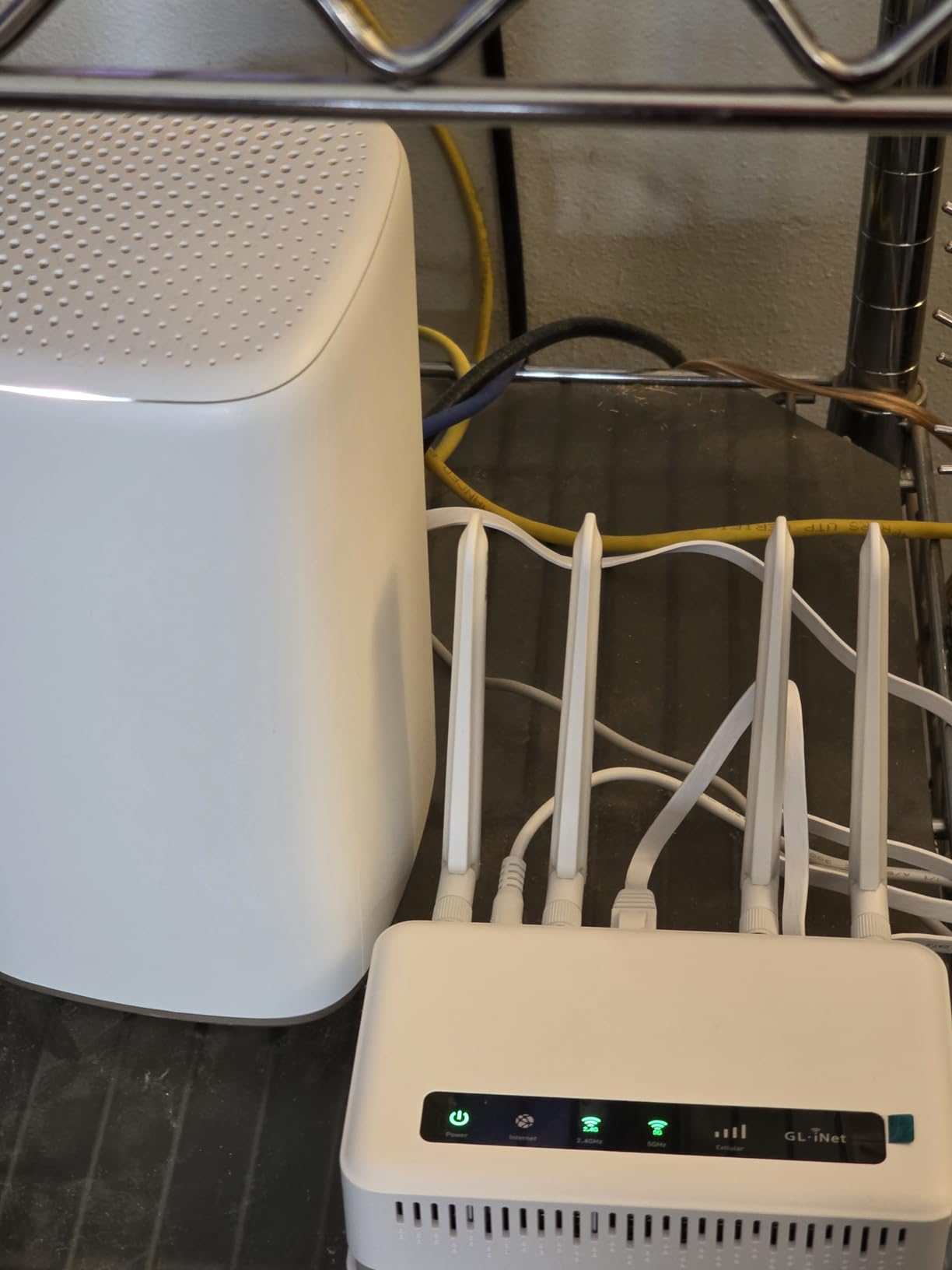
Four interchangeable SMA connectors mean you can run external antennas, and a wall mount kit is included, which is convenient for a permanent cabin install. OpenVPN and WireGuard come pre-installed for 30+ providers. Buyers highlight the aggregation, the antenna flexibility and the OpenWrt-based VPN capability as the reasons it suits RV and off-grid work.
Dual SIM has configurable failover priorities, and it is certified for AT&T and T-Mobile. Set your preferred carrier first and the second one takes over when the first stops delivering.
Why it suits boondocking pairs
Cat 12 with three-carrier aggregation is the difference between a usable rural connection and a dead spot. Combined with external antenna connectors, it is the configuration that most directly addresses the wall and tower problems RVers describe in forum threads.
Multi-WAN is the quiet superpower. On iRV2, owners regularly recommend pairing a satellite terminal with a cellular router as a fallback, and this unit is built for exactly that pairing through its multi-WAN controller.
Where it falls short
One Ethernet port is restrictive. If your plan needs a switch and a wired device, you are adding hardware immediately. The max OpenVPN throughput of 30 Mbps is also modest, which is fine for secure browsing and less fine for tunnelled large transfers.
This is a North America only variant, and the cellular function is restricted in a number of other countries. If your route crosses borders regularly, check carrier support for each country before committing. As with any cellular router, a SIM and a plan are required.
10. Cudy WR1500 – the cheapest way into WiFi 6
Cudy AX1500 Gigabit Mesh Wi-Fi 6 Router, 4X GbE, OFDMA, VPN, WR1500
AX1500
4 Gigabit ports
1024-QAM
WireGuard client
7.8 oz
Pros
- Highest average rating in the set at 4.6 with 79 percent five-star reviews
- AX1500 throughput of 1201 Mbps and 300 Mbps with 1024-QAM
- OFDMA multi-device efficiency keeps smart devices responsive
- Four Gigabit ports for wired devices
- Built-in WireGuard client
- Lightweight at 7.8 ounces
Cons
- AX1500 class is slower than AX3000 models for heavy traffic
- Beamforming coverage rated at 1100 sq ft
- Only 3 LAN ports once the WAN port is in use
The WR1500 is the entry point. It carries the highest average rating of any unit in this roundup at 4.6, and at 7.8 ounces it is the lightest router here, which makes it a genuinely appealing first travel router for a couple testing the idea. Buyers consistently cite easy setup, stable 5GHz behaviour and mesh expandability at a budget level.
Wireless is AX1500: 1201 Mbps on 5GHz and 300 Mbps on 2.4GHz, with 1024-QAM modulation that the manufacturer rates as around 38 percent faster 5GHz throughput than the equivalent AC1200 class. OFDMA gives the multi-device efficiency that keeps a dozen smart things from stalling a video call.
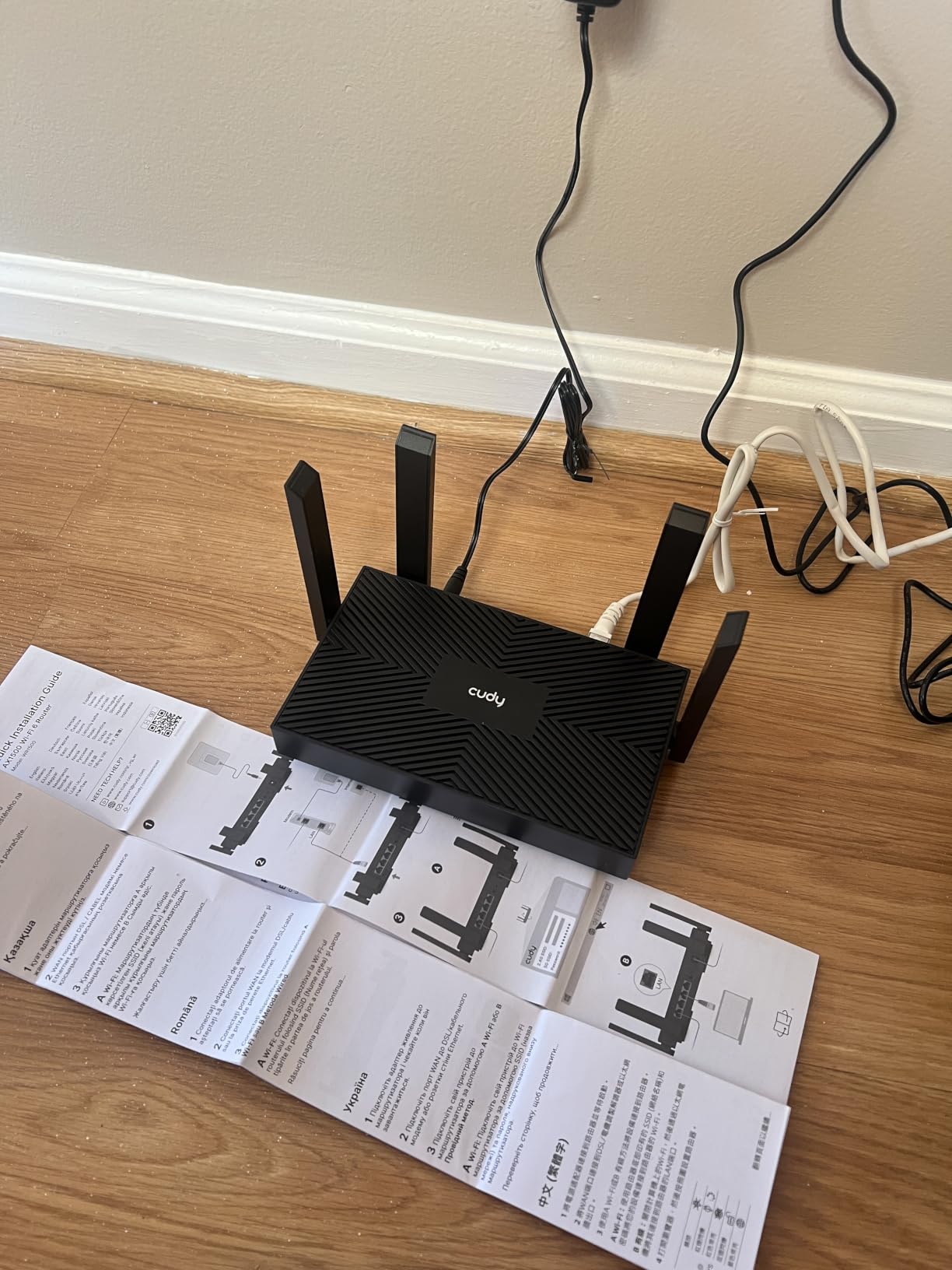
It also has four Gigabit ports, a built-in WireGuard VPN client for router-level protection on public networks, and Cudy Mesh expansion through the same app used for cloud remote control and per-device scheduling. WPA3 is supported, which is a good sign on a device aimed at public network use.
Beamforming coverage is rated at 1100 square feet, which is smaller than most full-size mesh systems. For a motorhome, van or travel trailer interior, that number is rarely the binding constraint.
Why it suits small rigs and first-time buyers
Travel trailers, campervans and a first season in an RV rarely have more than three or four people and a handful of devices online. At that scale the AX1500 tier is entirely adequate, and you are not paying for headroom you will not use.
It is also one of the few units here you can genuinely carry in one hand, and the WireGuard client means a first-time owner can still join a campground network safely without installing anything on each device.
Where it falls short
The AX1500 ceiling becomes real the moment several people stream at once or you want a headroom margin for a faster internet source later. The 300 Mbps 2.4GHz side is the weaker half, and that is the band that carries your smart devices through interior walls.
Coverage of 1100 square feet is modest for a large coach, and once the WAN port is occupied you have three LAN ports left. For a small rig that is fine; for a 40 foot motorhome with a back bedroom you will want a second mesh node or an access point.
11. TP-Link Roam 6 – a power bank friendly travel router
Roam 6 AX1500 Portable Wi-Fi 6 Travel Router Dual-Band USB C 3.0
AX1500
2 ports
Up to 60 devices
USB-C 3.0 power input
6.72 oz
Pros
- USB-C 3.0 powerable from any 5V 3A source including a power bank
- Pocket sized at 4.09 by 1.1 by 3.54 inches and 6.72 ounces
- Secure Wi-Fi on-the-go creates a private network from public Wi-Fi
- Router AP repeater client and USB tethering modes
- OpenVPN and WireGuard support
- One-step captive portal authentication through the Tether app
Cons
- Does not support OpenWrt
- AX1500 class speeds are modest next to AX3000 routers
- Only two Ethernet ports with one WAN or LAN and one LAN
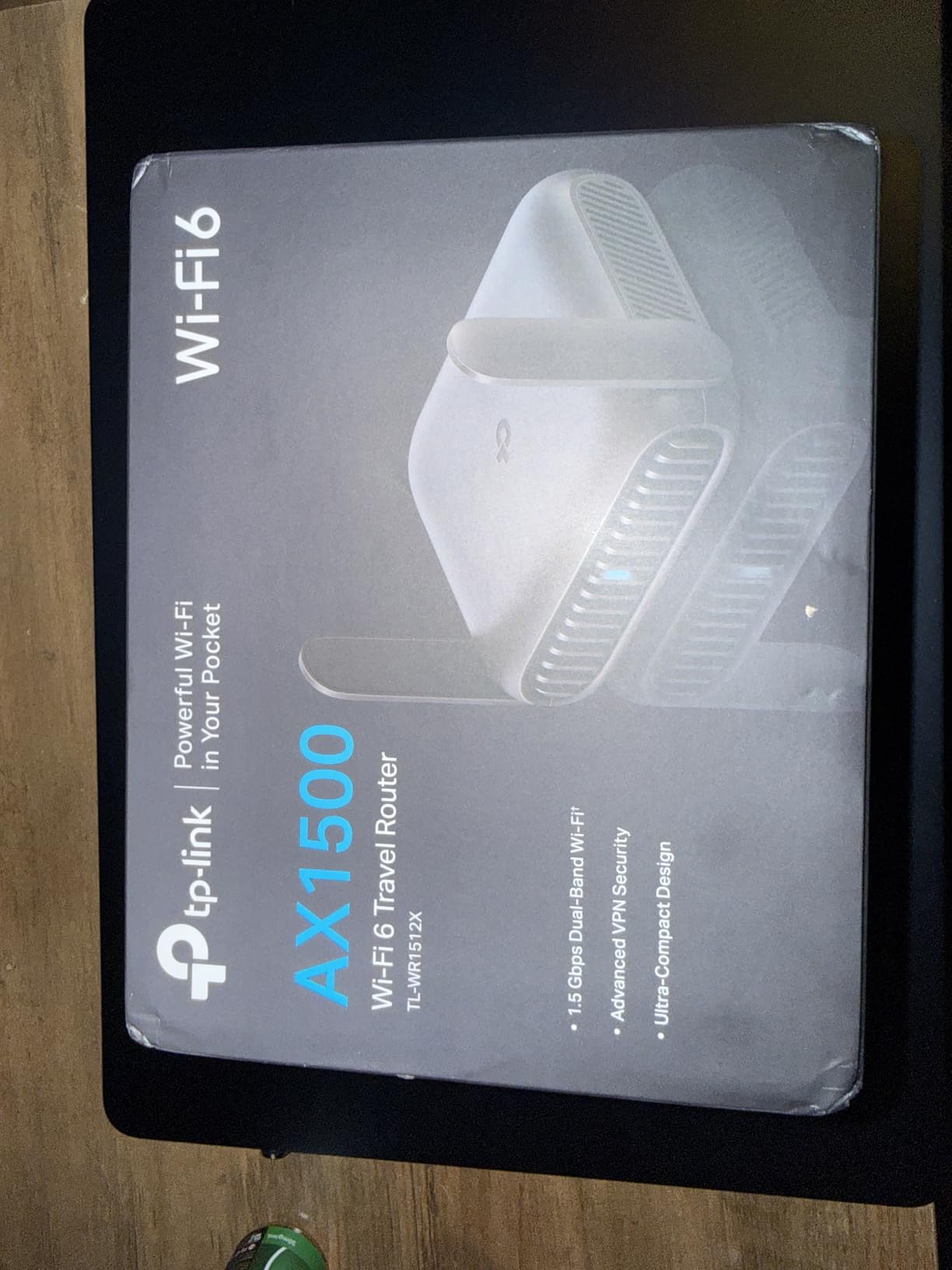
The Roam 6 is the smallest and lightest unit here at 6.72 ounces, and its USB-C 3.0 power input is the detail that makes it different. Any 5V 3A source will run it, including a power bank you already carry for a phone. That is the cheapest way to keep a network alive for a long drive when the inverter is switched off.
Travelers and RV owners value exactly those two things, the pocket form factor and the power bank compatibility. It supports up to 60 devices at once, which is plenty for two adults, and it offers router mode, access point, repeater and client mode plus USB tethering, so it can work with almost whatever source you have.
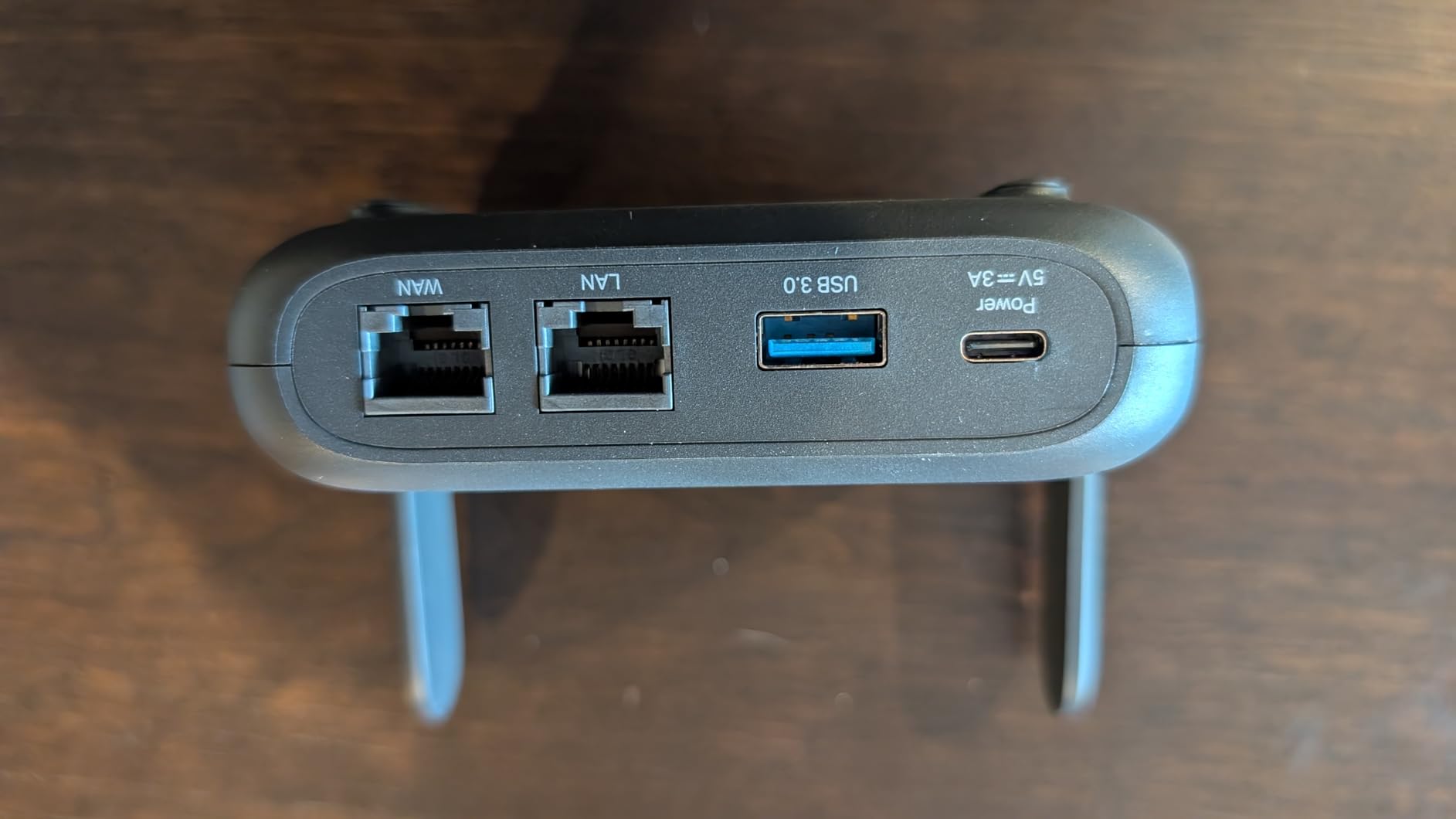
Secure Wi-Fi on-the-go turns a hotel, an airport or a campground network into your own private one, and the Tether app handles one-step captive portal authentication, which removes the single most annoying part of joining public Wi-Fi. OpenVPN and WireGuard are supported, so router-level protection is available even without OpenWrt.
It also carries the AX1500 speeds of 1201 Mbps on 5GHz and 300 Mbps on 2.4GHz, WPA3, and the same security-focused design pledge that TP-Link applies across its range.
Why it suits weekend and van setups
It has the lowest power appetite profile in the roundup, and the weight to live in a jacket pocket. For a couple travelling in a van for a season, that combination is worth more than a faster radio, because the alternative is finding mains power at the right moment.
It is also a good secondary unit to carry alongside a fixed install, giving you a private network in a car or a tent without unpacking the main rig hardware.
Where it falls short
It carries the lowest average rating in the set at 4.2, and the reasons are consistent: the AX1500 speed ceiling, two ports rather than four or five, and no OpenWrt support for anyone who wants to configure deeply.
Two Ethernet ports, one WAN or LAN and one LAN, is the binding limit for a wired setup. Anyone running a wired desk should treat this as a wireless tool and not a network hub.
Is a WiFi 6 Router Outdated? WiFi 6 vs WiFi 7 in 2026
No, a WiFi 6 router is not outdated for RV use, and it is still the smarter purchase for most rigs. WiFi 7 adds faster links and wider channels, but the practical difference for a travel router is small, and the models that pair with cellular modems or SIMs remain almost entirely 802.11ax.
The more useful point for RVers is that neither standard changes how radio behaves against a metal shell. Does WiFi 7 go through walls better than WiFi 6? No. Signal penetration is a physical property of the frequency and the material, and an aluminium frame attenuates both standards similarly. What changes your coverage is antenna placement, external antenna ports, and how far the indoor unit sits from the exterior antenna.
So the real buying question is not the generation number. It is whether the router accepts the internet source you can actually get, whether it can be powered where you put it, and whether it gives you a private network to share. Spend your budget there.
Router, Booster, Extender or Hotspot: What Each One Actually Does
Marketing confusion between these four categories is the single most common reason RVers buy the wrong box, and every competing guide blurs them. Here is the clean version.
A router creates a private WiFi network and shares one internet connection. A range extender or repeater takes an existing WiFi signal and rebroadcasts it further, which helps inside a building but does not create a new internet source. A cellular booster amplifies an existing carrier signal for phones and hotspots; it does not provide internet on its own. A mobile hotspot is an internet source and a small router combined, usually with a usage cap.
For an RV, the useful order is usually this. Start with a router, because it is what gives you WPA3, device management and the ability to add a VPN at the network edge. Add a booster only when a booster manufacturer confirms your exact carrier and band are supported, since many do not work with every carrier. Treat the extender as a last resort for an interior dead zone, and think of the hotspot as a source you plug into the router rather than a replacement for it.
Powering a Router in an RV Without Killing Your House Bank
Power is the quiet constraint that decides whether a permanently installed router works. The question on r/RVLiving is almost never about signal quality, it is about what the device draws overnight and whether anyone put in a real fuse.
First, check the input. A 12 volt DC unit such as the Cudy WR3000 or a mains-only unit such as the Archer AX55 needs completely different installs. Mains-only means an inverter is running, which costs you far more than the router draws; a 12V DC input with a fused cable is almost always the lower-draw path. Never wire a DC router from a battery without a fuse and a switch.
Second, decide whether it sleeps. A router that idles at high draw through a dry-camping week is a real problem, and the answer is a smart charger or a low-draw unit rather than a bigger battery. Our guide to deep cycle batteries for RVs covers the other half of that problem, and our picks for foldable solar panels cover keeping that battery topped up while parked in the sun.
Third, plan for the 12V accessories as a group. A router, a USB-C phone charger, a dash camera and a WiFi calling puck all on the same circuit is a different load than any one of them alone. Measure before you commit, and add a small UPS if the router must survive an engine-off power loss.
Antennas and the Metal Wall Problem
An RV shell is a Faraday cage with a few glass panels in it, which is why an all-in-one indoor unit in the middle of a coach will disappoint you no matter what speed class it carries. The fix is placement and external antennas, and it is usually cheaper than a better router.
The sequence that works: mount the antenna on or near the roof, run a proper shielded cable to the indoor unit, and keep that unit as close to the cable entry as you can manage. On r/wifi, owners consistently argue that a better ethernet or coax run is the real fix, which is exactly right. Feeding a router through twenty feet of unshielded cable thrown across a living space undoes most of the gain.
For cellular, direction matters more than gain. A high-gain antenna helps a weak signal, and a directional antenna helps a nearby tower, but a directional panel pointed at the wrong cell makes things worse. Owners on r/GoRVing who pair an amplifier with a roof-mounted Yagi report the biggest gains specifically at weak-signal sites, which is the situation you should optimise for.
Do the roof work properly or do not do it. Forum advice is consistent that amateur roof mounts get flagged at resale and can cause leaks, so a professional install is money well spent on a permanent installation. On r/wifi, owners also recommend burying-grade six-strand shielded cable for exactly this reason: it survives the environment and it protects the signal.
Starlink, Cellular and Campground Wi-Fi: Layering and Failover
Do you need a router if you have Starlink in your RV? Yes, and this is the question that surprises new owners most. A satellite terminal gives you one ethernet port. A router turns that single wired connection into a private WiFi 6 network with WPA3, guest access, device management and router-level VPN, and it gives you somewhere to plug in a cellular modem as a second source.
Layering works because the sources have different strengths. Satellite has the best latency and the most consistent throughput when you have clear sky. Cellular has the lowest latency of the two but depends entirely on tower proximity. Campground Wi-Fi is free but shared, slow under load, and often the reason a video call drops. A multi-WAN router such as the GL.iNet Spitz Plus can be told to prefer one source, fall over to another, or spread load between them.
On iRV2, the most common recommended hybrid is a Starlink terminal paired with a cellular router as fallback, which is also what an RV internet router installation should be designed around: one primary source, one automatic backup, and a router in the middle that owns the network. The layered setup also lets you pull entertainment from a USB drive over a good cellular signal instead of streaming, which is a meaningful saving on a data-limited plan.
How to Choose a WiFi 6 Router for Your RV
Work through these in order and the choice narrows fast. If you cannot get internet to the router, a faster router will not help, so the first question is always what the source will be.
1. Identify the source. If you rely on hookups, a plain WiFi 6 router with a good repeater mode is enough. If you boondock, you need a cellular router with a SIM, dual SIM, or an external antenna port. If you work, assume you need two sources and a router that can hold both.
2. Count the devices, honestly. Two adults on laptops and phones is a different load from a family with tablets, a smart TV, a console and a growing sensor list. Look at the simultaneous connection figure, not the headline speed.
3. Match the power method to the install. A portable setup wants USB-C or low draw. A permanent install wants 12V DC and a fused run, because running an inverter overnight to power a small router is the most common avoidable waste in an RV.
4. Check the antenna situation. If the indoor unit has to sit far from where the cable enters the coach, add an external antenna or a better access point. This step fixes more RV connectivity problems than any router upgrade.
5. Budget the whole system, not the box. Hardware amortises; the data plan recurs every month, and unlimited cellular plans that were throttled or retired have caught out a lot of RVers. Check the plan’s terms before you assume unlimited means unlimited, and check it for the carriers you will actually pass through.
6. Layer for security. Once you are joining campground networks, run the VPN at the router so every device inherits it, including the ones that cannot run a client. That is the single highest-return feature in this roundup for anyone who travels.
Frequently Asked Questions
What is the best WiFi router for an RV?
The GL.iNet GL-MT3000 Beryl AX is our top pick. Its 2.5G WAN port accepts Starlink, a cellular modem or campground Wi-Fi, it hands every device a private WPA2/WPA3 network, and at 196 g it fits in a drawer. The ASUS RT-AX1800S is the better pick for a permanently installed motorhome with several wired devices.
What is the best WiFi router for a motorhome?
For a Class A motorhome that stays installed, the TP-Link Archer AX55 is the stronger choice. Its four high-gain external antennas and five Gigabit ports let you shape coverage down the length of the coach and cable a desk, a television and a console without a switch. The GL.iNet Beryl AX is better if you travel and pack the router away.
How can I get better WiFi in my RV?
Move the antenna outside and run shielded cable to the indoor unit. Keep the router close to where the cable enters the coach rather than in a back cabinet. Aim cellular antennas at a nearby tower rather than a fixed direction, run a VPN at the router when you join public networks, and give devices to the 2.4GHz band when 5GHz struggles through interior walls.
Is a WiFi 6 router outdated?
No. WiFi 7 offers faster links and wider channels, but it does not pass through RV walls any better than WiFi 6, and most travel and cellular models on the market are still 802.11ax. Antenna placement, external antenna ports and your power method matter far more than the generation number.
What is the best WiFi for full time RV living?
A full-time setup works best as a layered system: one primary source, one automatic backup, and a router in the middle that owns the network. A multi-WAN router such as the GL.iNet Spitz Plus can pair a satellite terminal with a 4G LTE Cat 12 cellular connection and switch between them, while a 12V DC unit fed from a fused house bank run keeps the overnight draw low.
Final Verdict
For most RVers, the GL.iNet GL-MT3000 Beryl AX is the best WiFi 6 router for RV life. It accepts almost any internet source through a 2.5G WAN port, runs a VPN client so every device on board is protected on a public network, weighs less than 200 g and disappears into a drawer. That combination is not something the other ten units in this roundup match.
Buy the ASUS RT-AX1800S if your rig is wired and permanently installed, the Archer AX55 if you want the most reviewed, most capable fixed-install box with adjustable antennas, or the MOFINETWORK MOFI6500 if boondocking on 5G is the centre of your year. Layer a second source, power the router from 12V with a proper fuse, and check your data plan terms before the trip, not in the middle of a desert pullout.