
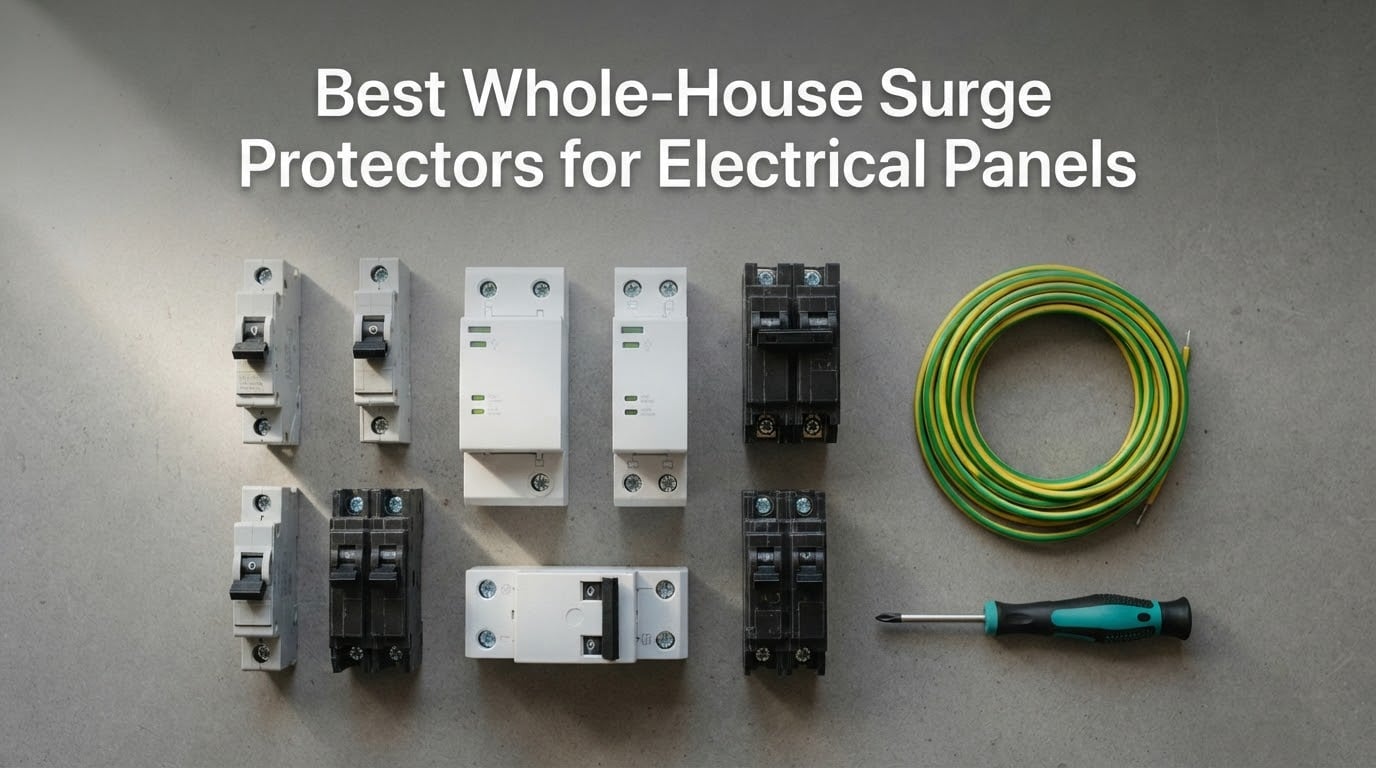
A whole-house surge protector is a UL 1449-listed surge protective device (SPD) – usually Type 1 or Type 2 – installed at your main electrical panel so it clamps incoming power surges before they reach your circuits, protecting everything downstream from grid switching events and nearby lightning. It lands on live busbars, so a licensed electrician does the work.
We spent weeks reading spec sheets, teardown notes, and owner reports on the eight panel-mounted SPDs below, then mapped them against the questions people actually ask on electrical forums: which Type, how big, what breaker, and does the thing work at all. Every number in this guide comes from manufacturer data and owner reviews, not from marketing copy.
Here is the short version. The best whole house surge protector for electrical panel duty is the Eaton CHSPT2ULTRA, because it fits inside virtually any load center, carries the deepest review base in the category, and costs nothing close to what the premium units do. If you want maximum headroom and a 10 year connected equipment warranty instead, the Siemens FS140 is the step up.
One thing to clear up before we get into specs: no panel-mounted device stops a direct lightning strike on your house. Electricians say this constantly on forums, and it is the single most misunderstood claim in this category. What an SPD does handle is the far more common event – utility switching, a transformer energizing down the street, a large motor starting, or the induced transient from a strike that lands nearby.
We also build these pages for people who want the whole system, not just one box. If you are pairing panel protection with a generator for outage coverage, our whole house generator picks cover the other half of that equation.
Table of Contents
Top 3 Picks: the Three Panel-Mounted SPDs We Would Install First for October 2026

Eaton CHSPT2ULTRA
- UL 1449 Type 2 SPD
- 108 kiloamp surge rating
- LED protection status indication
- Fits any manufacturer's load center

Siemens FS140
- 140000 amps per phase
- NEMA 4X indoor or outdoor enclosure
- 10 year connected equipment warranty
- Audible alarm plus status LEDs

Square D HEPD80
- 80 kiloamp per line
- LED status indicator
- Compact in-panel housing
- Works in any residential load center
The Siemens FS140 earns the premium slot on raw numbers: 140000 amps of surge current per phase in a NEMA 4X metal enclosure, with an audible alarm and a 10 year connected equipment warranty that no other unit here matches. It is also the only one in this group rated for outdoor mounting, which matters if you want it on the service side of the disconnect.
The Square D HEPD80 is the one most electricians reach for on a plain 200A residential panel. At 80kA per line it sits at the sweet spot for most homes, and the compact polycarbonate housing does not eat breaker space.
All 8 Whole-House Surge Protectors Compared in October 2026
| Product | Specifications | Action |
|---|---|---|
| Eaton CHSPT2ULTRA |
|
Check Latest Price |
| Siemens FS140 |
|
Check Latest Price |
| Square D HEPD80 |
|
Check Latest Price |
 Eaton CHSPT2SURGE Eaton CHSPT2SURGE |
|
Check Latest Price |
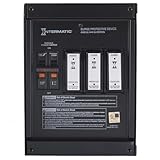 Intermatic Smart Guard IG2240-IMSK Intermatic Smart Guard IG2240-IMSK |
|
Check Latest Price |
 Leviton R2120-B Leviton R2120-B |
|
Check Latest Price |
 ABB THOMESURGEP ABB THOMESURGEP |
|
Check Latest Price |
 Furniqro FHSPD108S Furniqro FHSPD108S |
|
Check Latest Price |
Should You Protect Your Panel? The Honest Answer
Yes, if you have a modern panel, hardwired electronics worth protecting, and a service that has ever taken a surge. That covers most homes built in the last twenty years.
The value case is straightforward. A single panel-level device covers every hardwired load in the house at once: the furnace control board, the air conditioner compressor electronics, the smart thermostat, the range, the dishwasher, and anything else on the bus that never touches a power strip. Owners on r/HomeImprovement describe the scenario that convinces most people – a grid that “goes out a lot and we get surges all the time,” and electronics that keep dying until the panel is protected.
The cost side is easier to justify than most buyers expect. Every unit in this roundup sits well below what a single replacement furnace control board or a destroyed home network costs, and the install itself is a couple of hours of electrician time on a panel that is already open during a service upgrade. A garagejournal owner reported exactly this: the electrician added an Eaton whole house surge protector at the breaker panel while the service panel itself was being replaced.
Two honest caveats. First, grounding and bonding problems cut protection dramatically, and an SPD bolted onto a poorly grounded panel is an expensive way to do nothing. If your home predates modern grounding standards, have that checked first. Second, these devices are sacrificial by design – every surge they absorb uses part of their capacity, which is why the status indicator matters more than the price tag.
If you also want protection at the outlets for high-value gear, pair the panel device with point-of-use strips. Our RV and portable surge protector guide covers the point-of-use layer in depth, including why a UPS is not a surge protector.
Type 1 vs Type 2 vs Type 3: What Each One Actually Does
For most homeowners, a Type 2 device is the answer. A Type 1 is the right call when your service entrance is outdoors or your panel is upstream of the disconnect. A Type 3 is a point-of-use device you plug into a wall, and it is a separate layer rather than a replacement.
Type 1 devices mount at or upstream of the service disconnect, on the line side of the meter or at a service entrance panel. They are rated against the 10/350 microsecond lightning impulse waveform, which is the harsh current wave a strike injects, with I(imp) values typically running 25kA to 100kA. If your home has an exterior main disconnect, a Type 1 is the device that belongs at that location.
Type 2 devices install downstream at the main load center. They handle the 8/20 microsecond switching waveform – utility reclosers, transformer energizing, large motor starts – and are rated on I(n) and I(max), typically 20kA to 75kA. For a typical residential panel with an interior main, this is the standard and sufficient choice.
Type 3 devices are the plug-in or point-of-use layer, rated on open-circuit voltage U(oc) in the range of 6kV to 20kV. They protect one device or one receptacle at a time. A good system uses Type 2 at the panel and Type 3 at the equipment that cannot tolerate any residual transient, such as an AV receiver or a network rack.
One code point worth knowing: Article 230.67 of the 2020 NEC requires services supplying dwelling units to be provided with a surge protective device, and the device must be a Type 1 or Type 2. The 2023 edition expanded that requirement to dormitory units and guest rooms and suites in hotels and motels. If you have seen a panel without any SPD, your service simply predates the rule.
1. Eaton CHSPT2ULTRA – The Universal In-Panel Type 2 With the Deepest Review Base
Eaton Surge Protection Device, 1 Phase, 120/240V, 2 Poles, 2 Wires CHSPT2ULTRA – 1 Each
Surge rating: 108 kiloamps
Voltage: 240 volts
UL 1449 listed Type 2
Weight: 8 ounces
Pros
- Universal fit in any manufacturer's load center
- Deepest review base in the category at 2878 ratings
- LED protection status indication
- Compact 2.38 by 5.25 inch footprint fits inside a standard panel
Cons
- Installation means working inside a live breaker panel
- Sacrificial device that must be replaced after a severe event
- Neutral and ground conductors still need landing on the panel bussing
At 2878 ratings averaging 4.8 stars with 86 percent five-star, the CHSPT2ULTRA has the deepest social proof of anything in this roundup, and for a category where brand pedigree is the main trust signal, that matters more than any spec sheet advantage.
The physical logic is what sold us. It connects to any manufacturer’s load center, weighs 8 ounces, and measures 2.38 inches long by 5.25 inches wide, so it fits inside a standard residential panel without stealing a meaningful number of breaker spaces. The listing describes it as a UL 1449 listed Type 2 surge protective device for service entrance install, with LED protection status indication – that indicator is the feature owners mention most often when they describe why they bought it.
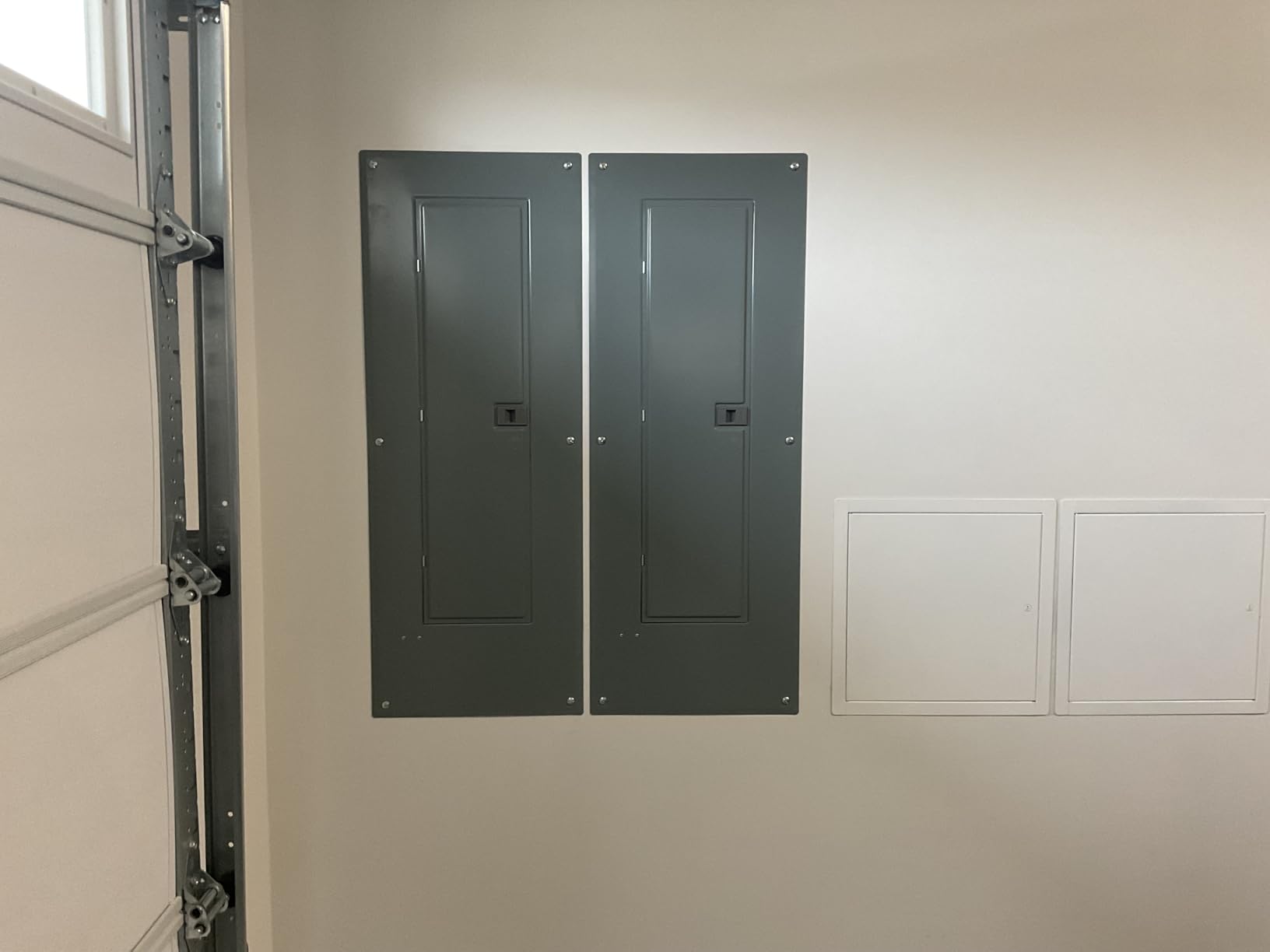
Owners consistently describe the installation as straightforward and the fit as universal, and reviewers who have opened the unit report solid construction. That combination – a device that fits everything, from any brand of box, with an indicator you can actually read – is why it is our top pick for a typical 200A service.
Its 108 kiloamp surge protection rating sits in the middle of this group, comfortably above the 36kA budget units and well below the Siemens FS140. For almost every residential application that gap does not change the outcome, because the common surge events are switching transients rather than direct strikes.
What you need to know before the electrician orders it
The neutral and ground conductors still need to be landed on the panel bussing, and the device needs its own two-pole breaker feed. Owners who have had this done report that your electrician will want to place it as the first breaker position in the panel, which keeps the feed short and the connection clean. If your panel is a Square D HomeLine or QO box, an Eaton device lands in it without an adapter – that cross-brand compatibility is the whole point of the design.
The LED status indicator is the field to check every few years. When it goes dark or changes state, the MOVs inside have degraded and the device needs replacing. That is not a failure of the install; it is the device doing exactly what a sacrificial protector is supposed to do.
Where this is the wrong choice
Skip it if you have an exterior main disconnect and want protection at the service entrance, because a Type 2 mounted downstream is not rated for the 10/350 microsecond waveform. It is also the wrong pick for anyone who wants a connected equipment warranty – the CHSPT2ULTRA does not carry one, and that coverage gap is real if you have expensive AV or network gear.
And it is not a DIY device. Opening a live service panel is electrician work, full stop. The compact footprint makes the install fast, not safe to attempt.
2. Siemens FS140 – Highest Surge Capacity and a 10 Year Connected Equipment Warranty
Siemens FS140 Whole House Surge Protection Device Rated for 140,000 Amps
Capacity: 140000 amps per phase
Enclosure: NEMA 4X metal
Size: 10 x 6 x 4 inches
Pros
- Highest surge current capacity in this roundup
- Commercial grade NEMA 4X metal enclosure for indoor or outdoor mounting
- Three layers of status indication including audible alarm
- 10 year product and connected equipment warranty
Cons
- Requires a separate two pole 20A 240V breaker that is not included
- 3/4 inch NPT tapered pipe thread is tricky to seal
- After a severe event it shuts down all power into the panel until removed
The FS140 is the only unit in this group with 140000 amps of surge current capacity per phase, and at 1468 reviews averaging 4.7 stars it has the second-deepest review base. Owners report it performing through lightning events without appliance damage, which is the outcome you are actually buying.
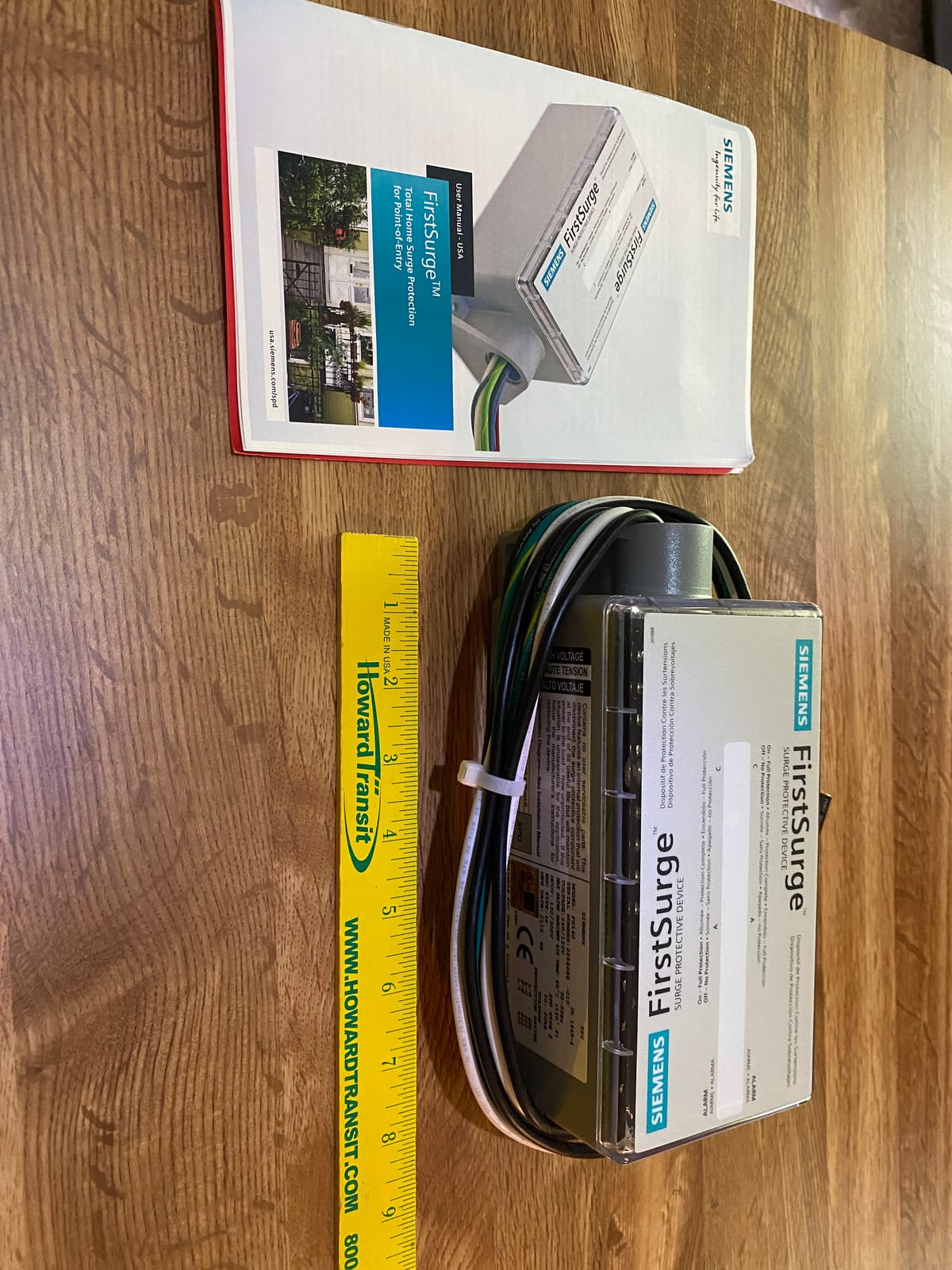
It is built differently from the plastic in-panel units. The commercial grade NEMA 4X iron enclosure is rated for type 4 outdoor mounting and can also be installed inside the load center, weighing 2.7 pounds at 10 by 6 by 4 inches. Siemens describes sub-1-nanosecond clamp-down response with 900V line-to-line and 600V line-to-neutral ratings, and it is compatible with any brand of load center and breakers.
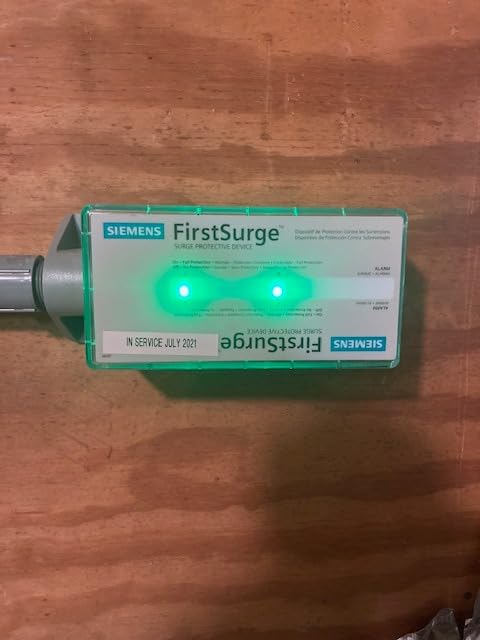
Status reporting is the part owners single out. You get an audible alarm, protection status LEDs, and a red service LED – three layers of indication, which is more feedback than any other unit here provides. The 10 year product and connected equipment warranty is also the strongest coverage in the roundup and is a genuine differentiator if you have a home theater or a network rack worth insuring.
Because it is a NEMA 4X unit, it is the natural choice for an exterior main disconnect or a panel mounted outdoors. A Type 2 that lives inside a dry interior panel has no business being outside; this one does.
What you need to know before the electrician orders it
Two practical details cost people money if they are not planned for. First, the two-pole 20A 240V breaker is not included, so it needs to be on the materials list. Second, the 3/4 inch NPT tapered pipe thread on the enclosure is difficult to seal properly – several owners report that a bulkhead fitting works better than the stock connection. Raise both with your electrician before the visit, not after.
The 10 by 6 by 4 inch footprint is real. In a small 40-circuit panel with existing tandem breakers, plan where it lands before the day, because moving it later means opening the panel again.
Where this is the wrong choice
It is the most expensive unit here and the hardest to install, so it is the wrong call for a tight budget or a cramped panel. It is also worth stepping back on a home with good grounding and no history of surges – 140000 amps per phase is genuine headroom, but the more common transients do not need all of it.
One failure mode to plan for: after a severe event the FS140 shuts down power into the panel until it is removed or bypassed. That is protective behavior, not a fault, but it means the house has no power until someone addresses the device.
3. Square D HEPD80 – The Compact 80kA Unit for a Standard Residential Load Center
Square D HEPD80 Universal Whole House Surge Protection Device, 1-Phase, 3-Wire for 120/240V, 80kA
Surge rating: 80 kiloamps
Voltage: 600 volts
Warranty: 5 year
Weight: 15.52 ounces
Pros
- Installs inside any residential load center
- LED status indicator makes end of life obvious
- Compact polycarbonate and rubber housing
- 80kA per line capacity at a mid range price
Cons
- Only a 5 year product warranty
- Dedicated two pole breaker plus neutral and ground connections required
- Sacrificial design needs replacing after a major event
At 1388 reviews and 4.7 stars, the HEPD80 is the best-regarded Schneider Electric unit in the group and the one most often described as the sensible default for a normal home. It carries 80kA per line of surge capacity, which is the number most electricians consider the residential sweet spot.
What it does well is fit. Schneider describes it as a compact surge suppressor designed for installation in any residential load centre, and the polycarbonate and rubber housing at 15.52 ounces stays out of the way of your breaker spaces. It is available in 80kA and 25kA versions, single and pack-of-3, so there is a capacity tier that matches a smaller service if you do not need the headroom.
Buyers consistently frame it as protection that complements point-of-use strips rather than replacing them. The device covers every hardwired appliance that never touches a surge strip – furnace board, range, dishwasher, HVAC – while strip-level protection still handles the sensitive electronics in the living room.
The LED status indicator is the deciding feature for most owners. Schneider states plainly that the indicator lets you immediately tell when a replacement is needed, which turns a silent failure mode into something you can check in five seconds during your yearly panel walk-through.
What you need to know before the electrician orders it
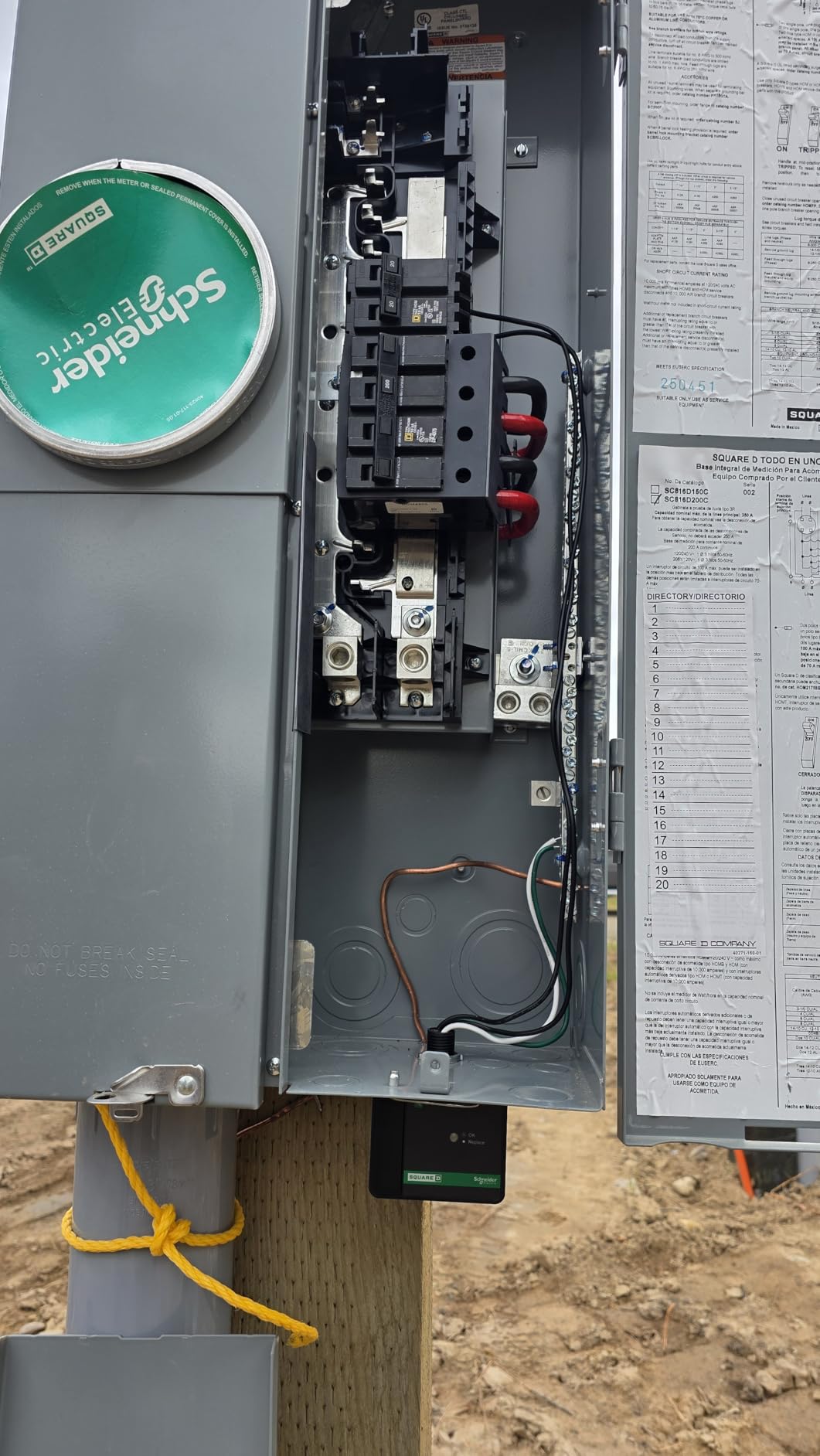
It needs a dedicated two-pole breaker and neutral and ground connections landed in the panel, same as the others. The difference in physical footprint is small enough that a Square D panel and a Square D device nest neatly, and electricians who work in those boxes daily will move faster on a matching install.
Check the warranty math if you are deciding between this and a premium unit. Five years of product warranty with five years of spare part availability in Europe is serviceable, but it is the shortest coverage among the higher-capacity devices here.
Where this is the wrong choice
Skip the 80kA version if you have a modest 100A or 150A service with a modest electronics load – the 25kA variant exists for that reason, and you are buying headroom you will not use. It is also the wrong pick at an exterior service entrance, since it is an in-panel Type 2 rather than a line-side Type 1.
If a connected equipment warranty matters to you, this is not the device. It protects the whole house; it does not insure the gear.
4. Eaton CHSPT2SURGE – The Budget In-Panel Option With Four MOVs
Eaton CHSPT2SURGE SPD Type 2 Chsp Whole Home Surge Protector, Nema 4, Single Phase, 120/240 Volts, Ul 1449 3Rd Edition
Current rating: 36 kiloamps
Voltage: 240 volts
Type: UL 1449 3rd edition Type 2
Pros
- Best price to protection ratio among in panel Type 2 devices
- Four Sincera T25D241K metal oxide varistors across two legs
- NEMA 4 outdoor rated housing with silicone dipped board and gasketed screws
- Quick connect design simplifies mounting
Cons
- Two pole 15A breaker required and short 14 inch leads may need extensions
- Status LEDs are hidden from view when mounted inside the panel
- Shunts common mode and nearby lightning transients rather than direct strikes
The CHSPT2SURGE sits at the bottom of the cost curve without bottom-of-the-market build quality. At 1243 reviews and 4.7 stars with 84 percent five-star ratings, its owner satisfaction is statistically indistinguishable from the premium units.
Owners who have opened the unit report the good stuff first: four Sincera T25D241K metal oxide varistors, two per leg, on a silicone-dipped circuit board inside a NEMA 4 outdoor-rated housing with gasket-sealed screws. That is a properly built device, and it is UL 1449 3rd edition listed as a Type 2 SPD for 120/240V single phase service. The quick connect design makes mounting the cable protection modules straightforward.
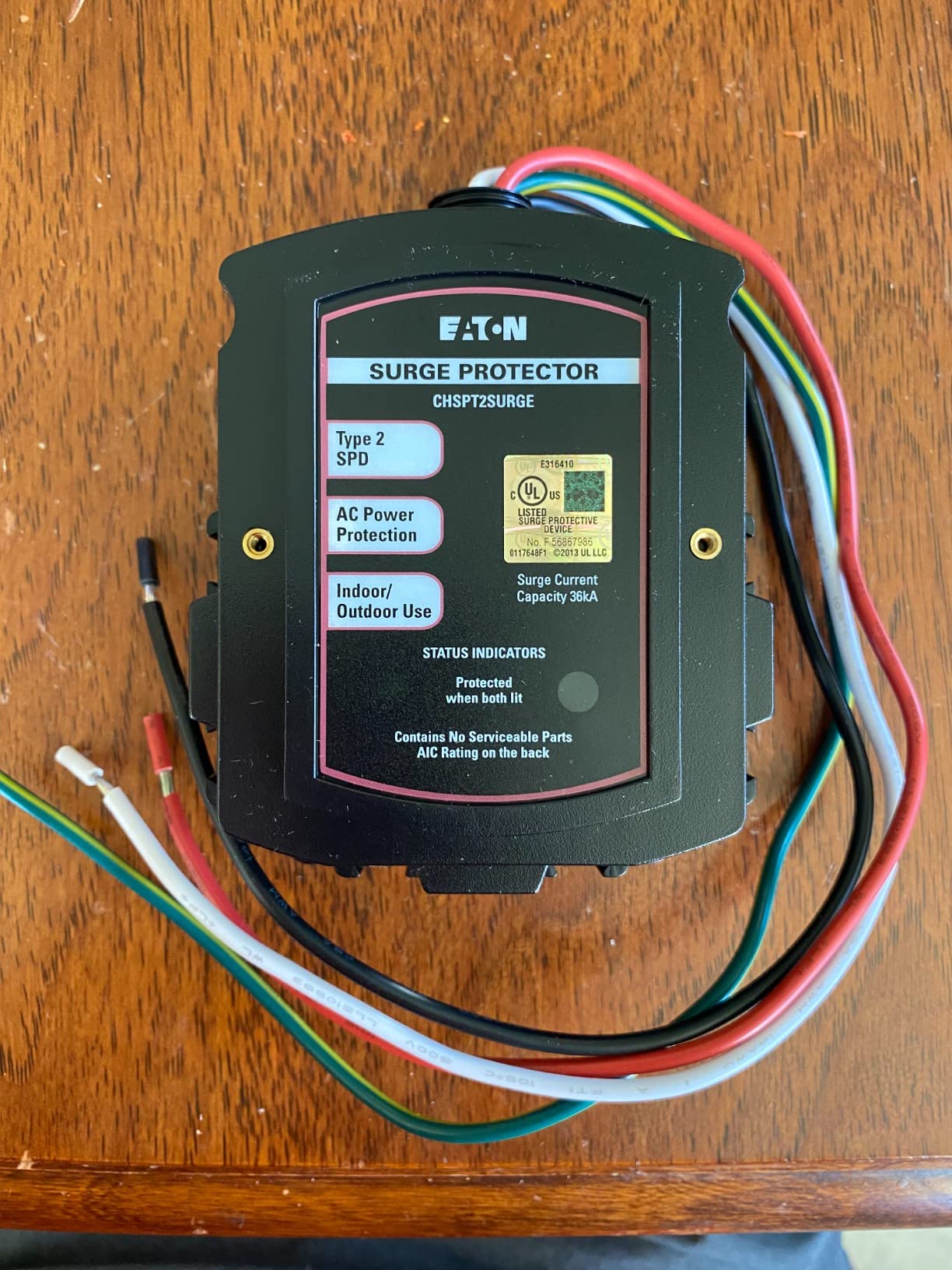
At 13.44 ounces and listed at 36 kiloamps of current rating, it is the smallest capacity number here, and that is exactly where the value judgment comes in. It is a device for handling switching surges and nearby-lightning induced transients in a home with a solid modern panel, not for absorbing a direct strike.
Several owners describe installation as simple provided the device is placed as the first breaker in the panel, which keeps the leads short and the wiring neat.
What you need to know before the electrician orders it
It requires a two-pole 15A breaker installed as the first breaker in the panel. The 14 inch leads are the detail that catches people – if the panel is deep or the bussing is awkward, the leads may need extending, which adds labor your quote may not have anticipated.
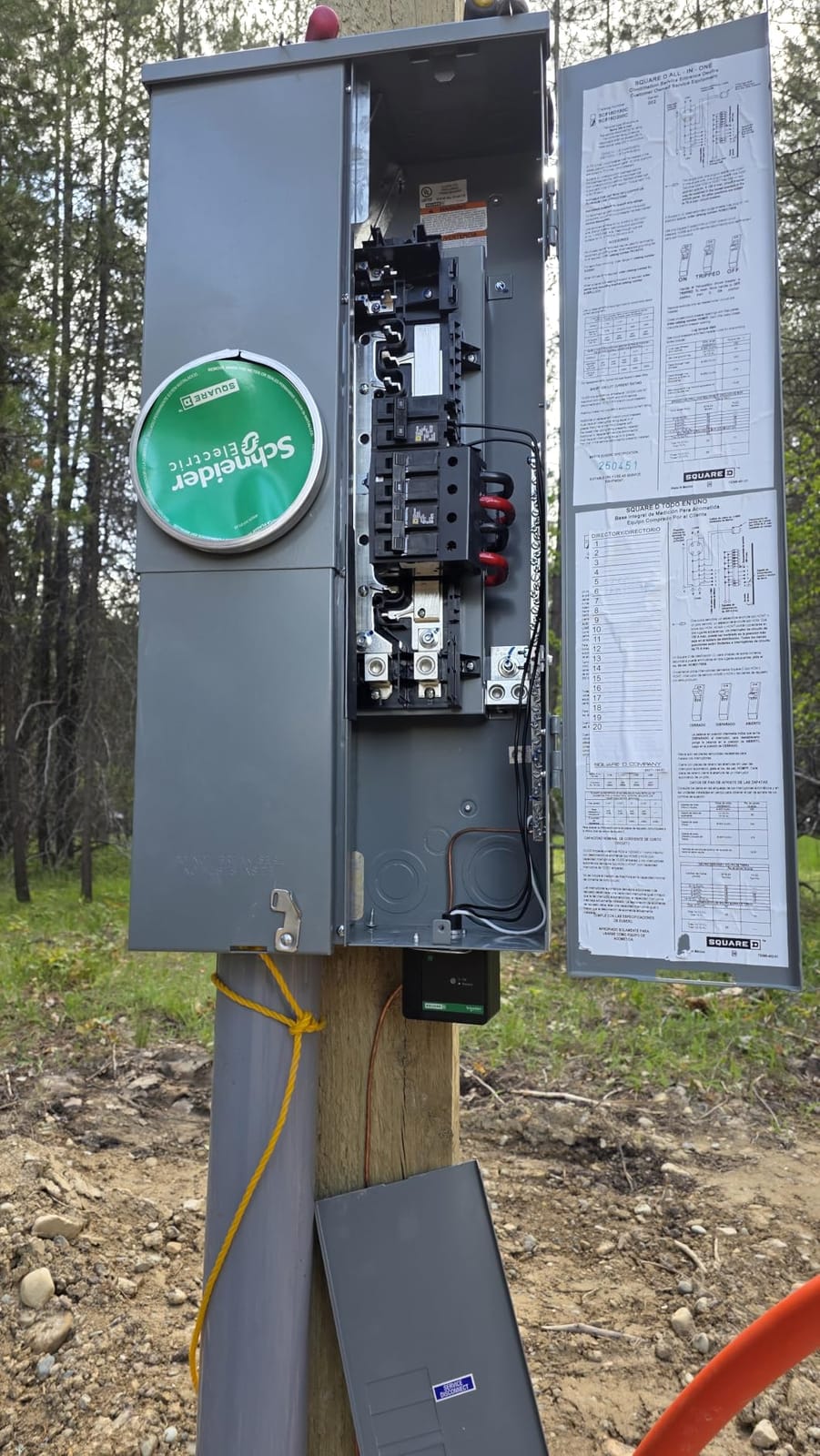
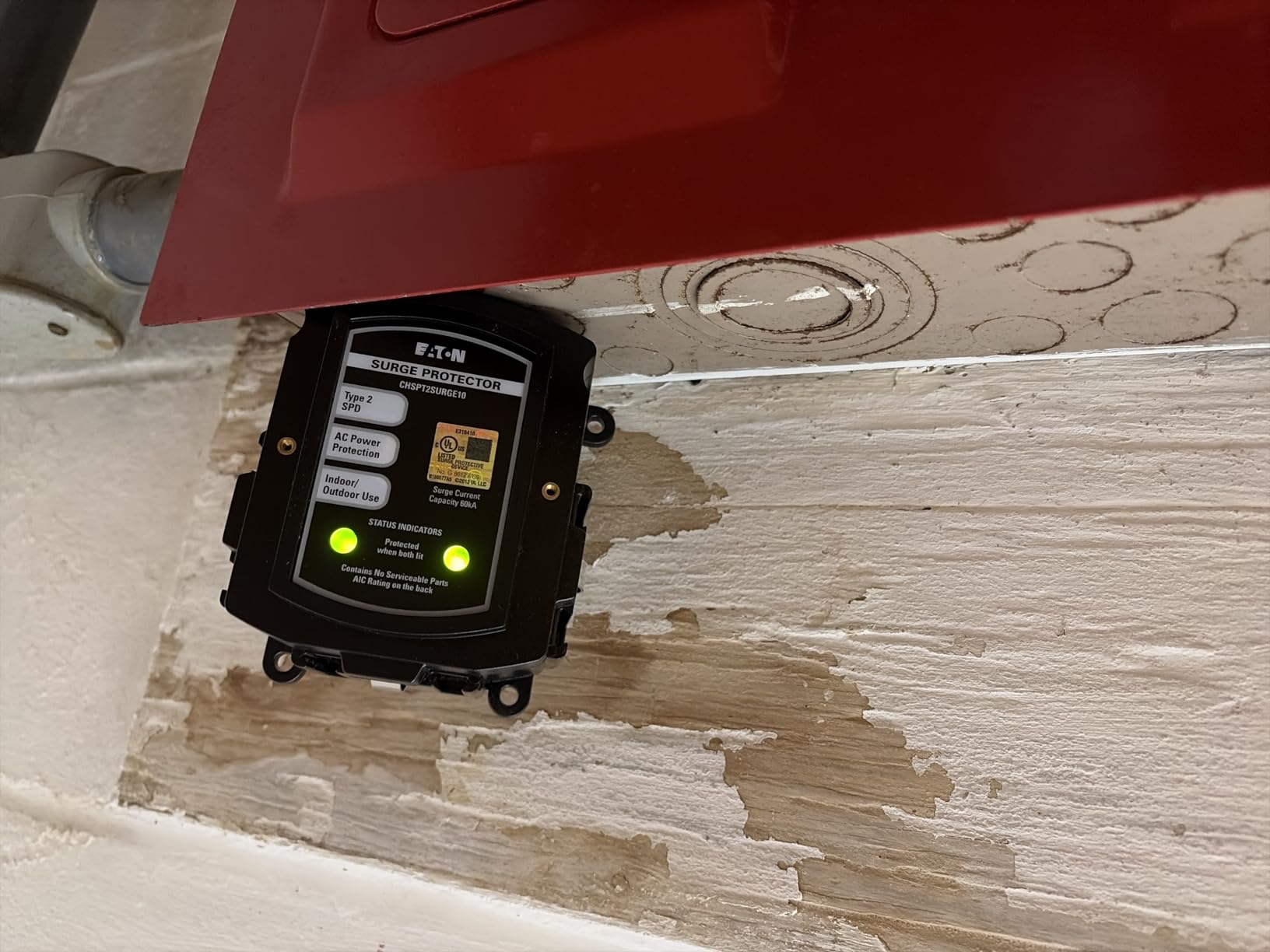
The two green LED indicators are worth thinking about before the install, not after. If the unit sits inside the panel, you cannot see them without opening the door, which defeats much of the convenience of having status indication at all. Ask your electrician whether the panel has a workable spot for an external view.
Where this is the wrong choice
This is the wrong device for a house with a long overhead service drop, a nearby transmission line, or a documented history of large surges. At 36kA there is less margin to absorb a serious event, and when the MOVs degrade you replace the unit rather than reset it.
Owners on forums also note that these shunt common mode and nearby-lightning transients only. If you want line-side coverage at an exterior disconnect, you need a Type 1 instead.
5. Intermatic Smart Guard IG2240-IMSK – The Only Model With Field-Replaceable Modules
Intermatic IG2240-IMSK Smart Guard Whole-House Surge Protector, 120/240 VAC
Modules: three field replaceable IModules
Enclosure: metal Type 1
Weight: 7 pounds
Pros
- Only unit here with user replaceable IModules
- no new SPD unit or rewiring needed after a surge
- Three IModules with bright power and protection status LEDs
- 50000 dollar connected equipment warranty for 10 years
- Module power switch allows safe disconnection during replacement
Cons
- Included white neutral pigtail is often too short to reach the panel
- Bulky 7 pound metal enclosure takes more room than in panel models
- Replacement module availability long term is not guaranteed
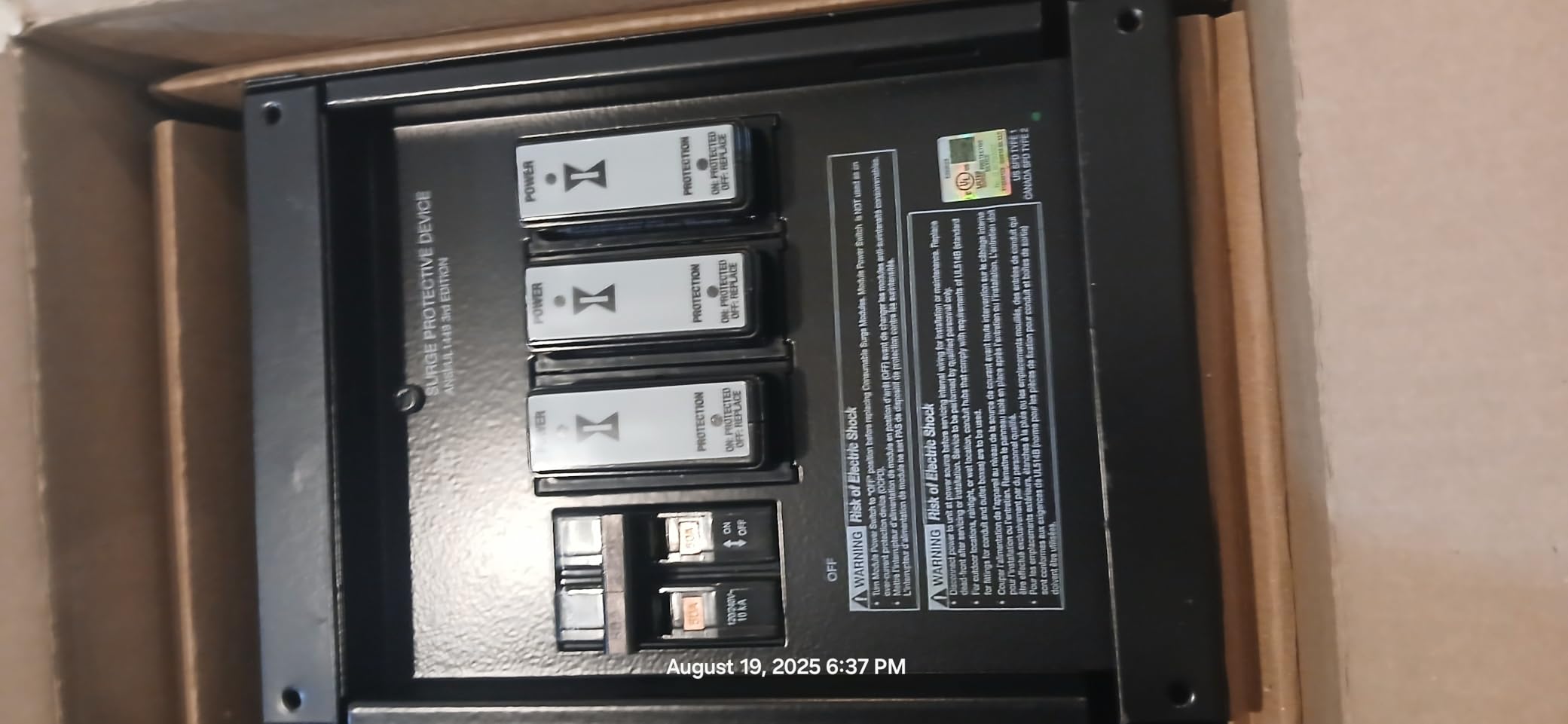
Every other sacrificial device in this roundup means a replacement device after a real surge. The Intermatic Smart Guard is the exception: it ships with three IModules that the owner or electrician can swap in place, without a new SPD unit and without rewiring the panel.
That single design decision changes the long-term cost picture. The modules carry LED lights for power and protection status, the doors are tamper-proof, and an included module power switch lets you disconnect power safely during a swap. The metal Type 1 enclosure suits indoor metal applications, and the 50000 dollar connected equipment warranty runs for 10 years.
Owners in high-lightning regions report the payoff directly: zero service calls and zero outages across multi-year periods, and one reviewer said they replaced several homes’ worth of electronics after a strike with nothing else lost. At 305 reviews and 4.6 stars, the review base is thinner than the big sellers, and it has the lowest five-star share at 82 percent and the highest one-star share at 5 percent – so expect some noise around the edges.
The recurring physical complaint is specific and fixable: the supplied white and neutral pigtail is shorter than the black leads and often needs extending to reach the panel. Your electrician can flush mount it or run extra wire, but know about it going in.
What you need to know before the electrician orders it
It weighs 7 pounds and is a metal enclosure, so it is not an in-panel unit. Plan the location as an external or adjacent mount rather than expecting it to sit on the bussing like the CHSPT2ULTRA. That also means it can be mounted where a Type 1 location is appropriate.
Check module availability with your electrician before you commit. Replaceable modules are only a benefit if the replacement parts remain obtainable, and that is a question worth asking of any product sold on a replacement-part model.
Where this is the wrong choice
The 7 pound metal body is the wrong answer in a small panel with no room, and the pigtail length can turn a one-hour job into a longer one. It is also the lowest-rated unit here at 4.6, so if you are sensitive to a broader failure rate, the premium units carry more social proof.
For a rental portfolio where you want to hand each tenant a functioning device quickly, the module swap is genuinely valuable. For a single home with a modern panel and good grounding, it is a nice-to-have rather than a necessity.
6. Leviton R2120-B – The Code-Centric Type 1 for Service Entrances
Leviton Type 1 Surge Protective Panel, Residential Home Surge Protection, 120/240 VAC, Split Phase, 36kA per Phase, R2120-B SPD, Gray
Type: Type 1 SPD for service entrances
Rating: 36kA per phase
Weight: 7.2 ounces
Pros
- Meets NEC 2020 and 2023 Article 230.67 requirements for dwelling units
- Compact Type 1 design that is straightforward to wire in
- Leviton brand reliability at a budget price point
- Popular for rental properties and furnace protection
Cons
- Housing can be slightly too large to sit flush on a finished wall disconnect
- Often needs an external mounting bracket because the panel has no built in spot
- Hard to visually confirm performance without an actual surge event
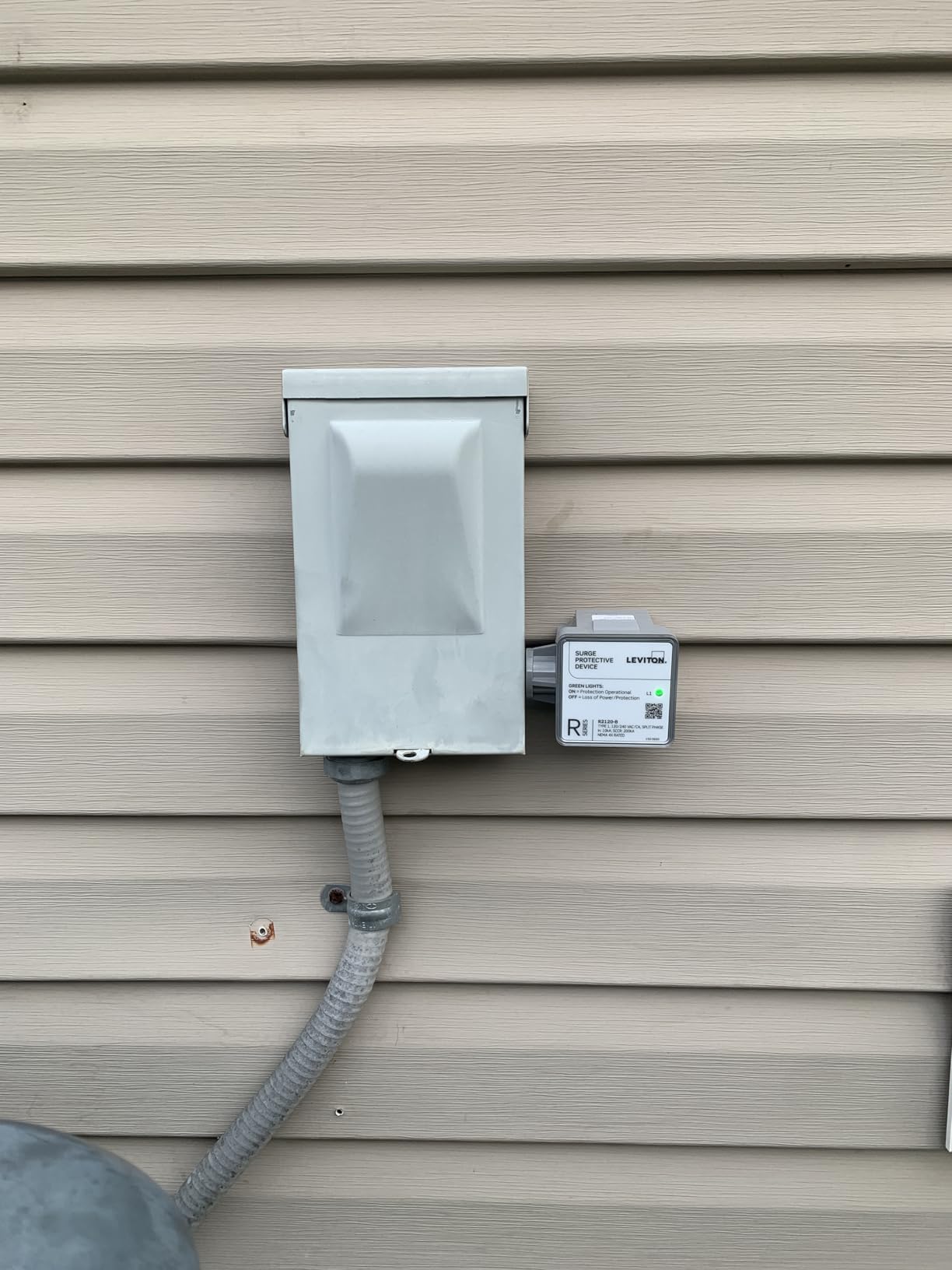
The R2120-B is a Type 1, which makes it a different animal from everything above it: it belongs at or upstream of the service disconnect, rated for the 10/350 microsecond lightning waveform rather than only the switching waveform. At 36kA per phase on 120/240 VAC split phase, it is a compact line-side unit at 7.2 ounces.
Its main argument is code and brand. Leviton states that Article 230.67 of the 2020 NEC requires all services supplying dwelling units to be provided with an SPD, and that the SPD must be a Type 1 or Type 2. The 2023 NEC expanded that requirement to dormitory units and guest rooms and guest suites of hotels and motels. If you are installing to current code, or updating a panel to current code, this satisfies the requirement and nothing else in the budget tier does it as a Type 1.
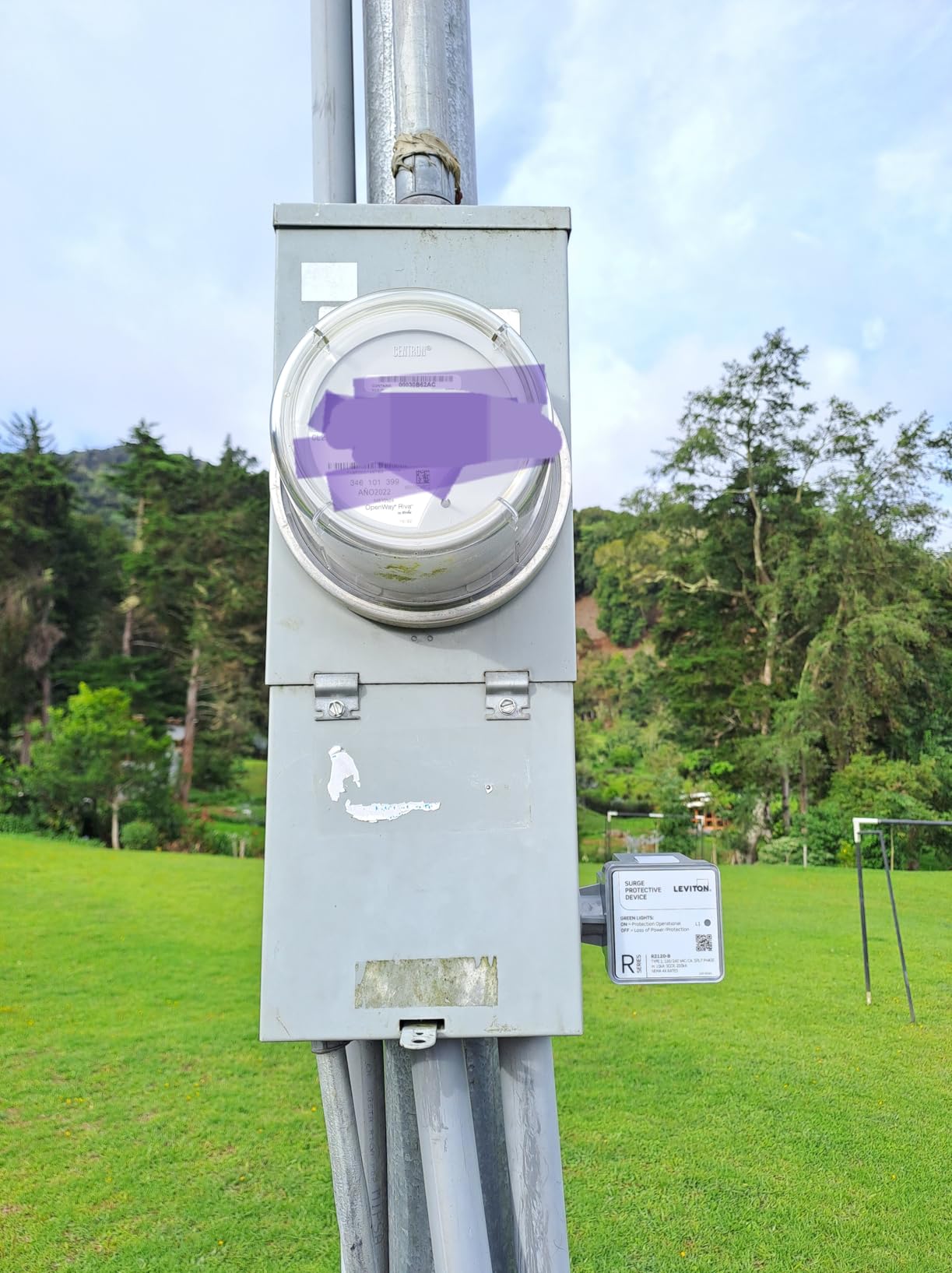
At 163 ratings and 4.7 stars, this is a newer listing with a thinner review base, and buyers frame it mostly around compliance and value. Owners describe adding it to existing panels specifically to meet or anticipate code requirements, and several mention installing them in every rental property to protect appliances and furnaces. The wiring is described as easy, and Leviton’s brand reputation carries real weight for buyers who do not want an unknown name on their service gear.
That furnace point connects to a broader use case. If your highest-value electronics are a gas furnace control board and a set of smart thermostats, protecting those hardwired circuits is where the return shows up fastest. It is also why our whole-house humidifier guide focuses on the same equipment chain – furnace-side electronics fail in ways that are easy to misdiagnose.
What you need to know before the electrician orders it
The physical fit is the thing to verify in advance. Owners report the housing can be slightly too large to sit flush against a wall-mounted disconnect box, and that it often needs an external mounting bracket because the panel has no built-in spot for it. On a flush-mounted disconnect in a finished wall, that bracket changes the install from quick to fiddly.
It is a Type 1, so confirm the electrician is placing it on the line side of the service disconnect. Mounted downstream where a Type 2 belongs, you are paying for a rating the location will not use.
Where this is the wrong choice
It is the wrong device for a panel with an interior main, where a Type 2 is both appropriate and cheaper. And with 36kA per phase it sits at the same capacity tier as the budget Type 2 units, so if you have heavy load or a rough service environment, this is not the capacity you want.
Owners also note the difficulty of visually confirming performance without an actual surge event. If knowing the device is still alive matters to you, verify that it carries a status indicator your electrician can point you to.
7. ABB THOMESURGEP – The External-Mount Type 1 That Frees Up Breaker Spaces
ABB THOMESURGEP • Whole Home Surge Protection Device • Type 1 SPD • NEMA 3R
Type: Type 1 SPD, 36kA per phase
SCCR: 200kA
Enclosure: NEMA 3R external mount
Pros
- External mount means it occupies no breaker spaces in the load center
- NEC 2023 Article 230.67 compliant 36kA per phase Type 1 ratings
- UL listed and ANSI certified with 200kA SCCR
- Universal fit with PowerMark PRO or any brand of load center
Cons
- Requires an external mounting location and a pigtail run back to the panel
- NEMA 3R housing is weather resistant but not fully exposed rated
- Limited long term field data with only 160 customer reviews
The THOMESURGEP solves a specific, unglamorous problem: a panel with no room left. Because it mounts externally with a pigtail connection rather than sitting on the bussing, it consumes zero breaker spaces, which makes it the pick for crowded panels, renovation work, and subpanels.
On paper it is a solid unit. Type 1 SPD at 36kA per phase, 120/240V and 120/208V AC, 200kA SCCR, 10kA nominal discharge, 50-60Hz operating frequency, in a NEMA 3R enclosure with an LED status indicator. ABB states it is NEC 2023 Article 230.67 compliant and compatible with PowerMark PRO or load centers of any brand, in service entrance or sub-panel locations. At 4.8 stars from 160 ratings with 86 percent five-star, it posts the highest average rating in this roundup.
The 200kA SCCR figure is the spec most worth understanding here. SCCR is the short circuit current rating – how much fault current the device can withstand before it fails destructively. A high SCCR matters on panels feeding heavy loads, which is exactly where you might be external mounting a Type 1.
Buyers consistently emphasize the external-mount design and the code compliance, and the ABB name carries weight for anyone who does not want a no-name device on the line side of their service.
What you need to know before the electrician orders it
It needs a real mounting location and a pigtail run back to the panel. On a finished wall that means deciding where the device lives before the drywall decision gets made, not after. NEMA 3R is weather-resistant but not fully exposed-rated, so it wants a sheltered exterior location rather than an open wall face.
With 160 customer reviews, long-term field data is limited compared to the 1400-plus review units above it. That is the trade for the highest average rating: less history behind the number.
Where this is the wrong choice
If your panel has room and you want the simplest possible install, an in-panel Type 2 is less work and no more money. The external mount earns its place only when panel space is genuinely constrained or you specifically want a line-side Type 1.
It is also the wrong call for anyone without a definite mounting spot. A NEMA 3R box on the side of a house in a region with heavy rain is not the same as a device rated for full exposure.
8. Furniqro FHSPD108S – A 108000 Amp Compact Unit From an Unknown Brand
Furniqro FHSPD108S Whole House Surge Protector for 108,000 Amps, Ultimate Surge Protection, Whole Home Surge Protector for Indoor/Outdoor Use, 120/240V
Surge capacity: 108000 amps
Voltage: 240 volts, 60Hz
Weight: 0.46 kg
Pros
- 108000 amp capacity in a compact plastic footprint
- Compatible with any brand of load center and circuit breakers
- Commercial grade enclosure suitable for indoor or outdoor mounting
- LED status indicators confirm the device is active
- Highest five star share at 86 percent in this roundup
Cons
- Unknown brand with a far smaller review base than the established electrical manufacturers
- Most startup and protection issues trace back to improper grounding or install
- Requires an electrician familiar with surge protector protocols
The FHSPD108S is the value entry here: 108000 amps of surge current capacity for 120/240V, 60Hz systems, in a plastic enclosure at 0.46 kg that the listing describes as commercial grade for both indoor and outdoor installation. It is compatible with any brand of load center and circuit breakers, and it has LED status indicators.
Owner satisfaction is high for what it is – 119 reviews at 4.7 stars with an 86 percent five-star share, the highest five-star proportion in the roundup. Owners cite the combination of 108000 amp capacity in a small body as the main draw, and several note that correct grounding is essential to getting it working as intended.
The honest framing is about what this category rewards. On forums, buyers explicitly warn each other off unspecified units and name Siemens, Square D, Eaton, and Leviton as the trustworthy set. The four names in the retail carousel are exactly those brands, and brand pedigree is the top trust signal in this category because a device that fails silently is worse than no device.
This is also the unit where the grounding conversation matters most. Owners advise having an electrician familiar with SPD protocols handle the install, because grounding errors and misuse are the usual cause of apparent startup issues. A brand name does not fix a bad ground connection.
What you need to know before the electrician orders it
Verify the UL listing yourself before it goes in a panel. UL 1449 is the one non-negotiable check, and if the documentation is not easy to find, that tells you something. Confirm the enclosure rating matches where it will actually sit, since indoor and outdoor in the listing language is broader than a NEMA 4X or 3R designation.
Have your electrician confirm the panel bussing connection and the ground reference during install, not after. The recurring advice from owners on this product is to verify grounding first.
Where this is the wrong choice
It is the wrong choice for a service entrance where a Type 1 line-side device is required, and the wrong choice for anyone who wants a connected equipment warranty – there is none here. The connected equipment coverage on the Siemens and Intermatic units is a real, concrete protection that this does not offer.
It is also the wrong choice if you cannot verify the listing and the warranty terms yourself. With 119 reviews, you are buying on spec sheet and support responsiveness rather than on field history, and in a category where a failed device is silent, that is a trade worth making only deliberately.
How to Choose kA and kVA Without Overspending
Is bigger necessarily better for surge protectors? The short answer is no, and the confusion is worth dismantling because it is the most-asked question in this category with no clear editorial answer anywhere.
Forum users run into this immediately: units are found rated from 20kVA to 80kVA, and there is no framework for deciding whether the higher capacity is worth the money. The problem is that kVA and kA are not the same measurement, and neither maps neatly onto panel size.
Here is how the numbers relate to a decision. kA per phase is how much surge current the device can absorb per phase before its metal oxide varistors degrade – more means more headroom and longer service life. kVA is the aggregate capacity across phases, and it is the number most often quoted ambiguously. Clamping voltage is the ceiling your electronics actually see, and for fragile gear that number matters more than raw kA.
For a typical 200A residential panel, a Type 2 in the 36kA to 80kA per phase range handles the switching surges that actually occur in normal service. Stepping to 108kA or 140kA per phase buys real headroom, and that headroom matters in three specific situations: a rural property with a long overhead service drop, a home near transmission infrastructure, or a panel feeding heavy inductive loads such as a welder, shop tools, or a central air compressor. Outside those cases you are paying for margin you will not consume.
Panel size is a weaker signal than people assume. A 200A and a 400A service in the same neighborhood see the same grid switching events. What changes with service size is how much of your equipment is expensive, and that is a better justification for higher capacity than the amperage number itself.
One more decision rule: prioritize a device with a status indicator and a real warranty over one with a larger kA number and neither. A silent failure in a protected panel is the outcome you are paying to avoid.
What Your Electrician Actually Does During the Install
The install is a short job on a panel that is already open, but knowing the sequence kills most of the anxiety that drives the can-I-do-this-myself question.
Verifying the ground and bond first. Grounding and bonding problems reduce protection dramatically, and an SPD on a poorly grounded panel is an expensive way to do nothing.
Confirming panel space and breaker position. Most in-panel devices go in as the first breaker position, which keeps the feed short and the wiring clean. External-mount models skip this entirely.
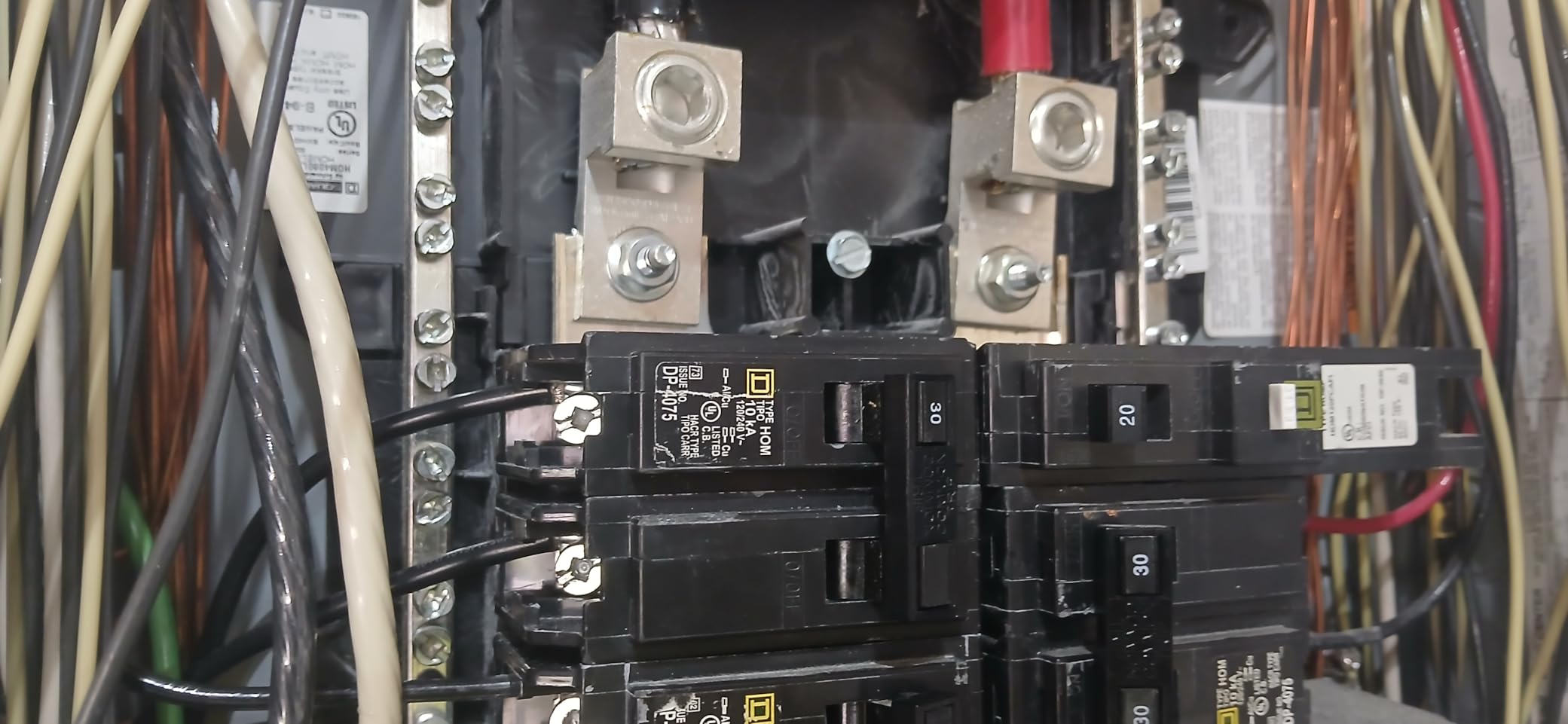
Installing the two-pole breaker feed. Common residential configurations are 15A or 20A two-pole breakers, and the breaker is usually not included with the device. Forum owners confirm the 50A and 20A configurations in real installs, so have yours on the materials list.
Landing the line, neutral, and ground conductors. Even universal-fit devices still need neutral and ground connected to the panel bussing. Short leads on some models may need extending.
Testing the status indicator and photographing the panel. Get a record of the indicator state on install day, so you have a baseline to compare against later.
The Siemens FS140 also needs its enclosure penetration sealed properly – the 3/4 inch NPT tapered pipe thread is the detail owners most often wish they had raised beforehand.
Should you buy the device yourself or let the electrician source it? Buying yourself gives you the model choice, which is how you end up with a specific unit instead of whatever the truck carries. Letting the electrician source it removes the coordination risk entirely. Either way, confirm the UL 1449 listing and the Type before anything is ordered.
Subpanels, Garages and Detached Structures
One SPD at the main panel protects everything fed from that panel, including interior subpanels, because the surge arrives on the service conductors before it reaches any branch circuit.
Detached structures are the genuine gap. A barn, a detached garage, or a shop fed by a long feeder from the main has its own exposure to induced transients along that run, and forum users protecting a barn subpanel with a welder, stationary shop tools, lighting, and a freezer are asking exactly the right question.
The practical rule: if the feeder is long and the structure holds equipment worth protecting, a second SPD at that subpanel is worth the trip. Any of the models above works at a subpanel location as long as the panel is a standard 120/240V single-phase setup. The ABB THOMESURGEP is explicitly rated for sub-panel use, and its external-mount design suits a detached building better than an in-panel unit.
For the furnace and refrigeration circuits specifically, remember that a freezer in an unheated outbuilding is one of the most surge-exposed loads in a house. If you are adding equipment there, protection is not optional.
How to Tell If a Surge Protector Has Died
Every SPD in this roundup is a sacrificial device. The metal oxide varistors degrade with each surge they absorb, and once they have taken enough energy they stop clamping.
The primary signal is the status indicator. The Square D HEPD80 has an LED that shows when replacement is needed. The Siemens FS140 layers three forms of indication – an audible alarm, protection status LEDs, and a red service LED. The Eaton CHSPT2SURGE has two green status LEDs, though owners note they are hard to read when the unit sits inside the panel. The Intermatic IModules show power and protection status with bright LEDs that read in light and dark.
Get a baseline. Photograph the indicator when the device is installed, and check it annually alongside your panel walk-through. If the light goes dark or changes state, the device needs replacing, not resetting.
Two failure modes catch people out. First, a device with a hidden indicator – an in-panel unit you never look at – can fail silently for years. Second, the Siemens FS140 shuts down power into the panel entirely after a severe event until it is removed or bypassed, which looks like a total electrical failure but is actually the protection working. Before calling an electrician for a no-power house, check whether a surge device has tripped.
Replacement is straightforward for the Intermatic, which has field-replaceable modules and a module power switch for safe disconnection. For everything else, replacement means a new device and an electrician visit, which is the strongest practical argument for the replaceable-module design.
Frequently Asked Questions
What is the best surge protector for an electrical panel?
The best whole house surge protector for electrical panel duty in most homes is the Eaton CHSPT2ULTRA, a UL 1449 listed Type 2 SPD rated at 108 kiloamps that fits inside any manufacturer’s load center and carries the deepest review base in the category. For maximum surge capacity and a 10 year connected equipment warranty, the Siemens FS140 is the premium step up at 140000 amps per phase in a NEMA 4X enclosure.
Should I put a surge protector on my electrical panel?
Yes, if you have a modern panel and hardwired electronics worth protecting. A single panel-mounted device covers the furnace control board, air conditioner electronics, smart thermostat, and every other hardwired load that never touches a power strip. Verify your grounding and bonding first, because an SPD on a poorly grounded panel does very little.
What size whole house surge protector do I need for a 200 amp panel?
For a typical 200A residential service, a Type 2 SPD rated between 36kA and 80kA per phase covers the switching surges that actually occur in normal service. Step up to 108kA or 140kA per phase if you have a rural property with a long overhead service drop, live near transmission infrastructure, or run heavy inductive loads such as a welder or shop tools.
Are whole house surge protectors a good idea?
For most modern homes, yes. The device protects every hardwired appliance in the house at once and costs a fraction of replacing a single furnace control board or a destroyed home network. The install is a short job on a panel that is often already open during a service upgrade, which is the cheapest moment to add one.
Which is better, Type 1 or Type 2 surge protector?
A Type 2 device is right for most homeowners because it installs at the main load center and handles the 8/20 microsecond switching waveform at I(n) and I(max) ratings typically 20kA to 75kA. A Type 1 belongs at or upstream of the service disconnect, rated for the 10/350 microsecond lightning waveform at I(imp) of 25kA to 100kA, and is the correct choice if your main disconnect is outdoors. NEC Article 230.67 accepts either for dwelling unit services.
How long does a whole house surge protector last?
There is no fixed lifespan because service life depends on how much surge energy the device has absorbed. That is why the status indicator matters: when the light goes dark or changes state, the internal metal oxide varistors have degraded and the device needs replacing. Check the indicator annually and photograph it on install day so you have a baseline.
Can a whole house surge protector stop a direct lightning strike?
No panel-mounted surge protective device stops a direct strike to your home. These units handle the far more common events: utility switching, a transformer energizing down the street, a large motor starting, and the induced transient from a strike that lands nearby. For protection against direct strikes you need external lightning protection and surge coordination.
The Bottom Line on Whole-House Surge Protection in 2026
The best whole house surge protector for electrical panel duty is the Eaton CHSPT2ULTRA: universal panel fit, a 108 kiloamp Type 2 rating, an LED status indicator, and the deepest review base in the category. It is the unit we would put in a standard 200A home without hesitating.
Step up to the Siemens FS140 for maximum surge capacity, outdoor mounting, and a 10 year connected equipment warranty. Go budget with the Eaton CHSPT2SURGE, or pick the Intermatic Smart Guard if field-replaceable modules matter to you. Add a second unit at a detached structure if you have a long feeder and expensive equipment out there.
Whatever you choose, have a licensed electrician install it, verify the grounding first, and check the status indicator every year. Layer it with point-of-use protection for the gear that cannot tolerate any residual transient.