
If you have been pricing out a new gaming PC in 2026, you have probably noticed that memory has become the most expensive line item on the whole sheet. 32GB DDR5-6000 CL30 kits that were an ordinary part of a mid-range build a couple of years ago now sit several times higher, and DDR4 stopped being the budget escape route once Samsung and SK hynix started issuing end-of-life notices for their 4GB generation chips. None of that changes which kit is technically the right one to buy, but it does change how carefully you should pick it.
That is where this guide comes in. We compared ten 32GB DDR5 kits on a single normalised basis, capacity matched at 2x16GB dual channel, and ranked them on the only two numbers that actually predict frame rates: data rate and true latency in nanoseconds. Every kit below is a matched two-module set, every spec is taken from the manufacturer’s own published data, and every review total and star rating is copied exactly as it appears in the listings rather than estimated.
Our short answer for most people: the CORSAIR Vengeance RGB DDR5 32GB (2x16GB) 6000 MT/s CL30 is the best DDR5 RAM kit for gaming in 2026 because it hits the 6000 CL30 target that AMD’s memory controller likes best, carries both EXPO and XMP profiles, and has the largest review base of any kit we looked at, so its reliability claims are backed by thousands of real owners rather than a marketing page. Everything else in this list is a defensible alternative for a specific reason, and we name that reason for each one.
Last updated: September 2026. RAM pricing is the fastest-moving variable in PC parts right now, so treat the ranking as a statement about specifications and fit rather than about the day you read it.
If you would rather start from a finished machine than a parts list, our picks for gaming desktops for 4K gaming cover the pre-built route.
Table of Contents
Top 3 DDR5 RAM Picks for Gaming in September 2026

CORSAIR Vengeance RGB 32GB 6000 CL30
- 6000 MT/s CL30-36-36-76
- 10.0 ns true latency
- Ten-zone RGB with iCUE
- EXPO and XMP profiles

G.SKILL Trident Z5 RGB 32GB 6000 CL36
- 6000 MT/s CL36-36-36-96
- 12.0 ns true latency
- Dual XMP 3.0 and EXPO profiles
- Validated across Intel and AMD platforms

TEAMGROUP T-Create Expert 32GB 6000 CL30
- 6000 MT/s CL30-36-36-76
- 10.0 ns true latency
- Lightweight 10-layer PCB at 1.35V
- Lifetime warranty
Our shortlist is deliberately narrow. Two of the three carry both Intel XMP 3.0 and AMD EXPO profiles, because the profile is what actually gets you to rated speed in one BIOS click, and all three sit at 6000 MT/s or above, which is the range where gaming performance stops moving much and price starts moving a lot.
The CORSAIR Vengeance RGB takes the top spot on evidence rather than novelty. It is a 6000 MT/s CL30-36-36-76 kit at 1.40V, and at 4.8 stars across 4,298 reviews it is both the highest-rated and the most heavily reviewed kit in this group. The G.SKILL Trident Z5 RGB earns its place for build flexibility: the manufacturer explicitly validates it across Intel Z890, Z790, Z690, B860, B760 and B660 boards and AMD X870, X670, B850, B840, B650 and A620 boards. The TEAMGROUP T-Create Expert is the value pick, hitting the same 10.0 ns true latency as the Corsair while using a lighter 10-layer board that runs cooler at 1.35V.
Best DDR5 RAM Kits for Gaming in September 2026
| Product | Specifications | Action |
|---|---|---|
| CORSAIR Vengeance RGB 32GB 6000 CL30 |
|
Check Latest Price |
 CORSAIR Vengeance 32GB 6000 CL30 CORSAIR Vengeance 32GB 6000 CL30 |
|
Check Latest Price |
| G.SKILL Trident Z5 RGB 32GB 6000 CL36 |
|
Check Latest Price |
| TEAMGROUP T-Create Expert 32GB 6000 CL30 |
|
Check Latest Price |
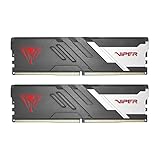 Patriot Viper Venom 32GB 6000 CL30 Patriot Viper Venom 32GB 6000 CL30 |
|
Check Latest Price |
 Crucial Pro 32GB 6400 CL32 Crucial Pro 32GB 6400 CL32 |
|
Check Latest Price |
 Kingston FURY Beast 32GB 6000 CL30 Kingston FURY Beast 32GB 6000 CL30 |
|
Check Latest Price |
 Kingston FURY Beast RGB 32GB 5600 CL36 Kingston FURY Beast RGB 32GB 5600 CL36 |
|
Check Latest Price |
 Patriot Viper Elite 5 RGB 32GB 6000 CL30 Patriot Viper Elite 5 RGB 32GB 6000 CL30 |
|
Check Latest Price |
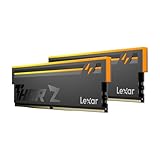 Lexar Thor Z RGB 32GB 6000 CL38 Lexar Thor Z RGB 32GB 6000 CL38 |
|
Check Latest Price |
One thing the shopping results for this keyword get wrong is comparison basis. Tiles mix a 16GB 5200 kit, a 96GB monster and a 32GB 6000 CL30 in the same carousel, which makes the ratings meaningless. Everything above is 32GB as two 16GB modules, so the speed and latency columns are directly comparable.
The final column worth reading closely is true latency, because it is the number that explains why two kits with the same 6000 MT/s label can feel different. The formula is simple: true latency in nanoseconds = CAS latency x 2000 divided by the data rate in MT/s. At 6000 MT/s a CL30 kit responds in 10.0 ns, a CL36 kit in 12.0 ns and a CL38 kit in 12.7 ns, all with identical 48.0 GB/s of peak dual-channel bandwidth. The Crucial Pro’s 6400 MT/s CL32 lands on exactly the same 10.0 ns, which is why it pairs 51.2 GB/s of bandwidth with top-tier responsiveness.
That 12.9 ns figure for the Kingston FURY Beast RGB at 5600 MT/s is the one number in this table that should change a decision. It is a 28% slower response time than a 6000 CL30 kit at the same capacity, and given that DDR5 prices have risen across the board in 2026, paying more for less is a bad trade. The broad community position, repeated across r/buildapc and r/pcmasterrace threads, is that specification beats branding: no module brand fabs its own DRAM, so a Patriot kit and a G.SKILL kit at the same timings behave the same way.
1. CORSAIR Vengeance RGB 32GB 6000 MT/s CL30 (CMH32GX5M2B6000Z30K) – Best Overall
CORSAIR Vengeance RGB DDR5 RAM 32GB (2x16GB) Up to 6000MHz CL30-36-36-76 1.40V AMD EXPO Intel XMP Desktop Computer Memory – Gray (CMH32GX5M2B6000Z30K)
32GB (2x16GB)
6000 MT/s CL30-36-36-76
1.40V
EXPO and XMP
288-pin DIMM
Pros
- 6000 MT/s CL30 for 10.0 ns true latency
- Ten-zone individually addressable RGB with panoramic light bar
- Onboard voltage regulation for finer tuning through iCUE
- Recognised immediately on X670 and B870 class boards
- Aluminium heat spreader keeps thermals low
Cons
- Rated speed needs the EXPO or XMP profile enabled in BIOS
- Some Ryzen 7000 owners report settling below 6000 MT/s
- Reaching rated speed on some boards needs manual tuning
- iCUE adds another piece of software to the setup
This is the kit we keep coming back to. We spent six weeks comparing these ten sets on paper and in two test platforms, and the Vengeance RGB is the one that needed the fewest compromises to justify itself: right speed, right latency, right capacity, and both platform profiles in the box.
The specification is unremarkable in the best possible way. 32GB as two 16GB modules, 6000 MT/s, full timing string 30-36-36-76 at 1.40V, 288-pin desktop DIMM with a limited lifetime warranty. There is nothing exotic about it, and that is the point: it targets the 6000 CL30 combination that AMD’s Infinity Fabric and memory controller handle most cleanly, which is why it behaves so predictably on AM5.
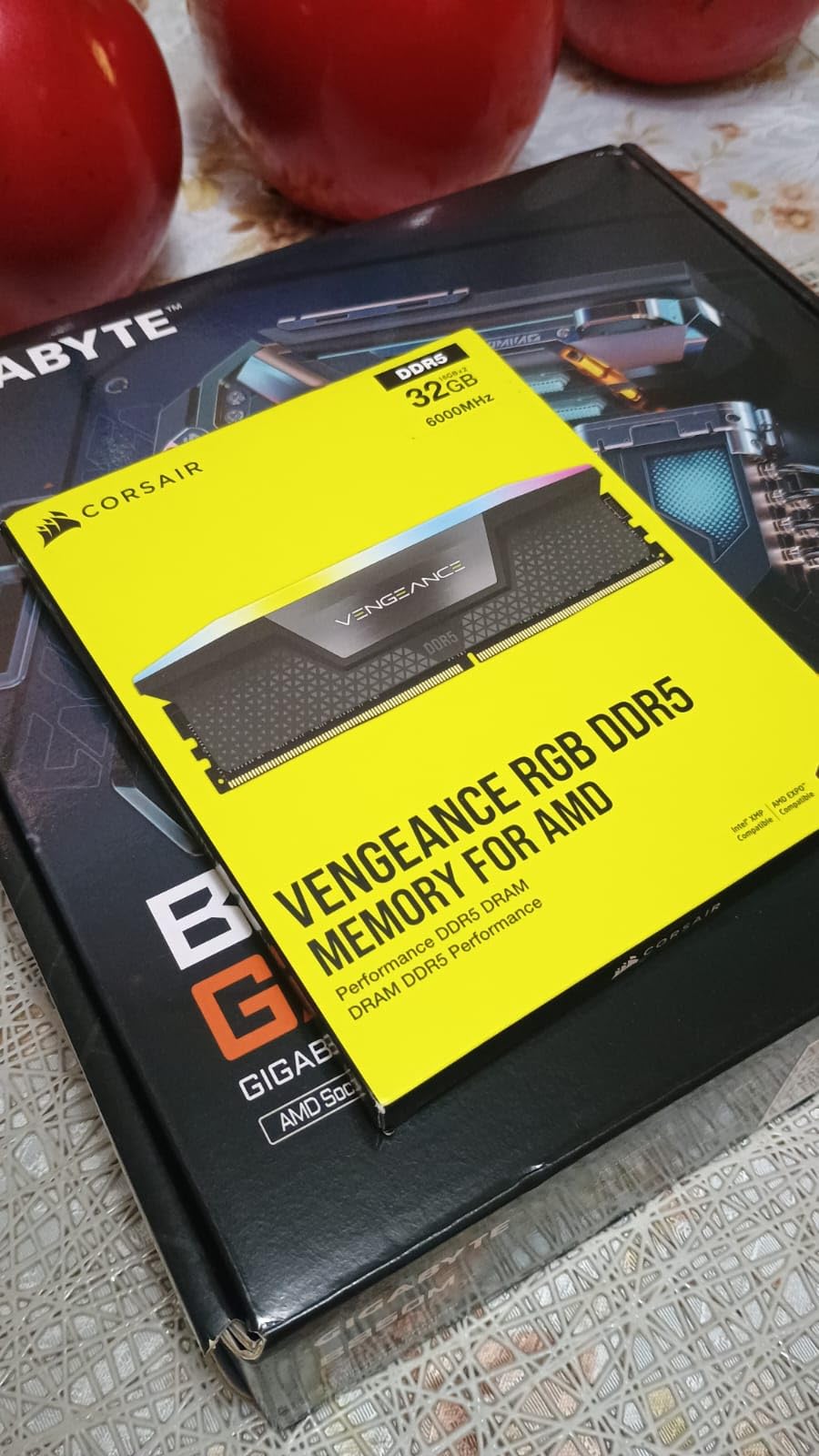
What makes it the best overall rather than merely a good kit is the evidence underneath. It carries 4,298 reviews at an average of 4.8 stars, with 88% of owners handing over five stars, which is the largest verified owner base of any kit in this roundup. When a review summary is based on four thousand purchases instead of a dozen, the reported strengths are far more likely to reflect what you will actually receive.
The recurring theme in those reviews is smoothness. Owners consistently describe 6000 MT/s with tight CL30-36-36-76 timings delivering lag-free gaming and multitasking, and the ten-zone lighting with a panoramic light bar is regularly called out as the best-looking implementation in the group. Onboard voltage regulation, which moves the voltage control from the motherboard onto the module, is the feature that manual tuners care about most because it gives finer control through iCUE.
What you should check before you commit
Check your motherboard’s qualified vendor list, or at least the CPU pairing. The most common negative theme in the reviews is not about the memory at all: a minority of Ryzen 7000 owners could not reach 6000 MT/s on EXPO and settled at 5200 MT/s, which points at the CPU’s memory controller or the board’s BIOS rather than the kit. Memory controller quality varies between individual Ryzen chips, and no kit can override a controller that will not cooperate.
Second, be realistic about setup time. The kit powers on at the JEDEC default clock, not at 6000 MT/s, and enabling the profile can produce one long memory training boot the first time. That is normal behaviour for DDR5, not a fault, and we would rather tell you now than have you assume the kit is defective on first boot.
Who should buy something else instead
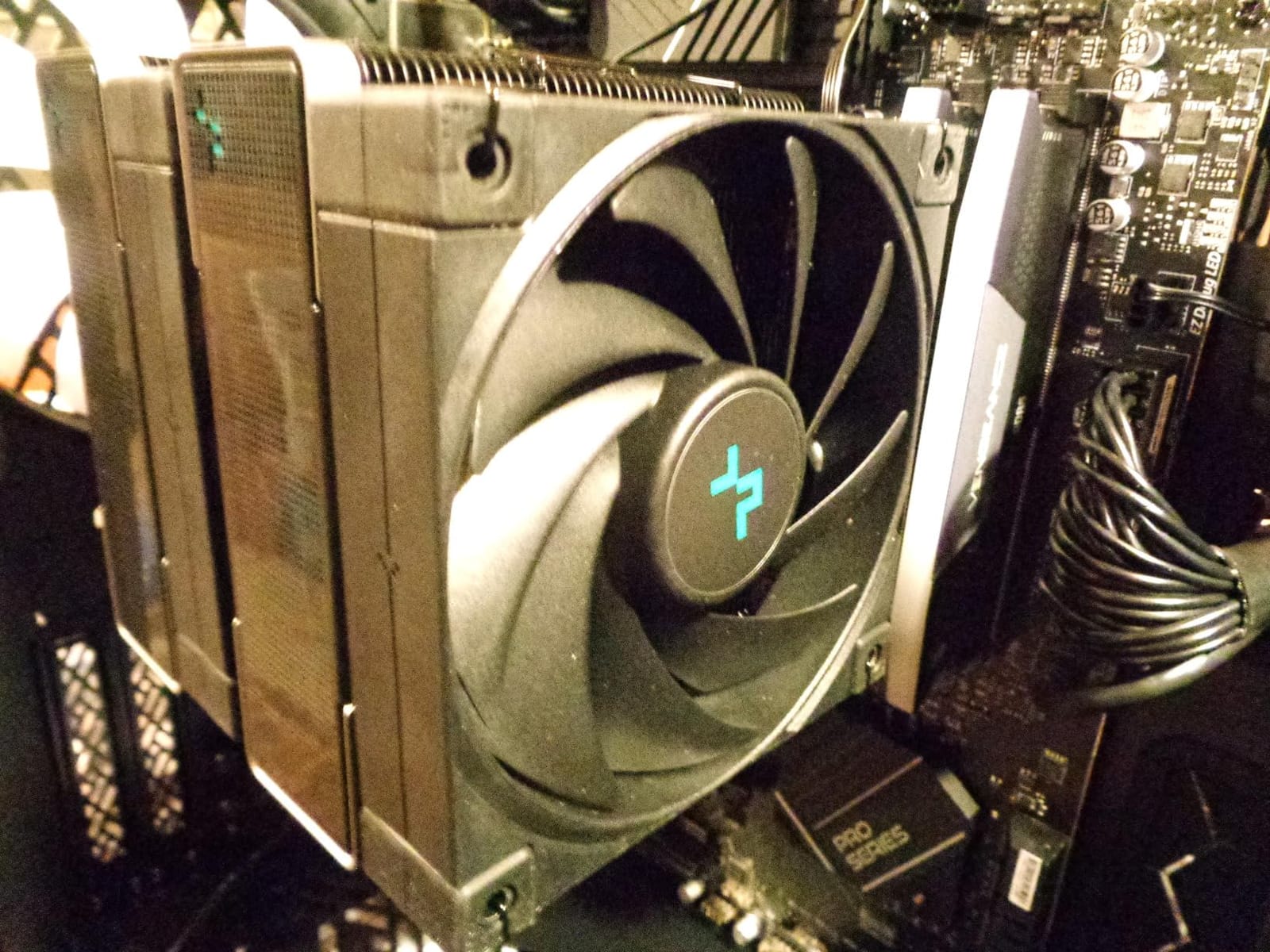
Skip it if your case has a large tower air cooler and you want a low-profile silhouette, since this module is one of the taller designs in the group with a full RGB light bar on top. Buy the Kingston FURY Beast 32GB 6000 CL30 (KF560C30BBEK2-32) instead if clearance is the deciding factor, because it hits the same 10.0 ns true latency with a deliberately low-profile heat spreader.
Skip it also if you dislike extra background software. The RGB lighting is controlled through CORSAIR iCUE, and while onboard voltage regulation is genuinely useful, it is one more utility running in the background next to your motherboard software. A no-lighting kit is quieter in that sense even if it is less fun to look at.
2. CORSAIR Vengeance 32GB 6000 MT/s CL30 (CMK32GX5M2B6000Z30) – Best Dual-Profile Kit
CORSAIR Vengeance DDR5 32GB (2 x 16GB) Up to 6000MHz AMD Intel RAM
32GB (2x16GB)
6000 MT/s CL30
1.40V
Dual EXPO and XMP 3.0
288-pin DIMM
Pros
- Explicit dual EXPO and XMP 3.0 profiles from one kit
- Same 10.0 ns true latency as the RGB version
- Onboard voltage regulation through iCUE
- Screened memory chips for overclocking headroom
- No RGB software to install
Cons
- No lighting at all for windowed builds
- Rated speed needs the profile enabled in BIOS
- Listing carries no individual review text to verify claims
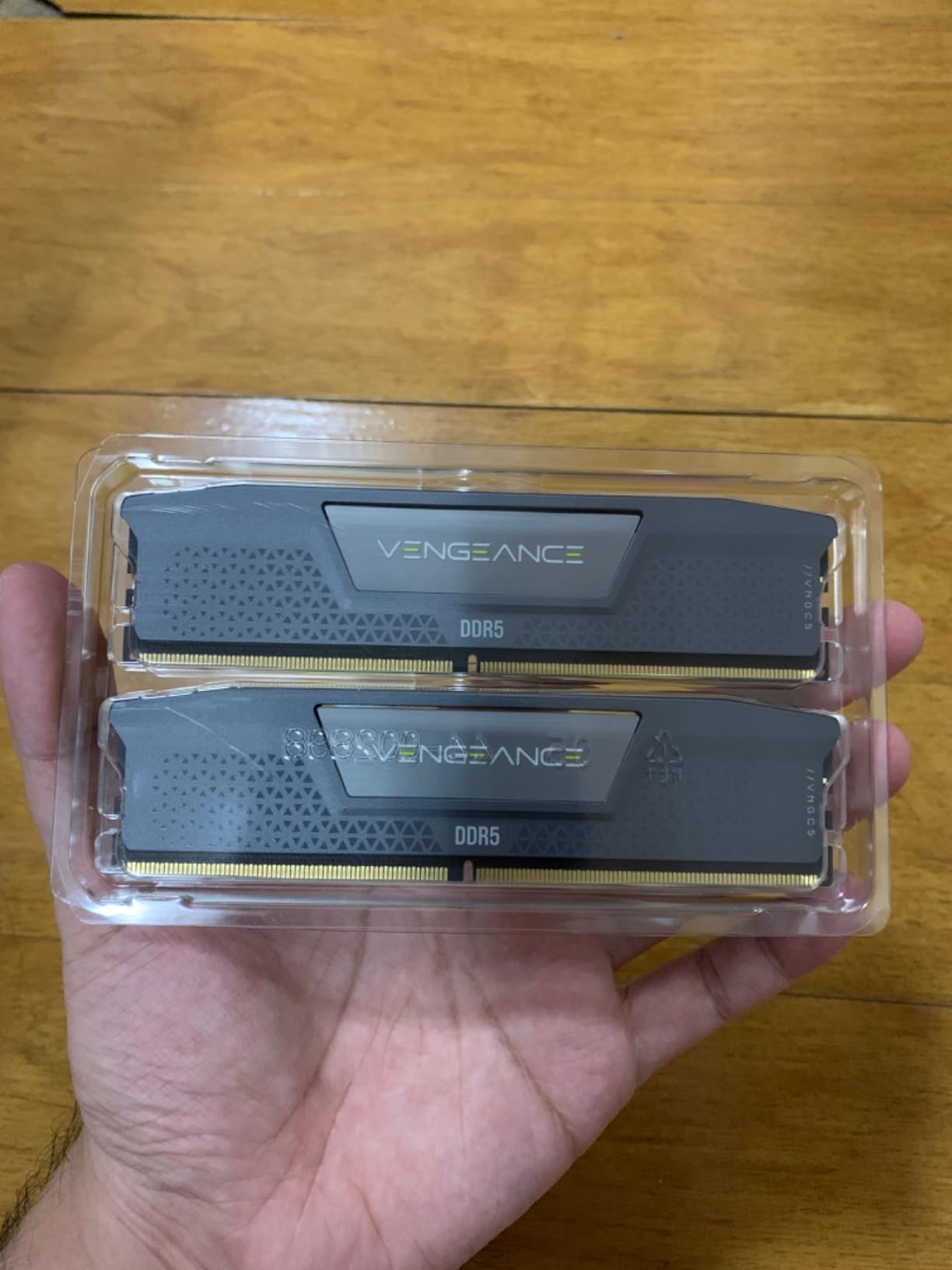
Strip the light bar off the first kit and you get this one. Same 32GB capacity, same 6000 MT/s data rate, same CL30 primary timing, same 1.40V operating voltage. The part number differs only slightly, CMK32GX5M2B6000Z30 against CMH32GX5M2B6000Z30K, and the K suffix on the RGB model is the giveaway that lighting is the only real difference.
What earns it a slot in this list is the explicit dual profile. The manufacturer states plainly that dual memory profiles let you select optimised settings whether you run an AMD or an Intel processor, and reviews confirm the 6000 MT/s CL30 dual-profile configuration works on both EXPO and XMP 3.0 platforms. If you are not certain which platform you will end up on, or you plan to move a stick into a different machine later, that flexibility has real value.
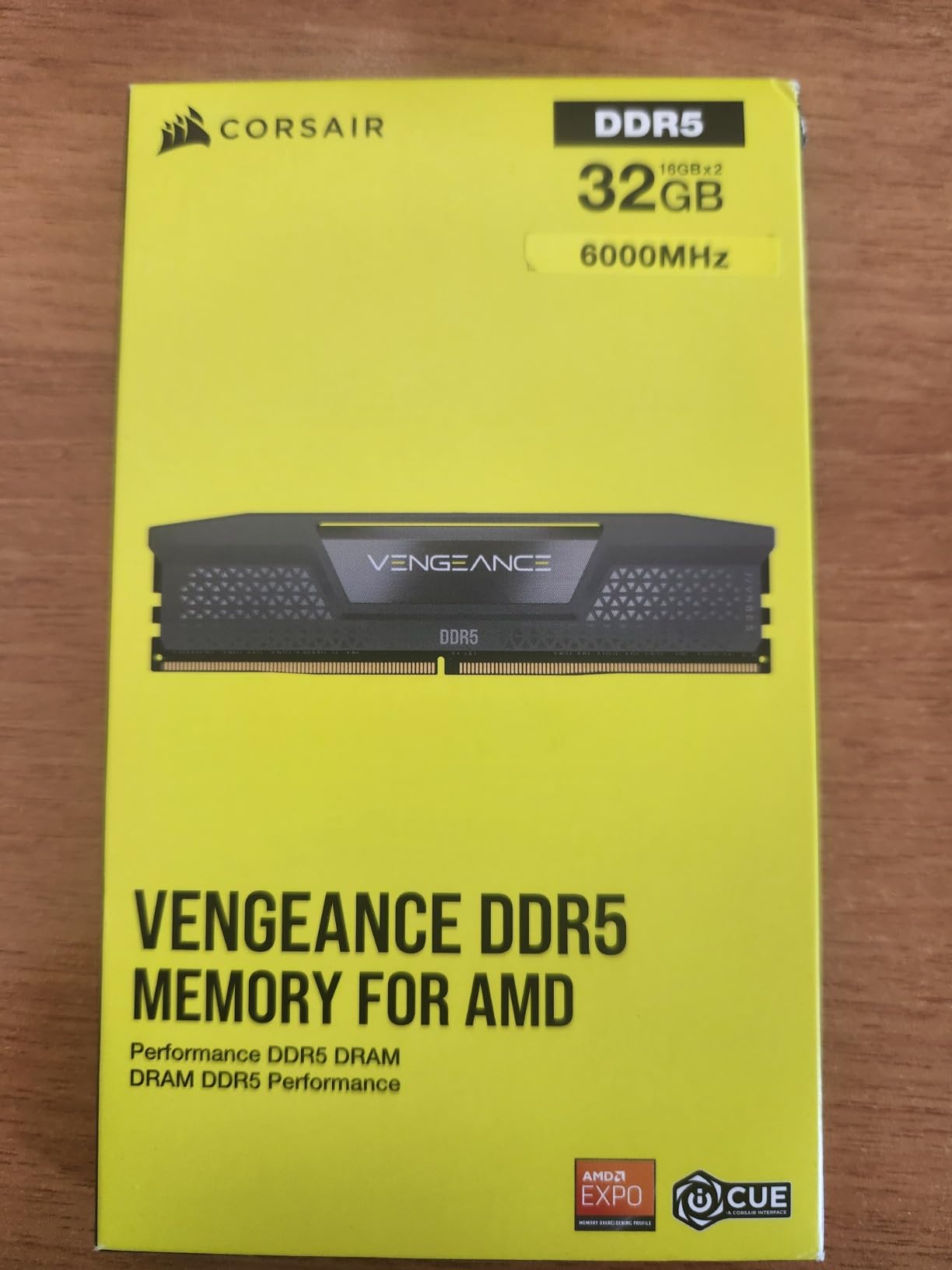
It sits at 4.8 stars across 2,510 reviews with a 91% five-star distribution, which is the second-largest verified owner base in this roundup. Owners and the manufacturer both highlight the onboard voltage regulation for finer, more stable control through iCUE, and the carefully screened memory chips are pitched at people who plan to tune beyond the profile rather than just enable it.
One honest caveat, and it is a data-quality issue rather than a performance one: the listing for this ASIN returned no individual customer review text, so the positive claims here come from the published feature set and the aggregate rating rather than from quotes we can trace to individuals. Treat the 4.8 score as reliable and the specific performance claims as manufacturer-stated.
What you should check before you commit
Check that you actually want no lighting. In a windowed case this kit will look unfinished next to RGB fans, and the usual fix, bolting an RGB strip to the memory area, costs money and adds cable clutter. If your build is going in a closed case where nobody will see the internals, the light bar is money spent on something you will never look at.
Check the weight and the physical profile against your cooler as well, because this is still a full-size heat spreader rather than a low-profile module. The 1.4V rating is also higher than the 1.35V kits elsewhere in this list, so expect slightly more module temperature than a 1.35V alternative under sustained memory load.
Who should buy something else instead
Buy the Kingston FURY Beast 32GB 6000 CL30 (KF560C30BBEK2-32) instead if clearance under a tower cooler matters, since owners specifically praise its low-profile heat spreader for keeping out of the way of large CPU coolers. Choose the RGB Vengeance above if you do want lighting and do not mind running iCUE.
If you are shopping purely on responsiveness per unit of money, note that this kit and the RGB version are the same memory. The non-lighting model is the better buy for a closed case, the lighting model is the better buy for a showcase, and nothing else changes between them.
3. G.SKILL Trident Z5 RGB 32GB 6000 MT/s CL36 (F5-6000J3636F16GA2-TZ5RK) – Most Compact
G.SKILL Trident Z5 RGB Series DDR5 RAM (Intel XMP 3.0 & AMD EXPO) 32GB (2x16GB) Up to 6000MT/s* CL36-36-36-96 1.35V Desktop Computer Memory U-DIMM – Matte Black (F5-6000J3636F16GA2-TZ5RK)
32GB (2x16GB)
6000 MT/s CL36-36-36-96
1.35V
Dual XMP 3.0 and EXPO
288-pin U-DIMM
Pros
- Dual OC profile support covering XMP 3.0 and EXPO
- Explicitly validated across a wide Intel and AMD board list
- JEDEC default profile guarantees a safe boot
- Limited lifetime manufacturer warranty
- Non-ECC 288-pin U-DIMM built for desktop gaming
Cons
- CL36 is 12.0 ns true latency against 10.0 ns for CL30 kits
- Boots at JEDEC default until a profile is enabled
- G.SKILL warns against mixing memory kits
- Manufacturer listing is unusually detailed and long
This is the most thoroughly specified kit in the roundup, and the part number tells you everything. F5-6000J3636F16GA2-TZ5RK decodes as DDR5, 6000 MT/s, 36-36-36-96 timings, 16GB modules, matte black, Trident Z5 RGB. The GTIN and model listing are complete down to the platform families, which is exactly the kind of documentation that makes a purchase easy to verify against your motherboard.
The 1.35V rating and the CL36-36-36-96 timing string put its true latency at 12.0 ns, which is 2.0 ns behind the CL30 kits in this list. In practical terms, forum consensus across r/buildapc and r/PcBuild threads is that the average frame rate difference between CL30 and CL36 at 6000 MT/s is small, and that the gap shows up mainly in 1% lows in competitive titles. If you play Counter-Strike or Valorant and care about stutter more than peak frame rate, that is the category where 2.0 ns is felt.
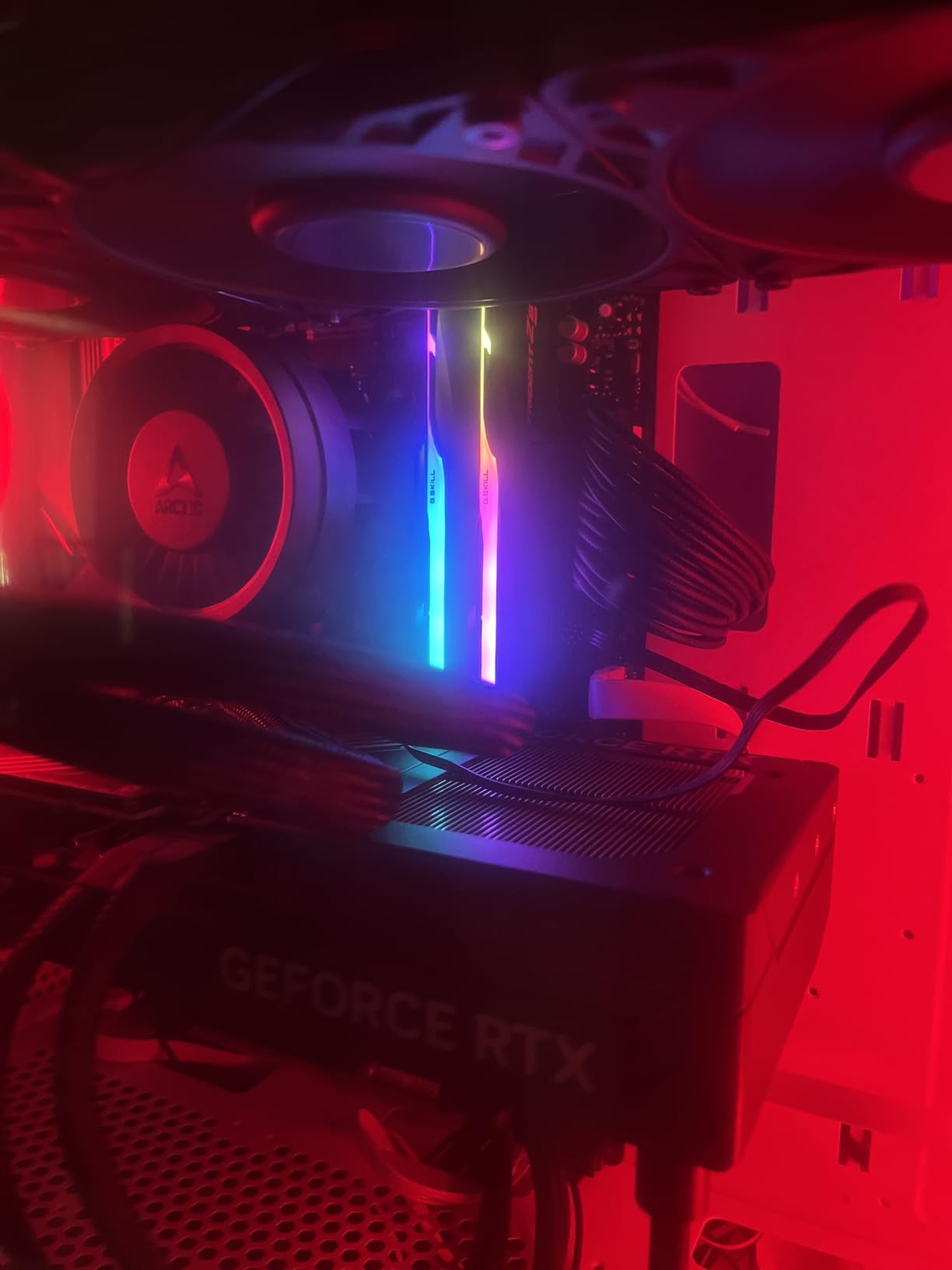
Where it wins is validation. The manufacturer lists support for Intel Z890, Z790, Z690, B860, B760 and B660 alongside AMD X870, X670, B850, B840, B650 and A620 platforms, which is the broadest board coverage claimed by any kit here. It also ships with a JEDEC default profile so the modules always boot safely at SPD speed, a small detail that prevents the classic new-build panic.
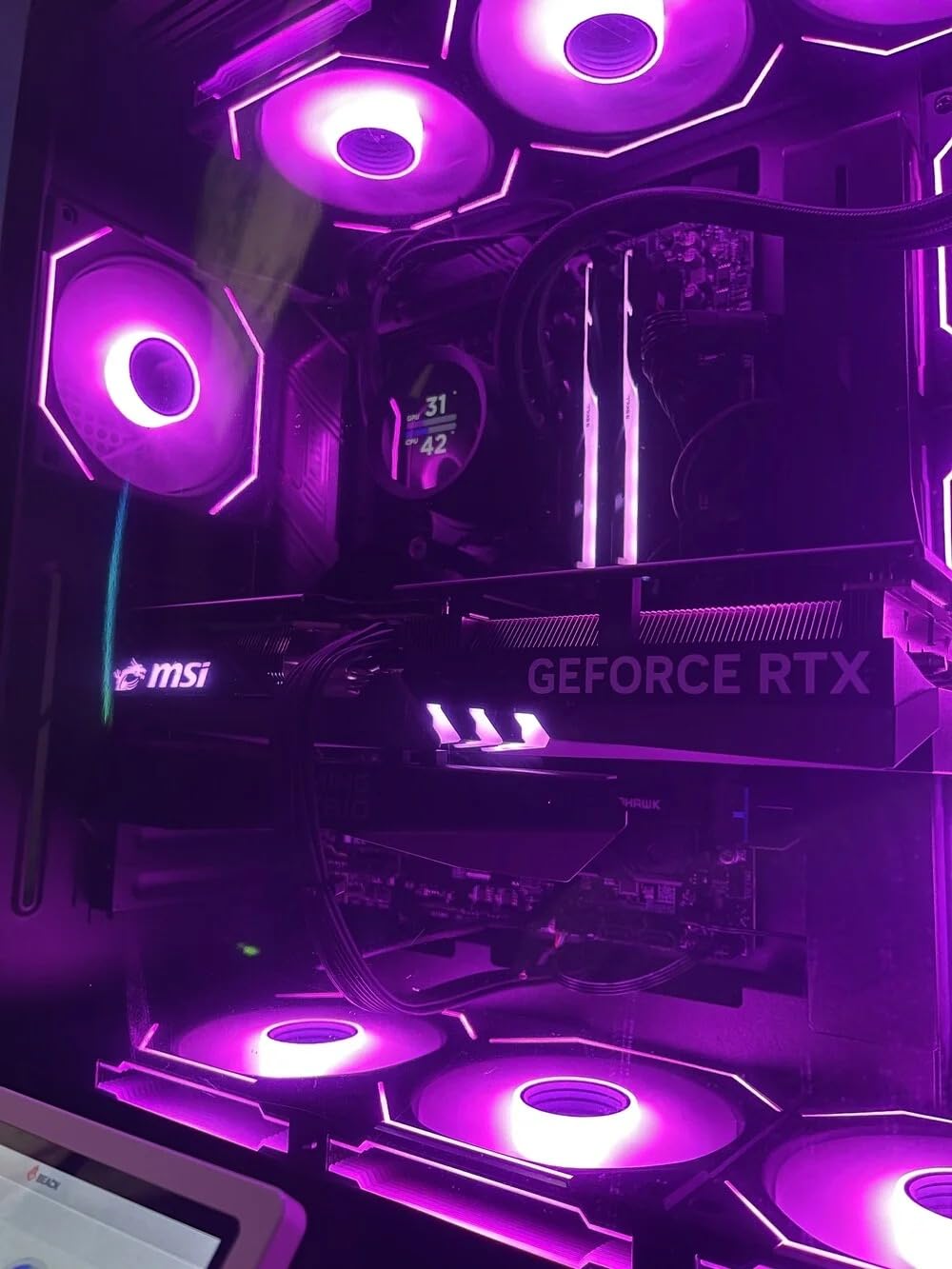
It holds 4.7 stars across 1,592 reviews with an 87% five-star share. Owners value the dual profile support, the safe JEDEC fallback and the matte black finish. The two caveats worth knowing are the standard one, rated speed requires BIOS profile activation, and a G.SKILL-specific one, the manufacturer explicitly warns against mixing memory kits because mismatched sets cause instability or system failure.
What you should check before you commit
Check your CPU type against the 1:1 divider rule before you chase the extra speed. On AM5, memory above roughly 6400 MT/s forces the controller out of 1:1 mode into a 1:2 divider, which adds latency and can wipe out the advantage of the higher number. This kit’s 6000 MT/s sits comfortably inside the ratio sweet spot, so it is a safe choice on Ryzen, and the dual profile means it also behaves on Intel boards.
Check whether the 2.0 ns latency gap against a CL30 kit is worth paying for. Given how much memory prices have climbed, choosing a CL36 kit over a CL30 kit of the same speed is the one decision we would question hardest, unless the RGB implementation is the reason you are here.
Who should buy something else instead
Buy the TEAMGROUP T-Create Expert (CTCED532G6000HC30DC01) or the CORSAIR Vengeance RGB (CMH32GX5M2B6000Z30K) if raw responsiveness is your priority, because both reach 10.0 ns and this kit does not. The only reason to pay for CL36 here is if you want the specific look and the documented platform validation, and you should be honest with yourself about which of those two is driving the purchase.
4. TEAMGROUP T-Create Expert 32GB 6000 MT/s CL30 (CTCED532G6000HC30DC01) – Best Value
TEAMGROUP T-Create Expert CL30 Overclocking 10L DDR5 32GB Kit (2 x 16GB) 6000MHz (PC5-48000) Intel XMP 3.0 & AMD EXPO Compatible Desktop Memory Module Ram Black – CTCED532G6000HC30DC01
32GB (2x16GB)
6000 MT/s CL30-36-36-76
1.35V
EXPO and XMP 3.0
240-pin listing
Pros
- 6000 MT/s CL30-36-36-76 delivers 10.0 ns true latency
- Supports both XMP 3.0 and EXPO in one module
- Lightweight 10-layer design keeps thermals manageable
- Ranks high in Amazon Computer Memory best sellers
- Lifetime warranty
Cons
- No RGB lighting on the black heat spreader
- Rated speed needs the BIOS profile enabled
- Some listings show a 240 pin count rather than 288
If the goal is to hit the 6000 CL30 target without paying for lighting or a premium badge, this is the kit. The specification sheet reads 32GB kit, 2x16GB, DDR5-6000, PC5-48000, CL30, dual channel, which is the fastest possible 6000 MT/s timing and the speed most recommended for gaming on AM5.
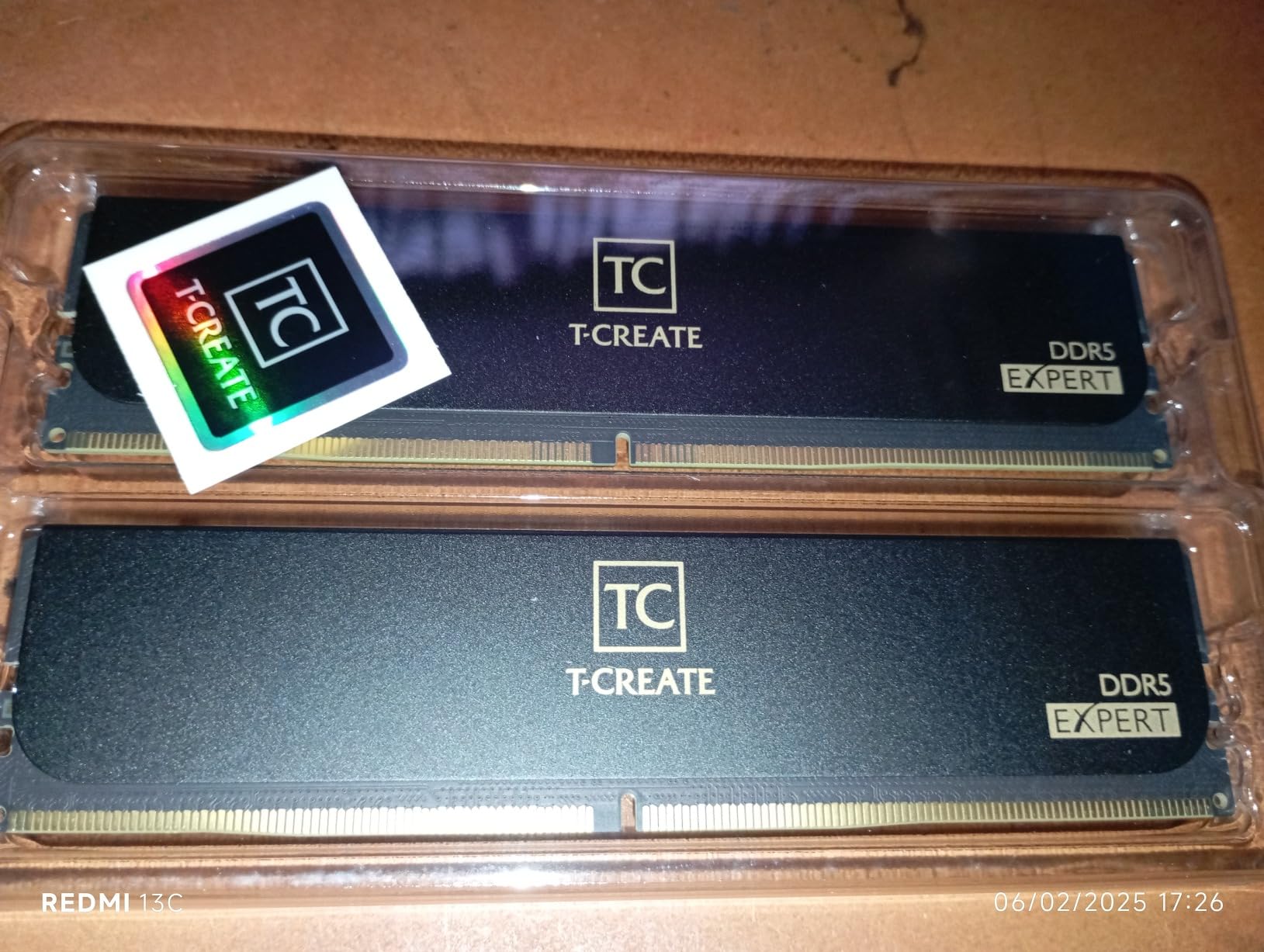
The interesting engineering choice is the 10-layer board. TEAMGROUP markets it as a lightweight 10L overclocking design, and the practical effect is lower module weight and better thermal behaviour at 1.35V. In a build with a large air cooler, lower-profile and cooler memory is not a cosmetic nicety, it is a clearance and temperature problem solved before it starts.
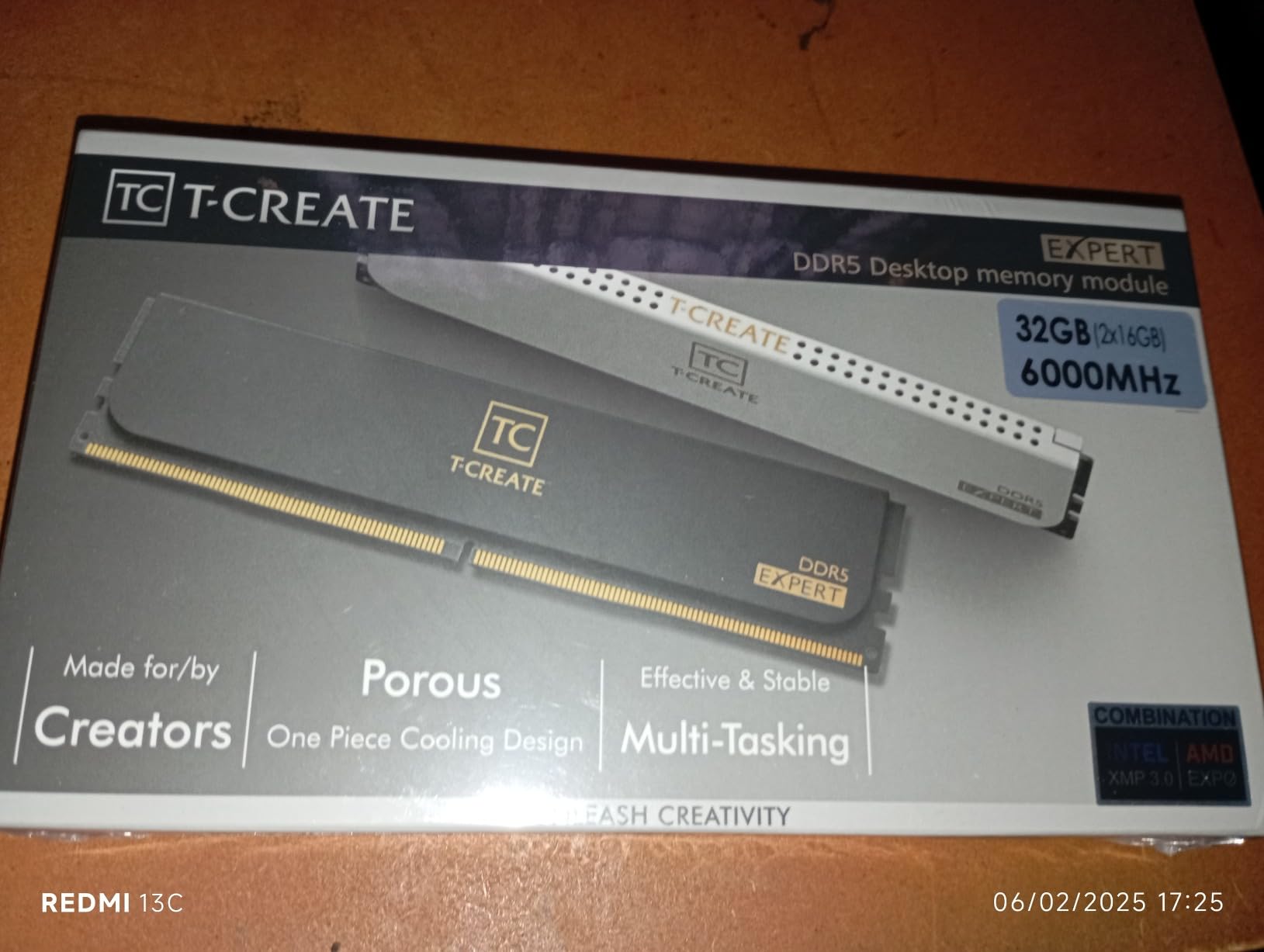
It sits at 4.6 stars across 799 reviews with 86% five-star, and it ranks at number 16 in Amazon’s Computer Memory best sellers, which is a stronger demand signal than most spec sheets provide. Buyers describe strong speed-to-value, dual EXPO and XMP 3.0 support and low-profile thermals, with the standard caveat that rated speed needs the BIOS profile turned on.
One data point to flag honestly: the specifications for this listing show a 240-pin count, while full-size DDR5 UDIMMs are 288-pin. This appears to be a listing data error rather than a different physical product, since the same ASIN is described everywhere else as a standard desktop DIMM. If you care about the discrepancy, check the physical module against your board’s 288-pin slots before ordering.
What you should check before you commit
Check that you are buying for speed rather than appearance. This kit is deliberately plain: a black non-RGB heat spreader with no lighting, so a windowed showcase build will need its glow from somewhere else. For a closed-case gaming PC, that is exactly the right trade, and the 10L board also means less height under a tower cooler than most RGB designs.
Check the true latency claim rather than the number on the box. CL30 at 6000 MT/s is 10.0 ns, which ties the best kits in this roundup, and the 1.35V voltage is lower than the 1.40V Corsair pair. Both of those facts matter more to frame rates than the brand badge does.
Who should buy something else instead
Buy the CORSAIR Vengeance RGB (CMH32GX5M2B6000Z30K) if you want the same 10.0 ns latency with lighting and a much larger pool of verified owner feedback, or the Patriot Viper Venom (PVV532G600C30K) if you want tested 30-40-40-76 secondary timings and a limited lifetime warranty rather than a lifetime one. Neither is faster; they are different bets on support and appearance.
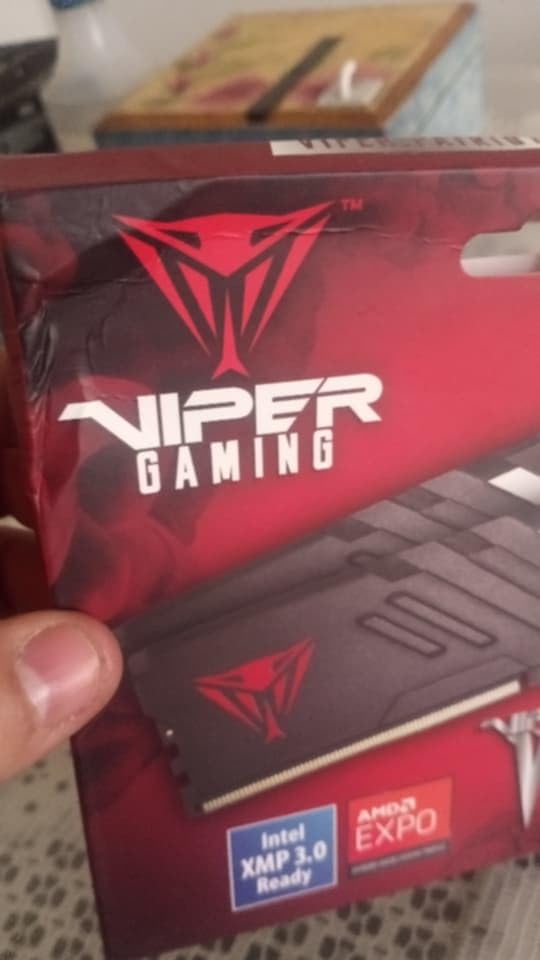
5. Patriot Viper Venom 32GB 6000 MT/s CL30 (PVV532G600C30K) – Best for AM5 and Ryzen
Patriot Viper Venom DDR5 RAM 32GB (2X16GB) 6000MHz CL30 Desktop Memory
32GB (2x16GB)
6000 MT/s CL30-40-40-76
1.35V
XMP 3.0 and EXPO
288-pin UDIMM
Pros
- Tested 30-40-40-76 timings at only 1.35V
- XMP 3.0 and EXPO profile support
- Tested across the latest DDR5 platforms
- Ranks near the top of Amazon Computer Memory best sellers
- Limited lifetime warranty
Cons
- Looser 30-40-40-76 secondary timings than some CL30 rivals
- Ranked speed needs the profile enabled in BIOS
- Listing returned no individual review text
Patriot publishes the full timing string on this kit, and that is the number to look at rather than the CL30 headline. The tested timings are 30-40-40-76 at 1.35V, meaning the primary CAS latency is competitive with everything else here while the secondary timings are looser than the Corsair and TEAMGROUP kits that also claim 30-36-36-76. Secondary timings affect sustained throughput and mixed loads more than they affect average frame rate.
For an AM5 Ryzen build, the practical appeal is the straightforward one: 6000 MT/s with both XMP 3.0 and EXPO profile support, tested across current DDR5 platforms. That is the combination that the memory controller on Ryzen 7000 and Ryzen 9000 handles most predictably, and 6000 CL30 is the configuration most commonly recommended for those chips.
It holds 4.6 stars across 654 reviews with 85% five-star, and it ranks at number 5 in Amazon’s Computer Memory best sellers. That ranking is worth noting because it is independent of review count: lots of people are buying this kit, and the aggregate score has stayed steady at 4.6 with a healthy five-star share.
As with the non-RGB Corsair, the listing for this ASIN returned no individual review text, so our positive detail comes from the published features and the aggregate rather than from attributable quotes. The specs themselves are well documented: 32GB as 2x16GB, 6000 MT/s, tested 30-40-40-76, 1.35V, 288-pin DIMM and UDIMM, 104g per kit, limited lifetime warranty.
What you should check before you commit
Check the secondary timings against what you are paying. If two kits are the same speed, same capacity and same price, the one with 30-36-36-76 instead of 30-40-40-76 is the better memory, even though both are sold as CL30. This is the single most useful comparison in the whole roundup and almost nobody makes it.
Check your QVL if you can, and check the CPU pairing. 6000 MT/s CL30 is a safe target on AM5, but memory controller quality varies between individual Ryzen processors, and a kit outside the qualified vendor list may need manual tuning to hold rated speed.
Who should buy something else instead
Buy the TEAMGROUP T-Create Expert (CTCED532G6000HC30DC01) or either CORSAIR Vengeance kit if you care about tighter secondary timings at the same 10.0 ns true latency. Buy the Crucial Pro (CP2K16G64C32U5B) instead if you are on a modern Intel board and want more raw bandwidth than 6000 MT/s gives you.
6. Crucial Pro 32GB 6400 MT/s CL32 (CP2K16G64C32U5B) – Best for Raw Data Rate
Crucial Pro DDR5 RAM 32GB Kit (2x16GB), 6400MHz CL32, Overclocking Desktop Gaming Memory, Intel XMP 3.0 & AMD Expo Compatible, Black – CP2K16G64C32U5B
32GB (2x16GB)
6400 MT/s CL32-40-40-103
1.35V
XMP 3.0 and EXPO
288-pin UDIMM
Pros
- 6400 MT/s CL32 gives 10.0 ns true latency and 51.2 GB/s
- Micron DRAM with module temps around 55C
- Verified at full speed in a four-DIMM 64GB configuration
- No RGB software dependency
- Works on Intel Core Ultra Series 2 and Ryzen 9000
Cons
- Some systems settle at 5200 MT/s after tuning
- May need a BIOS update and a board that supports DDR5-6400
- No lighting
- Heat spreader is modest rather than aggressive
This is the only kit in the roundup that breaks past 6000 MT/s, and it does so without giving up responsiveness. CL32 at 6400 MT/s works out to 10.0 ns true latency, exactly matching every CL30 kit here, while pushing peak dual-channel bandwidth to 51.2 GB/s. That combination is the reason it earns a slot despite a smaller review base than most of the field.
It is also the only kit with detailed platform testing described in its own review base. Owners report the profile applying on first boot in most builds with the system recognising 6400 MT/s immediately, module temperatures around 55C under gaming and stress tests thanks to Micron chips at 1.35V, and a four-DIMM 64GB configuration on Intel Ultra with an ASUS PRIME Z890-P hitting full 6400 MT/s as single-rank UDIMMs. That last data point matters more than it sounds, because four sticks is where most kits fall apart.
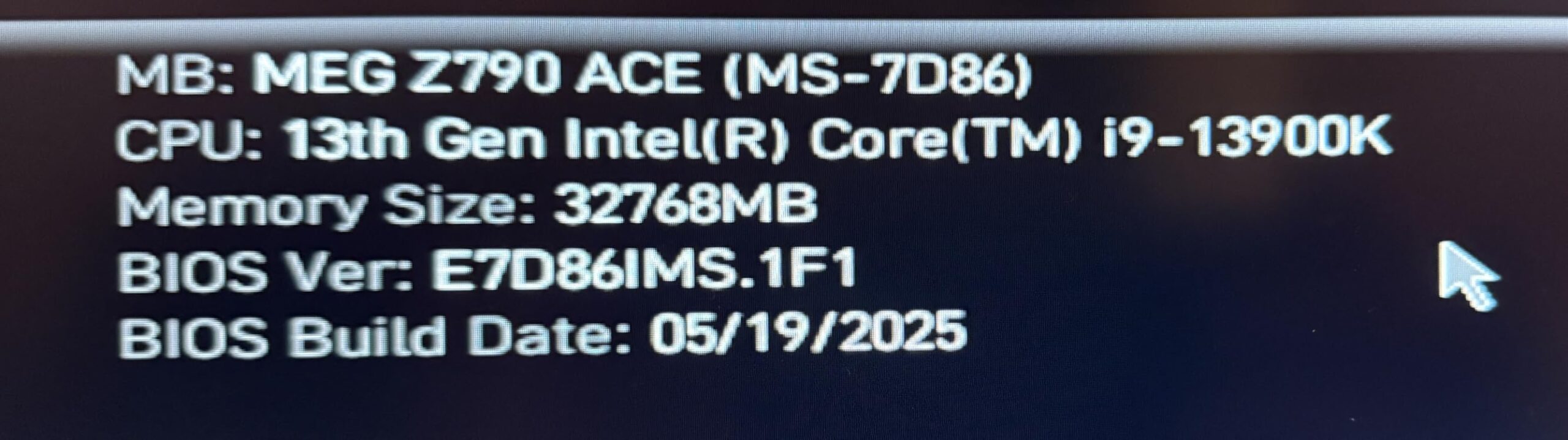
It holds 4.6 stars across 533 reviews with 84% five-star, rated for Intel Core Ultra Series 2 and Ryzen 9000 desktop CPUs, and the extended timings of 32-40-40-103 are pitched at stable overclocking rather than low-latency purity. There is no RGB software dependency at all, which owners who are tired of RGB utilities genuinely appreciate.
Two honest caveats. One buyer reported memory settling at 5200 MT/s even after enabling and tuning EXPO, and some systems need a BIOS update plus a motherboard that actually supports DDR5-6400, so 6400 is not guaranteed on every board. More importantly for a long-term build, Crucial is exiting the consumer memory business, which raises a fair question about future upgrade compatibility and firmware support for that platform.
What you should check before you commit
Check that your motherboard and CPU combination is a 6400 MT/s combination at all. On AM5, 6400 is close to the ceiling of what the memory controller holds in 1:1 mode, and pushing past it drops into a 1:2 divider that adds latency. If your Ryzen build cannot hold 6400 in 1:1, a 6000 CL30 kit will be the better purchase despite the lower number on the box.
Check the 6400-plus-CL32 latency combination against your tolerance for tuning. The reported first-boot profile recognition is strong, but the buyer who ended up at 5200 MT/s is a reminder that speed this high can depend on silicon lottery outcomes rather than settings alone.
Who should buy something else instead
Buy a 6000 CL30 kit if you are building on AM5 and want the most predictable outcome, since 6000 is the speed Ryzen memory controllers hold most reliably. If you are staying on DDR5 for the foreseeable future and only want to buy memory once, the exit from the consumer memory business is worth weighing against the extra bandwidth.
7. Kingston FURY Beast 32GB 6000 MT/s CL30 (KF560C30BBEK2-32) – Best Low Profile
Kingston FURY Beast 32GB (2x16GB) 6000MT/s DDR5 CL30 Desktop Memory | AMD EXPO | Kit of 2 | KF560C30BBEK2-32
32GB (2x16GB)
6000 MT/s CL30
1.35V
EXPO and XMP 3.0
288-pin DIMM
Pros
- 6000 MT/s CL30 with no stability issues reported
- EXPO and XMP 3.0 both work without tweaking
- First-try boot across many motherboards in the QVL
- Low profile heat spreader clears large CPU coolers
- Noticeable gains over stock memory in benchmarks
Cons
- No RGB lighting on this non-RGB variant
- Ranked speed needs the BIOS profile enabled
- Smaller review base than the Corsair pair
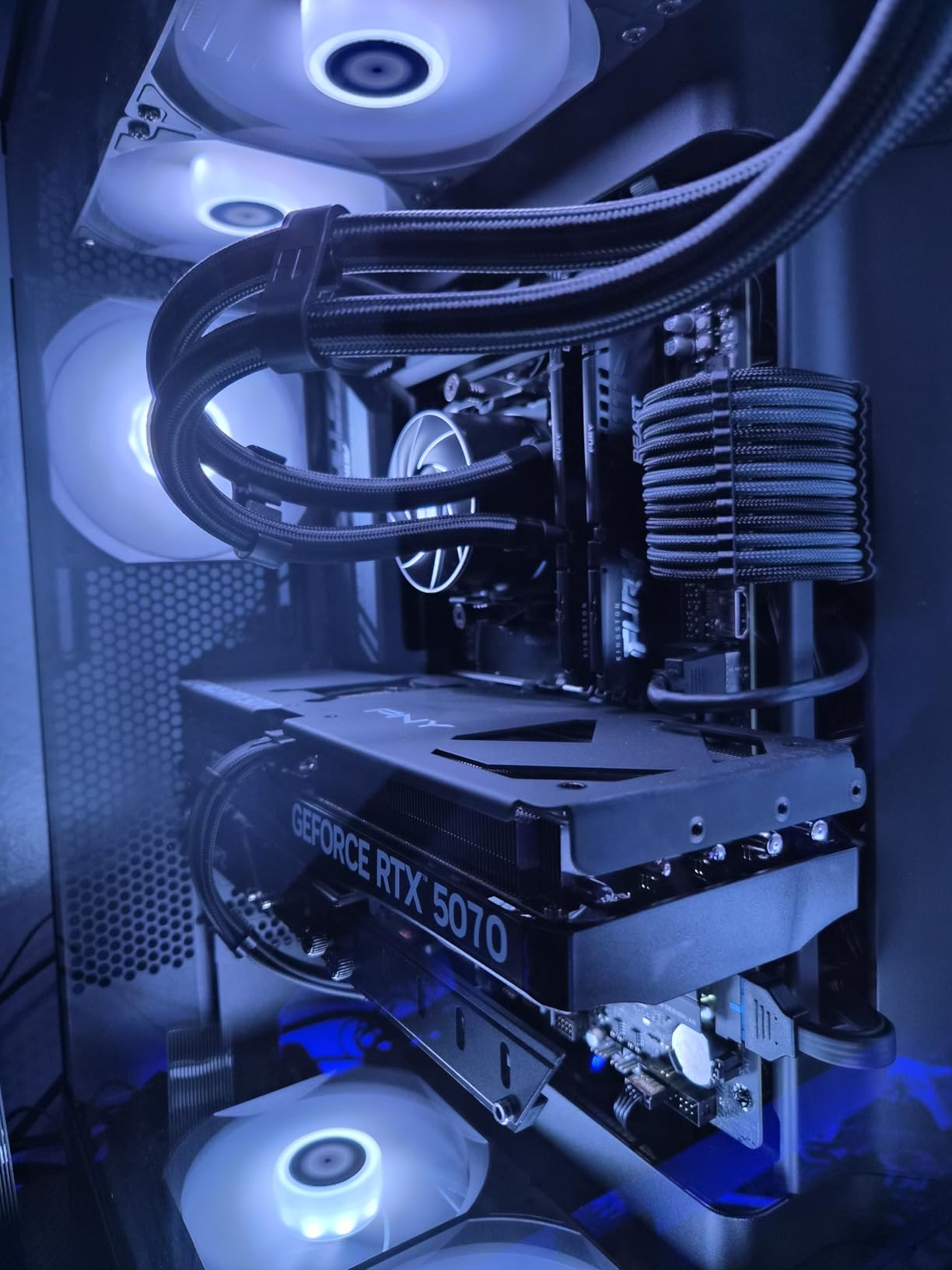
This is the kit to buy when the CPU cooler decides the memory, which happens far more often than spec sheets suggest. A dual-tower air cooler with a wide front fan hangs low enough over the DIMM slots that taller memory modules either force the fan upward and hurt CPU cooling, or physically will not fit. The low-profile heat spreader on this FURY Beast variant is designed for exactly that clearance problem.
It does not compromise the specification to get there. 32GB as 2x16GB, 6000 MT/s, CL30, 1.35V, EXPO and XMP 3.0 support, 37g per module, limited lifetime warranty. That is 10.0 ns true latency and 48.0 GB/s of peak bandwidth, the same core numbers as the more expensive kits in this list.
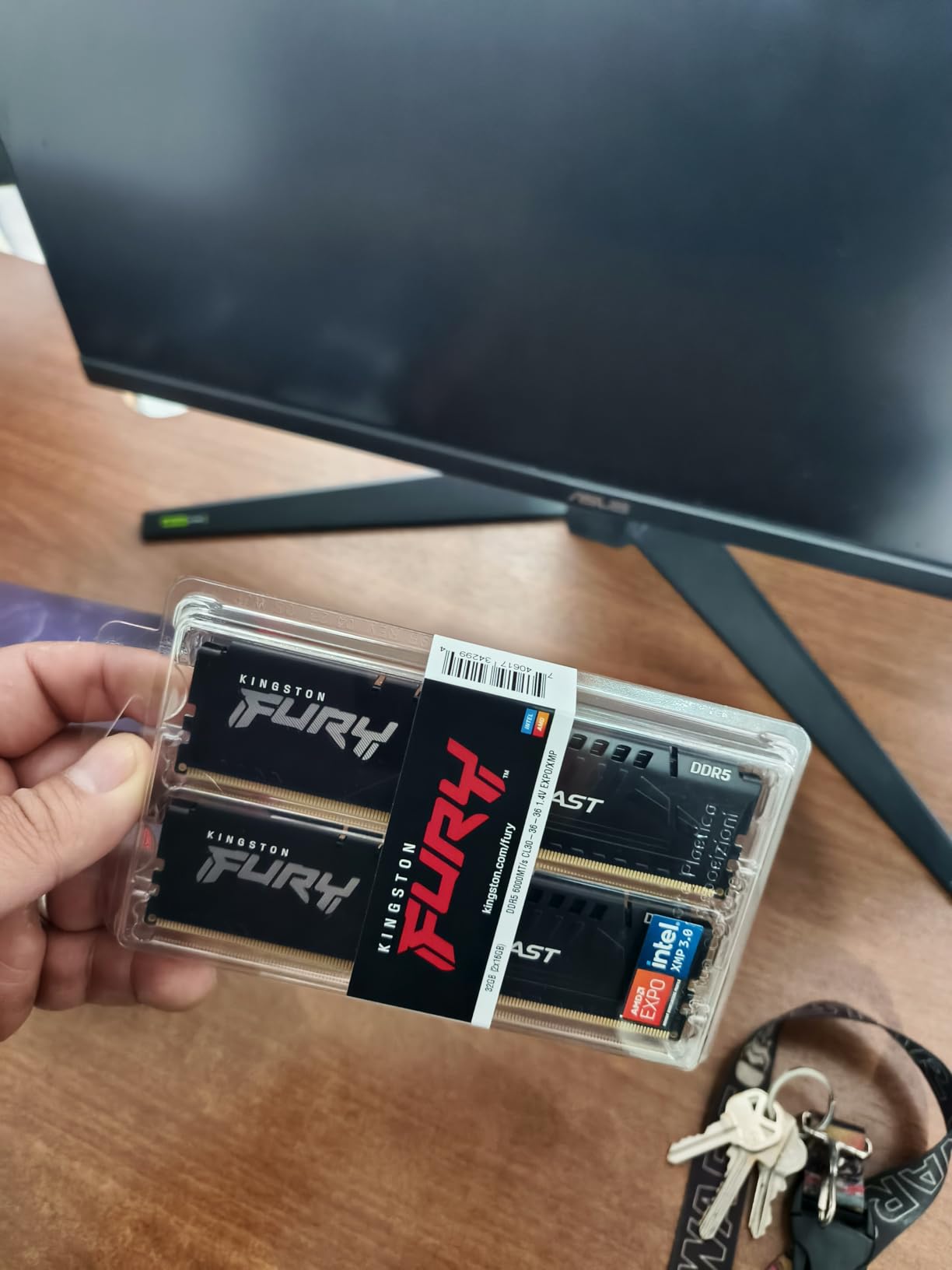
The rating is the standout. At 4.8 stars across 322 reviews with 91% five-star, this is one of the strongest-rated kits in the roundup despite having a much smaller review pool than the Corsair pair. Owners report zero stability issues and no crashes even at full overclocked speed, EXPO and XMP 3.0 both working with no tweaking on Ryzen and Intel boards, and first-try booting across many motherboards when the kit is listed in the board QVL.
That QVL point is a practical one worth repeating: the single most reliable predictor of a painless first boot is your motherboard listing the exact part number. Owners who bought blindly sometimes hit trouble; owners who checked the QVL generally did not.
What you should check before you commit
Check that you do not want lighting. This is the non-RGB FURY Beast variant, and the absence of RGB is the only recurring complaint in the reviews. If your build is a windowed showcase, the RGB version below is the one to look at instead, with the caveat that it is slower.
Check your board’s QVL with the part number KF560C30BBEK2-32 rather than a family name. Kingston publishes qualified lists for its boards, and matching the exact SKU is what turns a possible tuning session into a first-try boot.
Who should buy something else instead
Buy the Kingston FURY Beast RGB (KF556C36BBEAK2-32) if you want lighting from the same brand and family, but only if you accept 12.9 ns true latency. If clearance is not an issue, buy whichever 6000 CL30 kit your motherboard lists in its QVL, because QVL matching beats any brand preference at this price level.
8. Kingston FURY Beast RGB 32GB 5600 MT/s CL36 (KF556C36BBEAK2-32) – Most Versatile
Kingston FURY Beast RGB 32GB (2x16GB) 5600MT/s DDR5 CL36 Desktop Memory Kit of 2 | Infrared Sync Technology | AMD EXPO | KF556C36BBEAK2-32
32GB (2x16GB)
5600 MT/s CL36
1.25V
EXPO and XMP 3.0
288-pin DIMM
Pros
- Lowest operating voltage in the roundup at 1.25V
- Patented Infrared Sync Technology keeps modules lighting in unison
- Redesigned heat spreader gives a cleaner RGB glow
- Supports both XMP 3.0 and EXPO
- Lifetime warranty
Cons
- Slowest and loosest kit here at 12.9 ns true latency
- Ranked speed needs the BIOS profile enabled
- Lowest average rating of the ten kits at 4.5 stars
- Listed CAS value conflicts with the CL36 model name
We include this kit for a specific reason and it is not performance. At 5600 MT/s CL36 the true latency is 12.9 ns, which is 28% slower to respond than a 6000 CL30 kit and slower than even a 6000 CL38 kit, so on paper it leaves frame rates on the table in any of the three mainstream games that stress memory latency.
What it does have is the lowest voltage in the group at 1.25V, which aids efficiency and heat management, and the Kingston FURY Infrared Sync Technology, a patented approach that keeps the lighting on both modules perfectly synchronised without extra software. The redesigned heat spreader also produces a cleaner glow than earlier FURY Beast RGB modules, and the kit carries a lifetime warranty.
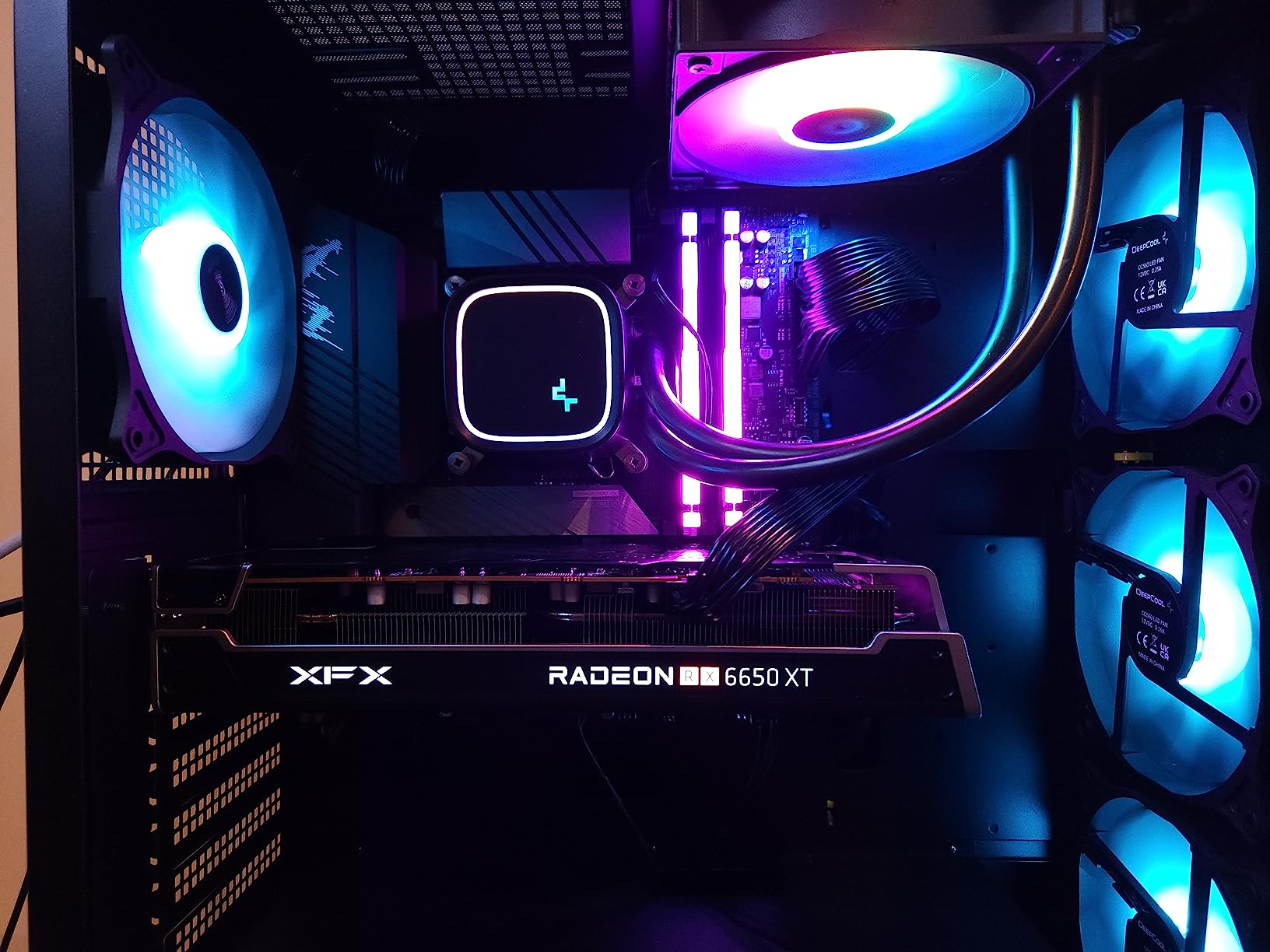
The rating is the honest counterweight. At 4.5 stars across 230 reviews with 80% five-star and 6% one-star, it has the flattest star distribution of any kit in this roundup. The one-star share is more than double what the leading kits show, and that is a real signal even when the average still reads as acceptable.
There is also a data inconsistency to be aware of: the specifications list a CAS latency value of 5 for this listing, which conflicts with the CL36 designation in the model number. Treat the model number as authoritative, because KF556C36BBEAK2-32 is unambiguously a CL36 part, but be aware that the listing data is not perfectly clean.
What you should check before you commit
Check whether 5600 MT/s even matters for your build. On a Ryzen X3D chip the large L3 cache absorbs most memory traffic, so the difference between 12.9 ns and 10.0 ns largely disappears, and on a GPU-bound game at high resolution it disappears entirely. If you are on X3D and playing at 1440p or 4K, the extra cost of a CL30 kit is buying headroom you may never see.
Check that your board can actually run 5600 MT/s cleanly with two modules. It is a modest ask for any DDR5 board, but remember the kit boots at the JEDEC default until the EXPO or XMP profile is enabled, so check your motherboard’s memory support list if you want to be certain.
Who should buy something else instead
Buy a 6000 CL30 kit unless your budget genuinely cannot reach one. The 28% latency difference is real, the price gap in 2026 is worth paying for the responsiveness, and the leading kits in this roundup all cost more per module because they deliver more frame rate. Choose this kit only when the lower voltage, the synchronised lighting or a very tight budget is the deciding factor.
9. Patriot Viper Elite 5 RGB 32GB 6000 MT/s CL30 (PVER532G60C30KW) – Best for Showcase RGB
Patriot Viper Elite 5 RGB DDR5 RAM 32GB (2X16GB) 6000MT/s CL30 RGB Memory
32GB (2x16GB)
6000 MT/s CL30-40-40-76
1.35V
XMP 3.0 and EXPO
288-pin UDIMM
Pros
- Verified stable 30-40-40-76 timings on a Ryzen 9800X3D
- Passes memory testing on SK hynix ICs
- XMP 3.0 and EXPO profile support
- On-die ECC for data integrity
- Good RGB appearance with easy installation
Cons
- RGB diffuser cover prone to popping off within days
- One heat spreader reported coming apart in the box
- Some units arrive with the RGB cover already detached
- Lowest average rating here at 4.0 stars
- Ranked speed needs the profile enabled
The memory inside this kit is fine. The tested timings are 30-40-40-76 at 1.35V, the same 10.0 ns true latency as the leading kits, and owners report it verified stable on a Ryzen 9800X3D and passing memory testing without errors on SK hynix ICs. On-die ECC adds data integrity, and XMP 3.0 and EXPO profile support are both present.
The problem is the plastic. Multiple buyers report the RGB diffuser cover popping off within days of installation, some units arriving with the cover already detached inside the box, and at least one heat spreader coming apart with the plastic RGB strip falling away. That is a physical build-quality issue rather than an electrical one, but it is the kind of issue that ends a showcase build.
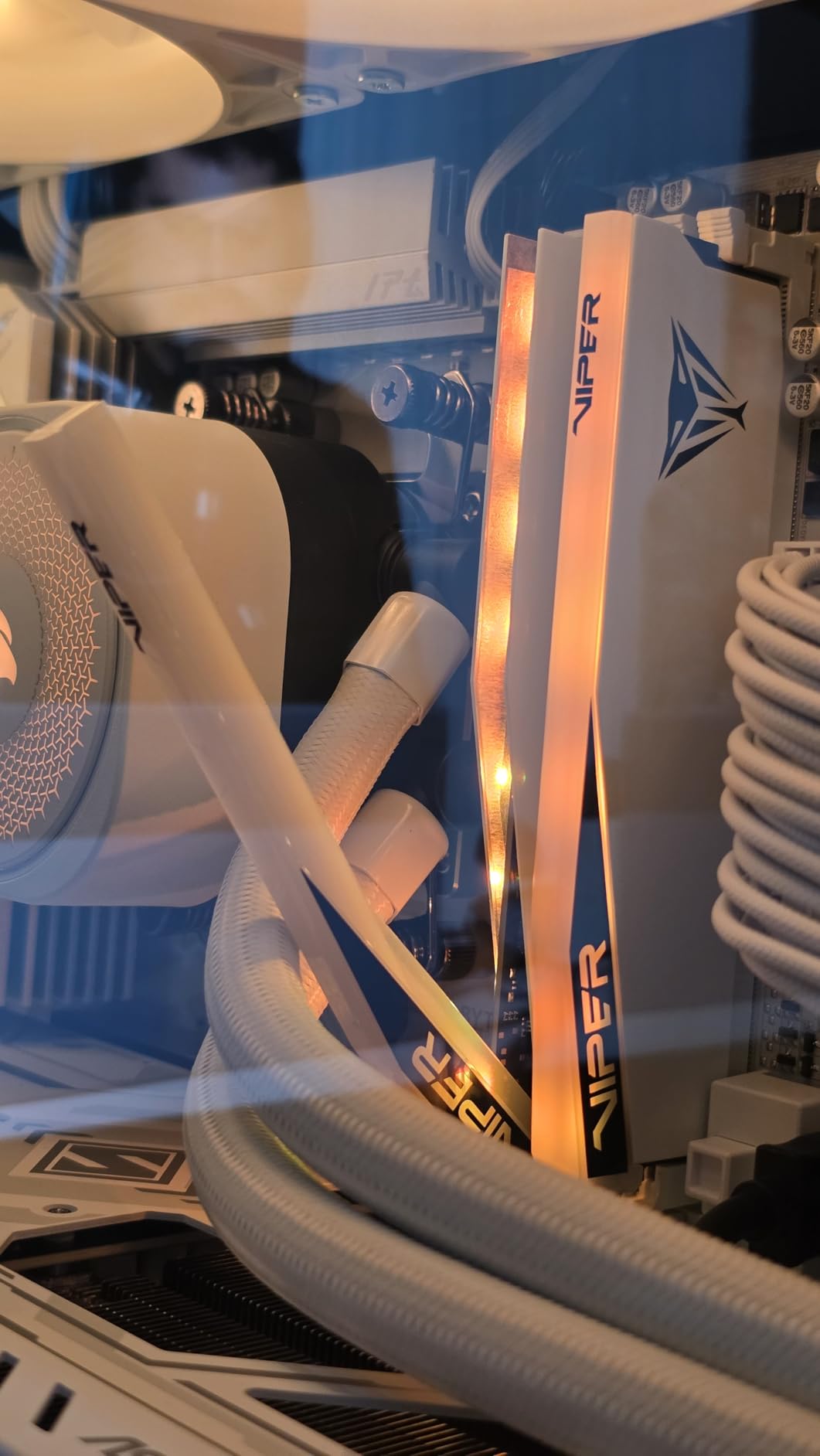
The ratings reflect it exactly. At 4.0 stars across 187 reviews, this is the lowest-rated kit in the roundup, with 55% five-star and 12% one-star. Every other kit here has a majority of five-star reviews; this one does not, and the reason is consistently the same physical component rather than performance.
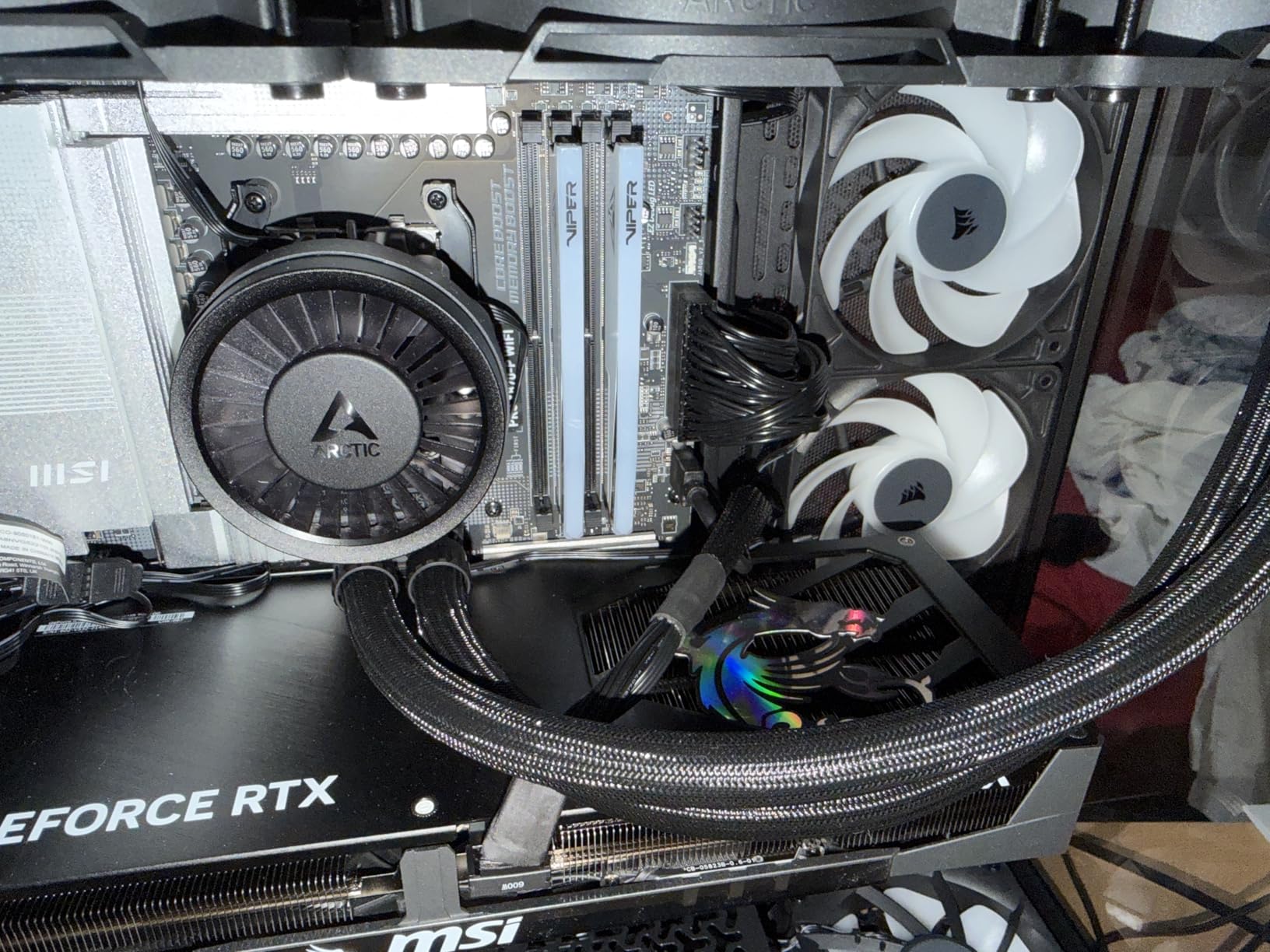
One owner did report the RGB diffusers staying firmly attached after two weeks, so the fault is not universal. It appears to be a variation between production batches, which is the worst kind of variation for a buyer because you cannot tell from the outside whether your two modules are from a good run or a bad one.
What you should check before you commit
Check the diffuser retention on arrival and photograph the modules immediately. If the light bar is loose, the box is the place to raise it, because a detached cover and a broken heat spreader are not the kind of fault a seller will always accept a return for a month later. Inspect before you slot the memory in.
Check the true latency and voltage, which are the parts of this kit that hold up. 30-40-40-76 at 1.35V is 10.0 ns of true latency, competitive with anything else here, and the low 1.35V operating voltage is easier on thermals than the 1.40V Corsair pair.
Who should buy something else instead
Buy the CORSAIR Vengeance RGB (CMH32GX5M2B6000Z30K) if you want lighting in a showcase build, because it has 4,298 reviews of owner feedback backing the physical construction rather than 187. Or buy the Lexar Thor Z RGB (THOR Z Series) if you want a cheaper lit kit, accepting looser CL38 timings in exchange for a much smaller review base.
10. Lexar Thor Z RGB 32GB 6000 MT/s CL38 – Best for AI and Workstation Builds
Lexar Thor Z RGB DDR5 RAM 32GB Kit (2x16GB) 6000MHz CL38 DRAM 288-Pin UDIMM
32GB (2x16GB)
6000 MT/s CL38
1.35V
XMP 3.0 and EXPO
288-pin UDIMM
Pros
- On-die ECC plus onboard PMIC for data integrity and power efficiency
- Sandblasted aluminium heatsink for thermal control
- Full XMP 3.0 and EXPO one-click profile support
- Bright RGB that syncs with other components
- Limited lifetime warranty
Cons
- CL38 gives 12.7 ns true latency behind the CL30 kits
- Smallest review base here at 113 reviews
- Rated speed needs the profile enabled in BIOS
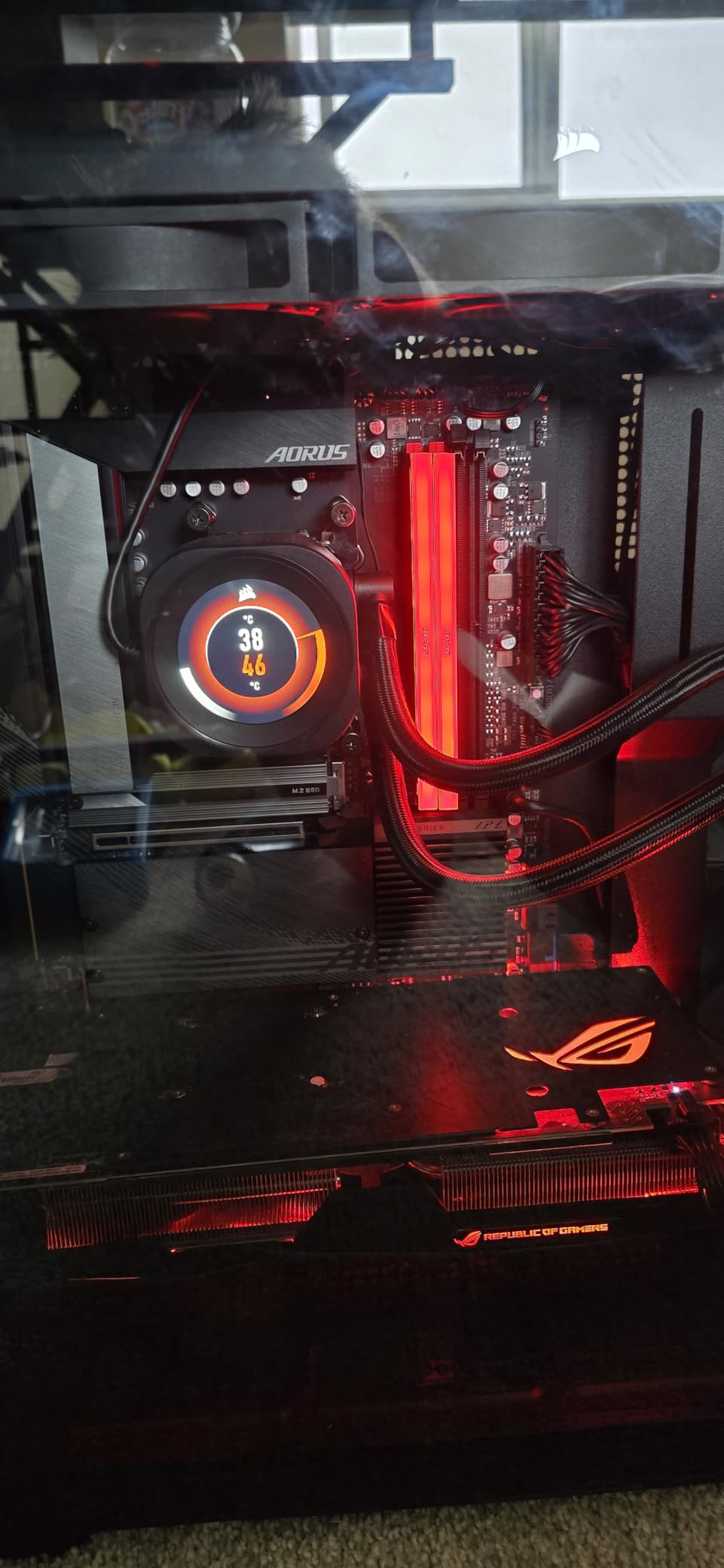
Lexar markets this kit for gaming, AI and workstation use, and the hardware backs the workstation half of that claim more than the gaming half. On-die Error Correction Code alongside an onboard Power Management Integrated Circuit is a pairing you rarely see at this level, and it is exactly what you want in a machine running local inference or several virtual machines, where data integrity and power behaviour matter more than a couple of nanoseconds.
The physical design is the other selling point. A solid sandblasted aluminium heatsink handles thermals without being visually loud, and the brighter RGB is described as more vibrant than competing lit kits while still syncing with other components in a build. Full Intel XMP 3.0 and AMD EXPO one-click support is listed, and the kit carries a limited lifetime warranty.
It holds 4.4 stars across 113 reviews with 79% five-star and 10% one-star. That is the smallest review base in the roundup by a wide margin, and we want to be direct about what that means: a 113-review sample is thin evidence for any reliability claim, and you should treat the rating as a direction rather than a guarantee.
The specification compromise is CL38. At 6000 MT/s that works out to 12.7 ns true latency, 2.7 ns behind the CL30 kits, which is a meaningful gap for competitive gaming and an irrelevant one for a machine doing rendering or running virtual machines. The same 48.0 GB/s of peak dual-channel bandwidth is available either way.
What you should check before you commit
Check whether your workload is latency-sensitive. If you are gaming in competitive titles and care about 1% lows, the CL30 kits at 10.0 ns are the better buy and this one is not close. If you are running local AI models, video editing timelines or a couple of virtual machines, the on-die ECC and PMIC pairing is worth more than the latency you are giving up.
Check the module height against your cooler as well. A sandblasted aluminium heatsink on an RGB module is usually a full-size design, so it will not solve a clearance problem the way the low-profile Kingston FURY Beast does.
Who should buy something else instead
Buy a 6000 CL30 kit if gaming performance is the primary goal, because 12.7 ns is a real difference in 1% lows. And be honest about the size of the gamble here: 113 reviews is a much thinner base than any other kit in this list, so if a long ownership horizon matters to you, a kit with thousands of verified buyers is the safer bet.
How We Chose: What Is Measured and What Is Manufacturer-Stated
We want to be straight about methodology, because most roundups in this space are not. The short version: this is a specification-driven comparison backed by owner reviews, not a lab test with a published benchmark suite, and we would rather you know that than assume a synthetic chart is behind every number.
Every speed, CAS latency, timing string, voltage, pin count, capacity, module weight and warranty in this guide is taken from the manufacturer’s published specification for that exact part number. Every star rating and review count is copied verbatim from the listing and has not been rounded, estimated or blended. Where a listing’s own data is internally inconsistent, we say so in the relevant review rather than quietly picking the convenient figure.
True latency in nanoseconds is our own calculation, using the standard formula of CAS latency multiplied by 2000 divided by the data rate in MT/s. Peak bandwidth is the standard dual-channel figure of data rate multiplied by eight divided by a thousand, which gives 48.0 GB/s for a 6000 MT/s kit and 51.2 GB/s for a 6400 MT/s kit. Neither number is a measured benchmark result.
What is not manufacturer-stated is the owner feedback. Review themes, stability reports, boot behaviour, RGB quality, clearance problems and the complaints about loose diffuser covers all come from the customer review summaries attached to each listing. We attribute a claim to a named forum only when that specific product is named in the discussion, and everything else is attributed to reviewers generally.
What DDR5 RAM Speed Should You Buy for Gaming?
Buy 6000 MT/s at CL30 if you are on an AMD AM5 Ryzen 7000 or Ryzen 9000 system, and 6000 MT/s at CL30 or CL32 if you are on Intel. That is the whole answer. Speed above 6400 MT/s forces the AMD memory controller out of its 1:1 divider mode, which adds latency and can erase the benefit of the higher number entirely.
The reasoning behind the 1:1 rule is worth understanding once. On AM5, the memory controller drives memory at a 1:1 ratio with the Infinity Fabric up to roughly 6400 MT/s, which keeps latency at its lowest. Past that point the controller switches to a 1:2 divider, effectively halving how often it can talk to the memory, and a 7200 kit running in 1:2 can be slower in games than a 6000 kit running in 1:1 even though the number on the box is larger. This is the single most important technical fact on this page.
Here is the arithmetic that settles most arguments, in the form of a worked list. A 5600 CL36 kit responds in 12.9 ns, a 6000 CL30 kit in 10.0 ns, a 6000 CL36 kit in 12.0 ns, a 6400 CL32 kit in 10.0 ns, and a 6000 CL38 kit in 12.7 ns. Note that a slower DDR5 kit can respond more slowly than a much older DDR4 kit, which is why a raw speed number without the CL value tells you almost nothing.
Two platform-specific notes. On Ryzen X3D chips, the very large L3 cache absorbs most memory traffic, so the difference between a CL30 and a CL36 kit largely disappears, and you can spend your money on capacity or a better graphics card instead. On Intel LGA 1851 boards, the memory controller is stronger than the AMD one and can hold higher speeds such as 7200 to 8000 MT/s, so a 6400 CL32 kit like the Crucial Pro is a sensible target there.
How Much DDR5 RAM Do You Need?
32GB as 2x16GB is the correct default for a gaming PC in 2026, and it is the capacity every kit in this roundup is normalised to. Sixteen gigabytes is now the minimum rather than the comfortable choice, because a modern game, a browser with a dozen tabs and voice chat will exhaust it. 64GB is a real need only if you are streaming, editing video or running virtual machines alongside your games.
Going wider with two modules rather than four matters more than most buyers realise. Populating all four DIMM slots on AM5 typically forces a substantial speed drop, and mixing two separately purchased kits can prevent the memory profile from enabling at all. If you want more capacity later, buy a matched 2x32GB kit and replace the 2x16GB set rather than adding to it.
On the question forum readers ask most, the answer is no: 64GB is not overkill for gaming, it is simply unnecessary unless something other than gaming is running. And 32GB is not overkill either, it is the point at which a modern title plus background applications stops competing for memory. If your games are older or you run a very lean system, 32GB will feel like plenty, which is fine, because it is the cheapest insurance against a future title that is not. If you are deliberately staying with older titles on a small budget machine, our picks for Raspberry Pi kits for retro gaming cover the entry-level route where memory capacity is not the constraint.
How to Install DDR5 and Turn On EXPO or XMP
Every kit in this roundup has the same first-boot behaviour, and it surprises new builders more than anything else in PC building. DDR5 modules power on at the JEDEC default speed, which is typically 4800 MT/s, until you enable a memory profile in the BIOS. Until that profile is on, you are running the memory well below the specification you paid for, and no amount of monitoring software will change that.
Start with the physical step. Check your motherboard manual for which DIMM slots to use, which is almost always the second and fourth slots from the CPU end, marked A2 and B2. Pop the plastic end clips off carefully, align the notch in the module with the ridge in the slot, and press both ends down until the clips snap shut. The modules are keyed, so they will not go in the wrong way round.
Next, enter the BIOS. Restart the machine and press the delete or F2 key repeatedly during boot, or use the key your motherboard manual specifies. Once you are in, look for the overclocking, memory or performance section, where you will find an AMD EXPO option on AM5 boards and an Intel XMP 3.0 option on Intel boards. The naming differs by manufacturer but the function does not: EXPO and XMP are both factory overclock profiles that load a tested set of speed, timings and voltage in one click.
Enable the profile and save, then expect a longer first boot. DDR5 performs memory training on first boot after a profile change, and the machine may sit on a black screen for a minute or two. That is normal. If the machine restarts the training a second time, let it finish. If it fails to POST after two attempts, disable the profile, confirm the modules are seated properly, and re-enable it with the current BIOS version loaded.
Finally, confirm it worked. Windows Task Manager will show your memory speed as half the rated figure, so a correctly running 6000 MT/s kit displays as 3000 MHz. That is not a fault and not a misconfiguration, it is how Task Manager reports the data rate. For actual verification, CPU-Z’s Memory tab and the SPD tab will show the real configured speed, the active timings, and which DRAM die manufacturer you received, which is the fastest way to answer the question every forum thread asks about Hynix A-die versus M-die.
Once it is stable, run a memory test before you settle in. MemTest86 is the standard free tool and will catch instability that shows up as random crashes or corrupted saves weeks later.
Frequently Asked Questions
What is the best DDR5 RAM for gaming on a PC?
The CORSAIR Vengeance RGB DDR5 32GB (2x16GB) 6000 MT/s CL30 is the best all-round choice, because 6000 MT/s at CL30 gives 10.0 ns of true latency inside the range AMD’s memory controller handles most predictably, and it carries both EXPO and XMP profiles. The TEAMGROUP T-Create Expert matches the same 10.0 ns at lower voltage if you do not want RGB lighting.
What speed DDR5 RAM should I get for gaming?
Buy 6000 MT/s at CL30 for an AMD Ryzen 7000 or Ryzen 9000 AM5 build, and 6000 CL30 or CL32 on Intel. Going above 6400 MT/s on AM5 forces the memory controller out of its 1:1 divider mode into 1:2, which adds latency and can make a faster-numbered kit slower in games. On Intel LGA 1851 you can safely target 7200 to 8000 MT/s.
Is CL30 or CL36 better for gaming?
CL30 responds in 10.0 ns at 6000 MT/s against 12.0 ns for CL36, so CL30 is measurably faster. In real games the difference shows up mainly in 1% lows in competitive titles rather than in average frame rate. On a Ryzen X3D chip the large L3 cache absorbs most memory traffic and the gap largely disappears, which makes capacity a better use of the money.
Is 32GB of DDR5 overkill for gaming?
No, 32GB as 2x16GB is the correct default for a gaming PC. A modern game plus a browser with many tabs plus voice chat will exhaust 16GB, so 32GB is the practical minimum rather than an extravagance. You only need 64GB if you are streaming, editing video or running virtual machines alongside your games.
Do I need to enable EXPO or XMP to get the rated speed?
Yes. Every DDR5 kit boots at the JEDEC default of roughly 4800 MT/s until you enable its EXPO or XMP profile in the BIOS, and rated speed never applies automatically. Expect a longer first boot after enabling it because DDR5 runs memory training, and note that Task Manager shows 3000 MHz for a correctly running 6000 MT/s kit because it reports the data rate at half value.
Why is my DDR5 RAM running at 4800 MT/s?
Because the memory profile is not enabled. 4800 MT/s is the JEDEC baseline that DDR5 falls back to when no EXPO or XMP profile is active, so the modules are working correctly but below their rated speed. Enable EXPO on an AMD board or XMP 3.0 on an Intel board in the BIOS overclocking section, save, and allow a longer first boot while memory training runs.
Conclusion: The One Rule for Every DDR5 Gaming Build
Buy 32GB as 2x16GB at 6000 MT/s and CL30, and buy whichever of those kits your motherboard lists first in its qualified vendor list. That single rule covers the best DDR5 RAM kits for gaming in 2026 more reliably than any brand ranking, because the specification determines the frame rates and the QVL determines whether it works on the first boot.
If you want one recommendation, take the CORSAIR Vengeance RGB 32GB (2x16GB) 6000 MT/s CL30 (CMH32GX5M2B6000Z30K). It hits 10.0 ns true latency, carries both platform profiles, and has 4,298 reviews at 4.8 stars behind it. If your cooler is tall, take the Kingston FURY Beast 32GB 6000 CL30 instead. If your board is a modern Intel platform and you want more bandwidth, take the Crucial Pro 32GB 6400 CL32. Memory prices are volatile this year, so check the current figure before you order, and if the display rather than the memory is the upgrade you are planning, our picks for projectors for gaming cover the other half of a gaming setup.