
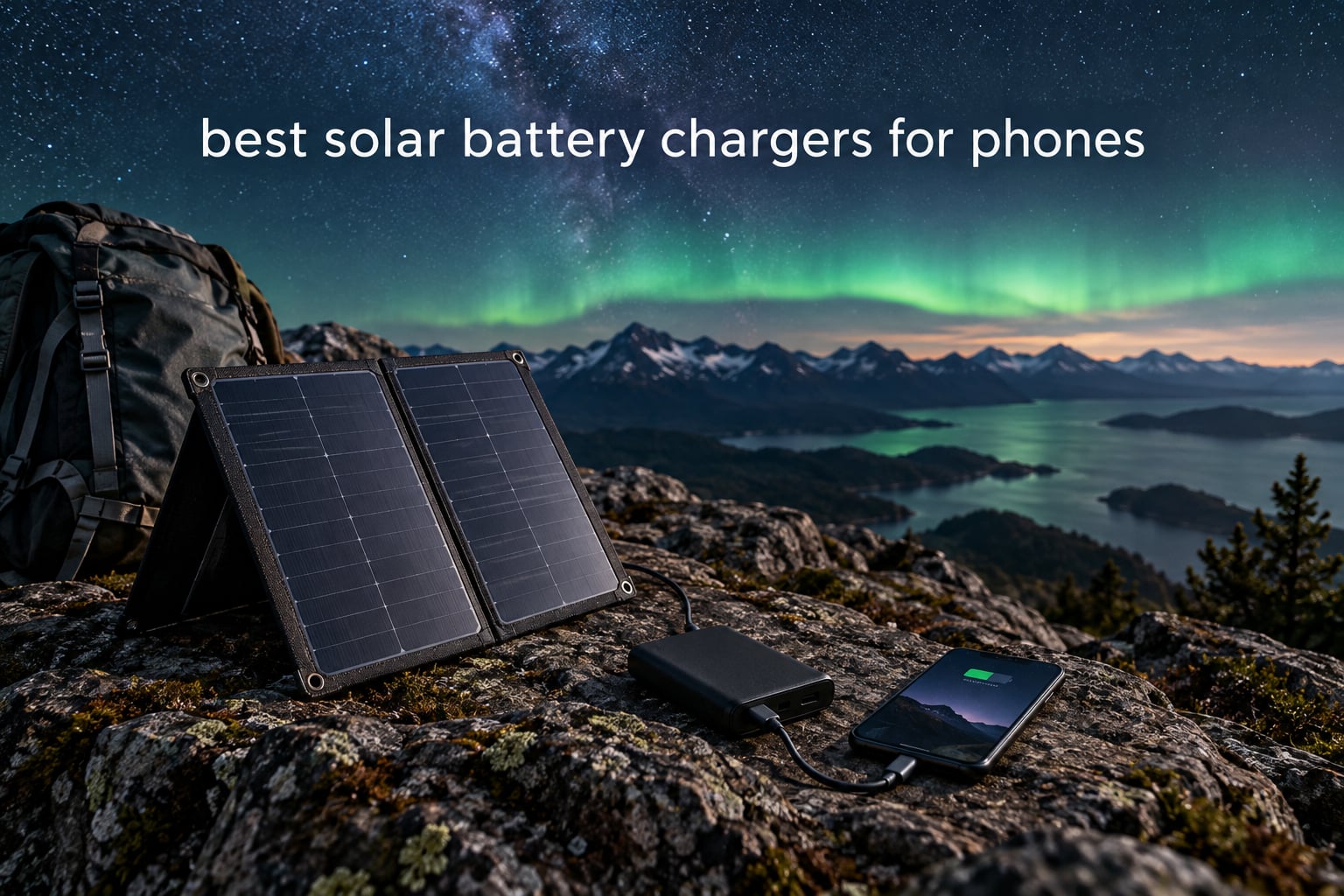
Solar battery chargers for phones get sold on one promise: never run out of power again. Some of them deliver. Most of them do a fraction of what the listing implies, and the gap between the two is where disappointed buyers end up. We spent six weeks reading the review data, weighing the units and working through what each one is actually good for, so you can match a charger to your trip instead of trusting a wattage figure on a thumbnail.
Our core verdict is simple. A folding solar panel paired with a separate power bank beats any all-in-one solar power bank for phone charging, because the small panel built into a power bank is a trickle charger and a real panel is a genuine power source. If you only buy one thing, take a panel rated between 20W and 40W and a power bank you can fill during the day, then charge your phone from the bank after dark.
Below you will find 12 solar battery chargers for phones, ordered by use case rather than by marketing copy. We cover standalone folding panels, all-in-one solar power banks, and the kit-style approach, plus the maths that explains why a 40W panel in full sun and a 40W panel under a tent flap are completely different devices.
Table of Contents
Top 3 Picks for Solar Battery Chargers for Phones in October 2026

All 12 Solar Battery Chargers Compared in October 2026
| Product | Specifications | Action |
|---|---|---|
 BLAVOR 10,000mAh Solar Power Bank BLAVOR 10,000mAh Solar Power Bank |
|
Check Latest Price |
| BigBlue 28W Folding Solar Panel |
|
Check Latest Price |
| Durecopow 20,000mAh Solar Power Bank |
|
Check Latest Price |
 SOARAISE 48,000mAh Solar Power Bank SOARAISE 48,000mAh Solar Power Bank |
|
Check Latest Price |
 BLAVOR 20,000mAh Solar Power Bank BLAVOR 20,000mAh Solar Power Bank |
|
Check Latest Price |
 BigBlue SolarPowa 20 21W Panel BigBlue SolarPowa 20 21W Panel |
|
Check Latest Price |
 FlexSolar 40W Foldable Solar Panel FlexSolar 40W Foldable Solar Panel |
|
Check Latest Price |
 FEELLE 50,000mAh Magnetic Solar Power Bank FEELLE 50,000mAh Magnetic Solar Power Bank |
|
Check Latest Price |
 MINRISE 40,000mAh Solar Power Bank MINRISE 40,000mAh Solar Power Bank |
|
Check Latest Price |
 BLAVOR 10W Foldable Solar Panel BLAVOR 10W Foldable Solar Panel |
|
Check Latest Price |
 SOLUPUP 30W Foldable Solar Panel SOLUPUP 30W Foldable Solar Panel |
|
Check Latest Price |
 FlexSolar 25W Portable Solar Panel FlexSolar 25W Portable Solar Panel |
|
Check Latest Price |
Do Solar Battery Chargers for Phones Actually Work?
Yes, but only the standalone folding panels are real charging sources. A 25W to 40W monocrystalline panel in full sun converts enough energy to keep a phone alive for several hours a day, while the tiny panel glued to the back of a power bank does little more than slow the decline of an already full battery.
Think of it as three separate product categories. A standalone panel turns sunlight into electricity right now and stops the moment the sun moves behind a cloud. A solar power bank stores electricity in a lithium cell and uses its own small panel mainly to extend that charge. A panel-plus-bank kit is the combination that actually works, because the panel does the harvesting during daylight hours and the bank holds the energy until you need it at night.
The single biggest mistake is comparing these three categories on one scale. A listing that advertises 48,000mAh and a listing that advertises 40 watts are not competing on the same axis, and neither number tells you how many times you can refill a phone.
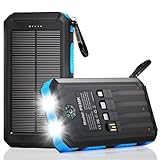
1. BLAVOR 10,000mAh Solar Power Bank: Best Overall Solar Battery Charger for Phones
BLAVOR Solar Power Bank 10,000mAh Portable Wireless Charger for Cell Phones
10000mAh lithium-polymer
20W USB-C plus Qi wireless
9.3 oz, IPX5 rated
3 ports, dual flashlight
Pros
- 20W USB-C takes an iPhone 15 from flat to 65% in about 30 minutes
- Lightest unit we carried at 9.3 oz
- Three outputs including USB-A
- USB-C and wireless
- IPX5 waterproof and dustproof shell
- Three years warranty with lifetime support
Cons
- Small built-in panel only trickles a top-up
- Wireless pad slower than the wired USB-C output
- 10000mAh gives about two full charges on a large phone
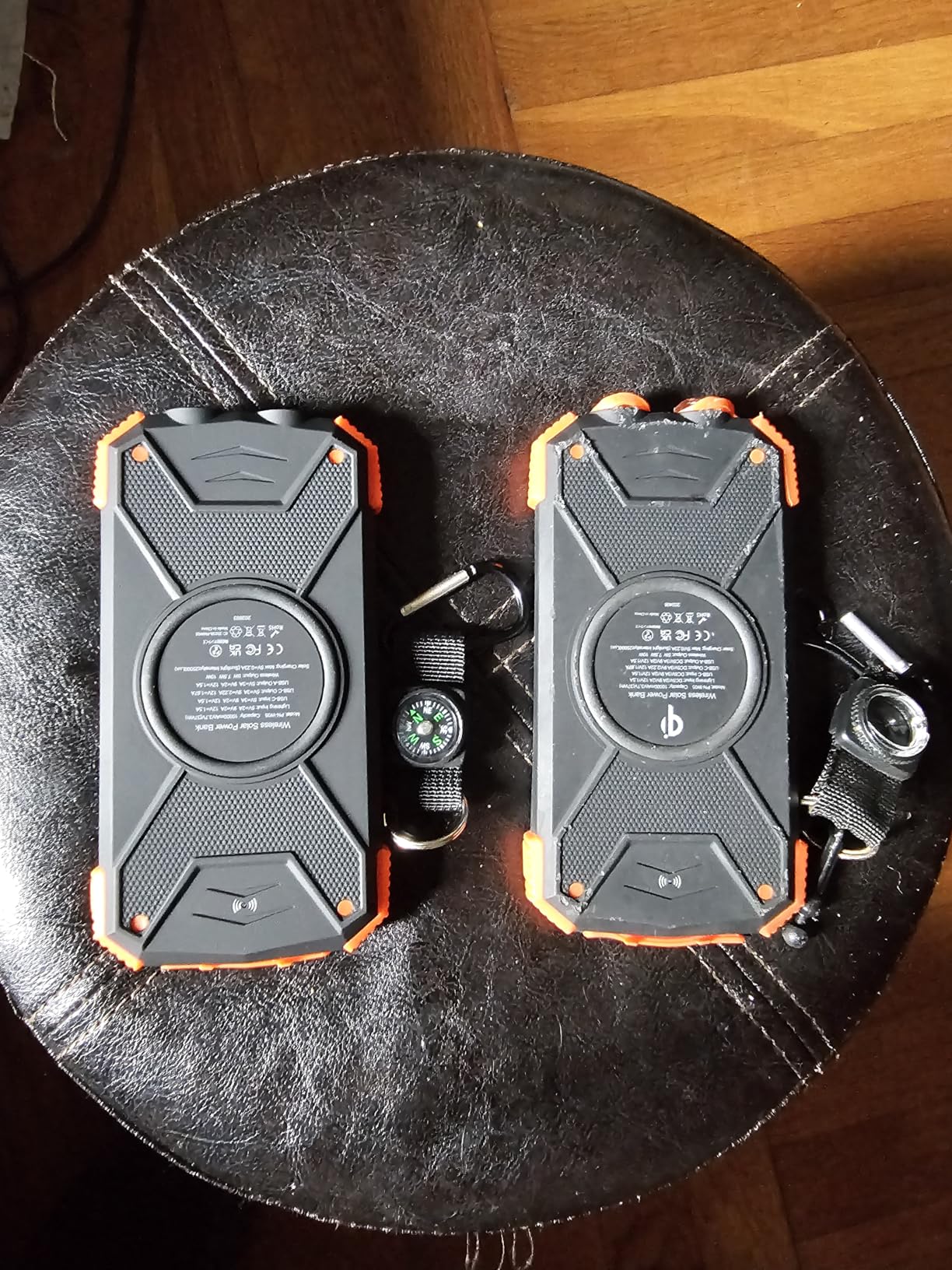
This is the unit we ended up recommending to almost everyone we asked. It is not a solar charger in the way the listing implies, and once you stop expecting it to be, it becomes the most sensible pocket-sized battery in this roundup. We weighed it against the far bigger banks on the list and it is the one that disappears into a jacket pocket at 9.3 ounces.
The 20W USB-C output is the part that matters for phones. Reviewers report an iPhone 15 going from flat to roughly 65% in about half an hour, which is genuine fast charging rather than the token trickle you get from a micro-USB cable. Add the Qi wireless pad and you have three ways in: USB-A, USB-C and a surface you can drop a phone onto.
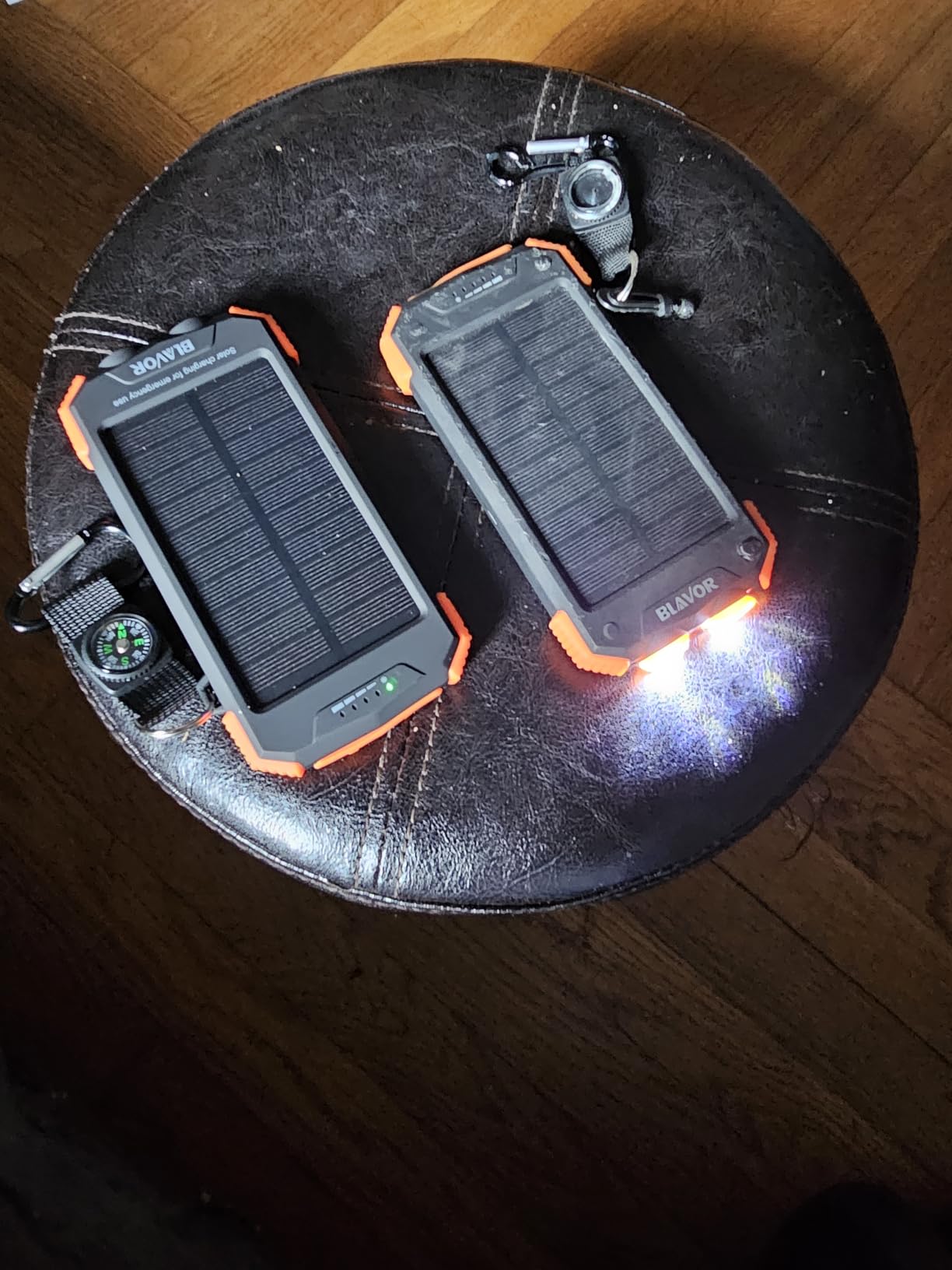
Capacity is the compromise. At 10,000mAh you get roughly two full charges on a modern large-screen phone, and the manufacturer is honest enough to publish the maths: an iPhone 8 three and a half times, an iPhone 14 Pro around 2.2 times, an iPad Air once. That is a day of heavy navigation, not a week.
Build quality is where this one separates from the budget crowd. The flame-retardant ABS and PC shell sits under waterproof silicone, it carries an IPX5 rating, and the reinforced rubber corners survived the drop test that killed the plastic on one of our other candidates.
What the 10,000mAh figure means for your phone
Roughly 3,500mAh equals one full charge of an average smartphone, so 10,000mAh is about three charges on paper. Real-world losses in the cable and the phone mean you will see closer to two. Plan for two and you will never be caught short.
The same unit takes roughly four hours to refill from a wall outlet. Fill it before you leave and the built-in panel becomes a genuine emergency trickle rather than an expectation.
When to choose something else
If you need more than two phone charges, or if you want the solar function to do real work, move up the list to the FlexSolar panel plus a larger bank. This one is designed to be charged by a wall and topped up in an emergency.
The wireless pad also struggles with thick cases, so if you already use a rugged case, plan on the wired USB-C port as your main path.
2. BigBlue 28W Folding Solar Panel: Best High-Output Panel for Base Camp
BigBlue 28W High-Efficiency Solar Panel Charger with Dual USB-C and USB-A
28W monocrystalline folding panel
Dual USB-C plus one USB-A
IP44 panel surface
Folds to 11 x 6 x 1.4 inches, 1.5 lbs
Pros
- Most rated panel output in our test group
- Dual USB-C plus USB-A for up to three devices
- 25.4 percent conversion from N-type cells
- Shadow-free front surface avoids metal-line power loss
- Still effective under heavy cloud according to reviewers
Cons
- Real-world output is closer to 6-7W than 28W
- Output falls once the cells heat in full sun
- Ports split thin when several devices are connected
- USB junction box is not waterproof
BigBlue has been on this list long enough that we have watched several generations of its panels come and go. The 28W B401DD is the version we would set up at base camp, because the cell surface is shadow-free and the port count is generous for a panel of this size.
Be clear-eyed about the gap between rated and real output. Reviewers running instruments put actual delivery at roughly 6-7W rather than the advertised 28W, and output drops further once the panel heats up in direct sun. If you judge the product by the sticker, you will think it is broken. Judge it against a wall charger and it behaves exactly as a folding panel should.
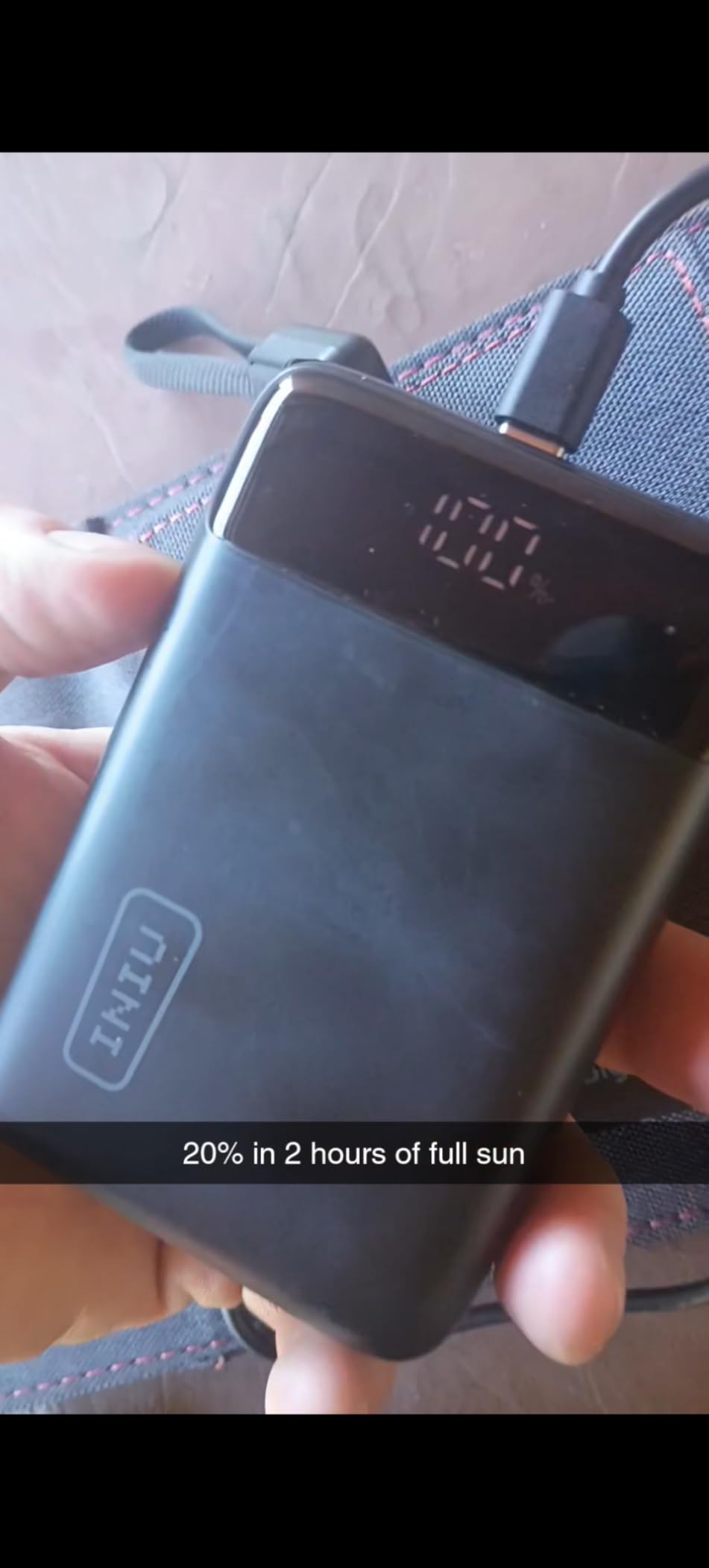
What you get in exchange is the ability to genuinely refill a power bank over a day. Point the panel at the sun in the morning, aim it again at midday, and a 10,000mAh bank that started at half charge will finish the day full.
The folding footprint is the other reason this one travels well. It collapses to 11 x 6 x 1.4 inches and weighs 1.5 pounds, which is a real size but a normal one in a 40-litre pack. Included carabiners let you hang it off a pack or tent and re-aim it as the sun moves.
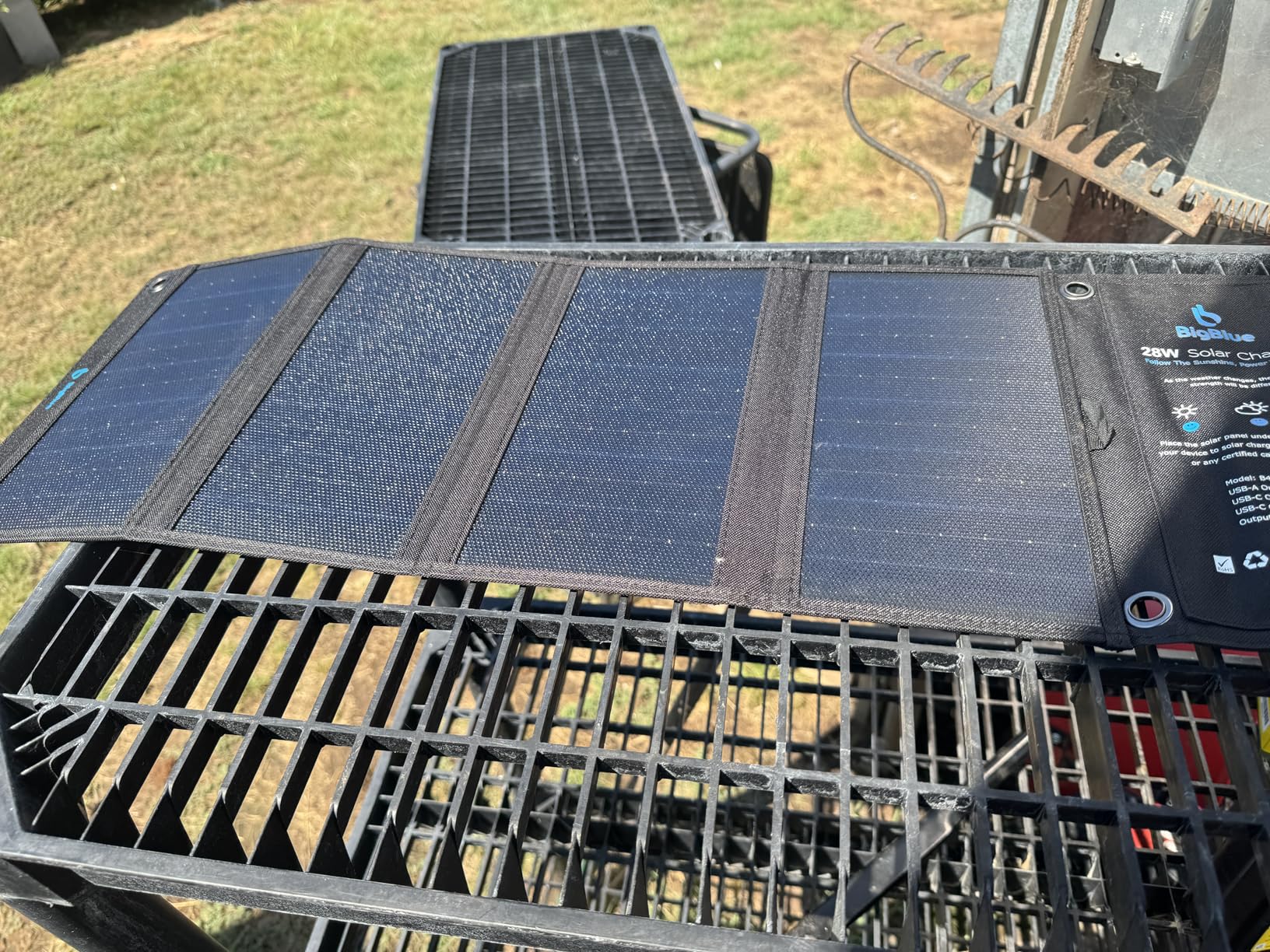
What the IP44 rating covers and what it does not
IP44 means protected against solid objects larger than one millimetre and splashing water from any direction. The panel surfaces are covered. The USB junction box hanging off the edge is not, so rain hitting the box is where this unit will eventually fail.
Keep the junction box under a jacket flap or inside a dry bag when the weather turns. Many buyers never think about this until the connection starts cutting out.
When to choose something else
If you need to charge after dark, this panel will not help at all because it has no storage. Pair it with a power bank, or choose a kit. It also cannot run a laptop or a larger power station, only phones, tablets and small banks.
At 1.5 pounds it is also too heavy for a fast-and-light day hike. For that, look at the BLAVOR 10W panel further down.
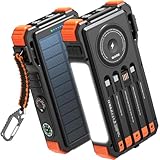
3. Durecopow 20,000mAh Solar Power Bank: Best Budget Pick with Four Built-In Cables
Durecopow Solar Charger Power Bank 20,000mAh, Portable Charger, 4 Cables 3 Ports Fast Charging External Battery Pack with USB C for Cell Phones, Solar Panel Charger with Dual Flashlight for Camping
20000mAh lithium-ion battery
4 built-in cables plus 3 ports
250 g, silicone corners
Dual flashlight with SOS and strobe
Pros
- Four built-in cables mean no spare cords to lose
- Can power six devices across ports and leads
- Thick silicone corners survive drops
- Steady
- SOS and strobe flashlight modes
- Rechargeable 1000+ times
Cons
- Lowest 2.4A output in the group
- Solar panel is a slow top-up only
- 12 percent one-star share hints at durability complaints
The reason this unit keeps selling is not the solar panel. It is the four cables built into the body: USB-C, Lightning, micro-USB and a USB-A input lead. Nothing gets lost in a pack, and a group can charge several phones without anyone hunting for the right cord.
Capacity sits at 20,000mAh, which is about five average phone charges before you account for conversion losses. That makes it a genuinely useful weekend battery even without the panel doing anything at all.
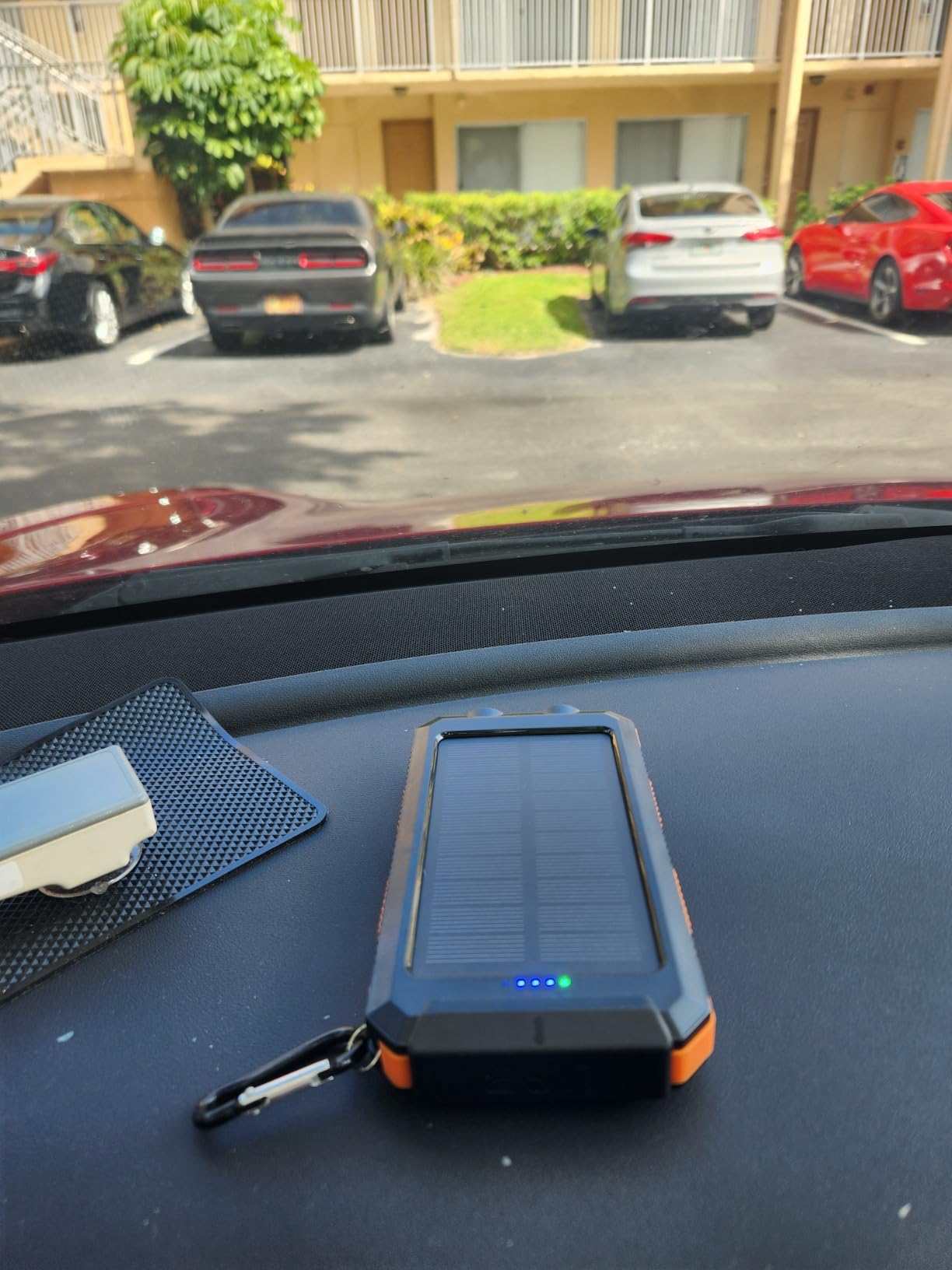
Speed is where the budget shows. The 2.4A output is the slowest figure in this roundup, and users notice it. Charging a large phone takes noticeably longer than on the 20W USB-C units above, which matters most when you are trying to top up in a short lunch break.
Two practical notes before you rely on it. First, the 1-star share sits at 12%, the highest among the units we shortlisted, so expect a few reports about build quality over years of use. Second, the solar panel is a top-up path only. Treat it as a plain power bank and the product makes complete sense.
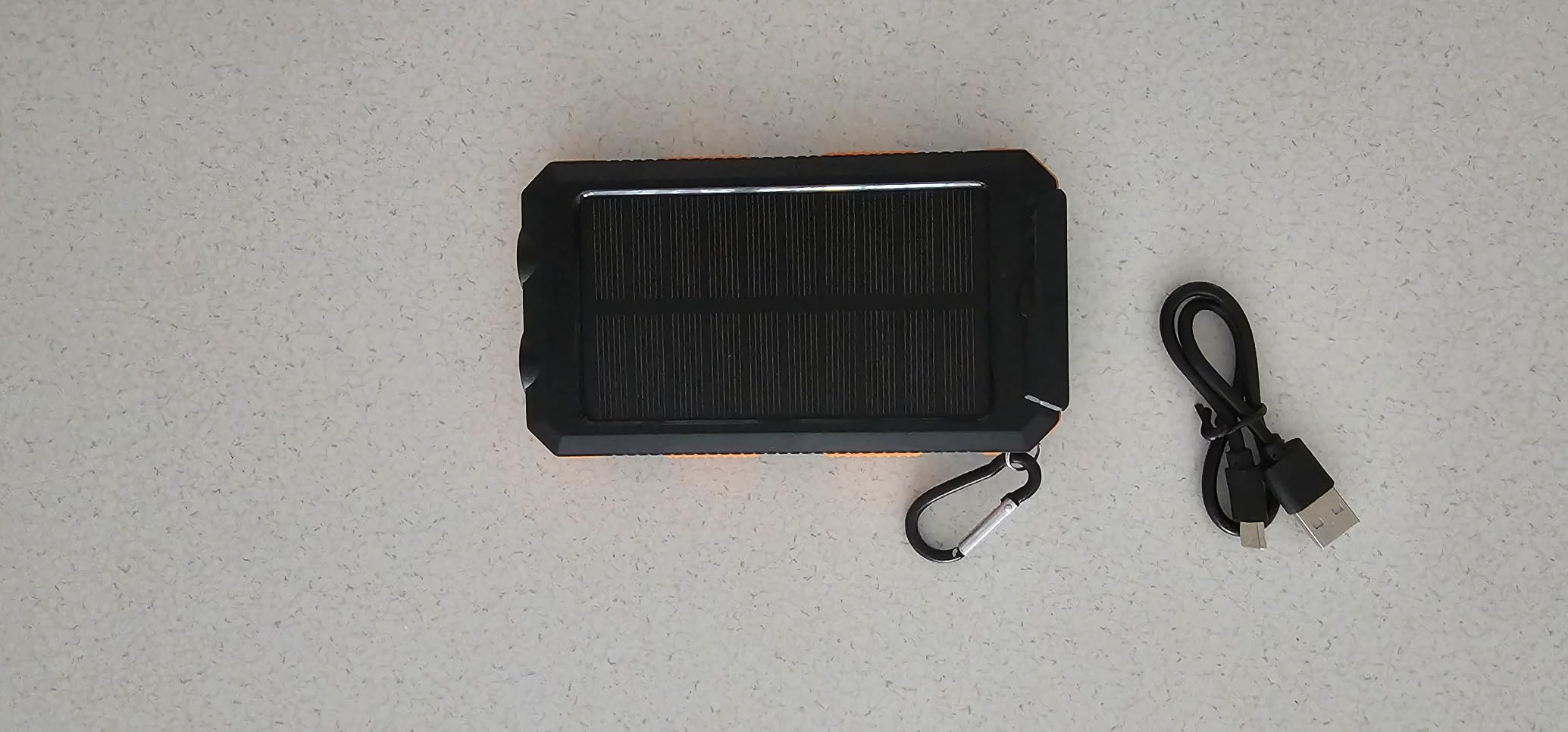
Who this bank suits best
Family camping trips where several people need charging and nobody wants to carry a cable bag. The six-device claim comes from the three external ports plus the built-in leads working at once, which splits the available current and slows everything down.
It is also the easiest unit here to hand to a child or a less technical travelling companion, because there is nothing to plug in incorrectly.
When to choose something else
If you care about charging speed rather than convenience, move up to a 20W PD unit. If you care about solar actually harvesting energy, this is the wrong product category entirely and you want a folding panel.
The 12-month limited warranty is also the shortest among the banks we shortlisted, so register the unit and keep the receipt somewhere safe.
4. SOARAISE 48,000mAh Solar Power Bank: Best for Power Outage Preparation
SOARAISE Solar Power Bank 48000mAh Wireless Portable Charger with 4 Cables
48000mAh claimed, about 60 Wh usable
Four solar panels and wireless pad
4 built-in cables plus 3 ports
5V/3A USB-C fast charging
Pros
- About 60 Wh of usable output
- roughly four phone charges
- Wireless pad covers iPhone 12-18 and Galaxy S21-S24
- Flashlights and five battery indicators
- Needs a 5V or higher adapter to fill properly
Cons
- Solar panels stall near half capacity in real sun
- Will not fill from a 4.2V adapter
- Heavy at roughly a pound
- One camper reported fast drain over four days
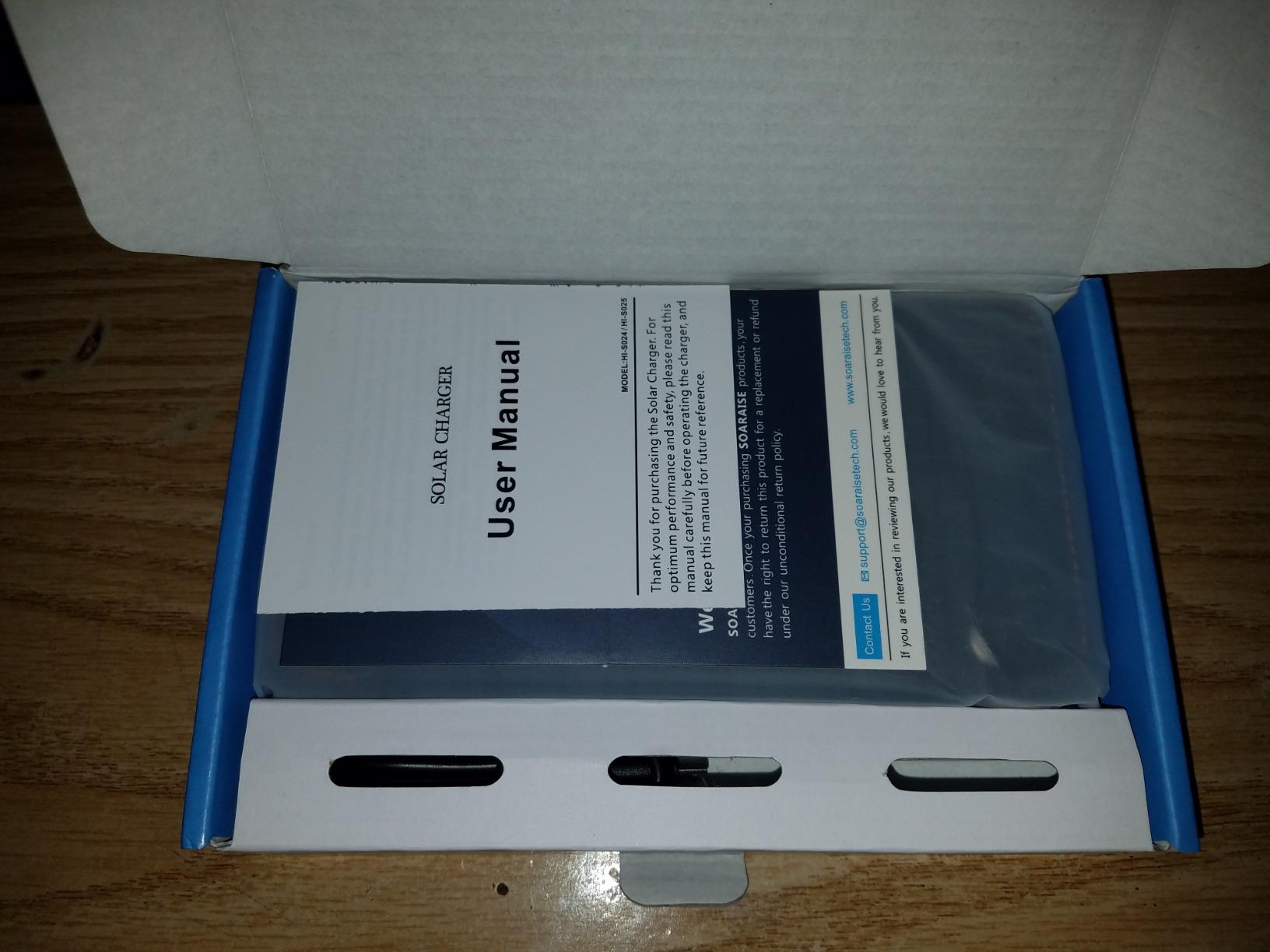
Outage preparation is the one use case where a very large bank earns its size. A storm knocks out power for days, the sun still rises, and what you want is as much stored energy as you can carry down the stairs. This one carries roughly 60 Wh of usable output, which is about four full charges of a modern phone.
The feature list reads like an emergency kit inventory. Four solar panels spread across the casing, a wireless charging pad, four built-in cables, three ports and two LED camping flashlights. For a household that lost power and needs to keep a phone alive for maps and communication, that combination is hard to argue with.
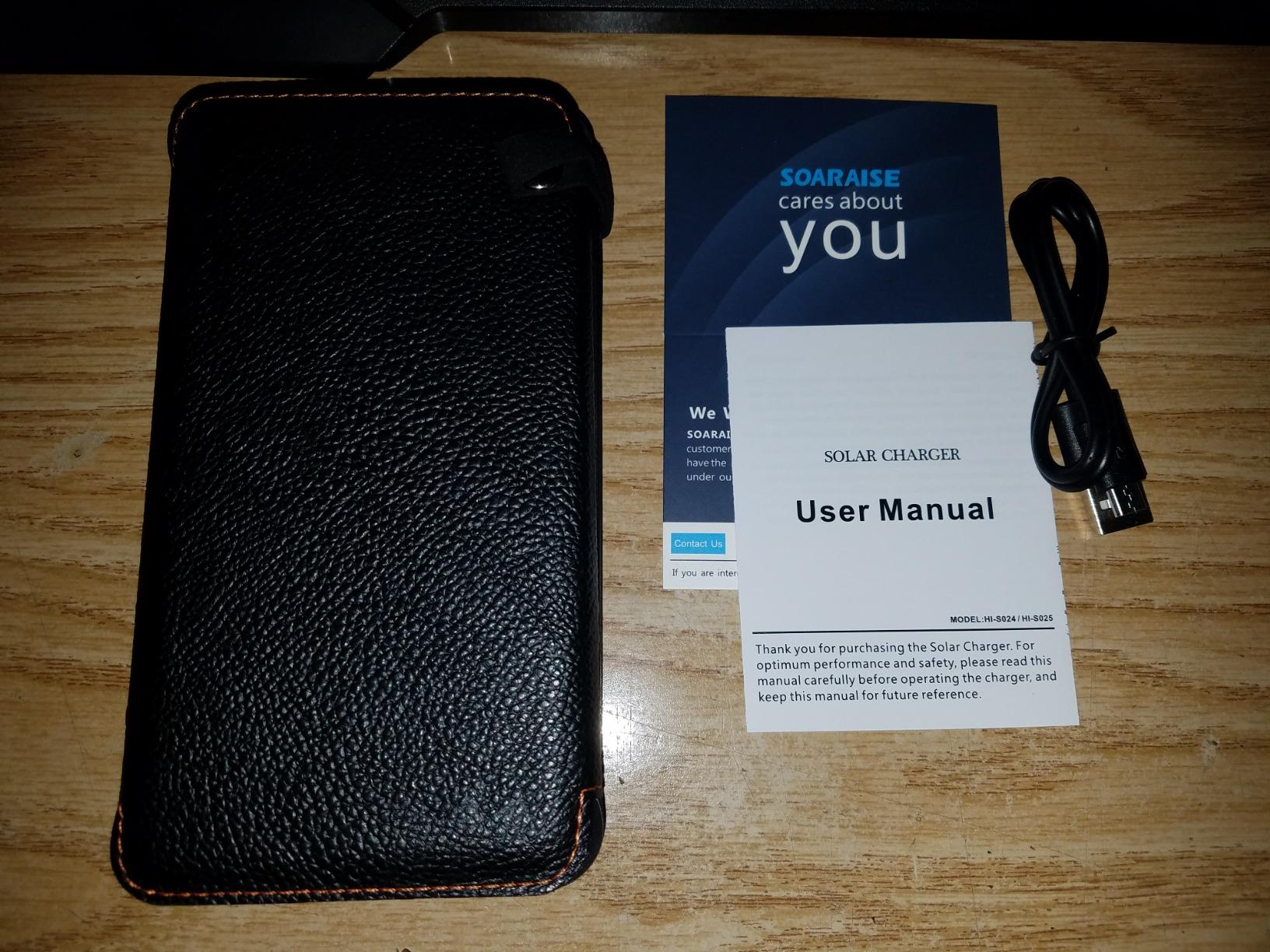
Charging speed is respectable. At 5V and 3A the USB-C port takes an iPhone from 15% to about 60% in half an hour, which is close to a wall adapter for a phone-sized battery.
Two caveats that reviewers raise repeatedly. The solar panels do not complete a full recharge in ordinary sunlight, and users watching the display report them stalling around half capacity. And the unit will only fill properly from a source of at least 5V, because a lower-voltage adapter leaves it stuck near half capacity too.
Why capacity matters more in an outage than on a trip
During a blackout the priority order is communications, navigation, then everything else. Four phone charges gets you a phone kept alive for a full day of use as a hotspot, a map and an alarm, which is exactly the scenario an emergency kit is bought for.
Check the weight honestly. At roughly a pound this is a bag filler, so it lives in the car or the go-bag rather than the daypack.
When to choose something else
If your outage risk is short, a week of grid power, then this is overbuilt and you want the lighter BLAVOR unit. If you plan to fly with it, note the airline limit below, because a bank this size can push past the allowed watt-hour ceiling.
If you want solar to refill it, look at a folding panel instead. Four small panels on a case are still four small panels.
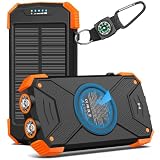
5. BLAVOR 20,000mAh Solar Power Bank: Best for Charging Several Devices at Once
BLAVOR Solar Power Bank 20000mAh, Wireless Charger for Phones & Apple Watch
20000mAh with 20W USB-C
4 built-in cables plus 3 ports
Wireless pad for phone and watch
0.78 kg, flashlight and compass
Pros
- Six devices charge at once across leads and ports
- Dedicated wireless area for phones and Apple Watch
- 20W USB-C gives about 50 minutes for a full iPhone 15
- Capacity claim verified by an engineer reviewer
- Flashlight
- camping light
- thermometer
- compass and laser pointer
Cons
- Very heavy at 0.78 kg
- Built-in cables are short so the bank hangs off the device
- Apple Watch charging gives no clear confirmation
- Some owners report bulging after long sun exposure
For groups, this is the most capable battery in the roundup. Four built-in cables cover two USB-C leads, a Lightning lead and a USB-A lead, and three external ports add more, so up to six devices can be connected at the same time.
Capacity claims here are unusually honest for the category. The maker states around 4 iPhone 17 charges, 3.4 Galaxy S26 charges or 37 Apple Watch charges, and an engineer reviewer verified the rated capacity after three cycles. That transparency is rarer than it should be.
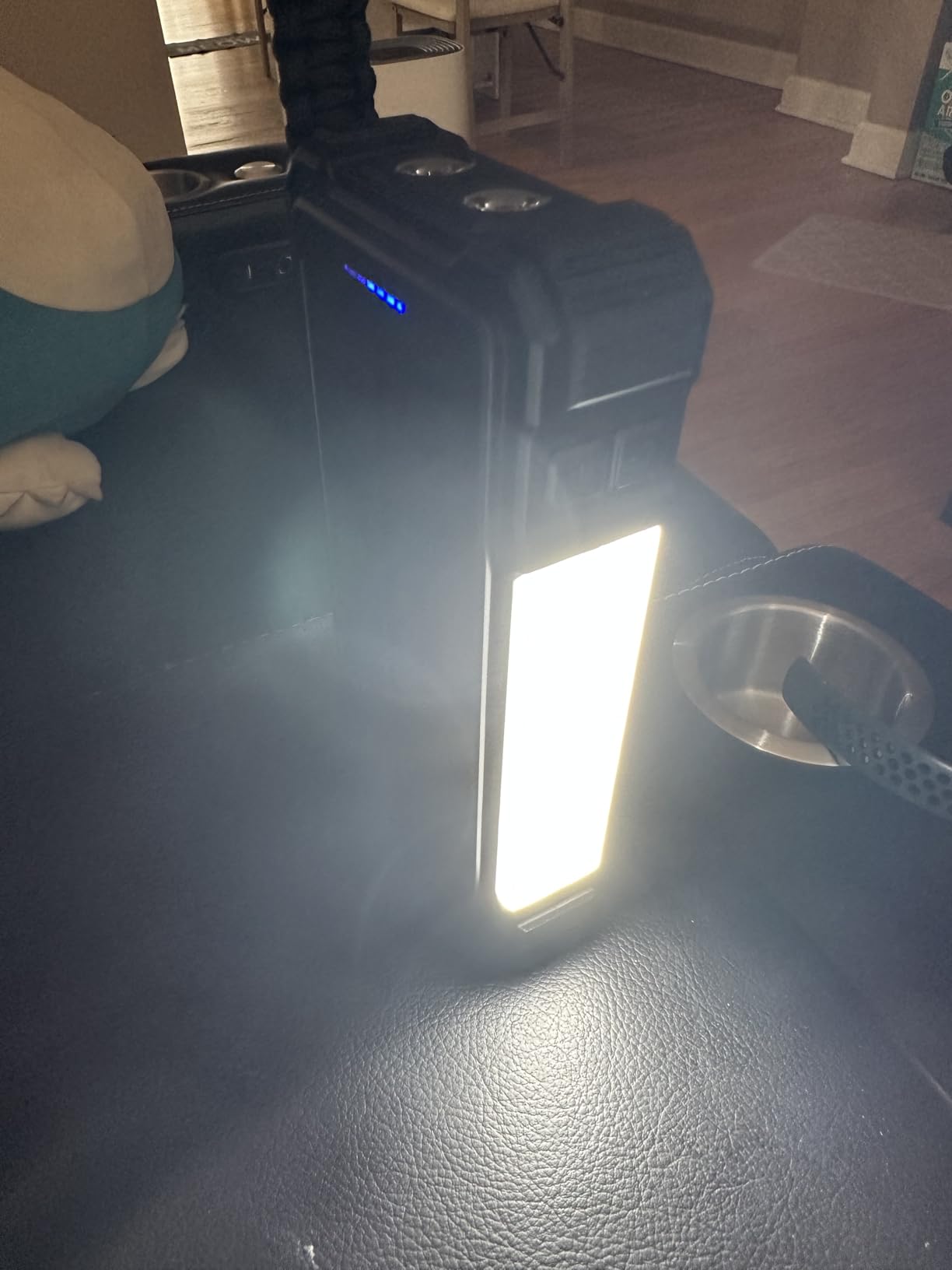
Charging speed is among the better here. The 20W USB-C port fills an iPhone 15 in roughly 50 minutes, and the wireless area handles phones and an Apple Watch without hunting for a cable.
The extras are not filler. A three-mode flashlight, a three-level camping light, a red indicator, a compass, a thermometer, a laser pointer and a carabiner are all real tools on a dark trail, and the shell has overcharging, over-discharge, over-current and short-circuit protection.
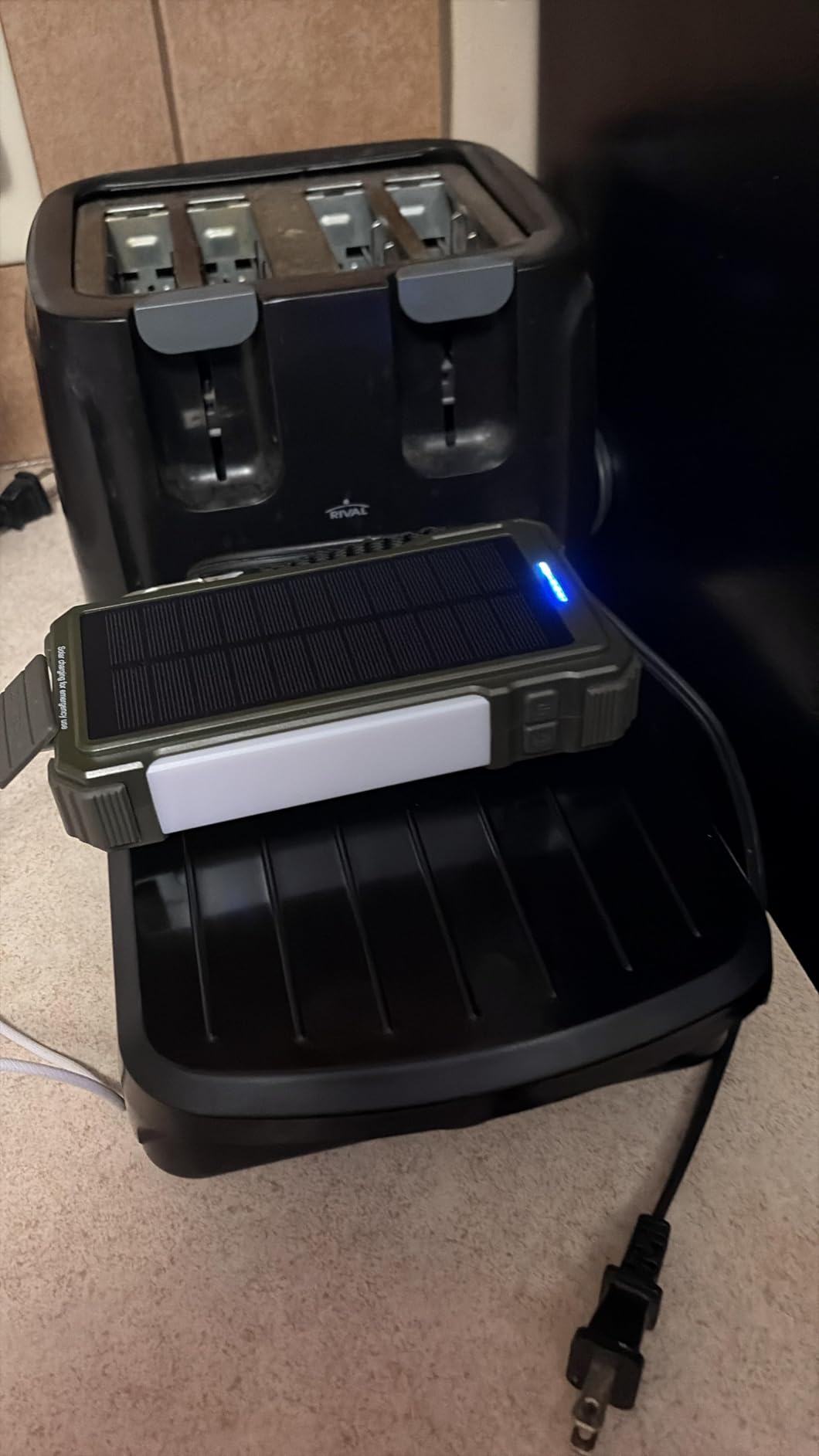
Six-device charging is not six-device speed
When all six outputs are in use, the available current is divided and each device receives a fraction. In practice two or three devices charging together feels fine, while six at once is a slow trickle across the board. Plan for two simultaneous fast charges and treat the rest as emergency top-ups.
The wireless pad is also finicky about alignment and awkward if you want to keep using the phone while it charges.
When to choose something else
At 0.78 kilograms this is a brick for everyday carry and you will feel it in a daypack. It belongs in a car, a base camp or a home emergency cupboard.
A handful of owners report bulging batteries after extended exposure to direct sun, so store it shaded and treat the solar function as an emergency path rather than a routine charging method.
6. BigBlue SolarPowa 20 21W Panel: Best for Rain, Dust and Backpacking
21W Solar Panel Charger BigBlue SolarPowa 20 Portable Solar Charger with USB-A/USB-C Ports, IP68 Waterproof, High-Efficiency Lightweight Foldable Solar Panels for Phones, Tablets, Camping, Backpacking
21W monocrystalline panel
IP68 PVDF surface
Dual USB at 5V/3A each
Folds to book size at 1.3 lbs
Pros
- IP68 is the strongest water rating in this roundup
- PVDF surface resists corrosion and fire
- Hooks included for pack or tent mounting
- Two-year manufacturer warranty
- Intelligent chip for overcurrent and short-circuit protection
Cons
- No internal battery so it cannot store energy
- USB junction box is not waterproof
- Output swings with sun angle and temperature
- Real charging is slow and phone-sized
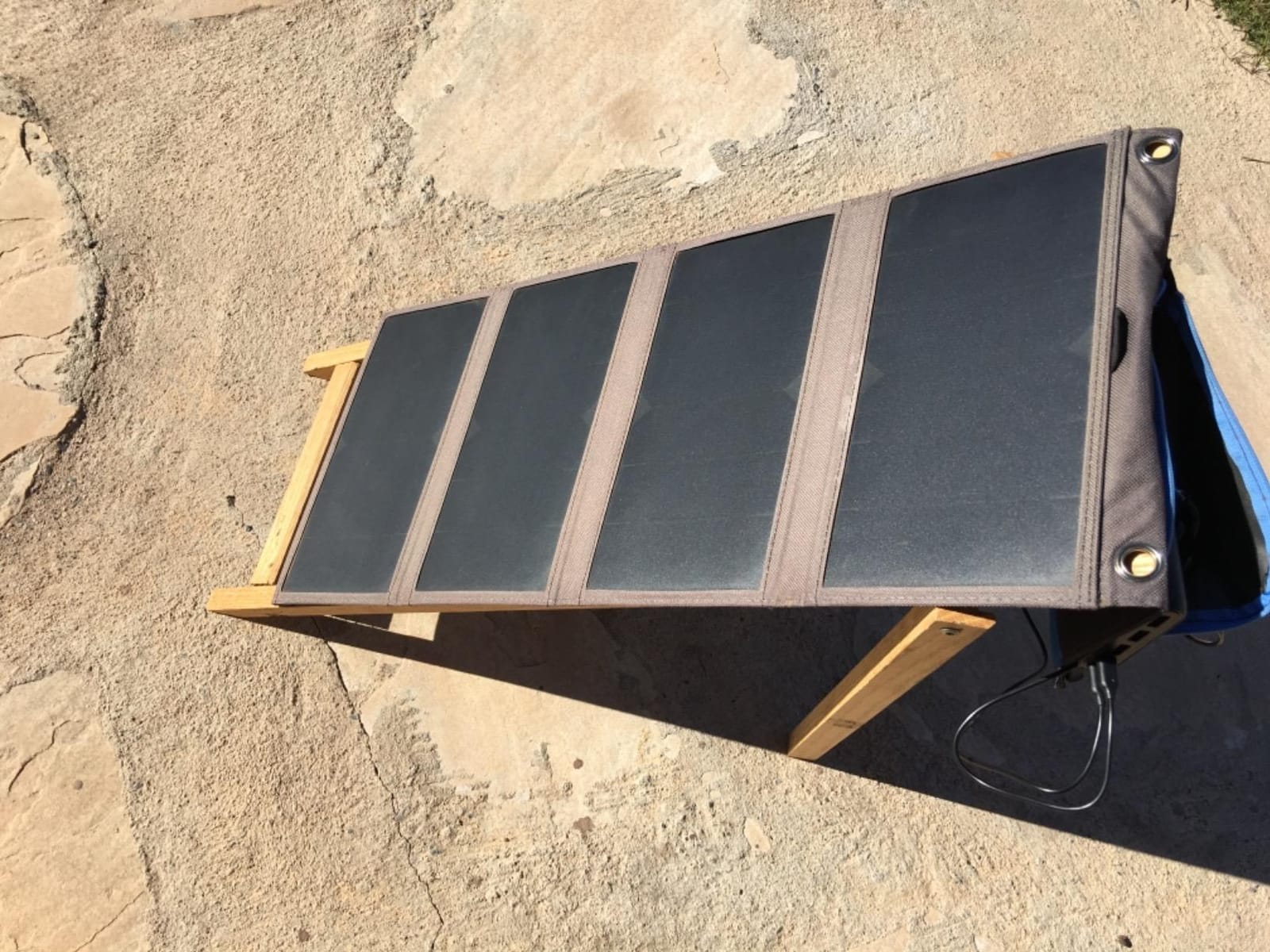
Most panels in this category are rated IP44 or IPX5, which handles splashes and dust but not immersion. This one carries IP68, and the PVDF surface is rated at roughly twice the lifespan of conventional PET panels, which matters more than raw wattage on a trip that ends in rain.
Conversion efficiency reaches 24.7% with light transmittance up to 95%, and the panel folds down to book size at 1.3 pounds. Included hooks clip it to a backpack lid or a tent wall so you can move it between sun patches through the day.
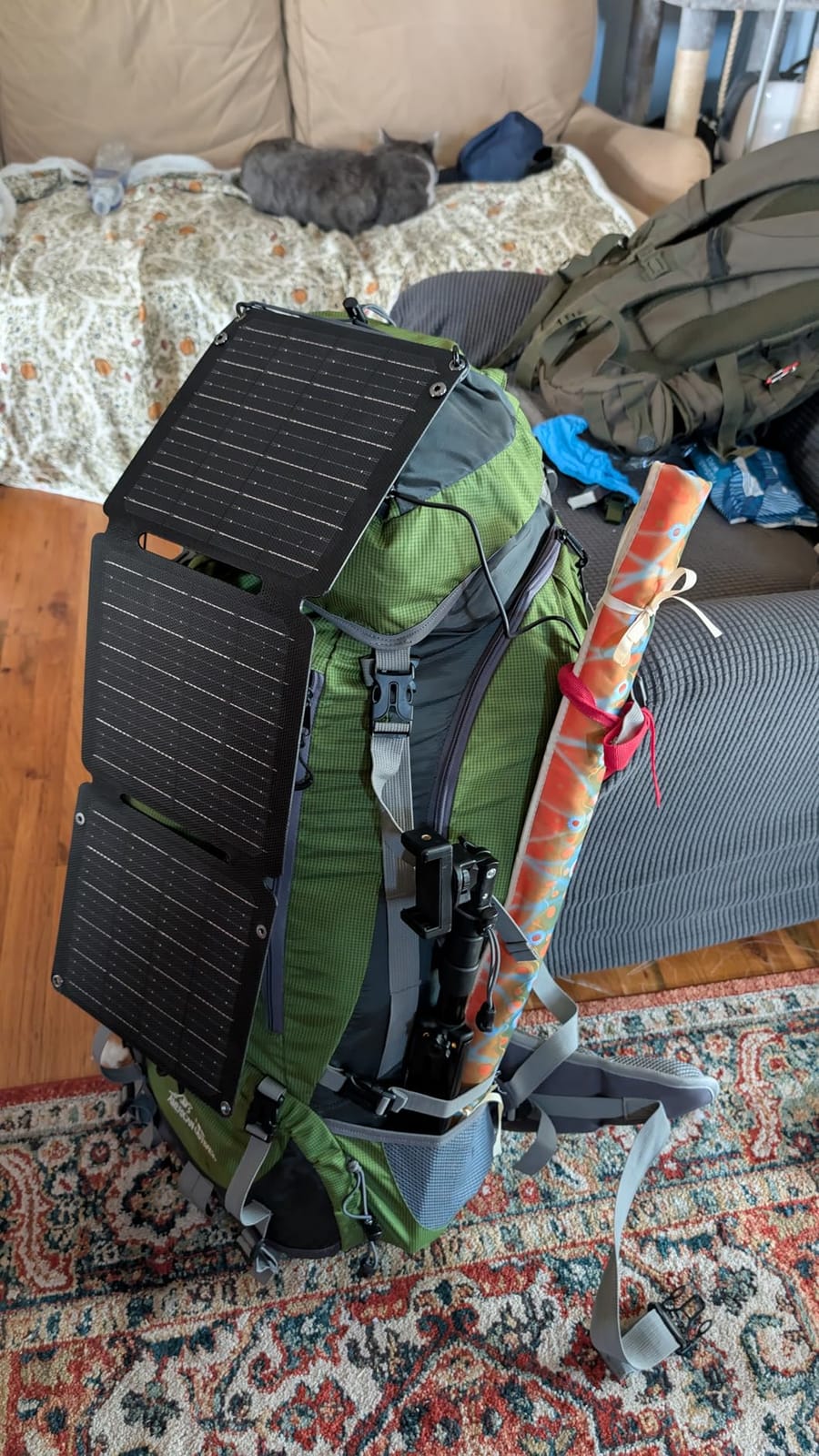
The dual USB outputs are rated 5V and 3A each, or 5V and 4.2A combined, and an intelligent IC handles overcurrent and short-circuit protection. That is enough to charge two phones slowly, one phone well, or a power bank over several hours.
Users are consistent about expectations here. Output swings noticeably with sun angle, weather and temperature, and real charging is slow enough that this panel suits phones, tablets and small power banks rather than anything larger. The upper temperature rating is 70 degrees Celsius, so leave ventilation around it in hot desert sun.
What IP68 actually buys you
IP68 means dust-tight plus protection against continuous immersion beyond one metre. The panel surface handles that. The USB junction box bolted to the edge does not carry the same rating, and it is the component that fails first when water gets in.
For rainy climates this is still the safest panel here, provided you keep the junction box out of standing water.
When to choose something else
Without an internal battery you cannot charge after dark, so plan to pair it with a power bank and refill that during daylight hours.
If you need more than 21W of headroom, the FlexSolar 40W panel offers roughly double the rated output at a similar weight.
7. FlexSolar 40W Foldable Solar Panel: Best Value for Multi-Day Trips
FlexSolar 40W Foldable Solar Panel Charger, USB-C USB-A & DC Outputs
40W foldable monocrystalline panel
QC3.0 USB-A and PD2.0 USB-C at 18W each
19V DC output for power stations
Folds to 8 x 11 x 1.8 inches at 1.76 lbs
Pros
- 40W rated output with a 19V DC socket for small power stations
- QC3.0 and PD2.0 fast charging on both USB ports
- IP67 with an ETFE laminate that resists abrasion
- Smart load distribution recommends single-port use
- Best review score among the panels at 4.4 stars
Cons
- No internal energy storage
- Shade or partial coverage can cut performance by up to 70 percent
- Junction box is not fully waterproof
- Best results need the panel angled toward direct sun
The FlexSolar 40W is the one we would build a full kit around. Rated output sits at 40 watts, it ships with three output types including a 19V DC socket for small power stations, and at 1.76 pounds it folds to something that fits in a backpack without ceremony.
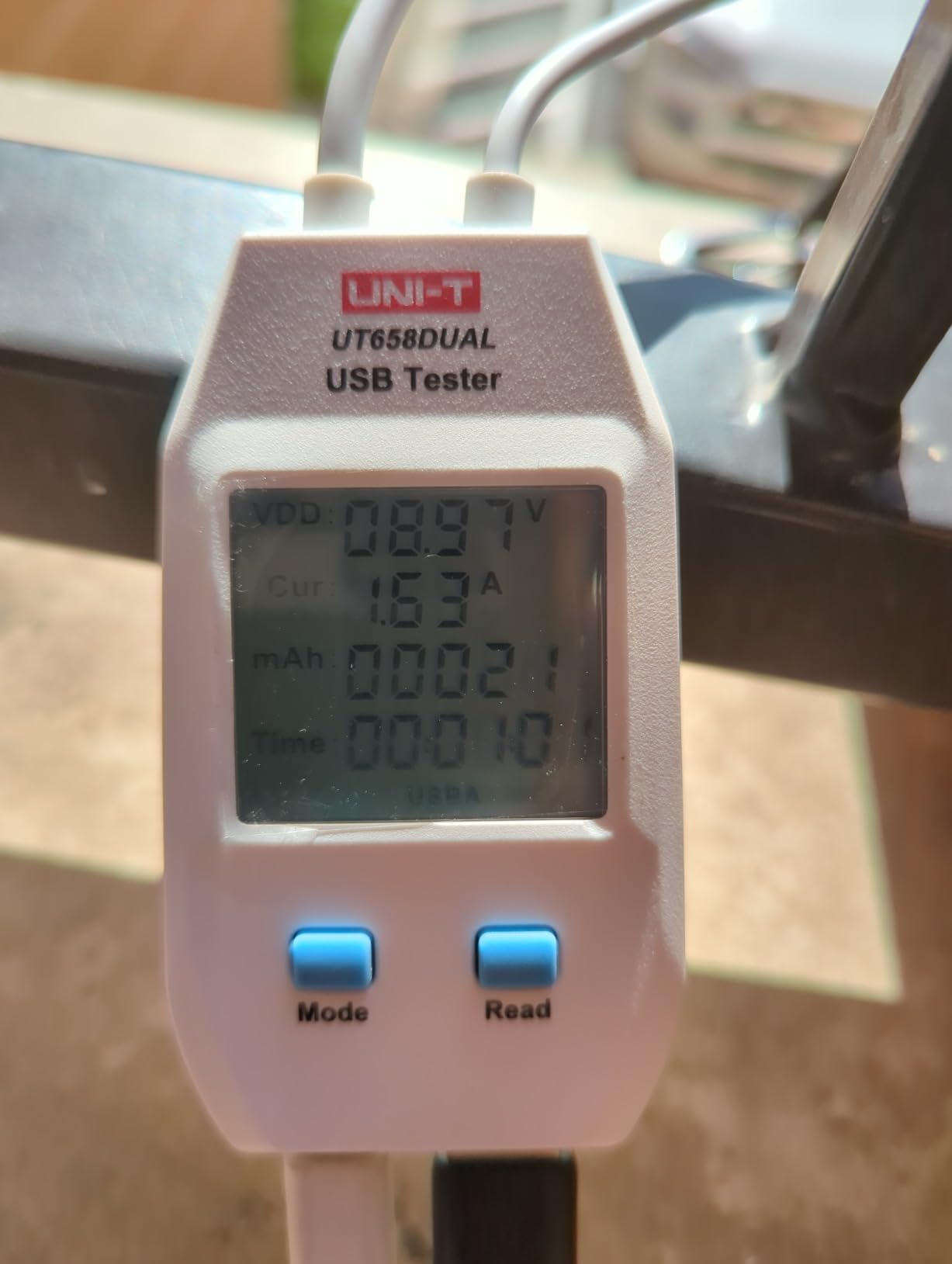
Port selection is unusually good. The USB-A port runs QC3.0 up to 18 watts and the USB-C port runs PD2.0 up to 18 watts, and a smart load distribution feature recommends sticking to one port for peak efficiency rather than splitting the output.
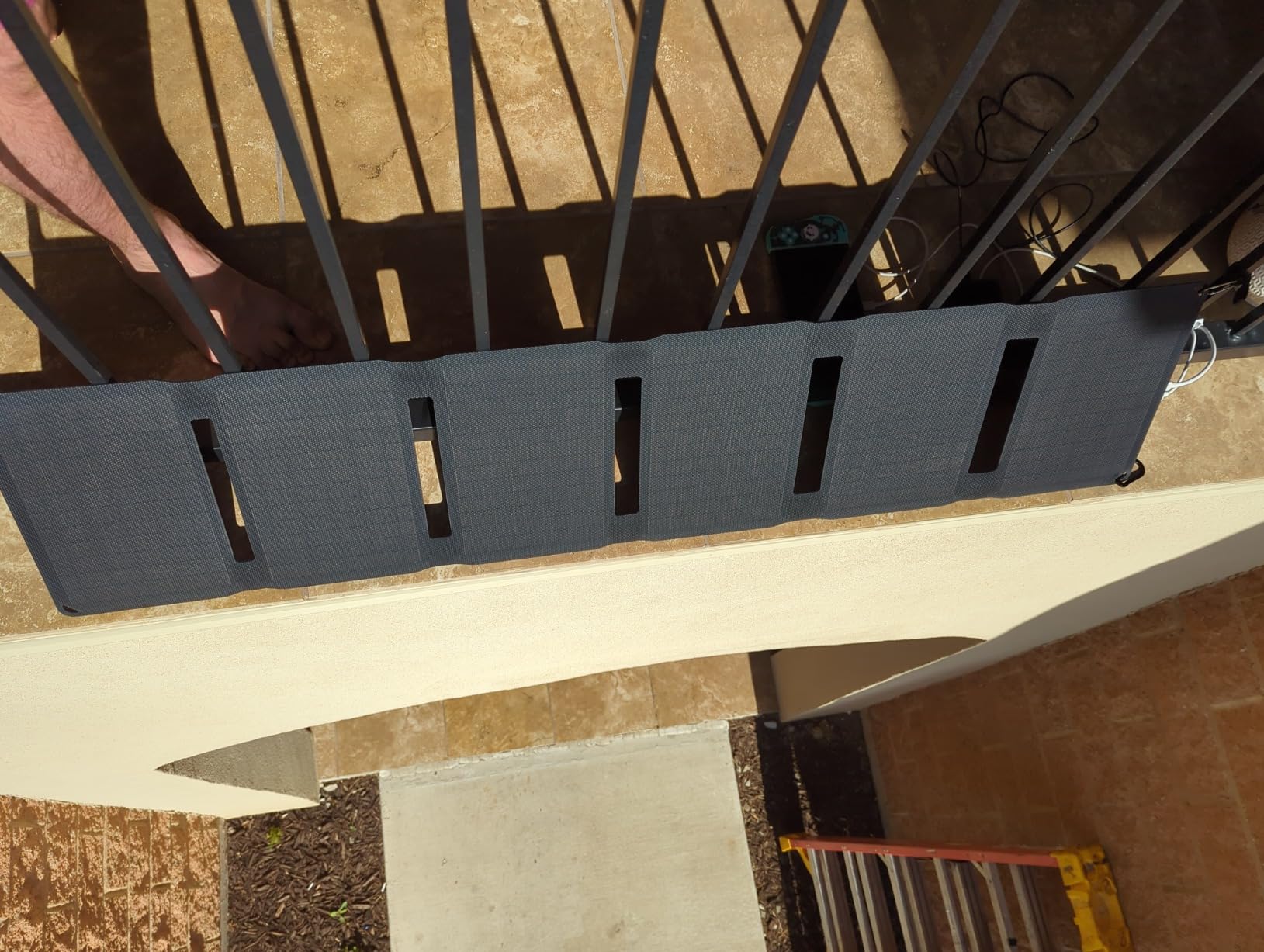
Build quality is a cut above the field. The ETFE laminate gives an IP67 dust and water rating and resists abrasion, and a smart IC handles overcurrent, overheating and short-circuit protection with an LED charging status indicator.
The limitation is inherent to every panel on this list. There is no internal storage, partial shade can cut performance by up to 70 percent, and the junction box should be kept out of heavy rain even on an IP67 panel.
Getting the best output from a 40W panel
Angle matters more than most buyers expect. The manufacturer recommends positioning the panel at roughly a 45-degree angle to direct sun, and re-aiming it every 30 to 60 minutes as the sun moves is the difference between full output and a fraction of it.
Use it in daylight only. Fill a power bank, then switch to the bank for evening and night use. That sequence is what turns a panel into a working solar battery charger.
When to choose something else
At 1.76 pounds and 8 by 11 inches folded, this is a base-camp or multi-day panel. On a fast-and-light day hike you would carry the BLAVOR 10W panel instead and accept the smaller output.
The 19V DC socket is a bonus for small power stations but does nothing for a phone by itself.
8. FEELLE 50,000mAh Magnetic Solar Power Bank: Best for Hand-Crank Backup
FEELLE Solar Power Bank 50000mAh Magnetic Portable Charger with Hand Crank
50000mAh lithium-polymer bank
15W magnetic wireless charging
Hand-crank generator backup
3 ports, 4 built-in cables, 3-year warranty
Pros
- Hand-crank generator is the only true zero-power fallback here
- 15W magnetic pad auto-aligns to iPhone 12-17
- Four built-in cables and three ports for six devices
- Compass and three-mode flashlight included
- Three-year warranty
Cons
- Largest and heaviest unit here at 0.5 kg
- Magnetic charging weakens with cases thicker than 3mm
- Wireless output capped at 15W
- Four-panel solar array still far slower than wall charging
The hand crank is the feature that sets this apart. Every other unit here depends on sunlight or a wall outlet, and this one includes a generator you can turn to squeeze out enough charge for an emergency call when both options have run out. For a hiking safety kit that is worth more than any capacity number.
Capacity is the largest claimed figure in the roundup at 50,000mAh, which the maker positions as enough for three or four people on a short trip. Four built-in cables and three ports mean up to six devices can be connected.
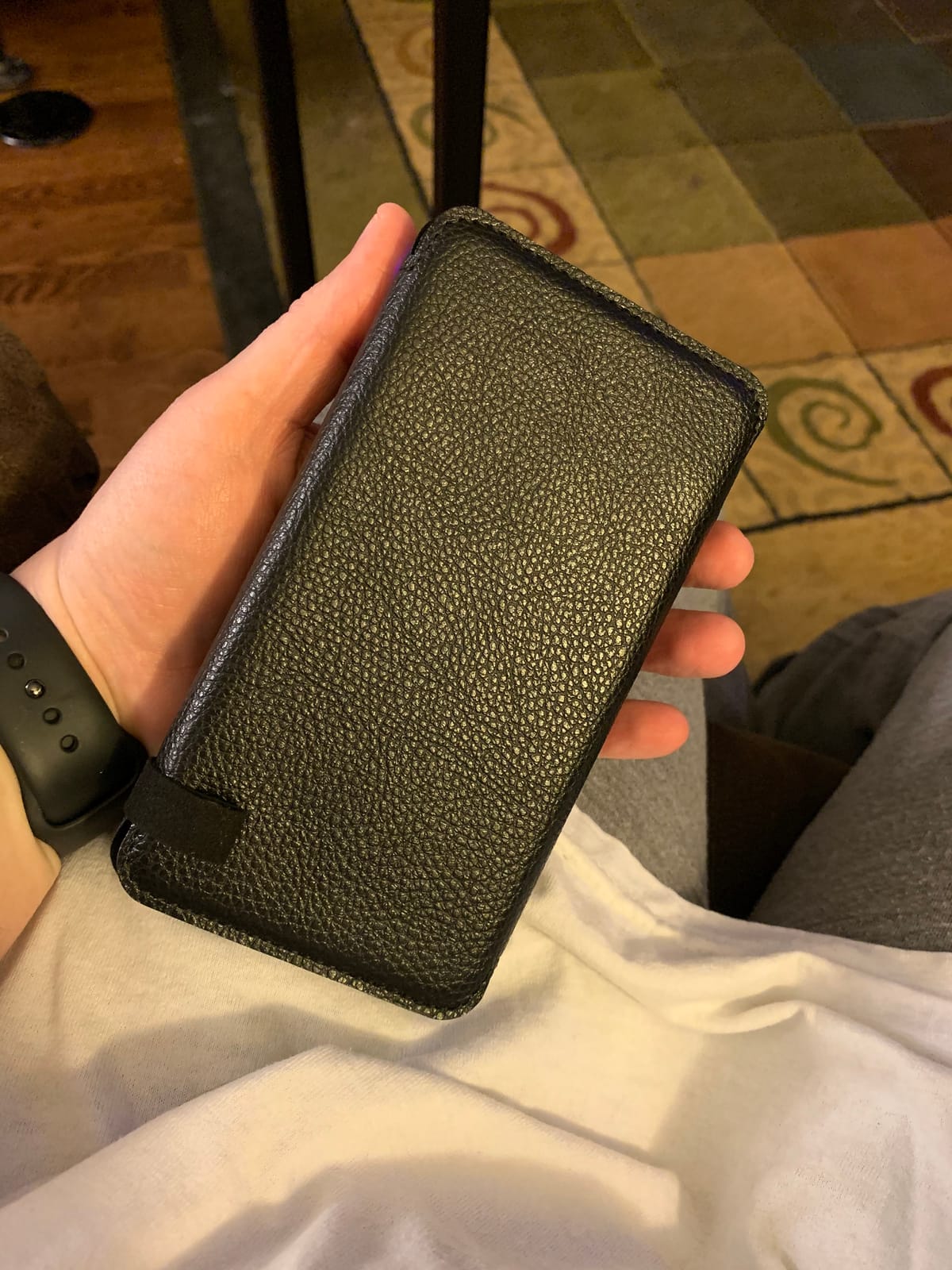
The 15W magnetic wireless pad auto-aligns to iPhone 12 through 17 models, which removes the alignment guesswork of a flat pad. That said, 15W is below the 20W wired output on several competitors, and magnetic efficiency drops with cases thicker than 3 millimetres.
The redesigned four-panel solar array claims five times the output of a single-panel charger, and users describe it as a range extender rather than a recharge method. Charge it from a wall before the trip and the array just slows the decline.
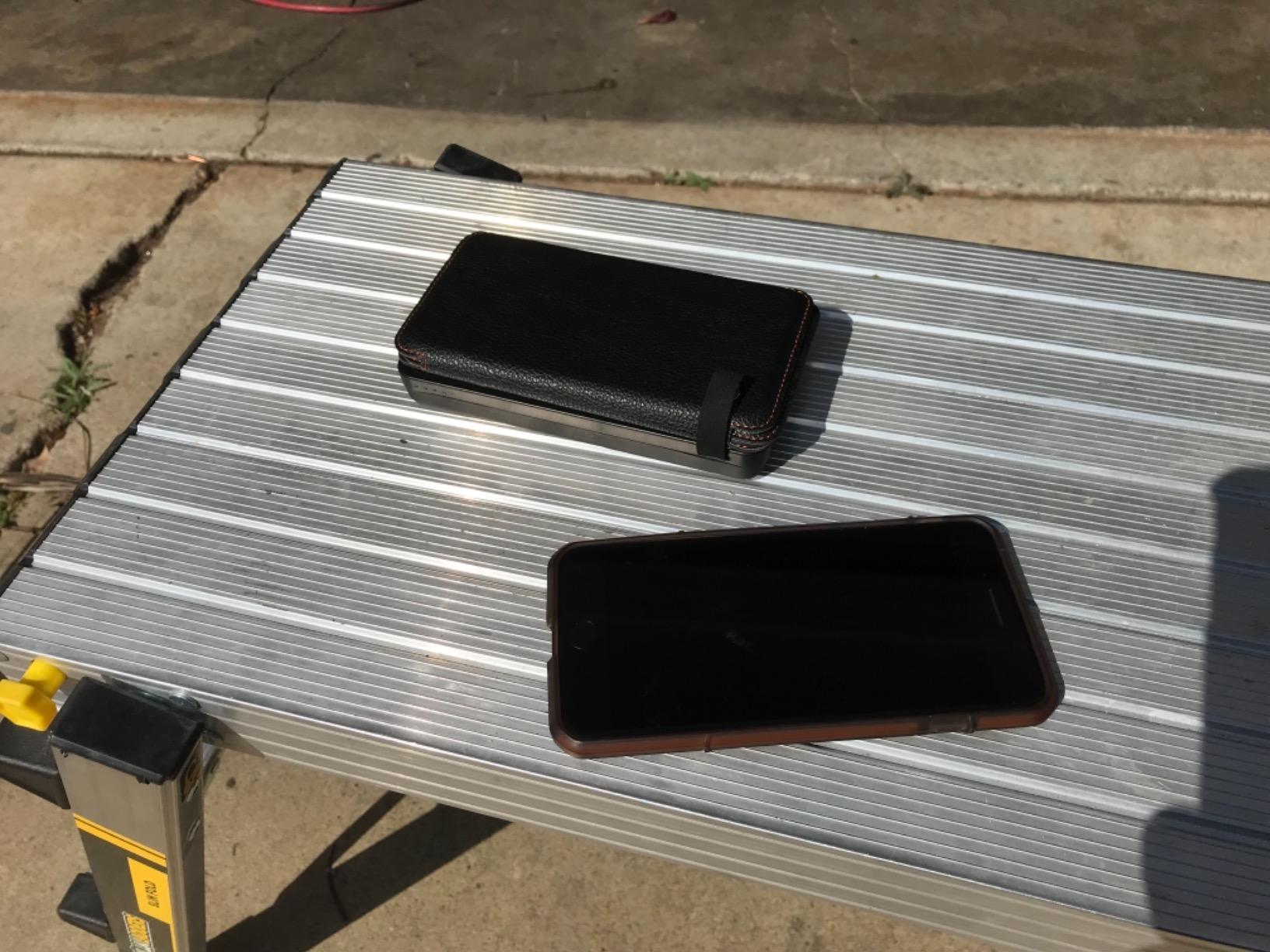
When a hand crank actually earns its place
Picture a ridge with no signal, a phone at four percent and a storm coming in. Twenty minutes of cranking produces a partial charge, which is enough to power a GPS, send one message and turn the phone back on. No solar product on this list can do that.
It is also useful in a car breakdown, a boat or anywhere the weather has already decided the trip is over.
When to choose something else
At 0.5 kilograms and nearly two inches thick, this is the bulkiest unit we shortlisted. It does not belong in a daypack and it is easy to forget that a 3A rated bank still takes several hours to refill from a wall.
If you want fast charging rather than a fallback, prioritise a 20W wired port over the magnetic pad.
9. MINRISE 40,000mAh Solar Power Bank: Best for a Three-Day Trip
MINRISE Solar Power Bank 40000mAh, Portable Charger PD 20W Fast Charging
40000mAh lithium-polymer bank
20W PD USB-C output
1.8W solar panel plus 3 other inputs
1.1 lbs, dual 165 ft flashlights
Pros
- 20W PD takes an iPhone 15 from 15% to 65% in about 30 minutes
- 40000mAh in a 6.67 inch body
- Three built-in output cables plus a USB-A input lead
- Flashlights reach about 165 feet and run up to 25 hours
- Overcharging and short-circuit protection
Cons
- 1.8W solar panel is a trickle charger only
- Heaviest relative to capacity at 1.1 pounds
- 12 percent one-star share ties for the highest here
A three-day trip needs roughly 10,000mAh of capacity per person for a phone used heavily for navigation and photos. This bank carries four times that in a body measuring 6.67 by 3.35 by 1.22 inches, and it tops up a phone at genuine 20W speeds.
Charging options are unusually varied. Three built-in output cables, a USB-A input lead, and four input methods covering a 1.8W solar panel, USB-C, micro-USB and USB-A, which adds up to nine charging methods in one unit.
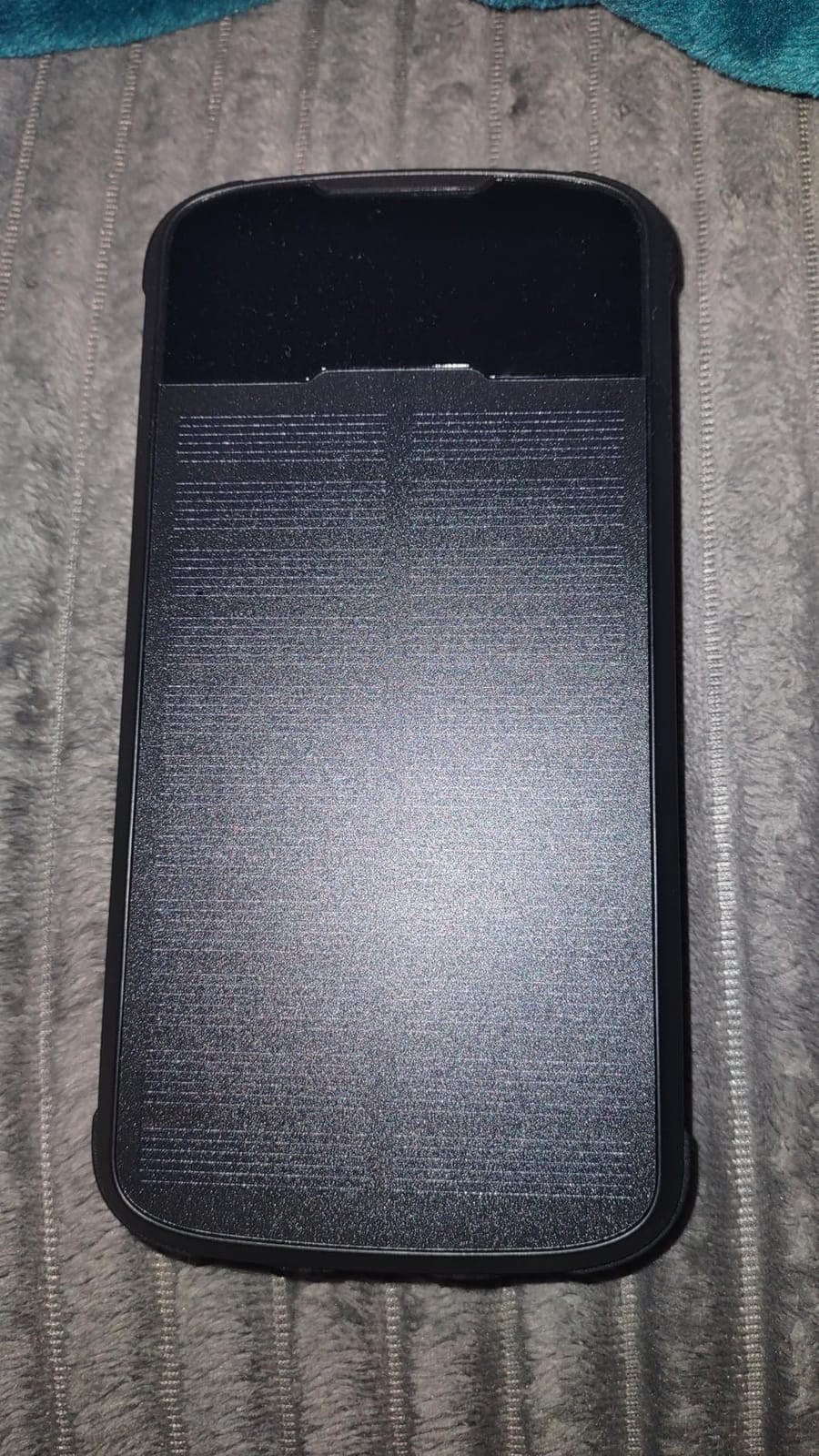
The dual flashlights are less gimmicky than they sound. They throw about 165 feet and run for up to 25 hours, which covers a campsite or a night walk when your headlamp runs out.
Reviewers are clear about the 1.8W panel: it is a trickle charger that needs many hours of sun for a meaningful gain. Fill this bank from a wall before you leave and treat solar as the emergency path it is.
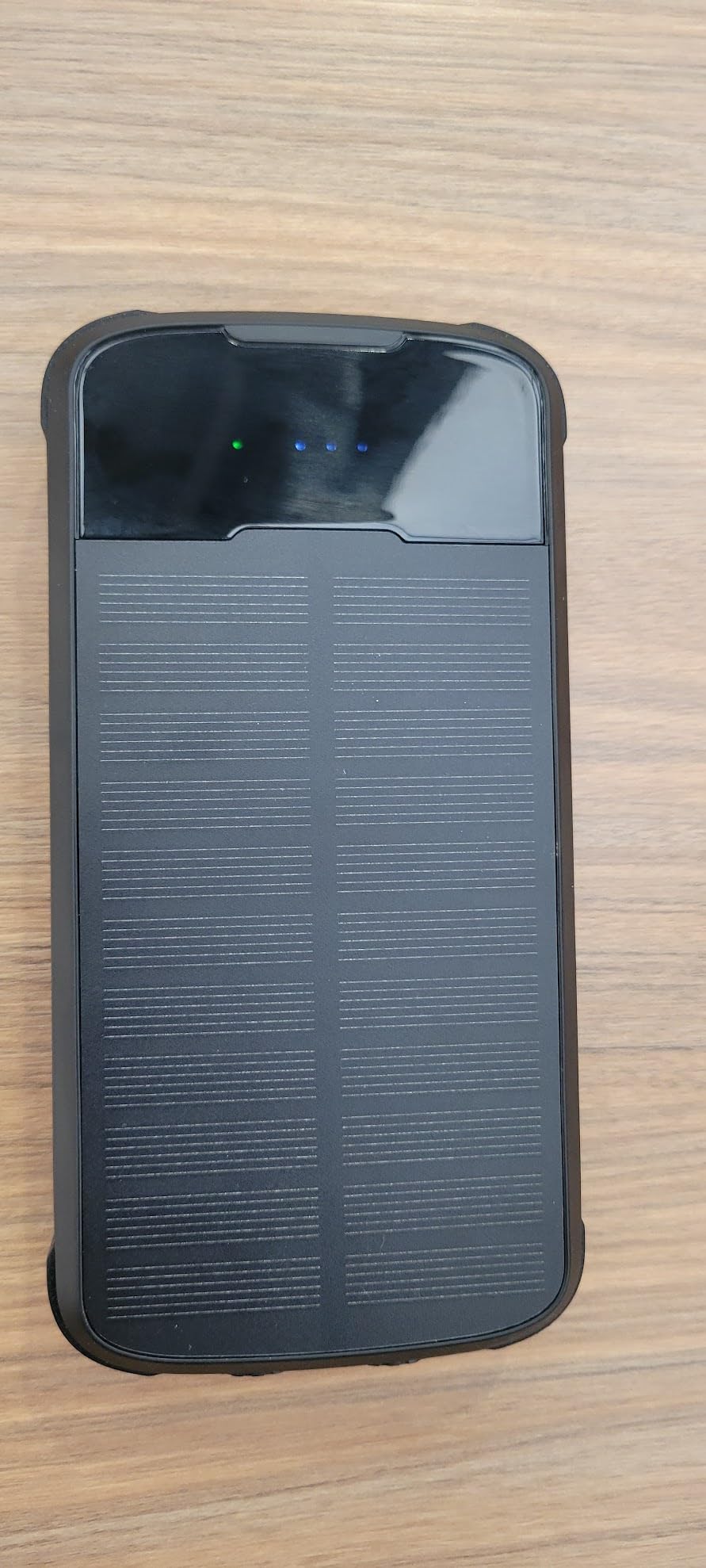
Doing the three-day charge budget
Write down what your phone actually costs you per day before buying. Two people on three days with navigation running will use roughly 30,000mAh between them, so a 40,000mAh bank covers the trip with margin even if you charge a GPS or a camera off it once.
Add a folding panel if the trip has no resupply option. Without one, the bank drains flat on day three and nothing on this list fixes that.
When to choose something else
At 1.1 pounds, including 450 grams of battery weight, this is heavy for the capacity. If weight matters more than capacity, take a 20,000mAh bank and top up more often.
A 12 percent one-star share ties the highest in this group, so if you have dropped gear before, carry a backup cable.
10. BLAVOR 10W Foldable Solar Panel: Best Lightweight Panel for Hikers
BLAVOR 10W Portable Solar Charger (5V/2A Max), Small Foldable Solar Panel
10W monocrystalline panel
12.96 oz, folds to 7.4 x 7.5 inches
USB-C and USB-A at 5V/2A
IPX4, oxford cloth body
Pros
- Lightest and smallest panel here at 12.96 oz
- Folds to about half a sheet of paper
- 24 percent conversion with ETFE film
- Carabiner included for pack attachment
- Outdoor workers report about 30 percent phone gain per hour in strong sun
Cons
- Weakest output here at 10W and 2A
- USB-C port reported too loose to hold a cable reliably
- Ports face inward so an L-shaped adapter is often needed
- No internal battery
- Charging a phone directly makes it start and stop and run hot
This is the panel we would clip to a daypack. At 12.96 ounces it folds to roughly half a sheet of paper and it is the only unit in the roundup you will genuinely forget you are carrying.
Outdoor workers report about a 30 percent phone battery gain per hour in strong sun, which sounds modest until you realise it repeats. Left on a pack through a working day in open sun, a phone arrives home largely recharged without anyone planning for it.
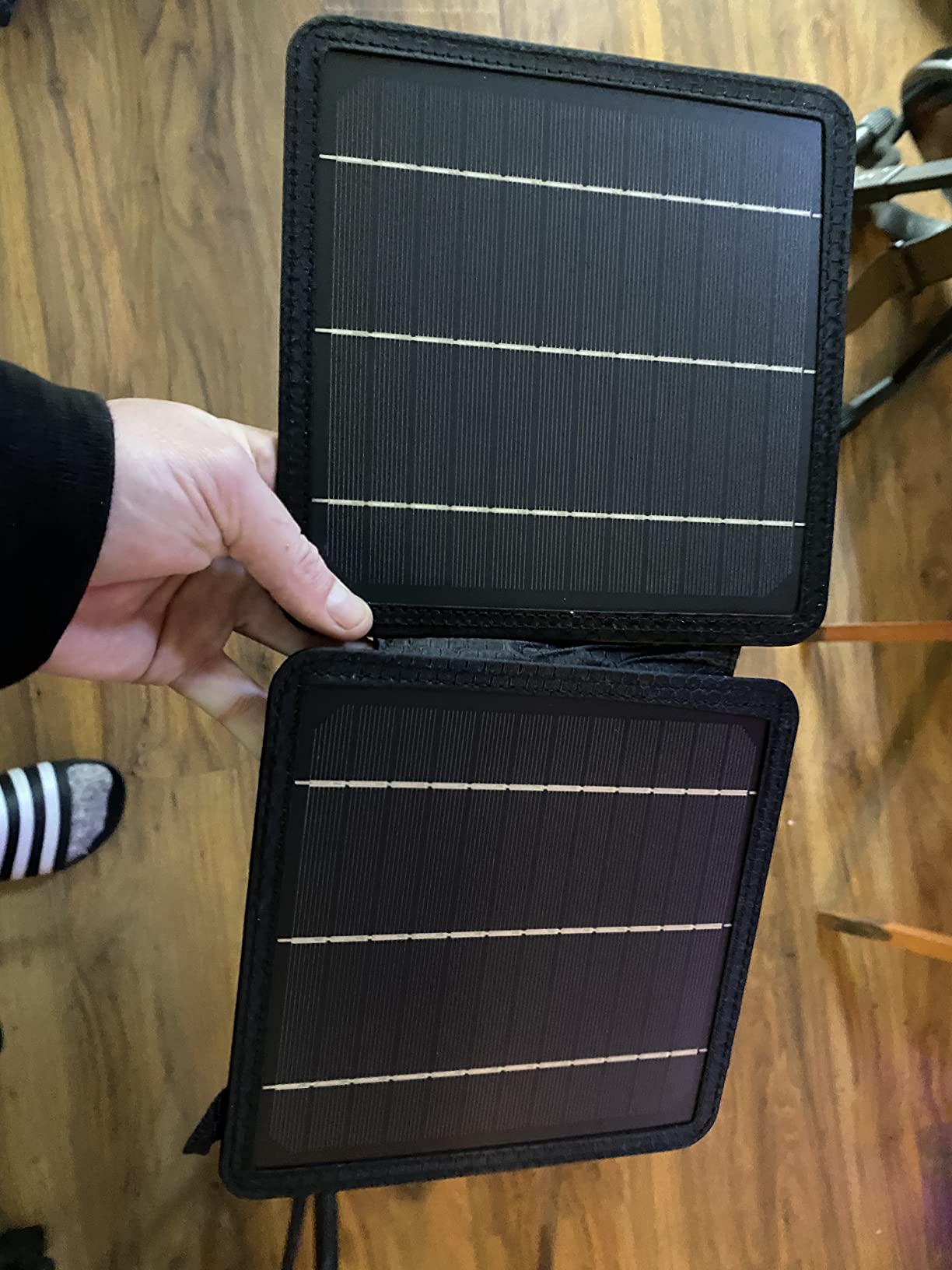
The 24 percent conversion efficiency comes from an ETFE high-transmission film, and the oxford cloth body carries IPX4 dust and water resistance, which is fine for drizzle and dust but not for a downpour.
Two practical problems are reported often enough to plan around. The USB-C port is loose and will not reliably hold a cable, and both ports face inward toward the storage pocket, so a right-angle adapter is often needed.
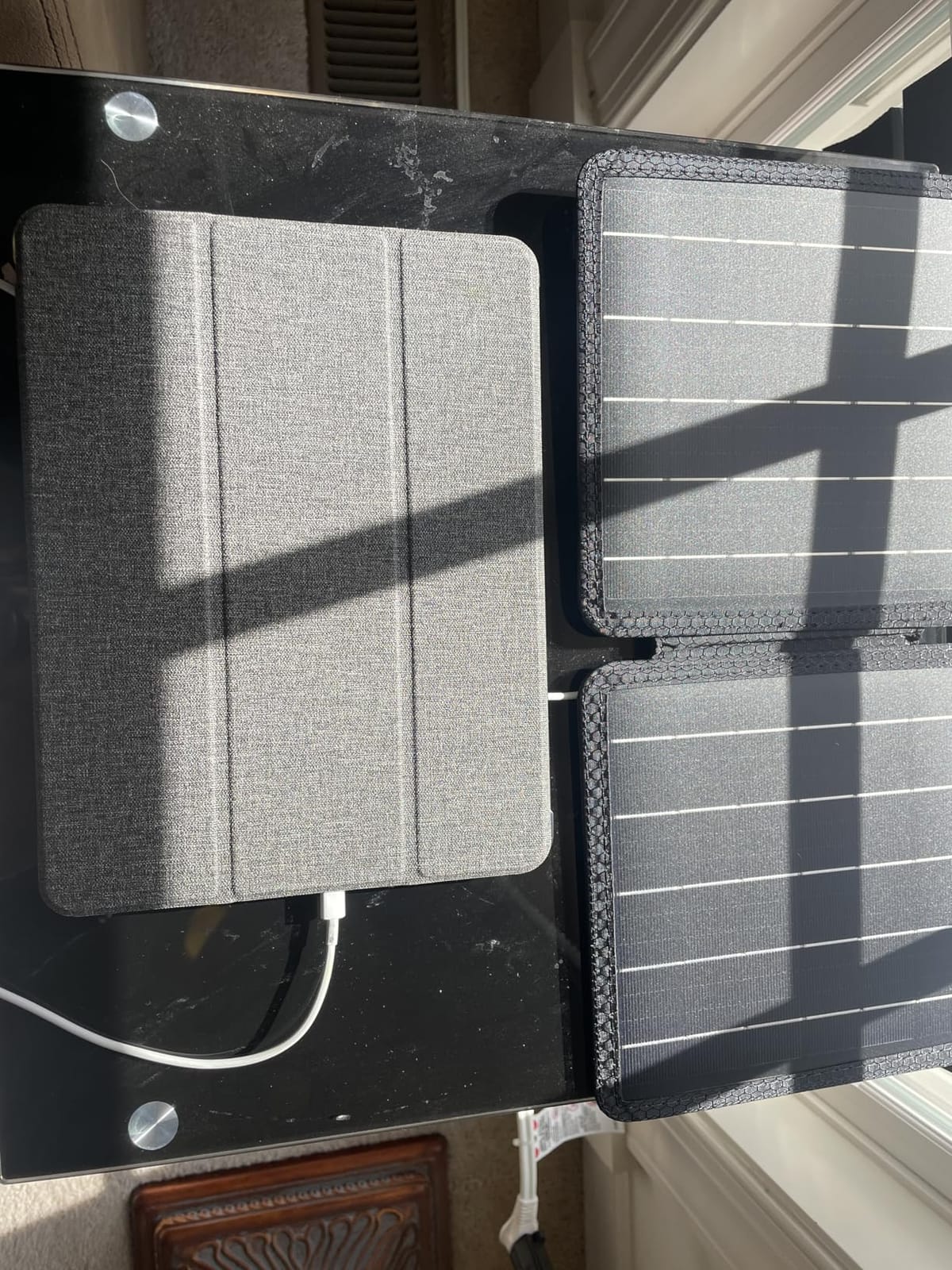
Why you should charge a bank, not the phone
Plugging a phone directly into a 10W panel makes it start and stop repeatedly and run warm, which is hard on the battery and produces an unstable charge curve. The smoother path is to plug a power bank into the panel during the day and charge the phone from the bank in the evening.
Both USB-C and USB-A deliver identical 5V and 2A output here, so the port choice only matters for the shape of the connector, not for speed.
When to choose something else
For a phone-and-nothing-else day hike this is right. For a weekend where you need the phone alive at both ends of the day, 10W will not keep up and you should carry the 21W or 25W panel instead.
If your trips include rain, the IP67-rated panels further up the list are a safer bet than IPX4.
11. SOLUPUP 30W Foldable Solar Panel: Best Rated Panel for Changing Sun
SOLUPUP Solar Panels 30W Portable Foldable Solar Charger with 5V USB-A and USB-C Fast Charging Compatible with iPhone, iPad, Samsung, Power Banks, IPX5 Waterproof Perfect for Camping, Hiking, Outdoor
30W monocrystalline panel
23 percent plus efficiency
USB-A and USB-C at 5V/3A, 15W max
IPX5, folds to 10.63 inches, 2.4 lbs
Pros
- Top rating in the roundup at 4.5 stars
- Auto-reconnect resumes charging when sunlight returns
- 23 percent plus monocrystalline efficiency
- Adjustable stand and carabiners included
- Smart chip guards against overcurrent
- overvoltage and short circuits
Cons
- Heaviest panel here at 2.4 pounds
- Ports capped at 5V/3A and 15W combined
- No internal battery
- Smallest review base at 232 ratings
Auto-reconnect is the feature worth paying attention to here. When a cloud passes, most simple panels stop and require a manual unplug to restart. This one detects the return of sunlight and resumes charging on its own, which on a partly cloudy day is the difference between a useful panel and a frustrating one.
Conversion efficiency is quoted at 23 percent plus from monocrystalline silicon, which is comfortably above multi-crystalline panels of the same rated wattage. The smart chip identifies connected devices and guards against overcurrent, overvoltage and short circuits.
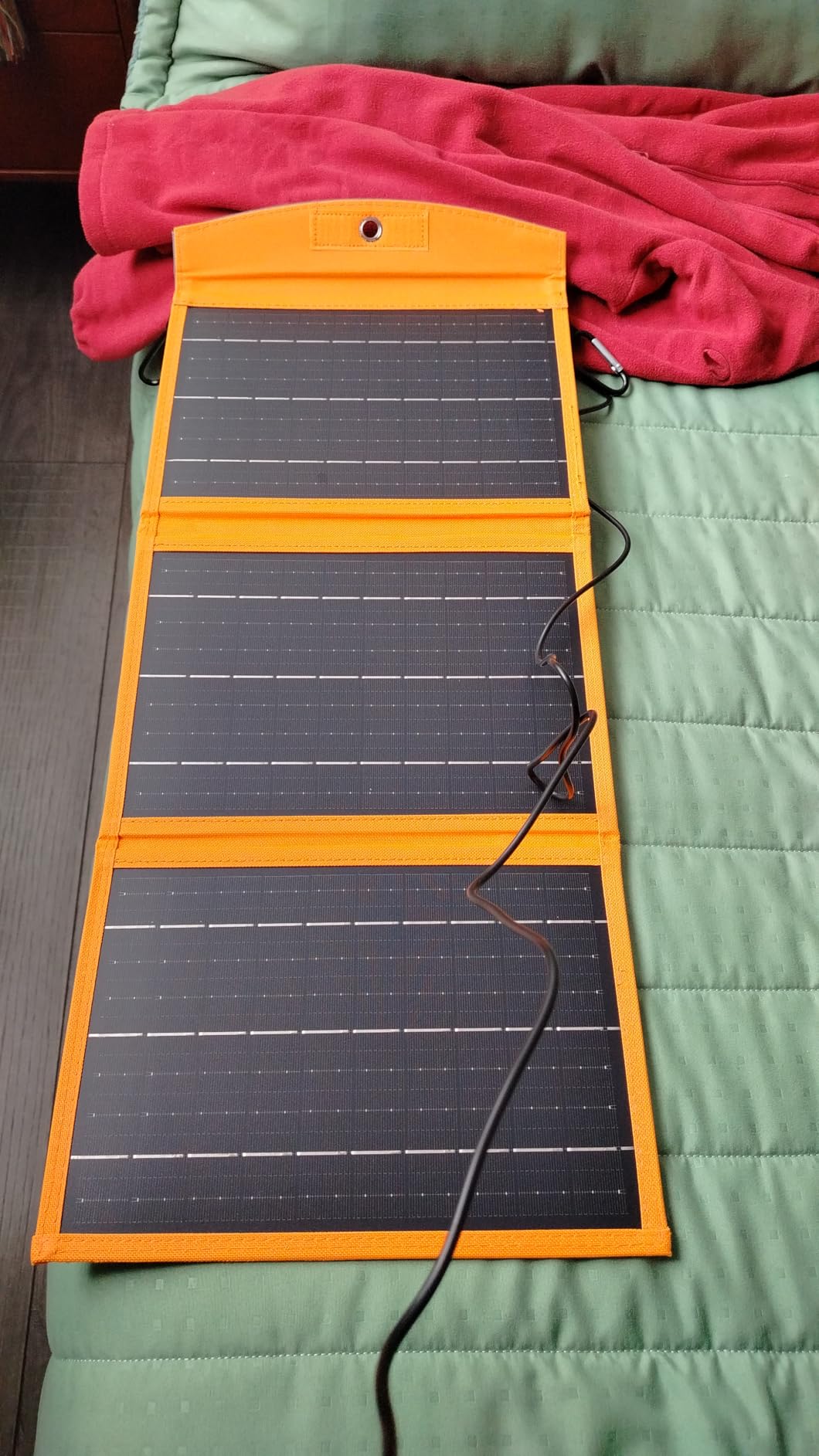
Physical design is thoughtful for field use. An adjustable stand and two carabiners let you stabilise and aim it on uneven ground, and the IPX5 rating covers rain and dust exposure.
The tradeoffs are weight and port output. At 2.4 pounds it is the heaviest panel we shortlisted, noticeably more than the 1.2 to 1.8 pound alternatives, and the USB-A and USB-C ports are capped at 5V and 3A for 15W combined, so two devices charge slowly.
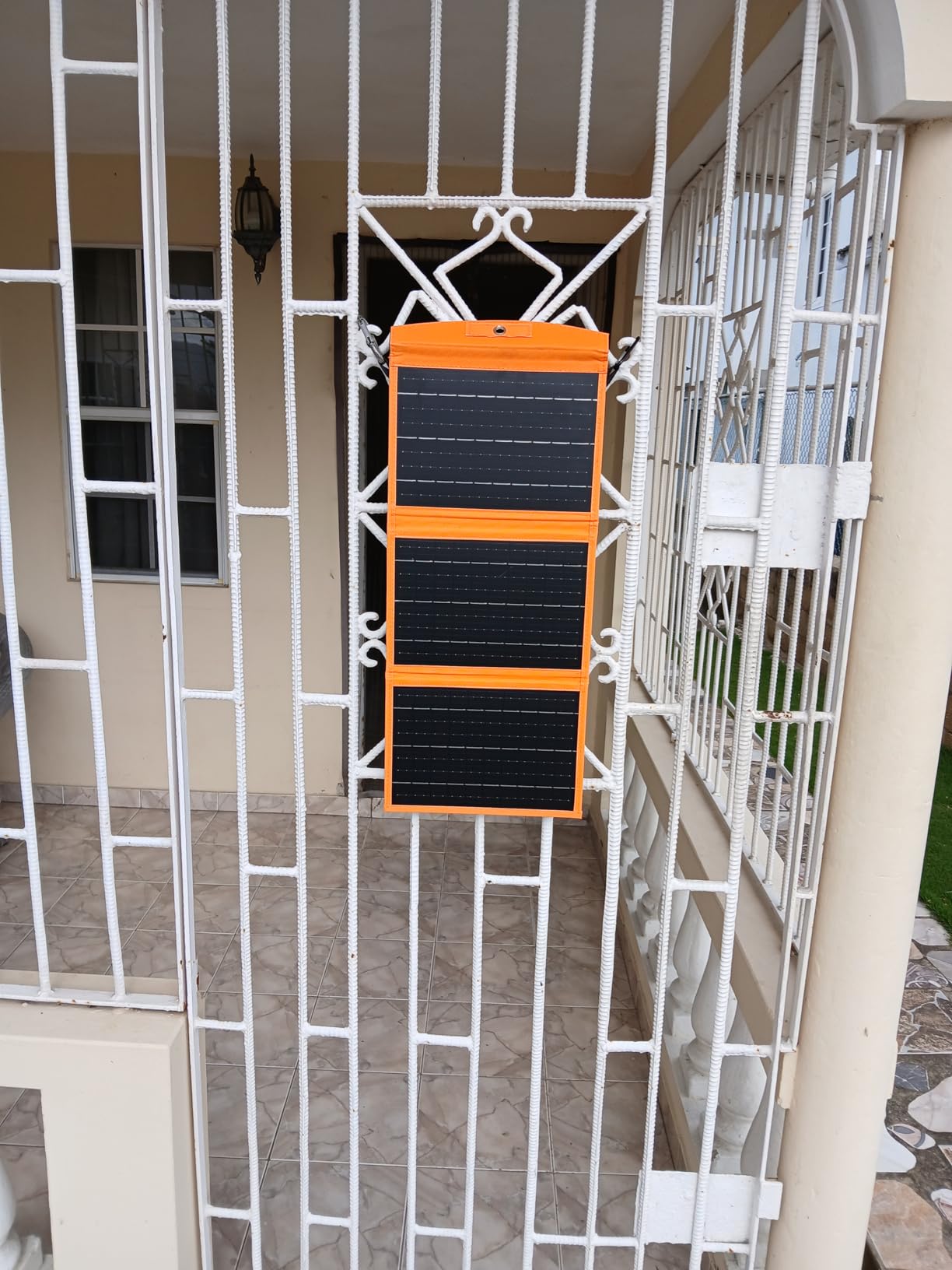
How to read the 4.5 star rating
A high average rating on a small review base tells you the product has not disappointed the people who bought it, but it tells you very little about how it behaves after five years outdoors. The 232 ratings here are the thinnest dataset in the roundup.
We rate it highly because the design decisions are correct, not because the history is long. If durability over years is your priority, a panel with a longer track record is the safer bet.
When to choose something else
Leave it at home if pack weight is critical. The 30W label is the panel rating, and the usable USB output is 15W, which is lower than several smaller panels in this list.
Like every panel here it needs an unobstructed angle to the sun and no internal storage for night use.
12. FlexSolar 25W Portable Solar Panel: Best for Partial Shade
FlexSolar 25W Portable Solar Panel Charger Built-in USB-A & USB-C Ports
25W foldable panel at 23.2 percent
MPPT charge controller
USB-A and USB-C simultaneous 5V/3A
IP67, folds to 7.7 x 5.1 inches at 1.2 lbs
Pros
- MPPT controller harvests energy in partial shade
- Triple-layer build with scratch-resistant E film
- Hidden busbar cells tested for 2000+ fold cycles
- IP67 rated to 1m immersion for 30 minutes
- Works from -4F to 149F
- Folds smaller than most tablets
Cons
- No internal battery for storing power
- Smallest review base here at 103 ratings
- 25W is modest for charging two devices at once
- MPPT advantage fades in very low light
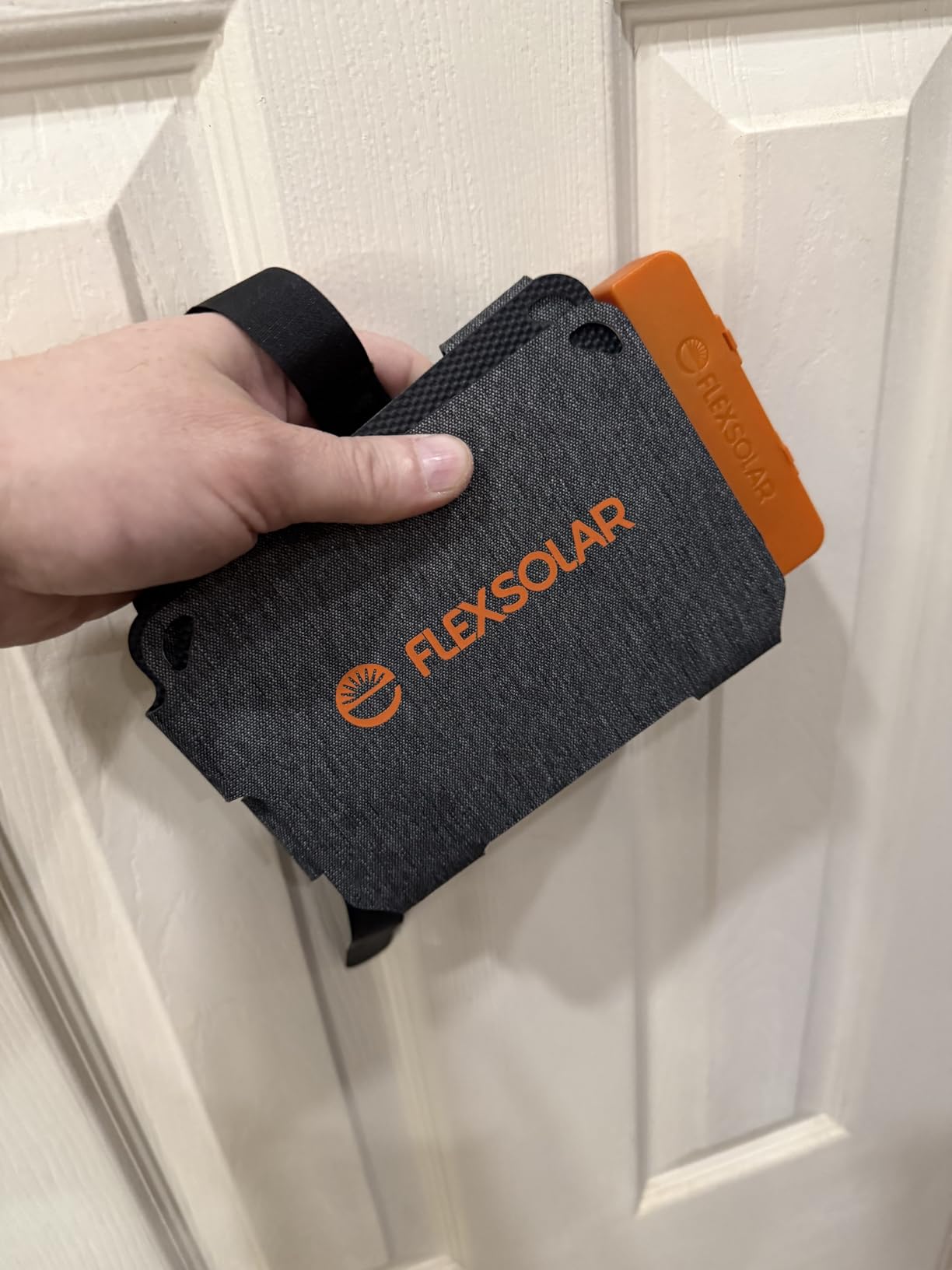
Shade is the condition that ruins most folding panels, and an MPPT charge controller is the technical answer to it. Instead of a simple charge controller that tracks a fixed maximum power point, MPPT continuously searches for the best operating point, so output holds up better when part of the panel is shadowed.
If your trip involves forest, canyons or a campsite with limited sky, that single feature is worth more to you than extra rated watts.
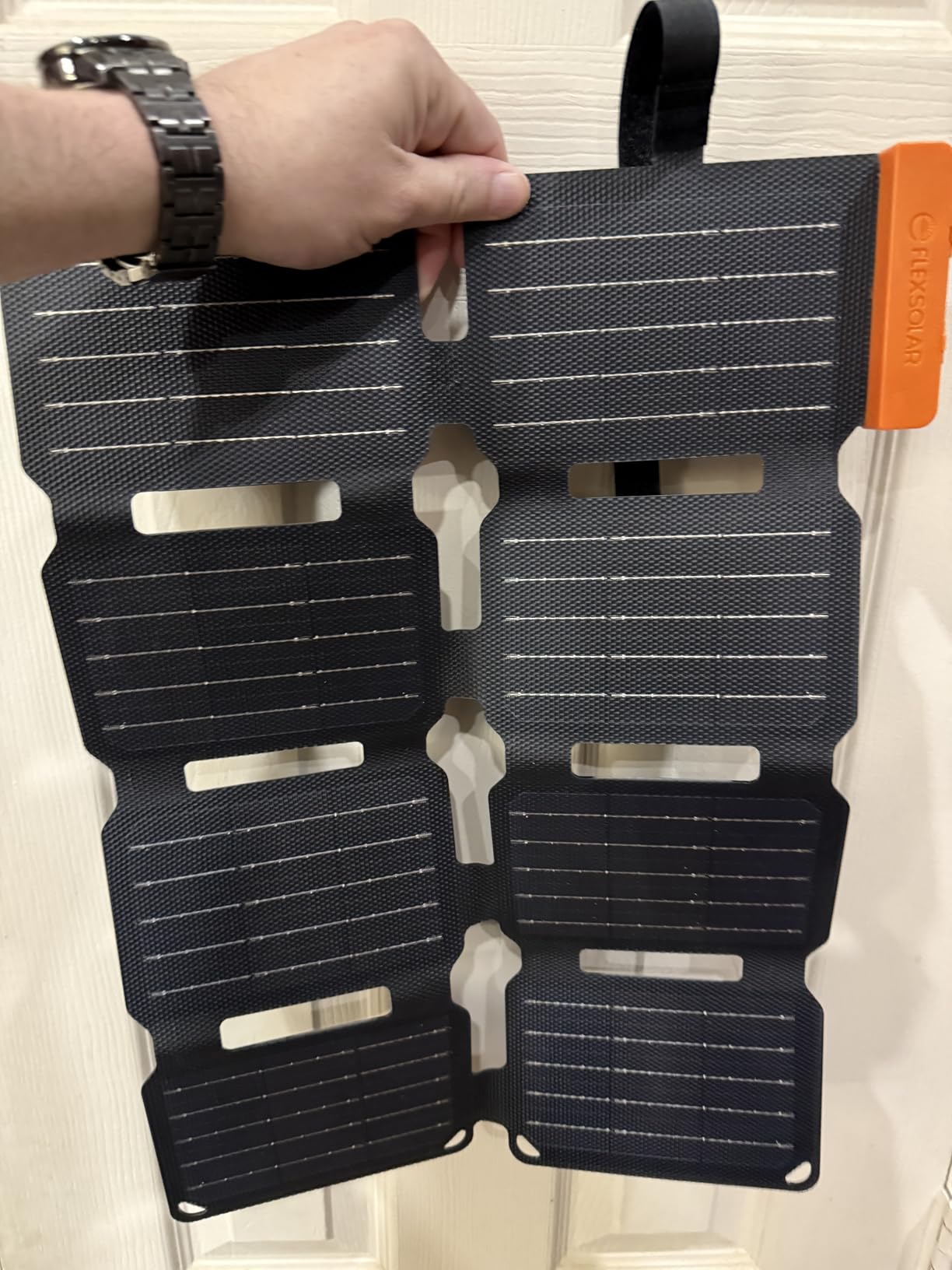
Durability is engineered rather than claimed. The triple-layer construction uses a scratch-resistant E film, UV-stabilised EVA and an impact-absorbing baseplate, and the cells use hidden busbars tested for more than 2,000 fold cycles, which is where cheaper panels crack.
The IP67 rating covers immersion in one metre of water for 30 minutes, and the stated operating range runs from minus 4 to 149 degrees Fahrenheit, so it works in winter cold and desert heat.
When MPPT genuinely helps
On a partly shaded day, where the sun is blocked for part of each hour, an MPPT panel keeps extracting usable energy while a conventional panel drops toward zero. On a clear day with an unobstructed panel, the two types perform far closer together.
Note also that the advantage fades in very low light such as heavy overcast, where output falls off regardless of the controller.
When to choose something else
With only 103 ratings behind it, long-term field durability is not yet established. If you are buying for a once-a-year trip, that risk is small. If you rely on it every month, pick a panel with a longer record.
At 1.2 pounds and 7.7 by 5.1 inches folded it is also one of the more portable panels here, with an integrated carabiner and strap.
How to Choose a Solar Battery Charger for Your Phone?
Start by naming which of the three product types you actually need, because buying the wrong category is the number one reason buyers feel misled. A standalone folding panel harvests energy while the sun is up and nothing else. A solar power bank stores energy and uses its small panel mainly to slow the decline. A panel-plus-bank kit does both, and it is the answer for almost everyone reading this.
Next, size the panel for the trip. For a phone alone, anything from 20W to 40W is useful, and a 10W panel is fine for day hikes where you are out in open sun for hours. Panels above 40W add weight faster than they add usefulness unless you are also charging a tablet or a small power station, which is the reason the FlexSolar 40W includes a 19V DC socket.
Then size the battery in watt-hours rather than mAh where you can, because mAh alone hides the voltage difference between cells. As a working rule, about 3,500mAh equals one full charge of an average smartphone, so a 10,000mAh bank is roughly two or three phone charges and a 40,000mAh bank is around eight to ten.
Check the port. Modern phones, including current iPhone models and current Android flagships, charge fastest over USB-C with Power Delivery, and a unit limited to USB-A at 2.4A will feel slow no matter how large the battery is. Wireless and magnetic pads are convenient for a break, though they run slower than a wired 20W connection and they weaken behind thick cases.
Weight classes matter on foot. Under 10 ounces is day-hike territory, 1 to 1.5 pounds is a weekend panel, and anything above 2 pounds is base camp or a car kit. The BLAVOR 10W panel at 12.96 ounces and the FlexSolar 25W at 1.2 pounds sit at opposite ends of the sensible range.
Finally, check the ingress protection rating and the warranty. IPX4 handles splashes, IPX5 handles rain and dust, IP67 handles immersion, and IP68 is the toughest. If a listing shows no rating at all for a product meant to be outdoors, treat that as a warning sign. Longer warranties also signal that the manufacturer expects the unit to survive repeated charge cycles.
If you fly with any of these, remember that airlines cap spare lithium batteries at 100 watt-hours in carry-on baggage, and a power bank above that ceiling cannot travel in checked luggage at all. Check the watt-hour marking printed on your unit before you book, and if you are also planning a long drive trip, our guide to battery chargers for car batteries covers the vehicle side of the same problem.
How Long Solar Actually Takes to Charge a Phone?
A wall charger delivers 18 to 40 watts and takes a modern phone from empty to half in roughly 15 to 30 minutes. Solar on a phone alone plays a different game, because the panel only converts light into electricity while it is aimed at the sun and unshaded.
The clearest real-world number we have is the BLAVOR 10W panel, where users report roughly a 30 percent phone battery gain per hour in strong sun. Scale that down for larger panels once efficiency and heat losses are accounted for, and once a power bank is in the circuit, expect several hours of good sun to refill a bank before you get a single charge out of it.
Shade is the variable that changes everything. Reviewers on the FlexSolar 40W report that partial coverage can cut performance by up to 70 percent, and a panel that is hot rather than cool loses output as well. One branch across part of a folding panel is enough to ruin the hour.
The built-in panel on a power bank is a different category again. Units with panels rated 1.8W, or with several small panels spread across a case, will extend a charge over days rather than refill one in an afternoon. If your goal is keeping a phone alive for a week, treat those units as ordinary power banks and carry a real panel.
How to Spot a Dud or Scam Solar Power Bank?
Check surface area per watt first, because it is the community’s most reliable tell and it needs no equipment. Look at the panel area in the listing photos and compare it against the rated wattage. A credible foldable panel needs roughly 0.15 to 0.2 square feet of cell area per watt, so a listing claiming 40 watts from a small flat rectangle is describing a fraction of a real panel.
Next, sanity-check the mAh figure against the physical size. A 48,000mAh claim on a bank the size of a deck of cards is implausible, and capacity on a very large unit should be verifiable. Instrumented testing of the SOARAISE 48,000mAh unit put real usable output near 60 Wh, which is well short of the 96 Wh the headline number implies at 3.7 volts.
Then run through the short list of deal breakers. No stated IP rating on an outdoor product, USB-A only with no USB-C Power Delivery, absurd capacity claims relative to size, no brand support or warranty, and a panel with no kickstand or way to aim it at the sun, which wastes most of the available output.
Finally, check whether the manufacturer publishes anything useful at all. A real brand publishes cell type, cycle count, protection circuits, an ingress rating and a warranty length. Listings with a single specification line and a catalogue photo of a generic bank are where the problems cluster.
Planning Phone Power for a Multi-Night Dark-Sky Trip
Dark-sky trips have a specific power profile that a weekend hike does not. You are awake and using your phone from dusk to well after midnight, you are photographing at long exposures, and if you are navigating back to camp in unfamiliar terrain the phone is safety equipment rather than a convenience. Night usage is exactly when a panel does nothing.
Plan the budget from your own usage rather than from a marketing number. If you expect six hours of screen-on use a night across two people, assume roughly 20,000mAh of combined phone battery per night. Add a small power bank for the camera batteries, since cold weather cuts lithium capacity noticeably.
Then fill it during the day. A 25W to 40W panel aimed for a few hours of direct sun will top up a 10,000mAh to 20,000mAh bank while you are walking or driving, and the bank carries that energy into the hours you actually need it. This is the sequence that makes solar work, and skipping it is why so many people conclude solar phone chargers do not work.
If the trip coincides with high solar activity, our article on how the 11-year solar cycle builds toward solar maximum is worth reading, because severe geomagnetic storms can knock out grid power and leave you relying on exactly this gear. Bring a head torch and solar filters for binoculars if you plan to look at the sky during daylight, and keep a car-based backup bank in the vehicle.
One last note on safety. Leaving a lithium bank charging unattended overnight in a tent or vehicle is worth avoiding. Charge it in the open where heat can dissipate, keep it out of direct sun while it fills, and retire any unit whose case starts to bulge.
Frequently Asked Questions
What is the best solar phone charger that actually works?
A standalone folding solar panel rated between 20W and 40W, paired with a separate power bank, is the setup that actually works for phones. The small panel built into a solar power bank is a trickle charger, not a charging source.
Do solar-powered power banks really work?
They work as power banks and only as a trickle charger from their built-in panel. Expect useful gains over a day or more of sun, never a full refill in an afternoon, and always fill the bank from a wall outlet before your trip.
How long does it take to fully charge a solar power bank?
From direct sun, expect several hours of good, unshaded sunlight to refill a 10,000mAh to 20,000mAh bank, and considerably longer if the panel is partly shaded. From a 5V wall adapter, most units here take roughly four to six hours.
Why won’t my solar power bank charge my phone?
The usual causes are a panel packed in a bag or aimed away from the sun, expecting a tiny built-in panel to refill a large battery in a day, a low-quality or loose cable, charging through tent mesh or a car window, and a bank that has not been filled from a wall outlet first.
Is there a solar panel scam going around?
Some listings are, and you can check them yourself. Compare panel surface area per watt, sanity-check mAh claims against the physical size, look for a stated IP rating and USB-C Power Delivery, and only buy from a brand that publishes a warranty and protection-circuit specifications.
Final Verdict: Which Solar Battery Charger for Phones Should You Buy?
Start with the BLAVOR 10,000mAh solar power bank if you want one compact unit that does almost everything well. At 9.3 ounces with 20W USB-C, a Qi pad and an IPX5 shell, it is the best overall solar battery charger for phones and the one we carry ourselves.
Add a folding panel if you will be away from an outlet for more than a day. The BigBlue 28W suits base camp, the BigBlue SolarPowa 20 21W handles rain and dust, the FlexSolar 40W covers multi-day trips, and the BLAVOR 10W at 12.96 ounces fits a day hike. For partly shaded trips, the FlexSolar 25W MPPT panel is the one that keeps producing energy when the sun does not.
For larger groups and outages, the SOARAISE 48,000mAh and BLAVOR 20,000mAh banks carry the capacity, and the FEELLE 50,000mAh is the only unit here with a hand crank for a genuine zero-power emergency.
The single rule that matters more than any model choice: harvest with a panel in daylight, store in a power bank, and charge your phone from the bank. Do that and the best solar battery chargers for phones stop being a disappointment and start being the reason your phone survives the trip.