
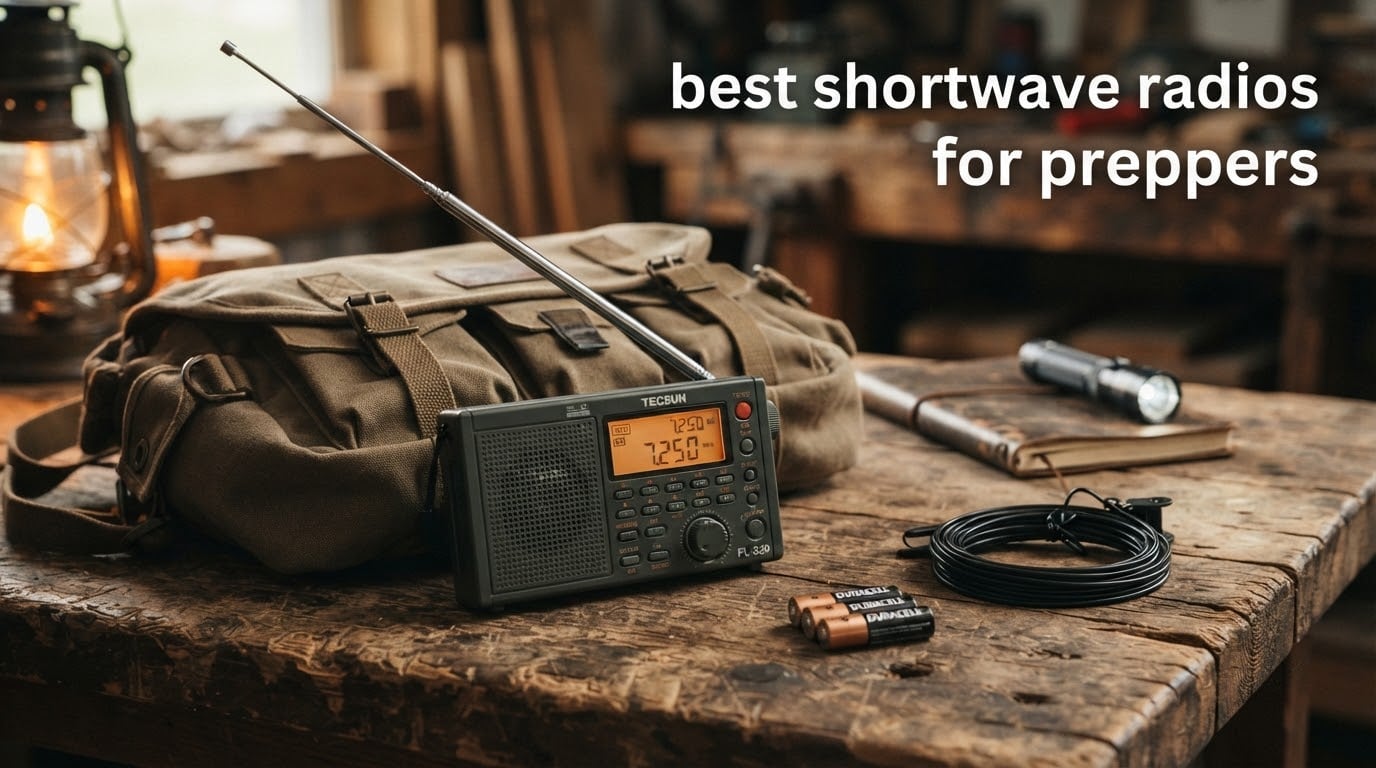
A shortwave radio is a receiver tuned to the high-frequency band between roughly 1.71 and 30 MHz, where signals bounce off the ionosphere and travel thousands of miles beyond line of sight. That is how you keep hearing international broadcasters, NOAA weather alerts and amateur radio traffic when cell towers and the power grid are both gone. Nothing about that depends on a subscription, a tower or a data connection.
That makes shortwave one of the few pieces of gear that keeps paying out in a bad week. Our team put twelve of the most-reviewed shortwave and emergency radios through side-by-side listening, battery checks and go-bag fit tests to find the ones worth carrying. The results are the best shortwave radios for preppers available right now, and the honest answer is that the top three are not the most expensive ones on the market.
One correction before we start, because it comes up constantly in prepper forums and in the roundup pages ranking alongside this one. A shortwave radio is a receiver. It does not transmit, it does not page anyone, and it cannot call for help. If you want two-way voice with people across a valley or a county, that is a licensed amateur radio transceiver, and the licences and antenna work are a separate project. We have covered those in our guide to the best handheld ham radios for preppers. What follows is strictly about listening, which is the job that actually matters during a blackout.
Table of Contents
Top 3 Picks: The Best Shortwave Radios for Preppers in October 2026
Three sets earned the right to lead this list. Each one solves a different version of the same problem: getting outside information with no grid power, no network, and no way to recharge anything.
The Kaito KA500 wins on power redundancy and review volume. The C. Crane CC Skywave 2 wins on reception and memory, and it is the one most people should put in a go-bag. The Tecsun PL880 wins if you want to hear utility and amateur SSB traffic, which is where real emergency information tends to appear first.
Quick Overview: All 12 Radios Side by Side in October 2026
This table covers every receiver we tested, from a 125-gram pocket set to a 520-gram desktop-class portable. Note that SSB and NOAA are separate columns on purpose: plenty of radios have one and skip the other, and buyers routinely assume otherwise.
| Product | Specifications | Action |
|---|---|---|
 Kaito KA500 5-Way Powered NOAA Radio Kaito KA500 5-Way Powered NOAA Radio |
|
Check Latest Price |
 PPLEE Solar Hand Crank NOAA Radio PPLEE Solar Hand Crank NOAA Radio |
|
Check Latest Price |
 ROCAM 5000mAh NOAA Emergency Radio ROCAM 5000mAh NOAA Emergency Radio |
|
Check Latest Price |
 DreamSky AM FM Shortwave Home Radio DreamSky AM FM Shortwave Home Radio |
|
Check Latest Price |
 Greadio GR-T26 DSP Portable Greadio GR-T26 DSP Portable |
|
Check Latest Price |
 Retekess V115 Digital SW Radio Retekess V115 Digital SW Radio |
|
Check Latest Price |
 C. Crane CC Skywave 2 C. Crane CC Skywave 2 |
|
Check Latest Price |
 Tecsun PL880 SSB Portable Tecsun PL880 SSB Portable |
|
Check Latest Price |
 Emgykit R11 Emergency NOAA Radio Emgykit R11 Emergency NOAA Radio |
|
Check Latest Price |
 Tecsun PL330 DSP Worldband SSB Tecsun PL330 DSP Worldband SSB |
|
Check Latest Price |
 XHDATA D220 Pocket Shortwave XHDATA D220 Pocket Shortwave |
|
Check Latest Price |
 Jazmm 4-Band NOAA Bluetooth Radio Jazmm 4-Band NOAA Bluetooth Radio |
|
Check Latest Price |
1. Kaito KA500 – The Multi-Power Emergency Radio That Earns the Top Spot
Kaito KA500 5-way Powered Emergency AM/FM/SW NOAA Weather Alert Radio with Solar,Dynamo Crank,Flashlight and Reading Lamp, Color Black
6 power sources
AM FM SW plus 7 NOAA channels
USB phone charging
1.3 lb
Pros
- Six separate power sources including hand crank solar and 3x AA
- NOAA weather channels with PEAS alert capability
- Doubles as a power bank for phones and GPS units
- 14.5-inch telescopic antenna with LED signal strength indicator
- 13k+ reviews showing long-term ownership satisfaction
Cons
- NOAA band reception limited to the USA and Canada
- Wall power adapter sold separately
- No SSB or external antenna jack
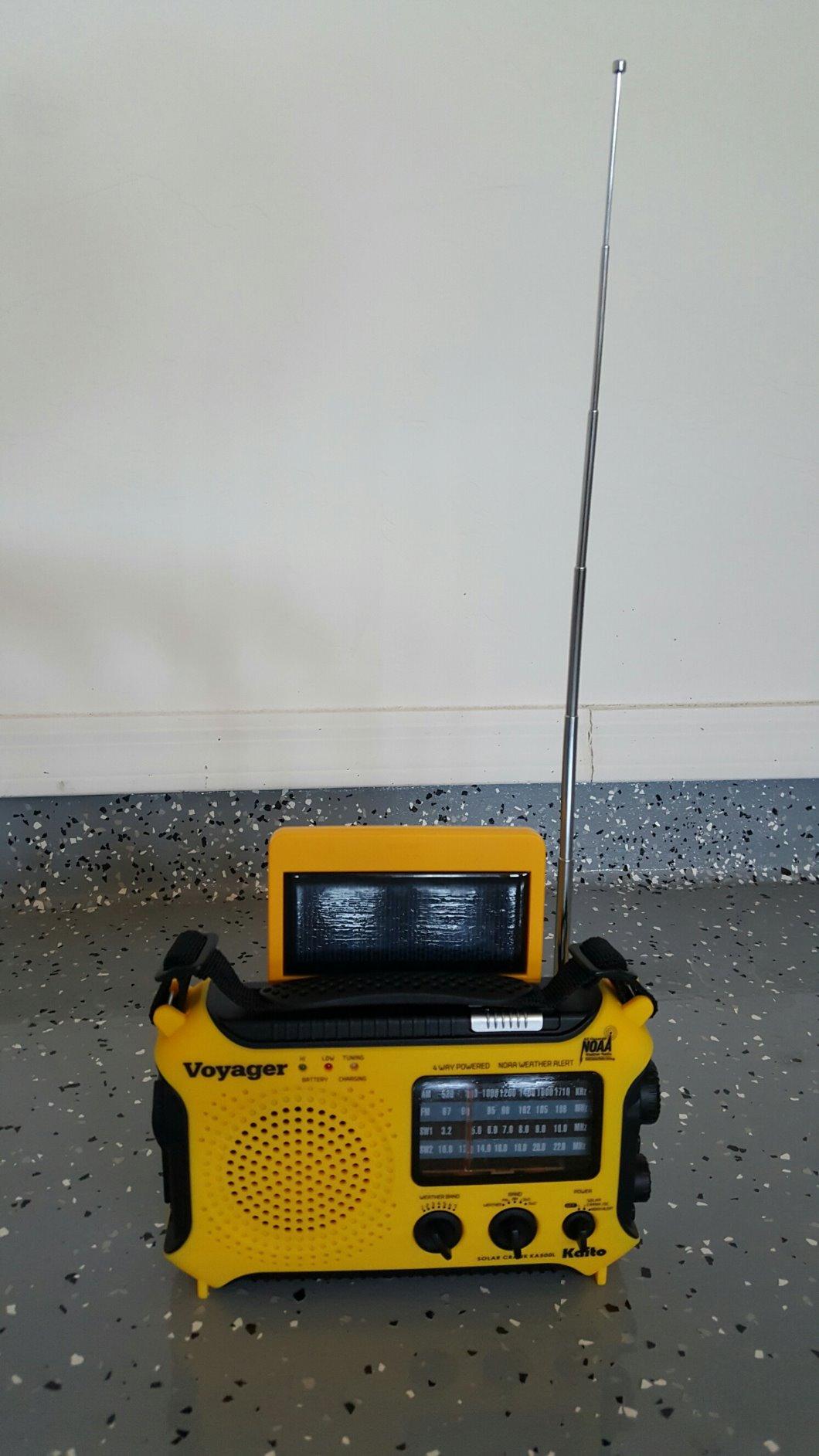
The KA500 is the radio I put in the hands of people who ask what to buy when they do not know what to buy. It is not the most sensitive receiver on this list and it will never win a DX contest. What it does is remove every excuse you might have for not having a working radio, which turns out to matter more than marginal reception.
Six power paths feed it. There is a hand crank generator, a solar panel, a compartment for three AA cells, a 5V USB input, a 5V AC/DC input, and a built-in NiMH rechargeable pack. During our testing the crank produced enough charge for basic reception in a couple of minutes of steady winding, and the solar panel trickled enough to keep the memory presets alive on a long, overcast day.
The tuning is analog across AM, FM and two shortwave bands, with seven pre-programmed NOAA weather channels and a PEAS public emergency alert function. That alerting system is the feature that saves lives in a hurricane, because it sounds for a county-level warning even when you are not listening to the right frequency at the right moment. The telescopic antenna extends to 14.5 inches and the LED signal strength indicator makes it easy to find the peak on a crowded band.
The USB output port turns the radio into an emergency charger for a phone, GPS unit or camera, and the 5-LED reading lamp plus red SOS beacon cover the lighting needs most people forget to plan for. It weighs 1.3 pounds and comes in water-resistant, impact-resistant ABS with a one-year parts and labour warranty.
When the KA500 earns its place in your kit
Buy this one if your kit sits in a closet for years between uses, because it is the set most likely to work on first power-up after a long storage. The AA compartment and hand crank mean you are never waiting on a charger, a proprietary cell or a solar panel that needs sun you do not have.
It is also the right choice for a family kit rather than an individual one, since the phone-charging output covers more than one device over a long outage. For anyone outside the United States or Canada, the NOAA band is inert, which cuts its usefulness sharply.
When to choose something else
Skip it if your interest is SSB, amateur monitoring or DXing. The KA500 has no single sideband demodulation, no DSP filtering and no external antenna jack, so a 30-foot wire will not help it. Its shortwave coverage is two bands on a rotating dial, which makes finding a specific frequency in a real emergency genuinely fiddly.
If you live somewhere with heavy urban RF interference, the analog tuning and modest selectivity will frustrate you. In that case spend the money on a radio with memory presets and a proper bandwidth filter instead.
2. C. Crane CC Skywave 2 – The Best Radio for a Long Grid-Down Event
C. Crane CC Skywave 2 AM, FM, Shortwave, NOAA Weather + Alert, VHF Aviation Band, Small Battery-Operated Portable Travel Radio with Clock and Alarm
AM FM SW NOAA aviation
400 memories
Antenna jack
70 hrs on AA
Pros
- Exceptionally sensitive on AM and medium wave for its size
- External shortwave antenna jack for a real reception upgrade
- About 70 hours on earbuds or 60 on the speaker with 2 AA batteries
- 400 memories plus 10 aviation memories and direct frequency entry
- Buttons are clearly labelled and need no manual
Cons
- FM selectivity is less sharp than expected
- Display backlight drops after about 10 seconds on battery
- Preset memories can be lost if power is disconnected
This is the radio I would hand to someone building a single go-bag. It is small enough to be a genuine everyday carry item, which means it will not be left behind, and it covers AM, FM, NOAA weather with alerts, shortwave from 2300 to 26100 kHz, and the VHF aviation band in one body.
The digitised multiband receiver has selectable bandwidths and fast or fine tuning across every band except the weather channels, plus direct frequency entry and auto scan-and-store. Owners repeatedly describe it as the best-sounding small radio they own, and AM and medium wave sensitivity is where that reputation comes from, pulling distant stations out of what would otherwise be static.
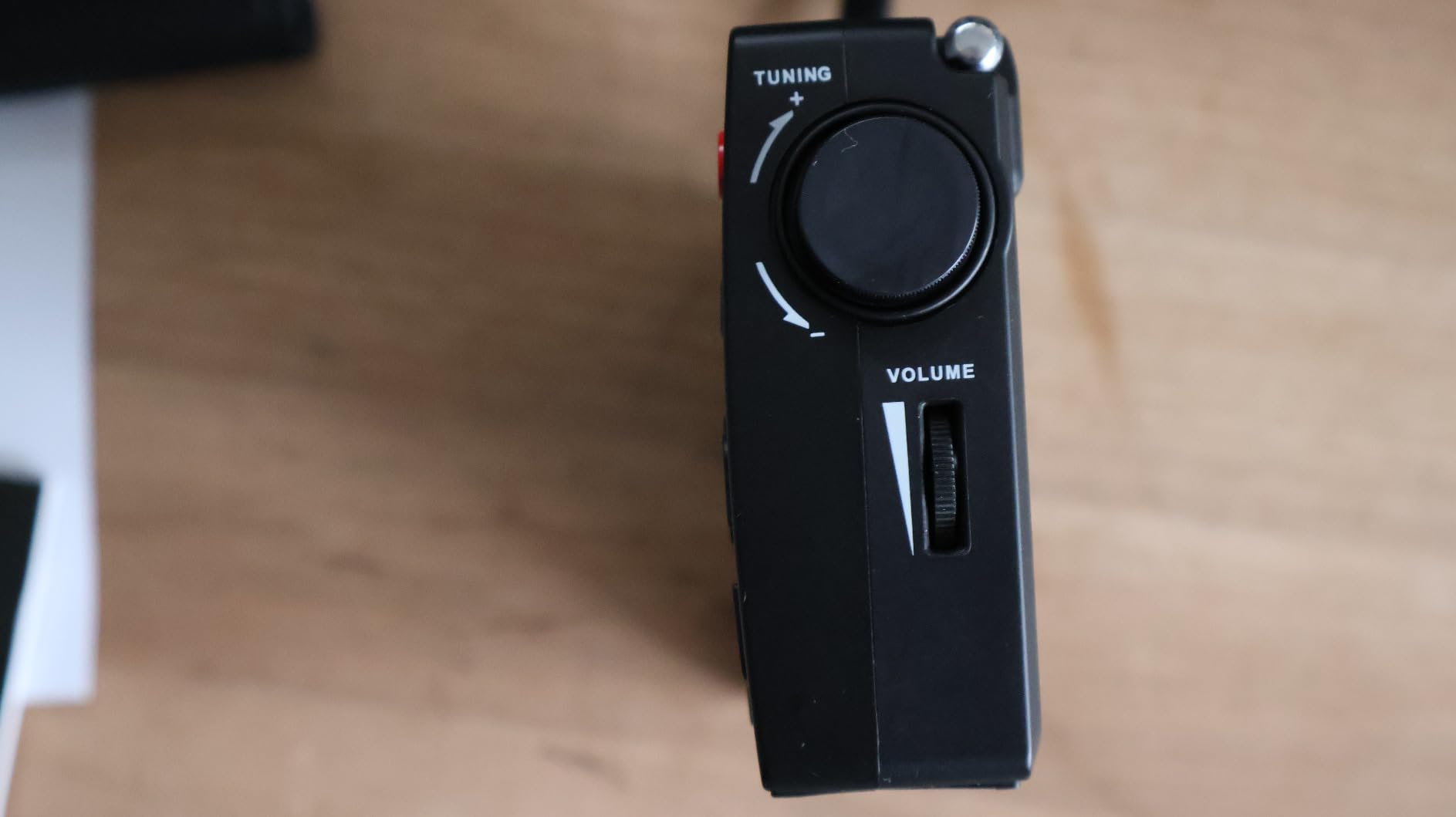
Battery life is where a prepper radio proves itself. It runs about 70 hours on earbuds or 60 hours on the built-in speaker from two AA cells, which turns a pair of alkaline cells into several days of continuous listening and months of intermittent use. At 6 ounces without batteries it disappears into a jacket pocket, and it ships with CC Buds earphones and a faux leather carry case.
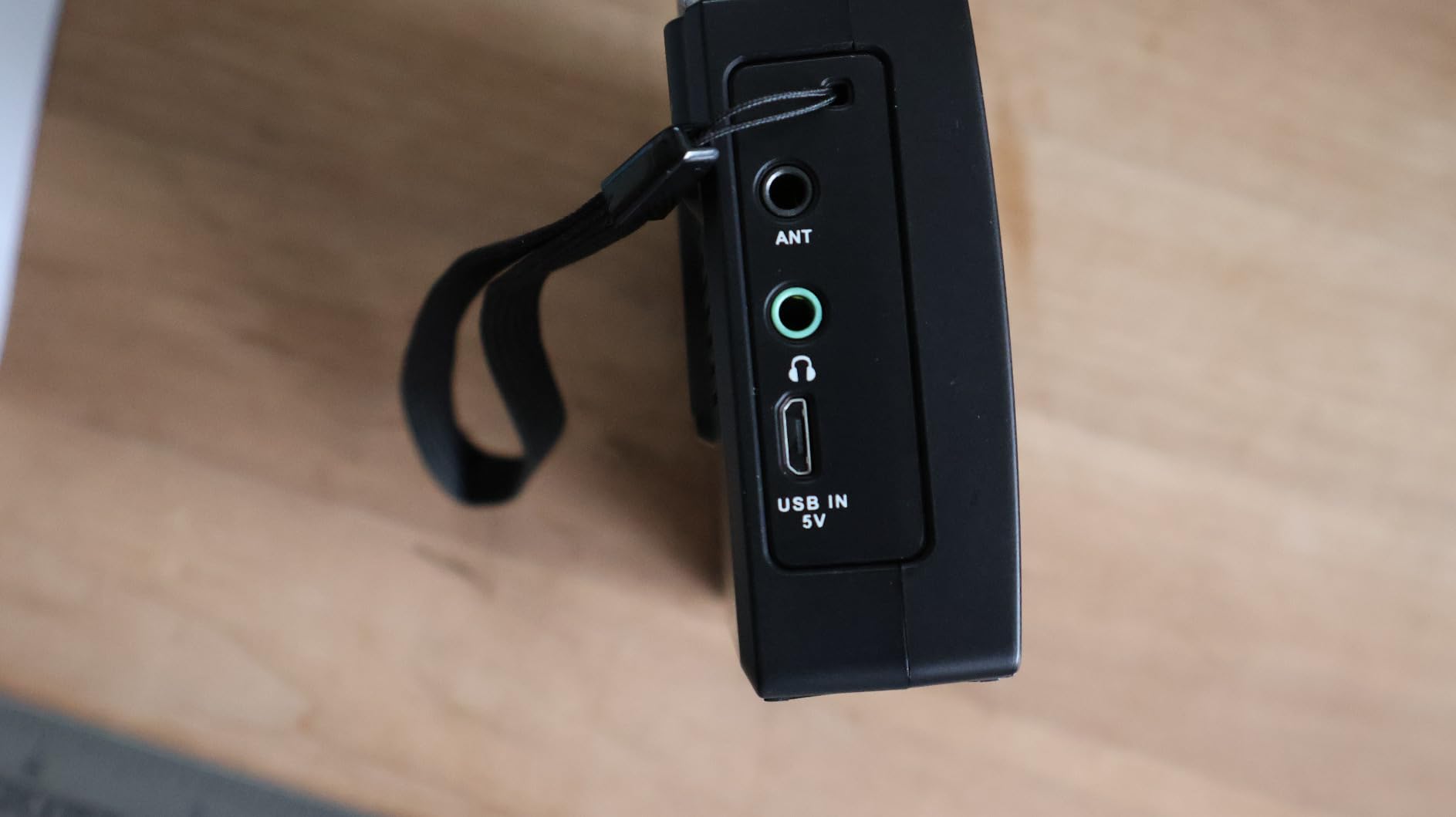
Two details matter more than they first appear. The shortwave antenna jack accepts an external wire, and on a small portable radio that jack is the difference between hearing a station and hearing only carrier hiss. The 400 memory slots let you store the exact frequencies from the pre-load checklist below before anything goes wrong, rather than trying to dial them in during a blackout.
When the CC Skywave 2 is the right pick
Choose it for any kit that needs to cover more than one country or one band. NOAA plus aviation plus shortwave in a 6-ounce body is a combination nothing else at this weight manages, and the aviation band is more active during a large-scale emergency than most buyers expect.
It is also a strong travel pick. Owners who fly with it cite the tuning controls and the fold-out back stand, and the direct frequency entry makes it usable by someone who does not want to hunt through a band.
When to choose something else
Skip it for SSB monitoring. There is no single sideband reception here, so amateur and utility SSB traffic is out of reach no matter how good the antenna is. It is also not water resistant, so it wants a dry bag in a wet climate.
If you plan to use a long external wire as your main antenna, note that preset memories can be lost if the power is disconnected, which is an easy mistake to make when you swap cells. Charge the AA pair fully before a long listening session.
3. Tecsun PL880 – The Receiver for Hearing SSB and Utility Traffic
Tecsun PL880 Portable Digital PLL Dual Conversion AM/FM Longwave Shortwave Radio with SSB (Single Side Band) Reception
AM FM LW SW with SSB
Dual conversion PLL
10 Hz SSB step
520 g
Pros
- True SSB reception with a 10 Hz tuning step for utility and amateur listeners
- PLL synthesized dual conversion delivers high sensitivity and selectivity
- Four bandwidth filters on AM and five on SSB
- 3-watt speaker gives good volume for a portable
- Alarm clock and 0-120 minute sleep timer add daily utility
Cons
- Higher cost than most portable multiband radios
- Bulkier and heavier at 520 g than compact alternatives
- No NOAA weather band or alert function
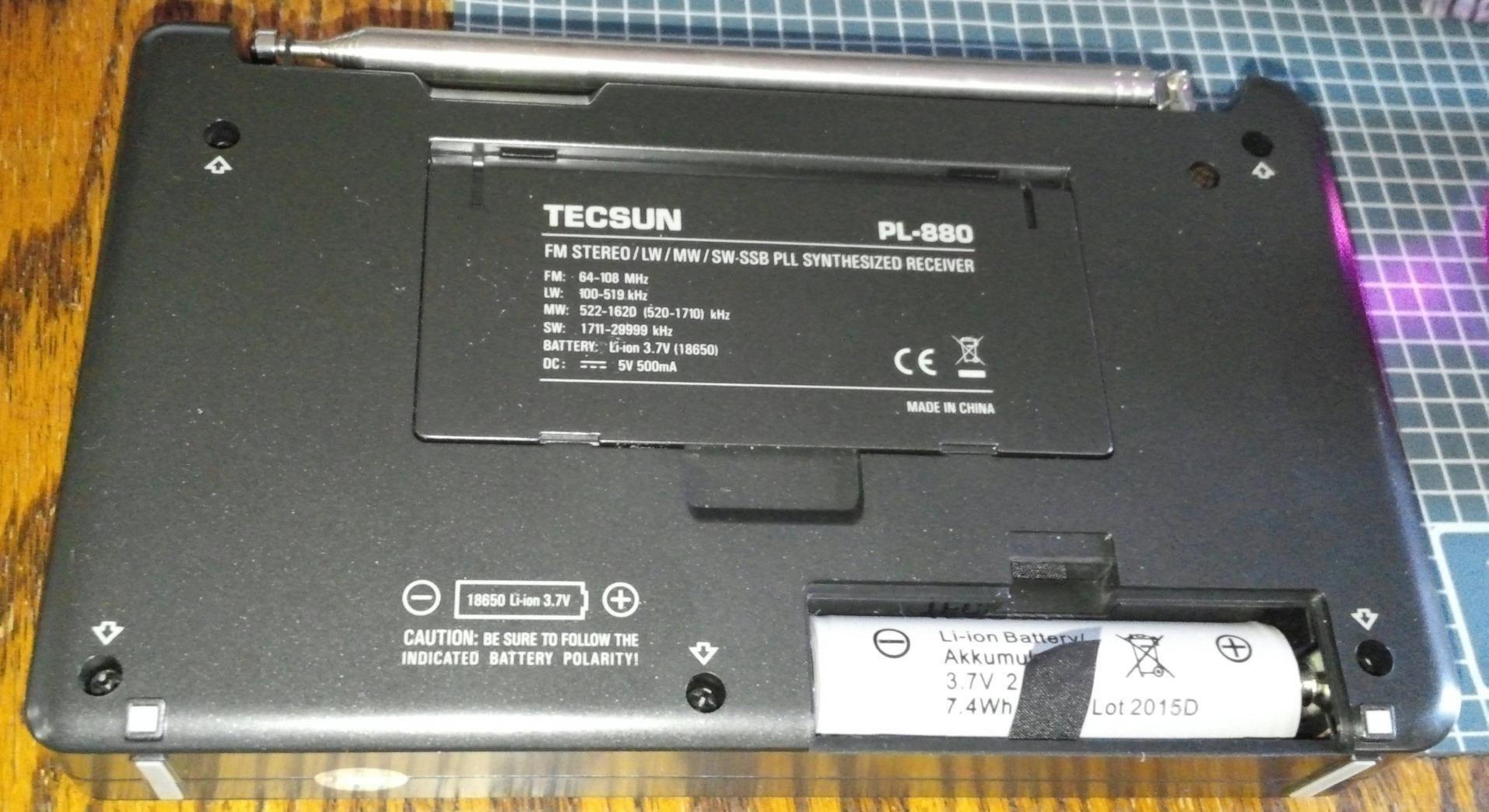
The PL880 is the reference point that other radios in this roundup get measured against, and reviewers regularly describe it that way. It is a PLL synthesised digital dual conversion receiver covering AM, FM, longwave and shortwave, with genuine single sideband reception rather than a marketing claim.
SSB is the reason this radio exists for emergency use. AM shortwave broadcasts are the loud, easy-to-hear stations, but during a real disruption the first useful traffic tends to be on SSB, where utility stations and amateur operators pass information that never becomes an AM broadcast at all. With a 10 Hz tuning step you can sit on a signal and actually copy it.
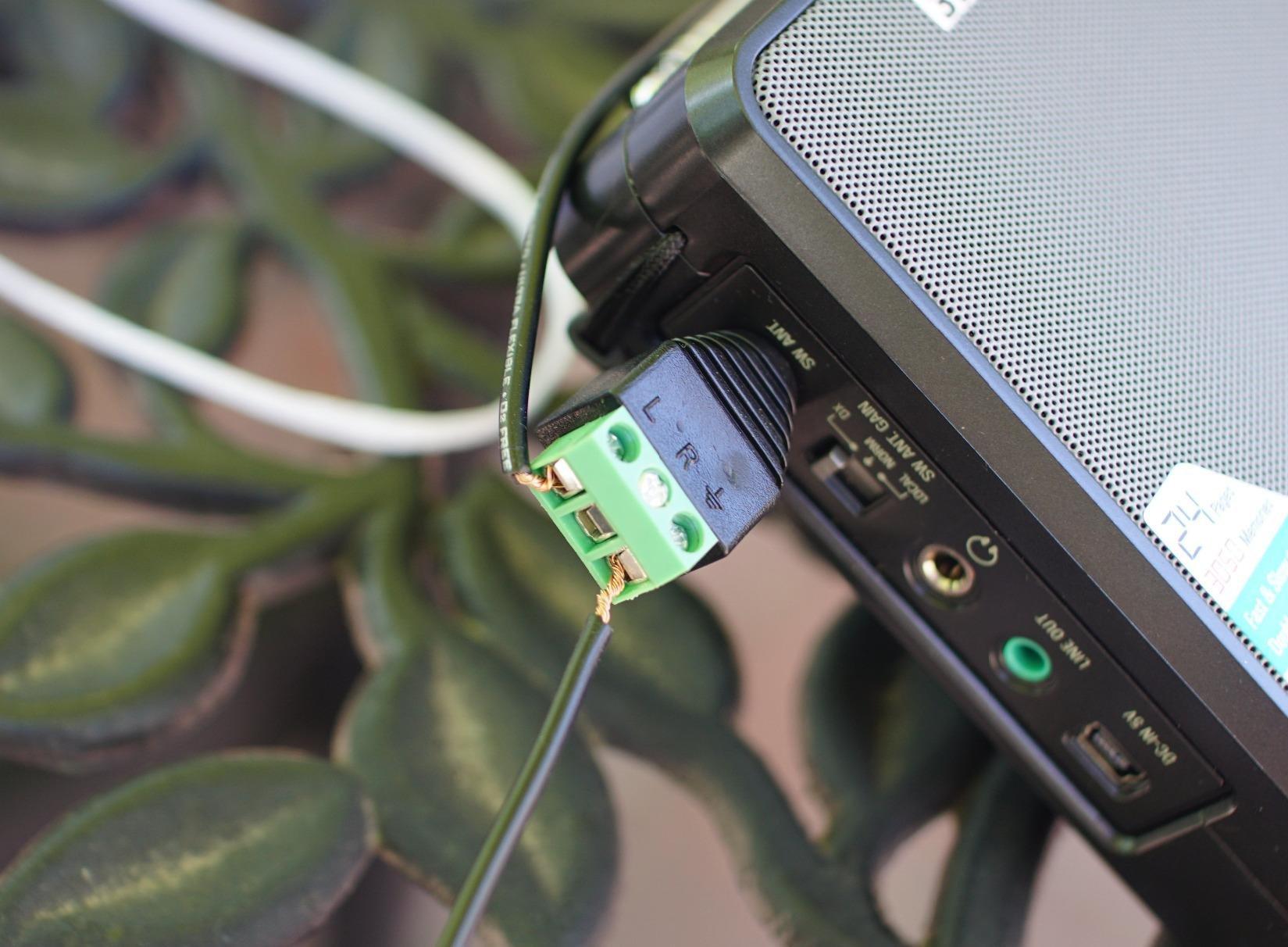
The filter story matters as much as the SSB story. Four selectable bandwidth filters on AM and five on SSB let you narrow the channel until the noise drops away and a weak station emerges, which is the single biggest practical difference between a receiver that works on weak signals and one that does not. At 7.5 by 4.5 by 1.25 inches and 520 grams, it is a serious piece of equipment rather than a pocket toy.
You get a 3-watt speaker, 3.5mm audio and USB interfaces, an alarm clock and a sleep timer that runs from 0 to 120 minutes, backed by a one-year USA warranty. The enclosure is plastic, which is a reminder that weight here comes from the receiver inside, not from ruggedisation.
When the PL880 earns its cost
Buy it if monitoring SSB is a genuine part of your plan, not a someday intention. In a grid-down scenario, knowing what the utility and amateur bands are carrying is worth more than any feature that only works while the grid is up. The selectable filters make it forgiving of bad conditions.
It is also the sensible choice for a home base station that a portable can be checked against. If you are ever unsure whether a cheaper set is missing a signal or whether the signal simply is not there, the PL880 tells you the answer.
When to choose something else
Skip it for a hurricane kit. With no NOAA weather band and no alert function, this radio will not wake you for a severe weather warning, which for a lot of people is the whole point of a go-bag radio. Our emergency weather radio guide covers that side of the problem.
At 520 grams it is heavy for a day pack, and the cost puts it out of reach if you are buying a second or third unit for a family. If the goal is ordinary shortwave listening, the PL330 covers the same bands for less money.
4. Tecsun PL330 – The Best Value Set With SSB and DSP
Tecsun Digital PL330 AM/FM/LW/SW Worldband Radio with Single Side Band Receiver
AM FM LW SW plus SSB
DSP and sync detection
850 memories
7.4 oz
Pros
- DSP demodulation with synchronized detection for real sensitivity and selectivity
- SSB reception makes it competitive with pricier receivers
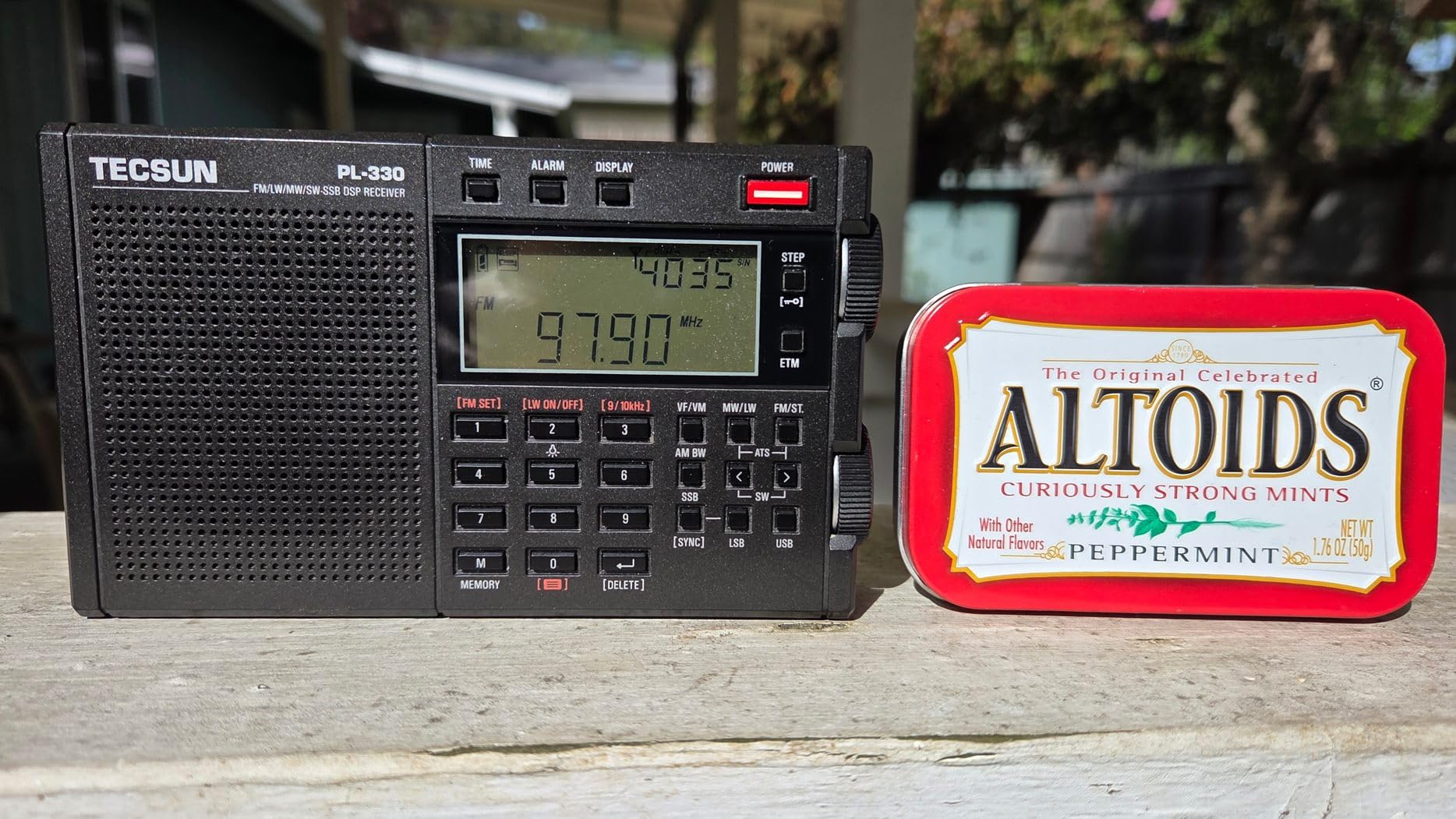
- Compact at 5.5 by 3.5 by 1 inches and 7.4 ounces
- 850 memory locations with direct frequency entry
- Reports of AM stations around 1200 miles away on the internal antenna
Cons
- No fold-out kickstand so it tips over with a long wire antenna
- Small 250 mW speaker and best sound comes through earphones
- No NOAA weather band or aviation band
The PL330 is the most-cited value recommendation in shortwave forums, and for a specific reason: it brings DSP demodulation, synchronized detection and true SSB into a body small enough for a pocket. Reviewers consistently report that it outperforms cheaper sets such as the XHDATA in both sensitivity and feature depth.
What synchronized detection does is use the received signal itself to help reject interference, and that translates directly into a quieter floor on a weak band. Combined with 850 memory locations and direct frequency entry, you can store a working station list once and never hunt for it again. That is a preparedness advantage as much as a convenience one.
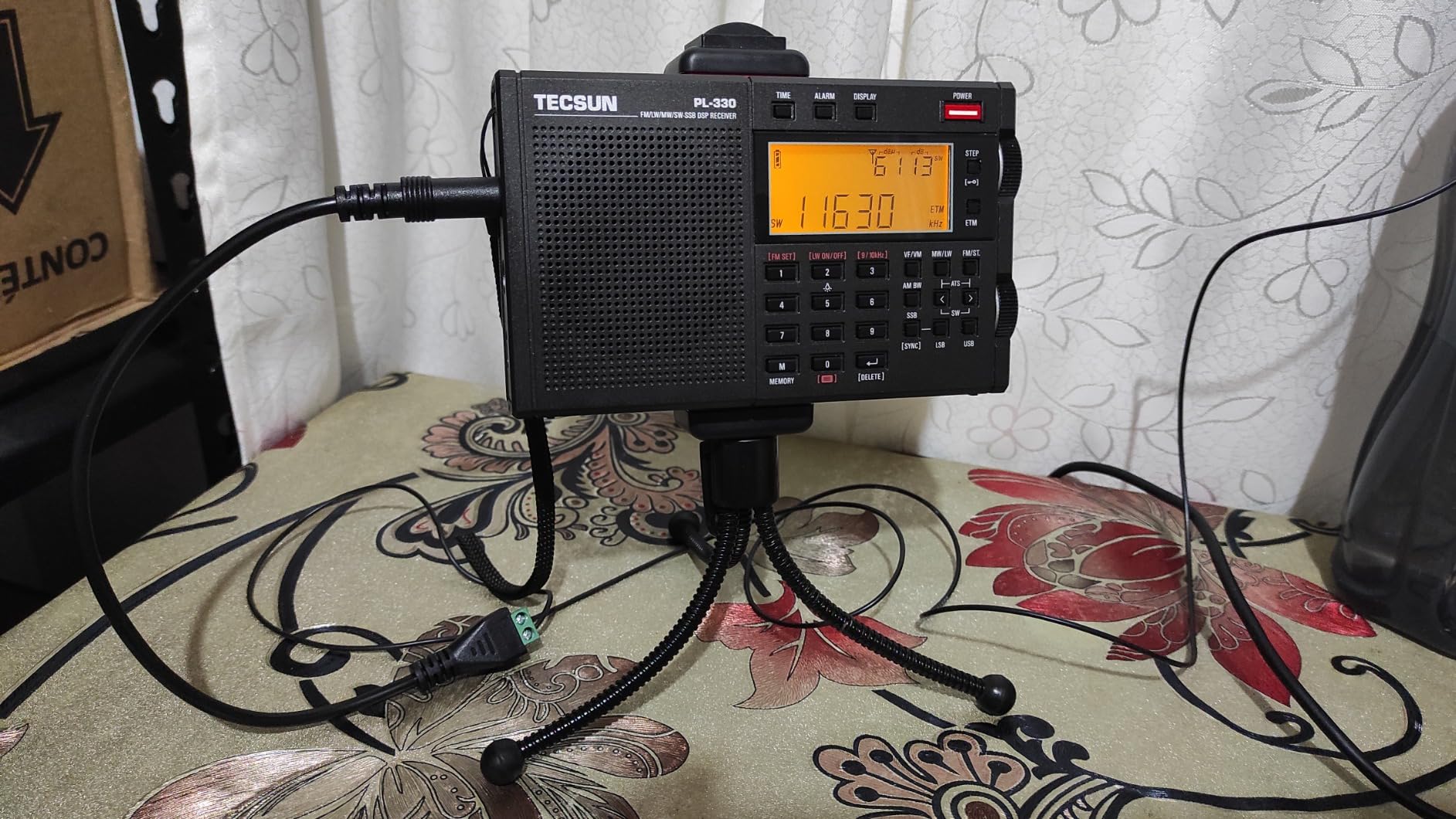
Battery life is genuinely good for portable use, with owners reporting around five days of camping on a single charge, and the set includes stereo earphones and a carry pouch. Coverage runs AM, FM, longwave from 150 to 519 kHz, shortwave from 2300 to 21950 kHz, and single side band.
There is an external antenna input and a 3.5mm audio output, plus an alarm clock, a sleep timer up to 120 minutes and a keylock function. The speaker is a full-range 8 ohm 250 mW unit, which sounds fine on speech and merely acceptable on music. Firmware version 3307 and a one-year warranty round out the package.
When the PL330 is the smart buy
This is the set to buy if you want SSB and DSP without spending top-tier money or carrying a heavy radio. At 7.4 ounces it genuinely disappears into a pocket, and the 850 memory slots mean your whole go-bag station list fits in the radio with room to spare.
It suits a user who will spend real time listening rather than catching bulletins in passing. Reviewers who want SSB generally pick this first, and the longwave band adds a layer most budget sets skip.
When to choose something else
Skip it if you need weather alerts, since there is no NOAA band here. There is also no kickstand, and because it is so small it tips over when a long external wire is attached, which is a genuine annoyance rather than a minor one during a fixed listening session.
The dense button layout and the manual take an evening to learn. If the radio will be handed to a family member during a crisis with no time to read instructions, the CC Skywave 2 is far more approachable.
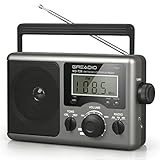
5. Greadio GR-T26 – The Most Versatile With Surprising Reception
Greadio Portable Shortwave Radio, Radios Portable AM FM Transistor Radio
AM FM SW with DSP
4.3 stars from 9283 reviews
9.4 in wide
2 lb
Pros
- Reviewers report sensitivity that rivals the Tecsun PL880 at a fraction of the cost
- Wide-bandwidth AM audio with a working tone control
- Very efficient on D cell batteries lasting months per set
- Digital frequency readout and a large fast tuning knob
Cons
- Shortwave readout uses megahertz so frequencies ending in 5 cannot be dialled exactly
- No weather band or longwave
- No automatic scanning and the readout does not backlight
The GR-T26 is the most-reviewed portable on this list after the KA500, and it earns that volume on price. Detailed reviewer testing reports sensitivity and selectivity that rivals far more expensive sets, and it holds up as a first serious shortwave receiver for almost nothing.
A DSP chip, a long antenna and a large LCD readout give it a technical footing that most sets at this cost lack. The display shows the tuned frequency, so you are not counting cycles on a dial, and the wide-bandwidth AM audio plus a working tone control let you shape the sound rather than just tolerate it.
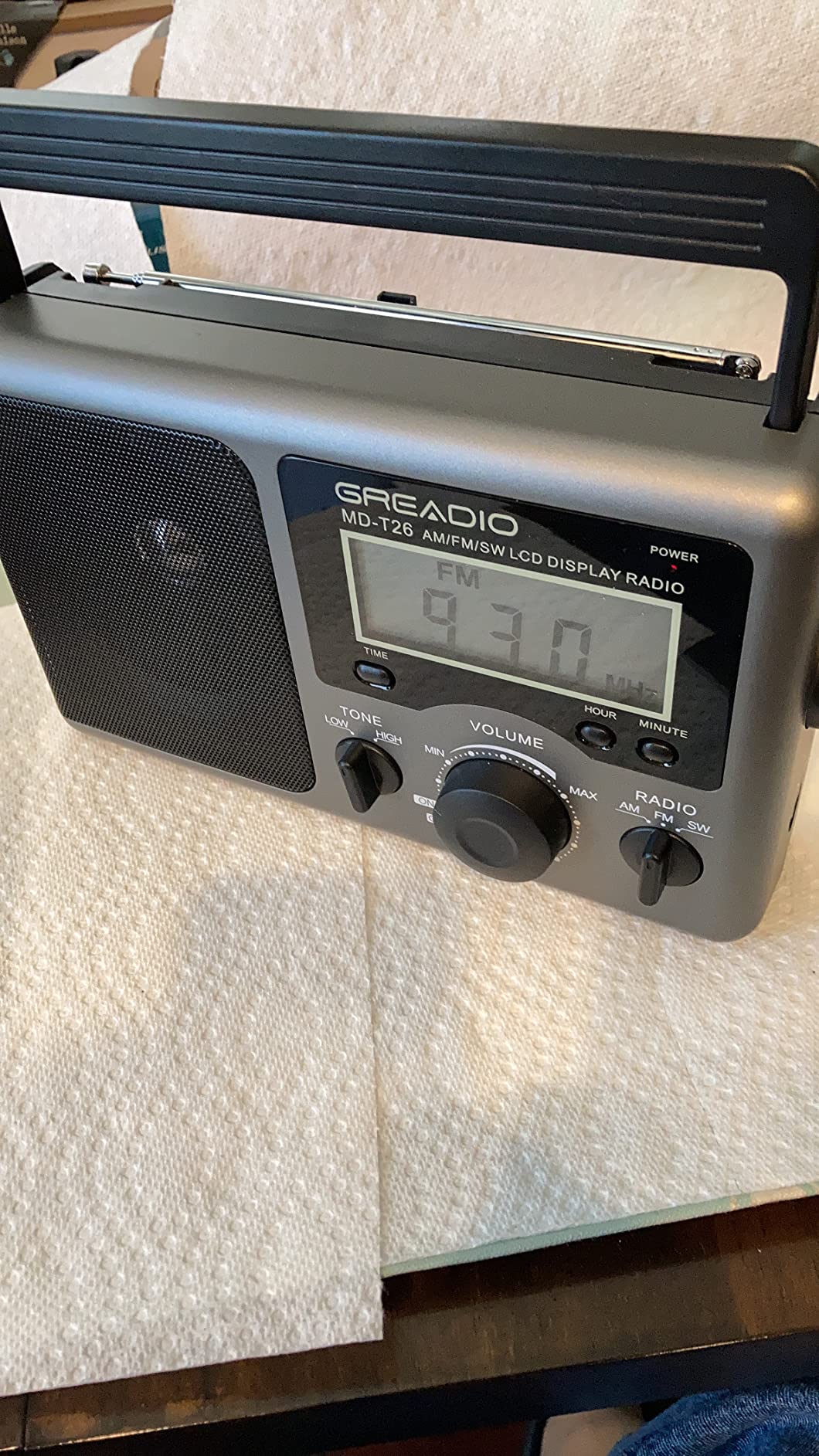
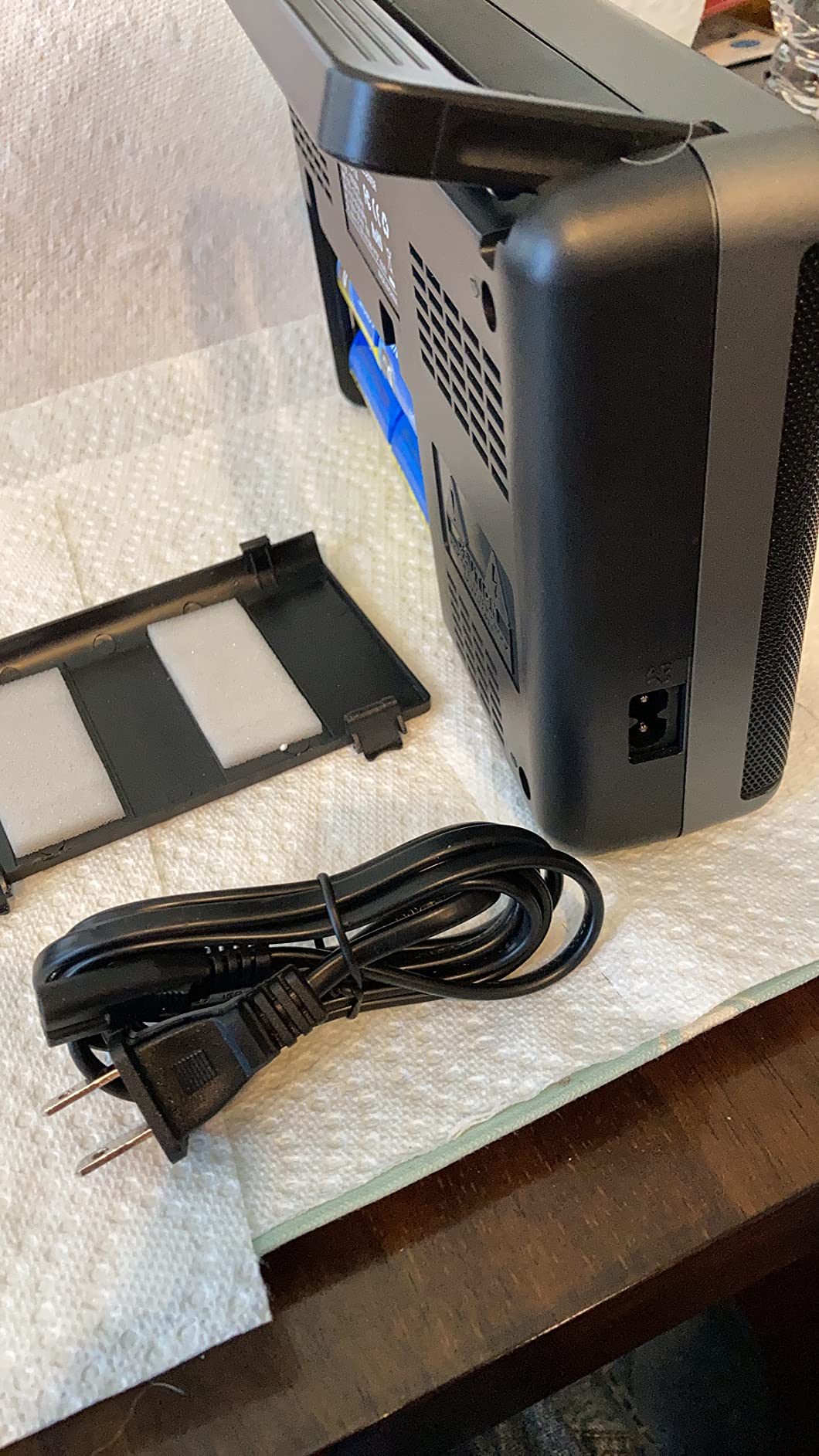
Battery efficiency is the quiet strength. It runs on AC through an included cable or on four D cells, and owners report months of use from one set, which is a very different proposition from a radio that needs charging every other day. Two built-in 2-watt speakers with a high and low tune mode fill a room, and there is a 3.5mm earphone jack and a carry handle. At 9.4 by 2.4 by 5.9 inches and 2 pounds, it is the largest set here.
The tuning granularity is the real drawback and it is specific. Because the shortwave readout works in megahertz, a frequency ending in 5 cannot be dialled in exactly, so a station at a precise kHz offset requires manual nudging rather than keypad entry. There is no weather band, no longwave and no automatic scanning.
When the GR-T26 makes sense
Buy it as a first receiver, a spare, or a shared household set. Two pounds and four D cells is a package you can hand to several people without a procurement process, and the reception reports back that claim for a set in this bracket.
It is also a sensible second opinion radio. If the more expensive set in your kit is silent on a band, this one tells you whether the band is genuinely quiet or the expensive set is the problem.
When to choose something else
Skip it for anything involving SSB, NOAA alerts or precise frequency work. The megahertz-only readout is a real limitation for anyone who wants to log a specific station, and there is no way to store and recall frequencies.
Some owners report weak or inconsistent shortwave reception, and the tuner readout does not light up, which is unpleasant at night. For a go-bag where weight and size matter, the XHDATA D220 covers the same ground in a fraction of the volume.
6. ROCAM CR1009 – The Severe Weather Radio With a 12-Month Warranty
Emergency Radio with NOAA Weather Alert – Solar Hand Crank Portable AM/FM Shortwave Radio, Rechargeable Battery 5000mAh, USB Charger, Flashlight, SOS Alarm for Home Outdoor Hurricane Survival
AM FM SW plus 7 NOAA
5 power sources
3W flashlight
IPX6
Pros
- Five power sources including a rechargeable cell that charges phones and tablets
- Bright 3W flashlight and 6-LED reading lamp with an easy-reach side switch
- IPX6 water-resistant ABS housing with a 12-month warranty
- Loud SOS alarm audible at a distance
- Compass attached to the carry strap
Cons
- Analog pointer display rather than a digital frequency readout
- Manual tuning means working through the band to find stations
- No SSB or longwave coverage
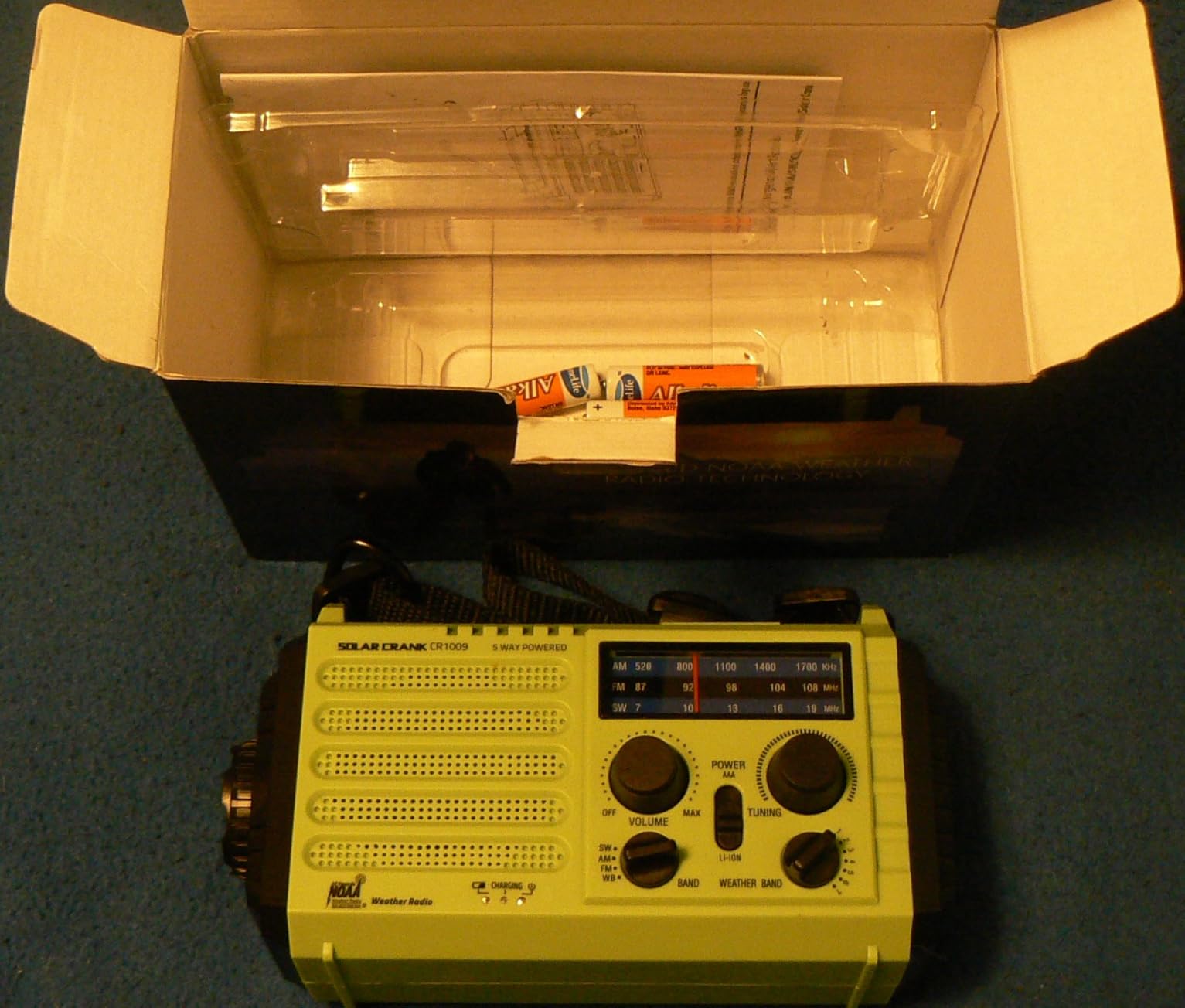
The ROCAM CR1009 is the pick for anyone whose real fear is a hurricane, an ice storm or a wildfire evacuation rather than an international broadcast. It covers AM, FM, shortwave and seven pre-programmed NOAA weather channels through an extended telescopic antenna, and the severe weather alert sounds loudly enough to wake a room.
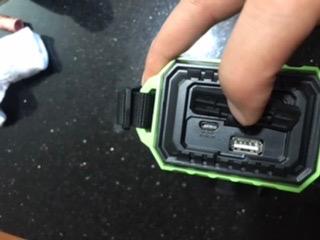
Five power sources keep it alive: an internal rechargeable pack, a solar panel, a hand crank, three AAA cells and a DC adapter. The rechargeable cell is the useful one in a long event because it will charge a phone or a tablet, which turns the radio into a small power station rather than a single-purpose box.
The lighting is unusually strong for this class. A 3W flashlight plus a 6-LED reading lamp with a front-facing adjustable design covers both moving around outside and reading a map at a table, and reviewers single this out more than almost any other feature. The SOS button triggers a loud alarm with a flashing red light, and a 3.5mm headphone jack sits on the right side.
At 7.5 by 3.5 by 4.7 inches and 1.2 pounds, with a carry strap, hang buckle and a compass, it is a complete grab-and-go unit. The IPX6 water-resistant ABS body is a genuine advantage in a storm, and it carries a 30-day refund, 90-day replacement and 12-month warranty. The tuning is an analog pointer with a manual approach, which is the main compromise.
When the ROCAM is the right radio
Choose it for coastal, tropical and flood zones where water ingress would end a lesser unit and NOAA alerting is the primary need. A radio that survives being rained on and still runs the alarm is worth more than a marginally more sensitive set that does not.
It also works as a phone charger in a multi-day outage, which is a capability most emergency radios at this level lack. For a family shelter kit, that single feature often decides the purchase.
When to choose something else
Skip it if you need to store frequencies. The analog pointer means no presets, so you will be working through the band with a tuning knob every time, and a 45-second notice to take shelter is a poor moment to search for a station.
There is no longwave, no SSB and no external antenna jack, so the reception ceiling is set by the internal whip. If you want to monitor emergency traffic from distant regions, the CC Skywave 2 covers more ground.
7. Emgykit R11 – The Feature-Heaviest Emergency Kit in the Group
Portable Shortwave Radios with NOAA/SW/AM/FM, for Camping & Home
NOAA AM FM SW
Bluetooth 5.0 speaker
4000mAh and 32 hrs
Solar and crank
Pros
- Most feature-rich unit here with Bluetooth speaker TF and USB playback plus NOAA alerts
- 4000mAh battery with Type-C charging giving up to 32 hours of playback
- Solar panel and hand crank as backup charging when no power is available
- Automatic scan and store of up to 210 channels across AM FM and SW
- Compact at 0.53 kg with carrying strap included
Cons
- Manual tuning remains analog despite the digital scan and store
- Scan effectiveness depends heavily on local signal conditions
- Speaker quality and tuning precision trail dedicated shortwave sets
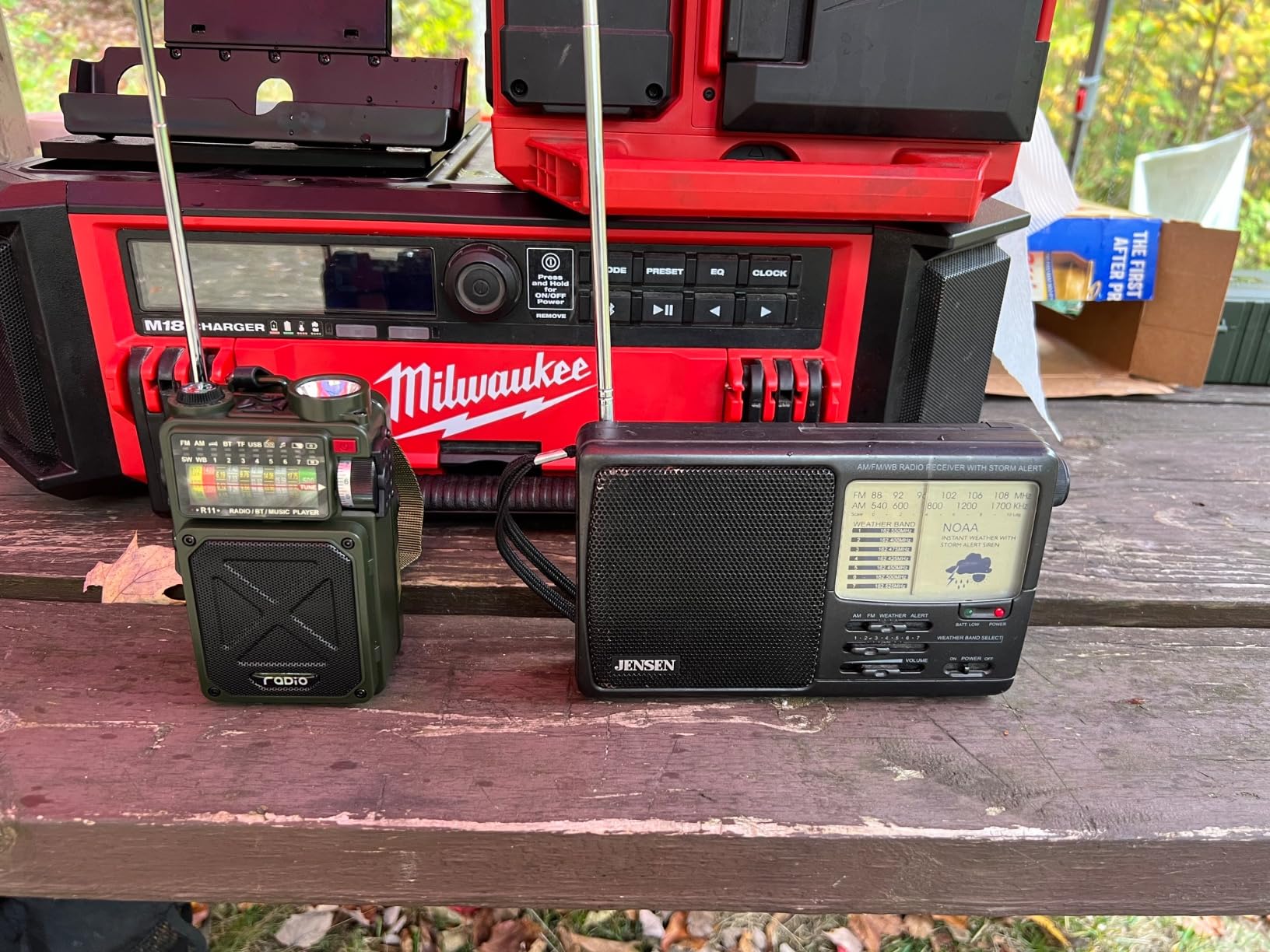
The R11 is the one to buy if a single box has to cover radio, lighting, music and device charging. It receives NOAA, AM, FM and shortwave in manual and scanning modes, and it doubles as a Bluetooth 5.0 speaker driving a 5-watt magnetic driver, with a 3.5mm headphone jack and a TF or microSD slot for file playback.
The 4000mAh rechargeable battery with Type-C charging gives up to 32 hours of playback, and a solar panel and hand crank sit behind it as backup charging paths. Seven built-in white noise sounds with a 10 to 70 minute auto shut-off are a nice touch for a group trying to sleep somewhere noisy, and emergency device charging keeps a phone alive.
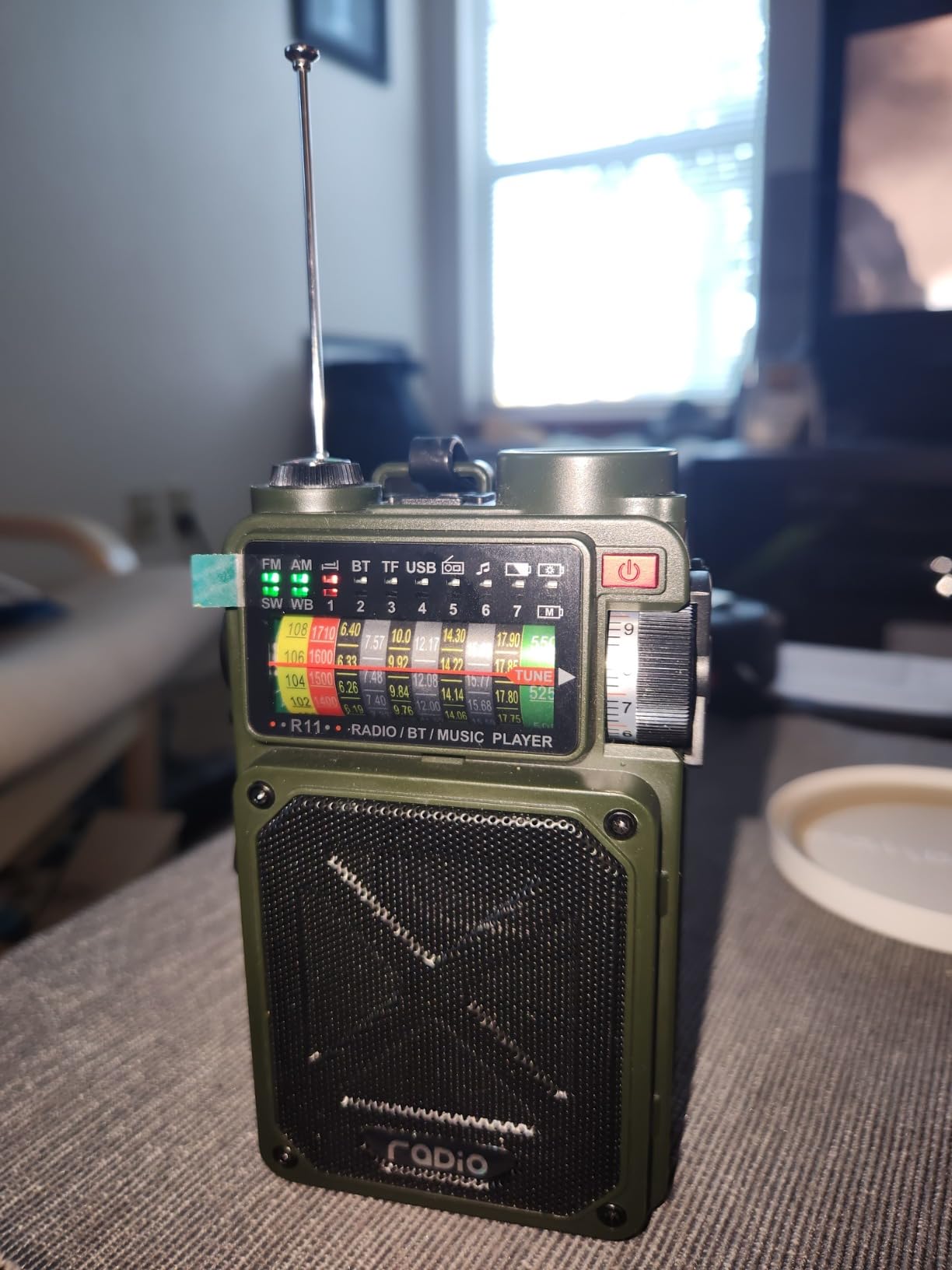
Automatic scan and store finds up to 70 channels per band, which is 210 stored channels across AM, FM and shortwave, so your station list is handled for you. Other kit features include a 120-lumen flashlight, a compass, an SOS alert and a carrying strap, and the package includes a military-style box, a Type-C cord and a user manual.
At 0.53 kg and 3.15 by 2 by 5.02 inches it is genuinely portable. The catch is honest: manual tuning is still analog, and scanning quality depends on what is actually in the air where you are. The speaker and tuning precision are below what the dedicated shortwave sets deliver, so treat this as an emergency box that also receives shortwave rather than a receiver built around shortwave.
When the R11 earns its place
Choose it for camping, overlanding and vehicle use where one device has to do several jobs. Music playback, a proper flashlight, a compass and phone charging in a 0.53 kg package is difficult to argue with, and 32 hours of playback covers a weekend without a socket.
It also suits a household that wants to pre-load stations without fuss, since scanning and storing removes the need to sit and dial frequencies in by hand.
When to choose something else
Skip it for weak-signal work. Tuning precision trails dedicated shortwave sets, and the analog manual mode means you cannot reliably hold a specific frequency when conditions degrade. If your interest is international stations rather than emergency kit functions, the Tecsun PL330 is the better receiver.
Do not expect the scan to find everything. Buyers should treat the 210 stored channels as a convenience, not a substitute for knowing the frequencies you want before the event.
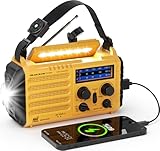
8. PPLEE Emergency Radio – The Compact Five-Power Unit With a 5000mAh Cell
Emergency Weather Radio, Portable Solar Hand Crank Radio with NOAA/AM/FM/SW
5 power sources
5000mAh cell
USB output
16 oz with strap
Pros
- Five separate power sources including a 5000mAh rechargeable battery
- Works as a USB power bank for phones during outages
- 3W camping flashlight plus a 2.5W reading lamp
- Compact and light at 16 ounces with the carry belt and carabiner included
- 18-month warranty with a 3-month refund window
Cons
- Analog tuning dial rather than digital frequency entry
- Analog pointer display makes identifying stations harder
- SOS alarm is loud but has no NOAA alert tone
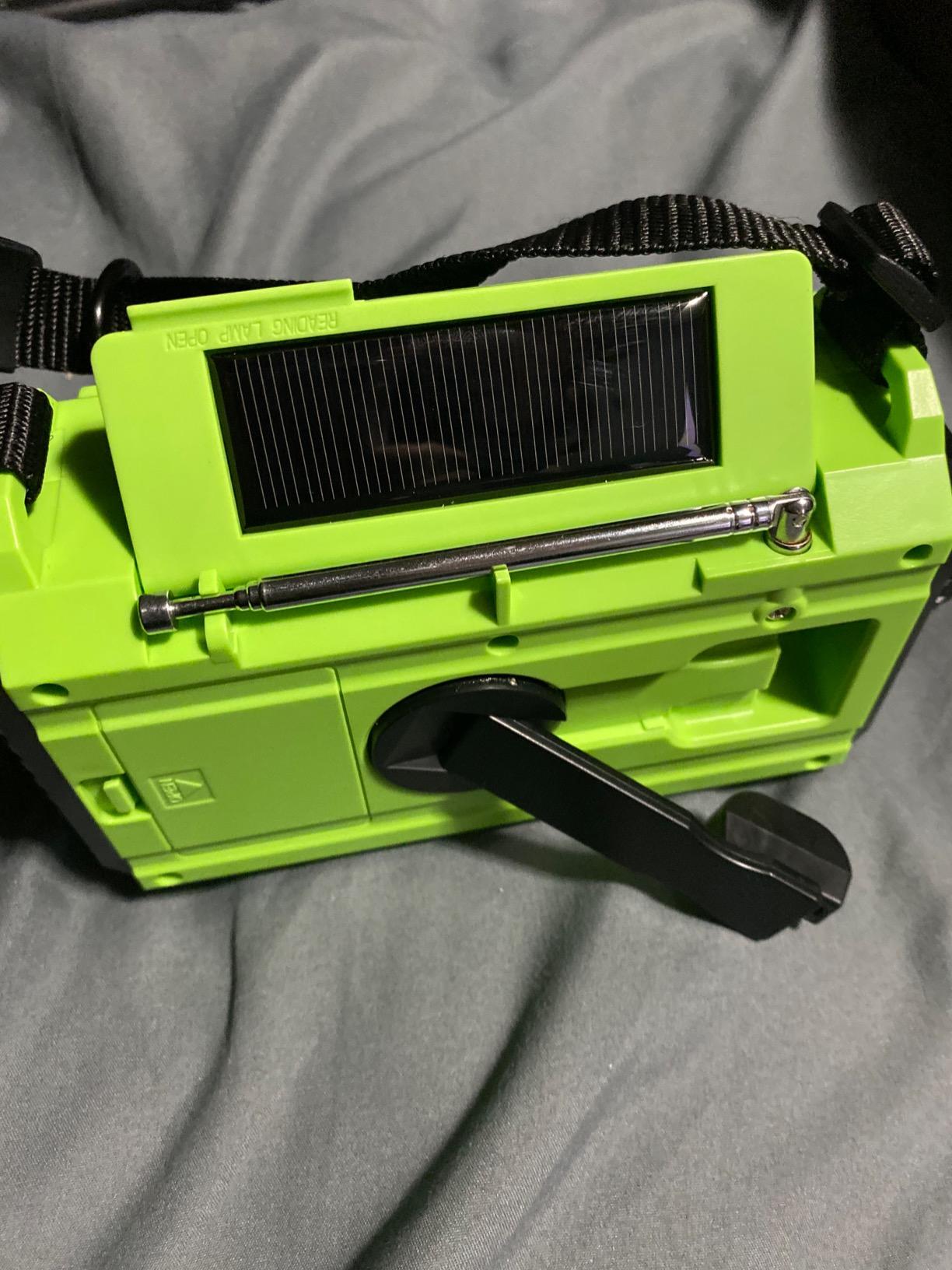
The PPLEE takes the basic emergency radio formula and executes it cleanly, with a 5000mAh internal cell that is larger than most in this class. Five power sources feed it: the internal rechargeable battery, solar, a hand crank, 5V USB input and three AAA cells, so you are never dependent on a single charging method.
It receives AM, FM and shortwave, with NOAA emergency weather alerts, a loud SOS alarm and a flashing red light for hurricanes, earthquakes, wildfires, snowstorms and tornadoes. A 3.5mm headphone jack and an adjustable antenna with a large tuning knob are both welcome on a unit this size.
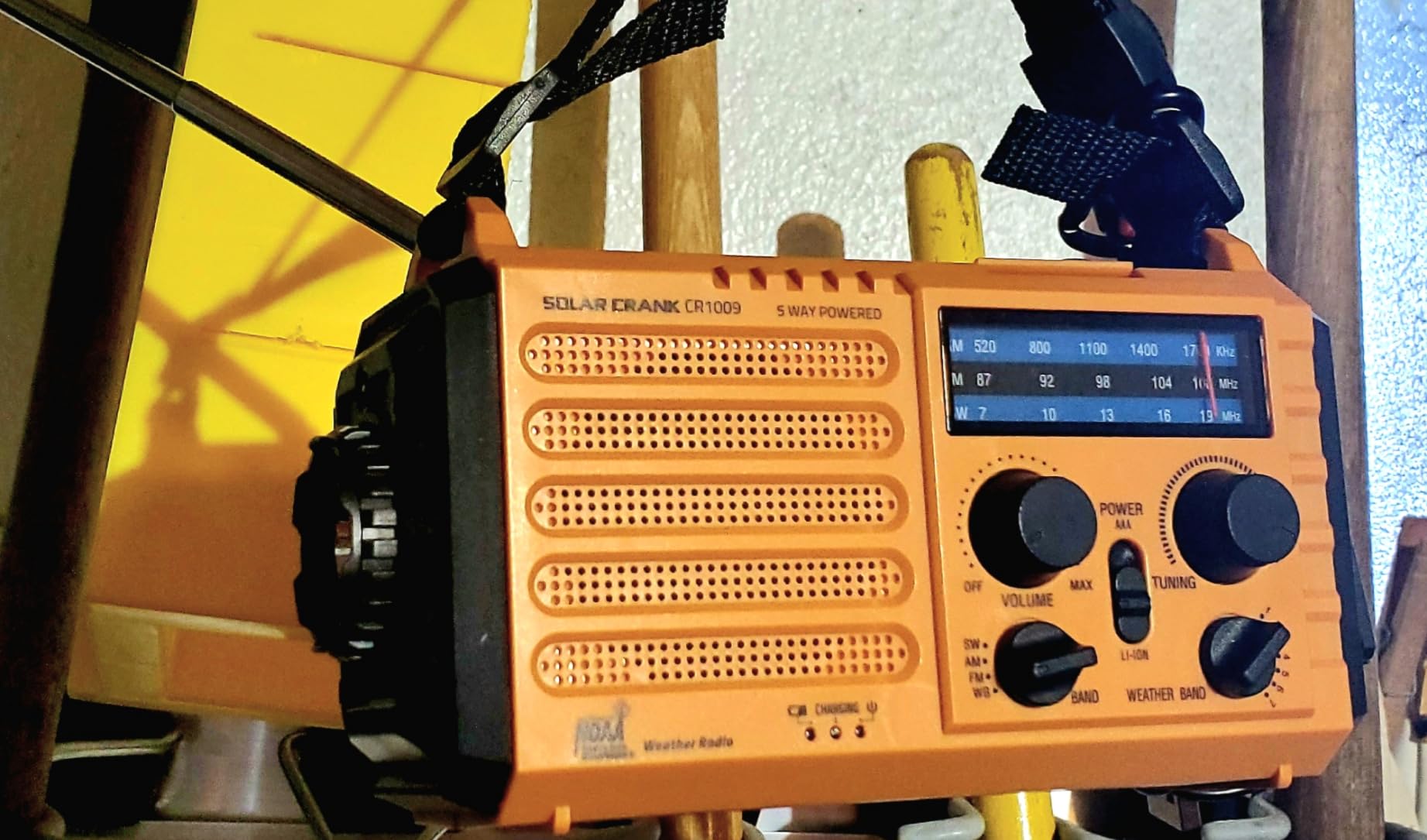
The extras are unusually thoughtful for a budget set. It measures 6.69 by 3.74 by 2.36 inches and weighs 16 ounces, and the package includes a carabiner, a compass, a braided belt and a USB charging cable, which is more than most competitors bother to supply. The 3W camping flashlight and 2.5W reading light cover the two lighting situations a kit actually faces.
The warranty is an 18-month extended period with a three-month refund and a 24-hour response commitment, which is better than the single year most brands offer. The trade-off is tuning: an analog pointer display means identifying a specific station is guesswork, and there is no SSB or longwave.
When the PPLEE is the right buy
Choose it when phone battery life is the real constraint. A 5000mAh internal cell that doubles as a USB power bank keeps a phone alive through a long outage, and reviewers treat that as the headline feature rather than the reception.
It is also a strong secondary or backup radio, because its small 16-ounce body and included belt make it easy to place in a vehicle, a desk drawer and a day pack at the same time. Three units in three locations is a better use of budget than one expensive set in one place.
When to choose something else
Skip it if you plan to listen to specific stations. The analog pointer and large tuning knob mean real time lost finding a frequency, which is exactly the time you do not want to waste during a warning.
There is no SSB, no longwave, no external antenna jack and no automatic scanning. If the antenna is the bottleneck in your location, this radio cannot be fixed with a wire.
9. Retekess V115 – The Digital Radio That Also Plays and Records MP3s
Retekess V115 Shortwave Radio, Digital Radio AM FM
AM FM SW digital
9k and 10k AM step
TF play and record
1000mAh
Pros
- Digital tuning with automatic station search storage and manual frequency entry
- Retains the last used setting after power off
- TF card MP3 playback plus radio recording in three quality settings
- Compact at 0.16 kg so it fits in a small pocket
- Plays while charging
Cons
- Small built-in speaker limits volume and tonal range
- 1000mAh battery gives only about 6 to 8 hours at medium volume
- No weather band on this variant
- Plastic construction feels light next to metal-bodied sets
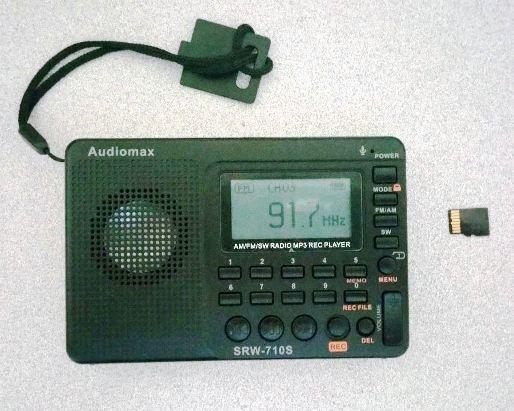
The Retekess V115 does something none of the other radios here do: it records. TF card playback with repeat, single repeat, directory repeat and random play modes covers stored audio, and radio recording to a TF card in three quality settings captures a broadcast directly, which is genuinely useful if you hear something important and cannot write it down.
Tuning is properly digital, with automatic station search and storage plus manual frequency key entry, and the AM step adjusts between 9kHz and 10kHz, which helps with international stations on different regional spacing. It also remembers the last used setting after power off, which is a small courtesy that becomes valuable in a blackout.
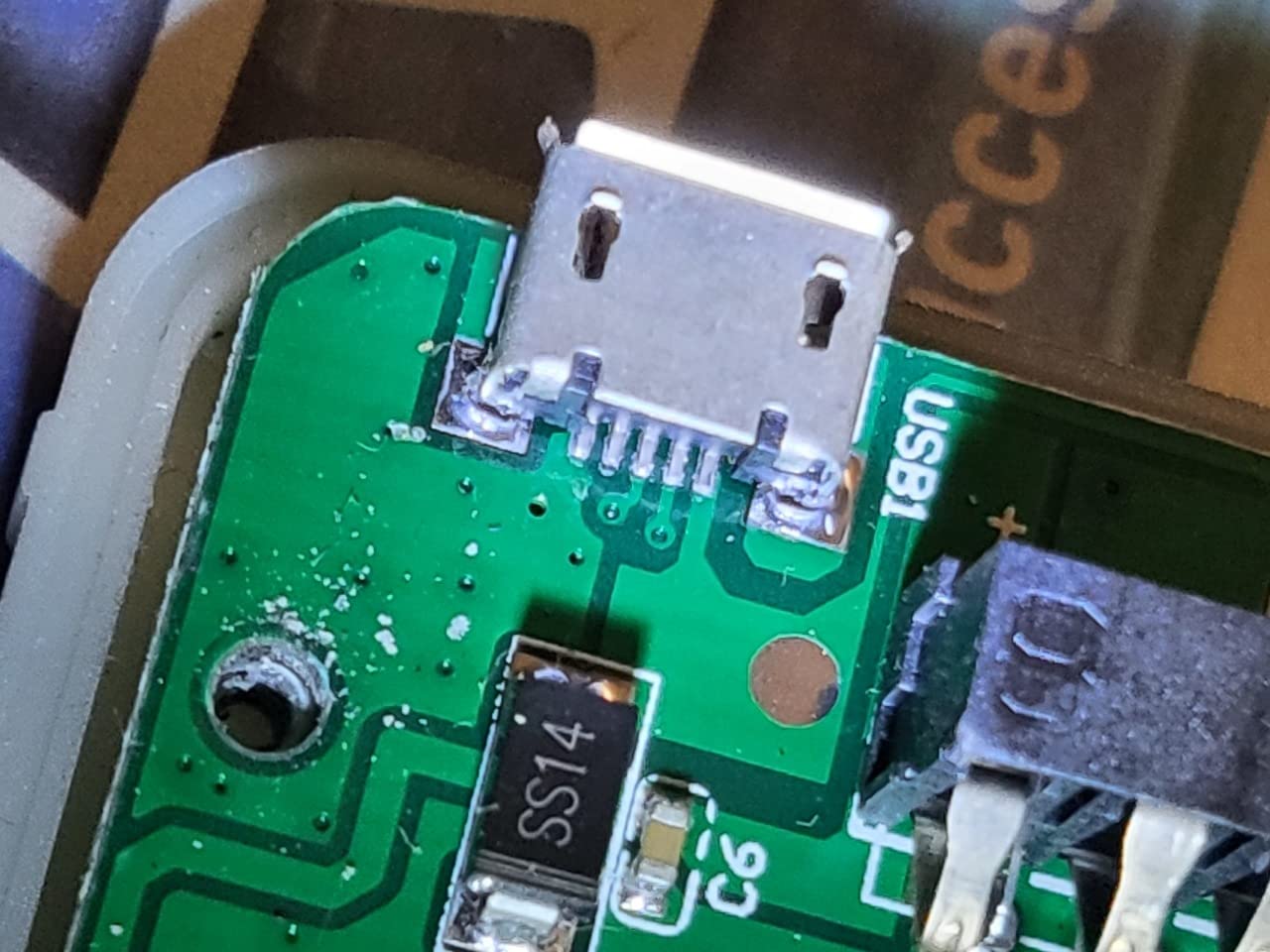
It weighs 0.16 kg and measures 4.73 by 0.8 by 3.15 inches, so it is the flattest radio in the roundup and slides into a pocket or a laptop sleeve. Power comes from a 1000mAh rechargeable BL-5C lithium cell, taking four to five hours to fill and running six to eight hours of playback at medium volume, and it plays while charging.
The package includes a hand strap with bracket, a Type-C charging cable and the BL-5C battery itself. Against that, the 2-watt speaker is small and thin-sounding, and this variant has no weather band. Recording quality is a convenience feature rather than broadcast-grade capture, but for logging a station schedule it does the job.
When the V115 is worth buying
Choose it for a kit where capturing information matters more than audio quality. Recording a broadcast to a card and keeping the file is a real advantage in a situation where you cannot be at the radio, and the flat form factor means it never adds bulk to a pack.
It is also a good travel radio for a long flight or a border crossing, since stored stations survive power cycles and the battery is small enough not to be a nuisance in hand luggage.
When to choose something else
Skip it for extended listening. Six to eight hours from a full charge is short for a device intended to be your information link during a multi-day event, and a spare BL-5C is one more thing to stock and rotate.
There is no weather band, no SSB and no longwave on this variant. The small speaker is fine for speech through earphones and poor for anything else, so do not choose it as a household radio that everyone will share.
10. Jazmm 4-Band Radio – The Four-Band Set With Bluetooth and NOAA
Bluetooth AM FM Shortwave Radio with NOAA Weather Alert,1250mAh Rechargeable Portable Pocket Radio with Best Reception,5W Big Speaker, Digital Tuner and Earphone,Support SD Card and USB MP3 Player
FM AM SW and NOAA
1250mAh cell
5W speaker
Bluetooth 5.4
Pros
- Four bands including NOAA with a DSP chip that pulls in weak stations
- 1250mAh rechargeable battery gives roughly 10 to 12 hours per Type-C charge
- Built-in 5W speaker with six EQ presets plus a 3.5mm headphone jack
- Bluetooth 5.4 lets it work as a wireless speaker
- Back clip and wrist strap make it easy to carry
Cons
- Battery is built in and not user-replaceable
- 352 g is noticeably heavy for a pocket radio
- Shortwave range of 4.75 to 21.85MHz is narrower than some rivals
- No record-to-card function despite the TF slot
The Jazmm covers four bands, which is more than most of this list: FM from 87 to 108MHz, AM from 520 to 1710kHz, shortwave from 4.75 to 21.85MHz and the NOAA weather band from 162.400 to 162.550MHz. An advanced DSP chip handles the faint-signal work, and the real-time weather alerts are a genuine addition rather than a token feature.
Power is a 1250mAh rechargeable cell charged over USB Type-C, giving roughly 10 to 12 hours of playback, and two LR44 cells are included. The built-in 5W speaker with six EQ stereo effects is unusually large for a portable, and a 3.5mm headphone jack covers private listening.
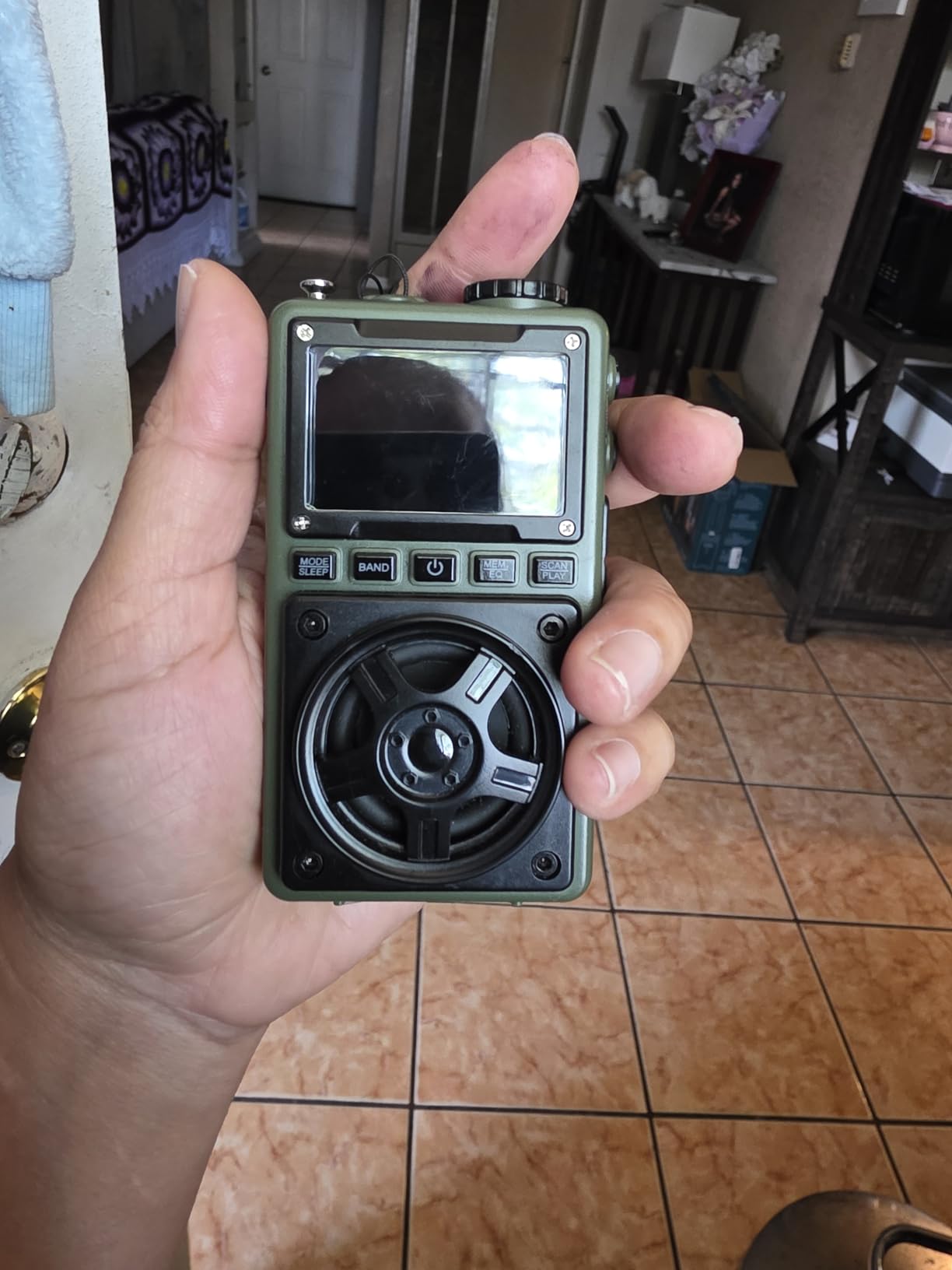
Bluetooth 5.4 lets it act as a wireless speaker for a phone, tablet or laptop, and a TF card slot handles MP3 playback. There is a built-in flashlight, a large bright digital display, simple buttons, a back clip and a wrist strap. Water resistance is not specified, which limits wet-weather use compared with the IPX6-rated sets in this roundup.
The battery is the real weakness. It is built in and not user-replaceable, so once the cell ages out the radio is finished, and that sits badly with the long-storage logic most preppers apply to a radio. At 352 g it is also the second-heaviest set here despite the pocket-oriented design, and the TF slot has no recording function to pair with.
When the Jazmm makes sense
Choose it for a vehicle or a day pack where Bluetooth speaker function is a genuine bonus, such as camping where a phone battery is precious. Four bands with NOAA in one unit covers the common emergency listening needs without a second device.
For a beginner who wants NOAA alerts, shortwave and digital frequency entry in one box, the feature list is unusually complete at this level.
When to choose something else
Skip it for a long-term stored kit. A non-replaceable battery works against the five to ten year rotation most preppers plan for, and the radio cannot be run on spares once the cell degrades.
The shortwave range stops at 21.85MHz, narrower than several rivals, and the 352 g weight undercuts the pocket positioning. If you want a radio that lives in a jacket for years, choose one that runs on AA cells.
11. XHDATA D220 – The Pocket Radio That Goes Anywhere
XHDATA D220 Portable Radio AM FM SW Shortwave Receiver Pocket Radio
FM1 FM2 AM SW
125 g body
3 buttons
2 AA cells
Pros
- Tiny and light at 125 g without batteries so it fits a pocket or handbag
- Only three control buttons so anyone in the household can operate it
- DSP chip gives good reception across all four bands
- Built-in speaker with a 3.5mm headphone jack
- Runs on two easily swapped AA batteries
Cons
- Non-digital display with no presets or station storage
- Batteries are not included and must be replaced when flat
- Not water resistant so it is unsuited to rain
- No Bluetooth MP3 or recording function
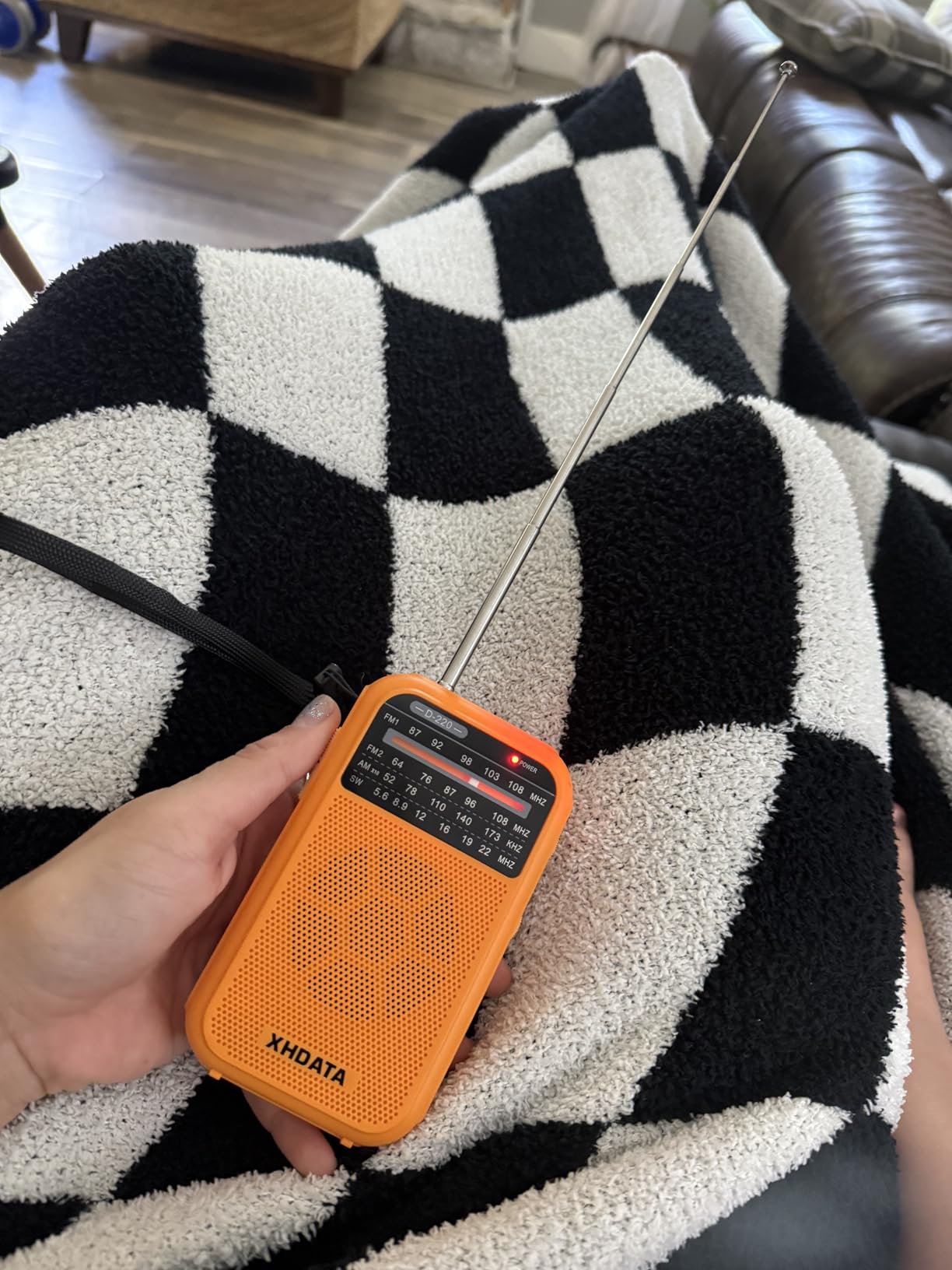
The D220 exists because of one requirement: it has to fit in a pocket and be usable by a frightened person. It measures 125 by 74 by 30mm and weighs 125 grams without batteries, with three controls total, a tuning knob, a band switch and a volume and power switch. There is nothing to misunderstand.
Reception is better than the price suggests, which is where the built-in DSP chip earns its place. Coverage is FM1 from 87 to 108MHz, FM2 from 64 to 108MHz, AM from 520 to 1730kHz and shortwave from 5.6 to 22.0MHz, with a built-in speaker and a 3.5mm headphone jack for private listening.
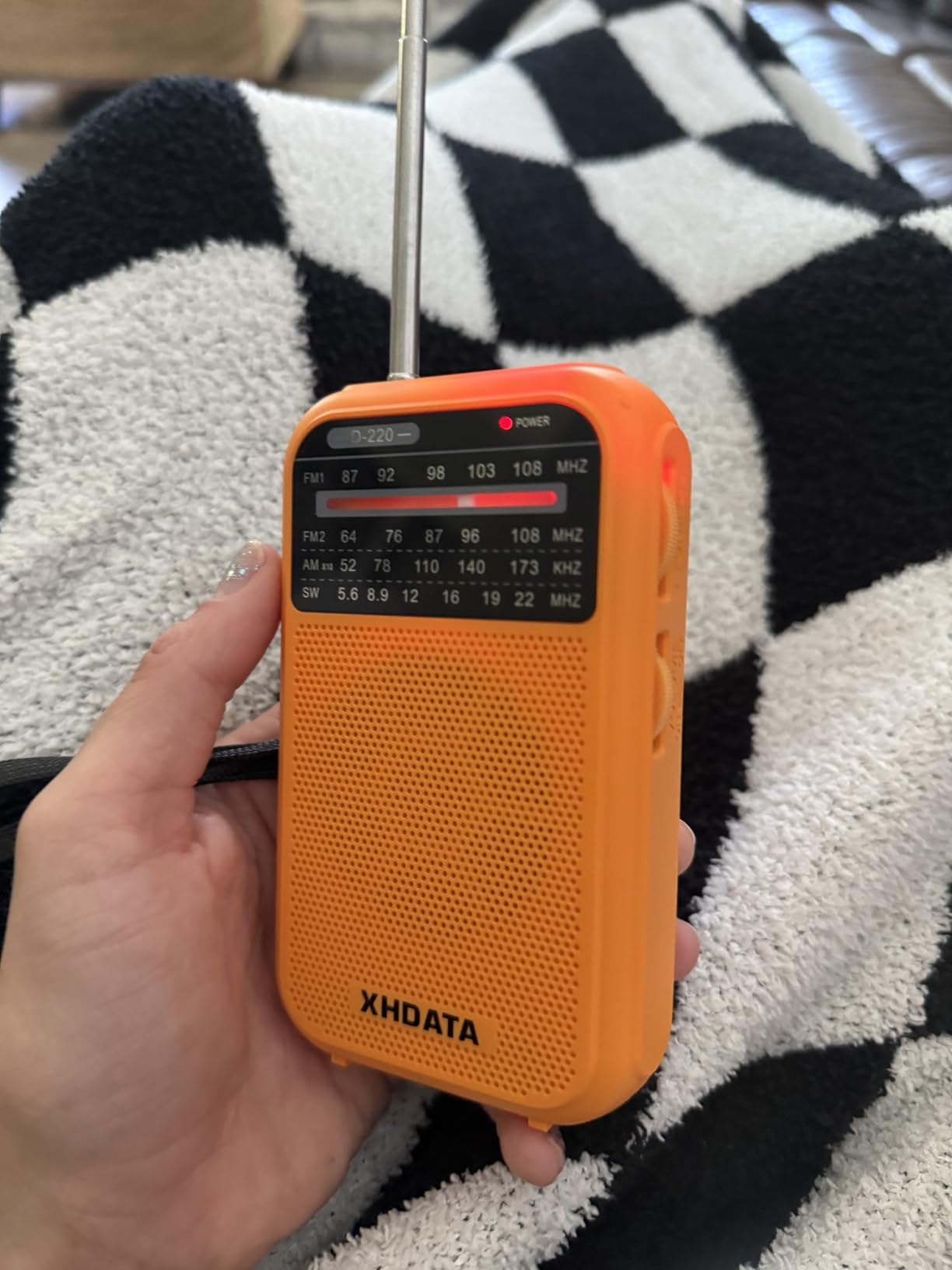
Power is two AA batteries, not included, and easy to swap. That is the single most important line in this review for a prepper audience, because AA cells lose very little capacity in storage and can be bought in any town on any day, which is precisely the property that rechargeable built-in cells lack. Owners consistently praise the balance of size, simplicity and reception.
The limits are equally clear. There is no digital display, so no station can be preset or stored, and you tune by ear through a manual knob. It is not water resistant, so rain ends it, and there is no Bluetooth, MP3 playback or recording to soften the fact that it does one job only. Warranty is one year after-service.
When the D220 is the right tool
Choose it as a walking, hiking or vehicle radio, or as a grab-and-go set for a family member who will not read a manual. Three buttons and a headphone jack mean it can be handed over in a blackout without a briefing.
It is an excellent second radio for a go-bag, because 125 grams and AA power are exactly the properties you want in a backup that gets carried and forgotten about until the moment it is needed.
When to choose something else
Skip it if you plan to monitor specific stations or follow an emergency traffic net. Without presets or a digital readout, you are tuning by ear every single time, and that is a poor fit for anything involving SSB or amateur monitoring.
Water resistance is absent, so keep it inside a jacket. There is also no weather band, so it will not give you an emergency alert.
12. DreamSky AM FM Shortwave Radio – The Home and Desktop Backup
DreamSky AM FM Radio Portable Shortwave Radio Battery Powered/Plug in Wall
AM FM and SW
AC or 4 AA
Large speaker
7.8 in wide
Pros
- Large high-performance speaker fills a room for its size
- Strong reception with high and low tone selection on all three bands
- Dual power with an AC adapter at home or 4 AA batteries outdoors
- Backlit digital clock display readable in the dark
- Large smooth analog dials that seniors can operate
Cons
- Not water resistant
- No NOAA weather band or emergency alert capability
- Analog tuning dials make exact shortwave frequencies hard to find
The DreamSky is not a go-bag radio and should not pretend to be one. It is a home backup, and in that role it does something few competitors do well: it fills a room. The large high-performance speaker delivers clear, loud output that several owners describe as the best sound available in this class, and it works just as well for a table radio as for background listening during an outage.
Reception covers AM, FM and shortwave through a long-range transistor antenna, with high and low tone selection that helps with the different characteristics of AM and shortwave programming. The controls are large smooth analog dials with a big volume knob and tuning wheel, and the operation is simple enough for an older relative to use without help.
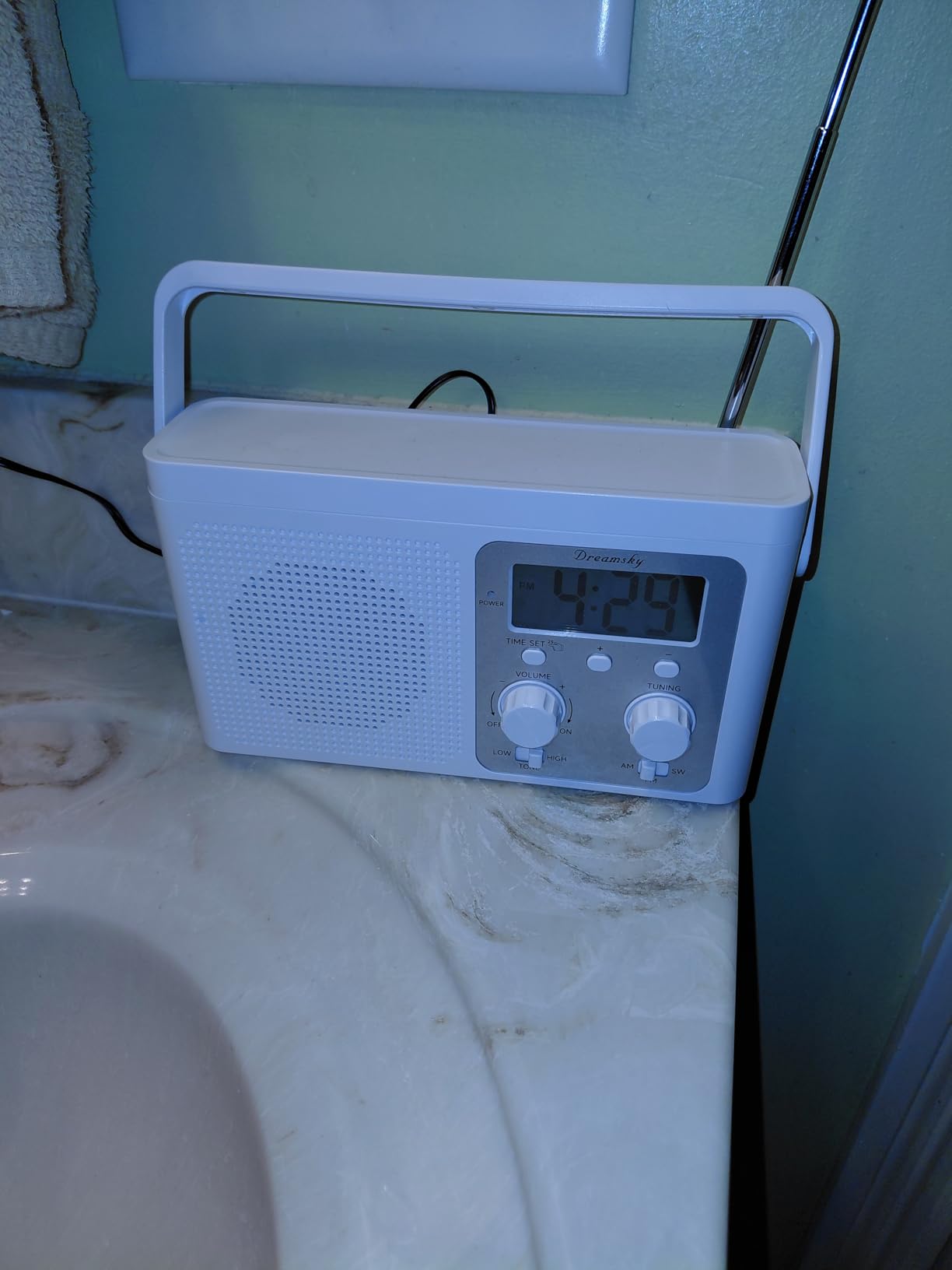
Power is an AC adapter for indoor use or four AA alkaline batteries for outdoor use, and the radio, adapter and manual are included. A digital LCD time display with a backlight in 12 or 24-hour format sits on the front, which is genuinely useful when mains power is gone and the grid clock with it. Dimensions are 7.8 by 2.15 by 4.45 inches, with a 3.5mm earphone jack for private listening.
Two things are missing and both matter in an emergency. There is no NOAA weather band, so no emergency alert capability, and the radio is not water resistant, so it belongs indoors. The warranty is a one-year replacement. The analog dials also make exact shortwave frequencies difficult to hit, which is the same limitation that makes the Retekess worth considering alongside it.
When the DreamSky is worth adding
Choose it as a house radio that keeps working when the internet and the smart devices stop, and as a second unit for an older family member. Loud output, large dials and a backlit clock are the three features that decide that use case.
It also makes sense as a second receiver in a two-radio redundancy plan, sitting on a kitchen counter while a go-bag set stays packed. Different power source, different location, different failure modes.
When to choose something else
Skip it for any go-bag, evacuation or outdoor scenario. It is not water resistant, it has no weather alerting, and its AA battery option means nobody would think of it as portable.
Anyone who wants to hear shortwave broadcasts from specific countries should look at a digital set instead, because analog dials make that a frustrating task. It ranks third in Portable Shortwave Radios on Amazon, but it is a home radio that happens to receive shortwave.
Buying Guide: How to Choose a Shortwave Radio for Emergency Preparedness
Sorting through shortwave specifications is harder than it looks, because marketing language and technical language overlap. These are the terms that actually change what you can hear, in the order they matter.
Single sideband is the feature that changes what you can hear
SSB, or single sideband, removes the redundant carrier signal that ordinary AM shortwave broadcasts waste power on, which means a station can be heard at much lower strength. For a prepper this is the single most valuable feature on the list, because during a real disruption the first-hand information tends to appear on SSB before it is repeated on an AM broadcast.
Only the Tecsun PL880 and the Tecsun PL330 in this roundup have genuine SSB reception. Both also have bandwidth filters, and without a filter, SSB audio is thin and fatiguing. If your scenario planning includes monitoring amateur or utility traffic, skip every other product here and choose one of those two.
DSP and synchronous detection explained
DSP, digital signal processing, means the radio handles the signal in software rather than entirely with analog components, which allows filters and noise reduction that analog sets could only approximate. Synchronous detection is a related technique that uses the signal itself to help cancel interference, and the practical effect is a quieter noise floor when the wanted station is weak.
Among the budget sets, the Greadio GR-T26, the XHDATA D220 and the Jazmm all carry a DSP chip, and the Tecsun PL330 pairs DSP with synchronized detection. The software-defined radio guide covers the next step up, where the same processing runs on a computer or phone and you can see the spectrum.
Sensitivity versus selectivity
Sensitivity is how faint a signal the radio can detect. Selectivity is how well it rejects everything either side of that signal. You need both: a sensitive radio with poor selectivity hears everything loudly, and a selective radio with poor sensitivity hears nothing at all. This is why an external antenna helps far more than buying a more sensitive set.
Bandwidth filters are the mechanism behind selectivity, and a radio that lets you choose a narrow filter will hear stations that a wider one smears into noise. The PL880 offers four filters on AM and five on SSB; the CC Skywave 2 offers selectable bandwidths across its bands.
Will a shortwave radio survive an EMP?
A shortwave receiver is one of the more survivable pieces of gear you can own, because it has no transmitter power amplifier, no microphone and no wiring harness, and it sits inside a plastic case that will not conduct a surge. The realistic risks are the DC input protection on the charging circuit and any attached USB or external antenna gear rather than the tuner itself.
Three habits improve the odds. Store the radio with the batteries removed, because a cell slowly venting in a sealed case is a real and common way radios get written off. Keep any external antenna, USB cable and power bank physically separate from the radio, since those are the components that would take the hit first. And favour AA battery power over built-in lithium cells, because a removable cell is a component you can replace.
Applying the 3-3-3 rule to radio gear
The 3-3-3 rule is a widely recognised preparedness convention, and it maps cleanly onto radio ownership. Three sources of water, three days of supplies, three months of financial reserves. Applied to communications it becomes three radios, three power sources, and three years of testing.
Three radios means a handheld transceiver, a receiver for official information, and a small always-carried set, each powered differently. Three power sources means mains, batteries and a hand crank or solar panel, so a single dead charger does not silence the household. Three years of testing means you find out now that the charging cable was the weak link, not three years into a crisis.
Power and battery strategy for a long-term kit
AA cells are the go-bag standard for a simple reason: they lose very little capacity over years of storage, and they are available in any town on any day. That is why the CC Skywave 2, the XHDATA D220 and the DreamSky all take standard AAs. Built-in lithium cells are more powerful, but once they degrade there is no spare, and two of the sets here have non-user-replaceable batteries.
Buy two radios that share a battery type, so one spare pack covers both. Store the cells outside the radio in a sealed bag, rotate them on a schedule, and test the whole chain rather than the radio alone. For a device needing more, note that the ROCAM and PPLEE units will charge a phone, which is often worth more than another hour of reception.
Antennas: why reception changes before the radio does
Most reception complaints trace back to the antenna, not the set. A long external wire on any radio with a proper antenna jack will pick up stations the telescopic whip cannot, and forum users hit this constantly, blaming the radio for what is an antenna limitation.
Only the CC Skywave 2, the PL330 and the PL880 in this roundup have a shortwave antenna jack, which is why we recommend them. A 30-foot wire strung away from buildings and power lines is the standard upgrade and needs no electronics. If you want to see how band behaviour changes with solar activity, our piece on why shortwave signals travel farther at solar maximum is worth reading before you judge a radio’s performance.
Receive-only versus two-way, and the licensing note
Everything on this page is receive-only. Receiving shortwave broadcasts requires no licence anywhere, and that includes NOAA weather alerts, aviation band and amateur band monitoring, which are all listen-only activities. Transmitting is a different matter entirely and requires an amateur radio licence in every country that issues one.
Prepper forums regularly see a Baofeng handheld recommended as an information radio. A transceiver can receive, but it will not decode a single emergency broadcast that a proper HF receiver cannot, and it needs a licence to transmit. We cover the transceivers separately in our handheld ham radio roundup.
Matching a radio to your disaster scenario
Map your kit to the event you actually expect rather than the worst one you can imagine. A hurricane zone needs NOAA alerting and water resistance, which points at the ROCAM CR1009 or the Kaito KA500. A grid-down blackout needs memory presets and long AA runtime, which points at the CC Skywave 2.
Civil disruption and long evacuations are where SSB monitoring earns its place, so the PL880 or the PL330. International travel and a home listening need are served by the DreamSky. Camping and vehicle use suit the Emgykit R11, and a walking or everyday-carry secondary radio is the XHDATA D220.
Blackouts in a populated area have their own pattern, and our article on how solar flares cause sudden shortwave radio blackouts explains why a high-frequency band can go quiet without any local emergency. Worth knowing before you assume your radio is broken.
Frequencies to store before things go wrong
Store your list now, while you have power and a clear head. Start with the seven NOAA weather channels from 162.400 to 162.550MHz if you are in the United States, then add the national shortwave broadcast bands used in your region, the local amateur emergency nets you want to monitor, and any aviation frequencies relevant to your area.
Set the alarms and sleep timers as well, since a radio that wakes you for a weather warning is more useful than one you have to remember to check. Presets matter here: tuning a frequency by ear at four in the morning with a flashlight in your teeth is not a plan.
Avoiding counterfeit and misleading marketplace radios
Unbranded sets advertising ten bands with HF coverage are the most common disappointment in this category, and the failure is always the same: the band is claimed but the sensitivity is not there. Look for a stated frequency range, a DSP mention, a warranty from a company you can contact, and a review count large enough to mean something.
Buying from an authorised dealer or a recognised retailer is the simplest protection. It is also the reason the C. Crane and Sangean brands score well in prepper forums, where buyers value a US-based company with a reachable warranty over a marketplace-only listing with no support behind it.
Frequently Asked Questions
What is the best radio to have in an apocalypse?
For information rather than two-way talk, a receive-only shortwave radio is the right answer, and the C. Crane CC Skywave 2 is our top choice because it runs about 70 hours on two AA batteries, stores 400 frequencies, includes NOAA weather alerts and accepts an external antenna. Pair it with a hand-crank multi-power unit like the Kaito KA500 so no single failure silences the household.
What radio do preppers use?
Most preppers use a three-part setup: a hand-crank NOAA radio for weather alerts, a receiver with memory presets and shortwave coverage for international and utility broadcasts, and a licensed amateur transceiver for local two-way voice. The first two are receive-only and need no licence. Transceivers require an amateur radio licence before you key the microphone.
What radio would survive an EMP?
A shortwave receiver is among the more survivable radios because it has no transmitter amplifier, no microphone and a plastic case. Store it with the batteries removed, keep external antennas, USB cables and power banks physically separate, and prefer AA battery power over a built-in lithium cell so a damaged component can be replaced. No consumer radio is EMP-proof, but a receiver degrades far more gracefully than a transceiver.
What is the 3-3-3 rule for radios?
The 3-3-3 rule is a preparedness convention covering three sources of water, three days of supplies and three months of savings. Applied to radio gear it means three radios, three power sources for each, and three years of testing. Three radios prevents a single failure silencing the household, three power sources means a dead charger is not fatal, and three years of testing exposes weak cables and dead batteries before they matter.
What is the best radio to use during nuclear war?
There is no radio that is specifically for that scenario, and any page claiming otherwise is selling something. What matters is a shortwave receiver with SSB, because utility and amateur SSB traffic is where time-sensitive information moves first. The Tecsun PL880 and PL330 both cover SSB, and a NOAA-enabled multi-power unit covers weather and power. Expect to use batteries, so plan for several radios rather than one.
Final Verdict: Which Shortwave Radio Belongs in Your Kit
The Kaito KA500 takes the top of the best shortwave radios for preppers because six power sources and a phone-charging output remove every reason a radio might be dead when you need it. For the single go-bag, the C. Crane CC Skywave 2 is the stronger instrument, with 70 hours on two AA cells, 400 memories and the only shortwave antenna jack at that weight. If SSB monitoring is part of your plan, the Tecsun PL880 is the receiver, and the PL330 gets you the same coverage and DSP for less.
Whatever you choose, store the frequencies now, buy a second unit that shares a battery type, and test the whole chain before you need it.