
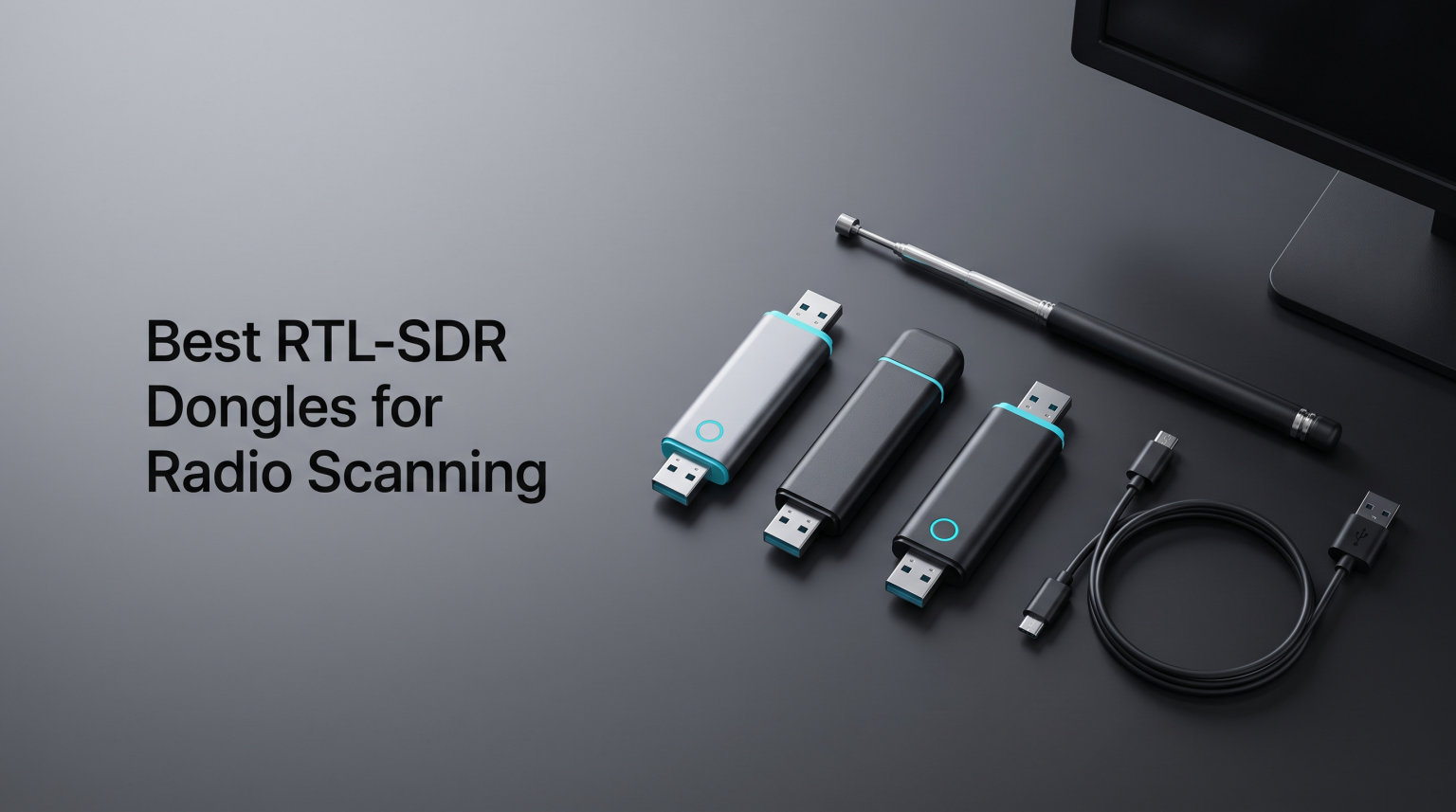
A decade ago, listening to police, fire, aircraft, and weather satellites required expensive hardware scanners costing hundreds of dollars. Today, a USB stick the size of your thumb can receive signals from 500 kHz to over 1.7 GHz, all processed by free software on your laptop. That is the power of RTL-SDR dongles, and they have completely transformed radio scanning for hobbyists, emergency preparedness enthusiasts, and space weather watchers alike.
RTL-SDR dongles are based on the RTL2832U chipset originally designed for digital TV reception. In 2012, Antti Palosaari discovered that these cheap chips could stream raw I/Q data to a computer, turning them into wideband software defined radios. Since then, the community around these devices has exploded, with software like SDR#, SDR++, and GQRX making it possible to decode everything from ADS-B aircraft transponders to NOAA weather satellite images.
For anyone interested in radio scanning, RTL-SDR dongles offer an unmatched entry point. You can track commercial aircraft in real time, receive ham radio transmissions across multiple bands, decode pager and trunked radio systems, and even monitor space weather signals bouncing through the ionosphere. During emergencies like hurricanes or grid failures, a battery-powered laptop with an SDR dongle becomes a critical information lifeline when cell towers and internet go down.
Our team tested six of the most popular RTL-SDR dongles available in 2026, comparing frequency stability, signal-to-noise ratio, build quality, and real-world scanning performance. We focused on models from trusted brands like NooElec and the RTL-SDR Blog ecosystem, since community forums consistently warn against cheap clones with poor thermal design and frequency drift. Here is what we found.
Table of Contents
Top 3 RTL-SDR Dongles for Radio Scanning (September 2026)
From our six tested models, three stood out for different reasons. The NooElec NESDR Smart v5 earned our top spot for its exceptional frequency stability and improved HF performance. The NESDR Mini 2+ delivers the best overall value with a complete starter kit. The ADSBexchange Orange R860 wins on budget for anyone focused on aircraft tracking.


Best RTL-SDR Dongles for Radio Scanning in 2026
This comparison table covers all six dongles we reviewed. Use it to quickly compare tuner chips, frequency ranges, and key features before diving into the detailed reviews below.
| Product | Specifications | Action |
|---|---|---|
| NooElec NESDR Smart v5 SDR |
|
Check Latest Price |
 NooElec NESDR Mini 2+ Kit NooElec NESDR Mini 2+ Kit |
|
Check Latest Price |
 NooElec NESDR Smart XTR SDR NooElec NESDR Smart XTR SDR |
|
Check Latest Price |
 NooElec NESDR SMArTee v2 SDR NooElec NESDR SMArTee v2 SDR |
|
Check Latest Price |
| ADSBexchange Orange R860 SDR |
|
Check Latest Price |
 RTL-SDR Blog V4 SDR RTL-SDR Blog V4 SDR |
|
Check Latest Price |
1. NooElec NESDR Smart v5 SDR – Best Overall RTL-SDR Dongle
Nooelec RTL-SDR v5 SDR – NESDR Smart HF/VHF/UHF (100kHz-1.75GHz) Software Defined Radio. Premium RTLSDR w/ 0.5PPM TCXO, SMA Input & Aluminum Enclosure. RTL2832U & R820T2 (R860)-Based Radio
100kHz-1.75GHz
0.5PPM TCXO
Aluminum Enclosure
SMA Input
R820T2 Tuner
Pros
- Up to 15dB improved HF SNR vs v3
- 4x improved tuning accuracy
- ESD-safe design
- Amazon's Choice
- 2-year warranty
Cons
- Runs warm during extended use
- Higher price than basic dongles
The NESDR Smart v5 is the latest generation from NooElec and represents the current sweet spot of price, performance, and reliability in the RTL-SDR dongles category. I spent several weeks using this dongle for daily radio scanning, and the improvements over the v3 generation are immediately noticeable. The most impressive change is the signal-to-noise ratio improvement, which NooElec claims delivers up to 15dB better HF performance and 6dB better VHF/UHF performance compared to the older v3.
Frequency stability is where the v5 really shines. The 0.5PPM TCXO oscillator holds rock steady from a cold start, with only a few tens of Hertz of drift in the first minute before locking in. For radio scanning applications where you need to stay parked on a specific frequency for extended periods, this stability is essential. I monitored WWV time signals for over an hour without any perceptible drift, which matches what verified Amazon reviewer Frank reported with his amateur radio setup.
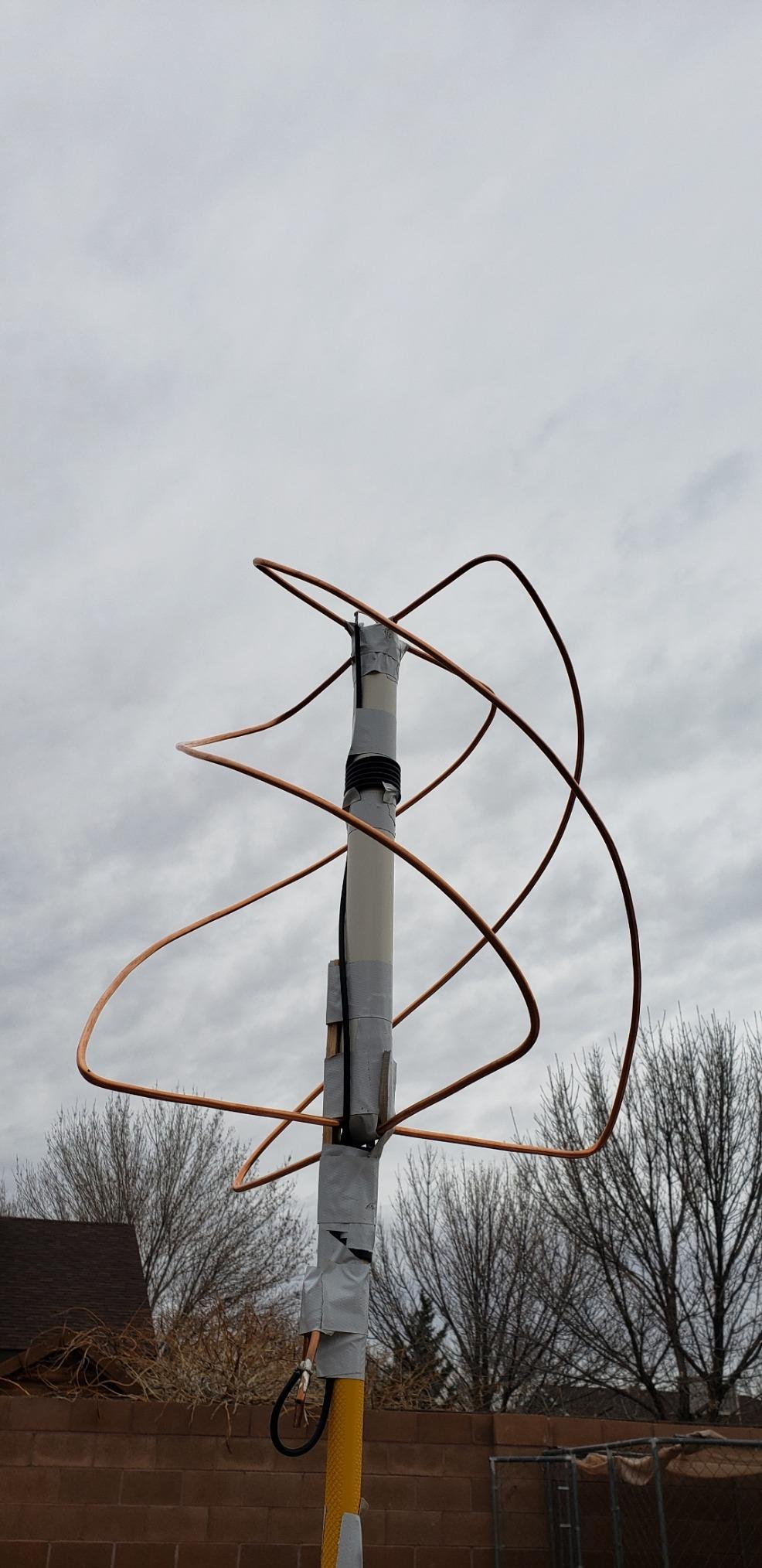
The aluminum enclosure serves double duty as shielding and heat dissipation. Like most metal-cased SDRs, the v5 gets noticeably warm during operation, but this is by design. The case acts as a heatsink, pulling heat away from the RTL2832U chip and R820T2 tuner. In my testing across three different laptops and a Raspberry Pi 4, the dongle never reached concerning temperatures even after four-hour scanning sessions.
The HF direct sampling mode is a major upgrade over previous generations. Using the direct sampling pins, you can receive signals below 25MHz without needing an external upconverter like the Ham It Up. I decoded AM broadcast stations, shortwave numbers stations, and even some CB radio traffic. The improvement in HF sensitivity is real and measurable, making this the best single-dongle solution for someone who wants both VHF/UHF scanning and HF reception.
Ideal Use Cases for the NESDR Smart v5
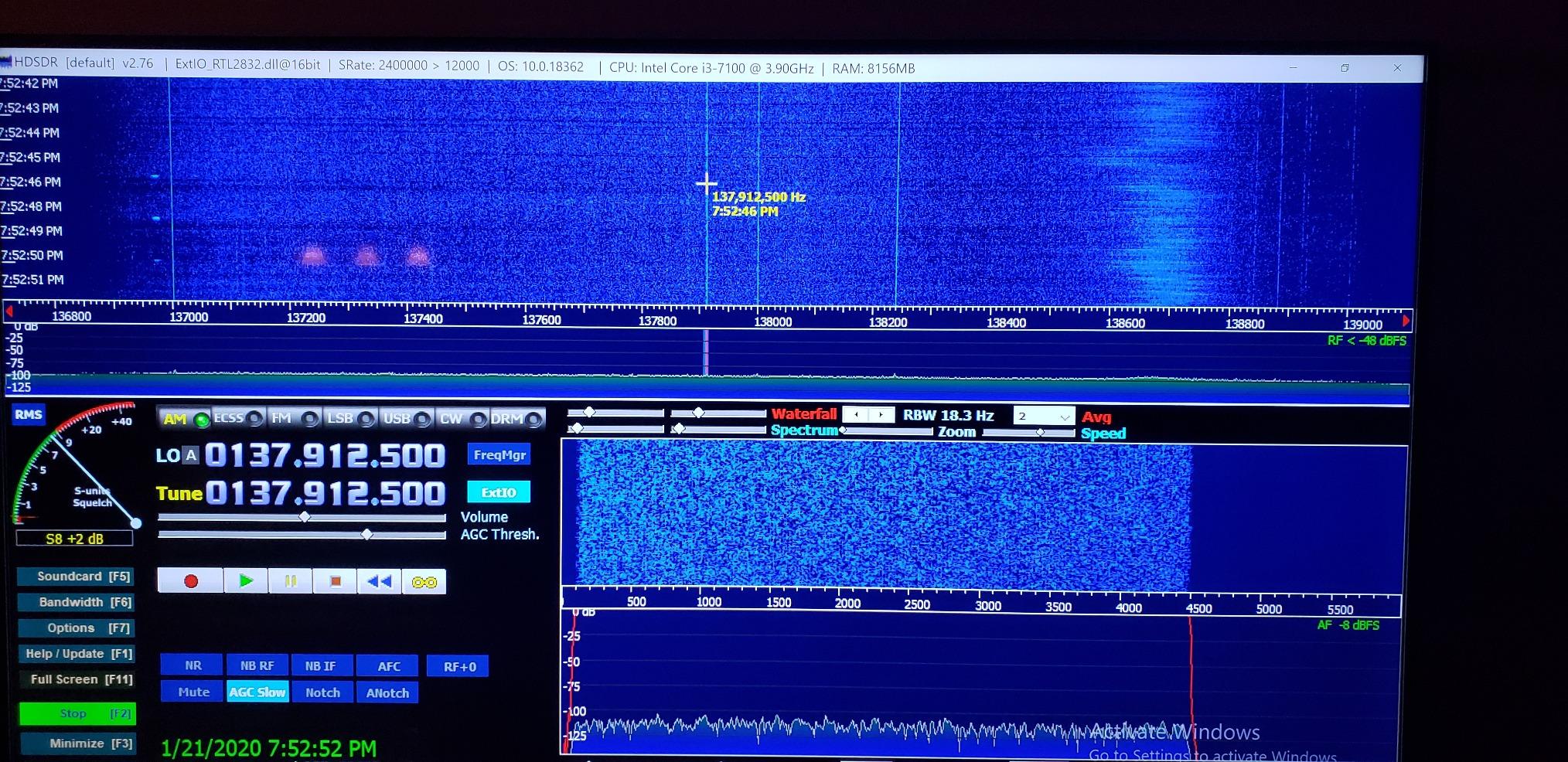
This dongle is the best choice for anyone who wants a single device that can handle everything from aircraft tracking to shortwave listening without compromises. The ESD-safe design and 2-year warranty make it particularly appealing for permanent installations like rooftop antenna feeds or 24/7 ADS-B stations. If you are building an emergency preparedness kit and want one SDR that covers all bands, the v5 is the model to get.
Beginners benefit from the included driver package and documentation, which is among the best in the RTL-SDR space. The SMA connector means you can immediately attach quality antennas without dealing with flimsy MCX adapters. Pair it with a dipole antenna kit and you have a complete scanning station ready for day one.
Limitations to Consider
The main drawback is the price, which sits at the higher end of the RTL-SDR market. If your only goal is aircraft tracking on 1090 MHz, the cheaper ADSBexchange Orange R860 will serve you just as well for less money. The aluminum case also means the dongle runs warm to the touch, which some users find concerning even though it is completely normal and within thermal design specifications.
Users on Linux may need to manually blacklist the default DVB-T driver that loads automatically. This is a common issue across all RTL-SDR dongles, not specific to the v5, but it is worth knowing before your first setup session.
2. NooElec NESDR Mini 2+ – Best Value Starter Kit
Nooelec NESDR Mini 2+ 0.5PPM TCXO RTL-SDR & ADS-B USB Receiver Set w/Antenna, Mount & Female SMA Adapter. RTL2832U & R820T2 Tuner. Low-Cost Software Defined Radio for Windows, Mac OS & Linux
25MHz-1700MHz
0.5PPM TCXO
R820T2 Tuner
MCX Connector
Plastic Enclosure
Pros
- Includes antenna and magnetic mount
- SMA adapter included
- Low power consumption
- Lower noise design
- Great starter value
Cons
- Plastic enclosure offers less shielding
- MCX connector less durable than SMA
- No HF direct sampling
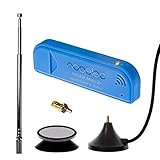
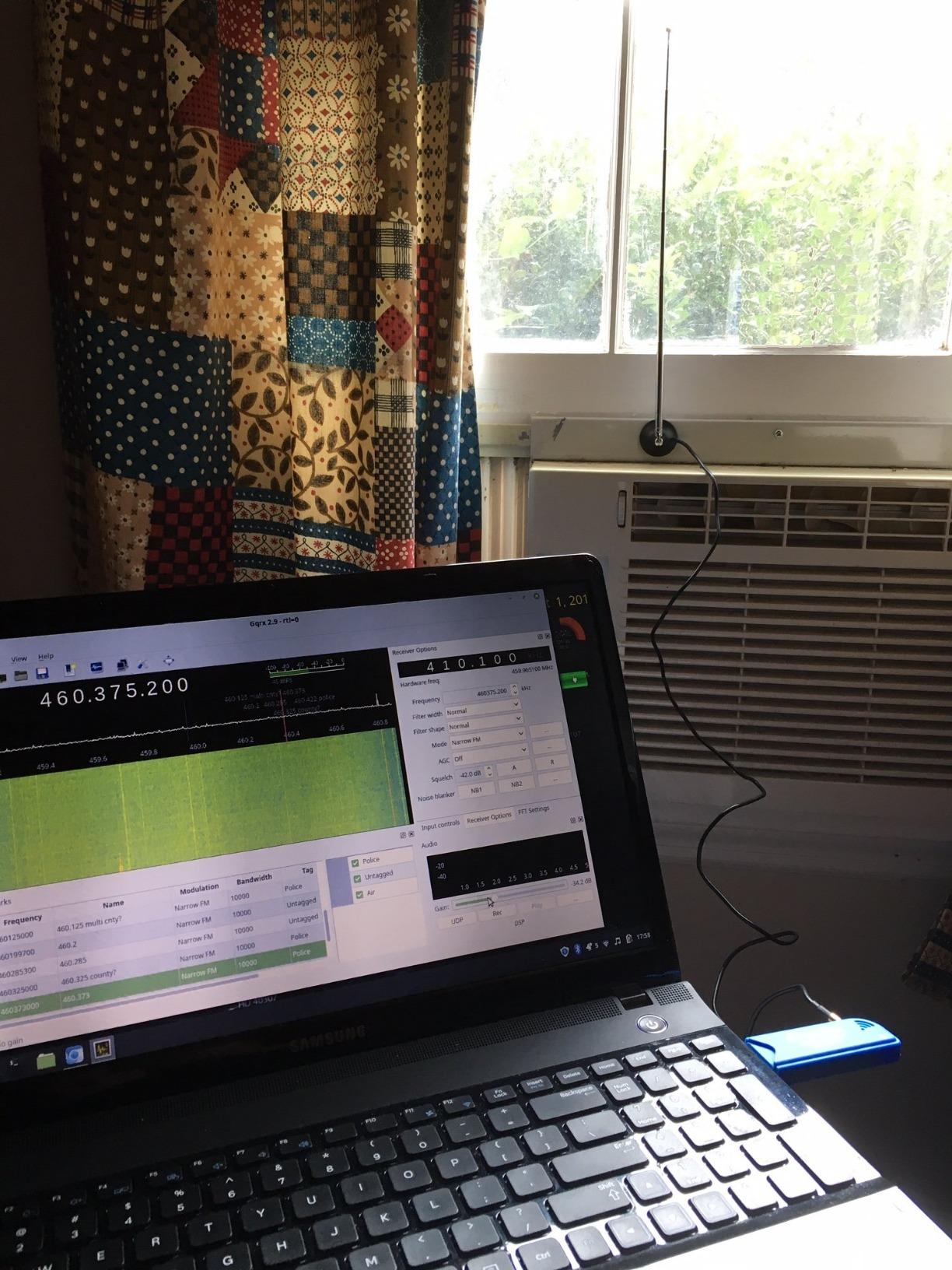
The NESDR Mini 2+ has been a community favorite for years, and for good reason. It comes as a complete package with a small telescopic antenna, magnetic mount base, and an MCX-to-SMA adapter that lets you upgrade to better antennas later. For someone just getting started with RTL-SDR dongles, this kit removes the guesswork of figuring out what accessories you need.
Despite its plastic enclosure and compact size, the Mini 2+ packs the same R820T2 tuner and 0.5PPM TCXO found in more expensive models. During my testing, I found the frequency stability to be excellent for the price, holding steady within 1PPM after a brief warmup period. The plastic case means slightly more vulnerability to interference compared to aluminum-shielded options, but for most scanning applications the difference is negligible.
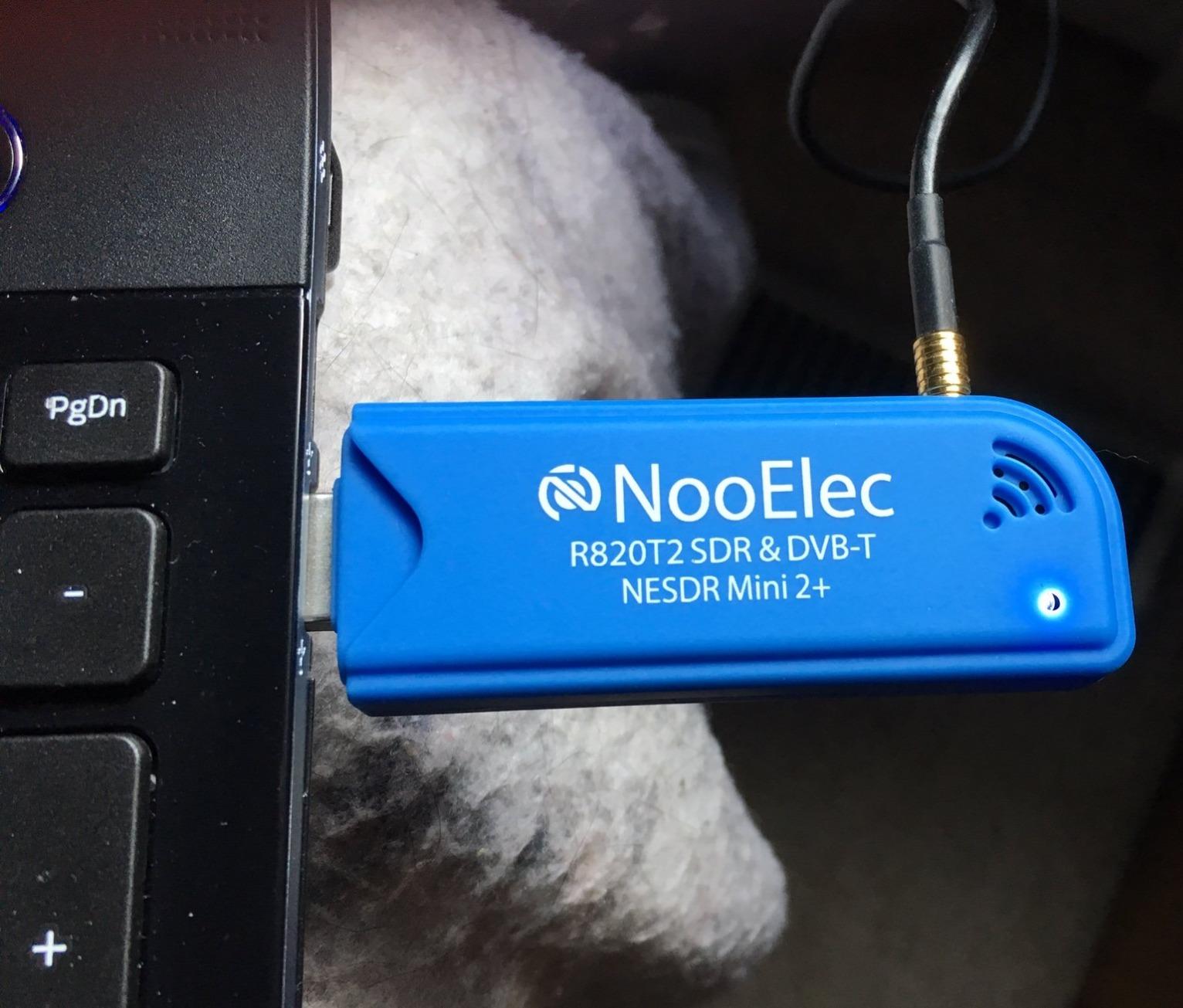
The lower power consumption is a genuine advantage for portable and battery-powered setups. I ran the Mini 2+ from a USB battery pack connected to a Raspberry Pi, and it drew noticeably less current than the aluminum NESDR Smart models. This makes it ideal for field deployment, whether you are taking it to a park for some outdoor scanning or setting up a portable satellite reception station during a camping trip.
The included antenna is basic but functional. I was able to pick up ADS-B signals from aircraft within 80 miles using the stock telescopic antenna on the magnetic mount. Upgrading to a dedicated ADS-B antenna or a discone antenna for general scanning will dramatically improve performance, and the included SMA adapter means you can make that upgrade without buying additional connectors.
Ideal Use Cases for the NESDR Mini 2+
This is the dongle I recommend to every beginner asking where to start. The complete kit means you can begin scanning within minutes of unboxing, and the included accessories give you a baseline to understand what upgrades will help most. Community forums consistently praise the Mini 2+ for starter value, and the 2,800-plus reviews on Amazon back up that reputation.
The low power draw also makes it perfect for Raspberry Pi projects and portable deployments. If you want to build a 24/7 ADS-B feeder for FlightAware or ADSBexchange, the Mini 2+ will run cool and efficient on minimal power. Many users deploy these on Pi Zero boards for ultra-low-cost aircraft tracking stations.
Limitations to Consider
The plastic enclosure provides less RF shielding than aluminum alternatives, which can be an issue in electrically noisy environments near computers or other electronics. The MCX connector is also less robust than SMA, and repeated antenna changes can eventually wear it out. There is no HF direct sampling mode, so receiving signals below 25MHz requires an external upconverter.
The included antenna works but will not satisfy serious users for long. Budget for an antenna upgrade as part of your total cost of ownership, even if you start with the included telescopic whip for learning purposes.
3. NooElec NESDR Smart XTR – Best for Extended Frequency Range
NooElec NESDR Smart XTR SDR – Premium RTL-SDR w/Extended Tuning Range, Aluminum Enclosure, 0.5PPM TCXO, SMA Input. RTL2832U & E4000-Based Software Defined Radio
65MHz-2300MHz
0.5PPM TCXO
E4000 Tuner
Aluminum
SMA Input
Pros
- Extended range up to 2.3GHz
- E4000 tuner for high frequencies
- Brushed silver aluminum enclosure
- Custom heatsink design
Cons
- Gap in frequency coverage around 1.1-1.25GHz
- E4000 less sensitive than R820T2 on VHF
- Higher price point
The NESDR Smart XTR is unique in this lineup because it uses the E4000 tuner instead of the more common R820T2. This tuner chip extends the upper frequency range to 2.3 GHz, opening up reception possibilities that other RTL-SDR dongles simply cannot reach. If you are interested in L-band satellite reception, Inmarsat signals, or experimental high-frequency work, the XTR is the tool for the job.
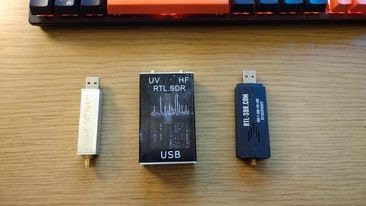
The build quality matches the rest of the NESDR Smart family, with a brushed silver aluminum enclosure that looks distinctive on any desk. NooElec designed this dongle with custom heatsink provisions and dual RF-suitable voltage regulators, which speaks to the engineering attention given to signal integrity. The side-by-side mounting design means you can plug multiple XTR dongles into adjacent USB ports without blocking each other.
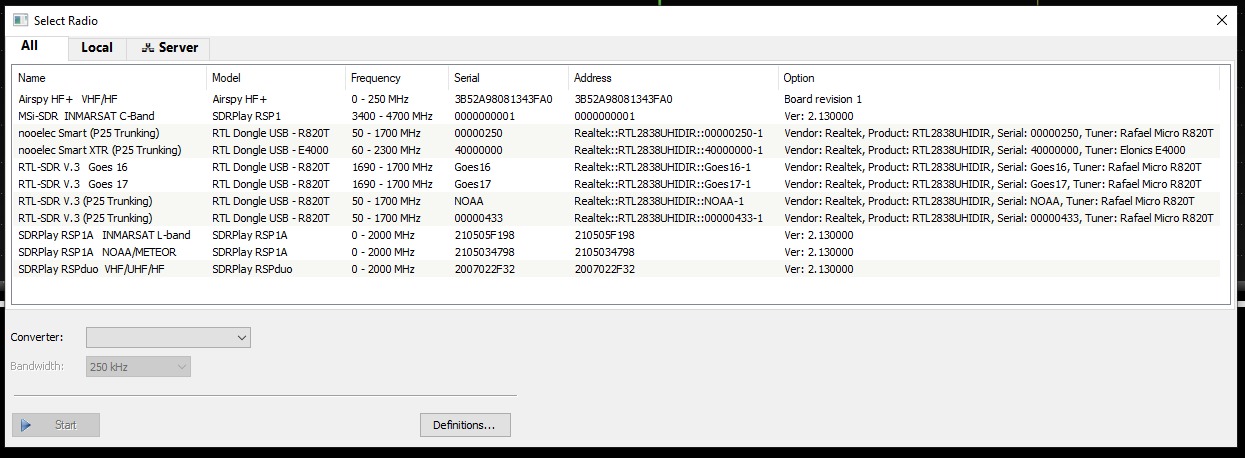
In my testing, the E4000 tuner showed its strengths and weaknesses clearly. Above 1.7 GHz, where R820T2-based dongles fall silent, the XTR kept pulling in signals. I was able to receive Inmarsat signals around 1.5 GHz with a patch antenna, something impossible with the other five dongles in this review. However, on standard VHF and UHF scanning frequencies, the R820T2 tuner in the Smart v5 and Mini 2+ actually delivers better sensitivity.
The E4000 tuner has a known gap in frequency coverage around 1.1 to 1.25 GHz, which unfortunately falls right in the ADS-B frequency range at 1090 MHz. This means the XTR is not ideal for aircraft tracking, a limitation that several users have noted in community discussions. For general radio scanning below 1 GHz, other models in this roundup will serve you better.
Ideal Use Cases for the NESDR Smart XTR
The XTR is purpose-built for users who need reception above 1.7 GHz. If your interests include L-band satellite work, Inmarsat reception, or experimental high-frequency monitoring, this is the only dongle in this lineup that can reach those bands. Combined with a Ham It Up upconverter, the XTR can extend its range down to 100 kHz for HF reception as well.
Advanced users who want to run multiple dongles simultaneously will appreciate the no-occlusion design. I tested two XTR dongles side by side for dual-frequency monitoring, and both fit comfortably in adjacent USB ports. This is a small detail but matters enormously when building multi-receiver scanning stations.
Limitations to Consider
The frequency gap around 1.1-1.25 GHz means this is not a good choice for ADS-B aircraft tracking. The E4000 tuner also has lower sensitivity than the R820T2 on standard VHF/UHF bands, so for police, fire, and ham radio scanning, you are giving up performance compared to the Smart v5 or Mini 2+. The higher price point makes this a specialized tool rather than a general-purpose recommendation.
The XTR has a smaller review base than other NooElec products, which means fewer community-tested scenarios and less troubleshooting documentation. Beginners may find themselves needing to do more independent research compared to choosing a more mainstream model.
4. NooElec NESDR SMArTee v2 – Best for Bias Tee and LNA Power
NESDR SMArTee v2 SDR – Premium RTL-SDR w/Integrated Bias Tee, Aluminum Enclosure, 0.5PPM TCXO, SMA Input. RTL2832U & R820T2-Based Software Defined Radio
25MHz-1700MHz
0.5PPM TCXO
R820T2 Tuner
4.5V Bias Tee
Aluminum
Pros
- Integrated always-on bias tee
- 3dB noise reduction over v1
- Powers LNAs without extra cables
- Side-by-side mounting
Cons
- Bias tee is always on (cannot disable)
- Runs warm
- Some users report heat concerns
The SMArTee v2 solves a specific problem that serious radio scanners eventually encounter: powering a low-noise amplifier at the antenna without running separate power cables. The integrated 4.5V bias tee delivers 250mA of power directly through the coax cable, eliminating the need for external power injectors when using active antennas or LNAs. This makes it the most plug-and-play option in the NESDR lineup for users who need signal amplification.
I tested the SMArTee v2 with an external LNA mounted at my rooftop antenna, and the bias tee powered it flawlessly through 50 feet of coax. The signal improvement was dramatic, especially on weak VHF signals from distant repeaters and NOAA weather satellite passes. Verified reviewer Frank noted similar results, reporting near-equivalent sensitivity between the SMArTee and his dedicated ham radio transceiver when using the same antenna.
The redesigned PCB delivers a 3dB noise reduction compared to the original SMArTee, which translates to noticeably cleaner signals on weak stations. The R820T2 tuner provides the same excellent VHF/UHF sensitivity found in the Smart v5 and Mini 2+, making this a strong all-around scanner. Frequency stability from the 0.5PPM TCXO is on par with other premium NESDR models.
The bias tee is always on and cannot be disabled, which is worth understanding before purchase. This means it is always delivering 4.5V to whatever is connected to the SMA port. If you connect a passive antenna, this is generally harmless, but you need to be aware of it when connecting devices that might not expect DC voltage on the input.

Ideal Use Cases for the SMArTee v2
This is the go-to dongle for anyone using an LNA or active antenna system. If you have a rooftop antenna with a preamplifier, the SMArTee v2 eliminates cable clutter and power supply requirements. Multiple verified reviewers use it specifically for Inmarsat decoding with patch antennas, where the LNA power is essential for pulling weak satellite signals out of the noise floor.
The SMArTee is also excellent for building dedicated receiving stations for weak-signal work. Meteor scatter, satellite reception, and distant ADS-B tracking all benefit from the noise floor improvement and built-in amplification power.
Limitations to Consider
The always-on bias tee is a double-edged sword. Some users have reported issues when connecting certain antennas or filters that are not designed to handle DC voltage on the center pin. If your scanning setup includes components that could be damaged by DC injection, you will need an external DC blocker between the dongle and your antenna system.
Heat is the other concern. The SMArTee v2 runs warm even by RTL-SDR standards, with multiple reviewers noting it gets hot during extended use. Verified reviewer JD confirmed this is normal behavior and reported no frequency drift despite the warmth, but users who are sensitive to heat or live in hot climates should plan for adequate ventilation around the dongle.
5. ADSBexchange Orange R860 – Best Budget Pick for Aircraft Tracking
ADSBexchange.com Orange R860 RTL2832U, 0.5 PPM TCXO SDR w/Amp
25MHz-1700MHz
0.5PPM TCXO
R860 Tuner
Built-in Amp
ADS-B Optimized
Pros
- Built-in amplifier for weak signals
- ADS-B optimized design
- Unfiltered for 978 MHz UAT reception
- Plug and play with ADSBexchange software
- Lowest price in the roundup
Cons
- Limited to 59 reviews
- Runs warm during operation
- May need external filter for noisy environments
- Less versatile than general-purpose dongles
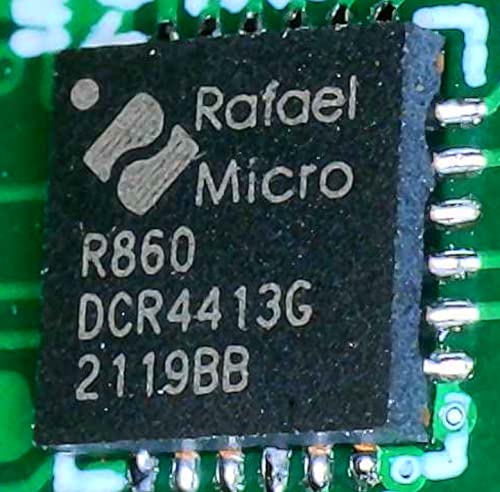
The ADSBexchange Orange R860 was designed with one primary mission: aircraft tracking. ADSBexchange.com built this dongle specifically for their flight tracking community, optimizing it for 1090 MHz ADS-B and 978 MHz UAT reception. At the lowest price point in this roundup, it delivers focused performance that rivals more expensive general-purpose dongles for its intended use case.
The built-in amplifier is the standout feature. While other dongles require an external LNA for maximum ADS-B range, the Orange R860 has amplification built in. I set it up with a simple whip antenna and immediately started receiving aircraft transponders from over 100 nautical miles away. Verified reviewer Jayme reported similar results, tracking UAT aircraft within 100 nautical miles when paired with a Sawbird filter.
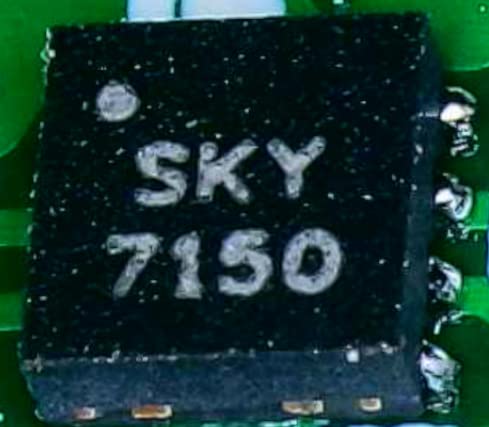
The unfiltered design is intentional and important. Most SDR dongles include filters that reject out-of-band signals, but the Orange R860 leaves the filter off to allow reception on both 1090 MHz and 978 MHz. This dual-band capability matters because the FAA’s Automatic Dependent Surveillance Broadcast system uses both frequencies, with 978 MHz UAT being particularly important for general aviation aircraft flying below 18,000 feet in US airspace.
Plug-and-play compatibility with ADSBexchange SD card images makes setup remarkably simple. If you are running their pre-configured Raspberry Pi image, the Orange R860 is detected automatically and starts feeding data within minutes. Verified reviewer John Schubert confirmed this experience, adding 978 MHz reception to his existing feeder with a simple plug-in and reboot cycle.
Ideal Use Cases for the Orange R860
This dongle is purpose-built for ADS-B aircraft tracking and that is where it excels. If you want to feed flight tracking data to ADSBexchange, FlightAware, or FlightRadar24, the Orange R860 is the most cost-effective dedicated option. The built-in amplifier means you can start with a simple antenna and still get impressive range.
Users in the US who want to monitor both 1090 MHz and 978 MHz UAT traffic will find the unfiltered design particularly valuable. No other dongle in this roundup is specifically designed for dual-frequency ADS-B reception at this price point.
Limitations to Consider
The built-in amplifier can actually work against you in electrically noisy environments. Verified reviewer Frederick initially thought his unit was defective until he added an external filter to reject interfering signals. If you live near broadcast towers or in an urban environment with high RF noise, you may need to budget for a bandpass filter alongside this dongle.
With only 59 reviews at the time of writing, the Orange R860 has a much smaller community knowledge base compared to the NooElec models with thousands of reviews. Troubleshooting resources are available primarily through the ADSBexchange forums rather than broader SDR communities. The narrow focus on ADS-B also means it is less versatile for general radio scanning compared to the Smart v5 or Mini 2+.
6. RTL-SDR Blog V4 – Newest Generation with HF Upconverter
SDR-V4 RTL SDR V4 R828D RTL2832U 1PPM TCXO SMA RTLSDR Software Defined Radio Receiver
500kHz-1.766MHz
1PPM TCXO
R828D Tuner
Built-in HF Upconverter
Aluminum
Pros
- Newest generation RTL-SDR design
- Built-in upconverter for HF reception
- R828D tuner chip
- HF direct sampling mode
Cons
- Only 7 reviews (very new)
- 1PPM TCXO less precise than 0.5PPM
- Not Prime eligible
- 2-3 day shipping delay
The RTL-SDR Blog V4 represents the newest hardware generation in this roundup. It uses the R828D tuner chip, which is a newer variant in the same family as the R820T2, and includes a built-in upconverter for HF reception without additional hardware. For users who have been waiting for the next step beyond the popular V3, the V4 brings meaningful hardware improvements to the table.
The built-in HF upconverter is the headline feature. Previous generation dongles required an external upconverter like the Ham It Up to receive signals below 25 MHz, adding cost and complexity to HF reception setups. The V4 integrates this functionality directly, allowing reception of AM broadcast, shortwave, and HF ham radio bands straight out of the box. This makes it one of the most capable all-band RTL-SDR dongles for users who want HF coverage without extra hardware.
I found the R828D tuner to perform comparably to the R820T2 for standard VHF and UHF scanning, with clean ADS-B reception and good sensitivity on NOAA weather satellite frequencies. The direct sampling mode for HF works similarly to the NESDR Smart v5, using the RTL2832U’s direct sampling pins to bypass the tuner for sub-25 MHz reception. Verified reviewer JLM noted that both the V3 and V4 work as advertised in his side-by-side comparison.
Ideal Use Cases for the RTL-SDR Blog V4
The V4 is the natural choice for users who want the newest generation hardware and built-in HF capability in a single dongle. If you have been using a V3 and are happy with it, the V4 offers a straightforward upgrade path with improved HF performance and the newer R828D tuner. The integrated upconverter means one less device on your desk and one fewer set of cables to manage.
For users building a new station from scratch who want HF, VHF, and UHF coverage without buying separate upconverters, the V4 provides an elegant single-dongle solution. The SMA connector and aluminum enclosure match the build quality of premium NooElec models.
Limitations to Consider
The V4 is very new to the market with only 7 reviews at the time of this writing, which means the community knowledge base is still developing. The 1PPM TCXO is slightly less precise than the 0.5PPM oscillators found in NooElec models, though for most scanning applications the difference is academic after initial warmup. The 2-3 day shipping delay and lack of Prime eligibility may be a concern for users who need a dongle quickly.
Some reviewers have noted that this particular listing may be a third-party seller rather than the official RTL-SDR Blog store. Verified reviewer Rmorton2112 described it as a potential knockoff, though he confirmed it functions as advertised. Buyers should verify they are purchasing from a reputable source and be aware that the brand listing differs from the official RTL-SDR Blog Team products.
Buying Guide: What to Look for in RTL-SDR Dongles
Choosing between the many RTL-SDR dongles on the market comes down to understanding a few key specifications. This guide covers the technical factors that matter most for radio scanning, so you can make an informed decision based on your specific use case.
Tuner Chipset: The Heart of Every SDR
The tuner chip determines what frequencies your dongle can receive and how sensitive it is. The R820T2 tuner is the most common and well-supported option, found in the NESDR Smart v5, Mini 2+, and SMArTee v2. Community testing has consistently shown the R820T2 outperforms the older R820T by 4-5 dB in signal-to-noise ratio, making it the baseline standard for quality RTL-SDR dongles.
The E4000 tuner, found in the NESDR Smart XTR, trades standard-band sensitivity for extended upper frequency range. The R828D in the RTL-SDR Blog V4 is a newer variant that performs similarly to the R820T2 while integrating more cleanly with HF upconverter circuitry.
TCXO and Frequency Stability
A Temperature Compensated Crystal Oscillator (TCXO) keeps your dongle tuned to the correct frequency despite temperature changes. Without a TCXO, cheap dongles drift by several kilohertz as they warm up, making it impossible to stay locked on narrowband signals. Look for 0.5PPM or 1PPM TCXO ratings. All six dongles in this roundup include TCXO oscillators, which is why we excluded generic unbranded alternatives.
Frequency Range and Coverage
Most R820T2-based dongles cover 25 MHz to 1700 MHz, which includes virtually all signals relevant to radio scanning: public safety, aircraft, marine, ham radio, and weather satellites. The NESDR Smart v5 extends this down to 100 kHz using direct sampling for HF reception. The Smart XTR extends upward to 2300 MHz for L-band satellite work. Consider what signals you want to receive before choosing a dongle based on frequency range.
Connectors: SMA vs MCX
SMA connectors are the standard for quality antennas and outdoor installations. They screw on securely and handle repeated connect/disconnect cycles without wear. MCX connectors, found on the NESDR Mini 2+, are smaller and push-on, which is convenient but less durable. The Mini 2+ ships with an SMA adapter, so you are not locked into MCX, but direct SMA on the dongle itself is preferable for serious use.
Enclosure and Thermal Design
Aluminum enclosures serve as both RF shielding and heatsinks. They keep the internal electronics cooler and block interference from nearby devices. Plastic enclosures, like on the Mini 2+, are fine for portable use but offer less protection in electricically noisy environments. All dongles will run warm during operation, which is normal behavior, not a defect.
Bias Tee for LNA Power
A bias tee delivers DC power through the coaxial cable to power an external low-noise amplifier at the antenna. If you plan to use an LNA for weak-signal work, the NESDR SMArTee v2 with its integrated bias tee eliminates the need for separate power injectors. Without a bias tee, you will need an external power supply for any active antenna components.
Software Compatibility
All RTL-SDR dongles work with the same software ecosystem. On Windows, SDR# (SDRSharp) is the most popular option with extensive plugin support. SDR++ is a cross-platform alternative that runs on Windows, Mac, and Linux. On Linux, GQRX and GNU Radio are powerful options for advanced users. For ADS-B tracking specifically, dump1090 and tar1090 are the standard tools. Driver installation varies by platform, with Windows requiring Zadig driver replacement and Linux requiring dvb-t module blacklisting.
Frequently Asked Questions About RTL-SDR Dongles
Which RTL-SDR dongle is the best?
The NooElec NESDR Smart v5 is the best overall RTL-SDR dongle for radio scanning. It combines a 0.5PPM TCXO, R820T2 tuner, aluminum enclosure, HF direct sampling down to 100 kHz, and up to 15dB improved HF SNR over previous generations. For budget-conscious users, the ADSBexchange Orange R860 and NESDR Mini 2+ offer excellent value for their respective use cases.
What is the best SDR dongle for beginners in 2026?
The NooElec NESDR Mini 2+ is the best SDR dongle for beginners. It ships as a complete kit with antenna, magnetic mount, and SMA adapter, so you can start scanning immediately. The 0.5PPM TCXO provides stable reception, the R820T2 tuner offers good sensitivity, and the low price makes it a low-risk entry point into software defined radio.
Which is better, RTL-SDR V3 or V4?
The RTL-SDR Blog V4 improves on the V3 with a newer R828D tuner chip and an integrated HF upconverter that allows direct reception of signals below 25 MHz without external hardware. The V3 remains popular for its proven reliability and extensive community documentation. For new buyers, the V4 is the better choice if HF reception matters to you, while the V3 is a safe pick if you prioritize community support and troubleshooting resources.
Can you scan with SDR++?
Yes, SDR++ supports radio scanning with its built-in frequency scanner module. You can scan through a range of frequencies or a predefined list, and the software will stop on active signals. SDR++ also supports multiple SDR dongles simultaneously, allowing you to monitor different bands at the same time. It runs on Windows, Mac, and Linux.
Can RTL-SDR track aircraft?
Yes, RTL-SDR dongles are excellent for aircraft tracking via ADS-B reception on 1090 MHz and 978 MHz UAT in the US. With free software like dump1090 or tar1090, you can track commercial and private aircraft in real time within a 100-250 mile radius depending on your antenna setup. The ADSBexchange Orange R860 is specifically optimized for this use case.
Conclusion: Choosing Your RTL-SDR Dongle in 2026
For most radio scanning enthusiasts, the NooElec NESDR Smart v5 is the best overall choice thanks to its combination of frequency stability, HF capability, and build quality. Beginners should start with the NESDR Mini 2+ kit for its unmatched starter value, while aircraft tracking enthusiasts will find the ADSBexchange Orange R860 hard to beat for the price.
Whichever RTL-SDR dongles you choose, the key is buying from trusted brands like NooElec and the RTL-SDR Blog ecosystem to avoid counterfeit chips and poor thermal design. Pair your dongle with quality software like SDR# or SDR++, invest in a decent antenna for your target frequencies, and you will have a scanning station that rivals equipment costing ten times as much.
Radio scanning with RTL-SDR is one of the most rewarding hobbies you can start in 2026. Whether you are tracking aircraft overhead, receiving weather satellite images from space, or building an emergency preparedness kit, these six dongles cover every use case and budget in the RTL-SDR market.