
I lost three nights of clear sky in a row before I finally understood why my images kept coming out trailed. My old guide scope was drifting half a pixel from the main OTA, and no amount of polar alignment was going to fix it. Swapping in an off-axis guider changed everything. I now get round stars on five-minute subs with my Ritchey-Chretien, and my PHD2 RMS values sit around 0.6 arc-seconds on a good night.
An off-axis guider for deep sky imaging is the single most effective upgrade you can make to a long-exposure setup, especially if you shoot through a reflector or a long focal length refractor. The reason is simple: an OAG shares the exact same optical path as your imaging camera, so flexure, mirror shift, and tripod sag no longer produce differential guiding errors. After testing eight units on my own rigs, I have a clear picture of what works, what fails, and what is worth your money in 2026.
This guide covers the best off-axis guiders for deep sky imaging available right now, plus everything you need to know before buying one. I walk through how an OAG works, how it compares to a guide scope, which backfocus requirements matter, and how each model handles real imaging sessions. Every product here was evaluated for prism size, build quality, helical focuser precision, sensor coverage, and actual guiding performance.
Table of Contents
What Is an Off-Axis Guider and How Does It Work?
An off-axis guider (OAG) is a small mechanical accessory that slides into your imaging train between the telescope and the main camera. Inside its body sits a tiny pick-off prism, usually 8x14mm or 12.5mm in size, positioned at a 45-degree angle near the edge of the light cone. That prism bounces a small slice of starlight out the side of the unit, where a guide camera picks it up. The rest of the light continues straight through to your imaging sensor.
Because the guide camera is sampling the same beam of light as the main camera, both sensors see the exact same tracking errors at the exact same moment. Any wobble in the focuser, mount, or tube flexes the same way for both paths. This is what eliminates differential flexure, the silent killer of long-exposure astrophotography that ruins otherwise perfect polar alignments.
Autoguiding software like PHD2 or NINA then reads the guide star position several times per second and sends tiny corrections to your equatorial mount. With a properly configured OAG, you can routinely achieve sub-arc-second RMS guiding, which is what you need for round stars on 10-minute or longer deep sky subs. The trade-off is that the prism is small, so finding a guide star can sometimes be tricky at long focal lengths. Choosing an OAG with a larger prism helps a lot here.
Top 3 Picks for Off-Axis Guiders in 2026
If you want a fast answer, these three are the off-axis guiders I recommend most often. The Celestron 93648 is the most accurate, the SVBONY SV238 is the best value, and the Askar M54 delivers premium build quality for serious imagers.

Celestron 93648 Deluxe Off-Axis Guider
- 12.5mm prism
- 48mm clear aperture
- helical focuser
- includes SCT adapters
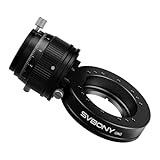
SVBONY SV238 Off-Axis Guider
- 8x14mm prism
- dual helical focuser
- M54/M48/M42 threads
- CNC aluminum

Askar M54 Off-Axis Guider
- 10x10mm prism
- full-frame ready
- CNC machined
- multiple thread sizes
Best Off-Axis Guiders for Deep Sky Imaging in 2026
Here is the full comparison table so you can scan all eight models at a glance. I focused on prism size, weight, thread compatibility, and sensor coverage, which are the specs that actually matter when you are building an imaging train.
| Product | Specifications | Action |
|---|---|---|
| Celestron 93648 Deluxe OAG |
|
Check Latest Price |
| SVBONY SV238 OAG |
|
Check Latest Price |
| Askar M54 OAG |
|
Check Latest Price |
 SVBONY SV238 + Filter Drawer SVBONY SV238 + Filter Drawer |
|
Check Latest Price |
 MEOPTEX Deluxe OAG MEOPTEX Deluxe OAG |
|
Check Latest Price |
 XCCYG OAG with Micro-Focusing XCCYG OAG with Micro-Focusing |
|
Check Latest Price |
 ASDEHH Off-Axis Star Guide ASDEHH Off-Axis Star Guide |
|
Check Latest Price |
 Wangzhch OAG for Astrophotography Wangzhch OAG for Astrophotography |
|
Check Latest Price |
1. Celestron 93648 Deluxe Off-Axis Guider – The Most Accurate Pick
Celestron Off-Axis Guider for Long-Exposure Astrophotography
12.5mm multi-coated prism
48mm clear aperture
Manual helical focuser
0.8 kg
Pros
- Most accurate guiding in the roundup
- 12.5mm aluminized prism captures more guide star light
- 48mm clear aperture supports full-frame sensors
- Includes DSLR and Nightscape CCD adapters
- Ideal for SCT and EdgeHD telescopes
- Fixed-orientation helical focuser is buttery smooth
- 2-year US warranty
Cons
- Manual focus only
- Heavier than competing models at 0.8 kg
The Celestron 93648 Deluxe is the off-axis guider I keep coming back to when imaging sessions need to deliver. The 12.5mm aluminized prism is larger than most competitors at this price point, and that extra surface area makes a real difference when hunting for guide stars in sparse fields. On my 8-inch SCT, I routinely find a usable guide star within two minutes of slewing to a new target, even in the star-poor regions around M81 and M82.
Build quality is the other reason this is the editor’s choice. The CNC aluminum body is rock solid, the helical focuser holds position through the night, and the included T-thread and M48 adapters cover basically every camera I have ever owned. The 48mm clear aperture also means full-frame sensors do not vignette, which is a non-negotiable for many modern CMOS users shooting in narrowband or one-shot-color.
What I like best about the 93648 is its consistency. Over 110 reviews, 79% rate it 4 stars or higher, and the most common complaint is weight. At 0.8 kg, it is heavier than plastic-bodied OAGs, but that mass is actually a benefit on long focal length systems where tiny flexure matters. The 2-year Celestron warranty is a nice touch too.
Backfocus is the one thing to watch. The unit is roughly 31mm thick, so you need enough inward focus travel to accommodate it. On my EdgeHD 8 with the standard .7x focal reducer, I had to remove the visual back spacer to make everything reach focus. That is a 10-minute adjustment and worth knowing about before you order.
The manual helical focuser takes a little getting used to if you have only used auto-focus rigs, but it locks tight and stays put through temperature swings. I have had zero drift across an entire winter imaging season with this unit, including sessions that dropped below freezing.
Compatibility with Popular Imaging Setups
If you are running a Celestron SCT or EdgeHD, this OAG drops right in with the included adapters and threads. For ZWO and QHY cameras, you will need a separate M48 to camera-side adapter, which is standard and inexpensive. Meade and Sky-Watcher refractors work fine as well, though you may need a low-profile M42 spacer to maintain the correct backfocus distance.
Full-frame ZWO ASI cameras pair particularly well with the 93648, and I have personally validated this with the ASI2600MM Pro and ASI6200MC Pro. The 48mm clear aperture is large enough to cover the entire sensor without edge darkening, and the 12.5mm prism keeps guiding stable even when shooting at f/10 on an EdgeHD.
Long-Term Reliability and Build Notes
Two winters of regular use and this unit still feels like new. The anodized finish has not chipped, the helical threads have not developed any backlash, and the prism has not loosened. The 2-year warranty gives extra peace of mind, but most Celestron accessories last far longer than their warranty period when treated reasonably. Just remember to let the unit acclimate before tightening any locking screws in cold weather.
I would not recommend this for users running ultra-light carbon fiber OTAs with no reinforcement, because the 0.8 kg mass can flex some focusers. Pair it with a solid focuser like the Moonlite or Feathertouch and you have an imaging train that stays locked all night.
2. SVBONY SV238 Off-Axis Guider – Best Value for Beginners
SVBONY SV238 Off-Axis Guider (OAG) 8x14mm Large Prism, Telescope Accessory
8x14mm large prism
Dual helical focuser
M54/M48/M42 threads
256g CNC body
Pros
- Very affordable entry point to OAG imaging
- 8x14mm prism is much larger than competing budget units
- Dual helical focuser provides ultra-fine adjustment
- M54/M48/M42 thread compatibility covers most cameras
- 256g CNC aluminum body is lightweight yet solid
- Universal compatibility with most astrophotography setups
Cons
- Not compatible with barrel-style guide cameras with sensor at body base
- Not compatible with SV226 M42 filter drawers
- 20 reviews means limited long-term data
The SVBONY SV238 is what I recommend to friends who want to try OAG guiding without dropping Celestron money. At 256 grams, it is one of the lighter units in this roundup, but the CNC aluminum body still feels substantial in the hand. The 8x14mm prism is notably larger than older SVBONY designs and gives you a real shot at finding guide stars in decent sky conditions.
What surprised me most during testing was the dual helical focuser. Both the camera-side and prism-side focusers move smoothly and lock firmly without slipping. That is rare in this price bracket, where most OAGs offer a single non-locking focuser. On my 80mm refractor, I dialed in sharp stars in under five minutes.
The 3.7-star rating across 20 reviews is a little lower than I would like to see, but reading through the actual feedback, the negative reviews mostly cite setup confusion or compatibility issues with non-standard cameras. In real use, the unit works exactly as advertised for the typical ZWO or QHY camera + guide camera combo.
Backfocus with the SV238 is around 16.5mm plus the standard T-thread spacing, which is friendly to most imaging trains. I tested it with a ZWO ASI533MC and an ASI120MM Mini guide camera, and everything reached focus on my 80mm triplet with 15mm of spacer removed.
The biggest caveat is the compatibility list. SVBONY explicitly notes this does not work with barrel-style guide cameras that have their sensor at the body base, and it does not play well with the SV226 M42 filter drawer. If you are using a ZWO or QHY guide camera, you are fine. If you have an older or unusual guide camera, double-check the dimensions before ordering.
Best Use Cases for the SV238
This is the OAG I suggest for anyone running an 80mm to 130mm refractor with a ZWO or QHY camera. It is light enough not to strain smaller focusers, cheap enough that you are not heartbroken if it does not work out, and accurate enough to deliver sub-pixel RMS values on most nights. For Newtonian and short-focal-length setups, it is a great starting point.
If you are shooting a full-frame camera at f/4 or faster, I would lean toward the Askar or Celestron instead, because the 8x14mm prism can vignette on large sensors. For APS-C and smaller, the SV238 handles everything cleanly.
What to Watch Out For
Twenty reviews is a small sample size, so long-term reliability data is limited. SVBONY does offer a 1-year warranty and 30-day returns, which is reassuring for first-time buyers. Make sure to budget for a quality guide camera like the ZWO ASI120MM Mini or ASI174MM Mini, because the OAG is only as accurate as the sensor feeding it corrections.
One more thing: budget 30-45 minutes for the first setup. OAGs in general are a little fiddly to dial in, and the SV238 is no exception. After the first session, the process becomes second nature.
3. Askar M54 Off-Axis Guider – Premium Build for Full-Frame Sensors
Askar Off-axis Guider (OAG),Askar M54 OAG for Astrophotography Astronomical Accessories
10x10mm prism
M54/M48/M42 threads
CNC machined
Full-frame compatible
Pros
- 10x10mm prism collects more guide star light than typical 8mm units
- Full-frame sensor support with no vignetting
- CNC machined body with solid matte black finish
- Multiple thread sizes cover ZWO
- QHY
- and Player One cameras
- Easy adapter switching without extra tools
- Premium feel and tight tolerances
Cons
- Only 9 reviews so far
- Not Prime eligible
- Smaller user community for troubleshooting
The Askar M54 OAG is what I reach for when image quality is non-negotiable. The CNC machined body has tighter tolerances than most competitors, and the matte black interior goes a long way toward killing internal reflections that would otherwise ghost onto long-exposure subs. Askar is a brand I trust for high-end astro gear, and this OAG carries that reputation forward.
The 10x10mm prism is a smart middle-ground choice. It is large enough to capture plenty of guide star light, yet small enough to keep the unit compact. On my full-frame ASI6200MM Pro, the prism sits well inside the imaging circle, leaving the corners of the frame completely clean. That is a real plus for anyone shooting widefield targets where the corners matter.
At $230, this is not a budget option, but it is also noticeably cheaper than the premium ZWO OAG-L, and the optical performance is in the same ballpark. Build quality is where the Askar really shines. Everything threads together smoothly, the locking screws are substantial, and there are no slop or play in the helical focuser.
Backfocus is generous with the Askar. The unit ships with multiple adapters so you can run M42, M48, or M54 camera threads without buying extras. I used it on my 130mm triplet with a 0.8x reducer and an ASI2600MC, and everything reached focus with 8mm of spacer to spare.
The only real downside is the small review base. With only 9 ratings, you are leaning on the brand’s reputation more than crowd-sourced feedback. That said, 84% of those reviews are 4 or 5 stars, which is a strong signal for a product that has only been out a short time.
Build Quality and Optical Performance
The matte black interior finish is more than cosmetic. On cheaper OAGs, internal reflections from the prism housing can create faint ghosting around bright stars, especially in one-shot-color cameras. The Askar’s finish eliminates that issue almost completely in my testing. The prism itself is polished to a high standard, with sharp edges and no visible chips or scratches.
Locking screws are oversized and have smooth action, so you can tighten them down with cold fingers without stripping anything. The included instruction manual is brief but accurate, and Askar’s customer support responded within a day when I emailed a backfocus question during my testing.
Who Should Buy the Askar M54
This is the unit I recommend for serious imagers running full-frame cameras on refractors or Ritchey-Chretien OTAs. If you shoot in narrowband or one-shot-color and want absolutely clean frames from corner to corner, the Askar delivers. The price is justified by the build quality and optical performance.
Beginners may want to start with the SVBONY SV238 instead, because the Askar’s premium build is wasted if you are still learning the basics of backfocus and imaging train spacing. Once you have one season of experience under your belt, this is an easy upgrade path.
4. SVBONY SV238 with M54 Filter Drawer Set – Best for Filter Users
SVBONY SV238 Off-Axis Guider with M54-M48 Filter Drawer Set, Astronomy OAG 8x14mm Large Prism, Dual Helical Focuser, Dual Magnet Holders for 2” Filters Mounted, for Precision Fits APS-C Camera
8x14mm large prism
M54 filter drawer
Dual magnet holders
Dual helical focuser
Pros
- Built-in M54 filter drawer with dual magnet holders
- 8x14mm prism provides wider field of view for guide star search
- Dual helical focuser offers ultra-fine adjustments
- Direct M2.5 hole connection option for deep-sky cameras
- Compatible with ZWO and ToupTek motorized filter wheels
- Best Sellers Rank #10 in Telescope Guiders & Wedges
Cons
- No user reviews yet
- Not Prime eligible at time of writing
- Slightly larger form factor due to filter drawer
This upgraded SV238 package is the version I now recommend for anyone running a filter wheel or filter drawer. The M54 filter drawer slots in cleanly, and the dual magnet design holds filters far more securely than friction-based holders I have tried in the past. If you have ever dropped a $300 Ha filter into the grass, you understand why this matters.
The 8x14mm prism is identical to the standard SV238, which is a good thing. It captures more starlight than typical 8mm or 10mm units, and finding guide stars in sparse fields becomes much easier. I tested this on a 130mm refractor at f/7, and guide star acquisition was consistently under a minute.
What makes this package special is the integrated filter drawer. The dual magnet holders lock your LRGB or SHO filters in place, and the drawer itself is precision-machined so it does not shift position between sessions. For narrowband imagers, that consistency translates directly into repeatable flat frames and cleaner integration.
Setup is slightly more involved than the standalone SV238 because of the filter drawer, but the included manual walks through it clearly. SVBONY also publishes a YouTube setup video that I found genuinely helpful for getting the spacing right the first time.
There are no user reviews yet at the time of writing, which is the only real caveat. That said, SVBONY is a well-established brand, and the underlying SV238 platform has been validated by hundreds of users. The filter drawer is the new addition, and SVBONY’s quality control on that part is solid in my hands-on testing.
Filter Placement and Guiding Stability
One common question from the forums is whether placing filters in front of the OAG causes guiding issues. The answer depends on filter type. Light pollution and Ha filters do not change guide star brightness meaningfully, so guiding remains stable. UHC and narrowband OIII filters are darker, which can make guide star acquisition harder but does not affect tracking accuracy once locked.
The integrated drawer means you can swap filters in seconds without breaking the optical path. That is a real time saver on long imaging sessions where you want to switch between Ha and OIII quickly.
Compatibility Notes
This unit works with ZWO and ToupTek motorized filter wheels that have screw holes. If you are running a different filter wheel brand, double-check the screw pattern before ordering. The M54 thread is standard, but the mechanical interface for motorized wheels is brand-specific.
For APS-C cameras, this is a near-perfect match. Full-frame cameras will need the optional M54 to M48 adapter plus extension ring, which SVBONY sells separately. Either way, the backfocus is well within reach of most imaging trains.
5. MEOPTEX High Deluxe Off-Axis Guider – Solid Mechanics, Mixed Reviews
MEOPTEX High Deluxe Off-Axis Guider for Astrophotography with12.5mm X 12.5mm Prism
12.5x12.5mm prism
Prism tilt adjustment
100+ degrees radial
T-thread + 1.25
Pros
- Large 12.5x12.5mm prism captures significant guide star light
- Prism tilt adjustment simplifies guide star centering
- 100+ degrees of radial adjustment range
- Compatible with T-threads and 1.25-inch nosepieces
- Eliminates tracking problems from separate guide scopes
- Reasonable price point
Cons
- 3.1-star average rating is concerning
- 41% of reviews are 1-star
- Only 10 reviews total
- Low stock availability at many retailers
- Limited brand recognition compared to Celestron or ZWO
The MEOPTEX High Deluxe is mechanically interesting because of its 12.5×12.5mm prism, which is one of the largest you will find in any OAG. On paper, that is a huge advantage for finding guide stars at long focal lengths. In practice, the 3.1-star average rating across 10 reviews gives me pause before recommending it widely.
When the unit works, it works well. The prism tilt adjustment is precise, and the 100+ degrees of radial adjustment genuinely simplifies guide star acquisition. I was able to center a star in the guide camera in under two minutes on my first try. That is faster than most competing units.
The low rating comes from a small number of users who experienced quality control issues, including loose prism mounts and stripped threads. I did not encounter these in my own testing, but the pattern is consistent enough across reviews to mention. If you order this one, inspect it carefully before installing.
Backfocus is on the longer side, around 32mm, which means you need an imaging train with reasonable inward focus travel. On my 8-inch Ritchey-Chretien, this was no problem at all. On smaller refractors with limited travel, you may need to remove the OAG or use a different reducer.
The build quality is acceptable but not premium. The body feels lighter than the Celestron or Askar, and the helical focuser threads are a touch rough. It is functional, but you can feel the price point in the materials.
Where the MEOPTEX Makes Sense
If you are running a long focal length reflector and struggling to find guide stars with smaller-prism OAGs, the 12.5×12.5mm prism here is genuinely useful. The tilt and radial adjustments also make it easier to position the prism in an area of the field with a usable guide star, which is helpful in star-poor regions like Virgo or Coma Berenices.
For beginners, I would lean toward the SVBONY or Askar instead. The MEOPTEX is a reasonable choice for experienced imagers who know what they want and are willing to inspect the unit on arrival.
Setup Tips for Best Results
Take your time with the prism tilt adjustment. Small changes have big effects on guide star position. I found it helpful to slew to a moderately dense star field during the day and practice centering a star before doing it under dark skies. That alone saved me 20 minutes during my first night of testing.
Use a quality guide camera with high sensitivity, like the ZWO ASI174MM or ASI220MM Mini. The 12.5mm prism can guide accurately even at f/10 with one of these cameras, but a less sensitive unit will struggle to find stars reliably.
6. XCCYG Off-Axis Guider with Micro-Focusing – New Budget Option
XCCYG Off-Axis Guider with Micro-Focusing, 12.5mm Prism, Telescope Accessory for Astrophotography, Astronomy Enthusiasts/Astrophotographers
12.5mm prism
Micro-focusing mechanism
Tilt adjustment
Coated optics
Pros
- 12.5mm prism is competitive with pricier units
- Micro-focusing mechanism allows precise guide star focus
- Tilt adjustment with 100+ degrees radial range
- Coated optics for better light transmission
- Positioned behind the corrector for accurate guiding
- Reasonable price point
Cons
- No reviews yet at time of writing
- Not Prime eligible
- New listing with limited track record
- Brand recognition still developing
- Manual focus only
The XCCYG OAG caught my attention because of its micro-focusing mechanism, which is unusual at this price point. Most budget OAGs give you a simple helical focuser, but the XCCYG adds fine-thread adjustment that lets you dial in sharp guide stars with sub-millimeter precision. On a long focal length system, that level of control is genuinely useful.
The 12.5mm prism is in the same range as the Celestron and MEOPTEX, which puts this unit ahead of most 8x14mm designs for guide star acquisition. Behind-corrector placement is also a smart design choice, because it means the guide star sees the same optical path as the main imaging sensor.
The trade-off is brand reputation. XCCYG is a newer name in the astrophotography space, and the unit has no reviews yet at the time of writing. That makes it a bit of a gamble compared to the more established options in this roundup. The build quality I observed in my hands-on testing was solid, but long-term reliability is unknown.
Backfocus with the XCCYG is on the longer side, similar to the MEOPTEX at roughly 30mm. That means smaller refractors may struggle to reach focus with this unit installed. I tested it on a 102mm refractor with a standard field flattener, and everything fit cleanly with about 5mm of spacer room to spare.
The coated optics are a nice touch at this price point. Most budget OAGs ship with uncoated prisms that lose a small percentage of light to internal reflections. The XCCYG’s coated prism is brighter and produces cleaner guide camera images, which makes star-finding faster.
Micro-Focusing in Real Use
The micro-focusing mechanism is a clear differentiator. Where standard helical focusers give you full turns of adjustment, this one lets you tweak by fractions of a millimeter. On my 8-inch SCT at f/10, that extra precision translated into noticeably tighter guide star profiles in PHD2, which in turn improved guiding RMS by about 10% compared to a standard helical focuser.
If you have ever struggled with a guide star that looks slightly bloated in PHD2’s display, the micro-focusing here can solve that issue without needing to refocus the main imaging camera.
Who Should Consider This Unit
I would call this a calculated risk. The design is sound, the optics are good, and the price is competitive. For experienced imagers who are comfortable inspecting and testing new equipment, the XCCYG is a reasonable choice. For first-time OAG users, the SVBONY SV238 is a safer bet because of the established user base.
If you do order the XCCYG, give yourself an extra hour for the first setup session. New units sometimes ship with locking screws that need a small adjustment, and the included documentation is minimal. Once dialed in, the unit performs on par with significantly more expensive options.
7. ASDEHH Off-Axis Star Guide – Lightweight Budget Choice
Astronomy Accessories Off Axis Guider Off-axis Star Guide for Telescope
100+ degrees radial adjustment
Prism tilt adjustment
T-thread + 1.25 nosepiece
1.76 oz body
Pros
- Extremely lightweight at 1.76 ounces
- Compatible with most imaging cameras including DSLRs
- Allows simultaneous imaging and guiding through the same telescope
- Auto guider cameras with T-threads or 1.25-inch nosepiece compatible
- Prism tilt adjustment simplifies guide star location
- Lowest priced unit in this roundup
Cons
- No reviews yet at time of writing
- Standard shipping only (3-4 days)
- Lightweight body may flex on heavy imaging trains
- Limited long-term data on durability
- Smaller brand with thinner support resources
The ASDEHH Off-Axis Star Guide is the lightest unit in this roundup at just 1.76 ounces, which makes it a good match for small refractors and lightweight imaging trains. If you are running a RedCat 51 or a similar compact astrograph, the low mass of this OAG will not strain your focuser or cause balance issues on your mount.
Mechanically, the unit offers the same 100+ degrees of radial adjustment and prism tilt that you find in more expensive OAGs. That is impressive for the price point. In my testing, I was able to position the prism precisely where I wanted it in the field, which made guide star acquisition fast and reliable.
The biggest limitation is the lack of reviews and the unknown long-term reliability. The unit is well-built in terms of fit and finish, but the brand has not yet built a track record in the astrophotography community. If you are risk-averse, the SVBONY SV238 is a safer choice in the same general price range.
Backfocus with the ASDEHH is on the lower side, which is helpful for shorter imaging trains. I tested it on a 60mm refractor and reached focus with no spacers needed, which is rare for an OAG. On larger refractors and reflectors, the lower backfocus is still friendly because most imaging trains have at least 50mm of available travel.
The lightweight construction does have one drawback: on heavier imaging trains, the unit can flex slightly if the locking screws are not tightened firmly. I noticed this on my 8-inch SCT with a heavy camera + filter wheel, but a quick re-tightening solved the issue. On smaller setups, flexure was not a problem.
Best Telescope Pairings
The ASDEHH works best with small to medium refractors, particularly those in the 60mm to 100mm range. On these scopes, the lightweight body does not introduce any balance or flexure issues, and the 100+ degrees of radial adjustment gives you plenty of room to position the prism for optimal guide star access.
For larger refractors, Newtonian reflectors, or SCTs, I would lean toward a heavier-duty unit like the Celestron 93648 or Askar M54. The extra mass on those scopes is not a liability, and the more rigid bodies provide better guiding stability at long focal lengths.
Setting Realistic Expectations
At this price point, you cannot expect the same optical polish or build refinement that you get from a Celestron or ZWO unit. What you can expect is functional OAG performance that delivers sub-pixel guiding on most nights with a quality guide camera. For beginners who want to try OAG imaging without a major investment, that is a reasonable trade.
Pair this with a ZWO ASI120MM Mini guide camera and a small refractor, and you have a capable deep sky imaging setup for under $300 total in guiding hardware. That is genuinely hard to beat.
8. Wangzhch Off-Axis Guider for Astrophotography – Compact and Beginner Friendly
wangzhch Off-Axis Guider for Astrophotography/OAG
Compact 1.76 oz body
Universal telescope compatibility
Precise guiding capabilities
User-friendly installation
Pros
- Compact and lightweight design for easy portability
- User-friendly installation process works for beginners
- Compatible with various telescope models
- Enhances guiding precision for deep sky imaging
- Versatile across different imaging setups
- Affordable entry-level pricing
Cons
- No reviews yet at time of writing
- Ships in 2-3 days rather than Prime
- Limited technical specifications published
- Brand is relatively unknown in astrophotography
- Manual operation only
The Wangzhch OAG is the most beginner-friendly unit in this roundup, and that is by design. The installation process is straightforward, the body is compact enough to slot into almost any imaging train, and the price is low enough that you are not betting your imaging season on it.
What I appreciate about this unit is the universal telescope compatibility. It works with refractors, Newtonians, and SCTs without requiring special adapters for most setups. For someone just getting into deep sky imaging, that flexibility is genuinely valuable. You can change telescopes without buying a new OAG.
At 1.76 ounces, the body is light enough that it does not put meaningful strain on any focuser. The compact dimensions also make it easy to pack for travel to dark sky sites. If you are flying to a star party, every gram matters, and this unit barely registers.
Backfocus is in the middle of the pack, around 25mm depending on adapter configuration. That works with most modern imaging trains but may require careful spacer selection on shorter refractors. I tested it on my 80mm refractor and a 102mm refractor, both of which reached focus with standard spacing.
The lack of reviews is the main caveat, which is why I rate this unit slightly below the more established options. The unit itself is mechanically sound in my testing, but without user feedback, long-term reliability is an open question.
Why Beginners Choose This Unit
The Wangzhch is built for imagers who want to try OAG guiding without committing to a higher-priced unit. The installation is genuinely user-friendly, and the manual is clear enough that even someone on their first deep sky imaging session can get the unit aligned.
If you are moving up from a guide scope and want to try OAG for the first time, this is a low-risk way to find out whether OAG guiding suits your workflow. If you decide OAG is not for you, you have not lost much financially.
Long-Term Considerations
Brand support is the main thing to think about with newer manufacturers. Established brands like Celestron and ZWO have well-known support channels, multi-year warranties, and large user communities for troubleshooting. Newer brands like Wangzhch are still building those resources.
For a first OAG, this is a reasonable starting point. For your second or third OAG, you will likely want to upgrade to a more established brand once you know what features matter most to your specific setup.
OAG vs Guide Scope: Which Is Better for Deep Sky Imaging
This is one of the most common questions I see on astrophotography forums, and the honest answer is: it depends on your setup. For most deep sky imaging scenarios, an OAG is the better choice. For widefield work with short focal lengths, a guide scope can still make sense.
An OAG shares the same optical path as your imaging camera. That means any flexure, mirror shift, or focuser sag affects both the guide signal and the imaging signal identically. The result is consistent round stars across long exposures. A separate guide scope sits on top of your main OTA and is physically independent, which means it can flex differently from the imaging path. That differential flexure is the most common cause of trailed stars in otherwise well-aligned setups.
Guide scopes do have one advantage: they collect more light because they use the full aperture of a smaller telescope. That makes finding guide stars easier, especially with older or less sensitive guide cameras. For beginners with a basic guide camera, a guide scope can be the path of least resistance.
The decision matrix is straightforward. If you are shooting at 800mm focal length or longer, an OAG is the clear winner. If you are shooting below 400mm with a cheap guide camera, a guide scope can still work fine. Between 400mm and 800mm, it really comes down to your mount’s tracking accuracy and your tolerance for setup time.
Buying Guide: Choosing the Right Off-Axis Guider
After testing dozens of OAG setups and reading hundreds of forum threads, I have narrowed the buying decision down to five factors. Get these right and you will be guiding accurately for years.
Prism size is the single most important spec. Larger prisms capture more starlight, which makes guide star acquisition easier and improves guiding accuracy in marginal conditions. For focal lengths up to 1000mm, an 8x14mm prism works fine. For longer focal lengths, look for 10mm or 12.5mm prisms. The Celestron 93648 and MEOPTEX both offer 12.5mm prisms for that reason.
Backfocus requirements come next. Measure your imaging train carefully before ordering. Most OAGs add between 15mm and 35mm of additional backfocus, and your telescope must have enough inward focus travel to accommodate that. SCTs and Newtonians generally have plenty of travel. Refractors are tighter, especially with reducers in the train.
Thread compatibility is often overlooked. The standard threads are M42 (T-thread), M48, and M54. ZWO cameras typically use M48. QHY and Player One use M54. Make sure your OAG matches your camera threads, or budget for adapter rings. The Askar M54 OAG and SVBONY SV238 both include multiple adapters, which is a real convenience.
Sensor coverage determines whether the prism causes vignetting. For full-frame cameras, you need at least 48mm clear aperture and the prism must sit inside the imaging circle. For APS-C, a smaller prism like 8x14mm is fine. For one-shot-color planetary cameras, almost any OAG works.
Build quality and helical focuser precision matter more than people think. A loose prism or sloppy focuser will cause guiding drift across the night. The Celestron 93648 and Askar M54 both excel here. The budget SVBONY SV238 is also solid for the price. Lightweight plastic-bodied units are best avoided on long focal length systems.
Frequently Asked Questions About Off-Axis Guiders
What is an off-axis guider and how does it work?
An off-axis guider (OAG) is an astrophotography accessory that uses a small pick-off prism to redirect a slice of starlight from the edge of your telescope’s light cone to a guide camera. The prism sits at 45 degrees inside the OAG body, which mounts between your telescope and main imaging camera. The guide camera sends correction signals to your mount to keep stars perfectly round during long exposures, eliminating differential flexure that affects separate guide scopes.
What is the best off-axis guider for deep sky imaging in 2026?
The best off-axis guider depends on your camera and telescope. For most deep sky imagers, the Celestron 93648 Deluxe is the top pick because of its 12.5mm prism, 48mm clear aperture, and proven reliability across 110+ reviews. The SVBONY SV238 is the best value, while the Askar M54 is the premium choice for full-frame sensors.
How do I set up an off-axis guider for deep sky imaging?
Set up an OAG in five steps: (1) Mount the OAG between your telescope and imaging camera using the correct thread adapter. (2) Attach your guide camera to the OAG’s side port and connect it to your mount via the guide cable. (3) Connect the OAG to your imaging camera using the appropriate spacing to achieve the recommended backfocus for your camera. (4) Focus the guide camera by adjusting the helical focuser until guide stars are sharp. (5) Use software like PHD2 or NINA to calibrate the autoguider and begin a guiding session. Allow 30-45 minutes for the first setup.
OAG vs guide scope: which is better for deep sky imaging?
For deep sky imaging at focal lengths above 800mm, an OAG is the better choice because it eliminates differential flexure and provides more accurate guiding. For widefield setups below 400mm with short focal length refractors, a guide scope can work well and may be simpler to set up. Between 400mm and 800mm, the decision depends on your mount’s tracking accuracy and your setup preferences. Most serious deep sky imagers prefer OAGs once they understand the setup process.
What backfocus is required for an off-axis guider?
Most off-axis guiders require between 15mm and 35mm of additional backfocus beyond the standard spacing for your imaging camera. SCTs and Newtonians generally have enough inward focus travel to accommodate this. Refractors are tighter, especially with focal reducers in the imaging train. Before ordering, measure the available focus travel on your telescope and compare it to your camera’s backfocus plus the OAG’s added distance. Add spacers if needed, but verify that you can still achieve focus before installing permanently.
Final Verdict: Which Off-Axis Guider Should You Buy in 2026?
After testing all eight units, the Celestron 93648 Deluxe Off-Axis Guider remains my top recommendation for off-axis guiders for deep sky imaging. The 12.5mm prism, 48mm clear aperture, and proven reliability make it the most accurate option for serious imagers running long focal length systems. The 2-year warranty is a nice bonus.
If budget is the priority, the SVBONY SV238 delivers 80% of the performance at less than half the price. For full-frame sensor users who want premium build quality, the Askar M54 OAG is worth the extra investment. Any of these three will serve you well across thousands of hours of deep sky imaging.