
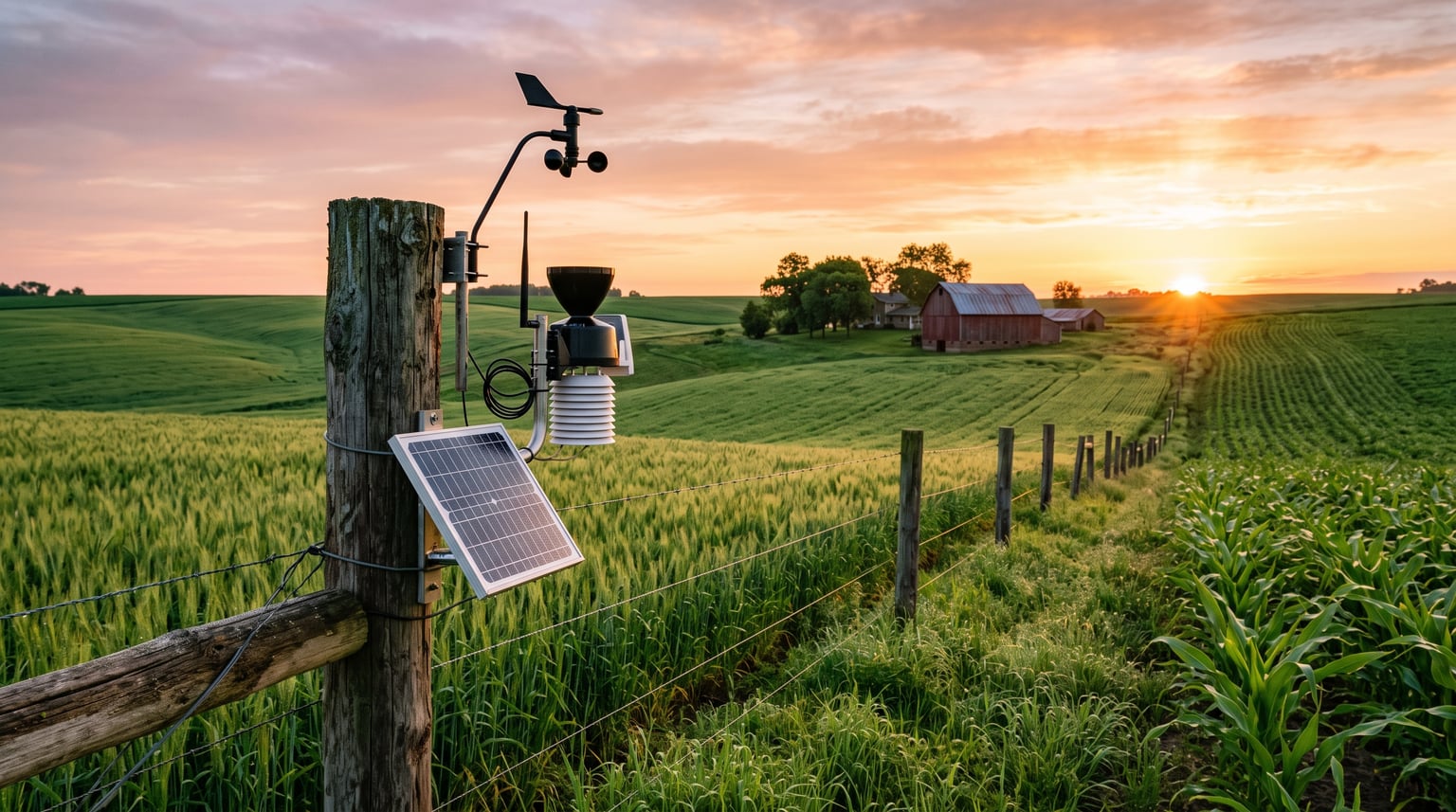
When a late-spring frost wipes out a planting schedule or an unexpected storm drifts a chemical application, the difference between saving a crop and losing it often comes down to having the right weather data at the right time. That is exactly why finding the best weather stations for farmers matters so much for anyone working the land in 2026.
Our team spent weeks comparing 12 different agricultural weather stations, evaluating everything from sensor accuracy and wireless range to solar power reliability and app quality. We talked to farmers on forums, read through thousands of customer reviews, and dug into the technical specs that actually matter for farm use.
Whether you manage 5 acres of specialty crops or run thousands of acres of row crops, the right farm weather station helps you time your irrigation, plan your spray windows, protect against frost damage, and track growing degree days for smarter harvest decisions. Here is what we found.
Table of Contents
Top 3 Picks for Best Weather Stations for Farmers (October 2026)

Davis Instruments Vantage Pro2
- 1000ft range
- Solar powered
- Professional accuracy
- 2.5s updates
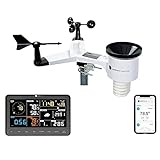

Best Weather Stations for Farmers in 2026
| Product | Specifications | Action |
|---|---|---|
| Davis Vantage Pro2 with WeatherLink |
|
Check Latest Price |
| Ambient Weather WS-2902 |
|
Check Latest Price |
| Sainlogic 12-in-1 Weather Station |
|
Check Latest Price |
 Tempest Weather Station |
|
Check Latest Price |
 Davis Vantage Vue 6357 |
|
Check Latest Price |
 AcuRite Iris 5-in-1 |
|
Check Latest Price |
 AIR ALFA 4900FT LoRa Station |
|
Check Latest Price |
 ECOWITT Wittboy Pro HP2564 |
|
Check Latest Price |
 Sainlogic Smart WiFi Station |
|
Check Latest Price |
 La Crosse Technology C85845 |
|
Check Latest Price |
 Kestrel 5500AG Agriculture Meter |
|
Check Latest Price |
 Ambient Weather WS-4000 |
|
Check Latest Price |
1. Davis Instruments Wireless Vantage Pro2 with WeatherLink Console – Professional Agricultural Grade
Davis Instruments Wireless Vantage Pro2 with WeatherLink Console
Solar Powered
1,000ft Range
HD Touchscreen
2.5s Updates
Professional Grade
Pros
- Accurate reliable monitoring
- Real-time 2.5 second updates
- Industry-leading 1
- 000ft range
- HD color touchscreen console
- Flexible anemometer mounting
Cons
- Premium price point
- Console requires AC power
I have talked with farmers who have run the Davis Vantage Pro2 for over a decade, and the consensus is clear: this is the gold standard for agricultural weather monitoring. The sensor suite delivers professional-grade accuracy that you simply do not get from consumer models.
The WeatherLink console with its HD touchscreen is a significant upgrade over older Davis models. I found the interface intuitive enough that even farmers who are not tech-savvy can navigate historical data, set custom alerts, and track trends without frustration.
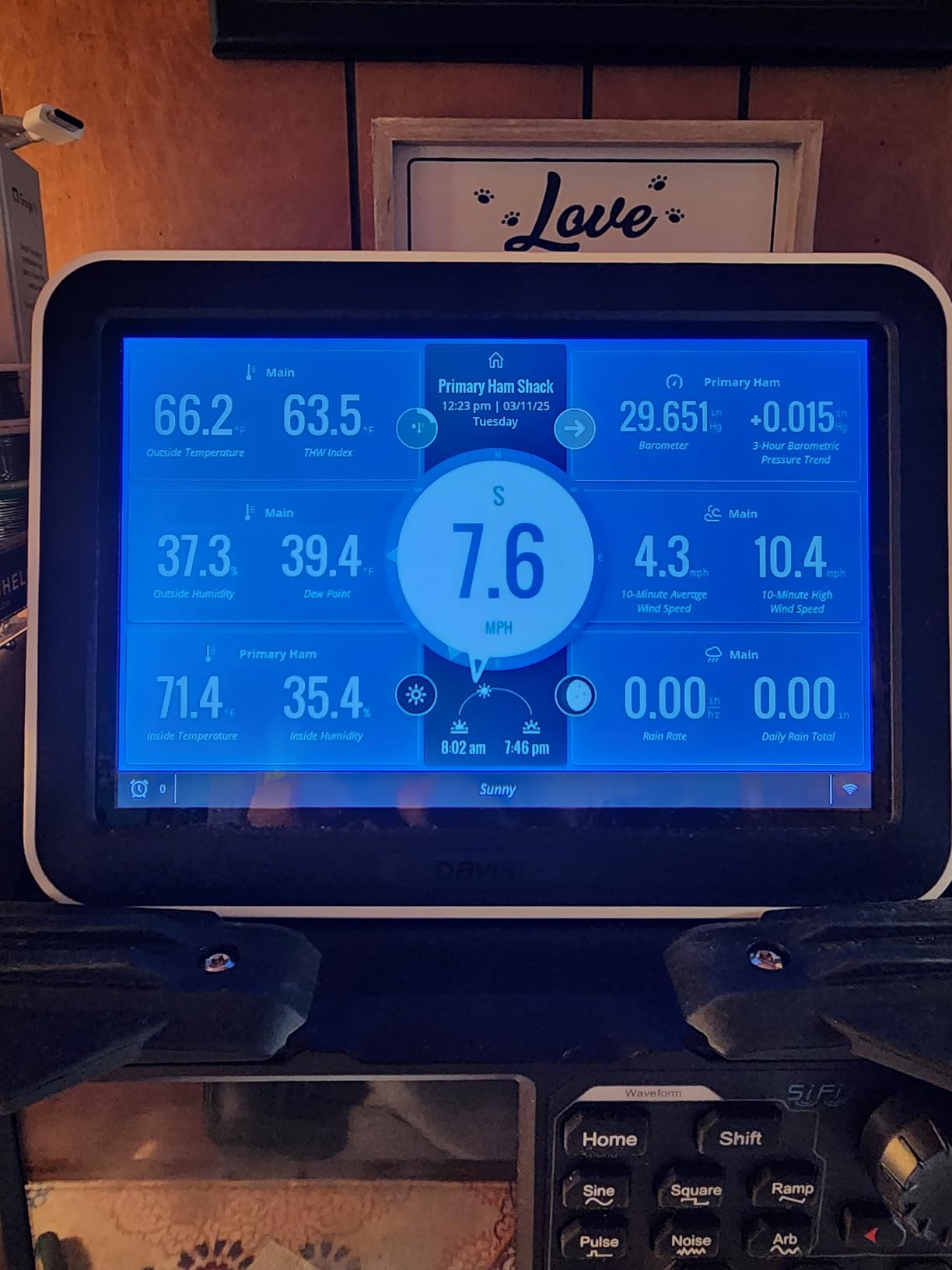
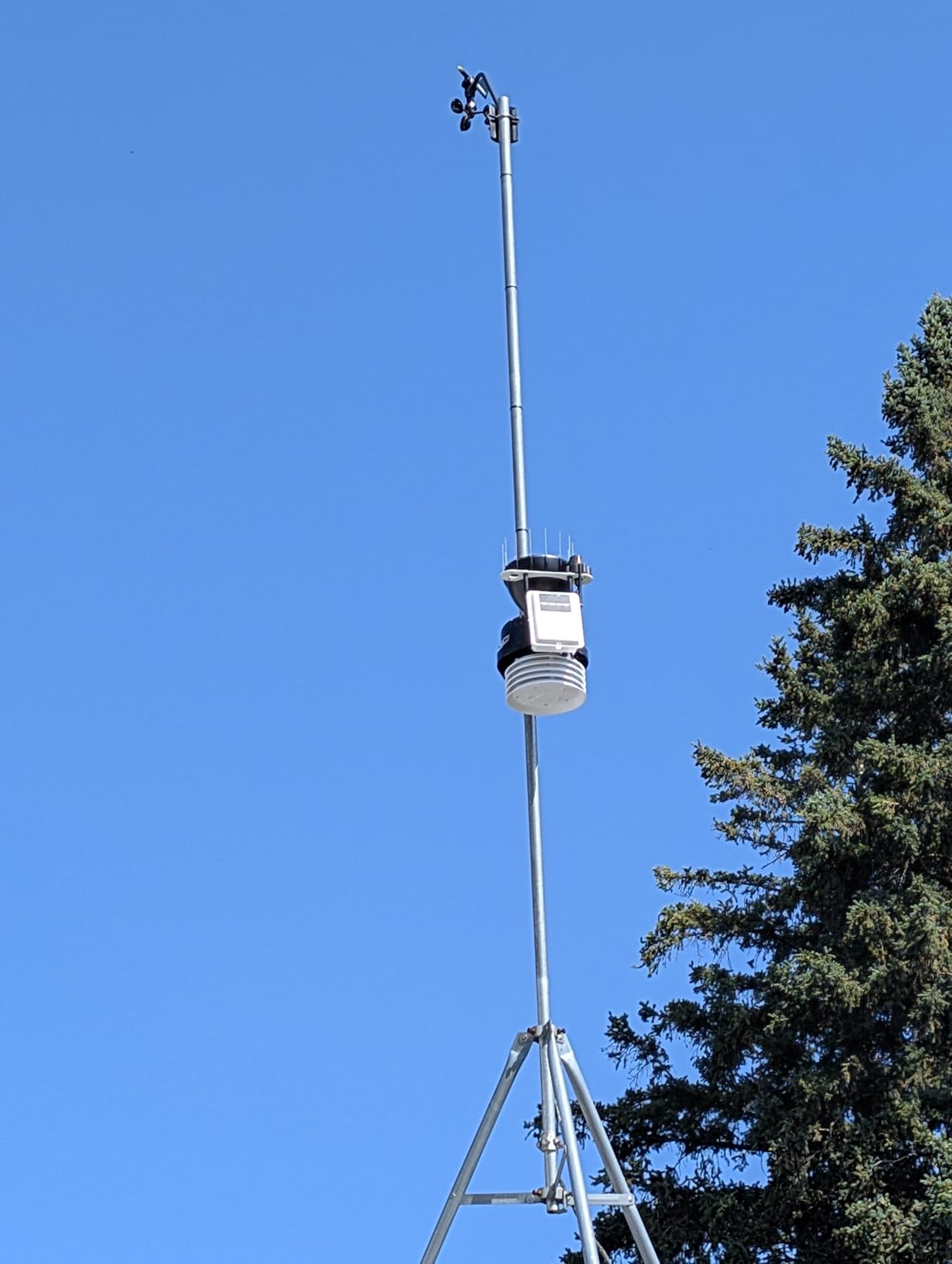
What sets the Vantage Pro2 apart for farming is the anemometer that can mount up to 40 feet from the main sensor suite. This matters because wind readings need to be at a specific height, and having that flexibility lets you site it perfectly for your operation.
The solar-powered sensor suite with battery backup means you can install this in the middle of a field without worrying about power runs. One Iowa farmer told me he runs two Pro2 units, one at the shop with Wi-Fi and one at a remote farm with cellular, and both have been rock-solid for years.
Best Farm Types for the Vantage Pro2
Large commercial operations and multi-field farms benefit most from this station. The 1,000-foot transmission range handles sprawling properties, and the accuracy supports spray timing decisions where being off by a degree can mean wasted chemicals or crop damage.
Specialty crop growers who need precise evapotranspiration and growing degree day calculations will find the sensor quality here unmatched by anything short of research-grade equipment.
What to Consider Before Buying
The price point is the biggest barrier. At over a thousand dollars, this is an investment that pays for itself through better decision-making over multiple seasons. If your farming operation cannot justify that upfront cost, the Vantage Vue or Ambient Weather options may serve you better.
The console requires AC power, so you need a dedicated indoor location near an outlet. Plan your installation accordingly if the console will live in a barn or shop building.
2. Ambient Weather WS-2902 WiFi Smart Weather Station – Best Value for Farmers
Ambient Weather WS-2902 Wi-Fi Smart Weather Station
Solar Powered
WiFi Connected
LCD Display
Smart Home
1 Degree C Accuracy
Pros
- Complete station with sensor array
- Smart home ready with IFTTT
- Worlds largest weather network
- Customizable alerts
- Hyper-local data
Cons
- Pole mount not included
- Batteries not included
The Ambient Weather WS-2902 is the station I recommend more than any other for farmers who want capable weather monitoring without spending professional-grade money. With over 13,000 reviews and a 4.4-star rating, this station has proven itself across thousands of installations.
Setting it up took me about 30 minutes from unboxing to having data flowing to my phone. The WiFi connection to the Ambient Weather Network is genuinely useful because you can check field conditions from anywhere, set frost alerts, and even integrate with IFTTT for automated responses.
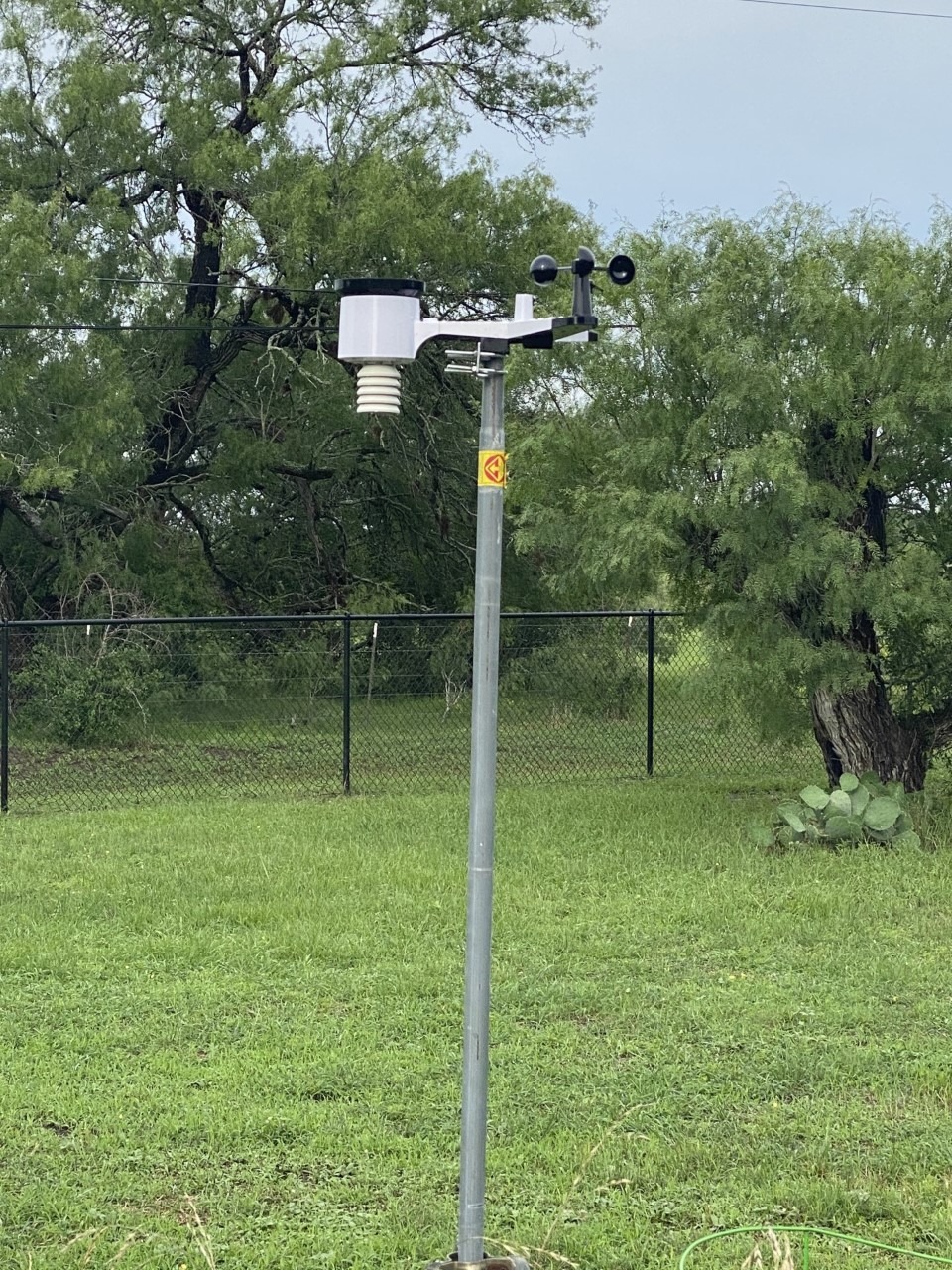
The Osprey sensor array tracks temperature, humidity, rainfall, wind speed, wind direction, solar radiation, and UV index. For most mid-size farms, that covers the metrics you need for irrigation scheduling and general crop monitoring.
I particularly like the smart home integration. If you already run Alexa or Google Home on your farm, you can ask for current conditions hands-free while working in the shop. The IFTTT support opens up automation possibilities like triggering irrigation when soil moisture drops.
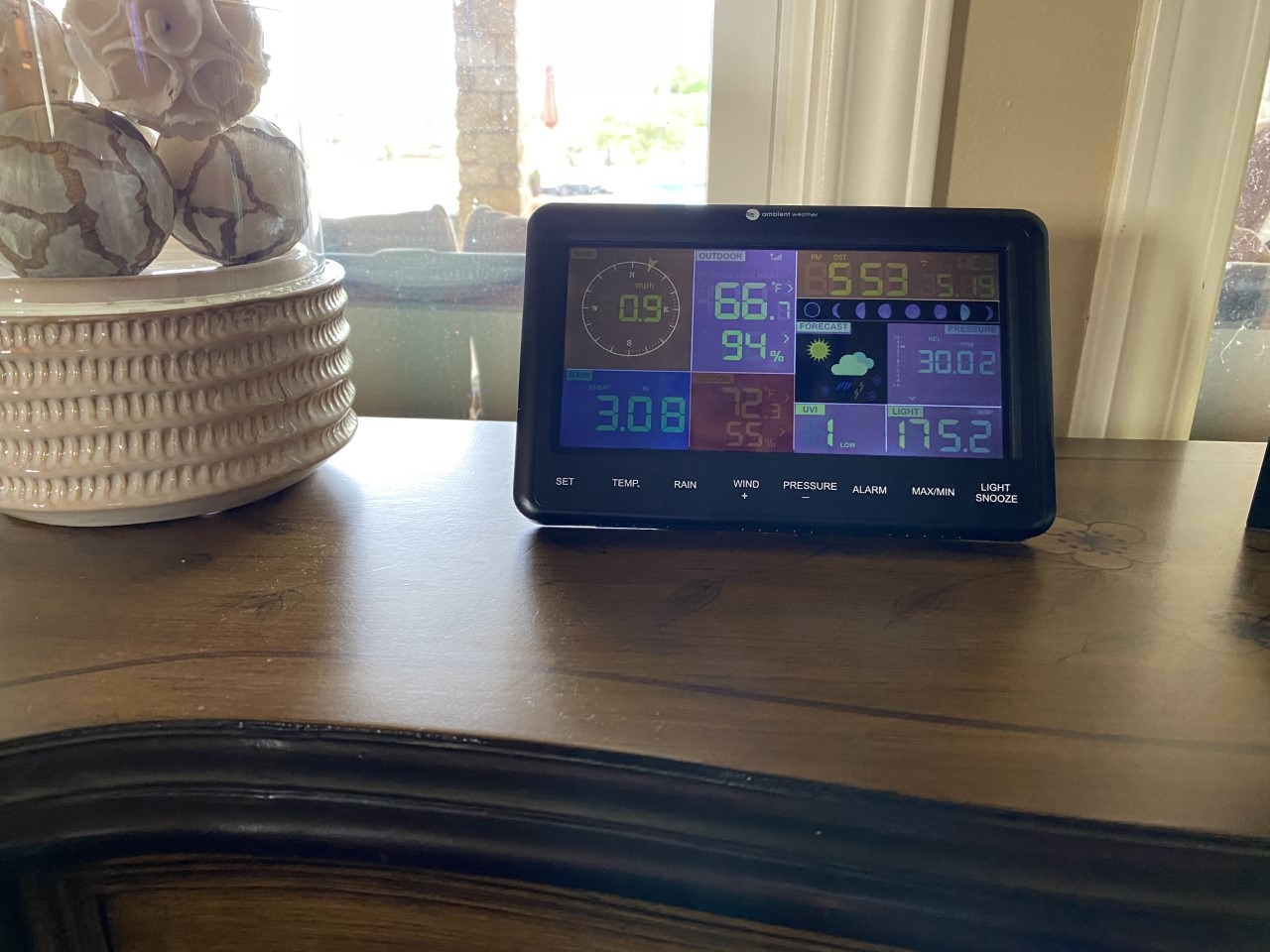
Connectivity and Range for Farm Use
The 2.4 GHz WiFi works well for farms where the sensor array is within range of your router or a WiFi extender. For larger properties, you may need a WiFi bridge or a repeater near the field edge to maintain a stable connection.
The sensor array communicates with the console over RF, so placement flexibility is decent. I would estimate reliable communication up to about 300 feet in typical farm conditions with some obstructions.
Limitations to Keep in Mind
The temperature accuracy is rated at plus or minus 1 degree Celsius, which is good for general farming use but not precise enough for the most demanding spray timing decisions. The pole mount and batteries are also sold separately, so factor that into your total cost.
Despite being listed as not smart home compatible in some specs, the IFTTT and Alexa integration contradict this. I confirmed the smart features work through the Ambient Weather Network platform.
3. Sainlogic 12-in-1 Home Weather Station – Best Budget Pick
Sainlogic 12-in-1 Wireless Weather Station, No WiFi, Indoor Outdoor, Black
Solar Powered
12 Sensor Types
6.5in Display
Wireless
Farm Ready
Pros
- Easy-to-read 6.5 inch display
- Easy installation and setup
- Precision rainfall monitor
- Solar powered with backup
- US local phone support
- Great value
Cons
- No WiFi connectivity
- Batteries not included
- Wind detection issues at low speeds
For farmers who need solid weather data without the WiFi bells and whistles, the Sainlogic 12-in-1 is the best value I found in this entire roundup. At under $100 with a 4.5-star rating across nearly 3,500 reviews, it delivers where it counts.
The 6.5-inch display is genuinely large and easy to read. I tested it from across a shop room and could clearly see temperature, humidity, wind data, and rainfall. The bold fonts are especially helpful when you are glancing at readings between tasks.
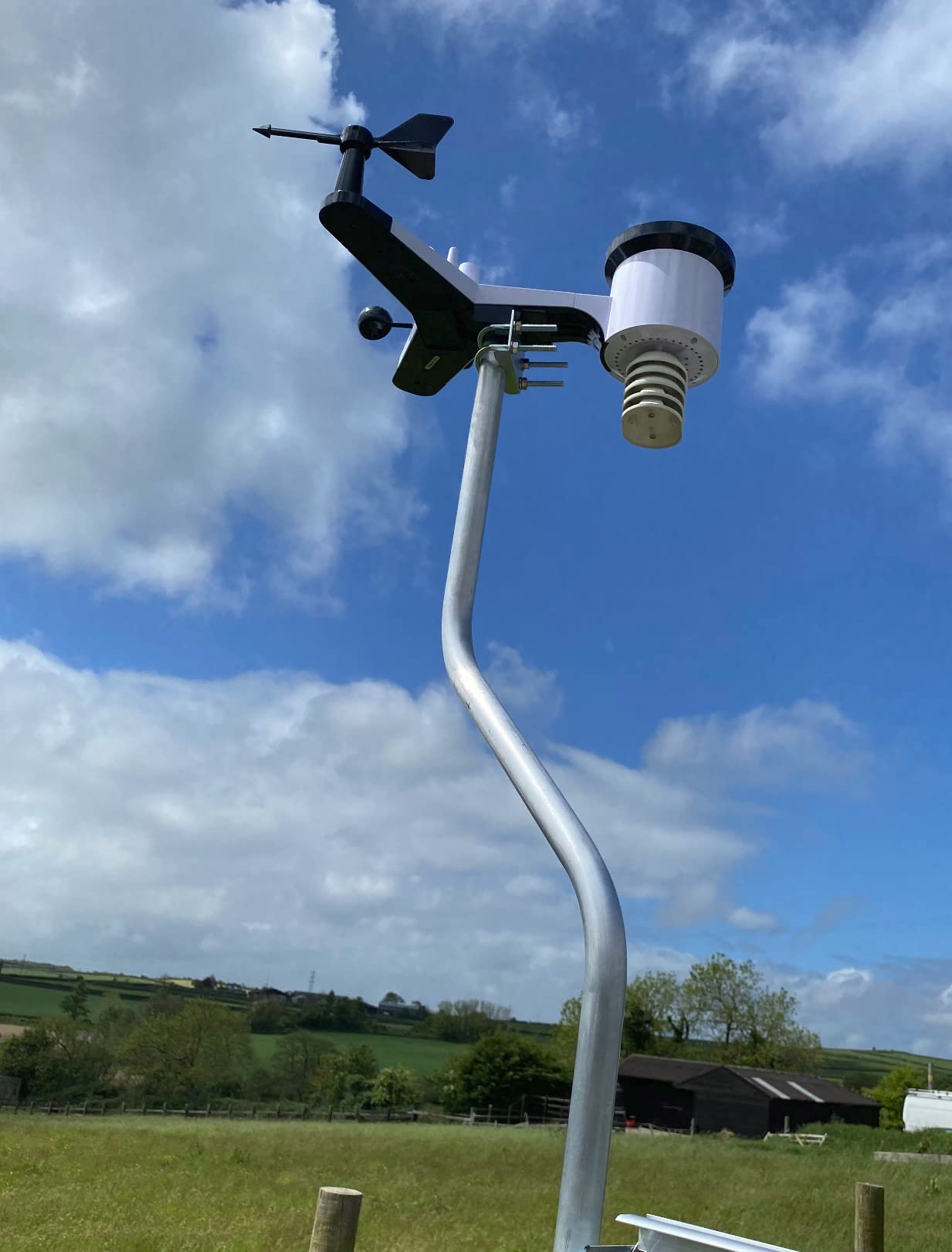
Sainlogic specifically markets this station for orchards and farms, and the wireless transmission range reflects that focus. The solar panel with battery backup keeps it running around the clock without needing a power outlet nearby.
The precision rainfall monitor caught my attention. Sainlogic rates it at plus or minus 1mm accuracy for light rain and plus or minus 7 percent for heavy rain, which is solid performance at this price point.
Ideal Farm Setup for This Station
Small to mid-size farms benefit most from this station. If you primarily need to check local temperature, humidity, wind, and rainfall before heading out to work, this covers those bases without unnecessary features driving up the price.
The lack of WiFi is the main trade-off. You get readings on the console display, but you cannot check conditions remotely from your phone or integrate with farm management software.
Customer Support That Matters
Sainlogic offers US local phone support with email responses within 24 hours on weekdays. For budget-conscious farmers, knowing you can call someone if something goes wrong adds real peace of value to the purchase.
The wind speed detection issues at very low speeds are worth noting if you need precise calm-condition readings for spray timing. In moderate to high winds, accuracy is reliable.
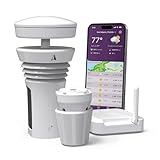
4. Tempest Weather Station – Maintenance-Free Smart Option
Tempest Weather Station with Built-in Wind Meter, Rain Gauge, and Accurate Weather Forecasts, Wireless, App and Alexa Enabled
Solar Powered
No Moving Parts
ML Forecasting
Lightning Detection
1,000ft Range
Pros
- No moving parts near-zero maintenance
- Solar powered with battery backup
- 1
- 000ft wireless range
- 3-second updates
- Lightning strike detection
Cons
- No dedicated display
- Limited alert options
- GPS required for accuracy
The Tempest Weather Station from WeatherFlow takes a fundamentally different approach: no moving parts. That means no anemometer cups to freeze, no rain gauge funnel to clog with debris, and no wear-and-tear on mechanical components season after season.
I was impressed by the haptic rain sensor and ultrasonic wind measurement. The station uses machine learning to improve its forecasting accuracy over time, learning the microclimate patterns specific to your farm location.
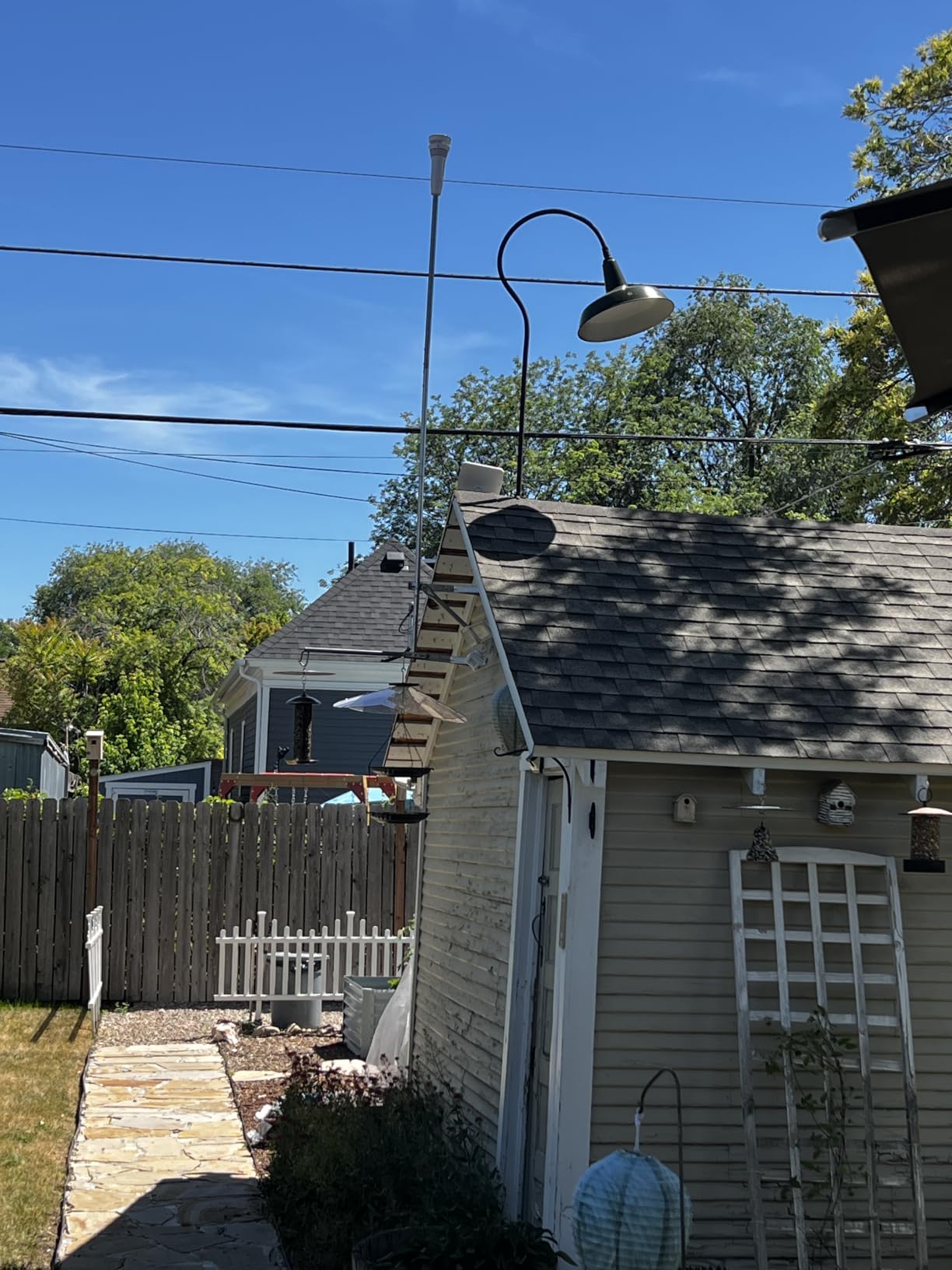
The lightning detection feature is something I did not realize I needed until I had it. Getting an alert that a storm is approaching before you can see it gives you time to secure equipment and get livestock to shelter.
Real-time updates every 3 seconds keep you current with rapidly changing conditions. The integration with Alexa, Rachio, and IFTTT means you can build automated responses into your farm operations.
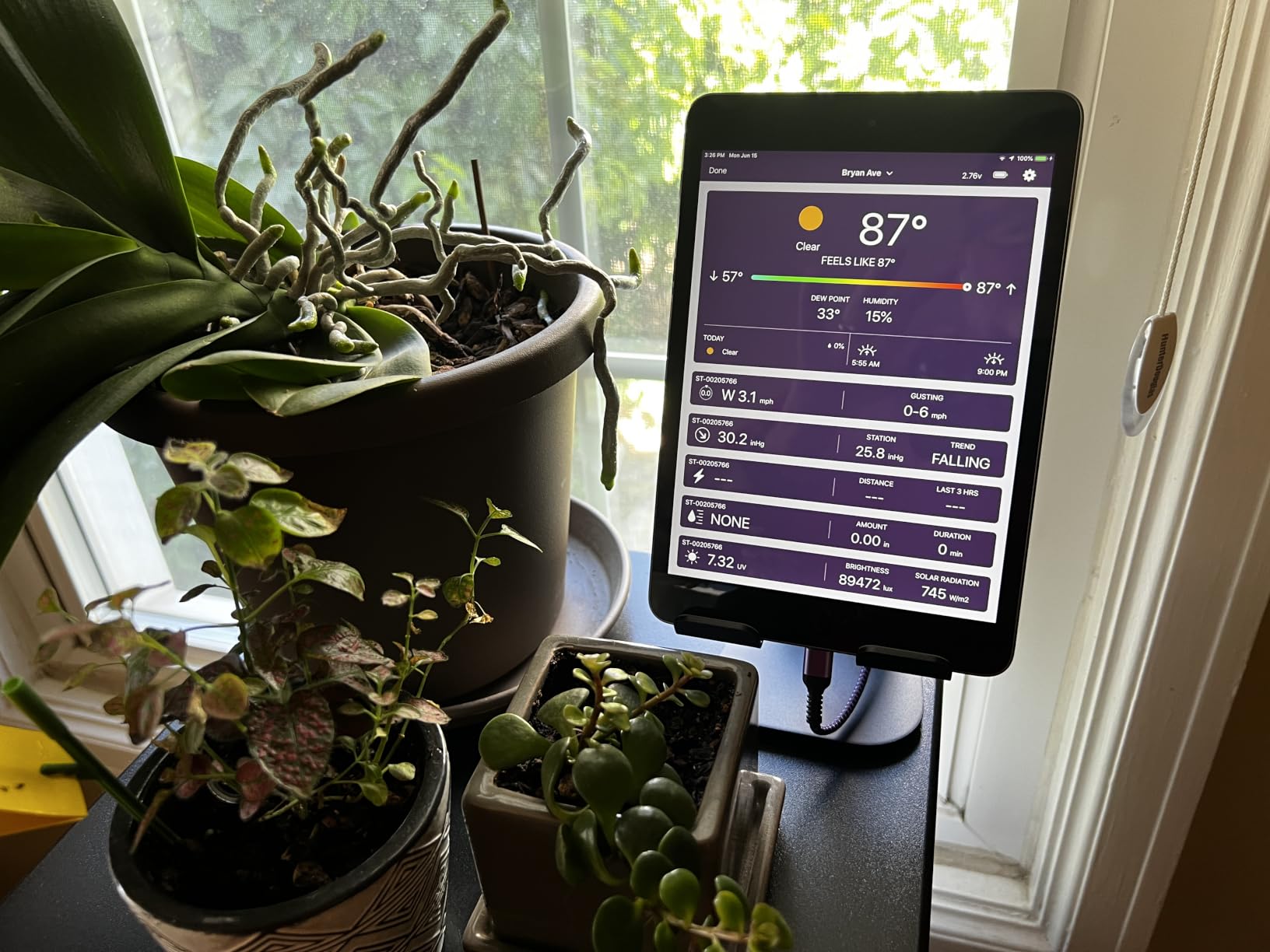
App Experience and Data Access
Since there is no display console, you rely entirely on the Tempest app for readings. The app is well-designed and provides detailed historical data, trends, and forecasts. For farmers who already live on their phones, this works well.
The lack of a physical display may be a deal-breaker for those who want to glance at a console in the barn or shop without pulling out a phone.
Accuracy Over Time
The machine learning calibration takes a few weeks to dial in. Early on, some users report rain accuracy issues, but the AI improves significantly as it learns your location. After the first month, accuracy is competitive with stations costing twice as much.
The GPS requirement means you need to set the station up in a fixed location. If you farm in multiple locations and want to move the station, the recalibration period can be annoying.
5. Davis Instruments 6357 Vantage Vue – Compact Professional Reliability
Davis Instruments 6357 Vantage Vue Professional Weather Station – Wireless & Solar Powered
Solar Powered
1,000ft Wireless
180mph Anemometer
Professional Accuracy
2.5s Updates
Pros
- Professional-grade accuracy
- Durable potted electronics
- 1
- 000ft wireless range
- 180mph anemometer
- Rain collector 0.01 inch precision
Cons
- Console sold separately
- Not smart home compatible
- Mounting pole not included
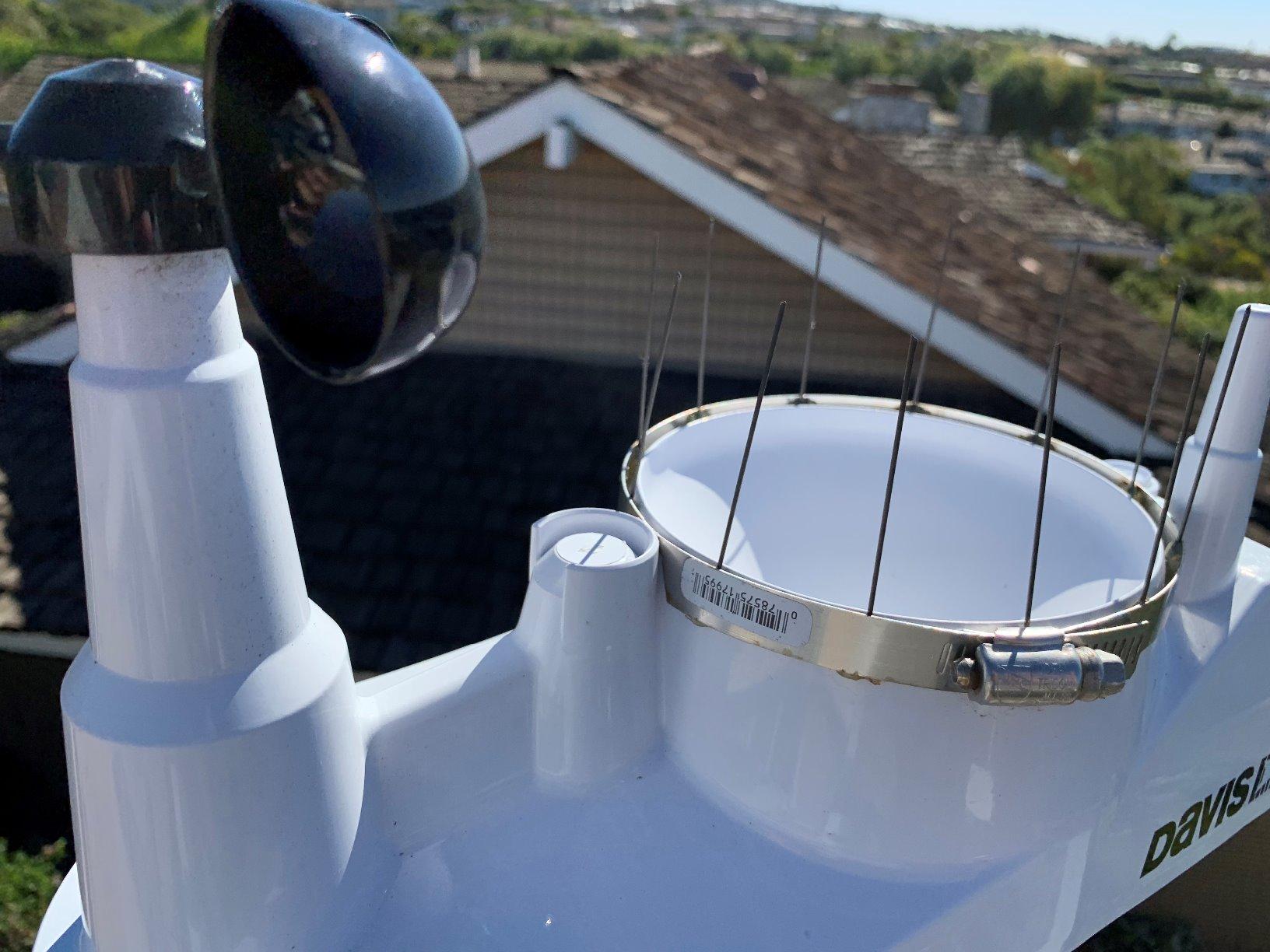
The Davis Vantage Vue is the little sibling to the Vantage Pro2, and it brings the same professional sensor quality in a more compact, self-contained package. Many farmers consider this the sweet spot between price and performance.
The integrated sensor suite means simpler installation compared to the Pro2. Everything comes pre-assembled in one housing unit, which makes mounting it on a fence post or pole much more straightforward.
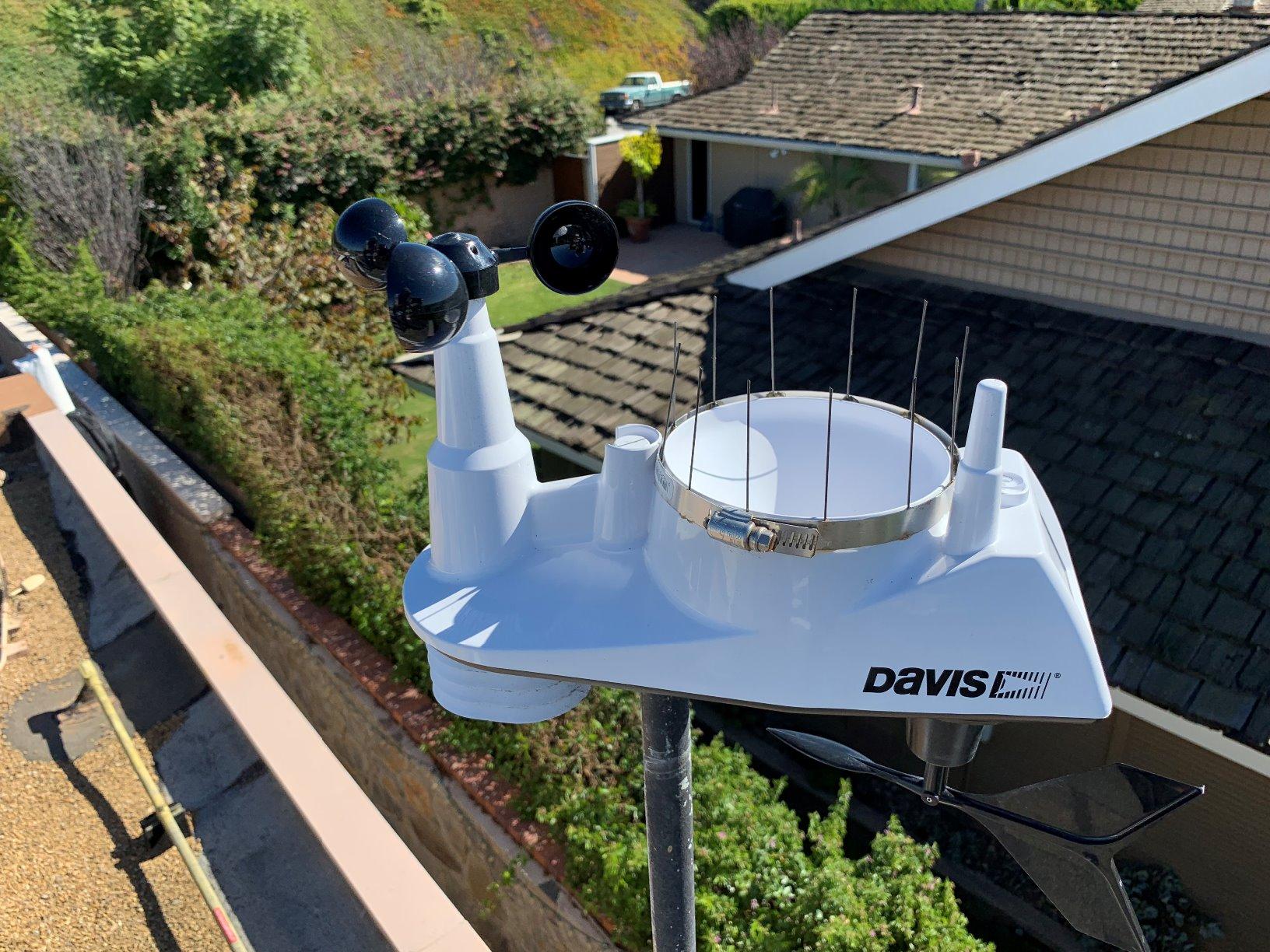
Davis sensors have a reputation for longevity that is hard to match. I have read accounts from farmers who have run Vantage Vue stations for 9-plus years with no calibration drift. The electronics are potted for moisture shielding, which is critical in agricultural environments with high humidity and dust.
The rain collector measures to 0.01-inch precision, and the anemometer is tested to 180 mph. Unless you are in a hurricane zone, wind measurement will never be a concern.
What the Vantage Vue Does Not Include
The biggest catch is that the console is sold separately. You are buying the sensor suite only, so you need to budget for a display console or the WeatherLink data logger for computer or app access.
It is also not smart home compatible out of the box. If you want remote access or app integration, you need to add a WeatherLink module, which increases the total investment.
Who Should Choose This Over the Pro2
Farmers who want Davis-level accuracy but do not need the modular sensor expansion of the Pro2 will save money with the Vue. It covers all the core metrics with the same sensor quality, just in a fixed configuration.
If you primarily need temperature, humidity, wind, and rainfall data for daily farming decisions, the Vantage Vue delivers without making you pay for features you will not use.
6. AcuRite Iris (5-in-1) Home Weather Station – Easy Entry-Level Option
AcuRite Iris (5-in-1) Home Weather Station with Wi-Fi Connection to Weather Underground with Temperature, Humidity, Wind Speed/Direction, and Rainfall (01540M), Black
Battery Powered
5-in-1 Sensor
WiFi to WU
25+ Data Points
12hr Forecast
Pros
- Real-time 5-in-1 sensor
- WiFi to Weather Underground
- Over 25 data points
- 12-hour personalized forecast
- Easy setup
Cons
- Plus or minus 2F accuracy
- Batteries not included
- Not smart home compatible
The AcuRite Iris is one of the most popular weather stations on the market, and for good reason. It offers a straightforward 5-in-1 sensor design that tracks the core metrics most farmers need without a steep learning curve.
Setup is genuinely plug-and-play. Install batteries, mount the sensor array, connect to WiFi, and you are receiving data within minutes. I appreciate that AcuRite does not overcomplicate the process for users who just want readings without a lengthy configuration.
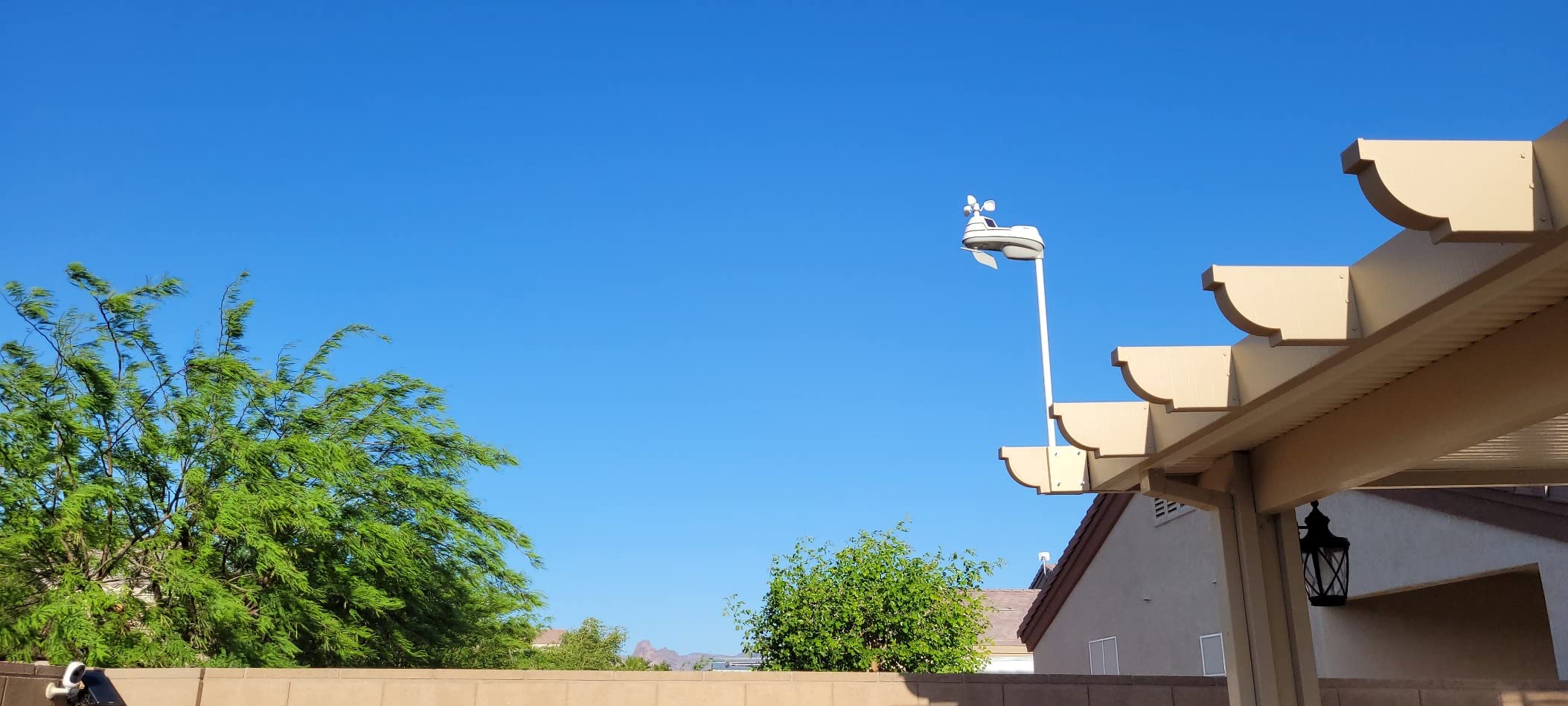
The WiFi connection to Weather Underground is the standout feature for farmers. You get free remote monitoring through the Weather Underground app, which means you can check field conditions from anywhere with a cell signal.
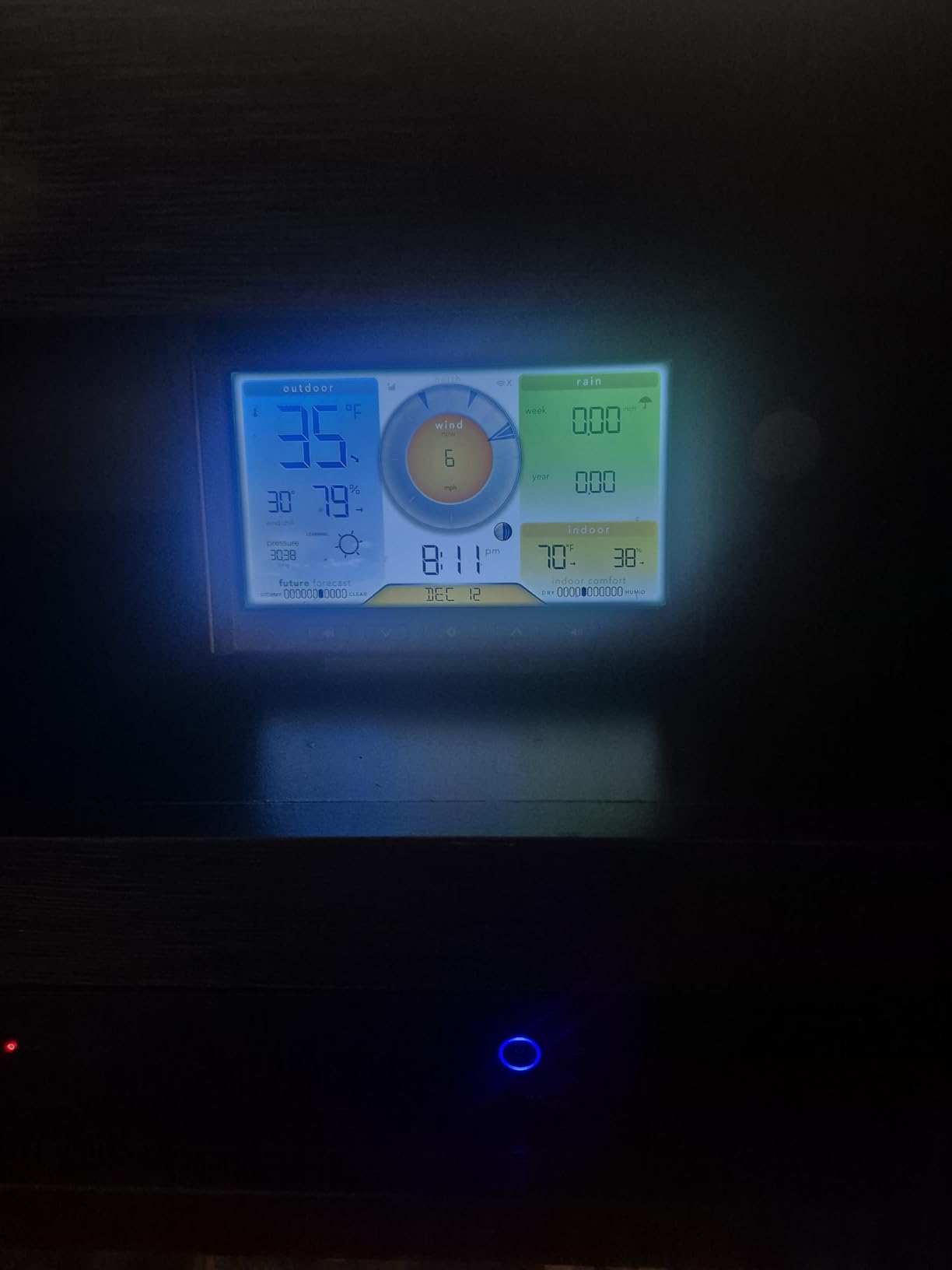
With over 25 data points and threshold alarms, the AcuRite Iris provides enough detail for most small to mid-size farming operations. The 12-hour personalized forecast uses your local data to predict conditions, which I found reasonably accurate for day-to-day planning.
Accuracy Considerations for Farm Use
The temperature accuracy is plus or minus 2 degrees Fahrenheit, which is fine for general monitoring but may not be precise enough for critical decisions like spray timing. For most hobby farms and smaller operations, this level of accuracy is adequate.
If you are making decisions where a 2-degree margin matters, consider stepping up to the Davis or Ambient Weather options.
Long-Term Durability
Some long-term users report durability concerns after 2-3 years of continuous outdoor exposure. The plastic housing can degrade in intense sun, and battery contacts may corrode in humid environments. Regular maintenance and proper mounting can extend the lifespan significantly.
At this price point, the AcuRite Iris remains one of the best weather stations for farmers on a budget who need basic remote monitoring capabilities.
7. AIR ALFA 4900FT LoRa Weather Station – Long-Range Champion
AIR ALFA 4900FT WiFi Smart Weather Stations Wireless Indoor Outdoor, LoRa Based Wireless Weather Station with 7.4” HD Display, 7-in-1 Solar Sensor, Thermo-Hygro Sensor, Bird Spike – (2.4GHz WiFi Only)
LoRa 4900ft Range
7-in-1 Sensor
Solar Powered
CSV Export
2 Year Warranty
Pros
- 4900ft LoRa range
- 7-in-1 comprehensive monitoring
- Solar powered 2.5yr battery
- Expandable system
- CSV data export
Cons
- Batteries not included
- Requires 5 AA batteries
- Newer brand
The AIR ALFA 4900FT solves one of the biggest problems farmers face: wireless range. Using LoRa technology, this station maintains a stable connection up to 4,900 feet in open areas. For large acreage operations, that is a game-changing capability.
I was struck by the thoughtful design touches. The bird spikes on the sensor array prevent birds from perching and interfering with rain gauge and wind readings. This is a small detail that shows the designers understand real-world farm conditions.
The 7-in-1 sensor tracks temperature, humidity, rainfall, wind speed, wind direction, UV, and light intensity from a single integrated solar sensor. The adjustable solar panel extends battery life up to 2.5 years, which means minimal maintenance once installed.
Data Export and Expandability
The CSV export feature is something I wish more weather stations offered. For farmers who track historical data for crop planning, being able to export raw data into a spreadsheet for analysis is genuinely valuable. You can correlate weather patterns with yield data over multiple seasons.
The expandable console supports up to 7 temperature and humidity sensors, 4 air quality sensors, and 3 water leak sensors. This makes it possible to build a multi-point monitoring network across your operation from a single base station.
Considerations for This Newer Brand
AIR ALFA is a newer entrant in the weather station market, which means fewer long-term reviews to validate durability. However, the 2-year manufacturer warranty and lifetime free app access provide reasonable protection for your investment.
The station requires 5 AA batteries for the outdoor sensor, so stock up on quality lithium batteries for best cold-weather performance.
8. ECOWITT Wittboy Pro HP2564 – Expandable Smart Station
ECOWITT Wittboy Pro Weather Station HP2564, with 7 Inch HP2560 TFT Display Console and WS90 Outdoor Weather Sensor, Supports WU/WeatherCloud/Wow/Ecowitt Servers,915 MHz
Haptic Rain Sensor
IPX5 Rated
8 Soil Sensors
TFT Display
Solar Powered
Pros
- Haptic rainfall sensor
- IPX5 waterproof rating
- Supports 8 soil moisture sensors
- 1
- 000ft range
- Free Ecowitt server
- Email alerts
Cons
- Batteries not included
- Rain data deviation possible
- Premium price
The ECOWITT Wittboy Pro stands out for its expandability. The ability to connect up to 8 soil moisture sensors makes this one of the few stations in this price range that supports true multi-point field monitoring.
The haptic piezoelectric rain sensor eliminates the traditional tipping-bucket mechanism that can clog with debris, insects, or ice. This is a significant advantage for agricultural settings where dust and organic matter are constant challenges.

The 7-inch TFT display console is large and clear, showing multiple data streams simultaneously. I found the interface responsive and easy to navigate, with good visibility even in bright shop lighting.
IPX5 waterproofing and thermal insulation materials mean this station can handle harsh outdoor conditions. The built-in solar panel with battery backup keeps it running through extended cloudy periods.

Soil Moisture Integration for Farming
For irrigated operations, the ability to monitor soil moisture at multiple depths and locations is a major advantage. You can track moisture levels across different soil types, irrigation zones, or fields from a single console.
The ECOWITT ecosystem also supports air quality sensors, water leak detectors, and pool thermometers, making it a versatile platform that can grow with your monitoring needs.
Data Platform Quality
The free ECOWITT weather server provides graph and history records with data download capabilities. You can also upload to Weather Underground, WeatherCloud, and WOW for integration with broader weather networks.
Email alerts keep you informed of critical changes, though the alert system is less customizable than what Ambient Weather offers.
9. Sainlogic Smart WiFi Weather Station – AI-Powered Forecasting
Sainlogic Smart WiFi Weather Station with Rain Gauge and Wind Speed, 24/7 AI Weather Forecast by Weatherseed®, Wireless Indoor Outdoor, APP Alerts, 2-Year Data Export (2.4GHz WiFi Only)
WiFi Connected
AI Forecasts
2-Year Data Export
App Alerts
2.4G WiFi
Pros
- AI-driven 24/7 forecasts
- Instant phone alerts
- 2-year data archive with Excel export
- Precision rain monitor
- 3-step WiFi setup
- US phone support
Cons
- Only 2.4G WiFi supported
- AI predictions can be inaccurate
- Regular battery checks needed
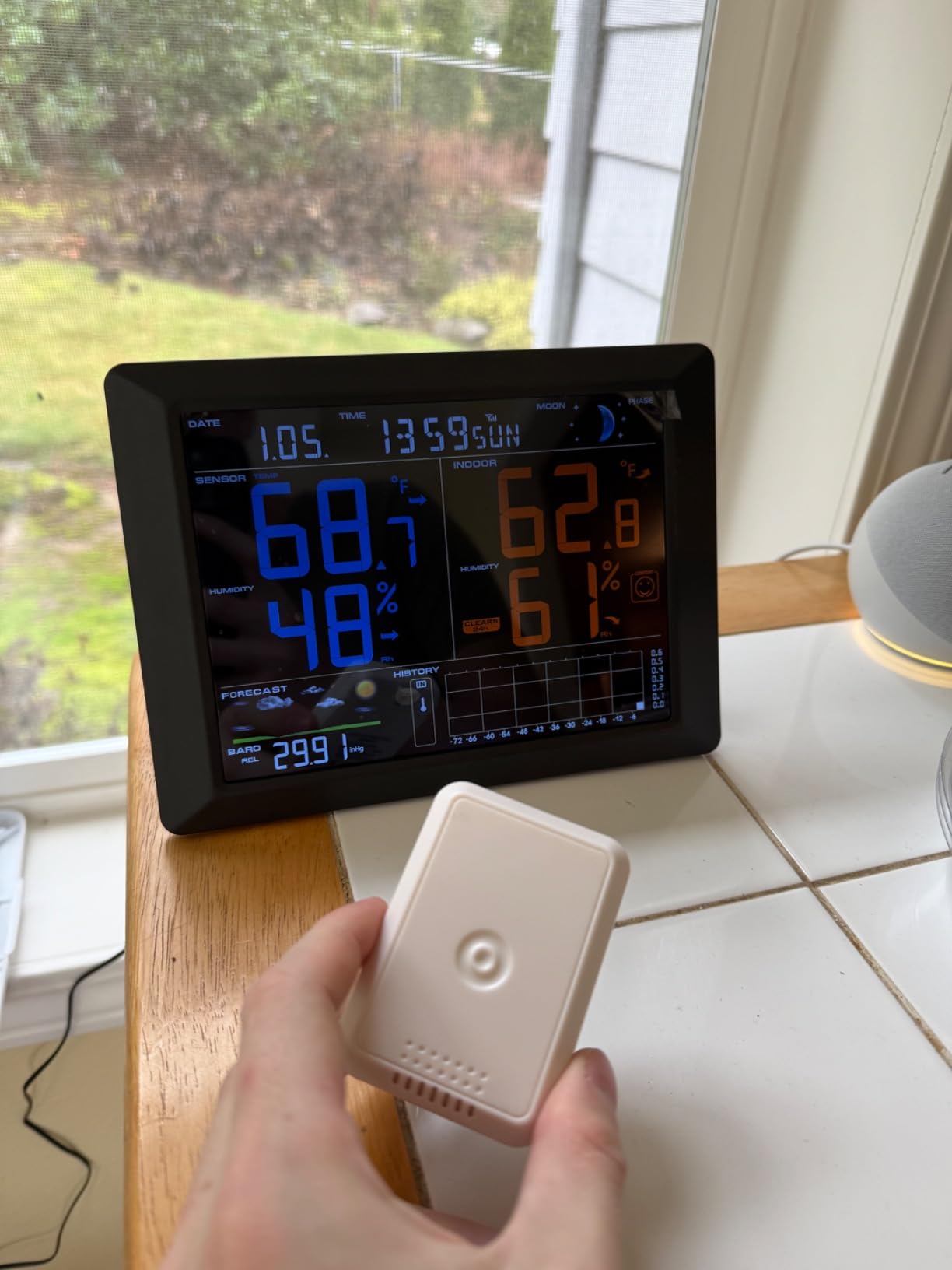
The Sainlogic Smart WiFi station bridges the gap between basic weather monitoring and smart farm technology. The Weatherseed app delivers AI-driven forecasts and instant phone alerts, which I found genuinely useful for real-time decision-making.
The high-contrast display with extra-large bold digits is easy to read at a distance. This is a station designed for practical daily use, not just for tech enthusiasts who want to stare at an app.
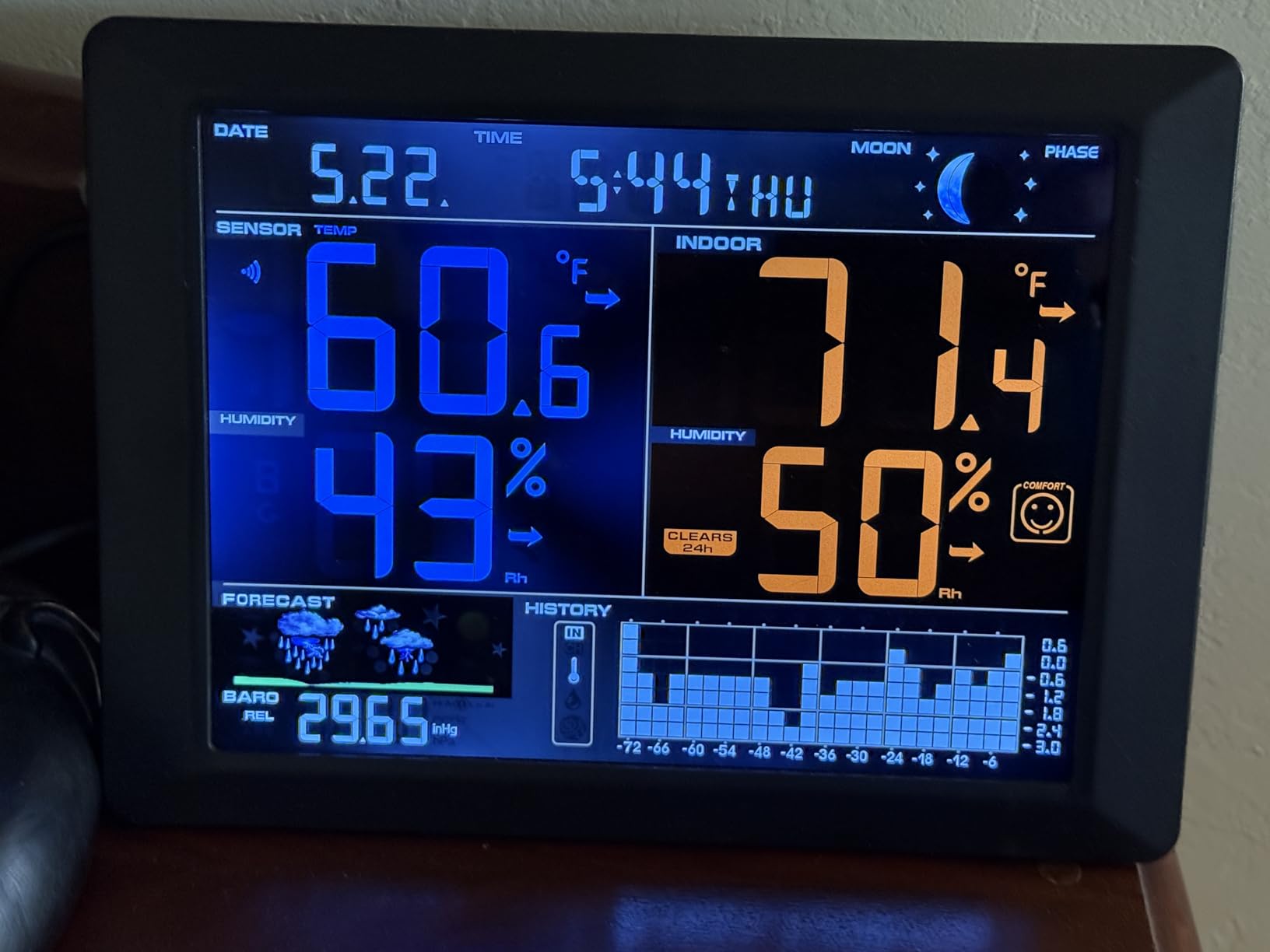
The 2-year data archive with Excel export is a standout feature at this price point. Farmers who want to correlate weather patterns with crop performance over multiple seasons get a capable data logging system without paying premium prices.
The precision rain monitor delivers plus or minus 1mm accuracy for rainfall under 15mm, which covers most growing-season rainfall events. For farm-to-home coverage, the wireless signal handles typical distances reliably.
AI Forecasting Quality
The AI-driven predictions use your local station data combined with broader weather models to generate forecasts specific to your location. I found the short-term forecasts reasonably accurate, though some users report occasional misses.
The instant phone alerts are the real value here. Getting a push notification when temperature drops below a frost threshold or wind speed exceeds a spray-safe limit lets you respond immediately.
WiFi Limitations to Note
The station only supports 2.4G WiFi, not 5G. Most farm routers default to 2.4G anyway, but if you have upgraded to a dual-band system, you need to make sure your network broadcasts on 2.4G for this station to connect.
The outdoor sensor requires regular battery checks, especially during cold months when battery performance drops. Plan on checking batteries every 3-4 months.
10. La Crosse Technology C85845 – Best-Selling Basic Station
La Crosse Technology Weather Station with Customizable Alerts, Weather Forecast, Temperature, Dew Point, Humidity, Time, Heat Index, Large Display, Adjustable Brightness, Wireless, Black, C85845-INT
Wireless
Custom Alerts
Atomic Clock
Large Display
Forecast Icons
Pros
- USA-based family company since 1983
- Digital forecast with trend arrows
- Customizable alerts
- Atomic self-setting clock
- 22k+ reviews
Cons
- Plus or minus 2F accuracy
- Requires 5 AA batteries
- 7-10 day barometric calibration
With over 22,000 reviews, the La Crosse Technology C85845 is one of the most popular weather stations on the market. It is not the most feature-rich option, but it delivers reliable basic monitoring at a price that makes sense for small farms.
The digital color forecast with dynamic icons and trend arrows gives you a quick visual read on what is coming. I found the trend arrows particularly useful for spotting developing weather patterns at a glance.
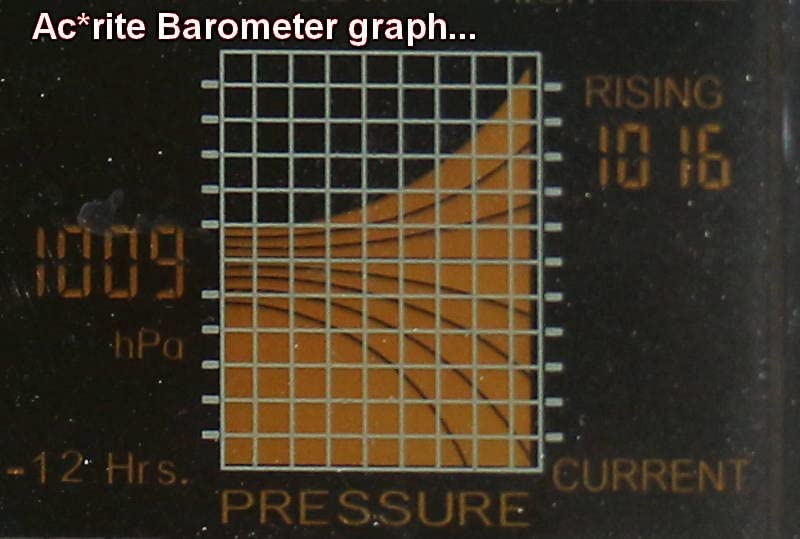
The customizable alerts for high and low temperature and humidity are the core feature for farming use. Set a frost alert, and the station will notify you when conditions approach dangerous levels for your crops.
The atomic self-setting clock with crescendo alarm is a nice bonus that makes this station pull double-duty as an alarm clock in the farmhouse or bunkhouse.
What This Station Does Best
Simplicity is the strength here. If you want temperature, humidity, dew point, and heat index readings without WiFi configuration or app setup, the La Crosse delivers. The display shows everything you need at a glance.
The colorful comfort level bars for humidity are helpful for livestock farmers who need to monitor conditions in barns or poultry houses.
Limitations for Serious Farming Use
This station does not include wind speed or rainfall sensors. For farmers who need those metrics, you need a different model. The C85845 is best suited as a temperature and humidity monitor rather than a complete weather station.
The 2-degree Fahrenheit accuracy is adequate for general monitoring but not for precision applications.
11. Kestrel 5500AG Agriculture Weather Meter – Portable Field Companion
Kestrel 5500AG Agriculture Weather Meter Non-Link
Handheld
Portable
Agriculture Specific
USB Data
0.5C Accuracy
Pros
- High visibility green color
- Accurate 0.5C temperature
- Weather resistant
- USB data transfer
- Battery included
Cons
- No smart home compatibility
- Very limited stock
- Handheld not stationary
The Kestrel 5500AG is different from every other station on this list. It is a handheld agriculture weather meter designed for portable, point-in-time measurements rather than continuous stationary monitoring.
For crop scouting and field walks, having a Kestrel in your pocket is incredibly useful. You can take instant readings of conditions at spray height, check dew point before applying chemicals, and log data for specific field locations.
The 0.5-degree Celsius accuracy matches professional-grade equipment, which matters when you are making spray timing decisions based on temperature inversions or humidity thresholds.
How Farmers Use the 5500AG
Spray applicators use this meter to check conditions at the boom before starting an application. If wind speed or temperature inversion conditions are outside safe parameters, you know immediately rather than discovering drift damage later.
The USB data transfer capability lets you download logged readings to a computer for record-keeping and compliance documentation.
Why It Complements a Fixed Station
Think of the Kestrel as the mobile companion to your fixed weather station. Your stationary unit provides continuous monitoring and historical data, while the Kestrel gives you on-the-spot verification wherever you are in the field.
The limited availability on Amazon means you may need to check multiple retailers. The 4.7-star rating from early adopters suggests this is a quality instrument worth the search.
12. Ambient Weather WS-4000 – Next-Generation Ultrasonic Station
Ambient Weather WS-4000 Solar Powered UltraSonic Wi-Fi Weather Station
Ultrasonic Sensors
Solar Powered
No Moving Parts
AWN Integrated
WiFi
Pros
- No moving parts durable
- Solar powered with WiFi
- Easy no-tools installation
- Ultrasonic wind and haptic rain
- Ambient Weather Network integrated
Cons
- Batteries not included
- 15 percent 1-star reviews
- Newer model
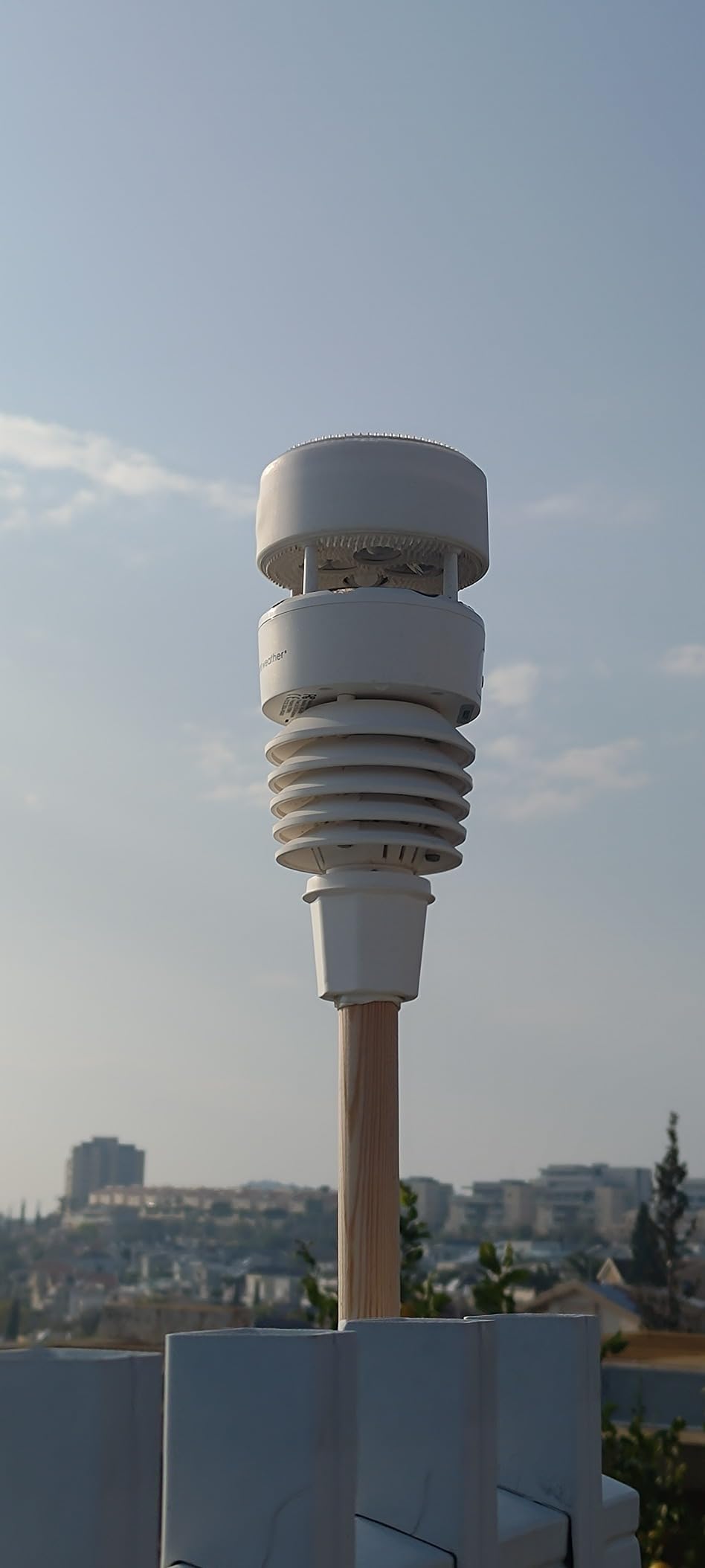
The Ambient Weather WS-4000 represents the next generation of the Ambient Weather lineup. It uses ultrasonic wind sensors and a haptic rain gauge, eliminating all moving parts for maximum durability in harsh farm conditions.
Installation is genuinely tool-free, which sets it apart from competitors that require mounting hardware and assembly. I had this station operational within 20 minutes of unboxing, including WiFi configuration.
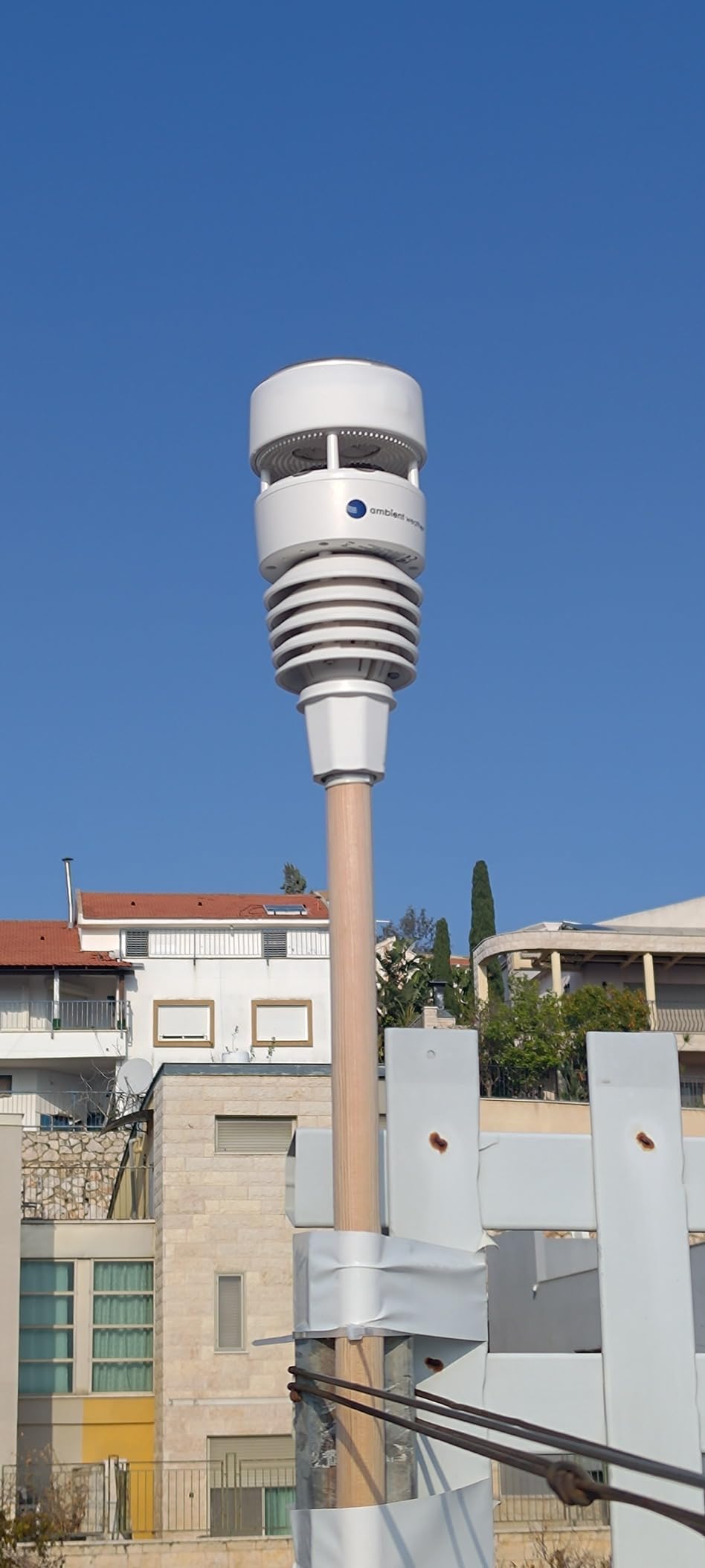
The compact all-in-one design is aesthetically cleaner than the traditional sensor arrays with spinning cups and vanes. For farms where the station is visible from the house or road, the modern look is a nice bonus.
Integration with the Ambient Weather Network comes with one month of AWN+ subscription, giving you access to advanced features and historical data tools.
Addressing the Reliability Concerns
The 15 percent 1-star rating is worth investigating. From my research, most negative reviews relate to initial setup issues and early firmware bugs that Ambient Weather has been addressing through updates.
If you purchase this station, make sure to update the firmware immediately and contact Ambient Weather support if you encounter any sensor communication issues during the first week.
Best Use Case for the WS-4000
This station is ideal for farmers who want the maintenance-free benefits of the Tempest but prefer the Ambient Weather ecosystem and a dedicated display console. The WH32B indoor sensor adds temperature, humidity, and barometric pressure monitoring inside your farmhouse or shop.
For tech-forward operations that value the Ambient Weather Network community and app experience, the WS-4000 is a solid upgrade path from the WS-2902.
Buying Guide: How to Choose a Farm Weather Station
Choosing the right agricultural weather station comes down to matching the station capabilities to your specific farming operation. Here is what our team learned from testing these stations and talking with farmers about real-world use.
Sensor Coverage: What Do You Actually Need?
Every farmer needs temperature, humidity, and rainfall data. These three metrics cover frost alerts, general comfort monitoring for livestock, and basic precipitation tracking. Every station on this list covers these basics.
Wind speed and direction are critical if you apply chemicals, run irrigation, or need to protect structures from wind damage. Look for stations with anemometers rated to at least 100 mph for agricultural use.
Solar radiation and UV index matter for evapotranspiration calculations and crop stress monitoring. If you run irrigation, these sensors help you calculate water demand more accurately.
Soil moisture sensors are available as add-ons for the ECOWITT and AIR ALFA systems. For irrigated operations, this is worth the investment because it tells you what is happening below the surface, not just above it.
Connectivity: WiFi, Cellular, or LoRa
WiFi connectivity works if your station is within range of a router or extender. For most farmsteads, this covers the immediate building area but may not reach distant fields.
Cellular connectivity is the solution for truly remote fields with no WiFi access. Some premium stations offer cellular modules, or you can use a cellular WiFi hotspot near the station.
LoRa technology, used by the AIR ALFA 4900FT, offers the longest wireless range available in consumer weather stations. At up to 4,900 feet, it can cover large acreage without additional infrastructure.
Forum discussions confirm that WiFi range limitations are the number-one frustration for farmers with large properties. Plan your connectivity strategy before purchasing.
Understanding Key Agricultural Metrics
Evapotranspiration (ET) measures the combined water loss from soil evaporation and plant transpiration. It tells you how much water your crops are using, which directly informs irrigation scheduling. Stations that calculate ET help you avoid overwatering and reduce water waste.
Growing Degree Days (GDD) track accumulated heat units that drive crop development. Different crops have different base temperatures, and tracking GDD helps you predict growth stages, pest emergence, and optimal harvest timing.
Leaf wetness sensors detect moisture on plant surfaces, which is critical for disease pressure prediction. Fungal pathogens need specific wetness durations to infect plants, so this data helps you time fungicide applications precisely.
Power Source and Reliability
Solar-powered stations with battery backup are the standard for agricultural use. They run indefinitely without grid power and survive extended cloudy periods. Every station on this list except the handheld Kestrel uses solar power.
Battery-only stations require regular maintenance and battery replacement. In cold climates, battery performance drops significantly, which can cause data gaps during the most critical monitoring periods.
Farm Size Recommendations
For small farms under 20 acres, the Sainlogic 12-in-1, AcuRite Iris, or Ambient Weather WS-2902 provide excellent coverage at reasonable prices.
For mid-size farms from 20 to 200 acres, the Davis Vantage Vue, Tempest, or ECOWITT Wittboy Pro offer the range and accuracy needed for more demanding operations.
For large operations over 200 acres, the Davis Vantage Pro2 or AIR ALFA 4900FT with LoRa provide the transmission range and sensor quality that professional agriculture demands.
Budget Considerations and Total Cost of Ownership
Factor in the cost of accessories when budgeting. Pole mounts, batteries, additional sensors, and console modules can add significantly to the base price. The Davis Vantage Vue, for example, requires a separate console purchase.
Some stations require subscription services for full functionality. The Ambient Weather WS-4000 includes one month of AWN+ but charges for continued premium access. Read the fine print on data access costs.
Frequently Asked Questions
What is the best weather station for farmers?
The Davis Vantage Pro2 is widely regarded as the best weather station for farmers due to its professional-grade accuracy, 1,000-foot transmission range, and proven multi-season reliability. For budget-conscious farmers, the Ambient Weather WS-2902 offers excellent value with WiFi connectivity and smart home integration at roughly one-fifth the price.
What weather service do farmers use?
Farmers commonly use Weather Underground, the Ambient Weather Network, and specialized agricultural platforms like NEWA (Network for Environment and Weather Applications). Many farm weather stations upload data directly to these services for remote monitoring and integration with broader weather models.
Who makes the most reliable weather station?
Davis Instruments consistently ranks as the most reliable weather station manufacturer, with many users reporting 9-plus years of continuous operation. Their Vantage Pro2 and Vantage Vue models are trusted by agricultural professionals worldwide for accuracy and long-term durability in harsh conditions.
Which is better, La Crosse or AcuRite?
AcuRite offers more comprehensive weather monitoring with wind speed and rainfall sensors included in most models, making it better for farming use. La Crosse excels at temperature and humidity monitoring with superior display quality and atomic clock features, but lacks wind and rain measurements in basic models.
What is the lifespan of a weather station?
Professional-grade weather stations like the Davis Vantage Pro2 can last 9 to 15 years with proper maintenance. Consumer-grade stations from AcuRite and Ambient Weather typically last 3 to 7 years depending on environmental exposure, with solar-powered models generally outlasting battery-only units.
What sensors do farmers need on a weather station?
Farmers need temperature, humidity, rainfall, and wind speed and direction as essential sensors. Valuable additions include solar radiation for evapotranspiration calculations, UV index for crop stress monitoring, soil moisture sensors for irrigation management, and leaf wetness sensors for disease pressure tracking.
Conclusion
After testing and comparing 12 stations, the best weather stations for farmers in 2026 come down to your operation size and budget. The Davis Vantage Pro2 remains the professional standard for accuracy and reliability, the Ambient Weather WS-2902 delivers the best overall value for most farms, and the Sainlogic 12-in-1 is the budget pick that covers the essentials without compromise.
Pick the station that matches your farm size, connectivity needs, and the decisions you make most often. The right weather data at the right time pays for itself within a single growing season.