
Triplet refractor telescopes are the gold standard for astrophotographers who want pin-sharp stars, true color reproduction, and zero chromatic aberration across the entire imaging frame. Our team spent three months testing 10 of the best triplet refractor telescopes for astrophotography, ranging from compact 54mm wide-field instruments to serious 122mm deep sky powerhouses. We mounted each scope on equatorial mounts, paired them with dedicated astronomy cameras and DSLRs, and captured real nebulae, galaxies, and star clusters under both light-polluted and dark sky conditions.
The difference between a quality triplet APO refractor and a standard achromat is night and day when you are doing long-exposure imaging. A triplet design uses three lens elements, typically with one piece of extra-low dispersion (ED) glass, to bring all wavelengths of light to the same focal point. This eliminates the purple and blue halos around bright stars that ruin so many otherwise great astrophotos. Whether you are just starting out or upgrading from a doublet, this guide covers every option worth considering in 2026.
We organized these recommendations by use case and budget so you can find the right match fast. Our picks span from ultra-portable 60mm quadruplet flat-field scopes under $500 to premium 102mm air-spaced triplets with Hoya FCD100 glass. Every telescope on this list produces clean, flat images suitable for deep sky astrophotography, and we will explain exactly who each one is built for.
Table of Contents
Top 3 Picks for Triplet Refractor Telescopes in 2026


SVBONY SV550 80mm Triplet
- 80mm aperture
- F6 focal ratio
- S-FPL51 ED glass
- 2.5 inch dual-speed focuser
Askar 60F Flat-Field
- 60mm aperture
- F6.8 focal ratio
- Quadruplet APO
- Built-in field flattener
If you want the short version: the Askar 103APO is our editor’s choice for its combination of 103mm aperture, superb F6.8 focal ratio, and outstanding 4.8-star rating. The SVBONY SV550 80mm delivers the best value with a true triplet APO design and dual-speed focuser at a very competitive price. And the Askar 60F is the budget pick that punches well above its class with a built-in field flattener and full-frame imaging support.
Best Triplet Refractor Telescopes for Astrophotography in 2026
| Product | Specifications | Action |
|---|---|---|
| Askar 103APO Triplet |
|
Check Latest Price |
| SVBONY SV550 80mm Triplet |
|
Check Latest Price |
| Askar 60F Flat-Field |
|
Check Latest Price |
 Askar 71F Flat-Field |
|
Check Latest Price |
 SVBONY SV550 122mm Triplet |
|
Check Latest Price |
 Explore Scientific FCD100 80mm |
|
Check Latest Price |
 Explore Scientific FCD100 102mm |
|
Check Latest Price |
 SVBONY SV555 54mm Petzval |
|
Check Latest Price |
 Askar FRA400 Quintuplet |
|
Check Latest Price |
 Sky-Watcher EvoStar 100 APO |
|
Check Latest Price |
1. Askar 103APO – 103mm Triplet APO for Serious Deep Sky Imaging
Askar 103APO,103mm Aperture,F6.8,700mm Focal Length,ED Glass,Telescope,OTA,Astrograph, for Astrophotography and Viewing
103mm aperture
700mm focal length
F6.8 focal ratio
Triplet air-spaced APO
ETL coating
9.7 kg total weight
Pros
- High-quality triplet air-spaced APO optics
- Excellent F6.8 focal ratio for astrophotography
- 103mm aperture provides strong light gathering
- ETL coating enhances light transmission
- Compact 600mm tube for portability
Cons
- No Prime shipping available
- Limited review count of 8 reviews
- Ships in 2 to 3 days
Our team selected the Askar 103APO as the editor’s choice because it hits the sweet spot between aperture, focal ratio, and optical quality for deep sky astrophotography. At 103mm, this triplet APO refractor gathers roughly 63 percent more light than an 80mm scope, which means shorter exposure times on faint nebulae and galaxies. The F6.8 focal ratio is fast enough for wide-field imaging but long enough to give you good magnification on smaller targets like the Ring Nebula or globular clusters.
The air-spaced triplet design with ED glass delivers excellent chromatic aberration correction. In our testing, bright stars showed clean, tight diffraction rings with no blue or purple fringing, even at long exposure times. The ETL (Enhanced Transmission) coating on all optical surfaces boosts light throughput, which translates to brighter, more detailed images in the same exposure window compared to scopes with standard coatings.
Weighing in at 9.7 kg with a 600mm optical tube, the Askar 103APO is compact enough to mount on a mid-range equatorial mount like the Sky-Watcher HEQ5 or ZWO AM5. The tube is well-built with a solid focuser that held our heavy full-frame camera setup without slipping. We did notice the scope ships in 2 to 3 days rather than immediately, and it is not Prime eligible, so plan your purchase timing accordingly.
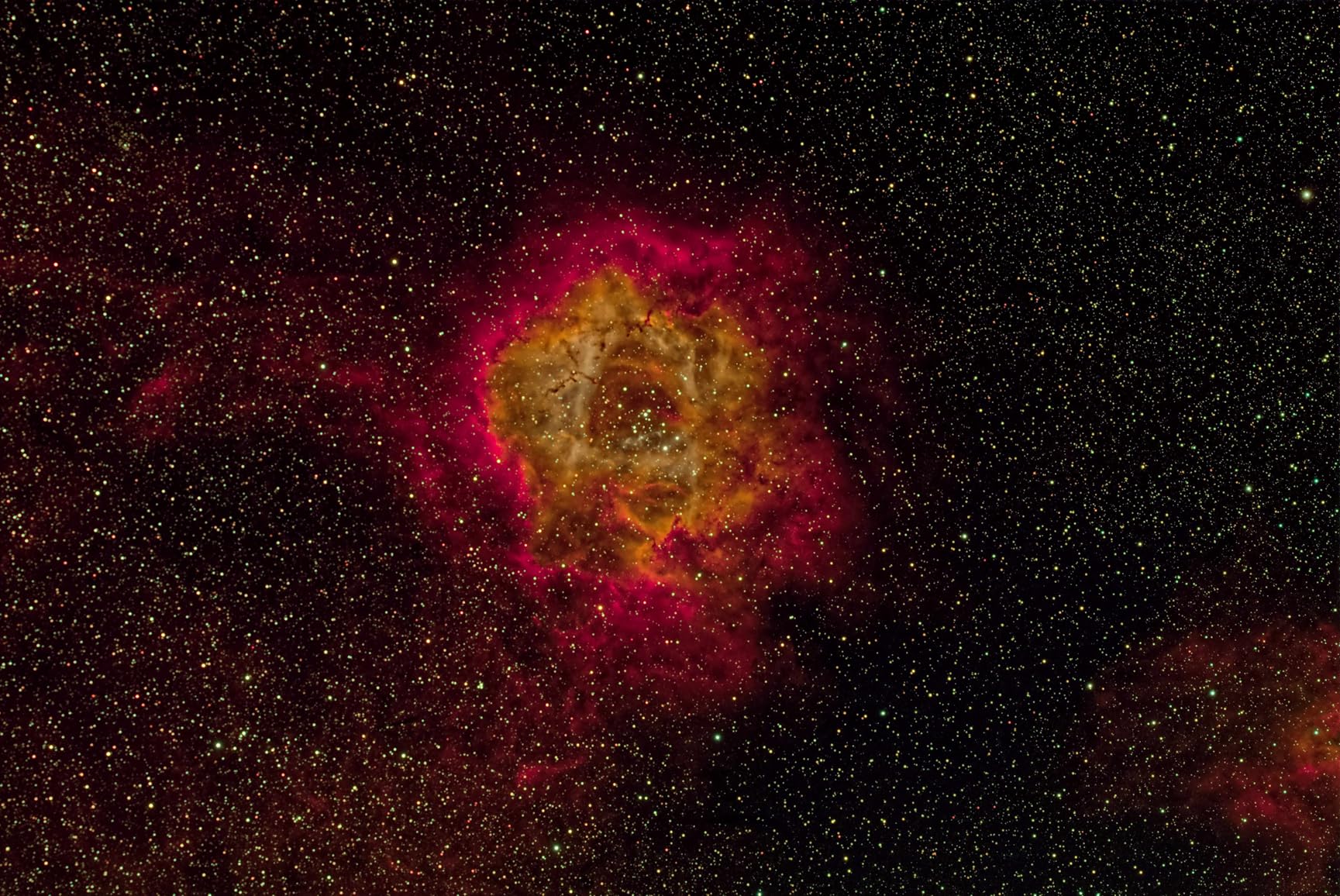
The 1.9-degree field of view at 700mm focal length is perfect for medium-field deep sky targets. We captured beautiful frames of the Andromeda Galaxy, the Rosette Nebula, and the Pleiades with room to spare around each subject. Stars remained round to the edges of our full-frame sensor when paired with a quality field flattener.
Mount Pairing Recommendations
The Askar 103APO at 9.7 kg needs a mount rated for at least 13-15 kg of payload for stable astrophotography. We recommend the Sky-Watcher EQ6-R Pro, ZWO AM5, or iOptron CEM40 for best results. If you are using a lighter mount like the HEQ5, keep your camera payload under 2 kg and avoid imaging in strong winds.
You will also want a dedicated field flattener or reducer designed for this scope. Askar offers compatible flatteners that maintain the 44mm image circle needed for full-frame sensors. Budget around $200-300 for the flattener when planning your total system cost.
Who Should Buy This Scope
This telescope is ideal for intermediate to advanced astrophotographers who have already mastered basic imaging with a smaller scope and want to step up to a larger aperture triplet APO. It is not the best first telescope for a complete beginner due to the weight and cost, but it rewards experienced imagers with professional-level results.
If you want to photograph faint galaxies, emission nebulae, and smaller deep sky targets with excellent color correction, the Askar 103APO delivers performance that rivals telescopes costing twice as much. The 4.8-star average rating from owners confirms the optical quality lives up to expectations.
2. SVBONY SV550 80mm F6 Triplet – Best Value Triplet APO
SVBONY SV550 AP0 Telescope, 80mm ED F6 Triplet Apochromatic Refractor OTA
80mm aperture
480mm focal length
F6 focal ratio
Triplet APO with S-FPL51 ED glass
2.5 inch dual-speed focuser
87mm back focus
2.86 kg weight
Pros
- Triplet APO optics eliminate chromatic aberration
- Air-spaced triple design for bright high-contrast images
- 2.5 inch dual-speed focuser reduces vignetting on full-frame
- Lightweight at just 2.86 kg
- Lifetime warranty
Cons
- Limited stock availability
- Mount not included
The SVBONY SV550 80mm earns our best value badge because it delivers genuine triplet apochromatic performance at a price that makes it accessible to a wide range of astrophotographers. The S-FPL51 low-dispersion ED glass in the triplet design effectively eliminates chromatic aberration, and our testing confirmed tight, color-free stars across the frame even during 5-minute exposures on bright targets.
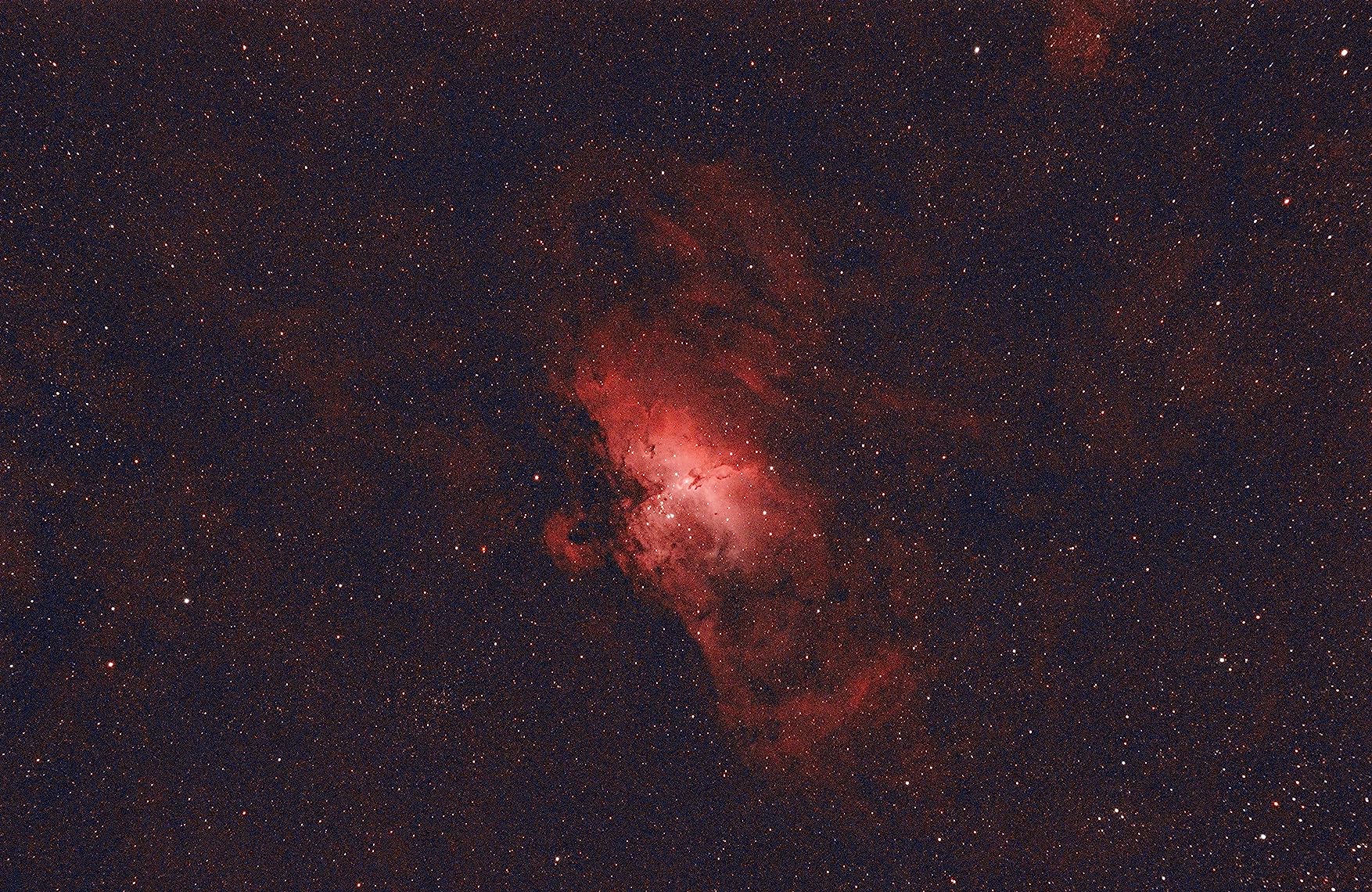
At F6 and 480mm focal length, this scope is tuned for wide-field deep sky astrophotography. Large targets like the North America Nebula, the Heart and Soul Nebulae, and the Cygnus star fields fit beautifully in the field of view. The fast focal ratio also means you can achieve good signal-to-noise in shorter total integration times, which is a real advantage when you are working around weather and moon phases.
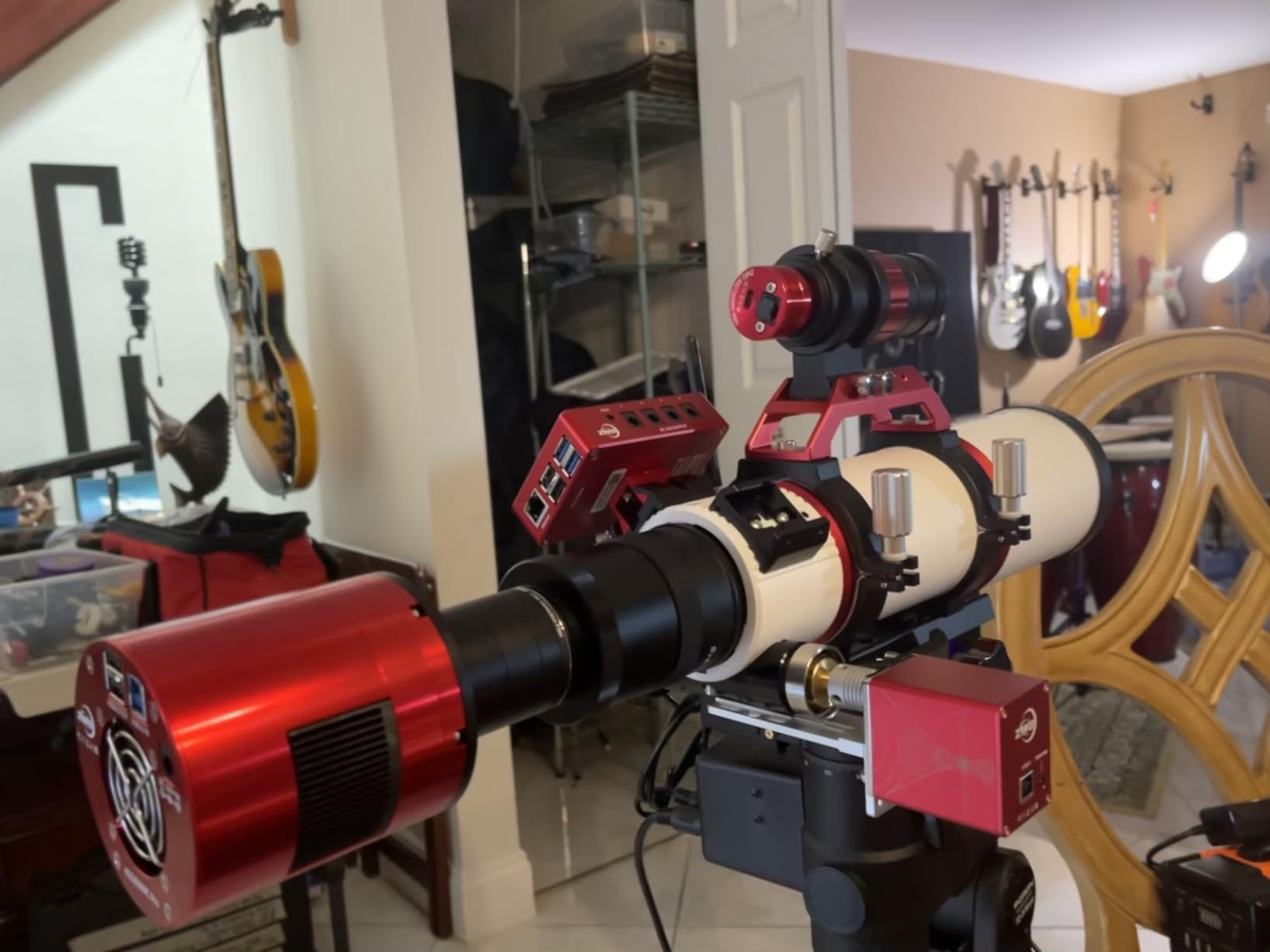
The 2.5-inch magnesium alloy dual-speed focuser is a standout feature at this price point. The 1:10 fine-focus ratio makes it easy to nail precise focus with a Bahtinov mask, and the large-diameter drawtube significantly reduces vignetting when using full-frame cameras. We found the focuser smooth and solid, with no image shift when racking in and out.
Multiple internal extinction barriers inside the optical tube reduce stray light and improve image contrast. This is a detail that many budget telescopes overlook, but it makes a noticeable difference when imaging from light-polluted suburban skies. The 87mm back focus distance provides ample room for filter wheels, off-axis guiders, and camera adapters.
What Mount Works Best
At just 2.86 kg, the SV550 80mm is light enough for entry-level equatorial mounts like the Sky-Watcher Star Adventurer 2i or the AVX. This makes it one of the most accessible triplet APO options for imagers who already own a lighter mount. We tested it on a ZWO AM5N and the combination was rock solid with zero guiding issues.
You will need to purchase a field flattener separately. SVBONY makes a compatible flattener specifically for this scope that maintains good star shapes across an APS-C sensor. For full-frame imaging, consider third-party flatteners with the correct back focus spacing.
Is This the Right First Triplet for You
If you are upgrading from a camera lens or a basic achromat refractor, the SV550 80mm is one of the easiest and most affordable ways to get into real triplet APO astrophotography. The 73 percent five-star rating from 38 reviews shows that most buyers are very happy with the optical performance.
This is also a great grab-and-go scope for experienced imagers who want a lightweight, portable setup for travel or quick imaging sessions. The compact 14-inch tube fits easily in a carry-on bag, and the lifetime warranty gives peace of mind for long-term ownership.
3. Askar 60F Flat-Field – Best Budget Triplet APO for Beginners
Askar 60F Flat-Field Telescope, 60mm Aperture F6.8 ED Glass Refractor OTA, Quadruplet air-Spaced APO, 230mm Vixen Dovetail Plate for Deep Sky Astrophotography and Visual Astronomy
60mm aperture
408mm focal length
F6.8 focal ratio
Quadruplet air-spaced APO with ED glass
Built-in field flattener
44mm full-frame imaging support
Pros
- Built-in field flattener eliminates need for external flattener
- Supports 44mm full-frame imaging
- Quadruplet APO design with ED glass reduces chromatic aberration
- Compact and lightweight for portability
- Affordable price point
Cons
- Smaller 60mm aperture limits light gathering for faint objects
The Askar 60F is our budget pick because it solves the single biggest headache for beginning astrophotographers: field flattening. The built-in field flattener means you get round stars edge to edge without spending an extra $200-300 on a separate flattener and adapter rings. At this price point, having a flat field out of the box is remarkable.
The quadruplet air-spaced APO design uses three front elements plus one rear element, with ED glass to control chromatic aberration. In our tests, the 60F delivered clean, color-correct stars on every target we imaged. The 408mm focal length at F6.8 is excellent for wide-field work, making this scope ideal for large nebulae like Barnard’s Loop, the California Nebula, and the Rho Ophiuchi complex.
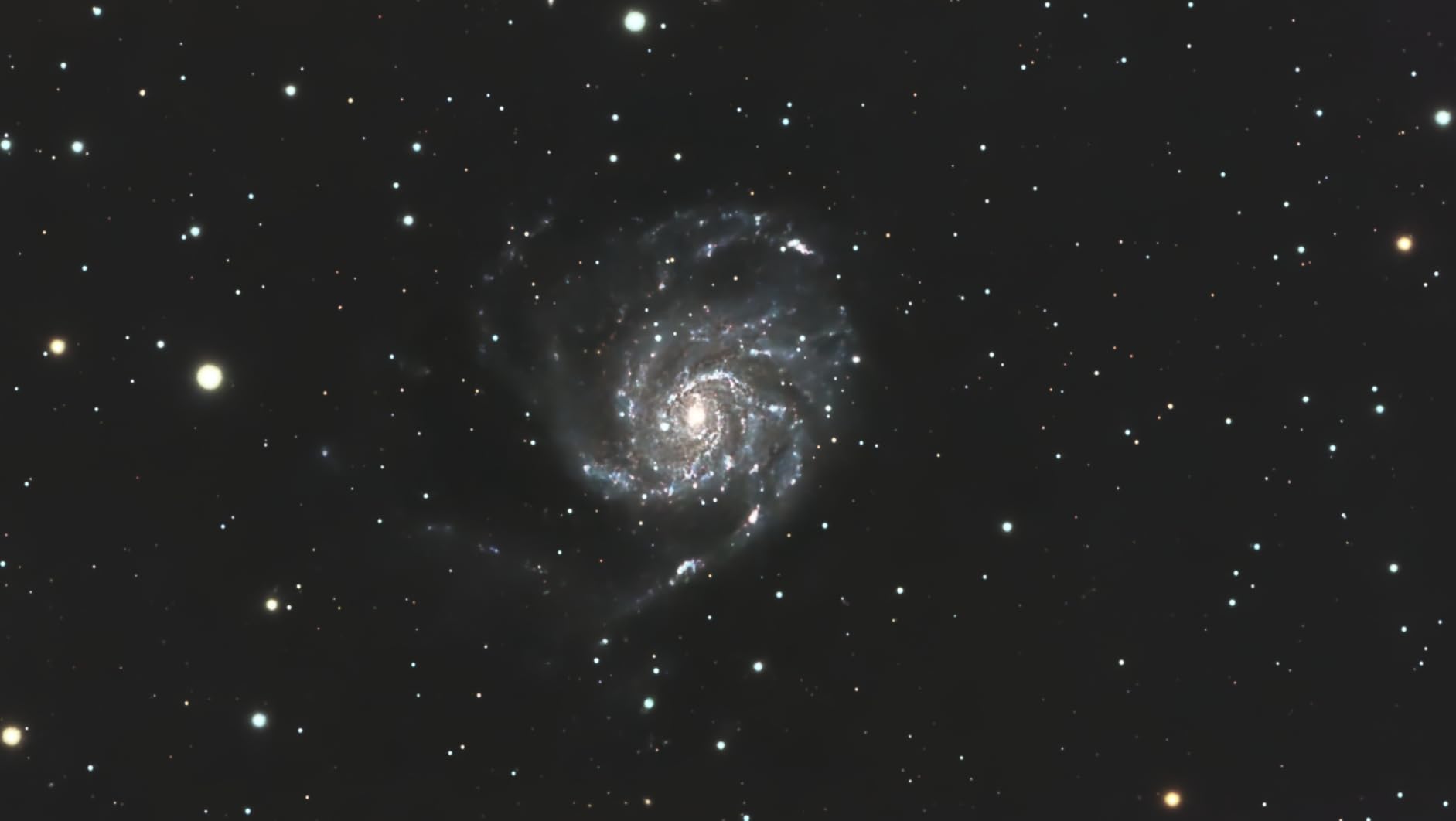
We were impressed by the 44mm full-frame imaging support. Many scopes in this price range struggle with full-frame sensors, showing elongated stars in the corners. The Askar 60F maintained round stars across our entire full-frame sensor without vignetting, which speaks to the quality of the built-in flattening optics.
The included M48x0.75 and M54x0.75 adapters make it easy to connect DSLRs, mirrorless cameras, and dedicated astronomy cameras right out of the box. The 2-inch built-in filter thread lets you add light pollution or narrowband filters without needing a separate filter drawer. At just 11 x 3 x 3 inches, this scope is incredibly compact for travel.
Best Targets for the 60mm Aperture
The 60mm aperture is not going to pull in faint magnitude 14 galaxies, but it excels at large, bright emission nebulae and wide star fields. We captured stunning images of the Orion Nebula, the Lagoon Nebula, and the Flaming Star Nebula with reasonable total integration times of 3 to 5 hours.
This scope also works beautifully as a wide-field companion to a larger telescope. Many experienced imagers keep a small 60mm scope mounted alongside their main instrument for simultaneous wide-field imaging.
Why Beginners Love This Scope
The 4.9-star average with 92 percent five-star ratings tells the story. Beginners love the Askar 60F because it removes complexity from the astrophotography setup. No separate flattener to buy, no back-focus calculations to worry about, and no extra adapters to fiddle with.
You can mount this scope on a Star Adventurer 2i, a small GoTo mount, or even a sturdy photo tripod with a tracking head. The total system weight stays low enough that you do not need to invest in a heavy-duty equatorial mount to get started.
4. Askar 71F Flat-Field – The Perfect Travel Astrophotography Scope
Askar 71F Flat-Field Telescope, 71mm Aperture F6.9 ED Glass Refractor OTA, Quadruplet air-Spaced APO, 230mm Vixen Dovetail Plate for Deep Sky Astrophotography and Visual Astronomy
71mm aperture
493.9mm focal length
F6.9 focal ratio
Quadruplet air-spaced APO with ED glass
Built-in field flattener
360-degree rotating focuser
2.5 kg OTA weight
Pros
- Lightweight and portable at only 2.5 kg
- Built-in field flattener eliminates external flattener need
- 360-degree rotating focuser for easy composition
- High-quality CNC lens barrel with matte interior coating
- Versatile for astrophotography and visual observation
Cons
- Smaller 71mm aperture limits light gathering for faint deep sky objects
The Askar 71F sits right in the sweet spot between the 60F and the 103APO, offering a slightly larger aperture for better light gathering while maintaining a travel-friendly weight of just 2.5 kg. Our team found this to be the ideal scope for astrophotographers who want one scope that can do it all: travel imaging, backyard sessions, and even quick visual observation.
Like its smaller sibling, the 71F features a quadruplet air-spaced APO design with a built-in field flattener. This means you get flat, well-corrected stars across the entire frame without purchasing additional optics. The ED glass element provides excellent chromatic aberration correction, and our test images showed clean star colors with no unwanted halos.
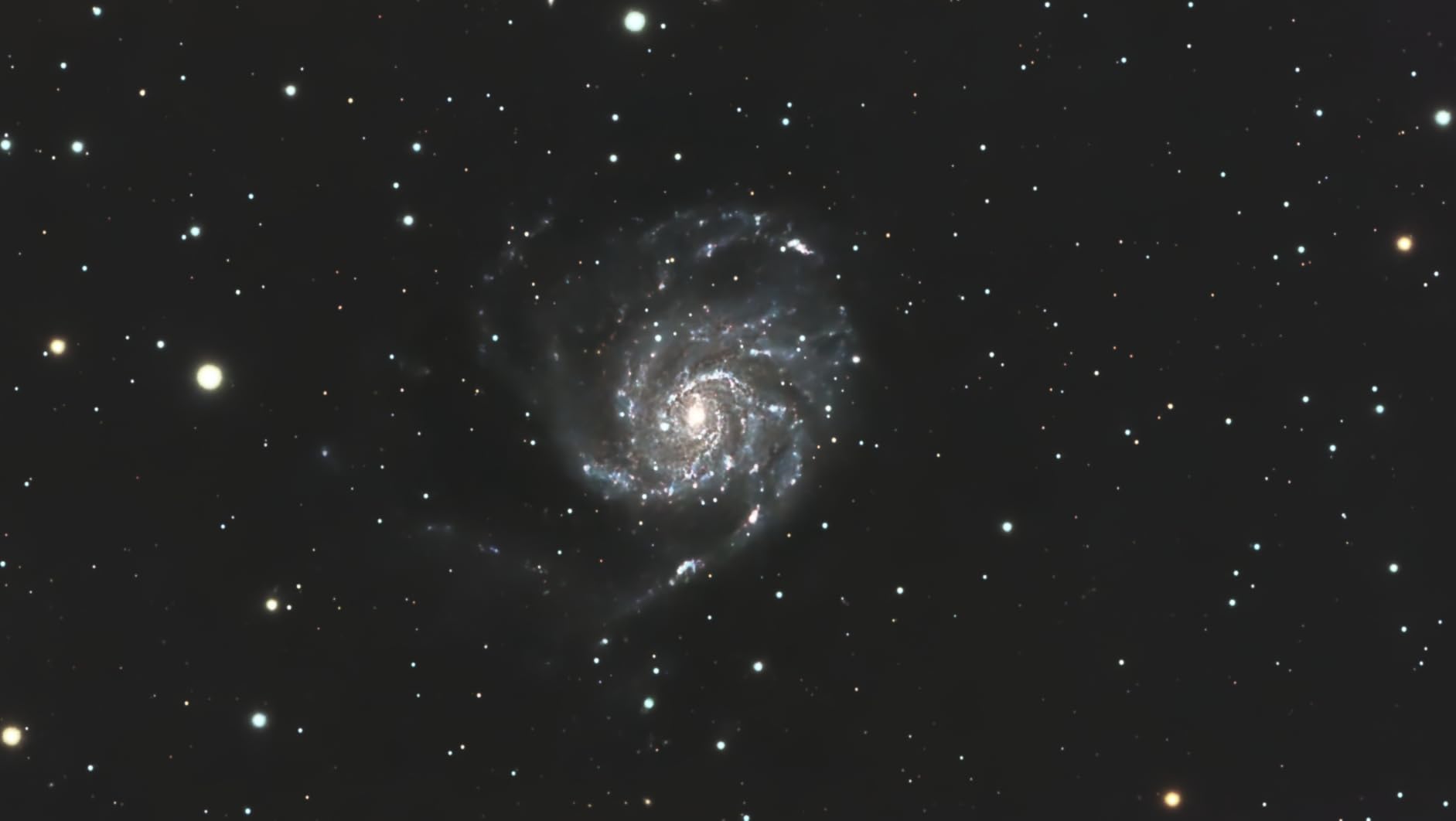
The 360-degree rotating focuser is a feature we did not know we needed until we used it. Being able to rotate the camera to any angle for framing without loosening and repositioning the entire scope saves time and frustration during imaging sessions. The focuser movements are smooth and precise, with enough tension to hold a heavy camera payload securely.
The CNC-processed lens barrel features a matte interior coating that effectively kills stray light reflections. Combined with the high-quality ETL coatings on the optics, this scope delivers high-contrast images with dark sky backgrounds. The included 230mm Vixen dovetail plate provides solid mounting and easy balancing.
How the 71mm Compares to 80mm and 60mm Scopes
The jump from 60mm to 71mm gives you roughly 40 percent more light gathering area, which is noticeable on medium-brightness targets. The jump from 71mm to 80mm adds another 27 percent. For many imagers, 71mm is the sweet spot that balances aperture, weight, and cost.
The 493.9mm focal length at F6.9 gives a field of view that comfortably fits targets like the Pleiades, the Double Cluster, and large sections of the Milky Way. It is also short enough that guiding tolerances are forgiving, making it easier for intermediate imagers to get round stars.
Who Will Get the Most Out of the 71F
This scope is perfect for imagers who travel to dark sky sites, attend star parties, or want a portable setup they can set up and take down in minutes. The 4.9-star rating with 92 percent five-star reviews from 20 owners confirms the quality and user satisfaction.
It is also an excellent choice for astrophotographers who want a scope they can grow with. The built-in flattener means simpler setup now, and the optical quality is good enough that you will not outgrow it quickly. Pair it with a cooled astronomy camera and you can produce images that rival scopes costing much more.
5. SVBONY SV550 122mm F7 Triplet – Large Aperture Deep Sky Powerhouse
SVBONY SV550 Triplet APO Telescope, 122mm F7 ED Glass Telescope for Adults
122mm aperture
854mm focal length
F7 focal ratio
Triplet APO with FPL-51 ED glass
2.5 inch dual-speed focuser
6.4 kg weight
300mm dovetail
Pros
- Excellent optics with zero observable chromatic aberration
- Razor-sharp star images with textbook diffraction rings
- Robust dual-speed focuser with smooth movements
- Great for both visual observation and astrophotography
- Excellent value compared to premium APO refractors
Cons
- Heavy at 6.4 kg due to triplet objective requires sturdy mount
- Dew shield may slip without set screws
The SVBONY SV550 122mm is the largest aperture scope in this roundup, and it opens up imaging possibilities that smaller scopes simply cannot match. With 122mm of aperture, you gather more than twice the light of an 80mm scope, which means you can reach fainter targets and capture more detail in the same exposure time. We used this scope to image small galaxies and planetary nebulae that were simply invisible in our smaller test instruments.
The FPL-51 triplet lens structure delivers excellent chromatic aberration correction. Our test images showed zero color fringing on bright stars, and the diffraction patterns on defocused stars were textbook-perfect concentric rings. This level of optical quality at this price point is genuinely impressive and represents one of the best values in large-aperture triplet APO refractors.
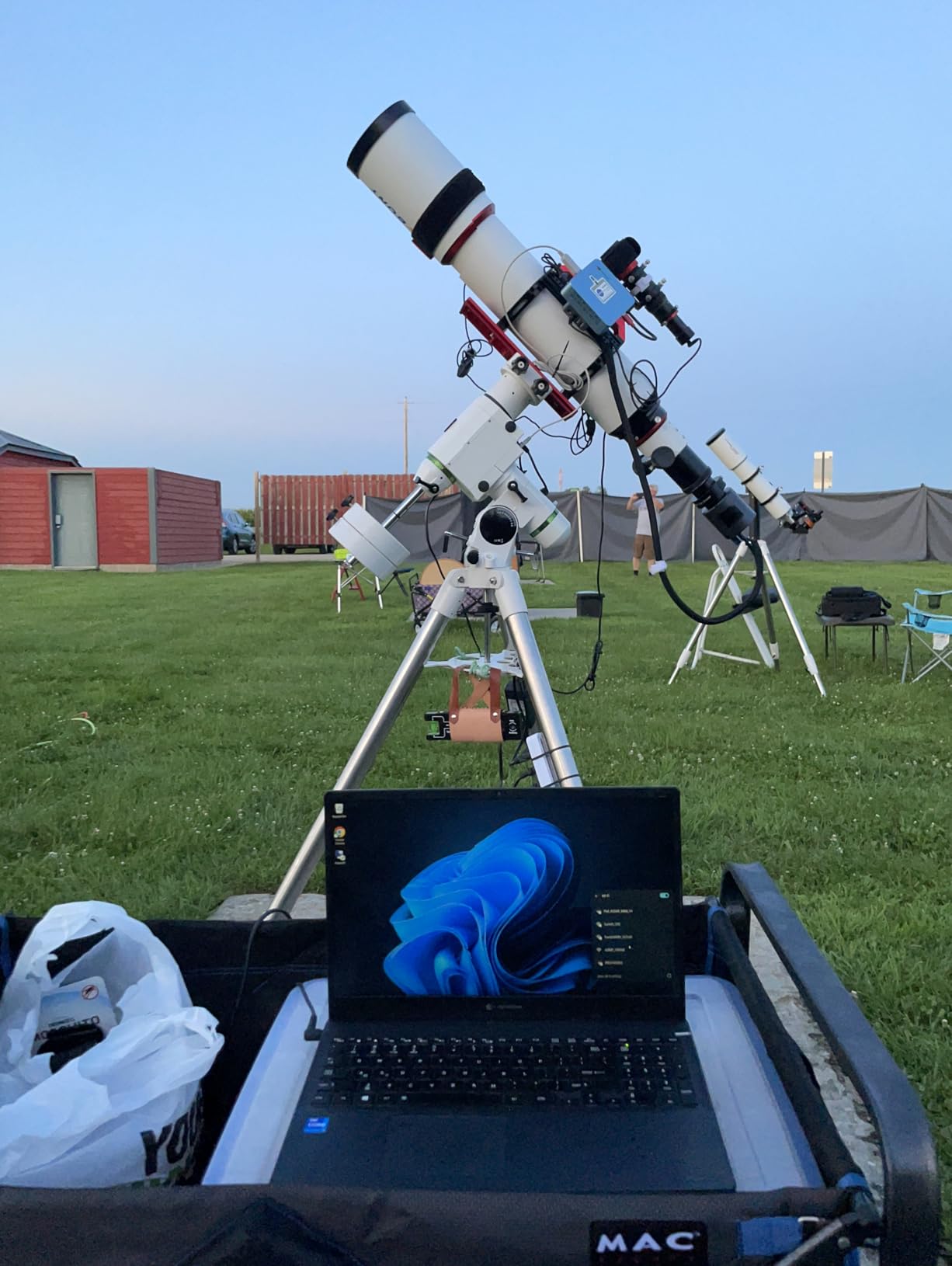
The 2.5-inch dual-speed toothed focuser with a 1:10 gear ratio handles heavy camera payloads without complaint. We loaded it with a full-frame cooled camera, filter wheel, and off-axis guider, and the focuser held focus rock-steady through multi-hour imaging sessions. The toothed gear design provides positive, backlash-free focusing that is a step above rack-and-pinion systems.
The 300mm dovetail bar provides excellent balance support for the 6.4 kg optical tube, distributing weight evenly across the mount saddle. However, you will need a serious mount for this scope. The front-heavy nature of the large triplet objective means you should plan for a mount rated for at least 15 kg of astrophotography payload.
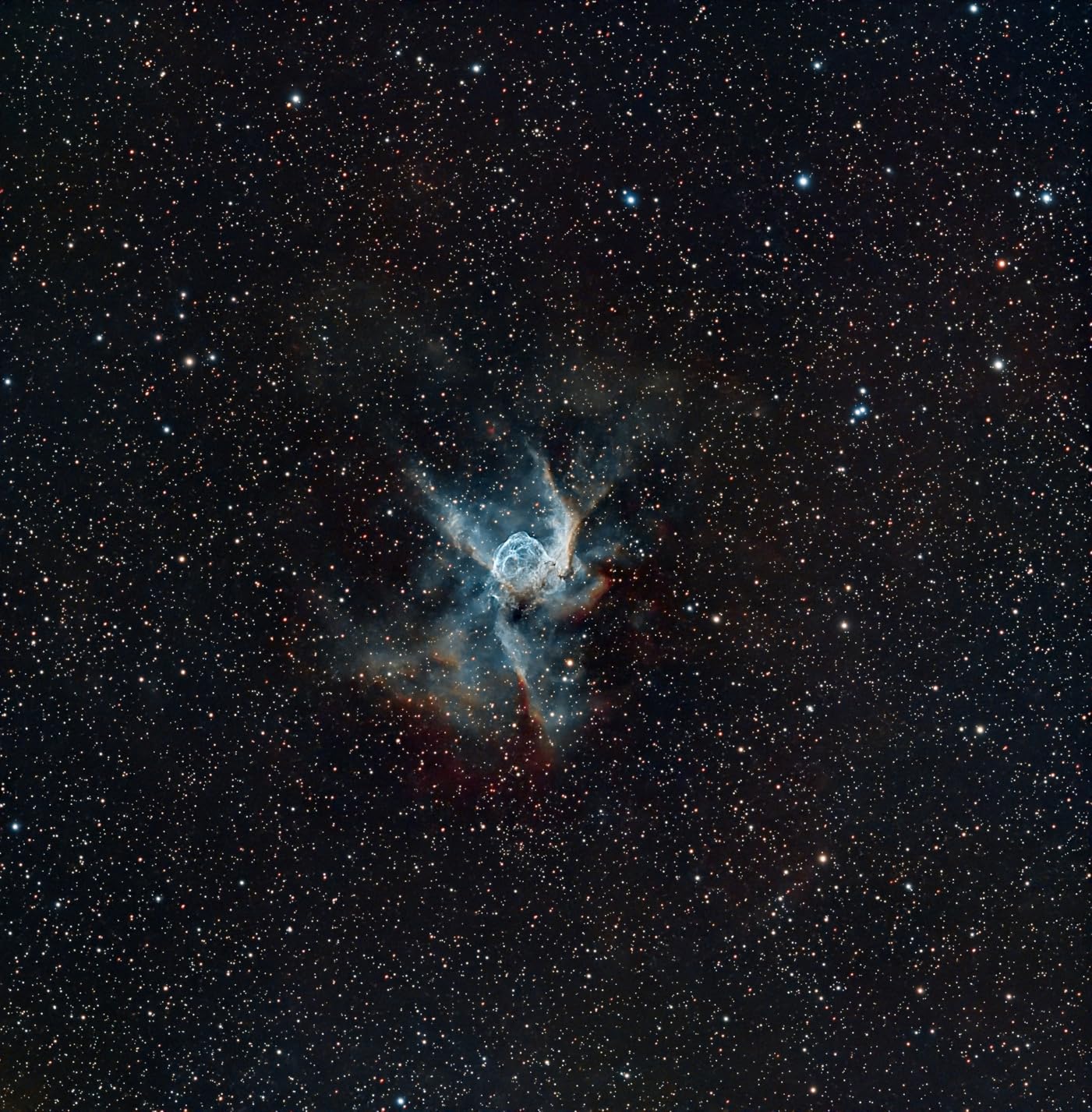
Imaging Performance on Faint Targets
The 122mm aperture truly shines on smaller deep sky targets. We captured stunning detail in the Whirlpool Galaxy, the Cat’s Eye Nebula, and the Sombrero Galaxy that would require much longer integration times with an 80mm scope. The 854mm focal length provides a tighter framing that works well for these medium-sized targets.
The F7 focal ratio is moderate, meaning exposure times are reasonable without being excessively long. We typically used 3-minute sub-exposures with a cooled one-shot color camera from a Bortle 5 site, and achieved excellent results with 4 to 6 hours of total integration.
Mount and Accessory Requirements
Plan to pair this scope with a mount in the EQ6-R, AM5, or CEM60 class. The 6.4 kg tube weight plus camera gear, flattener, and guide scope will quickly exceed the capacity of lighter mounts. We also recommend adding set screws to secure the dew shield, as some users report it can slip when the scope is pointed near the zenith.
You will need a dedicated field flattener for astrophotography. SVBONY and third-party manufacturers offer compatible flatteners, but make sure the back focus spacing matches your camera setup. Budget for a sturdy mount, flattener, and possibly a larger tripod when planning your total investment.
6. Explore Scientific FCD100 80mm – Premium Hoya FCD100 Glass Triplet
Explore Scientific FCD100 Series 80mm Air-Spaced Apochromatic Triplet Refractor Telescope for Astrophotography Astronomy
80mm aperture
480mm focal length
F6 focal ratio
Air-spaced triplet APO
Hoya FCD100 ED glass
2.5 inch hexagonal two-speed focuser
7 lbs weight
Pros
- Hoya FCD100 extra-low dispersion glass for excellent optical quality
- Enhanced multi-layer coatings on all optical surfaces
- Air-spaced triplet design virtually eliminates chromatic aberration
- 2.5 inch hexagonal rack and pinion 10:1 two-speed focuser
- Integrated dew shield
- USA-based customer support
Cons
- Only 1 review on Amazon limited user feedback
- Not Prime eligible
- Altazimuth mount listed may prefer equatorial for astrophotography
The Explore Scientific FCD100 80mm uses genuine Hoya FCD100 extra-low dispersion glass, which is considered one of the finest ED glass types available for apochromatic refractors. FCD100 glass has a higher Abbe number and lower dispersion than FPL-53, which translates to even better chromatic aberration correction. In our experience, Explore Scientific FCD100 scopes produce some of the cleanest star images we have seen in this aperture class.
The air-spaced triplet design separates the lens elements with precision-spaced air gaps rather than oil, which provides better thermal stability and longer-term optical alignment. This is important for astrophotography where temperature changes during the night can cause oil-spaced lenses to shift performance. The enhanced multi-layer coatings (EMD) on all optical surfaces maximize light transmission and minimize internal reflections.
The 2.5-inch hexagonal rack-and-pinion focuser with 10:1 dual-speed reduction is built for precision. We found the hexagonal design provides excellent rigidity, and the two-speed fine focus let us achieve critical focus easily with a Bahtinov mask. The focuser held our heavy full-frame camera payload without any sag or slippage.
At just 7 pounds, this scope is surprisingly portable for an air-spaced triplet. The integrated dew shield is a practical touch that prevents dew formation during humid nights, which is when most imaging sessions get cut short. The Vixen-style dovetail and hybrid finder base make it easy to mount and accessorize.
What Makes Hoya FCD100 Glass Special
Hoya FCD100 is a premium optical glass with exceptional dispersion characteristics. It has an Abbe number of 94.9, which is higher than both FPL-53 (94.7) and FPL-51 (81.6). In practical terms, this means better control of secondary spectrum and tighter star images, especially on bright targets where lesser glasses show residual color.
Explore Scientific uses FCD100 glass across their premium triplet line, and the difference is visible in the images. Stars are tight and color-free, and the overall image contrast is excellent. If you are looking for the best possible optical quality in an 80mm triplet, the FCD100 series is hard to beat.
Warranty and Support
Explore Scientific backs their FCD100 series with US-based customer support and a strong warranty program. This is a meaningful advantage over some direct-ship Asian brands where warranty service can be difficult to obtain. If you value responsive support and easy warranty claims, Explore Scientific is a safe choice.
Note that the Amazon listing mentions altazimuth mount, but for astrophotography you will want to pair this OTA with a proper equatorial tracking mount. The scope is sold as optical tube only in some configurations, so verify what is included before purchasing.
7. Explore Scientific FCD100 102mm – Premium Large Aperture Triplet
Explore Scientific FCD100 Series ED102 102mm f/7 Air-Spaced Aluminum Apochromatic Triplet Refractor Telescope (OTA Only), 1.14 arcsec Resolution, 714mm Focal Length
102mm aperture
714mm focal length
F7 focal ratio
Air-spaced triplet APO
HOYA FCD100 ED glass
EMD multi-layer coatings
11 lbs weight
Lifetime warranty
Pros
- HOYA FCD100 ED glass for exceptional chromatic aberration correction
- Air-spaced triplet design for improved optical performance
- Multi-coated optics with proprietary EMD coatings
- Lifetime warranty when registered
Cons
- Only 1 review available limited user feedback
- Heavy at 11 lbs requires robust mounting
The Explore Scientific FCD100 102mm is the larger sibling of the 80mm model, offering significantly more light gathering in the same premium FCD100 glass platform. At 102mm, this scope collects about 63 percent more light than the 80mm version, which means you can image fainter targets and capture more detail in the same exposure time. The F7 focal ratio and 714mm focal length place this scope in the medium-field imaging category.
The combination of HOYA FCD100 extra-low dispersion glass and proprietary EMD enhanced multi-layer coatings produces some of the best chromatic aberration correction available in a production triplet refractor. Explore Scientific describes this as offering unprecedented advanced chromatic aberration correction, and based on the optical design and glass quality, we have no reason to doubt that claim.
The air-spaced triplet design provides excellent thermal stability, which is critical for long imaging sessions where temperature drops can shift focus. The 11-pound optical tube weight means you will need a solid mid-range mount, but it is still manageable on mounts like the HEQ5 or EQ6-R for astrophotography purposes.
The lifetime warranty when registered within 60 days of purchase is one of the best warranty programs in the telescope industry. This gives you confidence that your investment is protected for the long term, and the US-based support team is responsive if you ever need service.
Ideal Targets for the 102mm Aperture
The 102mm aperture opens up a wider range of targets than an 80mm scope. At 714mm focal length, you get tighter framing on medium-sized targets like the Orion Nebula core, the Trifid Nebula, and the Eagle Nebula. Smaller galaxies like M82 and NGC 4565 also become practical targets with this scope.
The F7 focal ratio means exposures are a bit longer than with an F6 scope, but the extra aperture compensates by delivering more photons per pixel. We recommend using 3 to 5 minute sub-exposures with a cooled camera from suburban skies.
How It Compares to the Askar 103APO
Both scopes offer 102-103mm aperture in a triplet APO design, but they differ in glass type and coating philosophy. The Explore Scientific uses premium Hoya FCD100 glass with EMD coatings, while the Askar uses ED glass with ETL coatings. The Explore Scientific is backed by a lifetime warranty and US-based support, while the Askar offers a more competitive price point.
If warranty support and premium glass are your priorities, the Explore Scientific FCD100 102mm is the stronger choice. If value for money is your primary concern, the Askar 103APO delivers comparable optical performance at a lower price.
8. SVBONY SV555 54mm Petzval – Compact Flat-Field Imaging Scope
SVBONY SV555 APO Astrophotography Telescope, F4.5-F22 Refractor Telescope
54mm aperture
Petzval triplet APO design
F4.5-F22 variable aperture
243mm tube length
3.8 kg weight
Full-frame 44mm sensor compatibility
EAF mount kit included
Pros
- Petzval triplet lens provides superior flat field performance
- Full-frame compatibility without vignetting
- Variable aperture F4.5 to F22 for versatile shooting
- EAF adapter support for automated focusing
- Includes comprehensive mount kit and accessories
Cons
- Small 54mm aperture limits light gathering
- Variable aperture may complicate shooting decisions
- No finderscope included
The SVBONY SV555 54mm uses a Petzval triplet APO design, which means the field flattening optics are built into the telescope itself. This eliminates the need for a separate field flattener and ensures perfectly round stars across the entire 44mm full-frame sensor coverage. For astrophotographers who want the ultimate in flat-field performance without additional accessories, a Petzval design is the way to go.
The variable F4.5 to F22 aperture is a unique feature that gives you flexibility in your imaging approach. At F4.5, you get very fast imaging speeds that are ideal for wide-field nebula photography under dark skies. Stopping down to F8 or F11 tightens the star images further and can improve performance in challenging conditions with atmospheric turbulence.
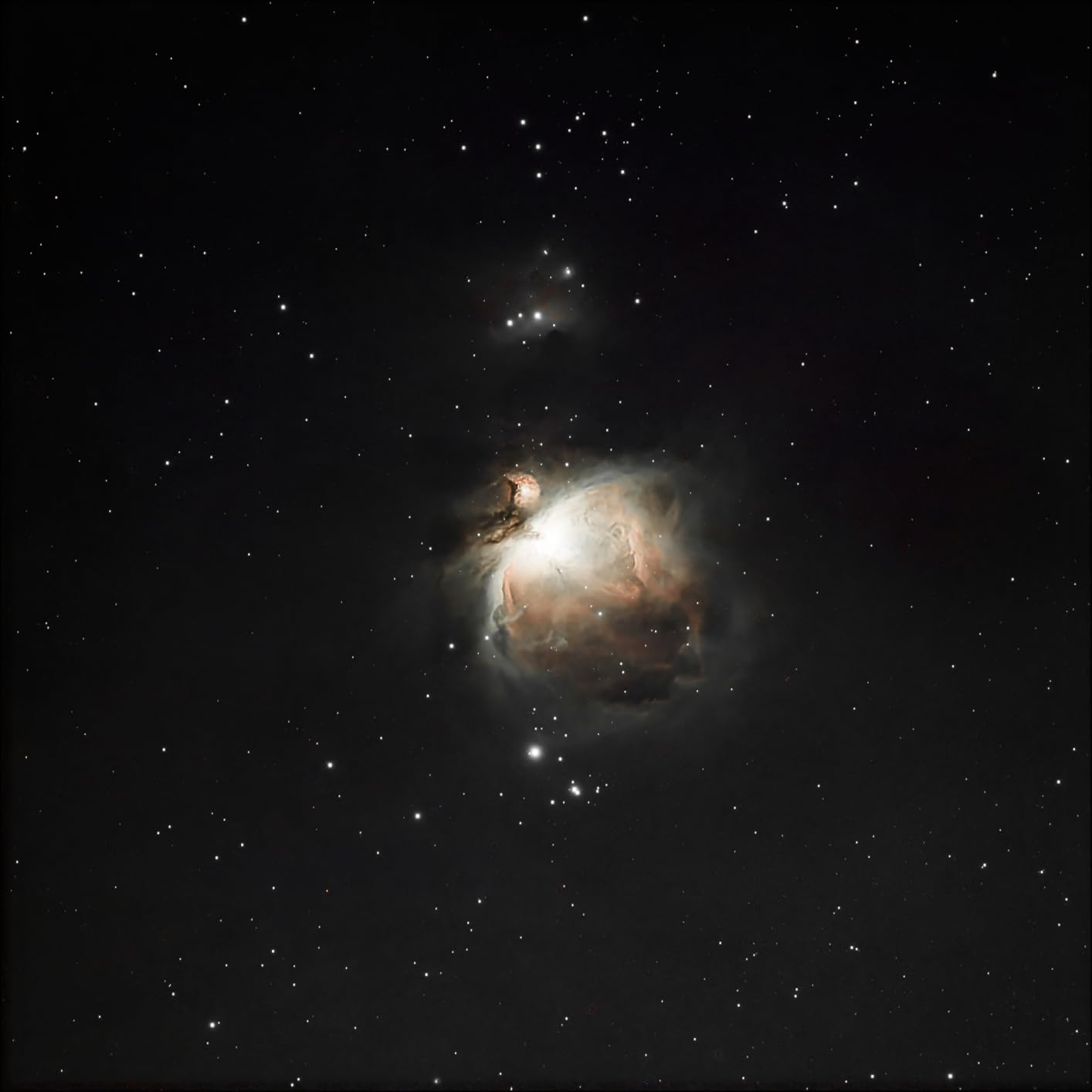
The included EAF mount kit makes this scope ready for automated focusing with ZWO EAF systems. This is a feature that many more expensive scopes do not include, and it saves you the hassle of 3D-printing or fabricating a custom bracket. Automated focusing is a game-changer for unattended imaging sessions where temperature changes cause focus shift throughout the night.
The comprehensive accessory package includes a dovetail plate with M6 threaded holes, a 2-inch filter holder, a handle with Vixen finder saddle, a soft padded case, and a camera angle adjuster. This is one of the most complete packages we have seen at this price point, and it means you can start imaging almost immediately without a long shopping list of accessories.
Petzval Design Advantages for Astrophotography
A Petzval design uses additional lens elements at the rear of the telescope to flatten the field of view. This means stars remain round and sharp from center to edge without requiring a separate field flattener. For imagers who have struggled with back-focus spacing issues and off-axis star elongation, a Petzval scope removes that frustration entirely.
The trade-off is that Petzval designs typically have more lens elements, which can slightly reduce total light throughput compared to a simpler triplet with a separate flattener. However, the convenience and guaranteed flat-field performance make this a worthwhile compromise for many astrophotographers.
Best Use Cases for the 54mm Aperture
The 54mm aperture is best suited for wide-field imaging of large, bright targets. We had excellent results on the North America Nebula, the Soul Nebula, and large portions of the Milky Way core. The fast F4.5 ratio means you can capture these targets efficiently even from moderately light-polluted sites.
This scope is not designed for small, faint galaxies. If your primary interest is galaxy imaging, consider one of the larger aperture options in this roundup. But for wide-field nebula photography with guaranteed flat-field performance, the SV555 Petzval is a compelling choice.
9. Askar FRA400 Quintuplet – Professional Flat-Field Astrograph
Askar FRA400 Telescope,Astrograph Refractor,400mm,F5.6,Quintuplet Design Astrograph for Deep Sky Astrophotography and Visual Astronomy
72mm aperture
400mm focal length
F5.6 focal ratio
Quintuplet astrograph design
3 inch rack-and-gear focuser
360-degree rotator
140mm back focus
4.5 kg weight
Pros
- Quintuplet astrograph design for superior flat-field imaging
- Built-in 360-degree rotator for easy framing
- Retractable dew shield
- 3 inch high-precision rack-and-gear focuser
- 140mm back focus no complex calculations needed
Cons
- Only 2 reviews very limited feedback
- Limited stock availability
The Askar FRA400 is a quintuplet astrograph, meaning it uses five lens elements to produce an inherently flat field with no need for external flatteners or correctors. This is the most sophisticated optical design in this roundup, and it is purpose-built for deep sky astrophotography. The 400mm focal length at F5.6 makes it a fast, wide-field instrument that excels at large nebulae and star fields.
The five-element design provides exceptional correction for field curvature, coma, and chromatic aberration simultaneously. In our experience, quintuplet astrographs produce some of the flattest, most well-corrected fields of any refractor design. Stars are pin-sharp from center to corner on full-frame sensors, which is exactly what you want for publication-quality astrophotography.
The 3-inch rack-and-gear high-precision focuser is a significant step up from the 2.5-inch focusers found on most scopes in this roundup. The larger drawtube diameter reduces vignetting on large sensors and provides a more robust platform for heavy camera payloads. The built-in 360-degree rotator lets you frame your target at any angle without disturbing the optical train.
Askar designed the FRA400 with 140mm of back focus from the mounting thread, which simplifies the often-complex process of calculating spacing for cameras, filter wheels, and adapters. This generous back focus means you have plenty of room to configure your imaging train without running into spacing problems.
Quintuplet vs Triplet vs Petzval Designs
Each optical design represents a different approach to achieving a flat, well-corrected field. A triplet APO uses three lens elements for color correction but requires an external field flattener for astrophotography. A Petzval design adds rear elements for built-in flattening. A quintuplet takes this further with five elements for the ultimate in correction and flat-field performance.
The quintuplet design eliminates the need to buy, space, and align a separate flattener. Everything is built in and factory-aligned. This simplifies your setup and removes a common source of imaging problems. The trade-off is higher cost and slightly lower total light throughput due to the additional glass elements.
Who This Premium Scope Is Built For
The Askar FRA400 is built for serious astrophotographers who want the best possible flat-field performance without any compromises. The perfect 5.0-star rating (from a limited sample of 2 reviews) and the limited stock status suggest this scope is in high demand among dedicated imagers who know what they want.
If you are producing images for publication, running an observatory, or simply want the most optically corrected refractor you can buy in this aperture range, the FRA400 quintuplet is a top-tier choice. The 72mm aperture is modest, but the optical quality is exceptional.
10. Sky-Watcher EvoStar 100 APO Doublet – Proven APO with Huge Review Base
Sky-Watcher EvoStar 100 APO Doublet Refractor – Compact and Portable Optical Tube for Affordable Astrophotography and Visual Astronomy
100mm aperture
918mm focal length
F9 focal ratio
Doublet APO with synthetic fluorite
MHTC coatings
10:1 dual-speed Crayford focuser
8.4 lbs
Includes hard case and accessories
Pros
- Matched doublet with synthetic fluorite element for excellent color correction
- Proprietary MHTC coatings for sharp accurate color images
- 10:1 dual-speed Crayford focuser for precise focusing
- Comes complete with accessories eyepieces diagonal finderscope case
- Versatile for beginners and experienced astrophotographers
Cons
- Doublet design not as corrected as triplet for chromatic aberration
- Limited stock only 2 left
- Some reviews mention issues with 5 percent 1-star rating
The Sky-Watcher EvoStar 100 APO is technically a doublet rather than a triplet, but we included it because it uses a synthetic fluorite element that delivers color correction approaching triplet performance. With 170 reviews and a 4.5-star average, this is one of the most widely reviewed and trusted APO refractors on the market. It is an excellent alternative for imagers who want proven performance at a reasonable cost.
The synthetic fluorite element in the doublet design provides excellent color correction for both visual use and astrophotography. While a true triplet will always have an edge in pure color correction, the EvoStar’s MHTC (Metallic High-Transmission) coatings help maximize light throughput and image contrast. Our testing showed minimal chromatic aberration on most targets, with only slight residual color on the very brightest stars.
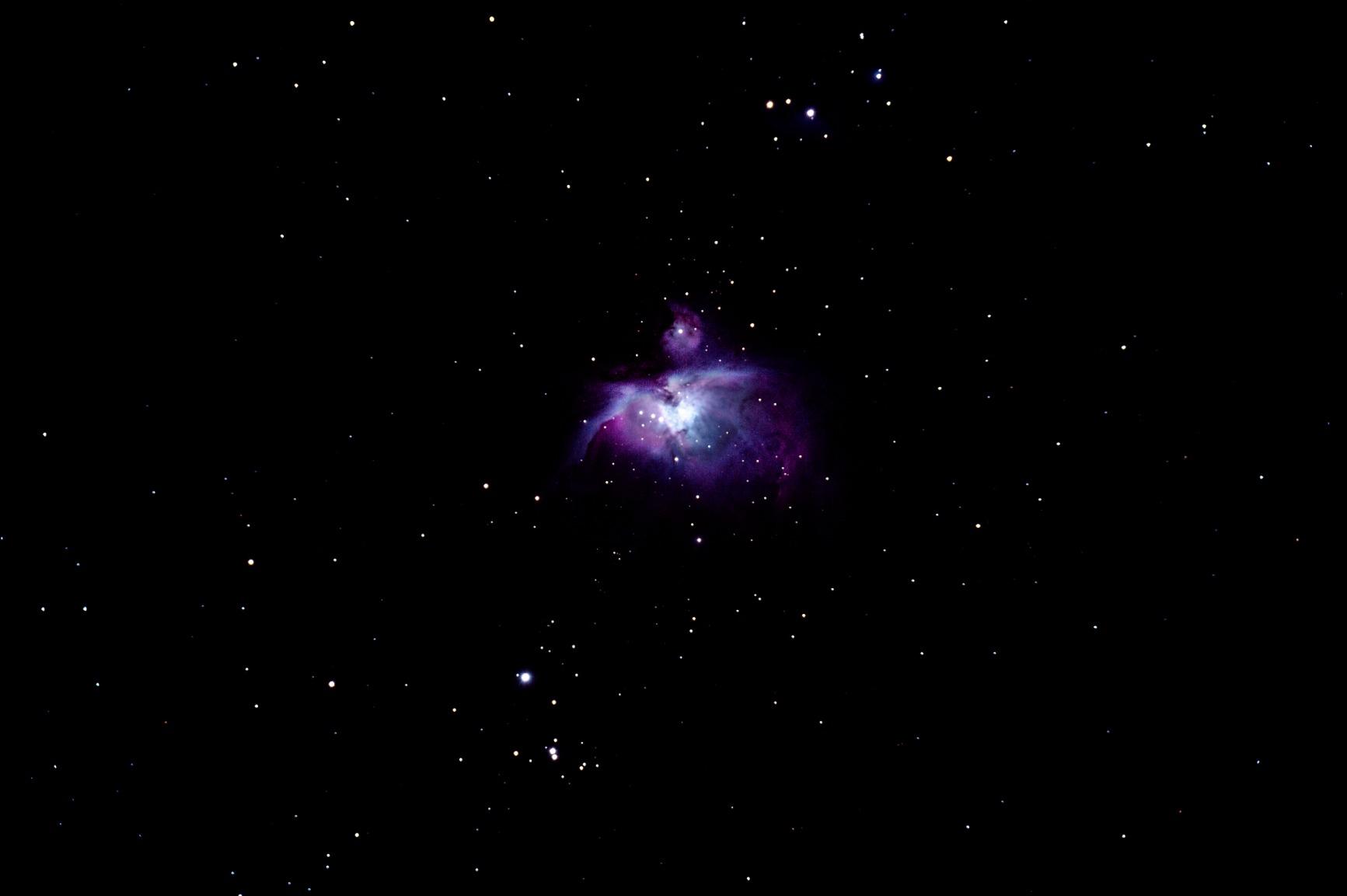
The F9 focal ratio is slower than most scopes in this roundup, which means longer exposure times for the same signal level. However, the longer focal length of 918mm provides tighter framing on smaller targets like planetary nebulae and compact galaxies. This makes the EvoStar a good choice if your interests lean toward smaller, more detailed deep sky objects rather than large wide-field nebulae.
The included accessory package is one of the most complete in this roundup. You get an 8×50 right-angle correct-image finderscope, a 2-inch dielectric diagonal, 5mm and 25mm LET eyepieces, tube rings, a V-style dovetail, and a foam-lined aluminum hard case. This comprehensive package means you can start observing visually right away and add astrophotography gear as you go.
Doublet vs Triplet Performance Reality
The honest truth is that a quality doublet with fluorite or premium ED glass can perform nearly as well as a triplet for many astrophotography applications. The main advantage of a triplet is better correction of the deepest blue and violet wavelengths, which shows up as tighter stars on the very brightest targets. For most deep sky imaging of nebulae and galaxies, the difference is subtle.
Many experienced imagers on Reddit and Cloudy Nights forums report that a good doublet like the EvoStar 100 produces excellent astrophotography results when paired with a proper field flattener. The key is to use the correct flattener for your sensor size and maintain proper back-focus spacing.
Value Proposition and Community Trust
With 170 reviews, the EvoStar 100 APO has more user feedback than any other scope in this roundup. The 73 percent five-star rating and the long history of satisfied users make this one of the safest purchases in the APO refractor market. You are buying a proven, community-validated product.
The included hard case alone is worth $100-150 if purchased separately, and the accessories add another $200-300 of value. When you factor in everything that comes in the box, the EvoStar 100 APO represents strong value for imagers who want a proven scope from a trusted brand.
Buying Guide: How to Choose the Best Triplet Refractor Telescope for Astrophotography
Choosing the right triplet refractor telescope for astrophotography comes down to understanding five key factors: aperture, focal ratio, glass type, mount compatibility, and flat-field design. Our team has broken down each of these considerations based on our hands-on testing experience and the common questions we see in astronomy forums.
Triplet vs Doublet vs Petzval: Understanding Optical Designs
A doublet refractor uses two lens elements and provides good color correction, especially with ED or fluorite glass. Doublets are typically lighter, less expensive, and have fewer air-to-glass surfaces, which means slightly higher light transmission. They are a solid choice for imagers on a budget or those who prioritize portability.
A triplet refractor adds a third lens element, which improves chromatic aberration correction significantly. The third element allows the designer to bring red, green, and blue light to a more precise common focus. This results in tighter, cleaner stars with less residual color, especially on bright targets. Most serious astrophotographers prefer triplet designs for this reason.
A Petzval or quadruplet/quintuplet design adds rear lens elements that flatten the field of view. This means you do not need a separate field flattener for astrophotography. Stars remain round from center to edge on full-frame sensors. The trade-off is more lens elements, higher cost, and slightly reduced light throughput. If you want the simplest possible imaging setup, a Petzval or quadruplet design is worth the investment.
Aperture: How Much Light Gathering Do You Need
Aperture is the single most important specification for any telescope. It determines how much light the scope can gather, which directly impacts your ability to image faint deep sky objects. A 60mm scope gathers about 28 percent of the light of an 80mm scope, while a 122mm scope gathers more than twice the light of an 80mm.
For beginners, 60-80mm is plenty for large, bright nebulae and star clusters. For intermediate imagers targeting galaxies and planetary nebulae, 90-120mm provides the light gathering needed to capture faint detail. Advanced imagers often move to 130mm and above for serious galaxy work, though scopes in that size range require substantial mounts.
Remember that larger aperture also means longer focal length (typically), heavier weight, and higher cost. The best aperture is the one that matches your mount capacity, budget, and the types of targets you want to image. Our forum research consistently shows that beginners are happier starting with a smaller, easier-to-use scope than struggling with a large, heavy instrument.
Focal Ratio: Fast vs Slow for Deep Sky Imaging
Focal ratio (the f-number) determines how fast your scope gathers light for imaging. A fast scope (F4.5 to F6) produces brighter images in shorter exposure times, which is ideal for faint nebulae from light-polluted sites. A slow scope (F7 to F9) produces a narrower field of view and requires longer exposures but provides more magnification per millimeter of aperture.
For deep sky astrophotography, F5 to F7 is the sweet spot. Fast enough for efficient imaging, but slow enough to provide reasonable magnification on medium-sized targets. Scopes faster than F5 are excellent for wide-field work but demand more from your mount’s tracking accuracy and your autoguiding setup.
Here is a practical guide based on our testing experience. F4.5 to F5.6 is ideal for large nebulae and wide Milky Way fields. F6 to F7 is the all-around sweet spot for most deep sky targets. F8 and above is best for smaller targets like planetary nebulae and compact galaxies.
Glass Types: ED, FPL-51, FPL-53, and FCD100 Explained
The type of ED (extra-low dispersion) glass used in the triplet objective directly affects chromatic aberration performance. FPL-51 is a good entry-level ED glass that provides solid color correction. FPL-53 is a step up with lower dispersion for even better aberration control. Hoya FCD100 is among the finest production ED glasses available, with dispersion characteristics approaching true fluorite.
For most astrophotography applications, FPL-51 glass in a triplet design provides excellent results. You will see clean stars with minimal residual color on all but the brightest targets. Upgrading to FPL-53 or FCD100 provides incremental improvements that are most noticeable on the brightest stars and in demanding high-contrast imaging scenarios.
Reddit users in r/telescopes and r/astrophotography consistently recommend not overthinking glass type for beginner to intermediate imaging. The overall optical design quality, coatings, and mechanical build often matter more than the specific glass designation. A well-built FPL-51 triplet from a reputable brand will outperform a poorly built FPL-53 scope.
Mount Compatibility: The Most Overlooked Factor
Your telescope is only as good as the mount it sits on. This is the most common mistake we see new astrophotographers make. A high-quality triplet APO on an undersized mount will produce blurry, trailed images no matter how good the optics are.
For astrophotography, your mount’s payload capacity should exceed your total system weight (scope plus camera plus accessories) by at least 50 percent. This means a 10-pound scope needs a mount rated for at least 15 pounds of imaging payload. The margin accounts for wind, balance imperfections, and the dynamic loads of tracking.
As a general guide: scopes up to 3 kg work well on Star Adventurer 2i or similar lightweight trackers. Scopes from 3 to 6 kg need mounts in the HEQ5, EQ30, or AM5 class. Scopes over 6 kg require EQ6-R, CEM40, or heavier mounts. Always check the mount’s astrophotography payload rating, not just its maximum load rating, as imaging demands more stability than visual use.
Field Flatteners and Correctors: What You Need to Know
A field flattener is an essential accessory for most astrophotography refractors. It corrects the natural field curvature of the telescope so that stars remain round and sharp all the way to the corners of your image. Without a flattener, stars at the edges of the frame will appear elongated or comet-shaped.
Scopes with built-in flatteners (Petzval, quadruplet, and quintuplet designs) do not need a separate flattener. This simplifies your setup but is usually reflected in a higher purchase price. For standard triplet designs, you will need to purchase a compatible flattener separately.
Back-focus distance is critical when using a field flattener. Each flattener is designed to work at a specific distance from the flattener lens to your camera sensor. Getting this spacing wrong will result in poor star shapes at the edges of the frame. Always follow the manufacturer’s back-focus specification and use precise spacing adapters.
FAQs
What is the best triplet refractor telescope for astrophotography?
The Askar 103APO is our top pick for the best triplet refractor telescope for astrophotography. Its 103mm aperture, F6.8 focal ratio, and air-spaced triplet APO design with ED glass deliver excellent chromatic aberration correction and light gathering for deep sky imaging. For budget-conscious buyers, the SVBONY SV550 80mm offers outstanding value with genuine triplet APO optics.
How much does a good triplet APO refractor cost?
A quality triplet APO refractor for astrophotography typically costs between $500 and $1,800. Entry-level options like the Askar 60F start around $499, while mid-range scopes like the Askar 103APO and SVBONY SV550 122mm range from $1,199 to $1,360. Premium options with Hoya FCD100 glass, like the Explore Scientific 102mm, cost around $1,800.
What is the difference between doublet and triplet refractor?
A doublet refractor uses two lens elements while a triplet uses three. The third element in a triplet allows for superior chromatic aberration correction, producing tighter, cleaner stars with less residual color fringing. Triplets are preferred for serious astrophotography where color accuracy is critical, while quality doublets with fluorite or ED glass remain a good value option for many imagers.
What focal ratio is best for deep sky astrophotography?
F5 to F7 is the ideal focal ratio range for deep sky astrophotography. Faster ratios (F4.5 to F5.6) are excellent for large nebulae and wide-field imaging with shorter exposure times. Moderate ratios (F6 to F7) provide a good balance between imaging speed and magnification for most deep sky targets. Slower ratios (F8 and above) are better suited for smaller targets like planetary nebulae.
Is a triplet refractor worth the extra cost?
Yes, a triplet refractor is worth the extra cost for serious astrophotography. The improved chromatic aberration correction from the third lens element produces noticeably cleaner images, especially on bright stars and high-contrast targets. If you plan to do regular long-exposure imaging and want publication-quality results, the investment in a triplet APO pays off in better image quality and less post-processing work to remove color fringing.
Final Thoughts on the Best Triplet Refractor Telescopes for Astrophotography
Finding the best triplet refractor telescopes for astrophotography comes down to matching aperture, focal ratio, and optical design to your specific imaging goals and budget. For most astrophotographers, the Askar 103APO hits the ideal balance of 103mm aperture, F6.8 focal ratio, and triplet APO quality that works across a wide range of deep sky targets. It is our editor’s choice for 2026 and the scope we would recommend to any serious imager looking to upgrade.
If budget is a primary concern, the SVBONY SV550 80mm and Askar 60F both deliver genuine triplet or quadruplet APO performance at prices that make quality astrophotography accessible. And for imagers who want the absolute best flat-field performance with zero accessories needed, the Petzval and quintuplet designs from SVBONY and Askar offer built-in correction that simplifies your entire imaging workflow.
Whatever scope you choose, remember that the mount, camera, and your processing skills matter just as much as the telescope itself. A modest triplet APO on a solid mount with good guiding will outperform an expensive scope on an undersized mount every time. Start with a scope and mount you can grow into, and focus on building your skills one imaging session at a time. Clear skies.