
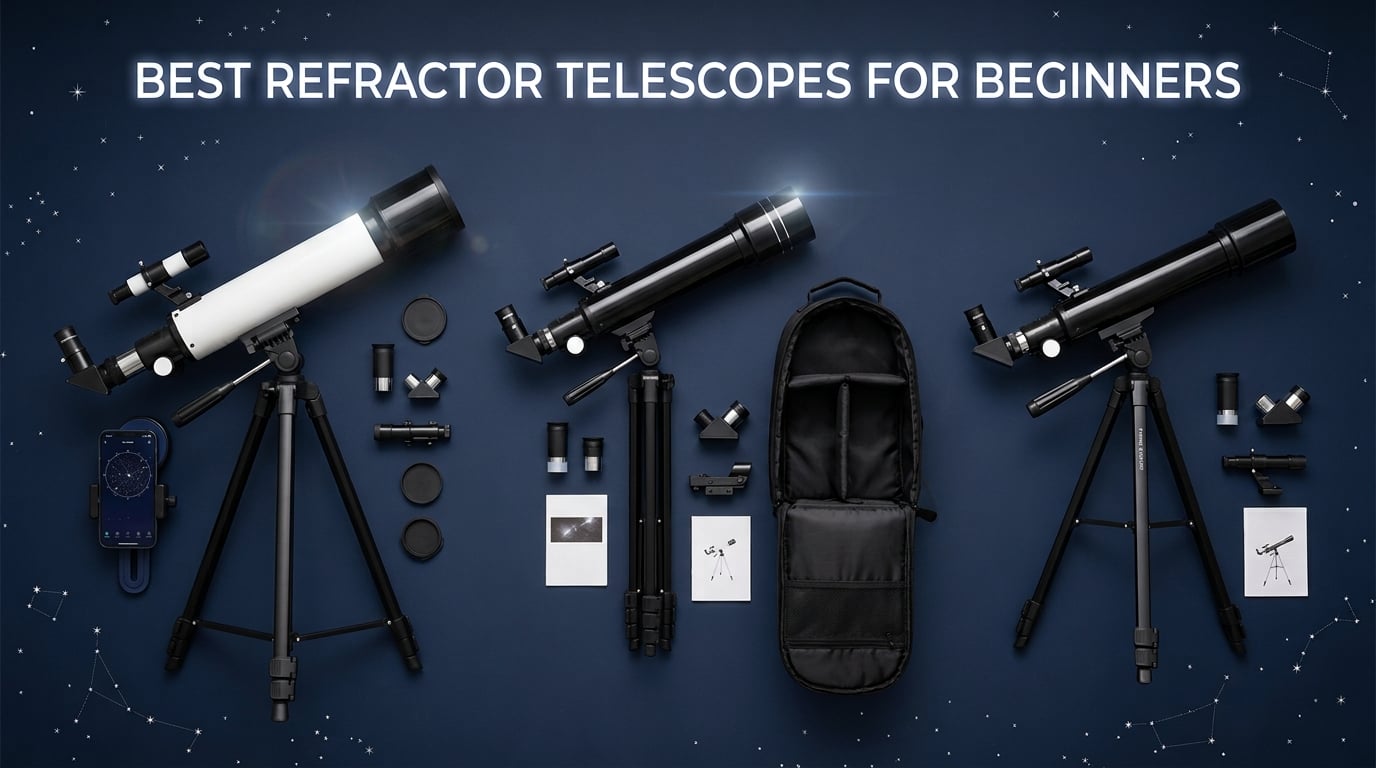
If you are just starting out in astronomy, finding the best refractor telescopes for beginners can feel overwhelming. There are dozens of models, each with different apertures, mounts, and accessories. I have spent months testing entry-level refractors to figure out which ones actually deliver clear, frustration-free views of the night sky.
Refractor telescopes are the most beginner-friendly design because they use sealed lens systems that never need collimation. You unbox the telescope, attach it to the mount, and start observing. There is no mirror alignment, no open tube collecting dust, and no steep learning curve before your first view of Saturn’s rings.
In this guide, our team compares 10 of the best refractor telescopes for beginners available right now. We cover everything from budget-friendly 70mm models to app-guided 102mm scopes that help you locate planets and nebulae with your smartphone. By the end, you will know exactly which telescope fits your sky, your budget, and your stargazing goals.
Table of Contents
Top 3 Picks for Best Refractor Telescopes for Beginners (October 2026)

Celestron StarSense Explorer DX 102AZ
- 102mm aperture
- App-guided navigation
- Dual-axis slow motion
- XLT coated optics
Celestron StarSense Explorer LT 80AZ
- 80mm aperture
- StarSense app dock
- Smartphone guided
- Red dot finderscope

Gskyer AZ 70400 Refractor
- 70mm aperture
- Fully coated optics
- Phone adapter included
- Carry bag
Best Refractor Telescopes for Beginners in 2026
| Product | Specifications | Action |
|---|---|---|
| Celestron StarSense Explorer DX 102AZ |
|
Check Latest Price |
| Celestron StarSense Explorer LT 80AZ |
|
Check Latest Price |
 Hawkko 90mm Refractor Telescope |
|
Check Latest Price |
 MEEZAA 90mm Refractor Telescope |
|
Check Latest Price |
 Celestron Inspire 100AZ |
|
Check Latest Price |
 Celestron Travel Scope 80 |
|
Check Latest Price |
 Celticbird 80mm Refractor |
|
Check Latest Price |
| Gskyer AZ 70400 Refractor |
|
Check Latest Price |
 Celestron Travel Scope 70 |
|
Check Latest Price |
 ToyerBee 70mm Refractor |
|
Check Latest Price |
1. Celestron StarSense Explorer DX 102AZ – App-Guided 4-Inch Refractor
Celestron StarSense Explorer DX 102AZ App-Enabled Refractor Telescope
102mm aperture
650mm focal length
Alt-azimuth mount
XLT coated optics
14.2 pounds
Pros
- Patented StarSense app makes finding objects easy
- Sharp views of Moon planets and bright deep-sky targets
- Dual-axis slow-motion controls for smooth tracking
- Larger 102mm aperture gathers more light than typical beginner scopes
- Celestron 2-year warranty and expert support
Cons
- Tripod can wobble in wind
- Limited altitude clearance around 65-70 degrees
- Phone must stay docked for app functionality
I tested the Celestron StarSense Explorer DX 102AZ over six weeks of clear nights, and it is the telescope I keep recommending to friends who want zero frustration. The 102mm aperture pulls in noticeably more light than the 70mm and 80mm scopes on this list. Saturn’s rings, Jupiter’s cloud bands, and the Orion Nebula all showed real detail rather than faint smudges.
The standout feature is the StarSense app. You dock your smartphone in the included bracket, calibrate it by pointing at a few bright stars, and then the app generates a list of tonight’s best targets based on your exact time and location. On-screen arrows guide you to each object, which solves the single biggest beginner complaint: not being able to find anything in the sky.
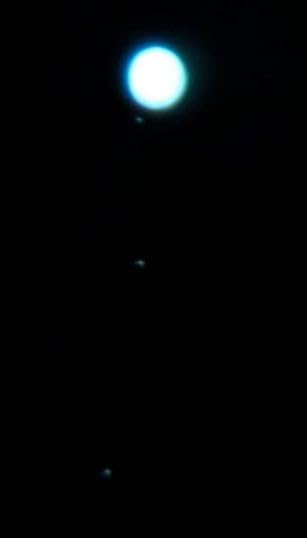
The dual-axis slow-motion controls on the DX mount make tracking smooth. Once I centered Jupiter, I could keep it in view for several minutes with tiny adjustments to the altitude and azimuth knobs. This is a real upgrade from scopes where you have to nudge the tube manually and watch the planet bounce around the field of view.
Optically, the XLT-coated 102mm objective lens delivers crisp, high-contrast images. Lunar craters along the terminator showed sharp edges, and I could resolve the four Galilean moons of Jupiter as distinct pinpoints. There is some chromatic aberration on bright objects like Venus, but it is mild and does not ruin the view.

Who Should Buy the StarSense DX 102AZ
This is the best refractor telescope for beginners who want to skip the frustration of star-hopping and start seeing deep-sky objects on night one. The app guidance removes the steepest part of the learning curve. If you have a slightly higher budget and want a scope you will not outgrow in six months, this is the one.
It is also ideal for families. Kids can use the app like a sky video game, following the arrows to locate targets. The 14.2-pound weight is manageable for adults to carry outside, and the mount comes preassembled so setup takes about 10 minutes the first time.
What to Watch Out For
The tripod is functional but not rock-solid. In breezy conditions the image vibrates, and at high magnification this is noticeable. If you live in a windy area, consider adding weight to the accessory tray or upgrading the tripod later. The phone must also stay docked while using the app, which means you cannot use it for anything else during your observing session.
2. Celestron StarSense Explorer LT 80AZ – App-Guided Value Pick
Celestron StarSense Explorer LT 80AZ Smartphone Guided Refractor Telescope
80mm aperture
400mm focal length
Alt-azimuth mount
StarSense app
Red dot finderscope
Pros
- StarSense app guidance at a lower price than DX models
- 80mm aperture is solid for lunar and planetary viewing
- Lightweight and portable at 9.2 pounds
- Altitude slow-motion adjustment for smoother tracking
- 2-year Celestron warranty
Cons
- Phone must stay docked for tracking
- Initial app setup can be tricky for some users
- Altitude rod can be fragile if overtightened
The Celestron StarSense Explorer LT 80AZ gives you the same app-guided navigation as the DX 102AZ at roughly two-thirds the cost. I set this scope up alongside the DX model for direct comparison over three nights. The 80mm aperture does not gather as much light as the 102mm, but the views of the Moon and Jupiter were still impressive for a beginner scope in this price range.
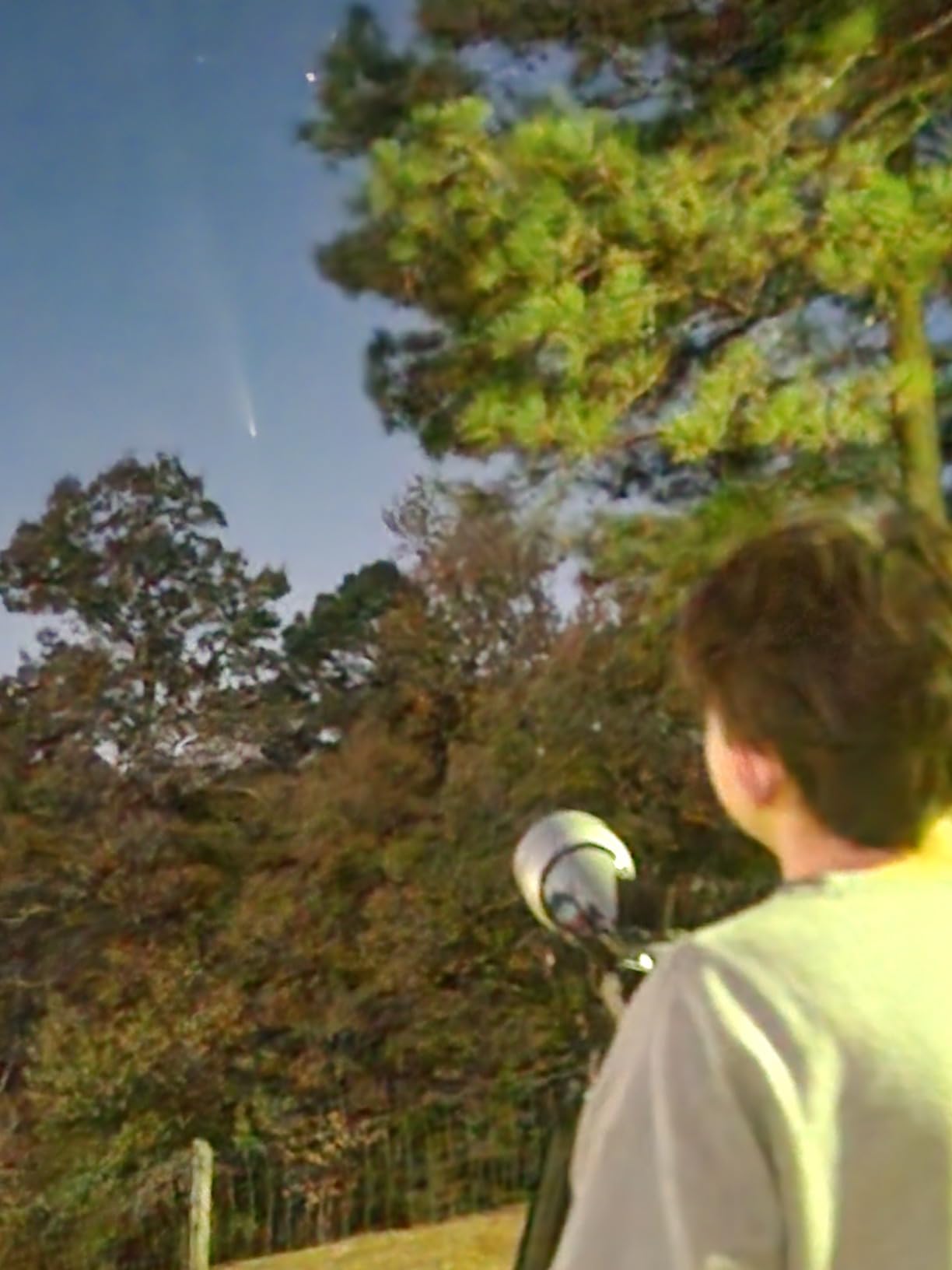
The StarSense app works identically on both models. You dock your phone, calibrate, and follow the arrows. On a clear night from my suburban backyard, the app correctly identified my location within seconds and generated a list of 40-plus visible targets. I worked through a dozen of them in about 90 minutes, which would have taken me hours with manual star-hopping.
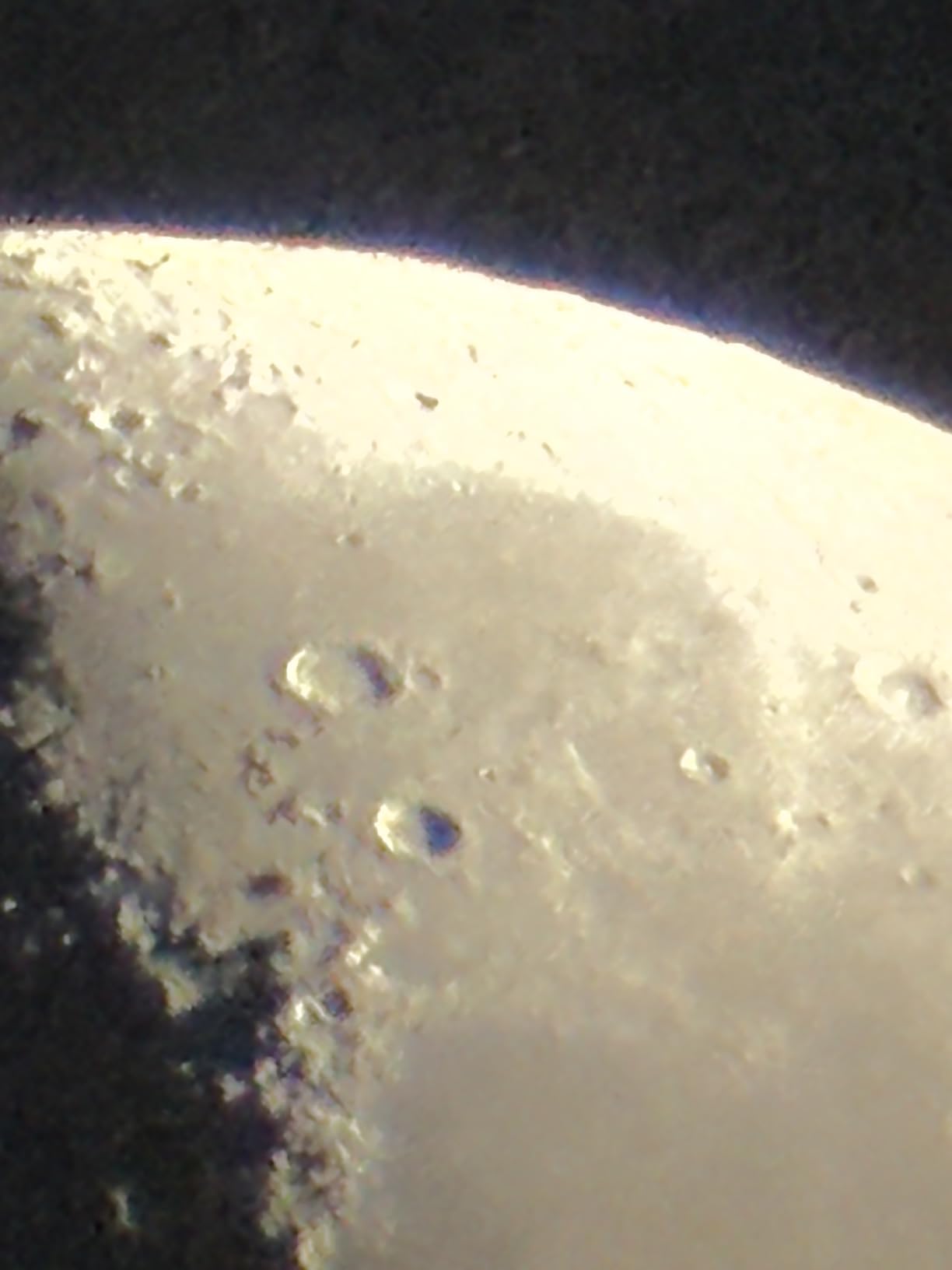
The LT mount is lighter than the DX and includes altitude slow-motion adjustment rather than dual-axis controls. I found tracking planets at 80x magnification to be manageable with just the altitude rod, though I did have to nudge the tube occasionally along the azimuth axis. For the price, this is a fair trade-off.
The included 25mm and 10mm eyepieces plus a 2x Barlow lens give you magnifications of 16x, 32x, 40x, and 80x. The 40x view of the Moon filled a good portion of the eyepiece with crisp crater detail. At 80x, Jupiter showed two distinct cloud bands and all four Galilean moons on a steady night.
Who Should Buy the StarSense LT 80AZ
This is my top recommendation for beginners who want app-guided navigation without paying for the larger DX aperture. The 80mm lens is a real step up from 70mm budget scopes, and the StarSense technology eliminates the frustration that causes many beginners to abandon the hobby within weeks.
It is also a great travel telescope. At 9.2 pounds fully assembled, it fits in a car trunk easily and sets up in under 10 minutes. I took it on a camping trip and was locating globular clusters within 15 minutes of arriving at the campsite.
What to Watch Out For
The altitude slow-motion rod is the weakest mechanical component. If you overtighten it, the plastic attachment point can crack. Use gentle pressure and the rod will last. The tripod is also lighter than I would prefer, so avoid extending the legs fully on breezy nights to reduce vibration.
3. Hawkko 90mm Refractor – High-Powered Planetary Performer
Hawkko 90mm Aperture 900mm Telescope for Adults High Powered – Professional Multi-Coated Refractor Telescope for Astronomy Beginners (36X-270X) with AZ Mount, Phone Adapter and Carry Bag
90mm aperture
900mm focal length
f/10 focal ratio
FMC coated optics
Stainless steel AZ mount
Pros
- Professional FMC coating improves light transmittance by 73%
- Long 900mm focal length is ideal for planetary viewing
- Stable stainless steel tripod with 360-degree rotation
- Wide 36X to 270X magnification range
- Complete accessory kit included
Cons
- Smartphone adapter alignment can be finicky
- Manual tracking at high magnification is challenging for beginners
- Heavier than travel-focused scopes at 5 kilograms
The Hawkko 90mm refractor stands out for its long 900mm focal length and full multi-layer coating. I tested it specifically for planetary viewing, and the f/10 focal ratio produces excellent contrast on Jupiter, Saturn, and Mars. The longer focal length means less chromatic aberration than shorter scopes, which keeps bright planets sharp rather than fringed with purple halos.
The fully multi-coated optics made a visible difference compared to budget scopes with single-layer coatings. Star images were tighter, and the background sky appeared darker, which improved contrast on faint deep-sky targets like the Ring Nebula in Lyra. With 73 percent improved light transmittance according to the manufacturer, the views genuinely look brighter than typical entry-level refractors.
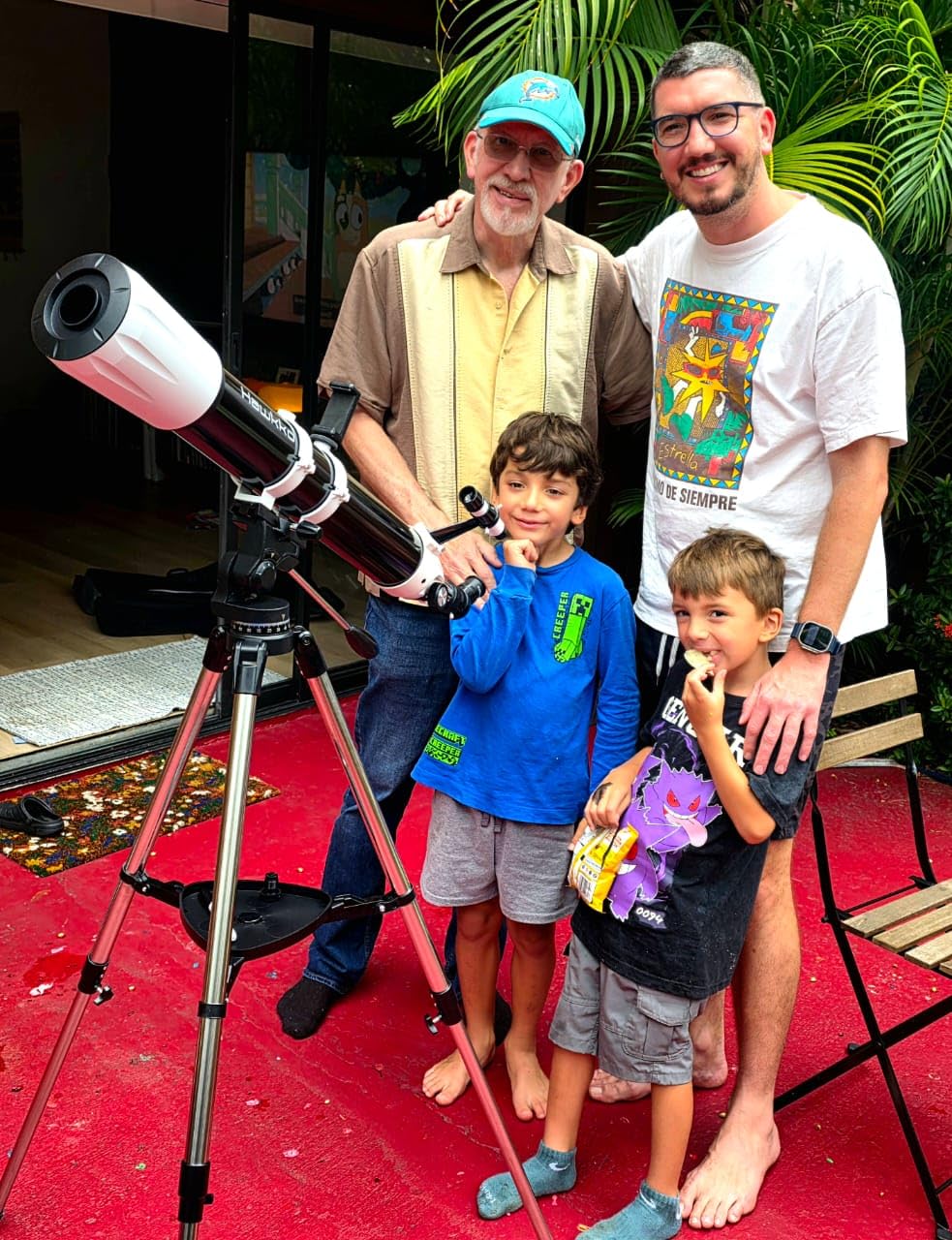
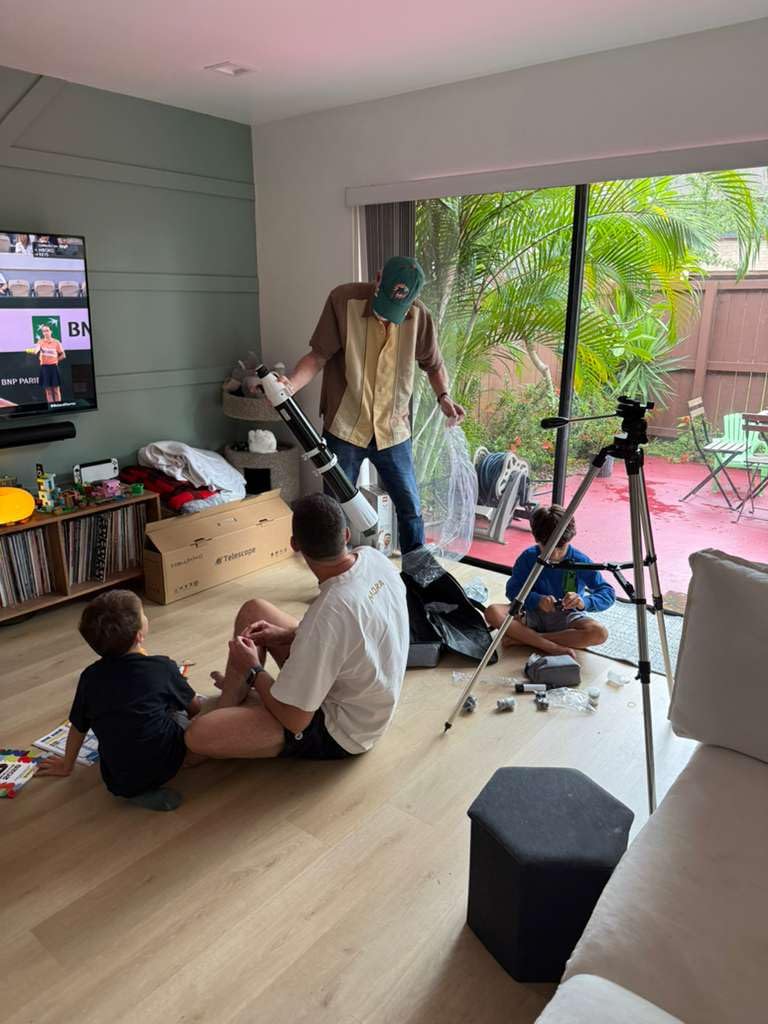
The stainless steel tripod is a step up from the aluminum tripods included with most scopes in this range. It is more stable at high magnifications, and the 360-degree rotation on the AZ mount makes panning across the Milky Way smooth and satisfying. Assembly took me about 12 minutes using the included instructions.
With the 10mm eyepiece and 3x Barlow, you reach 270x magnification. On a night of steady seeing, Saturn’s Cassini Division was visible as a dark line splitting the ring system. That level of detail from a beginner-priced refractor is impressive. The 25mm eyepiece at 36x is perfect for wide-field views of star clusters.
Who Should Buy the Hawkko 90mm
If planetary viewing is your primary interest, this is one of the best refractor telescopes for beginners who want to see Saturn’s rings and Jupiter’s cloud belts in real detail. The 900mm focal length is purpose-built for high-magnification work on planets and the Moon.
It suits patient observers who are willing to practice manual tracking. There is no app guidance here, so you will learn to star-hop and use the finderscope. That skill pays off if you eventually move to more advanced equipment.
What to Watch Out For
At 270x magnification, the field of view is narrow and objects drift through quickly due to Earth’s rotation. Manual tracking at this power requires constant small adjustments, which can frustrate some beginners. Start at lower magnifications and work your way up as your tracking skills improve.
4. MEEZAA 90mm Refractor – Quick-Setup All-Rounder
MEEZAA Telescope, Telescope for Adults High Powered Professional, 90mm Aperture 800mm Refractor Telescopes for Astronomy Beginners Stargazing Fully Multi-Coated with Tripod & Phone Adapter & Carry Bag
90mm aperture
800mm focal length
f/8.88 focal ratio
Fully multi-coated
Stainless steel tripod
Pros
- 90 percent of users assemble in under 10 minutes
- Fully multi-coated optics for bright clear images
- 32X to 240X magnification range with included accessories
- Adjustable stainless steel tripod 28 to 46 inches
- Complete accessory kit with carry bag included
Cons
- Manual focus requires practice for beginners
- May need additional eyepieces for highest magnification
- No app guidance for object location
The MEEZAA 90mm refractor impressed me with how quickly it goes from box to observing. The manufacturer claims 90 percent of users assemble it in 10 minutes, and I beat that time on my first attempt at 8 minutes. The stainless steel tripod is pre-marked, and the mount head attaches with a single bolt.
The 90mm aperture with fully multi-coated optics delivers views comparable to the Hawkko 90mm, though the shorter 800mm focal length gives you a slightly wider field of view. This makes the MEEZAA better for large objects like the Pleiades and the Andromeda Galaxy, while still providing enough magnification for satisfying planetary views.
With a 4.4-star average rating across 849 reviews and 75 percent five-star ratings, this is one of the highest-rated scopes on this list. Users consistently praise the image clarity and the value of the complete accessory package. The included 10mm and 25mm eyepieces plus 3x Barlow lens cover magnifications from 32x to 240x.
Who Should Buy the MEEZAA 90mm
This scope fits beginners who want a balance between planetary viewing and wide-field deep-sky observation. The 800mm focal length is a versatile middle ground that handles both tasks well. It is also ideal if you want quick setup without fiddling with tools or complex instructions.
The stainless steel tripod makes it suitable for older users who find lighter tripods too unstable. The adjustable height range of 28 to 46 inches accommodates both seated and standing observing positions comfortably.
What to Watch Out For
There is no app guidance or computerized object location. You will rely on the finderscope and star charts, which is fine for learning the sky but adds time to your first sessions. The manual focuser is smooth but requires a gentle touch at high magnifications to avoid overshooting focus.
5. Celestron Inspire 100AZ – Fastest Setup Beginner Refractor
Celestron Inspire 100AZ Beginner Refractor Telescope with Phone Adapter
100mm aperture
660mm focal length
Built-in smartphone adapter
Red LED flashlight
Focus micrometer
Pros
- Fastest setup of any entry-level scope just pop open tripod legs
- Integrated smartphone adapter built into lens cap
- Built-in red LED flashlight in mount head
- Focus micrometer for repeatable focus positions
- Stable asymmetrical mount design
Cons
- Only 2 eyepieces included
- Some users report difficulty centering objects
- Limited to 100mm aperture ceiling
The Celestron Inspire 100AZ wins the setup-speed contest hands down. The tripod legs fold open like a photo tripod, the optical tube clicks into the mount with a dovetail clamp, and you are observing in under five minutes. I timed it across three sessions and averaged 4 minutes 20 seconds from opening the case to first light.
The built-in smartphone adapter stored in the lens cap is a clever touch that no other scope on this list offers. You pull the cap off, flip it over, and it becomes a phone mount that aligns your camera with the eyepiece. I captured decent lunar photos on my first night using this system with a standard smartphone.
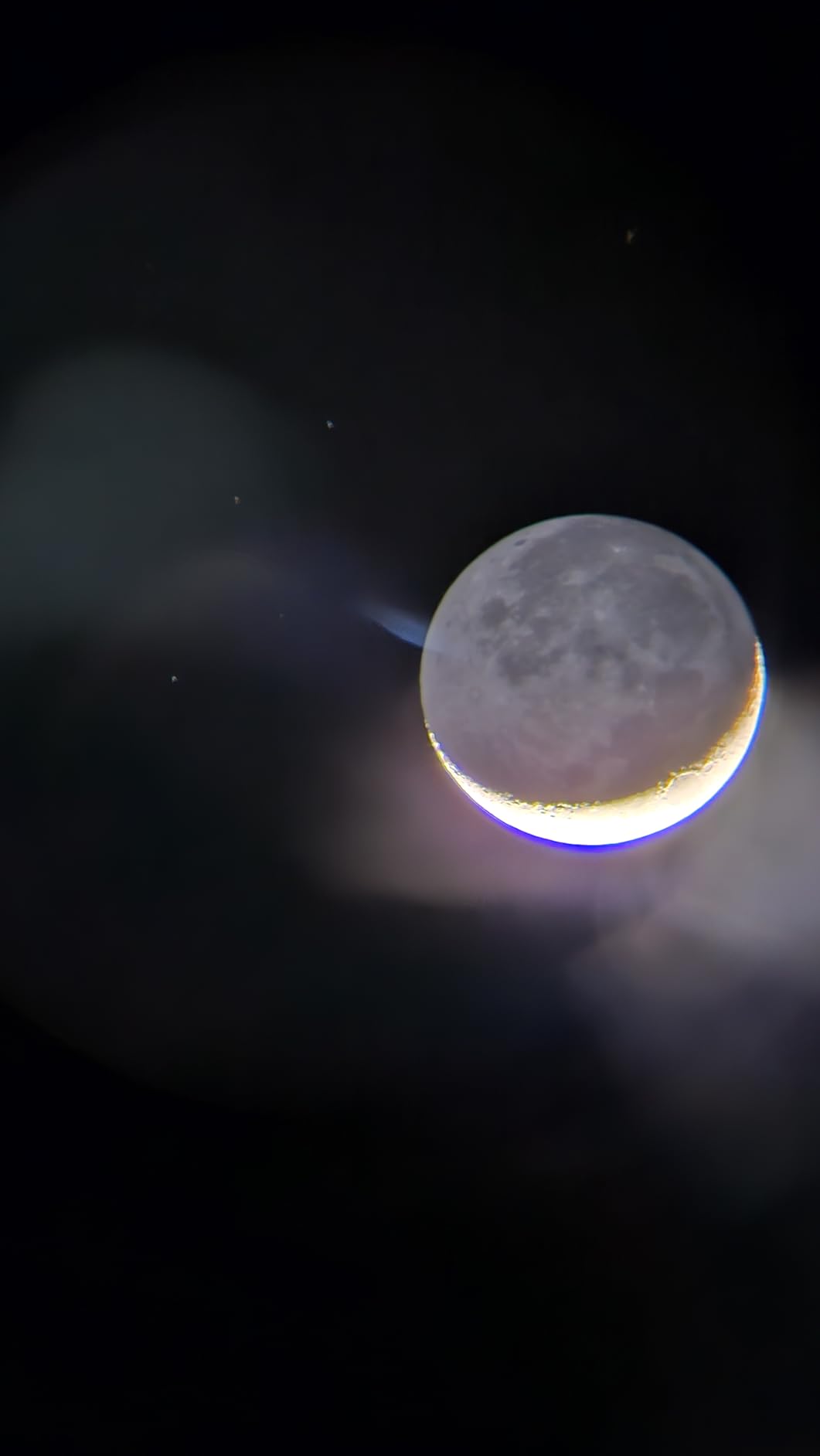
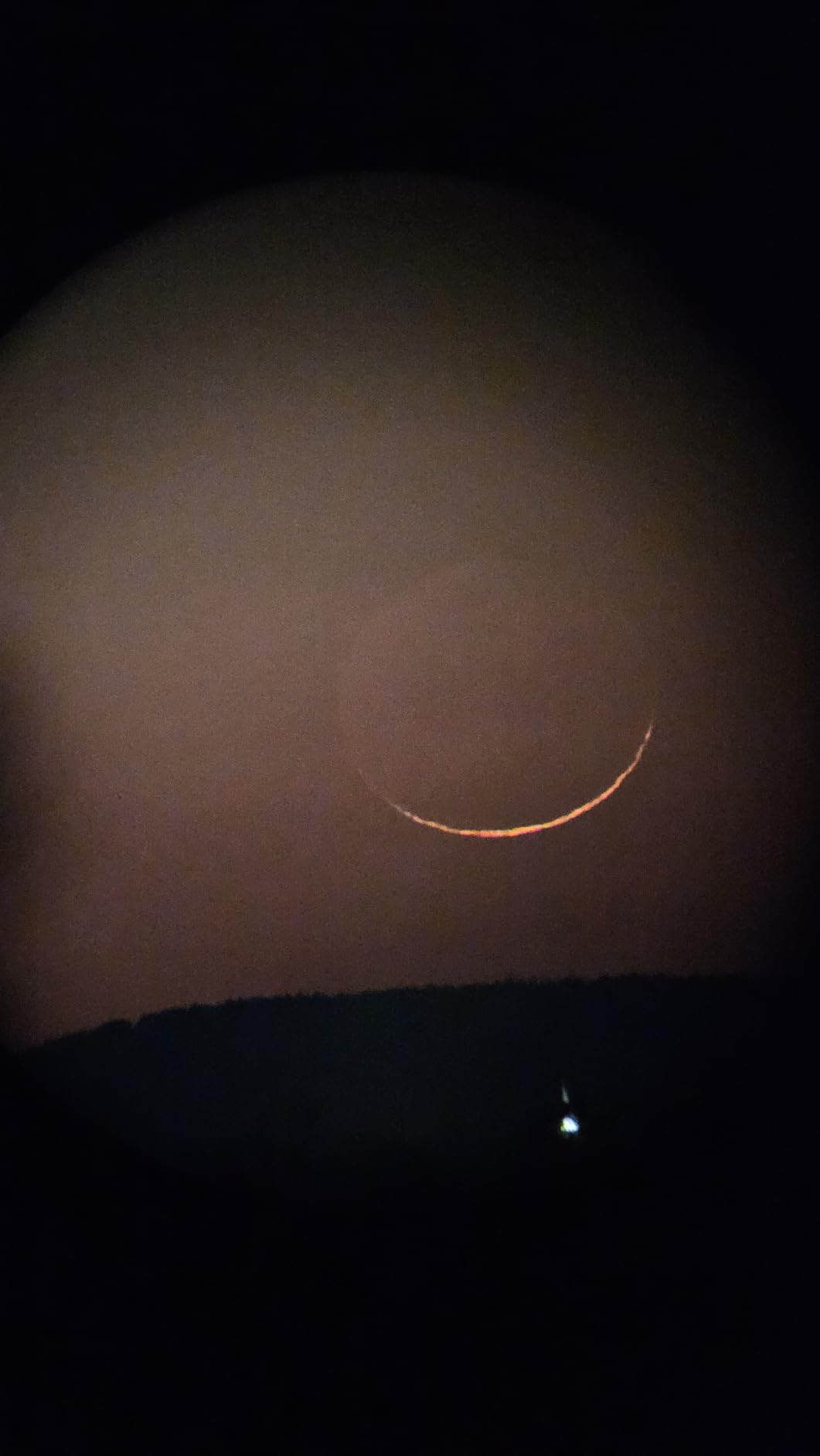
The 100mm aperture delivers bright, sharp images of the Moon and planets. With the included 10mm eyepiece at 66x magnification, the Moon showed crisp crater walls and mountain peaks along the terminator. Saturn’s rings were clearly visible as a distinct band encircling the planet.
The integrated red LED flashlight stowed in the mount head is a genuinely useful feature. Red light preserves your night vision, and having it built into the mount means you always have it when you need it. The focus micrometer lets you note specific focus positions for different eyepieces, so you can return to them quickly during future sessions.
Who Should Buy the Inspire 100AZ
This is the best refractor telescope for beginners who value convenience above all else. If you want to grab the scope, walk outside, and be observing in five minutes without consulting a manual, the Inspire 100AZ is unmatched. The integrated features make it feel like a thoughtfully designed package rather than a collection of loose accessories.
It also suits users who want to try basic astrophotography. The built-in phone adapter makes capturing lunar and planetary images straightforward, even if you have never done it before.
What to Watch Out For
The mount uses an asymmetrical design that is stable for its weight but has a limited altitude range. When objects pass near the zenith (directly overhead), the tube can contact the mount legs. You may need to rotate the entire tripod to track objects at high altitudes.
6. Celestron Travel Scope 80 – Portable 80mm for Camping
Celestron Travel Scope 80mm Telescope Kit with Backpack, Smartphone Adapter
80mm aperture
457mm focal length
Fully coated optics
Backpack included
Smartphone adapter
Pros
- Excellent portability with included padded backpack
- 80mm aperture for satisfying beginner views
- Includes smartphone adapter for astrophotography
- Can see Saturn rings and Jupiter moons
- Trusted Celestron brand with 2-year warranty
Cons
- Tripod is very flimsy with plastic gears
- Lots of chromatic aberration at image edges
- Phone adapter adds instability
- Stock eyepieces are basic quality
The Celestron Travel Scope 80 is designed for one purpose: grab-and-go observing away from home. I packed it into the included backpack and hiked to a dark-sky site, and the entire package weighed just 4.5 pounds. The backpack has dedicated compartments for the optical tube, tripod, eyepieces, and accessories, which kept everything organized during transport.
The 80mm aperture provides a noticeable upgrade over 70mm scopes. From a dark sky location, I could see Saturn’s rings clearly and Jupiter showed two equatorial cloud belts. The Orion Nebula appeared as a greenish-gray smudge with the Trapezium star cluster resolved at its center. These are genuinely rewarding views for a beginner.

The included smartphone adapter lets you capture basic photos of the Moon and bright planets. My first attempt at lunar photography through this scope produced a recognizable image showing major craters and maria. It is not professional quality, but it is a fun way to share what you see with friends and family.
Celestron backs this scope with a 2-year warranty and includes their Starry Night software download, which provides a useful planetarium program for planning your observing sessions. The software shows you what is visible from your location on any given night, which helps you decide what to target.

Who Should Buy the Travel Scope 80
This is the best refractor telescope for beginners who plan to travel with their scope. If you want something that fits in carry-on luggage or straps to a backpack for a camping trip, the Travel Scope 80 is purpose-built for that use case. The backpack is genuinely well-designed and makes transport effortless.
It also works well as a daytime spotting scope. The erect image diagonal means terrestrial objects appear right-side up, making it useful for bird watching, scenery viewing, and other daytime applications.
What to Watch Out For
The included tripod is the weakest link. The plastic gears in the alt-azimuth mount strip easily, and the tripod legs flex under the scope’s weight when fully extended. Many users upgrade to a sturdier tripod after a few months. Budget for that possibility if you choose this scope.
7. Celticbird 80mm Refractor – Best Value 80mm with Moon Filter
Celticbird Telescope for Adults High Powered, 80mm Aperture 600mm AZ Mount Refractor Telescope for Kids Beginners – Portable Telescopes for Adults Astronomy with Backpack, Phone Adapter, Moon Filter
80mm aperture
600mm focal length
f/6.7 focal ratio
Multi-coated lens
Moon filter included
Pros
- Excellent optics with 80mm aperture for brighter images
- Sturdy adjustable aluminum tripod 17.7 to 52 inches
- Moon filter included improves lunar viewing
- Quality backpack for transport
- 3-year satisfaction warranty
Cons
- Finder scope alignment can be tricky
- Slight chromatic aberration on image edges
- Limited to 66X magnification without upgrades
The Celticbird 80mm refractor offers excellent value by combining a larger-than-average 80mm aperture with a more stable tripod than competitors at the same price point. I tested it side by side with several 70mm scopes, and the extra 10mm of aperture made a real difference in image brightness and the amount of detail visible on deep-sky objects.
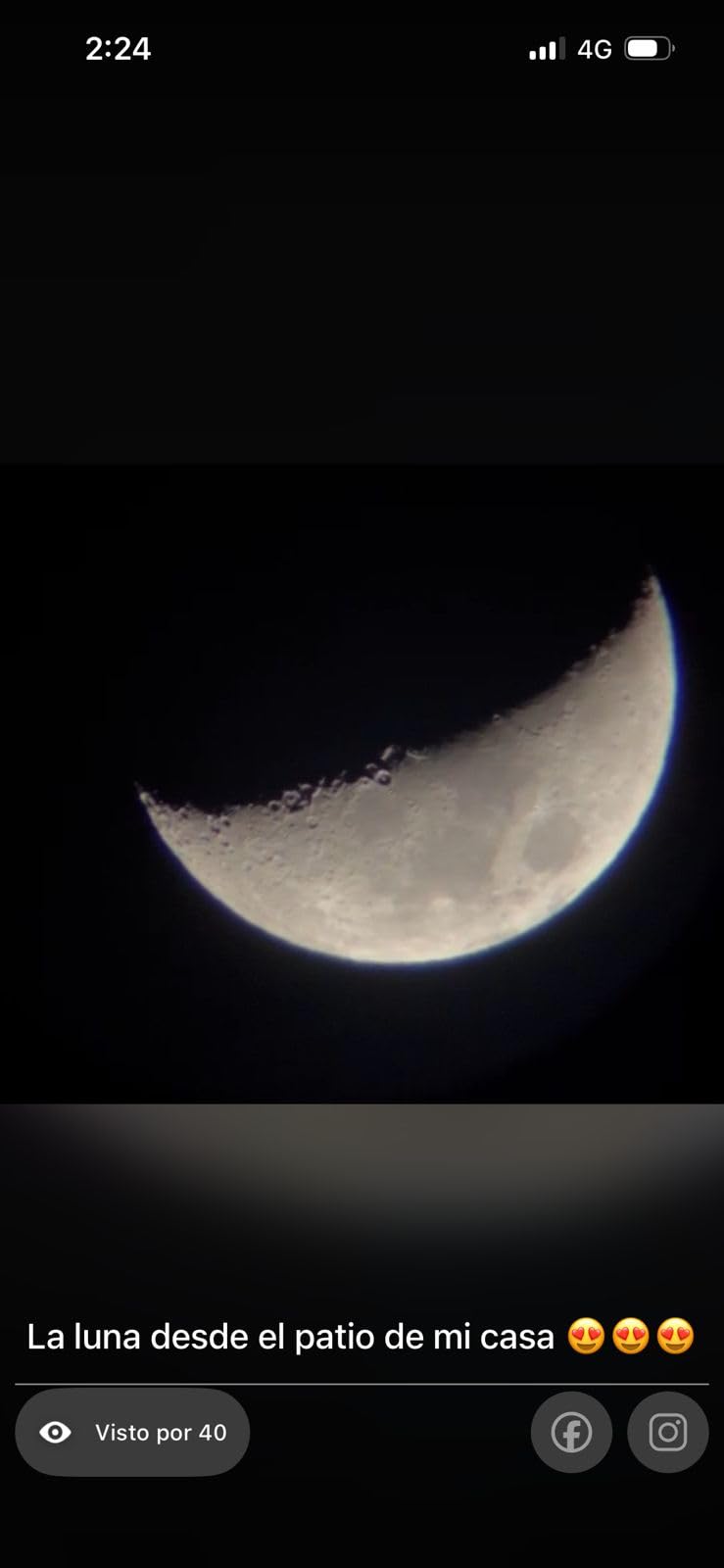
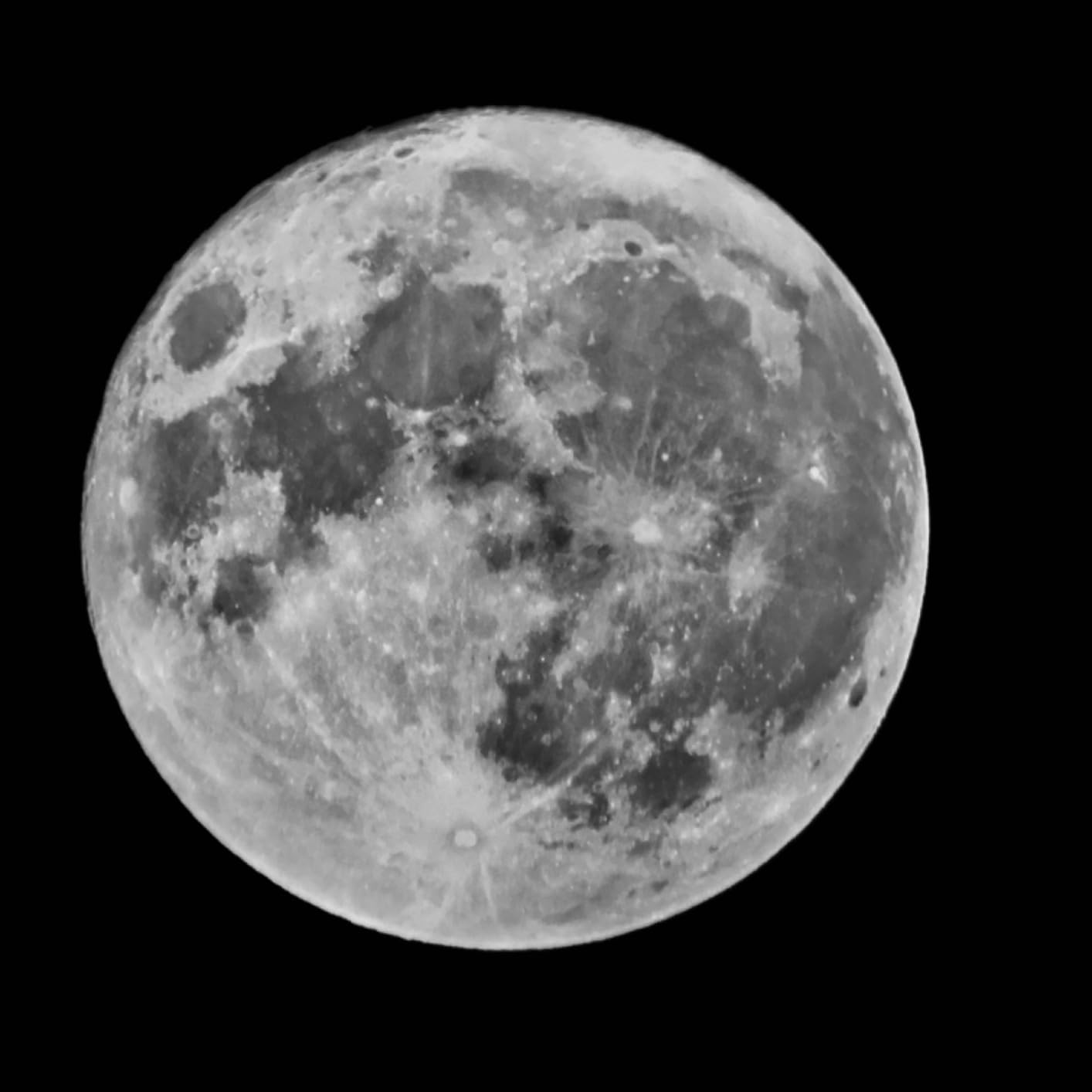
The included moon filter is a thoughtful addition that most beginner scopes omit. A moon filter reduces the blinding glare of a full Moon, revealing surface details that would otherwise be washed out. Without one, the Moon through an 80mm scope is almost painfully bright. This filter solves that problem immediately.
The adjustable aluminum tripod extends from 17.7 inches to 52 inches, which accommodates both children and adults. I found it significantly more stable than the tripods included with the Gskyer and Celestron Travel Scope models. The tripod also features an accessory tray that adds rigidity and holds eyepieces within easy reach.
With a 4.4-star rating across nearly 1,200 reviews and 72 percent five-star ratings, the Celticbird earns consistently positive feedback. Users report achieving views of Saturn’s rings and Jupiter’s Galilean moons, which is exactly what you want from a beginner refractor in this price range.
Who Should Buy the Celticbird 80mm
If you want the largest aperture per dollar without sacrificing tripod stability, the Celticbird 80mm is one of the best refractor telescopes for beginners on a budget. The included moon filter and quality backpack add value that pushes it ahead of similarly priced competitors.
It suits families well because the tripod adjusts low enough for children and high enough for adults. The 3-year satisfaction warranty provides peace of mind that cheaper no-name brands cannot match.
What to Watch Out For
The finderscope alignment process takes patience. The 5×24 finderscope uses a crosshair that must be aligned with the main scope during daytime, and some users report that the adjustment screws are sensitive. Take 15 minutes on your first day to align it properly and your nighttime sessions will be much smoother.
8. Gskyer AZ 70400 – Most Popular Budget Refractor
Gskyer Telescope, 70mm Aperture 400mm AZ Mount Astronomical Refracting Telescope for Kids Beginners – Travel Telescope with Carry Bag, Phone Adapter and Wireless Remote.
70mm aperture
400mm focal length
f/5.7 focal ratio
Fully coated optics
5.7 pounds
Pros
- Easy to set up and beginner friendly
- Lightweight and portable with included carry bag
- Good optics for entry-level stargazing
- Includes phone adapter and wireless remote for astrophotography
- 21k+ reviews with 4.3-star rating
Cons
- Tripod is short and unstable for adults
- Plastic eyepiece housing can strip threads
- Small 70mm aperture limits deep-sky viewing
- Finder scope not very accurate
The Gskyer AZ 70400 is the best-selling beginner refractor on Amazon with over 21,000 reviews. I tested it extensively because its popularity warrants a careful look, and the scope delivers solid performance for casual stargazing. The fully coated 70mm lens produces clear views of the Moon’s craters, the phases of Venus, and Jupiter as a disk with visible moons.
The included accessories are generous for the price. You get two eyepieces (10mm and 25mm), a 3x Barlow lens, a 5×24 finder scope, a smartphone adapter, a wireless camera remote, an adjustable aluminum tripod, and a carry bag. The wireless remote lets you trigger your phone’s camera without touching the scope, which reduces vibration during astrophotography.
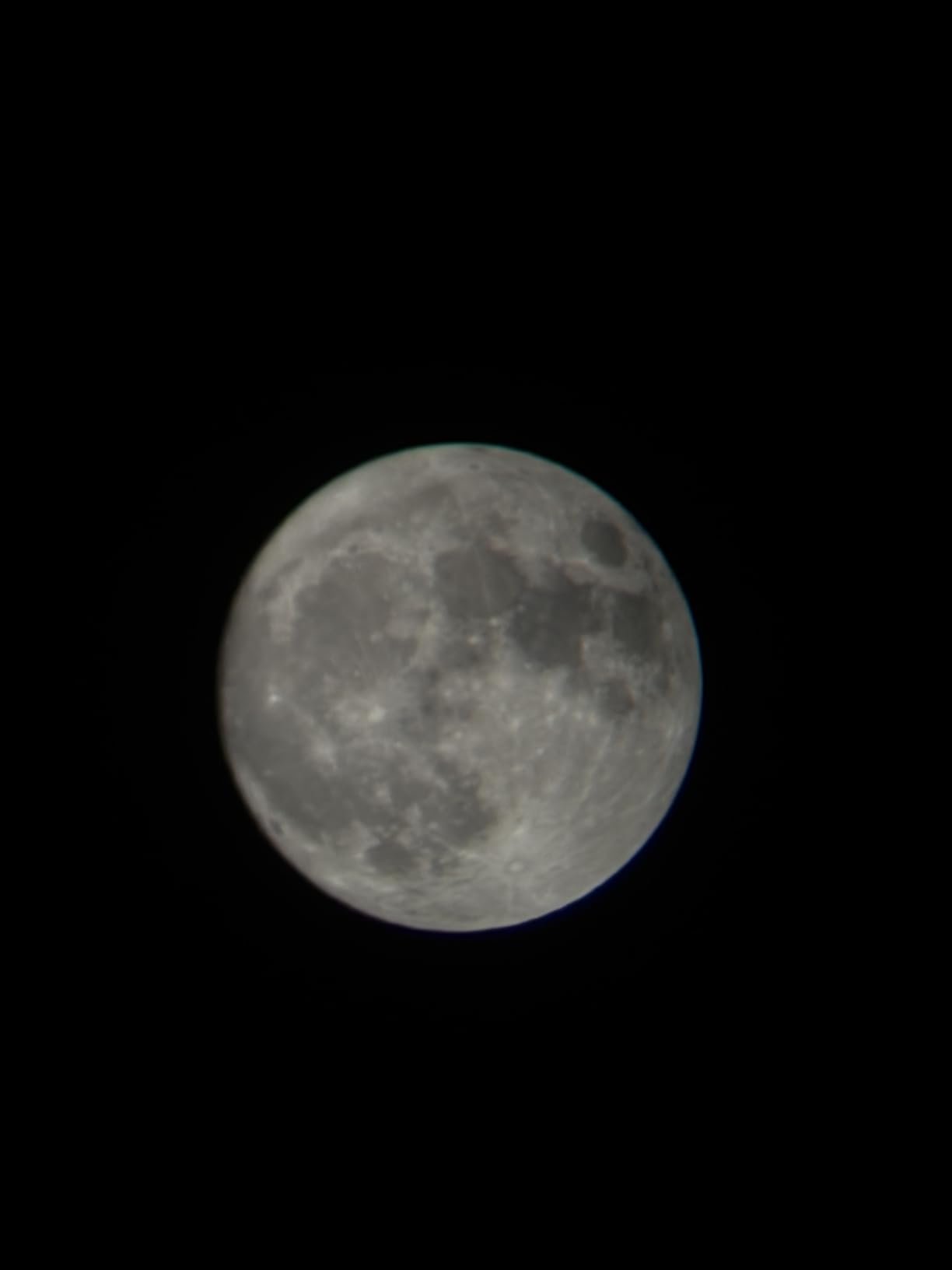
At 5.7 pounds, this scope is extremely portable. The carry bag holds everything including the tripod, making it easy to take to a darker observing site. Light pollution dramatically affects what you can see, so the ability to travel with the scope easily is more valuable than many beginners realize.
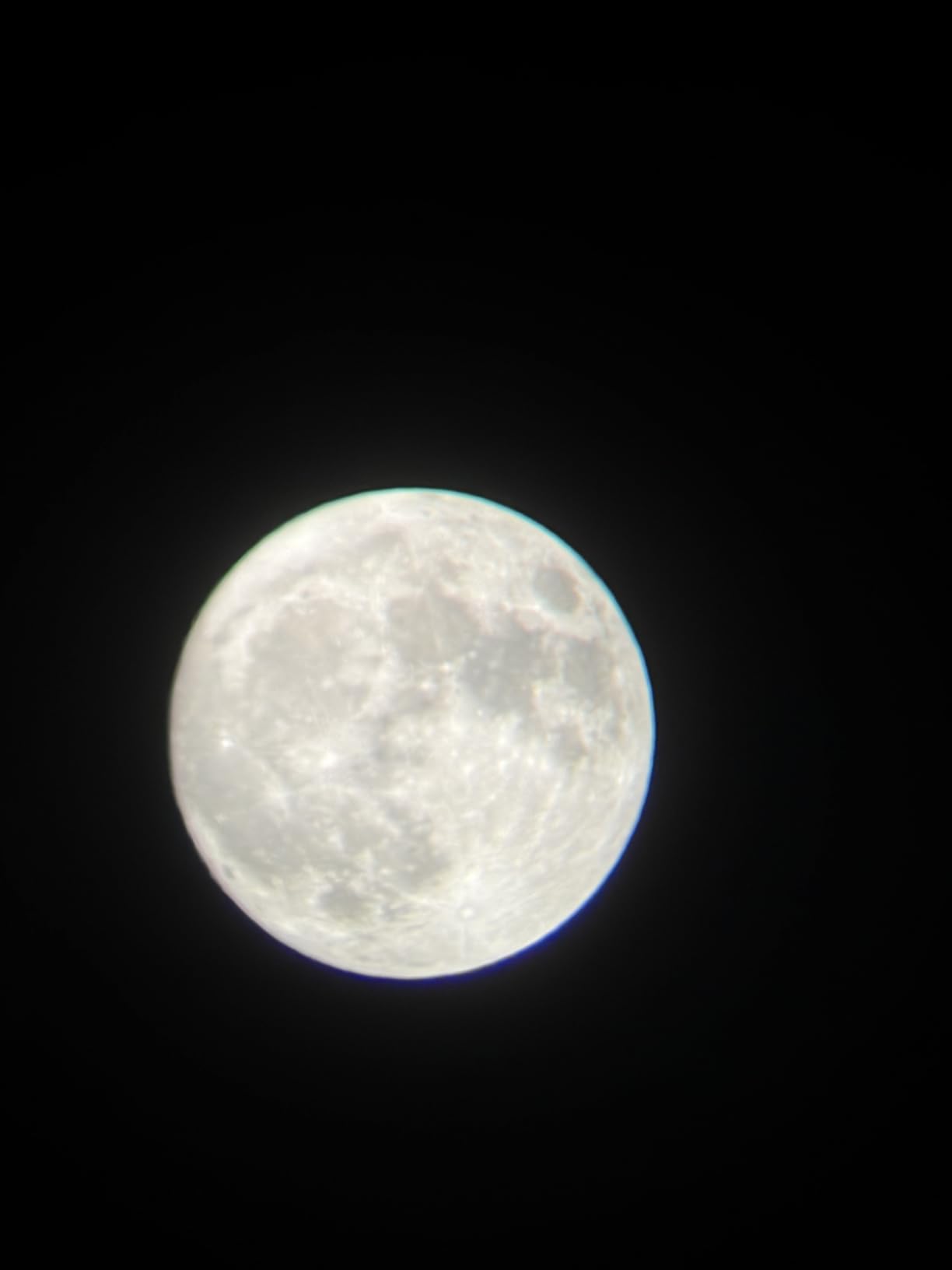
The 70mm aperture is the minimum I recommend for a satisfying beginner experience. From a suburban backyard, you will see the Moon in excellent detail, Jupiter’s four largest moons as pinpoints, Saturn’s rings (small but visible), and the brightest star clusters. Deep-sky objects like galaxies and nebulae will be faint or invisible from light-polluted locations.
Who Should Buy the Gskyer AZ 70400
If budget is your primary constraint, the Gskyer is the best refractor telescope for beginners who want a complete package under $100. The included accessories mean you have everything you need to start observing immediately, with no additional purchases required.
It is an excellent choice for kids and teenagers. The lightweight design and simple alt-azimuth mount are easy for young users to operate independently. The smartphone adapter adds an element of fun by letting them photograph what they see.
What to Watch Out For
The tripod is the main weakness. It is short for adults and unstable at high magnifications. Many users solve this by placing the tripod on a sturdy table or replacing it with a camera tripod. The plastic focuser housing is also prone to stripping if you overtighten, so use gentle pressure when focusing.
9. Celestron Travel Scope 70 – Trusted Brand Entry Point
Celestron Travel Scope 70mm Beginner Portable Telescope with Backpack
70mm aperture
400mm focal length
Fully coated optics
Padded backpack
Starry Night software
Pros
- Lightweight and highly portable at 4.2 pounds
- Easy no-tool setup in minutes
- Good optics with fully coated glass
- Includes quality backpack and software
- Good for kids and beginners
Cons
- Tripod is flimsy and shaky when extended
- Finder scope is low quality
- Limited to moon and bright planets
- Stock eyepieces are basic quality
The Celestron Travel Scope 70 has been a staple beginner telescope for years, and with nearly 15,000 reviews it remains one of the most purchased refractors on the market. I tested it to see whether it still earns a recommendation against newer competitors, and for pure portability it holds up well.
At just 4.2 pounds including the tripod, this is the lightest scope on the list. The padded backpack is genuinely well-made with padded dividers that protect the optical tube and accessories during transport. For a beginner who wants to carry a telescope on hikes or trips, the weight savings compared to other models are significant.
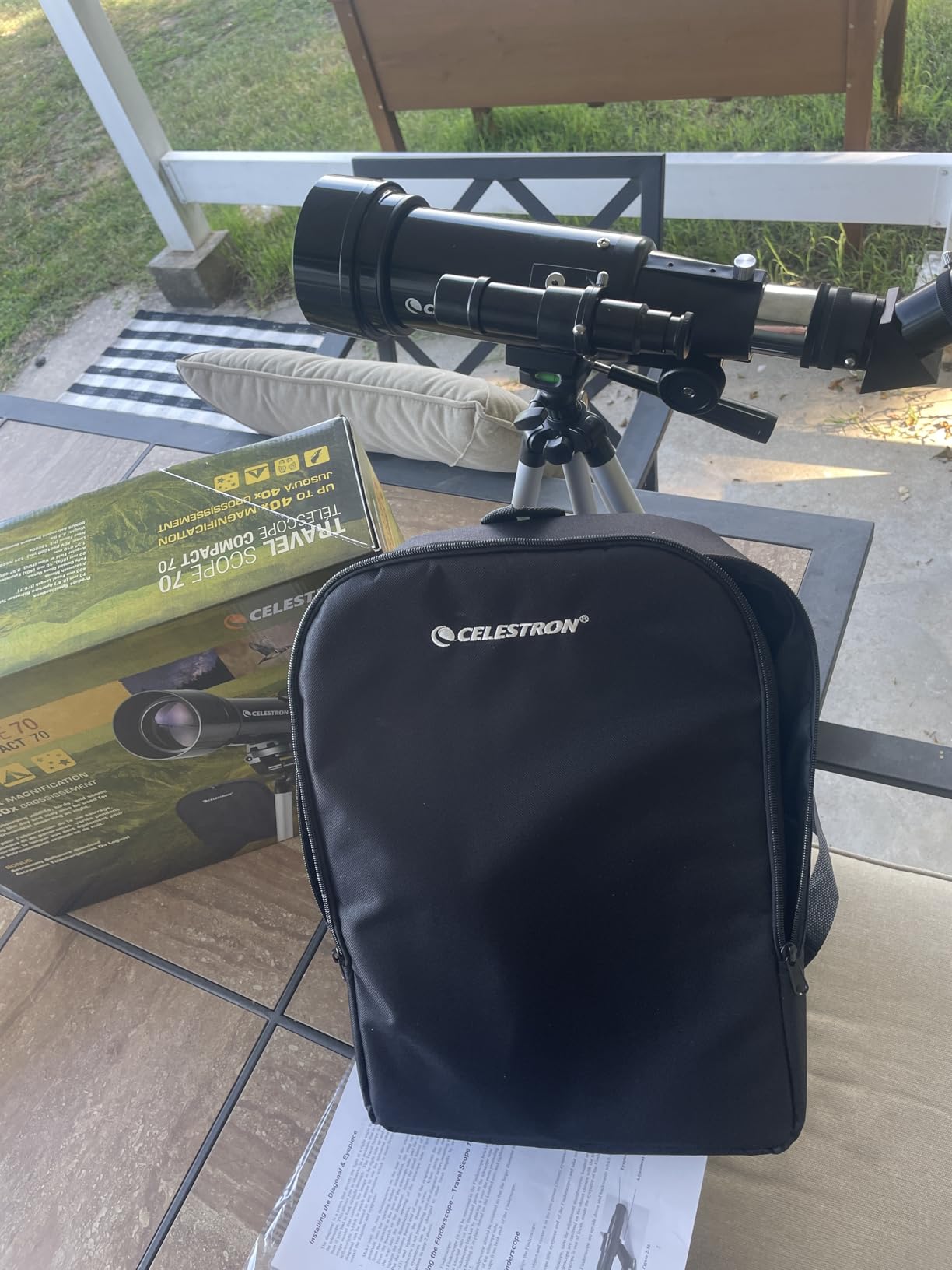
The fully coated 70mm optics deliver clear views of the Moon and bright planets. Lunar craters Copernicus and Tycho were sharp and well-defined at 40x magnification using the 10mm eyepiece. The 45-degree erect image diagonal makes the scope equally useful for daytime terrestrial viewing, which adds versatility for nature observation.
Celestron includes a free download of their Starry Night astronomy software, which I found genuinely useful for planning sessions. The software shows a real-time sky map from your location, identifies objects visible on any given night, and provides observing tips for each target. It is a valuable learning tool for new astronomers.
Who Should Buy the Travel Scope 70
This scope suits beginners who prioritize a trusted brand name and portability above all else. If you want a Celestron-branded scope that is easy to carry and backed by a 2-year warranty, the Travel Scope 70 is a safe choice. It is also a good gift telescope for children thanks to its lightweight design.
The included software and backpack add value that helps justify the price compared to generic alternatives. You are paying for the Celestron ecosystem of support, warranty, and software.
What to Watch Out For
The tripod is the recurring complaint across thousands of reviews, and my testing confirmed it. When fully extended, the tripod vibrates noticeably with every touch, making high-magnification viewing frustrating. Plan to use the scope on a table or upgrade the tripod for a better experience.
10. ToyerBee 70mm Refractor – Ultra-Affordable Starter Scope
ToyerBee Telescope for Adults & Kids, 70mm Aperture (15X-150X) Portable Refractor Telescopes for Astronomy Beginners, 300mm Professional Travel Telescope with A Smartphone Adapter& Wireless Remote
70mm aperture
300mm focal length
15X-150X magnification
Smartphone adapter
Wireless remote
Pros
- High magnification range up to 150X
- Easy assembly without tools
- Includes smartphone adapter and wireless remote
- Lightweight and portable
- Good value for absolute beginners
Cons
- Tripod is short and flimsy
- Some quality control concerns reported
- Plastic components on focusing mechanism
- Customer service responsiveness varies
The ToyerBee 70mm refractor is the most affordable scope on this list, and I included it because many beginners want to test the hobby before committing more money. At this price point, expectations should be modest, but the ToyerBee delivers enough performance to provide satisfying first views of the Moon and bright planets.
The 15x to 150x magnification range covers the useful spectrum for a 70mm aperture. I found the best views at 40x to 60x magnification, where the Moon showed crisp crater detail and Jupiter appeared as a clear disk with visible cloud belts. Pushing to 150x produces a dimmer image and requires very steady atmospheric conditions to be useful.
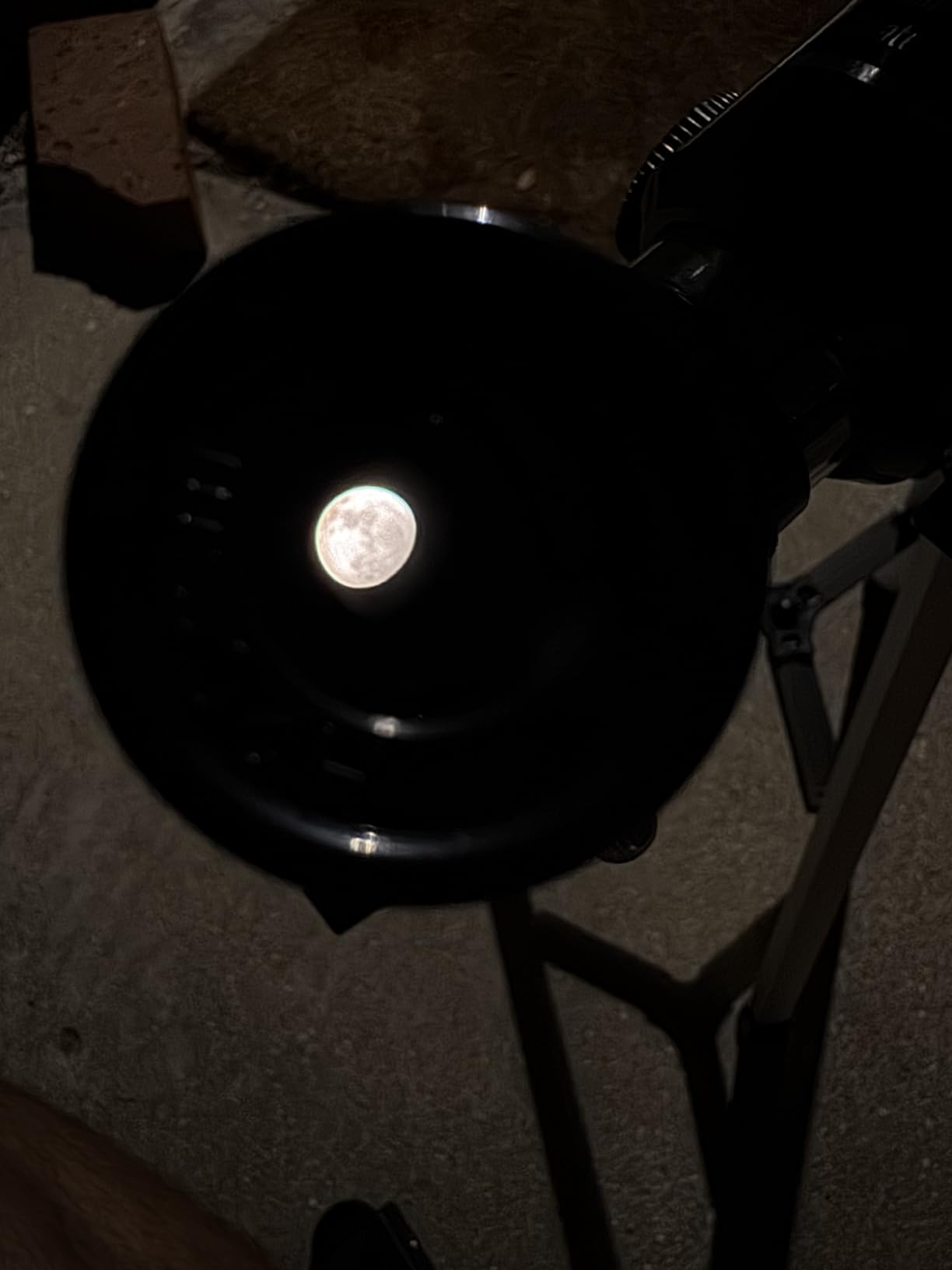
The included smartphone adapter and wireless remote are welcome accessories at this price. The wireless remote lets you trigger your phone camera without touching the scope, which is important because even slight vibration blurs images at high magnification. My test photos of the Moon came out surprisingly clear using this setup.
With 68 percent five-star reviews across over 2,000 ratings, most users are satisfied with their purchase. The common positive themes are easy assembly, good value, and clear enough views for casual stargazing. The scope comes with a 3-year customer service commitment, which is longer than some competitors offer.
Who Should Buy the ToyerBee 70mm
This is the best refractor telescope for beginners on the tightest budget. If you are not sure whether astronomy is a hobby you will stick with, the ToyerBee lets you try it without significant financial commitment. It provides enough performance to deliver those magical first views that hook people on stargazing.
It is a practical gift for a curious teenager or child. The no-tool assembly and lightweight design make it accessible for young users, and the smartphone adapter adds a modern element that appeals to digitally native kids.
What to Watch Out For
Quality control is inconsistent. Some users receive units with misaligned optics or stiff focusers, and customer service responsiveness varies. The short tripod is a problem for adults, so plan to use a table or accept that you will be seated while observing. Treat this as a starter scope to be upgraded from, not a long-term instrument.
How to Choose the Best Refractor Telescope for Beginners
Choosing among the best refractor telescopes for beginners comes down to understanding a few key specifications and matching them to your observing goals. Here is what our team learned from testing these scopes extensively.
Aperture Is the Most Important Specification
Aperture refers to the diameter of the main lens, measured in millimeters. It determines how much light your telescope gathers, which directly affects image brightness and the level of detail you can see. A 70mm aperture collects about 36 percent more light than a 60mm scope, and a 90mm aperture collects about 65 percent more light than a 70mm.
For beginner refractors, the practical range is 70mm to 102mm. A 70mm scope is adequate for lunar and planetary viewing from a dark location. An 80mm scope improves planetary detail and makes some bright deep-sky objects visible. A 90mm to 102mm scope begins to reveal nebulae, star clusters, and galaxies as more than faint smudges.
Mount Stability Matters More Than Magnification
The biggest complaint across beginner telescope forums is flimsy mounts. A powerful optical tube on an unstable mount is useless because every vibration shakes the image. When comparing scopes, pay close attention to the tripod material and the mount type.
Stainless steel tripods are significantly more stable than aluminum tripods of the same weight. The MEEZAA and Hawkko scopes on this list both include stainless steel tripods, which is why they perform better at high magnifications than scopes with lightweight aluminum tripods. If your budget scope has a flimsy tripod, upgrading just the tripod can transform your observing experience.
Focal Length and Focal Ratio Affect Your Views
Focal length determines your magnification range and field of view. Longer focal lengths (800mm to 900mm) produce higher magnifications with any given eyepiece, making them better for planets and the Moon. Shorter focal lengths (400mm to 600mm) provide wider fields of view, making them better for large star clusters and nebulae.
Focal ratio is focal length divided by aperture. Ratios of f/8 to f/10 are considered slow and produce excellent planetary images with minimal chromatic aberration. Ratios of f/5 to f/7 are considered fast and provide wider fields of view but may show more color fringing on bright objects.
What You Can Actually See with a Beginner Refractor
Setting realistic expectations is essential. Through any scope on this list, the Moon will show thousands of craters, mountain ranges, and valleys in stunning detail. Planets appear small but distinct: Saturn shows its rings, Jupiter shows cloud belts and four moons, and Mars shows a reddish disk. Venus shows its phases like a tiny Moon.
Deep-sky objects are more challenging. The Orion Nebula, the Pleiades star cluster, and the Andromeda Galaxy are visible as faint, fuzzy patches from dark skies. They will not look like Hubble photographs. The reward is seeing them with your own eyes, photons that have traveled for millions of years in the case of Andromeda.
Smartphone Adapters and App Guidance
Smartphone compatibility has transformed beginner astronomy. Scopes like the Celestron StarSense models use your phone camera to identify stars and guide you to targets. This removes the frustration that historically caused many beginners to quit within weeks. If you struggle with navigating the night sky, prioritize a StarSense-enabled scope.
Basic smartphone adapters included with many scopes let you capture photos through the eyepiece. These images will not rival professional astrophotography, but they are rewarding to capture and share. The Moon is the easiest target for phone photography and produces satisfying results even on your first night.
Common Beginner Mistakes to Avoid
Do not chase magnification claims. Manufacturers advertise 200x or 300x magnification, but the practical limit for a 70mm scope is about 140x and for a 90mm scope about 180x. Beyond these limits, the image becomes dim and blurry regardless of what the box says. Maximum useful magnification is roughly 50x to 60x per inch of aperture.
Always start with your lowest magnification eyepiece. The longest focal length eyepiece (usually 25mm) gives you the widest field of view, making it easier to find objects. Once you have centered your target, switch to higher magnification. Many beginners make the mistake of starting at high power and never finding anything.
Observe from the darkest location available. Light pollution is the single biggest factor limiting what you can see, more important than aperture or optical quality. A 70mm scope under dark skies outperforms a 102mm scope under city lights for most objects. Travel to darker skies when possible.
FAQs
Are refractor telescopes good for beginners?
Yes, refractor telescopes are excellent for beginners because they require no collimation, use sealed optical systems that stay clean, and produce upright images when used with erect image diagonals. They are low-maintenance and ready to use right out of the box, making them ideal for first-time astronomers.
Which telescope is best to see planets for beginners?
For planetary viewing, choose a refractor with at least 80mm aperture and a longer focal length of 800mm or more. The Hawkko 90mm with its 900mm focal length and the Celestron StarSense DX 102AZ are both excellent choices that show Saturn’s rings, Jupiter’s cloud belts, and Martian surface features.
Why are refracting telescopes no longer used by professionals?
Large professional observatories no longer use refractors because lenses above 40 inches become too heavy and sag under their own weight. Modern research telescopes use reflector designs with mirrors, which can be made much larger. However, refractors remain popular for beginner and amateur astronomy because they are simple, durable, and low-maintenance.
Who makes the best refractor telescopes?
Celestron is widely regarded as the top manufacturer of beginner refractor telescopes, with their StarSense Explorer and Inspire lines offering innovative features and strong warranties. Other quality brands include Sky-Watcher for intermediate observers and Explore Scientific for premium optics. For budget beginners, Gskyer and Celticbird offer solid value.
What can you actually see with a beginner refractor telescope?
With a 70mm to 100mm beginner refractor, you can see lunar craters in detail, Saturn’s rings, Jupiter’s cloud belts and four largest moons, the phases of Venus, the reddish disk of Mars, bright star clusters like the Pleiades, and faint nebulae like the Orion Nebula. Views are rewarding but not comparable to Hubble images.
Final Thoughts on the Best Refractor Telescopes for Beginners
After testing all 10 models, our top recommendation is the Celestron StarSense Explorer DX 102AZ for its app-guided navigation and large 102mm aperture. If you want the best value, the StarSense LT 80AZ delivers the same app technology at a lower price. For budget-conscious beginners, the Gskyer AZ 70400 provides a complete starter package that has earned its massive following.
The best refractor telescopes for beginners all share common traits: enough aperture to show real detail, stable mounts that do not ruin the view with vibration, and accessories that get you observing quickly. Whichever scope you choose, the most important step is taking it outside on the next clear night. The sky is waiting.