

Something drains your battery overnight, an intermittent no-start comes and goes, or a check engine light keeps pointing at a sensor you already replaced. In every one of those cases, the multimeter is the tool that tells you what is actually happening in the wire. Knowing the best multimeters for automotive work is not a spec-sheet exercise; it is the difference between guessing at parts and measuring a circuit.
We spent weeks comparing eight meters on the kinds of jobs these tools actually face: battery at-rest checks, charging system tests, parasitic draw down in the milliamp range, continuity tracing through a harness, voltage drop on a ground strap, and sensor signal work on modern vehicles with 10 MegOhm input requirements. We weighed display readability under a hood at midday, build quality in a drop-prone shop environment, and whether the test leads survive a year of daily use.
This list spans the full range. There is a budget meter here for a first garage, a mid-tier pick with the modes weekend mechanics want, and professional Flukes for shop work on hybrid and EV low-voltage systems. Where two meters do the same job well, we say so plainly, because paying twice for the same accuracy is the most common mistake in this category.
One note before we start: a multimeter measures electrical values. An OBD2 scanner reads data the car reports about itself. They answer different questions, and owning both is common. If you want the bench-and-garage side of the comparison, our guide to the best benchtop multimeters for professionals covers fixed-bench use in more depth.
Table of Contents
Top 3 Picks for Automotive Diagnostics for October 2026

AstroAI 6000-Count True RMS
- True RMS on AC
- 6000-count auto-ranging
- Double ceramic fuse
- Duty cycle and temperature

Klein Tools MM420
- Auto-ranging True RMS
- Lead-alert LEDs
- 600V CAT III rating
- 6.6-foot drop rating

Innova 3320
- 10 MegOhm input impedance
- Battery load-test LEDs
- UL certified
- DC volts and resistance
The AstroAI takes the top slot on the strength of measurement breadth combined with an owner rating base that is far larger than anything else in this group. The Klein MM420 edges ahead of cheaper rivals on build quality and the lead-alert LEDs, which remove a genuinely common beginner error. The Innova 3320 stays the cheapest route to a meter with proper 10 MegOhm input impedance, the single most important spec for protecting a modern vehicle computer.
All 8 Meters at a Glance for October 2026
| Product | Specifications | Action |
|---|---|---|
| AstroAI 6000-Count True RMS Multimeter |
|
Check Latest Price |
| Klein Tools MM420 |
|
Check Latest Price |
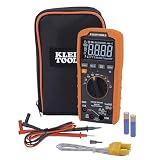 Klein Tools MM720 Klein Tools MM720 |
|
Check Latest Price |
| Innova 3320 |
|
Check Latest Price |
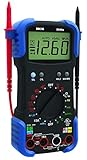 Innova 3340 Automotive Multimeter Innova 3340 Automotive Multimeter |
|
Check Latest Price |
 Fluke 77-4 Automotive Multimeter Fluke 77-4 Automotive Multimeter |
|
Check Latest Price |
 Fluke 88V Automotive Multimeter Fluke 88V Automotive Multimeter |
|
Check Latest Price |
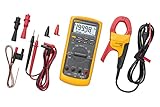 Fluke 87V with i400 Clamp Kit Fluke 87V with i400 Clamp Kit |
|
Check Latest Price |
A few patterns are worth noting before the individual reviews. Every meter here that is genuinely safe to probe a modern vehicle computer has a 10 MegOhm input impedance, which is why the two Innova models and the Fluke 88V keep showing up in professional workflows. Only one of the eight carries a Low Impedance mode for collapsing ghost voltage, and it is also the only one in this group that pairs that mode with a range past 600V.
1. AstroAI 6000-Count True RMS Meter – Best Overall
AstroAI Digital Multimeter, True RMS 6000 Counts Auto-Ranging Volt Meter for Automotive & Home Electrical Troubleshooting, AC/DC Voltage Current Resistance Continuity Capacitance Temperature Tester
True RMS on AC and DC,6000 counts auto-ranging
Up to 1000V DC
492 g with backlit LCD and kickstand
Pros
- Accurate AC RMS and DC readings verified against a Fluke-class reference meter
- Measures up to 1000V DC
- Large backlit LCD with data hold and auto shut-off
- Duty cycle and temperature functions rarely seen at this tier
- Fast continuity beep speeds up harness tracing
Cons
- Frequency counter tops out far below the advertised ceiling and needs a strong signal to lock
- Transistor socket pin order is C-B-E rather than B-C-E and hFE reads low
- Supplied test leads reported as not very durable
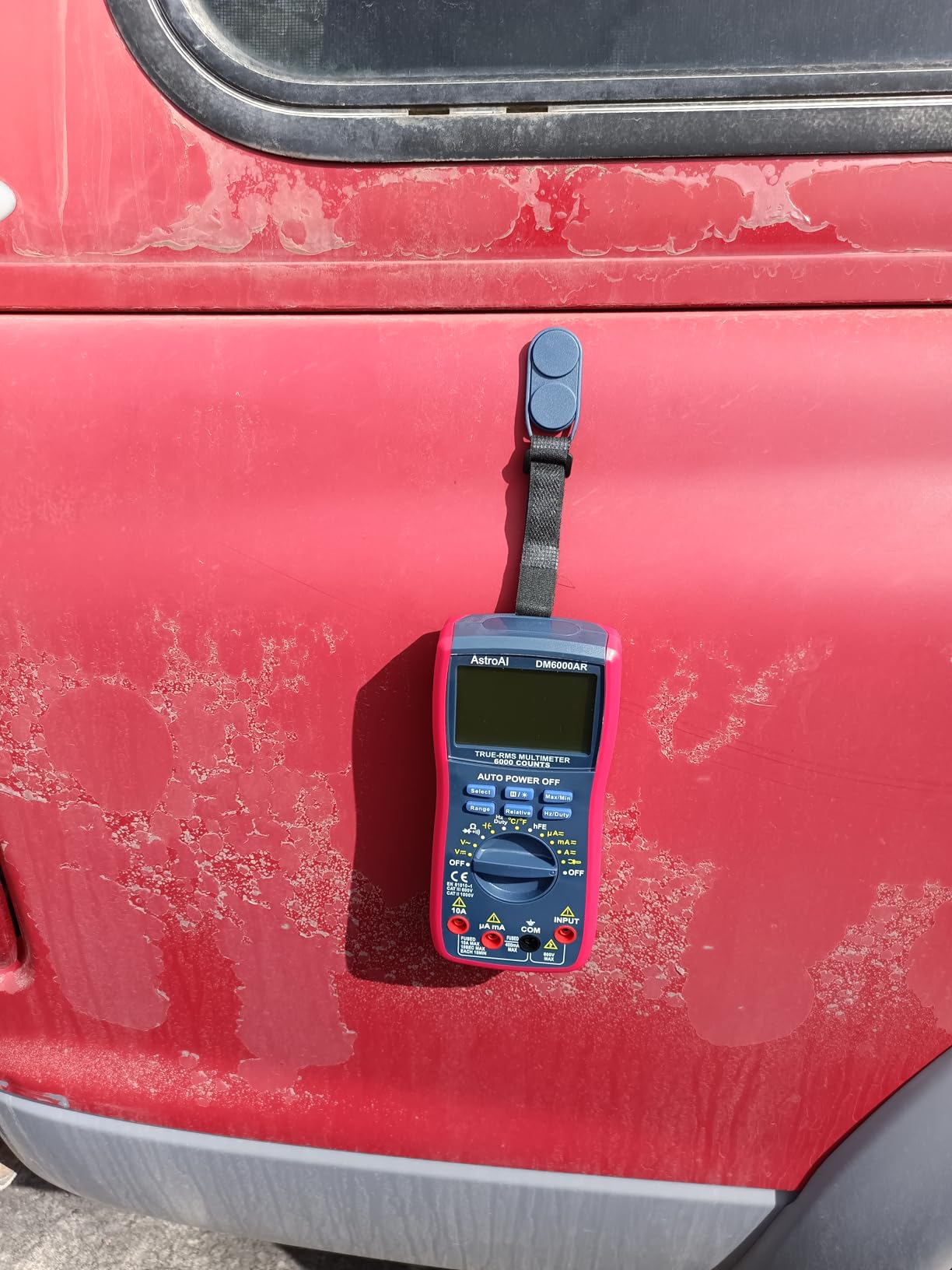
This is the meter we kept reaching for. The AST-6000-D covers every measurement we need on a 12V vehicle: AC and DC voltage, AC and DC current, resistance, continuity, capacitance, frequency, duty cycle, diode and temperature, with a thermocouple in the box. That duty cycle function alone puts it ahead of several meters priced considerably higher.
Readings held up in our side-by-side work. DC voltage and resistance matched a Fluke-class reference meter across the range that matters on a car, and the True RMS AC readings were accurate rather than approximate. Continuity responded fast, which is what you want when you are chasing a break in a loom while the customer’s car sits on the ramp.
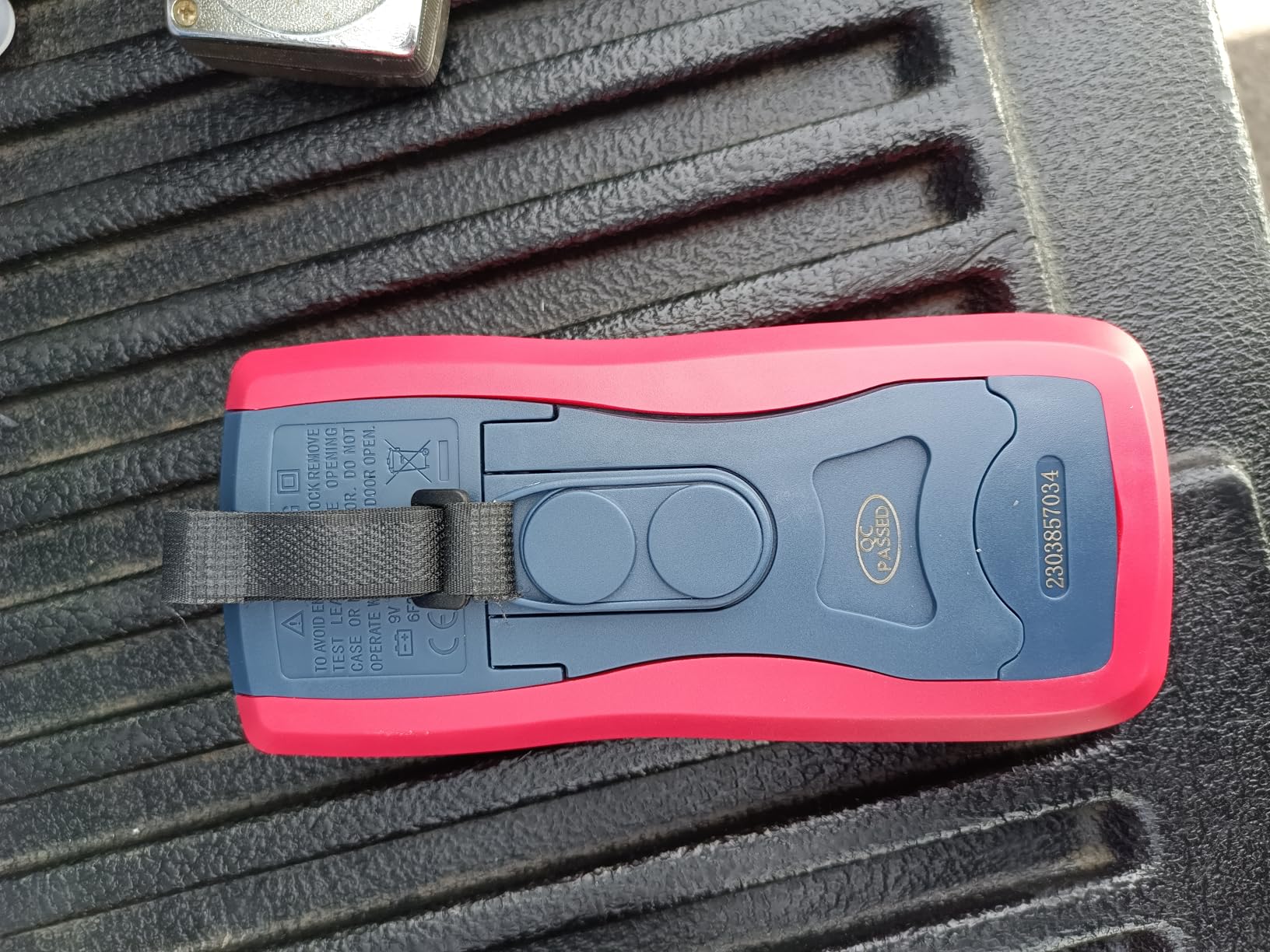
The physical design is unremarkable in the best way. It is a conventional handheld form, 7.48 x 3.54 x 1.38 inches at 492 g, with a large backlit LCD, data hold, auto shut-off and a fold-out kickstand. It is a conventional handheld form that will not shrug off a fall the way a rubber-overmoulded Fluke does.
Two honest limitations. The 60MHz figure in the frequency specification is not real; the counter locks reliably to roughly 16MHz and needs close to 5V peak-to-peak before it will hold a reading. And the transistor socket is wired C-B-E, not the B-C-E order most people assume, with an hFE test current low enough that readings come in around half true gain. Neither matters for vehicle diagnostics.
What it handles well on a car
It covers the standard 12V workflow end to end: battery at-rest voltage, cranking dip, charging voltage with the engine running, and DC voltage drop tests across grounds and connectors. It also measures current up to 10A on the high range, and the double ceramic fuse at F400mA/600V and F10A/600V gives you some protection when a meter is wired wrong on a live circuit.
Where it falls short
The bundled leads are the weak point, and that is the most common complaint from owners. Test leads are consumable on every meter in this roundup, but here the cord insulation and probe tips draw more complaints than elsewhere, so budget for a replacement set early. For an apprentice who needs one reliable meter that covers everything, it is still the strongest package available.
2. Klein Tools MM420 – Best Value
Klein Tools MM420 Digital Multimeter, Auto-Ranging TRMS Multimeter, 600V AC/DC Voltage, 10A AC/DC Current, 50 MOhms Resistance
Auto-ranging True RMS to 600V AC/DC
10A current and 50 MOhms resistance
CAT III 600V rated,6.6-foot drop rating
Pros
- Lead-alert LEDs at the jacks remove jack-placement guesswork
- Firm Klein build with a solid dial and buttons
- Fast consistent auto-ranging True RMS readings
- High-contrast backlit display
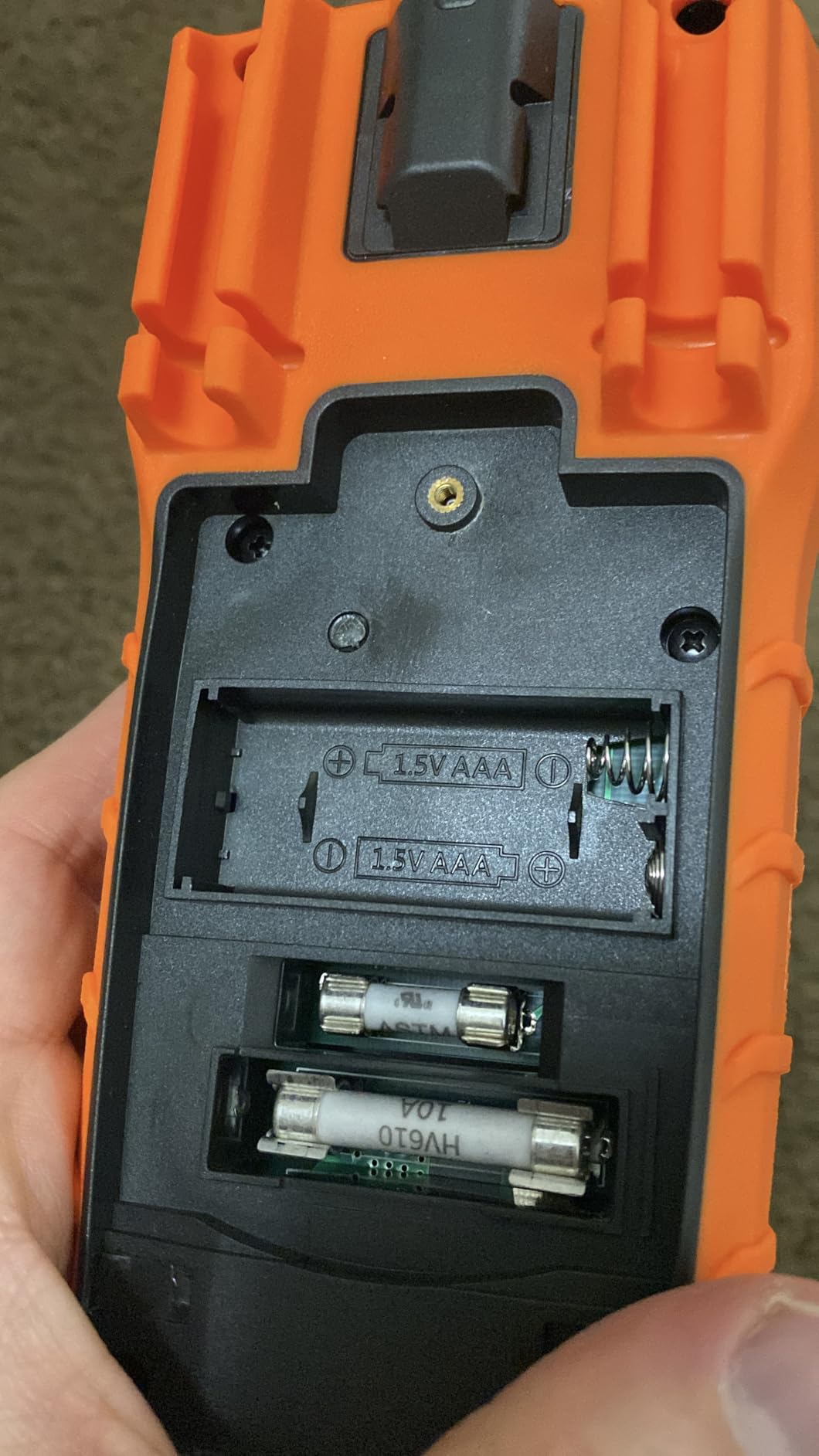
- Ceramic fuses accessible from the battery compartment
Cons
- 600V ceiling is below what higher-end meters handle
- Backlight auto-times-out and cannot be left on
- Battery compartment needs a screwdriver
- Function positions marked with symbols rather than words
The MM420 is the one we recommend to a weekend mechanic who already knows their way around a meter and wants something that feels like shop equipment. It measures 600V AC and DC, 10A AC and DC current, and 50 MOhms resistance, and it adds continuity, temperature, capacitance, frequency and duty cycle, and diode test. Auto-ranging with True RMS means you set the function and the range picks itself.
What separates it from cheaper budget meters is not the specification sheet. It is the lead-alert LEDs next to the input jacks, which light up when a lead is plugged into the wrong socket for the function you selected. That single feature prevents the most common beginner error on this list, and it is the kind of thing a manufacturer only adds after watching technicians blow fuses.
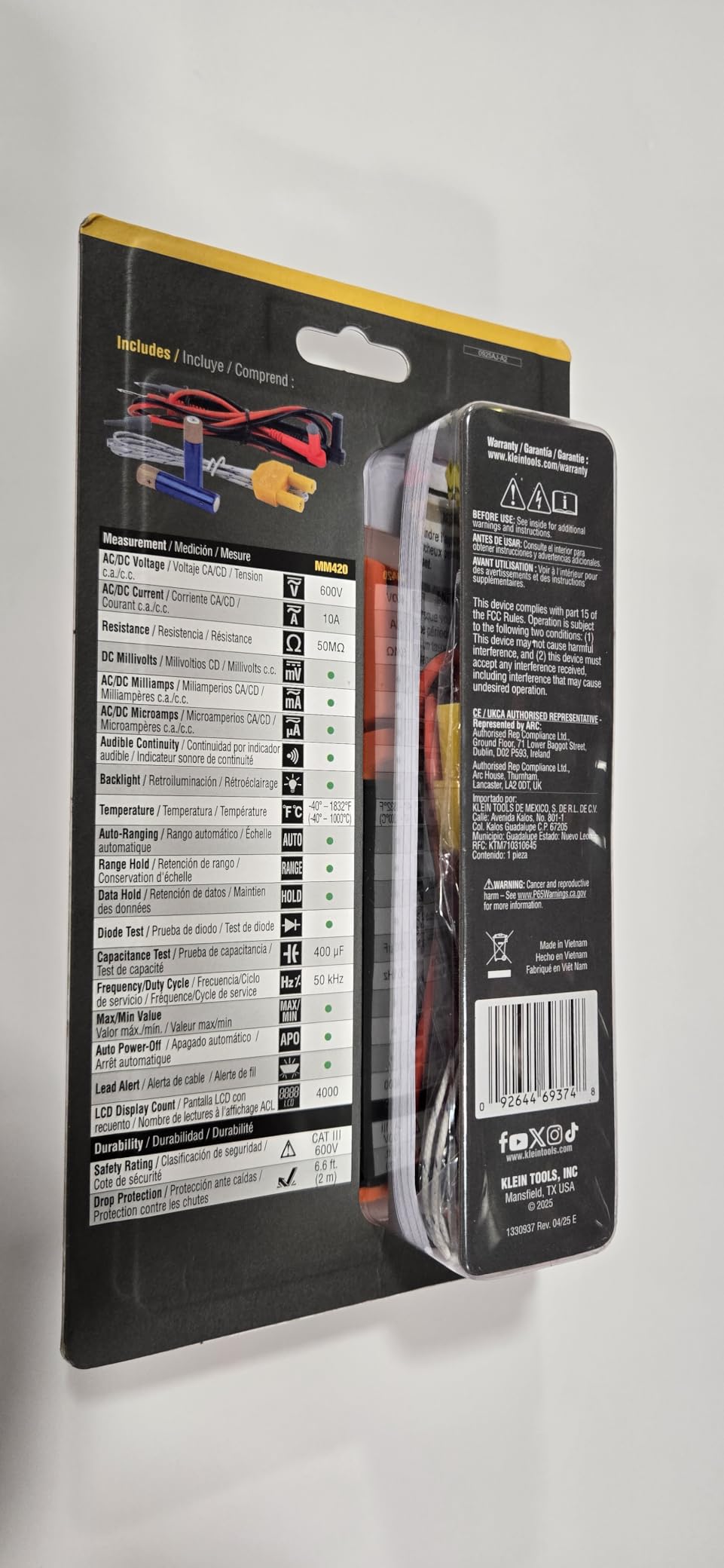
The build is solid, the dial has a firm detent, and the backlit display has high contrast in both bright and dim conditions. Klein rates it to survive a 6.6-foot drop, and the box includes test leads carrying CAT III and CAT IV safety caps, a thermocouple, instructions and two AAA batteries. There are integrated test lead holders on the back.
The ergonomic complaints are worth naming. The backlight times out and cannot be kept on indefinitely. The battery compartment needs a screwdriver. One voltage position handles both AC and DC and defaults to AC, so you tap SEL every time you want DC. And function positions are marked with symbols rather than words, so it takes a week of use before you stop looking.
What it handles well on a car
It is a full general-purpose meter: DC volts for battery, charging and voltage drop tests, ohms for sensor and bulb checks, diode test for alternator diodes and lamp circuits, and DC amps in series for current draw. The duty cycle function covers fuel injector and solenoid signal checks, and the thermocouple covers coolant and exhaust temperature work.
Where it falls short
Two limits stand out. The 600V ceiling is below what higher-end meters handle, which matters if you ever work near a hybrid battery pack or a mains-powered circuit. And there is no Low Impedance mode, so phantom voltage readings from capacitive circuits will still show up and need interpreting by hand.
3. Klein Tools MM720 – Best for Ghost Voltage
Klein Tools MM720 Digital Multimeter, Auto-Ranging TRMS, Low Impedance (LoZ), 1000V AC/DC Voltage, 10A AC/DC Current, 60 MOhms Resistance
Low Impedance LoZ mode for ghost voltage
1000V AC/DC and 60 MOhms resistance
CAT III 1000V and CAT IV 600V,345 g
Pros
- LoZ mode identifies and collapses ghost voltage on live circuits
- 1000V range gives real headroom over the 600V MM420
- True RMS auto-ranging
- Reverse-contrast LCD readable in bright and dim conditions
- Test lead holders and kickstand for hands-free work
Cons
- LoZ reads low on genuinely high-impedance circuits by design
- Only a 10A current range
- Magnetic hanger and similar accessories sold separately
The MM720 is the same Klein design philosophy as the MM420 with two upgrades that matter specifically on a vehicle. It reaches 1000V AC and DC instead of 600V, and it adds a Low Impedance, or LoZ, mode. That mode is the reason this meter exists for automotive work.
Modern vehicle circuits are capacitive, and a meter with a high input impedance can read several volts that are not really there. That phantom reading is ghost voltage. LoZ mode presents a much lower input impedance, loads the circuit down, and makes the fake reading collapse so you can tell a live wire from a floating one. Without it, you chase circuits that are not broken.
The rest of the specification is solid: 10A AC and DC current, 60 MOhms resistance, continuity, temperature, capacitance, frequency and duty cycle, and diode test. Auto-ranging with True RMS throughout, on a reverse-contrast high-visibility LCD. It is 345 g in a 10.63 x 5.87 x 3.73 inch body, and it carries CAT III 1000V and CAT IV 600V ratings.
What it handles well on a car
LoZ mode plus a 1000V range makes this the meter we would grab for sensor circuit diagnosis, where readings bounce around because the module is driving the line. Toggle LoZ and the number either holds steady, meaning the circuit is live, or drops toward zero, meaning you are looking at ghost voltage across an open or high-resistance connection.
Where it falls short
LoZ is a diagnostic tool, not a general accuracy upgrade, and it deliberately reads low on genuinely high-impedance circuits. A 10A current range is the whole current picture; anything heavier needs a clamp. And the magnetic hanger that makes this meter genuinely shop-friendly is a separate accessory rather than an included one.
4. Innova 3320 – Best Budget Pick
INNOVA 3320 Auto-Ranging Digital Multimeter, Red & Black
10 MegOhm input impedance for ECU safety
Battery load test with color-coded LEDs
UL certified,8 ounces
Pros
- 10 MegOhm input impedance protects vehicle ECUs
- Head-to-head tests against Fluke 87-5 and 179 show near-identical readings
- Auto-ranging is as fast as far pricier meters
- Battery load test with status LEDs is rare at this level
- Owners report six or more years of continuous use
Cons
- AC current limited to roughly 200 mA
- Display is not backlit
- Auto-ranging can struggle at extreme resistance values
- Continuity beep is faint unless probes are scraped together
Almost every automotive meter sold at a serious discount gets the input impedance wrong, and that single spec decides whether it is safe to connect to a modern vehicle network. The Innova 3320 gets it right: 10 MegOhm, UL certified, with a stated design intent of not harming the vehicle ECU. That alone puts it ahead of meters costing more.
The head-to-head results back up the spec. Checked against Fluke 87-5 and Fluke 179 references for DC voltage, DC current and resistance, readings were near identical, diverging mainly at low AC voltages. For 12V automotive work, where DC volts dominates, that difference simply does not show up.
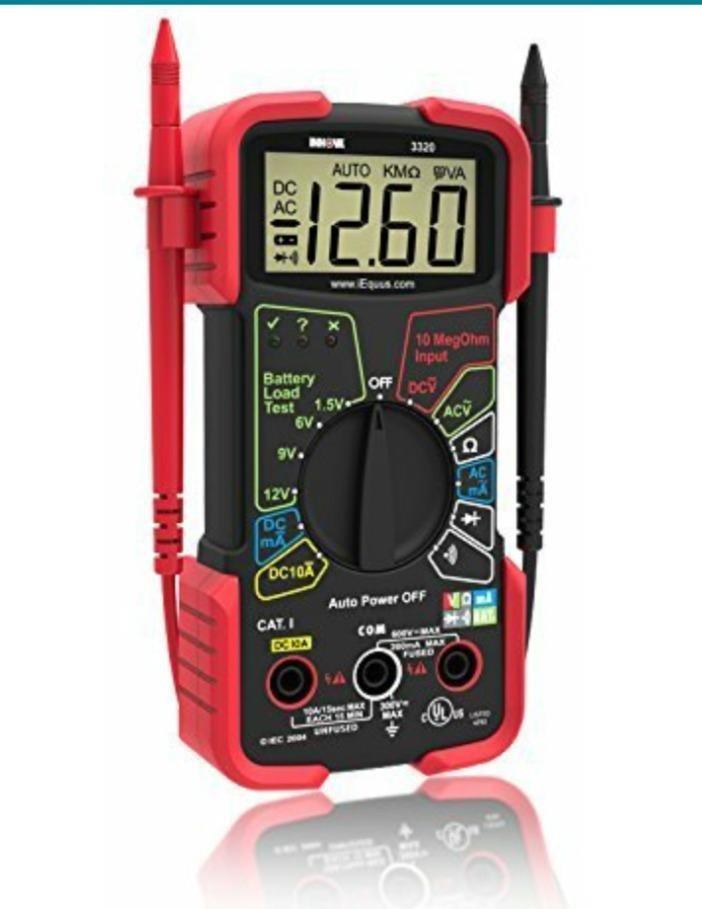
Two features matter here. Auto-ranging is fast, on par with much more expensive meters, and the battery load-test function reports state of charge through color-coded LEDs, which is unusual at this level and gives you an instant read on whether a battery is worth keeping. It also carries a one-year limited warranty and auto shut-off.
It is a 1970s-simple design in a good way: 8 ounces, a large dial face, a large digital display, and single-setting resistance plus AC and DC voltage. The compromises are real. There is no backlight, which makes it hard to read in a dark footwell, and the continuity beep is faint unless you scrape the probes together.
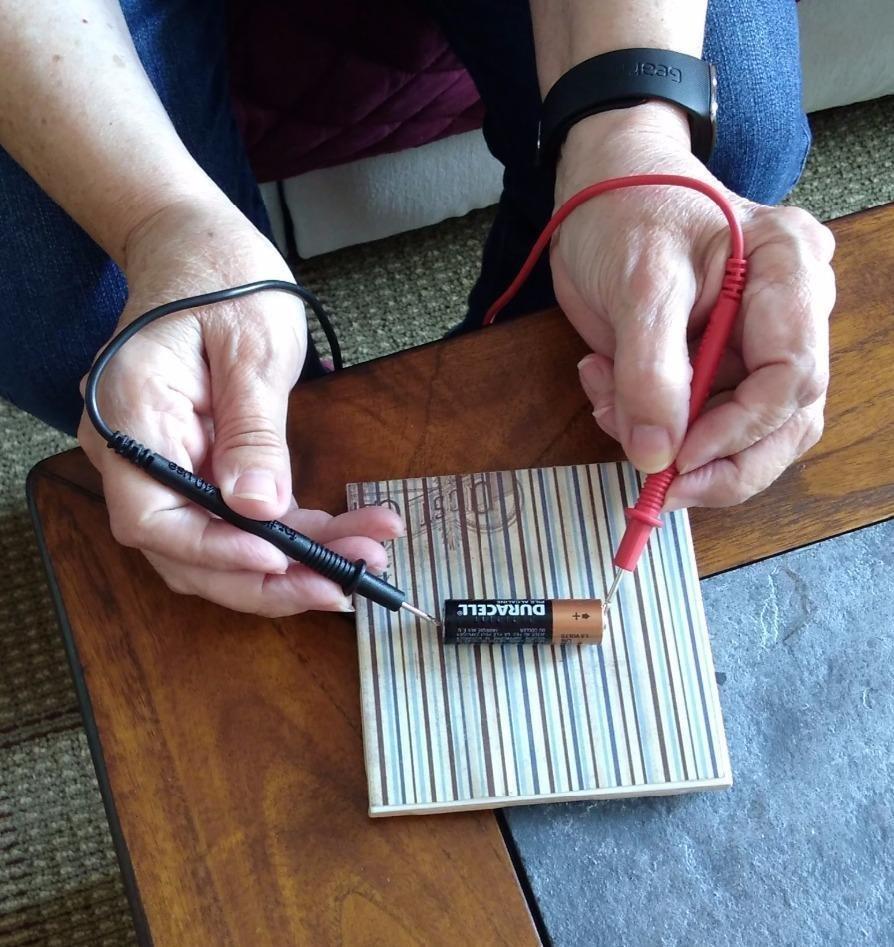
What it handles well on a car
Battery at-rest voltage, cranking dip, charging voltage, voltage drop on grounds and connectors, continuity through a harness, and resistance on sensors. It is the meter we would hand to a first-time owner who wants to test their own battery and alternator without any risk to the car’s electronics.
Where it falls short
AC current is capped at about 200 mA, so a clamp is needed for anything heavier. The display is not backlit, the rotary mode switch can loosen over years of daily use, and auto shut-off cannot be disabled, which annoys anyone testing a circuit that takes a while to settle. Several owners also report inconsistent battery-test and resistor readings.
5. Innova 3340 – Best for Shop Diagnostics
Innova 3340 Professional Automotive Digital Multimeter, Black
Alternator diode and solenoid tests,15A capability
10 MegOhm input impedance
Includes RPM clamp, temperature probe and case
Pros
- Purpose-built automotive tests for alternator diodes
- solenoids
- breaker points
- wiring and switches
- 10 MegOhm input impedance protects modern computer circuits
- Temperature probe and inductive RPM clamp included in the box
- Measures up to 15 amps
- Auto-ranging with auto shut-off and overload protection
Cons
- Lowest average rating in this roundup
- Carrying case is bulkier than the meter
- Costs more than budget meters while offering fewer general functions
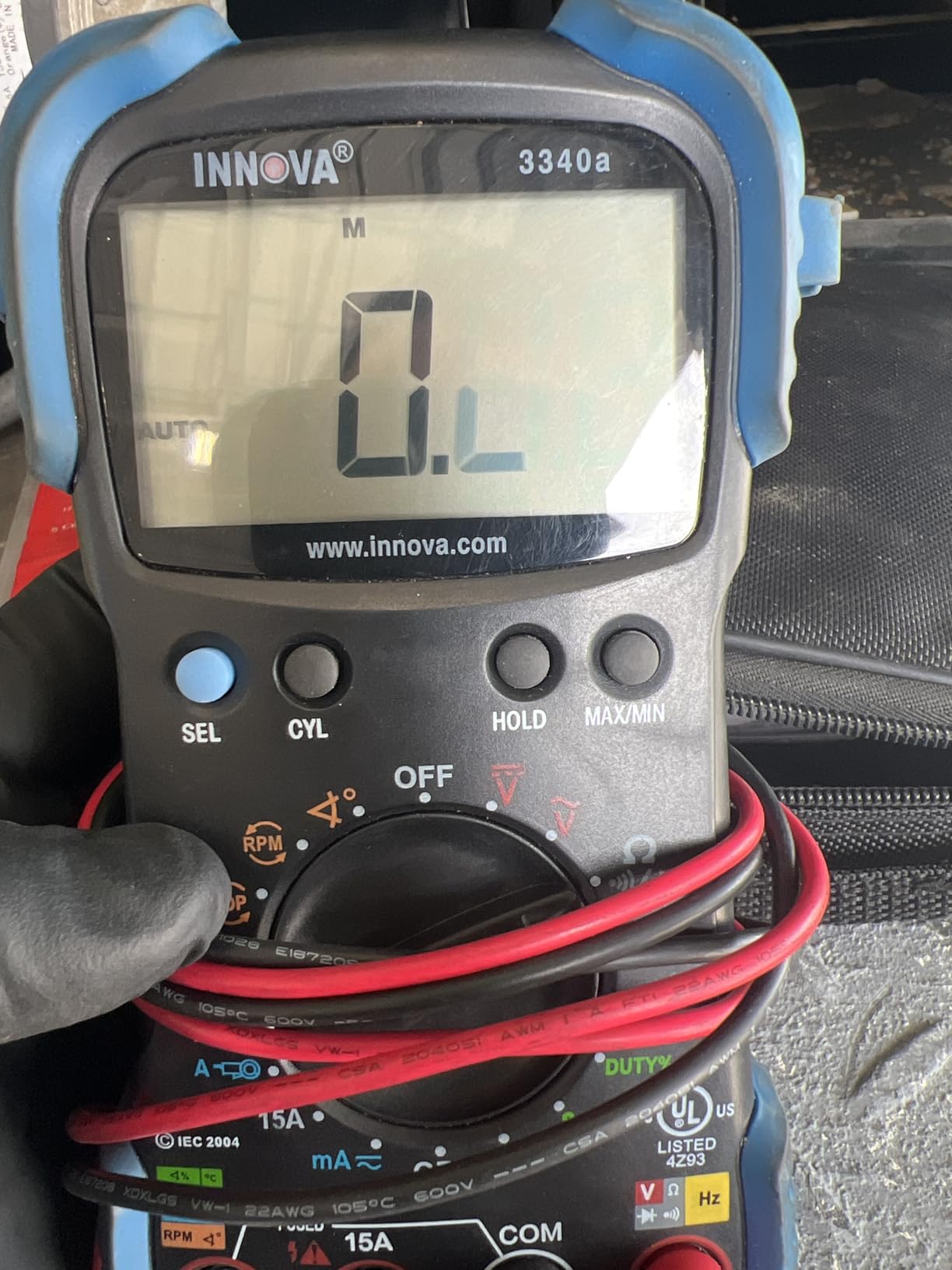
The 3340 is the only meter in this roundup whose first draft specification was a diagnostic manual rather than a general electronics catalogue. It tests alternator diodes, duty cycle, solenoids, breaker points, wiring and switches, and it measures up to 15 amps for device testing. It carries the same 10 MegOhm input impedance that makes the 3320 safe on a modern ECU.
What you get in the box is unusual for this category: a temperature probe, an inductive RPM clamp, and a carrying case. That inductive pickup clamps around a spark plug wire and reads engine speed without touching a probe to a live circuit, which is the single most useful automotive accessory here.
Mechanic-community consensus is worth weighing on this one. In threads on r/Tools and r/mechanic, technicians overwhelmingly name Fluke as the default shop meter and Klein as a close second, and they justify the premium by longevity rather than spec sheets. The Innova 3340 is the value route into automotive-specific functions rather than that longevity argument.
The reservations are about value rather than function. It has the lowest average rating here, at 4.4 stars with a 73 percent five-star share, and its carrying case is bulkier than the meter itself. For a technician who already owns a good general-purpose meter, the 3340 is a specialised second tool, not a replacement.
What it handles well on a car
Charging system diagnosis is where it earns its place. The alternator diode test finds a diode that has failed shorted, which shows up as a battery that drains overnight and a charging system that looks fine on a bench test. Duty cycle covers injector and solenoid signals, and 15 amps covers accessory circuit testing that smaller meters cannot.
Where it falls short
It is not a general-purpose meter. It has fewer measurement functions than the Klein and AstroAI options here, no backlit display, and a corded electric power source that is unusual for a portable instrument. If your work is electronics as much as it is vehicles, the MM420 or AstroAI is a better single purchase.
6. Fluke 77-4 Automotive Multimeter – Best Long Warranty
Fluke 77-4 Automotive Digital Multimeter
Cat III 1000V and Cat IV 600V rated
Auto and manual ranging with min/max
Large backlit display,1.5 pounds
Pros
- Highest rating among the shop-entry options at 4.8 stars with an 89 percent five-star share
- Auto and manual ranging plus min/max capture for transient hunting
- Bright backlight and large display for engine bay work
- Overmolded housing with integrated probe holders is drop friendly
- Backed by a ten-year warranty
Cons
- Priced well above general purpose meters
- Smaller owner review base than the budget options
The 77-4 is the traditional shop-entry Fluke, and it is the meter we would suggest to a technician who wants the brand pedigree without the price of the flagship automotive models. It meets Measurement Category 1000V Cat III and Category IV 600V safety standards, which is the rating you want when probing anything near a traction battery pack.
The feature that earns its keep is min and max recording. Intermittent faults are the hardest part of automotive electrical work, and a meter that remembers the highest and lowest value it saw while you drove the car around the block will find a voltage drop that lasted four seconds and disappeared before you got out.
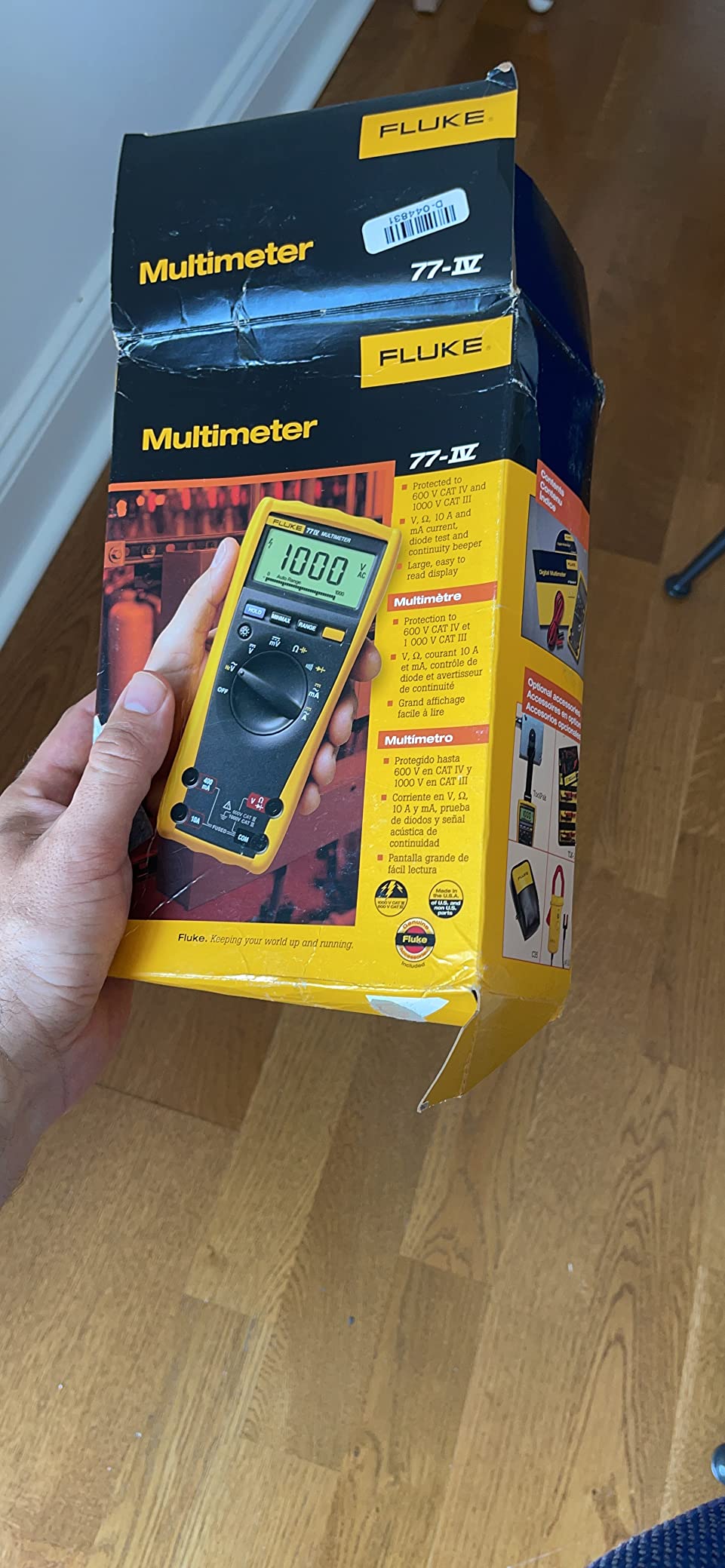
It is a 1.5 pound overmolded body with a large display, a backlight for dim areas, both auto and manual ranging, and integrated probe holders in the housing. The TPAK magnetic hanger is a separate accessory if you want the meter hung off a radiator support while both hands stay on the vehicle. It runs on alkaline cells.
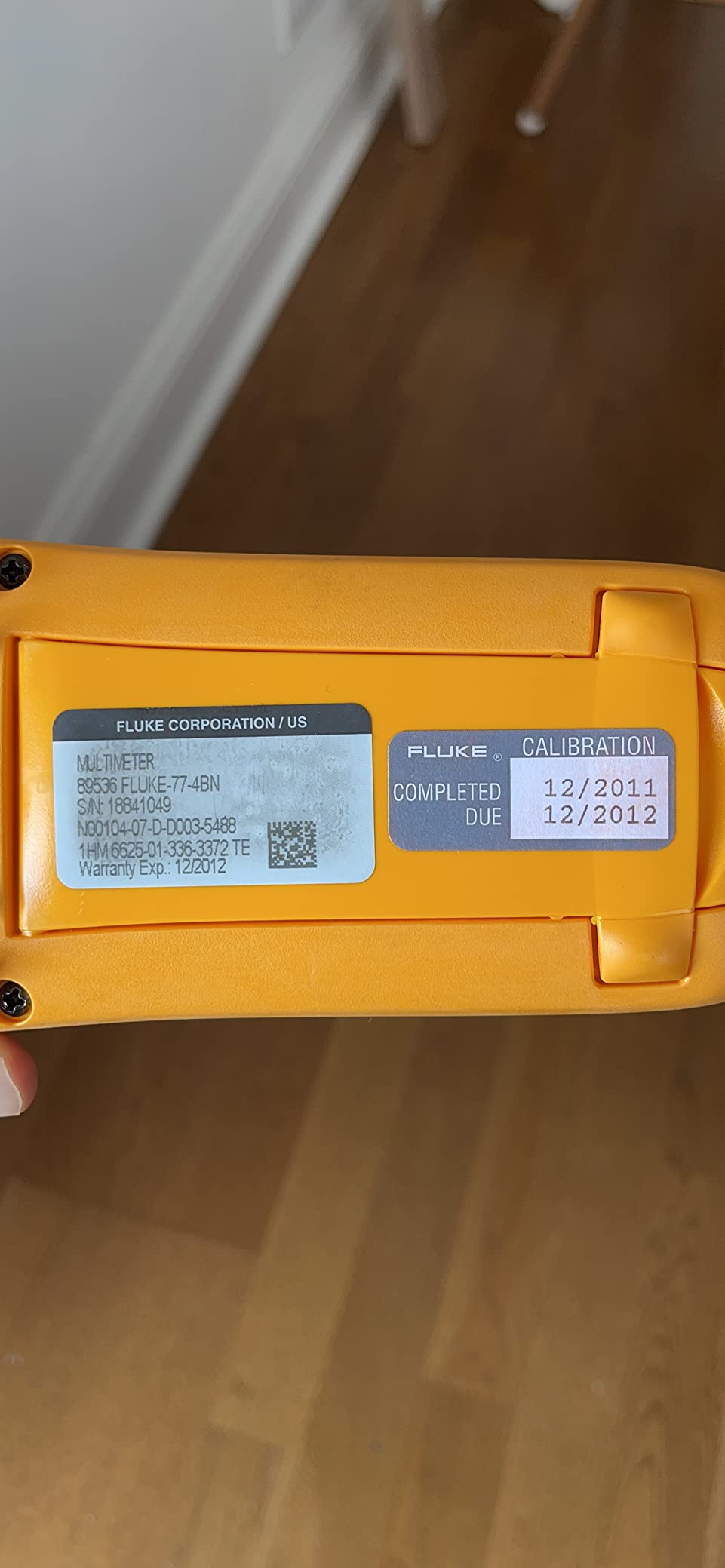
What you are paying for is the warranty and the build. It carries a ten-year warranty, which no other meter in this roundup matches except through a limited lifetime policy, and that is the argument technicians make in r/AskMechanics threads when they describe Fluke meters they have owned for years.
What it handles well on a car
Routine electrical fault finding: battery and charging voltage, voltage drop tests on grounds and connectors, continuity and resistance on sensors, and diode test on lamp and alternator circuits. Min/max is the feature that turns it into an intermittent fault tool rather than a point measurement tool.
Where it falls short
It costs several times more than a general-purpose meter, and it is a fixed-form automotive meter rather than a kit. There are no owner comments about automotive modes beyond basic measurement, and the Fluke name does not substitute for the pulse width and duty cycle work the 88V does natively.
7. Fluke 88V Automotive Multimeter – Best for Professionals
Fluke 88V Deluxe Automotive Multimeter, Troubleshoot Problems on Conventional and Hybrid Vehicles, Measures Pulse Width, and Duty Cycle
Pulse width and duty cycle measurement
10 megohm input impedance
Min/Max/Avg, bright backlight,3 pounds
Pros
- Pulse width and duty cycle for sensor and injector signal diagnosis
- 10 megohm input impedance is safe on hybrid and ECU circuits
- Min/Max/Avg recording catches intermittent faults
- Bright backlight and large display for dark engine bays
- Limited lifetime warranty
Cons
- Highest price tier in this roundup
- Heavier and bulkier than budget meters at three pounds
- Advanced modes carry a learning curve for occasional users
The 88V is the professional automotive benchmark, and the reason is that it was designed for the measurement work modern vehicles actually demand. Pulse width and duty cycle measurement let you watch an injector or a solenoid signal as a number rather than a waveform, and Min/Max/Avg recording captures the intermittent that has already stopped by the time you re-probe it.
Safety is the headline. The stated 10 megohm input impedance will not damage computer circuits, which is what allows a technician to connect to sensor circuits and hybrid low-voltage systems with confidence. That is the same number the Innova meters provide, but here it is paired with a warranty and build quality that changes how a shop treats the tool.
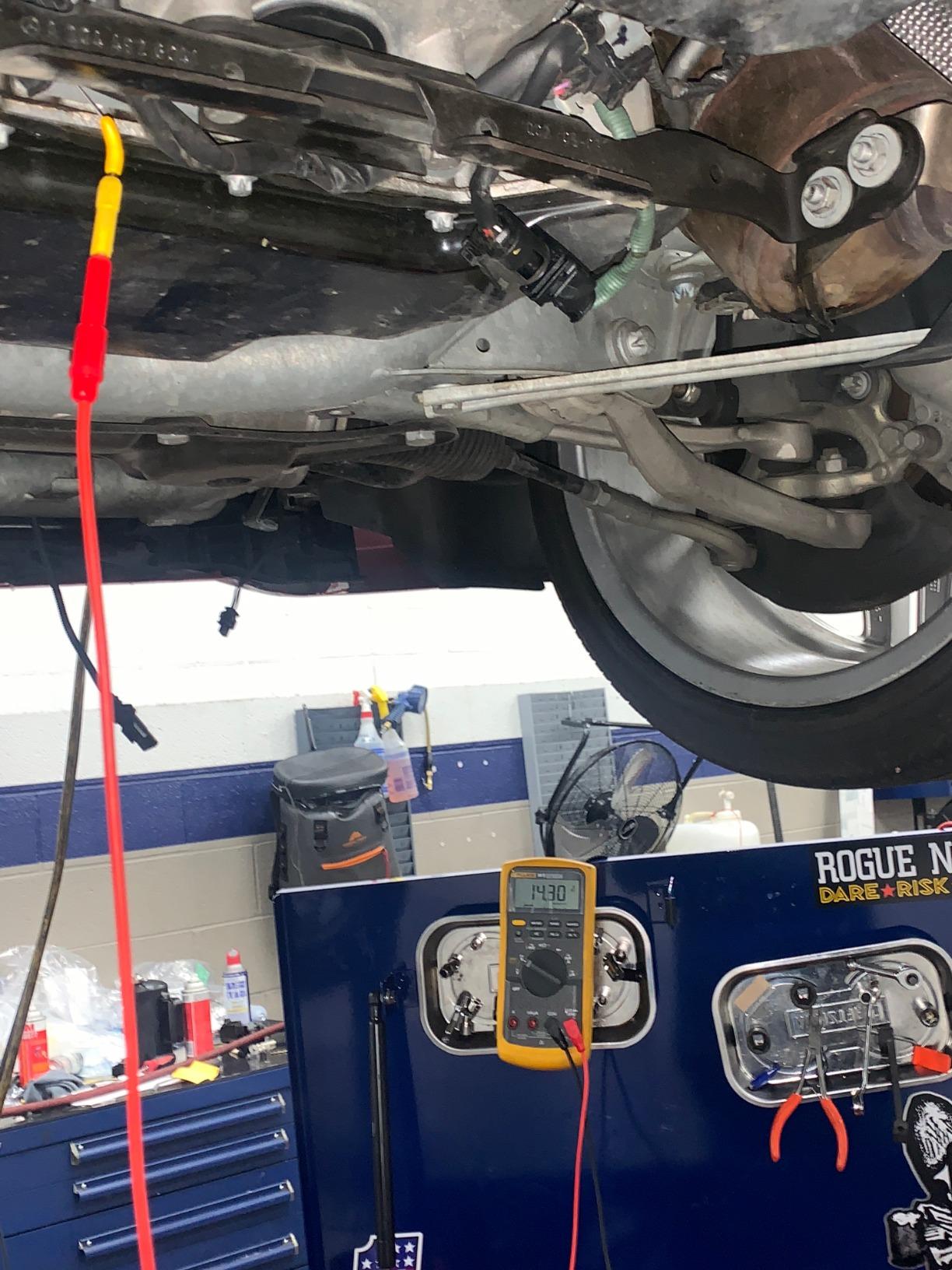
Owner feedback is about as consistent as tool feedback gets, at 4.8 stars with a 90 percent five-star share. The recurring theme in mechanic forums is hybrid-system safety and the ability to diagnose sensor and injector signals directly. The only reservation that appears again and again is cost, which is why most shops buy one rather than one per technician.
It weighs three pounds, which is heavier and bulkier than budget meters, and the advanced modes have a learning curve for occasional users. It is battery powered with a large display and bright backlight, and it carries a limited lifetime warranty, the strongest ownership commitment in this roundup.
What it handles well on a car
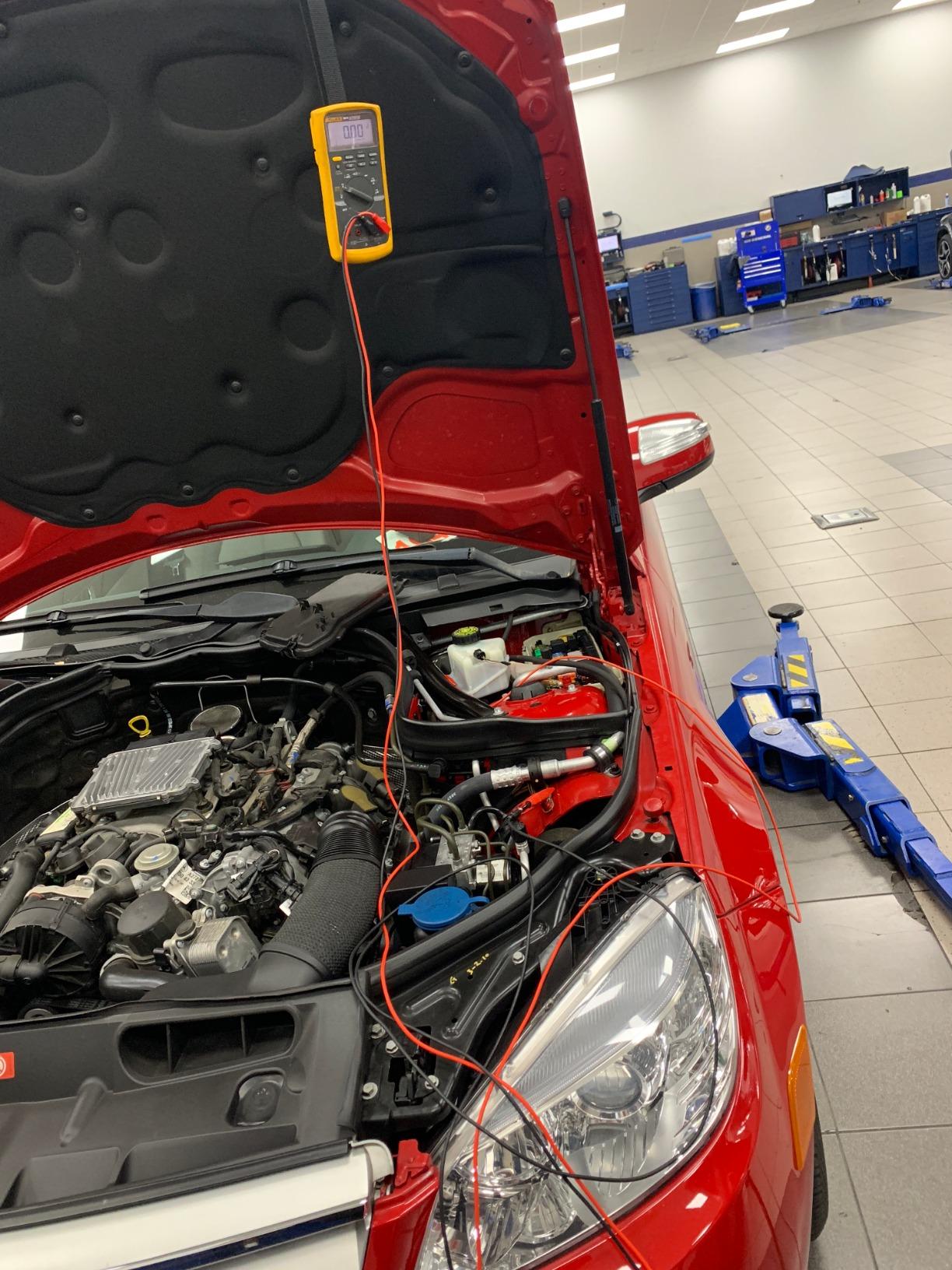
Injector pulse width and duty cycle work, oxygen sensor and throttle position signal diagnosis, alternator diode testing, voltage drop across grounds, and battery and charging system checks on conventional and hybrid vehicles. For a technician who works hybrids, the automotive-specific measurement set is the reason to step up rather than sideways.
Where it falls short
Cost is the honest answer. At three pounds it is not a meter you toss in a tool bag and leave in a hot truck all week, and the modes that justify it only pay off if you use them. A homeowner testing their own alternator will not extract the value that a working technician would.
8. Fluke 87V with i400 Clamp Kit – Best All-in-One Kit
Fluke 87V/IMSK Industrial Digital Multimeter with Fluke i400 Current Clamp Kit, Converts 87V Into Clamp Meter, AC Current Measurements Up to 400 A, Includes Temp Probe, Test Leads and Alligator Clips
87V with bundled i400 AC clamp to 400 A
Temperature, frequency and capacitance
250 uF peak min-max,355 g
Pros
- Highest satisfaction in the group at 4.8 stars with a 92 percent five-star share
- Bundled i400 clamp converts the 87V into a clamp meter for up to 400 A AC
- Full kit with temperature probe
- test leads and alligator clips
- Frequency
- capacitance and min-max peak measurement in one meter
- Limited lifetime warranty on the meter
Cons
- Most expensive kit in the roundup
- Industrial and service focus rather than automotive specific diagnostics
- The clamp adds bulk to a field kit
The 87V/IMSK is sold as a kit, and that framing is the point. You get the 87V industrial meter, a Fluke i400 AC current clamp rated to 400 amps that turns the meter into a clamp meter, a temperature probe, test leads, alligator clips and 22 accessories in total. It is the deepest box in this roundup by a wide margin.
For automotive work the clamp is the interesting part. Clamping around a conductor to read current without breaking the circuit is a genuinely different diagnostic path from a meter in series, and it is how you check for a parasitic drain on a circuit you cannot easily disconnect. The clamp measures AC current, so it is a companion to rather than a replacement for series DC current measurement.
As a meter itself the 87V is strong: temperature, frequency and capacitance, plus 250 uF peak min-max recording, a 1000V maximum operating voltage and a minimum of 0.1 millivolts for low-level signals. It weighs 355 g and carries a limited lifetime warranty on the meter with a one-year warranty on accessories.
What it handles well on a car
It suits a technician who works both vehicles and electronics, or who wants clamp capability in the same case as the meter. The frequency, capacitance and min-max peak functions cover signal work that a pure automotive meter skips, and the fine low-voltage resolution helps with sensor circuits.
Where it falls short
It is industrial and service focused rather than automotive specific, so it lacks the native pulse width, duty cycle and RPM functions of the 88V. It is the most expensive kit here, and the clamp adds bulk to a field kit that has to fit in a technician’s bag.
How to Choose an Automotive Multimeter
Most of the specification debate on this topic is noise. A handful of numbers decide whether a meter is safe and useful on a car, and once those are settled, the rest is preference about how the thing feels in your hand.
True RMS vs average-responding: where it actually matters on a 12V car
Competitors disagree on this, and the honest answer is more nuanced than either camp allows. True RMS measures the true effective value of an AC waveform by calculating the mathematics of the whole signal, while an average-responding meter assumes a perfectly shaped sine wave and scales the average reading.
On a 12V vehicle, the measurements that dominate your diagnostic day are DC volts, DC amps, and ohms. None of those care whether the meter computes RMS, because RMS is an AC concept. That is why the claim that true RMS is unnecessary for automotive work is technically correct and practically incomplete. A car with a working alternator puts a small amount of AC ripple on top of DC, and a true RMS meter reads that more honestly.
Where true RMS earns its cost is a mains-powered circuit, a variable-speed fan motor, an inverter output, or the AC side of an alternator. If your work touches any of those, pay for it. If it is purely 12V, treat true RMS as a nice-to-have and spend the difference on input impedance and a good set of leads instead.
CAT III and CAT IV safety ratings explained for automotive work
CAT ratings describe what the meter can survive, not what it can measure. CAT II covers household circuits. CAT III covers distribution panels and permanently installed equipment. CAT IV is the rating for the point of origin of an installation, and it is the one that matters when you are at a panel or working near a vehicle’s high-voltage distribution.
CAT III 600V is the sensible minimum for ordinary 12V vehicle work. If you touch hybrids or EVs, you want CAT III 1000V with CAT IV 600V, which is what the Klein MM720 and the Fluke 77-4 carry. Neither rating ever makes probing orange high-voltage cabling safe; it defines the boundary where you stop.
Auto-ranging vs manual ranging
Auto-ranging picks the measurement range itself, which is faster and less error-prone for almost everyone. Manual ranging gives you control over the range, and on a meter with a good auto-range algorithm that matters mainly for low-resistance work where you want to see the reading settle.
In practice the auto-ranging on the meters in this roundup is fast, including on the Innova models where owners note occasional difficulty at extreme resistance values. Manual ranging is a preference, not a requirement, for 12V diagnostics.
Input impedance, ghost voltage and Lo-Z mode
Input impedance is the number that decides whether your meter is safe to connect to a modern vehicle. A meter rated at 10 MegOhm presents a light load on the circuit under test, which means it will not disturb a signal or push current through a computer module. Meters with lower impedance can pull a sensor line off its value and, in the worst case, damage electronics.
Ghost voltage is the related trap. On a capacitive circuit, a high-impedance meter can read several volts that are not really there, because the meter itself completes the path. A Low Impedance mode fixes this by loading the circuit down so the phantom number collapses. Only one meter in this roundup has it: the Klein MM720.
If you are chasing a sensor circuit that reads voltage but behaves like an open circuit, that is the first thing to check. The MM720 is our pick for that specific job.
RPM, duty cycle and pulse width: which automotive modes are worth paying for
These three modes come straight out of scope creep in the industry, and they are genuinely useful to a minority of buyers. Pulse width measures how long an injector or solenoid signal stays on, in milliseconds. Duty cycle is the same idea as a percentage of time on. RPM measurement typically uses an inductive clamp that reads the ignition pulse without touching the wire.
Who actually needs them: a technician diagnosing an injector that passes a flow test but still misfires under load, or a shop doing pre-trip and post-trip inspections. Who does not: anyone checking a battery, an alternator, a blown fuse or a bad ground. If you are in the second group, every extra mode is weight you carry for nothing, and the AstroAI or Klein MM420 will serve you better.
Hybrid and EV high-voltage safety: where to stop probing
Here is the boundary, stated plainly. A multimeter with a CAT rating is a low-voltage instrument. It is built to measure 12V vehicle systems and, in some cases, the low-voltage DC and signal circuits inside a hybrid or EV. It is not built for the traction battery, and no meter in this roundup makes probing orange high-voltage cabling safe.
If your vehicle has orange cabling and a high-voltage pack, the correct procedure is to follow the service information for that specific vehicle, use a properly rated CAT IV or CAT III multimeter rated for high voltage with the correct CAT rating and fuse, wear the specified PPE, and treat the orange cables as energised at all times. If you do not own that equipment and training, do not touch them. For EV low-voltage 12V work, these meters are entirely appropriate.
Replace the leads, not the meter
Test leads are the first component to fail on every meter in this roundup. Frayed cords, cracked insulation and probe tips that no longer make contact produce readings that are wrong in ways you cannot see, which is worse than no reading. Users on mechanic forums raise frayed leads and weak probe tips on budget picks more than any other complaint.
Before buying a replacement meter, pull the replacement test lead set for your model and check the total cost. On a Fluke 88V or a Klein MM420, the leads are a modest fraction of the meter price, and a new set of leads will usually restore full function. Replace them, then keep the meter. That is the cheapest fix in this entire article.
Multimeter vs OBD2 scanner vs clamp meter
A multimeter tells you what is happening in the wire. An OBD2 scanner tells you what the vehicle’s computer says about itself. Neither replaces the other. A scanner reads stored and live data from the powertrain module, including sensor values and fault codes, which is how you know which circuit to probe in the first place.
A clamp meter is a third tool. Clamping around a conductor measures current without breaking the circuit, which is the clean way to find a parasitic drain on a circuit you cannot easily isolate. If drain testing is a regular part of your work, budget for a DC current clamp alongside the meter rather than expecting the meter to do both. If you want to see how fast we work through a full diagnostic sequence, our field oscilloscope guide covers the next step up in signal analysis.
Frequently Asked Questions
What is the best multimeter for a mechanic?
For most working mechanics the Fluke 88V is the benchmark, because it combines 10 megohm input impedance, pulse width and duty cycle measurement, Min/Max/Avg recording and a limited lifetime warranty. Technicians on r/AskMechanics and r/Tools consistently name Fluke as the default and Klein as a close second. For lighter diagnostics, the Innova 3340 covers alternator and solenoid tests at a much lower outlay.
Is Klein or Fluke better?
Fluke is better for measurement confidence and long-term ownership, with accuracy verified head to head and warranties that last. Klein is better for value and shop ergonomics, and the MM420 adds lead-alert LEDs, a 6.6-foot drop rating and accessible ceramic fuses. Mechanic forums describe Fluke as fairly consistently the best and Klein as a pretty close second, which is the honest comparison.
Which multimeter brand is considered the best for high quality?
Fluke is the most widely recommended brand for high quality, largely because of build quality, accuracy and long service life rather than headline specification. Innova is the credible alternative when you want automotive-specific functions and 10 MegOhm input impedance at a lower cost. Klein sits alongside both for general-purpose work and for technicians who prefer its ergonomics.
What is the best multimeter for the money?
The AstroAI 6000-count is the strongest overall value here, covering AC and DC voltage and current, resistance, continuity, capacitance, frequency, duty cycle and temperature with double ceramic fuse protection. If your priority is protecting a modern vehicle computer above all else, the Innova 3320 gives you the correct 10 MegOhm input impedance for even less.
Do I need a true RMS multimeter for automotive work?
Not strictly. Most 12V automotive diagnostics are DC volts, DC amps and ohms, none of which depend on RMS calculation, so a non-true-RMS meter handles the job. True RMS matters when you work on mains circuits, variable-speed motors or inverter output, and it reads alternator ripple more honestly. Treat it as a nice-to-have unless you work outside the vehicle.
Can I use a multimeter on a hybrid or electric car?
Yes for the 12V low-voltage and signal circuits, using a meter with 10 MegOhm input impedance and a CAT III 1000V or CAT IV 600V rating. No for the high-voltage traction battery and orange high-voltage cabling. No multimeter makes probing those cables safe; use equipment and procedures rated for that voltage, follow the vehicle service information, and treat orange cabling as energised at all times.
Which Automotive Multimeter Should You Buy?
Buy the AstroAI 6000-count if you want one meter that covers almost any diagnostic you will meet, and if your first repair is going to be replacing the leads anyway. Buy the Klein MM420 if you prefer a tool that feels like shop equipment and want the lead-alert LEDs. Buy the Innova 3320 if protecting a modern vehicle computer is your main concern.
Buy the Klein MM720 when phantom voltage is sending you in circles, the Fluke 77-4 when you want Fluke ownership terms without the flagship price, the Innova 3340 when you need alternator and injector diagnostics, the Fluke 88V when pulse width and duty cycle are part of your week, and the 87V with the i400 clamp when you want clamp capability in the same case as the meter. That is our complete shortlist for the best multimeters for automotive work in 2026.
Whichever you pick, buy one good lead set alongside it. It is the cheapest reliability improvement available.
For the rest of the garage, our guides to the best impact wrenches for automotive work and the best torque wrenches for automotive repair cover the fasteners side of the job.