
If you want one instrument to start on, the Stylophone Original is our pick for the best analog synthesizers for beginners in 2026. It costs less than a takeaway meal, it makes a real analog sound, and it is playable about ten seconds after you open the box.
That said, the Stylophone is not the right answer for everyone, and pretending otherwise would waste your money. Beginners fall into three camps. Some want to learn how synthesis works, knob by knob. Some play bass or leads and want a monosynth they can push hard. Some want to press chords and pads straight away and record them into a DAW. The instruments that suit those three people barely overlap.
So this guide covers 12 units, ordered from the smallest and cheapest to the largest, and each one is labelled with what its signal path really is. Some of the best-sounding beginner synths are not analog at all, and one or two on this list have no oscillators you can control. We would rather you know that before you buy than three months after.
Table of Contents
Our Top 3 Analog Synth Picks for October 2026


Behringer Crave
- Pure analog VCO/VCF/VCA
- Moog-style ladder filter
- 32-step sequencer
- Patch bay
The Monologue is the highest-rated instrument in this group and the best teaching tool, with an oscilloscope that shows you the waveform you are hearing. The Crave is the strongest all-round value if you want a real analog signal path and patch cables at a beginner budget.
All 12 Synths at a Glance in October 2026
| Product | Specifications | Action |
|---|---|---|
| Stylophone Original |
|
Check Latest Price |
 Behringer TD-3-AM Behringer TD-3-AM |
|
Check Latest Price |
 Korg monotron DUO Korg monotron DUO |
|
Check Latest Price |
| Behringer Crave |
|
Check Latest Price |
 Behringer MODEL D Behringer MODEL D |
|
Check Latest Price |
| Korg Monologue |
|
Check Latest Price |
 Korg minilogue Korg minilogue |
|
Check Latest Price |
 Moog Subharmonicon Moog Subharmonicon |
|
Check Latest Price |
 MicroKits Synth-a-Sette MicroKits Synth-a-Sette |
|
Check Latest Price |
 Roland AIRA S-1 Roland AIRA S-1 |
|
Check Latest Price |
 Stylophone GENX-2 Stylophone GENX-2 |
|
Check Latest Price |
 Arturia MiniBrute 2S Arturia MiniBrute 2S |
|
Check Latest Price |
Two entries deserve an honesty note before anything else. The Roland AIRA S-1 is analog modeling, meaning a digital chip imitates the behaviour of analog circuits rather than using them. The Stylophone Original and GENX-2 run simple analog circuits with a fixed tone shape rather than a full oscillator architecture. Neither is a bad instrument, but neither teaches you the VCO-filter-amplifier chain the way a true analog monosynth does.
1. Stylophone Original: The Cheapest Real Analog Start
Stylophone The Original Pocket Electronic Synthesizer | Synth Musical Instrument | Synthesizer Keyboard | Stylophone Instrument Synth
Analog pocket synth
3 octaves
Optional vibrato
3.5mm line in
8.8 oz
Pros
- Playable seconds after unboxing
- Genuine analog circuit with a retro organ character
- Pocket sized with built-in speaker
- Records into a computer via 3.5mm line in
Cons
- Single-note voice over a very small range
- Stylus surface can feel imprecise
- Battery-only with no DC power input
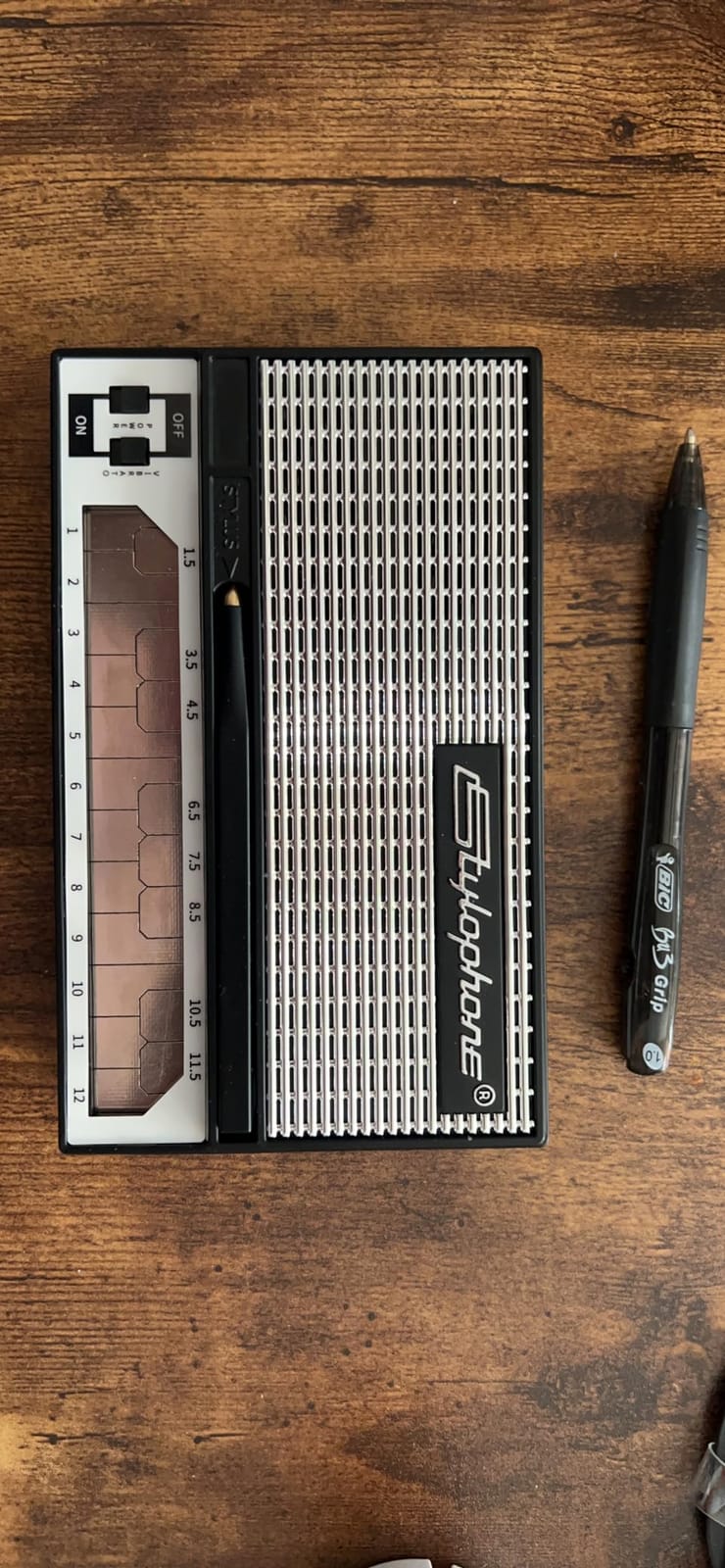
My first session with the Stylophone lasted about ten minutes because there is nothing to switch on. You slide the stylus across the metal surface, you press a key with your other hand, and there is a sound. That instant response is why it has collected a review count in five figures and why it is still the answer when someone asks what the cheapest good analog synth is.
It runs a genuine analog circuit first released in 1968, covering 3 octaves with an optional vibrato effect. The tone is warm, vintage and organ-like rather than bright and cutting, which is a fair description of the character it has always had.
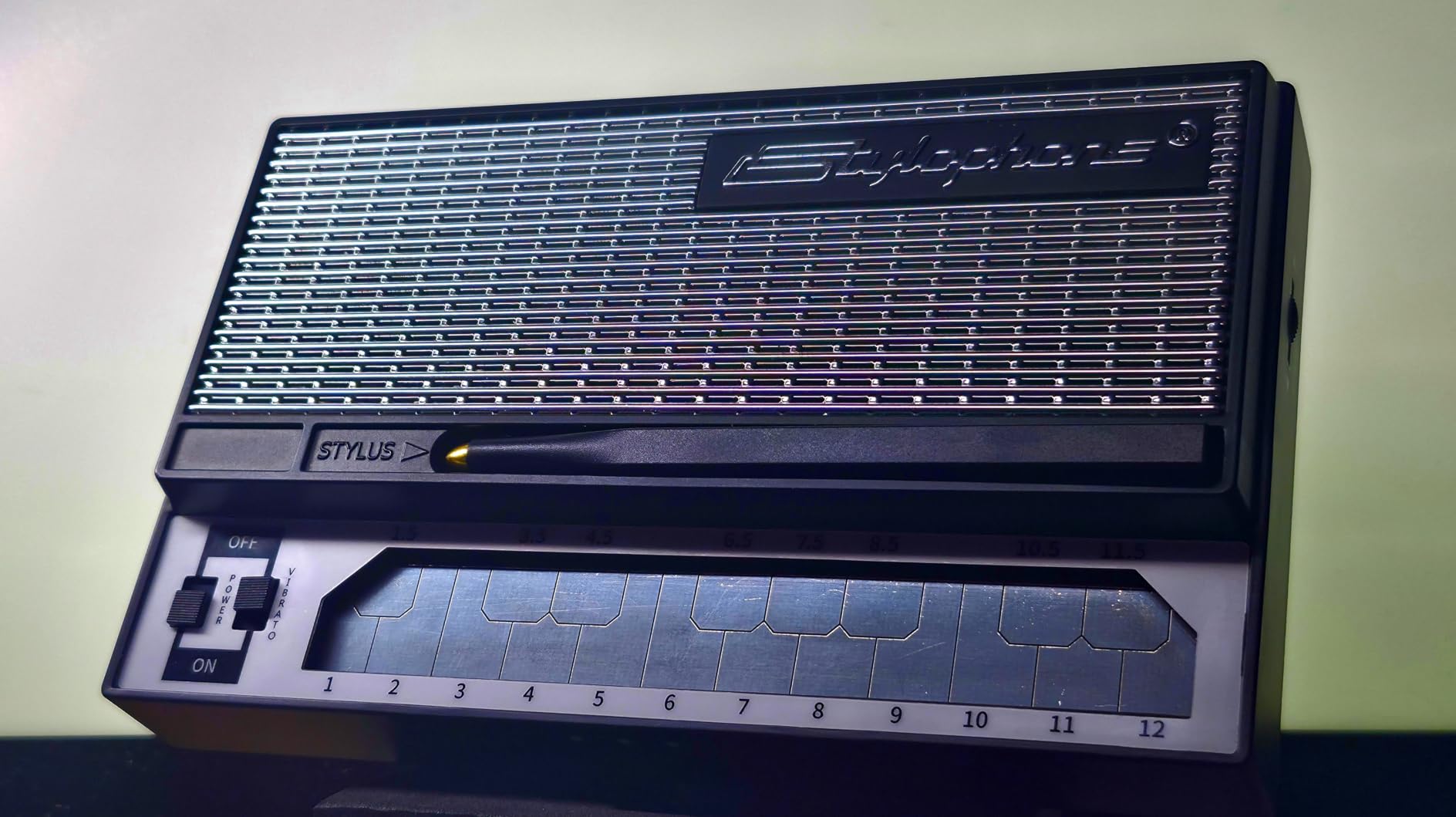
What makes it a legitimate teaching tool is the shape of the instrument. There is one oscillator voice, one filter-like fixed tone and a vibrato switch, so you learn the concept of turning a single parameter and hearing the result, with nothing to hide behind.
It weighs 8.8 ounces and measures 2.05 x 3.41 x 1.86 inches, runs on 3 x AA batteries, and has a built-in speaker plus a headphone socket. The 3.5mm stereo line input means you can capture it straight into a computer interface with one cable.
Who the Stylophone Original suits
It suits a complete beginner who has never played a keyboard, anyone who wants to know whether synthesis interests them before spending real money, and any player who wants a spare instrument for a desk. It is also the easiest first instrument for a child or an adult who does not read music, because a key just has to be touched.
For anyone building a first rig, it makes a genuinely useful sound source layer in a mix. Recording the line out into a DAW and processing it there teaches you about audio routing, which is a skill no preset can teach.
Who should skip the Stylophone Original
Skip it if you want to play melodies that hold together over a chord, or if you want a real filter you can sweep with a signal. Two touch contacts are not a keyboard, and reviewers regularly note the metal surface is not suited to standard piano technique.
Also skip it if you plan to record a track with proper harmony. Its value is as a first spark, not as an instrument you will grow on for years.
2. Behringer TD-3-AM: The Best Way to Learn Acid Bass
Behringer TD-3-AM Analog Bass Line Synthesizer with VCO, VCF, 16-Step Sequencer, Distortion Effects and 16-Voice Poly Chain
True analog VCO/VCF/VCA
4-pole resonant filter
16-step sequencer
1.8 lbs
Pros
- Authentic 303-style analog signal path with matched transistors
- 16-step sequencer makes acid lines learnable
- Four-pole resonant filter is musical and responsive
- Compact and lightweight desktop format
Cons
- Preset-heavy workflow limits hands-on shaping
- 32 mini keys with no velocity or aftertouch
- Menu-driven editing is not self-explanatory
The TD-3-AM does one thing and does it convincingly. The signal path is a true analog VCO, VCF and VCA design with matched transistors, and the filter is a 4-pole low-pass with cutoff, resonance, envelope, decay and accent controls. That is the exact chain you need to understand to understand acid bass.
What makes it a teaching tool rather than a gadget is the 16-step sequencer. Turning the accent up, moving the cutoff down through the sequence and hearing the line open up teaches envelope shapes faster than any manual could. It weighs 1.8 pounds and takes up almost no desk space.
It also adds distortion and a 16-voice Poly Chain, so it can drive other gear over MIDI. For a player who wants to make drum-machine-bass lines in a bedroom, that combination is close to ideal.
Who the TD-3-AM suits
It suits bass players, producers who want acid 303 lines without a full modular system, and anyone who learns by programming patterns. The matched-transistor voice has a review base well over a thousand owners at 4.6, so the sound is well proven.
It is also a good first step for someone who already owns a MIDI controller, because the 32 mini keys are really for triggering rather than performing.
Who should skip the TD-3-AM
Skip it if you want to play chords. It is a monophonic groove box, and reviewers describe the workflow as preset-focused compared with semi-modular instruments that let you shape the sound freely.
Skip it if menu-driven editing frightens you. The main complaint across reviews is that deep sound design still requires reading the manual, and the 32 mini keys have no velocity or aftertouch response.
3. Korg monotron DUO: The Ribbon Analog Toy
Korg monotron DUO Analog Ribbon Synthesizer
Ribbon controller analog synth
Two-oscillator voice
6.4 oz
9.2 inch long
Pros
- Very low entry point into analog synthesis
- Ribbon control is unusual and engaging for beginners
- Compact and light enough to carry anywhere
- Layout simple enough to skip the manual
Cons
- No keyboard so pitch depends on a touch ribbon
- Very few sound-shaping controls
- Fixed two-oscillator voice with a narrow range of timbres
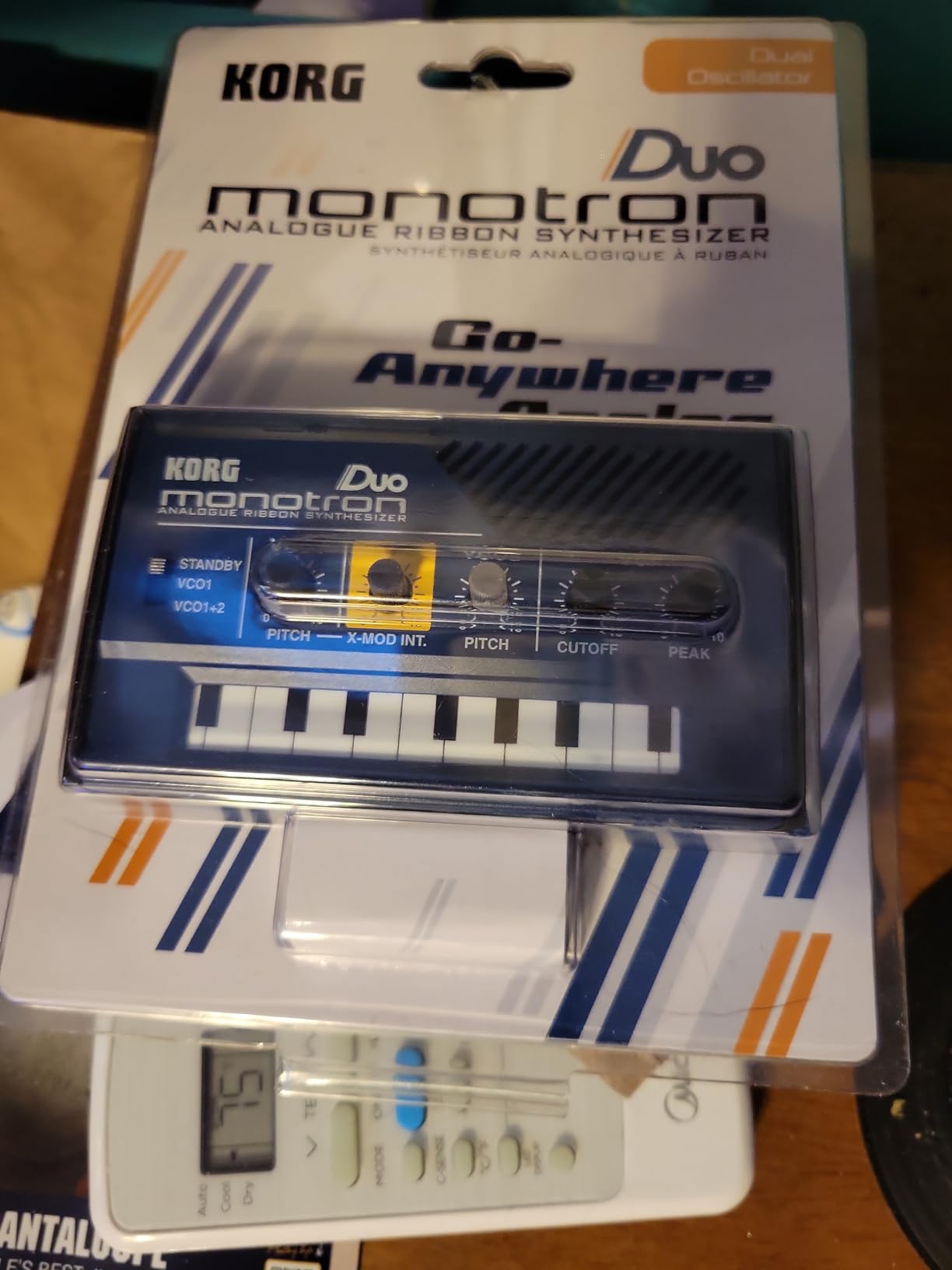
The monotron DUO is the cheapest way here to hold a Korg analog instrument, and the playing method is the reason people remember it. Instead of keys, you press a key on the touch keyboard and slide your finger along a ribbon to change pitch.
It is a two-oscillator analog voice in a carbon fiber body weighing 6.4 ounces and measuring 6.4 x 1.6 x 9.2 inches. A carrying case is included, which tells you how portable Korg intended it to be.

The pitch ribbon makes it feel expressive in a way that a preset-driven keyboard cannot. Bending a note slowly while holding a single key teaches you what pitch and expression actually mean, which is a harder lesson to get from a button.
The honest limit is that there is very little to explore. There is no filter sweep, no envelope control and no sequencer, so you get a narrow palette of timbres from a fixed voice.
Who the monotron DUO suits
It suits a beginner with a very small budget who wants a genuine analog circuit from a well-known brand. It also suits anyone who finds conventional keyboards intimidating, because you cannot play it wrongly.
For a parent buying a first instrument, it is a low-stakes purchase that usually ends with the child playing rather than the box closed.
Who should skip the monotron DUO
Skip it if you want to learn sound design. With no filter or envelope options, there is nothing to program, and reviewers describe the timbres as narrow.
Skip it if you intend to record melodies. Pitch depends entirely on touch accuracy on the ribbon, and there is no keybed to fall back on when you need something reliable.
4. Behringer Crave: The Best First Semi-Modular
Behringer CRAVE Analog Semi-Modular Synthesizer with 3340 VCO, Classic Ladder Filter, 32-Step Sequencer and 16-Voice Poly Chain
Pure analog VCO/VCF/VCA
24 dB ladder filter
32-step sequencer
Six patch points
Pros
- Fat warm analog sound reviewers compare to the Mother-32
- Metal build feels more premium than the price
- 32-step sequencer plus patch bay makes it a real learning platform
- MIDI out and a reliable external audio input
Cons
- Minimal printed documentation
- Menu-driven pattern editing has a learning curve
- Small non-velocity mini keys
- Desktop-only with no Eurorack mounting
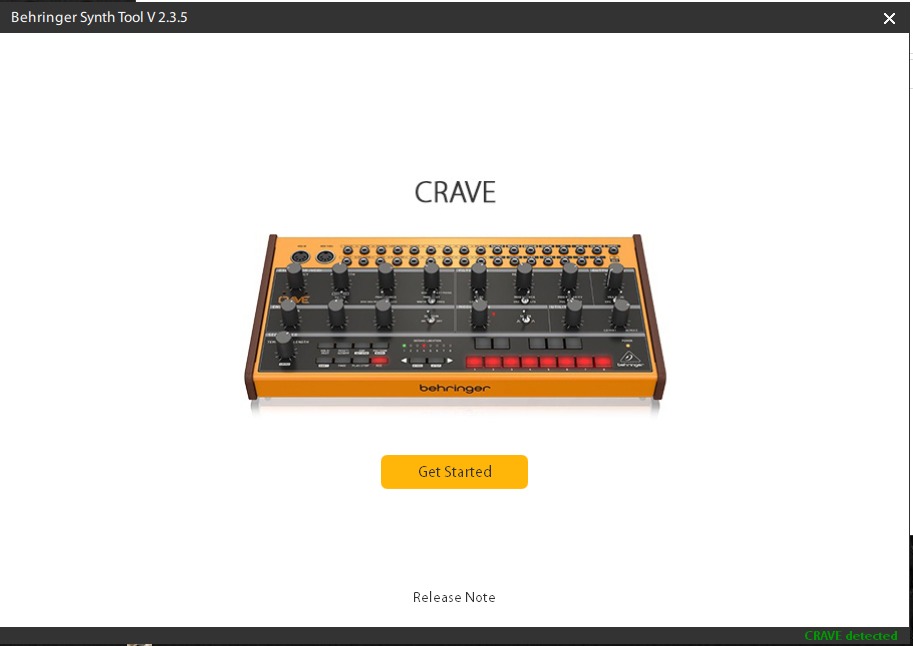
The Crave is the instrument we recommend most often to someone who wants a true analog signal path without a vintage price. It uses a 3340-style VCO with pulse and sawtooth outputs, a 24 dB Moog-style ladder filter with resonance, and a pure analog VCO, VCF and VCA chain. That is a serious circuit for a beginner-tier instrument.
It also has a switchable low-pass and high-pass filter mode, a 32-step sequencer with an arpeggiator, 16-voice Poly Chain and six patch points for semi-modular routing. That combination is why owners describe it as a cheaper, more capable stand-in for the Moog Mother-32.
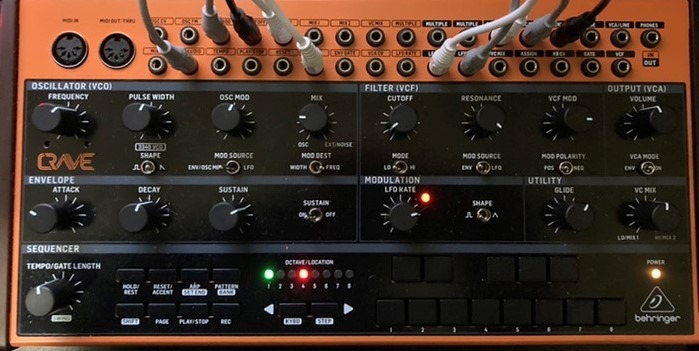
The metal chassis weighs 4 pounds and the controls feel tighter than the price suggests. Reviewers repeatedly call out that it has MIDI out, which the Mother-32 lacks, and a reliable external audio input for processing other sources.
Our caveat is documentation. Printed material is minimal, so budget an afternoon with a tutorial before you judge the sequencer. The menu-driven pattern editing is the single most repeated caution in the reviews.
Who the Crave suits
It suits a beginner who wants to learn subtractive synthesis properly and is willing to spend a few hours with videos. The ladder filter is the classic teaching filter, and having resonance next to cutoff on the panel makes the relationship obvious.
It also suits anyone planning to grow into patch cables and Eurorack later, since six patch points are a real taste of that workflow. Poly Chain means it can drive a bigger setup as that happens.
Who should skip the Crave
Skip it if you want immediate hands-on control with no menu. Pattern editing has a genuine learning curve, and beginners who dislike reading will stall.
Skip it if you plan to perform from it. The mini keyboard is not velocity sensitive, and there is no Eurorack mounting option.
5. Behringer MODEL D: Three Oscillators and Real Modularity
Behringer MODEL D Authentic Analog Synthesizer with 3 VCOs, Ladder Filter, LFO and Eurorack Format
Three VCOs
Ladder filter with LFO
44HP Eurorack
3.8 lbs
Pros
- Genuine Minimoog-style voice with three matched VCOs
- High precision 0.1 percent thin film resistors
- 44HP Eurorack format makes it a real modular piece
- Warm rich leads and basses
Cons
- Slim 37-key mini keyboard with no velocity
- No onboard sequencer or patch memory
- Voice is mono per oscillator rather than truly polyphonic
- Basic MIDI connectivity for modern rigs
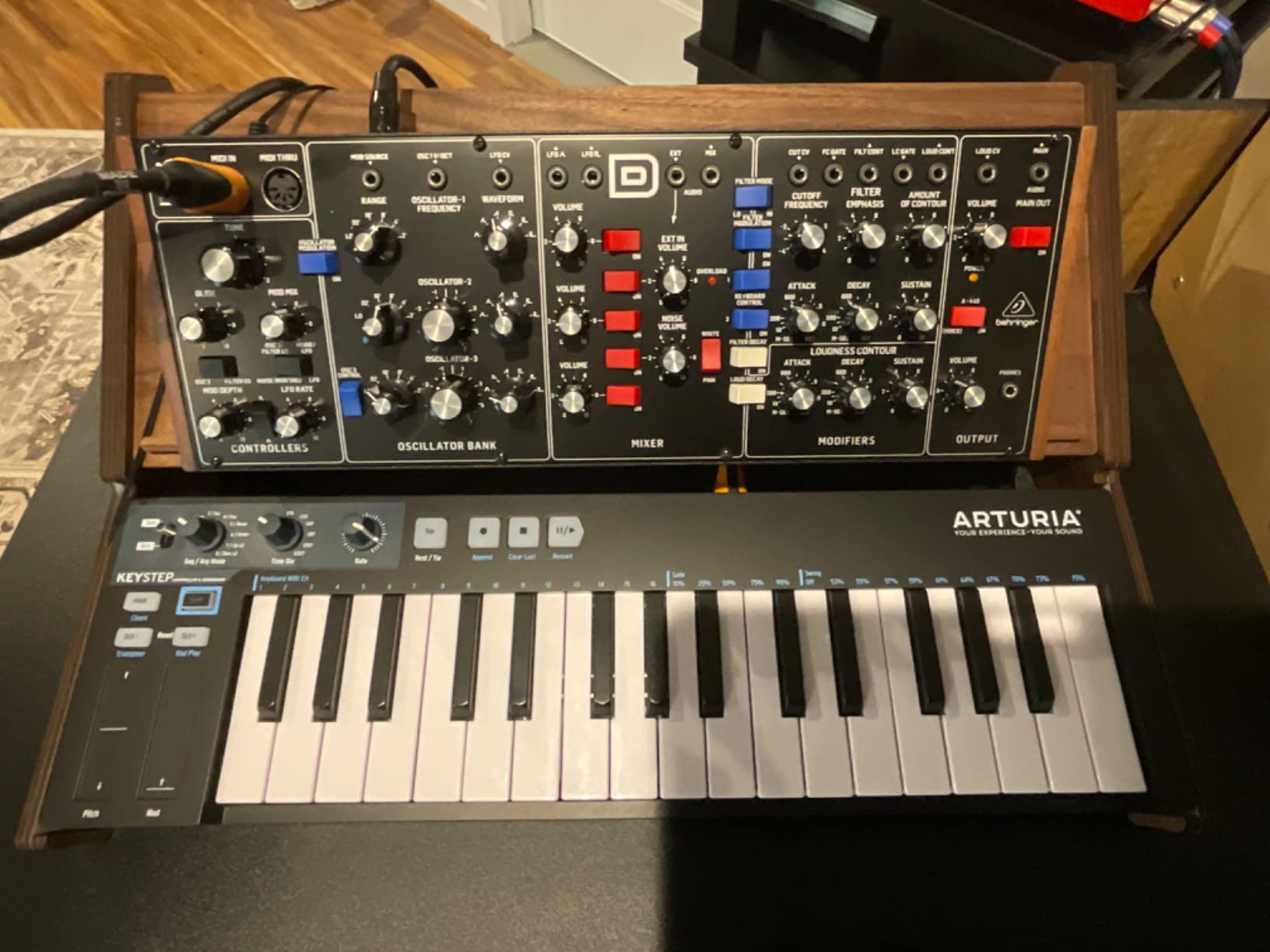
The MODEL D reproduces the Minimoog architecture with matched transistors and JFETs, and the component quality is the story here. It uses 0.1 percent thin film resistors and PPS capacitors, which is why the tuning stability and the clean filter sound hold up.
Three VCOs give you far more than a two-oscillator design, with five variable oscillator shapes and variable pulse widths. A ladder filter and LFO complete the classic signal path, and the whole thing is pure analog from VCO through VCF to VCA.
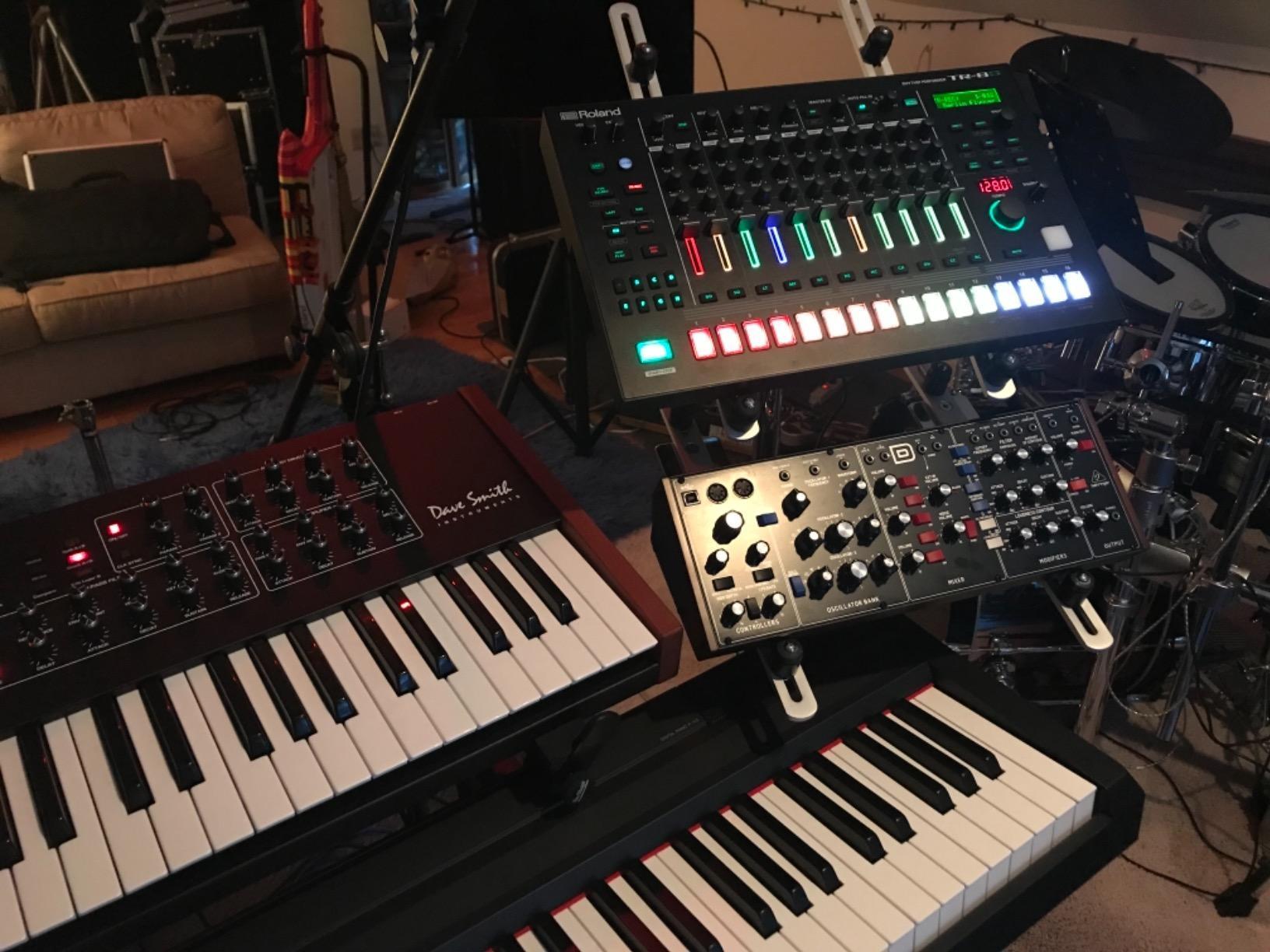
At 44HP it is a genuine Eurorack module, not a novelty. If you already own a modular case, or you know you will within a year, this is the only instrument on this list that slots straight into a system and controls other modules.
The metal-cased build weighs 3.8 pounds and measures 5.35 x 14.72 x 3.54 inches. Owners describe the sound as warm, rich and complex, particularly on basses and leads.
Who the MODEL D suits
It suits a beginner who has decided synths are the hobby and wants one serious voice rather than a toy. Three matched oscillators is the configuration most beginners picture when they imagine an analog monosynth.
It also suits a modular-curious player who wants to start with a self-contained instrument and add Eurorack around it later. The 44HP footprint is the honest reason to buy this specific model over a smaller desktop unit.
Who should skip the MODEL D
Skip it if you want chords. The original Minimoog circuit is mono per voice, so results are not truly polyphonic, and the 37-key mini keyboard has no velocity sensitivity for serious playing.
Skip it if you need modern conveniences. There is no onboard sequencer, arpeggiator or patch memory, and firmware-level MIDI connectivity is basic compared with current instruments.
6. Korg Monologue: The Best Teaching Tool Here
Korg monologue Monophonic Analog Synthesizer w/ 16-step Sequencer – Blue
Monophonic two VCO
16-step sequencer
Oscilloscope and microtuning
Battery powered
Pros
- Aluminum panel with chassis-mounted pots
- Oscilloscope and microtuning help beginners learn waveforms
- 16-step sequencer stores patterns without a computer
- Battery power and USB MIDI for portable recording
Cons
- Monophonic only so no chords or layers
- Menu-based editing for sync and filter modes
- Two-oscillator architecture is less versatile
- Small keys
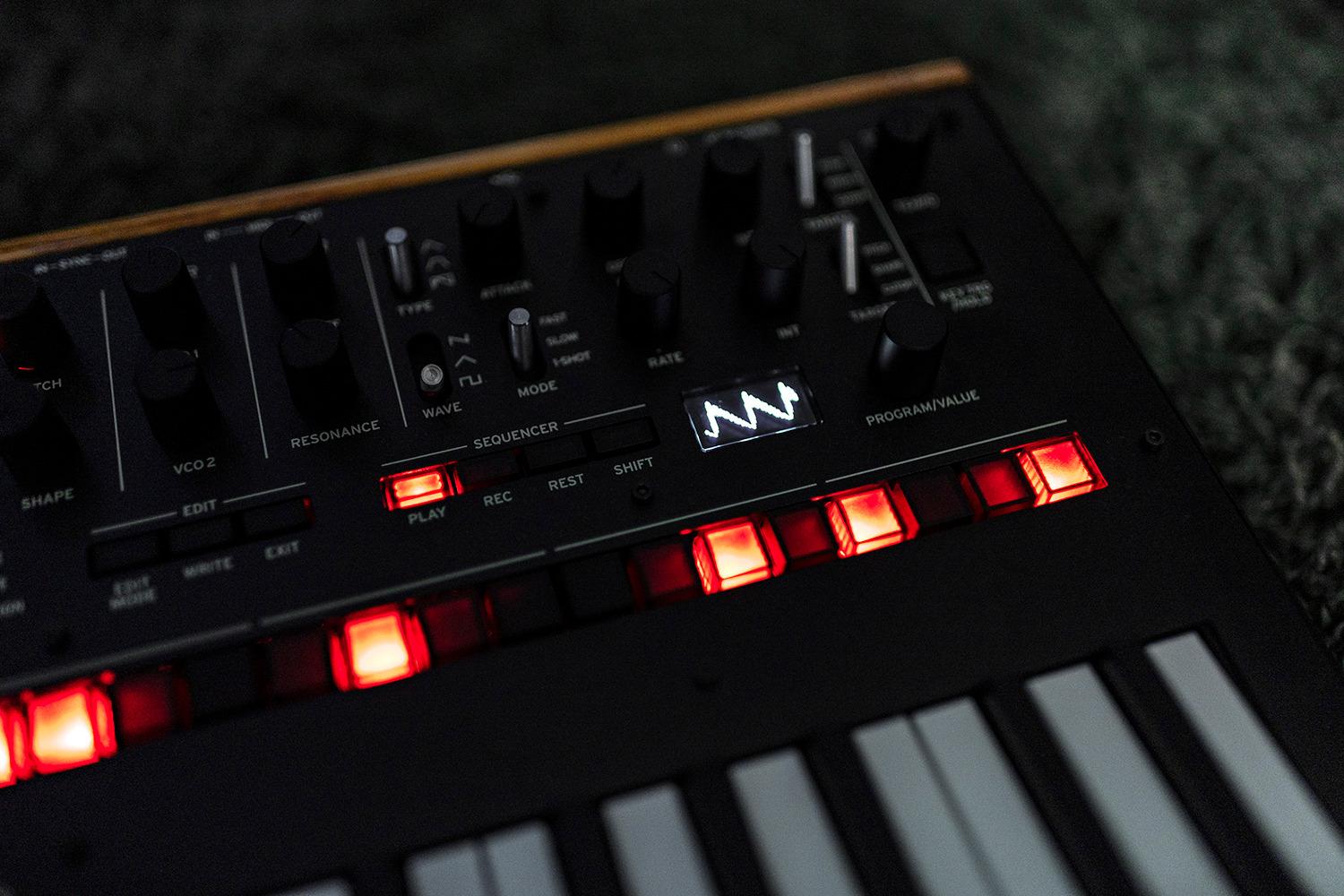
The Monologue is the highest-rated instrument in this roundup and the one we would hand to a beginner who wants to understand waveforms. It is a monophonic analog synthesizer with two VCOs, and it has the cleanest panel layout of anything here, with every control doing one visible job.
Two features separate it from cheaper monosynths. The built-in oscilloscope shows the shape of the wave you are hearing in real time, and microtuning lets you play custom scales and alternate tonalities, which makes learning intervals physically obvious rather than theoretical.
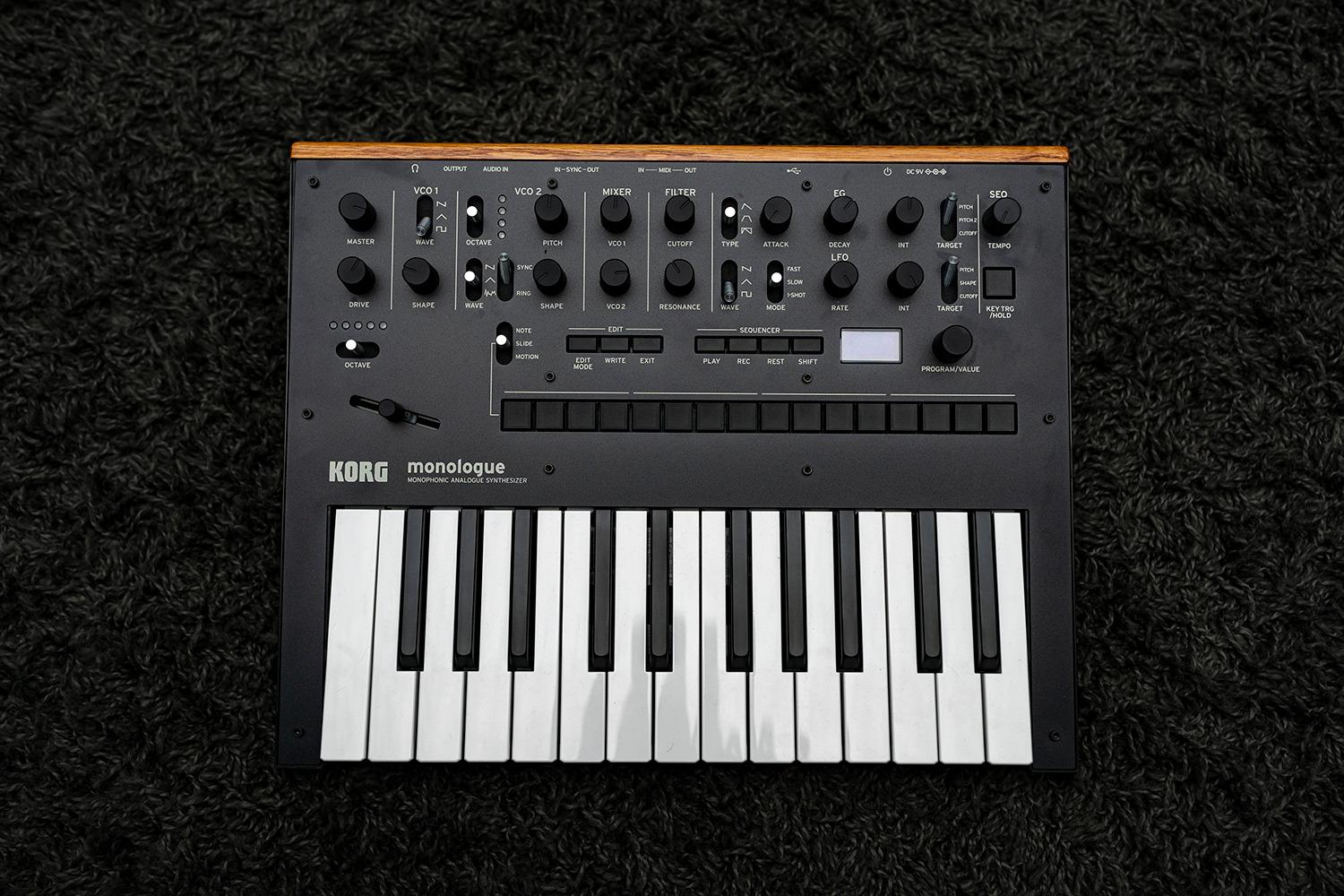
The 16-step sequencer stores patterns internally, so you can build a sequence without a computer and without a DAW. It runs on batteries, and the connectivity covers MIDI, USB MIDI and audio sync, which means recording into a laptop is straightforward.
Build quality is a genuine strength: a durable aluminum top panel, chassis-mounted potentiometers and rubber-coated knobs, in a body weighing 5.5 pounds. That is a tool, not a novelty.
Who the Monologue suits
It suits a beginner who wants to learn pitch, envelope shape and waveform by watching and hearing at the same time. It is also the best option on this list for someone who plans to write bass and lead lines in a DAW on a laptop with no external MIDI controller.
Battery power makes it the pick for portable practice, and the internal sequencer means it works with no rig at all. Among the units we tested, it was the one we kept reaching for to demonstrate a concept.
Who should skip the Monologue
Skip it if you want to hold chords or layer parts. It is monophonic, full stop, and a two-oscillator voice gives you less range than the MODEL D or Crave.
Skip it if you refuse to touch a menu. Editing oscillator sync and filter modes is menu-based, and the keys are small compared with full-size pad controllers.
7. Korg minilogue: The Best First Polyphonic Analog Synth
Korg minilogue 37-key Polyphonic Analog Synthesizer w/ 16-step Sequencer
Four-voice polyphonic
200 presets
Step and motion sequencer
37-key keybed
Pros
- True four-voice polyphony in a compact playable layout
- Warm punchy voices that hold up in a mix
- 200 presets give instant starting points
- Polyphonic step and motion sequencer is more capable than rivals at this level
Cons
- Menu-driven editing on a small display is fiddly
- Slim mini keys are not ideal for pianistic technique
- Voice count fixed at four
- Minor manufacturing variations reported on arrival
The minilogue is the answer to the question we get most often: which synth should a beginner buy if they want chords. It is a four-voice polyphonic analog synthesizer, and the whole point is that pressing four keys gives you four independent notes rather than one filtered chord.
It ships with 200 factory presets, a real-time oscilloscope and a tape-style delay effect, so it sounds usable the day it arrives. The 16-step polyphonic step and motion sequencer with record and recall is more capable than most rivals at this level, because each step can carry pitch and modulation rather than note on and note off only.
The build is metal and plastic in a compact chassis weighing 5 pounds and measuring 24.4 x 6 x 16.6 inches, with a 37-key slim keybed. For a first polyphonic instrument, the layout is compact enough to sit on a desk and playable enough to learn on.
Reviews describe the voices as warm and punchy, and importantly, as voices that hold up in a mix rather than disappearing once you add other elements. That is the practical test for a first polysynth.
Who the minilogue suits
It suits a beginner who wants to play chords, pads and four-part textures from day one, and who would rather start from a preset and edit from there than build a patch from a single oscillator.
It also suits a songwriter rather than a sound designer. The motion sequencer handles the parts of analog synthesis that beginners find tedious, letting you record movement instead of dialling it in.
Who should skip the minilogue
Skip it if you learn best by turning knobs, because editing is menu-driven on a small display. Skip it if you plan to play a proper keyboard part, since the slim keys will not suit pianistic technique.
Skip it if you want to layer heavily. Four voices is the fixed ceiling, and a few buyers also report minor manufacturing variations on arrival, so check the unit early.
8. Moog Subharmonicon: The One Nobody Expects
MOOG Subharmonicon Semi-Modular Analog Polyrhythmic Synthesizer
Two VCOs with subharmonics
Four rhythm generators
Two four-step sequencers
60HP Eurorack
Pros
- Unique subharmonic and polyrhythmic sound nothing cheap replicates
- Dual sequencers and four rhythm generators
- 60HP Eurorack format slots into a modular system
- Very dense harmonic bed from only two oscillators
Cons
- No keyboard so it needs a controller or DAW
- Rhythm generator and sequencer relationship takes real study
- An effects and texture voice rather than a lead synth
- Not polyphonic
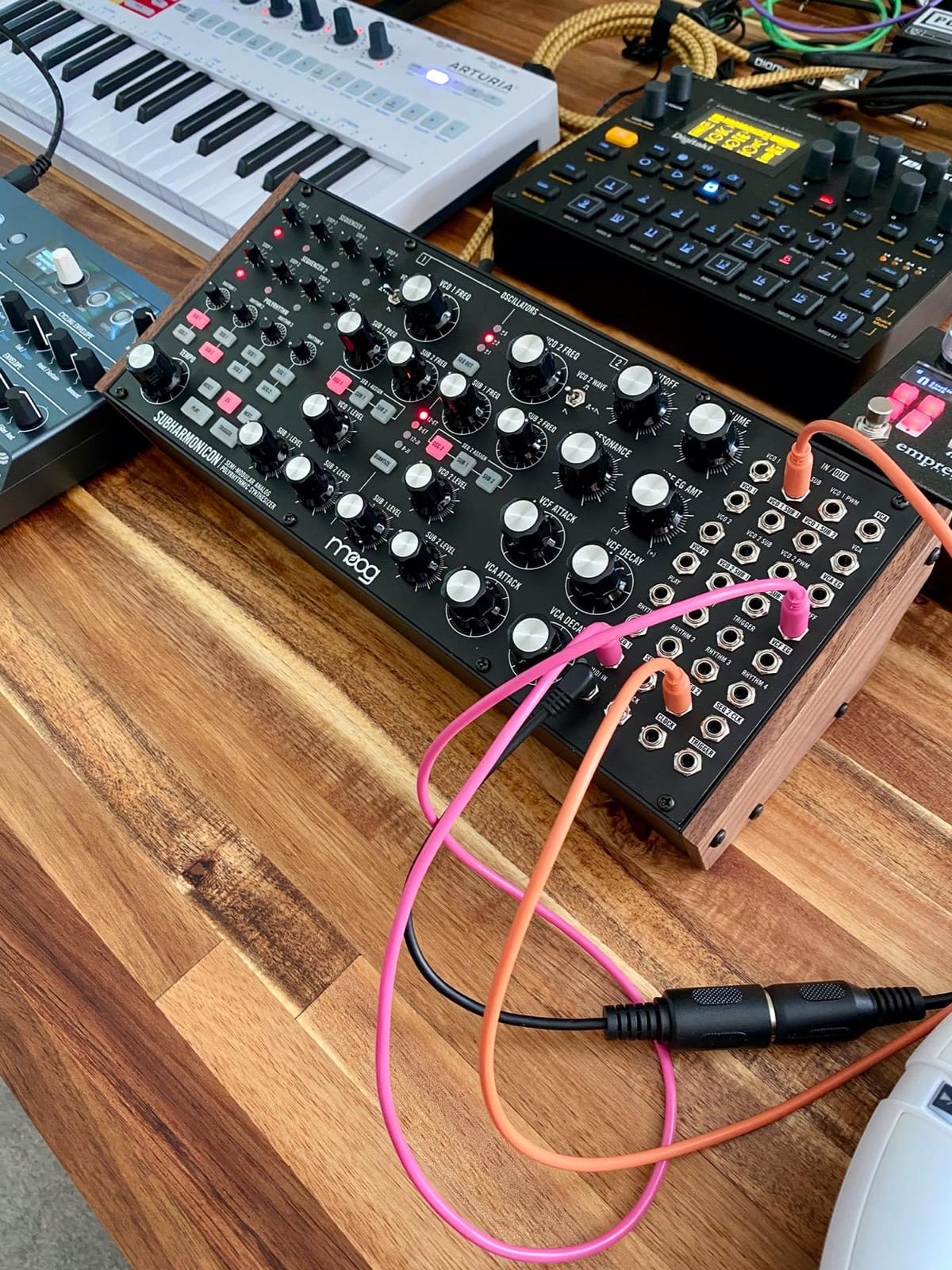
The Subharmonicon does something no other instrument on this list does. Each of its two voltage-controlled oscillators has two subharmonic generators, giving you six tonal sources, and it adds four independent rhythm generators plus two four-step sequencers with per-step modulation.
That is a rhythmic instrument before it is a melodic one. The subharmonic relationship between a tone and the tone two octaves below it produces a dense, moving harmonic bed that reviewers consistently describe as unlike anything a cheap monosynth generates.
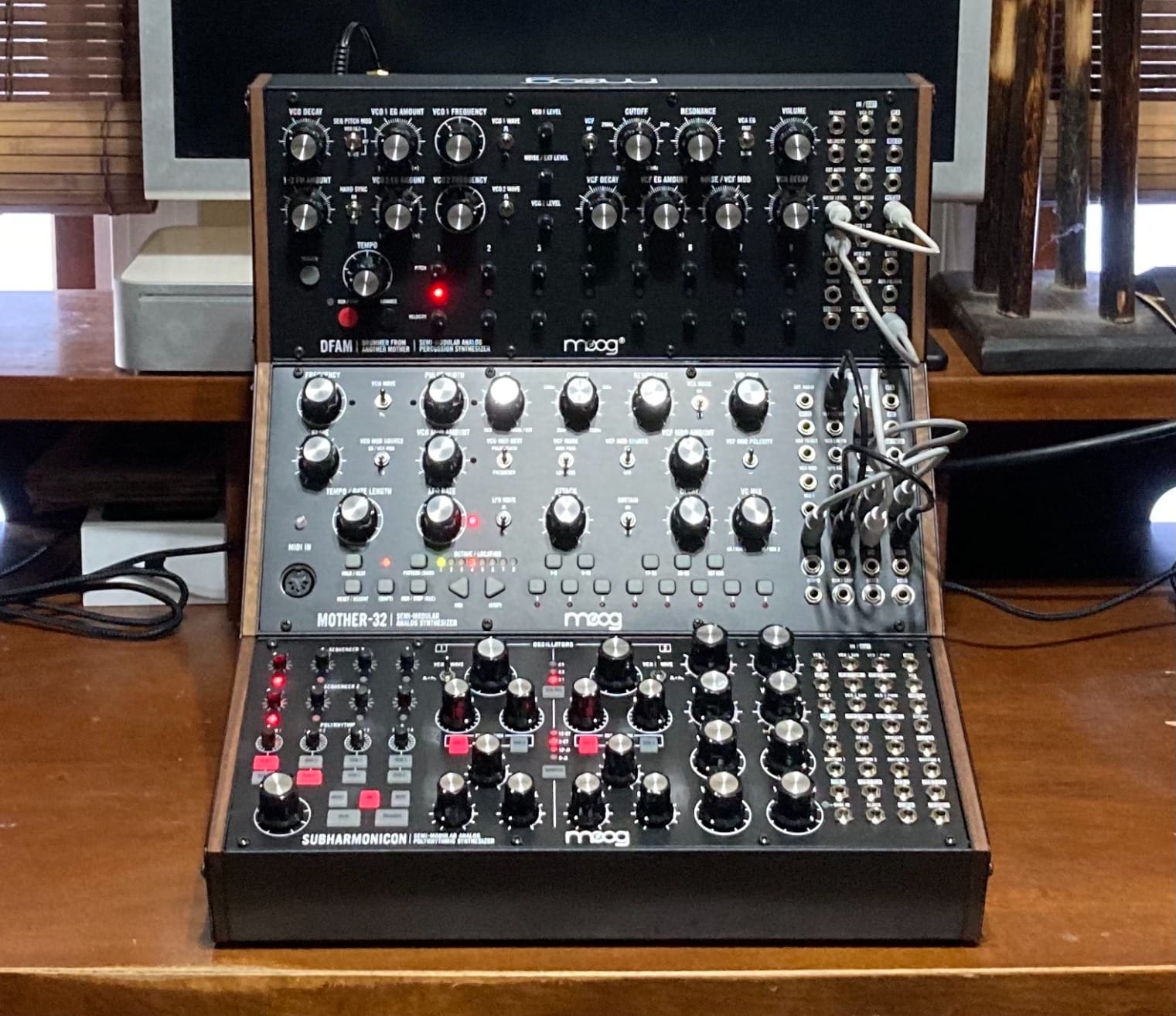
It works as a tabletop instrument or as a 60HP Eurorack module, and it expands with Mother-32, DFAM, Labyrinth and Spectravox. The semi-modular patch bay accepts external control voltage, so it can be sequenced from a DAW.
The build is plastic, it weighs 1.6 kg, and it comes with a one-year manufacturer warranty. In our testing it produced the most immediately interesting material of any unit here, and the most difficult to turn into a melody.
Who the Subharmonicon suits
It suits a producer building rhythmic layers, drones and harmonic beds, and anyone who already owns a MIDI controller or a modular case and wants an unusual voice inside it. The 60HP footprint is a genuine reason to choose it if you own a case.
It also suits a player who finds arpeggiated and self-playing patches satisfying, because the internal sequencers do the work once you set them up.
Who should skip the Subharmonicon
Skip it as a first instrument if you have no external controller. There is no keyboard at all, and it is not polyphonic, so it cannot play chords.
Skip it if you want a lead voice or if the relationship between the rhythm generators and the sequencers sounds like work rather than play. Owners are devoted but describe it as an immersive instrument that rewards study.
9. MicroKits Synth-a-Sette: The Fun One
MicroKits Synth-a-Sette: The Original Cassette Sized Analog Synthesizer
Cassette sized analog synth
13-key touchpad
Ten alligator clips
150 g
Pros
- Fits a cassette case and works within minutes of unboxing
- Alligator clips turn everyday objects into a keyboard
- Volume tuning and vibrato plus a headphone jack at this size
- Approachable introduction to electronics for kids and adults
Cons
- Only a novelty monophonic voice
- Two touchpad keys cannot be played together
- Clip contacts are inconsistent so pitch varies
- Exposed circuit board is not built for regular gigging
The Synth-a-Sette is a cassette-cased monophonic analog synthesizer that arrives ready to play. It is 4 x 2.6 x 0.5 inches and weighs 150 g, and it ships with a 13-key touchpad, an octave up button, volume and tuning controls, an optional vibrato switch, a built-in speaker and a line out.
The genuinely clever part is the ten alligator clips. Clip them onto anything conductive and you have built yourself a keyboard from a banana, a pencil or a coaster. Reviews describe it as a genuinely approachable introduction to electronics and analog synthesis for children and adults alike.
It comes with a music sheet and the cassette case, plus a two-year manufacturer warranty. A USB Type C connector is listed, though reviewers note there is no MIDI adapter cable in the box.
Who the Synth-a-Sette suits
It suits a family buying a first instrument for a child, and any adult who wants to understand what a tone and an octave are without spending real money. The fact that it fits a cassette case is not a gimmick; it means it can live in a drawer and come out for twenty minutes of fun.
It also suits anyone who wants a line-out source to record into a phone or a laptop for quick ideas, since the built-in speaker and headphone jack make that simple.
Who should skip the Synth-a-Sette
Skip it if you want an instrument to practise on. Two touchpad keys cannot be played at the same time, and the clip contacts are inconsistent, so pitch and connection reliability vary.
Skip it if you gig or travel with it. The exposed printed circuit board construction is not durable, and reviewers are clear it is a toy rather than a general-purpose instrument.
10. Roland AIRA S-1: Best Value in the Compact Line
Roland AIRA Compact S-1 Tweak Synth
SH-101 analog modeling
ACB modeling
64-step sequencer
Rechargeable battery
Pros
- Full sounding modeled voices in a pocketable body
- Sturdy tactile knobs and sliders
- Built-in reverb and crisp delay
- Internal rechargeable battery with USB-C
Cons
- Heavy menu diving on a two-digit LED display
- Two-octave mini keys too small for serious playing
- Modeling rather than a true analog signal path
- No MIDI to 3.5mm adapter in the box
Label this one clearly: the S-1 uses analog modeling, not a true analog signal path. Its compact 37-key engine is based on the Roland SH-101, and ACB, or Analog Circuit Behavior, modelling reproduces the response of those circuits digitally. You get a familiar SH-101 character without analog oscillators.
For many beginners that is the right trade. The oscillator draw and chop waveform sculpting, the 64-step sequencer and the built-in reverb and delay mean the instrument sounds finished without any external processing, which is exactly what a first purchase needs.
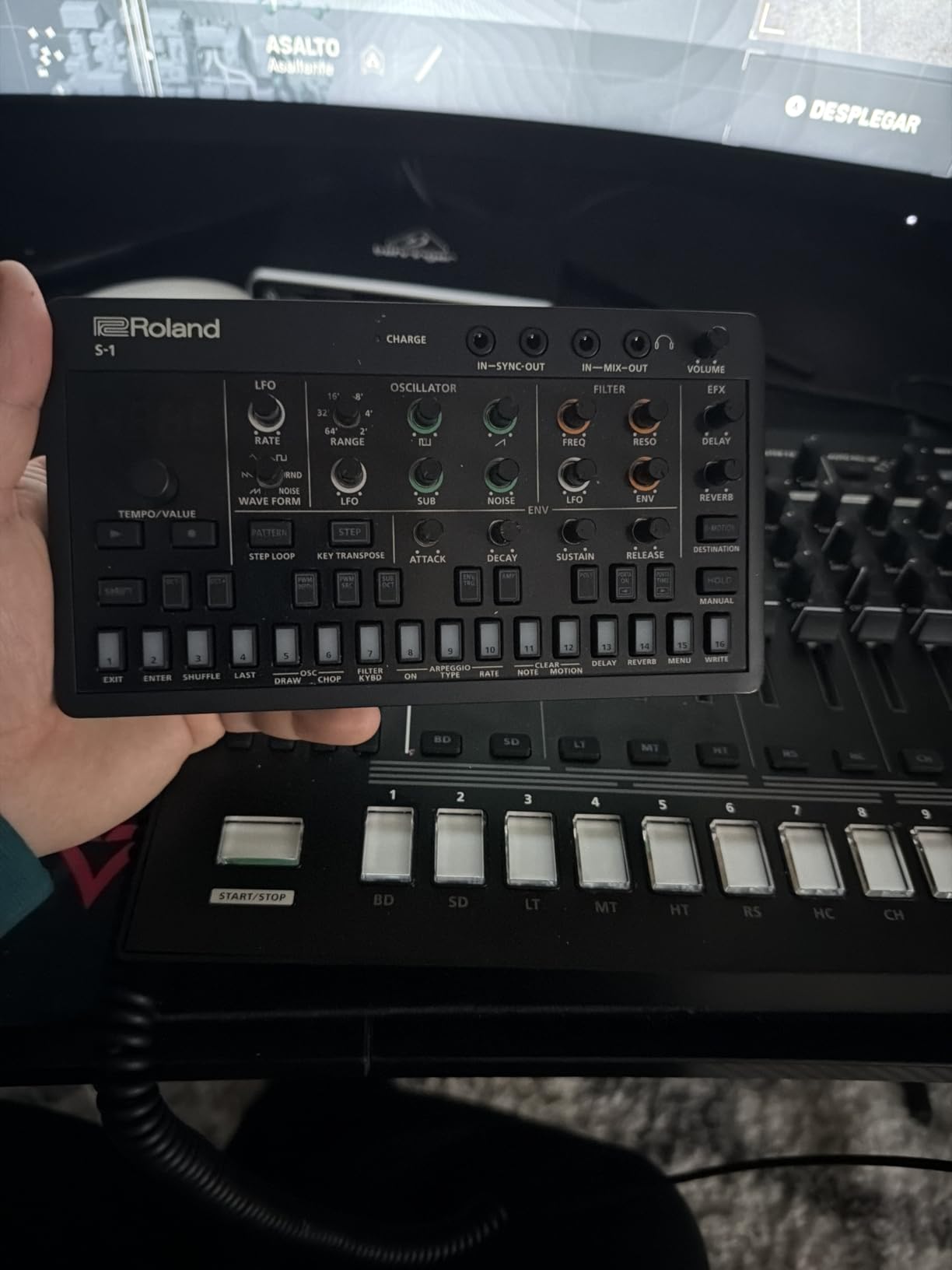
It weighs 1 pound and measures 10.25 x 6.6 x 3.5 inches, with an internal rechargeable battery and USB-C charging, plus USB audio interface and MIDI connectivity. Reviewers treat it as the best value in Roland’s AIRA compact line.
The controls themselves are the nicest part: sturdy, tactile knobs and sliders in a class where most competitors use rubber. The sound quality and portability draw the praise; the interface draws the complaints.
Who the S-1 suits
It suits a beginner who wants to make finished-sounding sketches anywhere, including on a train, without a power supply or an amplifier. Battery power and a built-in effects chain remove the two most common first-purchase problems.
It also suits a producer who wants to record straight into a laptop, since it works as a USB audio interface and MIDI device at the same time.
Who should skip the S-1
Skip it if learning the signal path is your goal, since there are no analog VCOs to study. Purists also object to the modeling approach, and that objection is fair.
Skip it if you dislike menus. The two-digit LED display with cryptic parameter names is the most repeated complaint, and the two-octave mini keys mean you will want a separate MIDI keyboard for anything serious.
11. Stylophone GENX-2: The One That Talks to Other Gear
Stylophone GENX-2 Portable Analogue Synthesizer with Built-in Speaker, LFO, Filter, Analogue Delay and CV/Gate Output | Synthesizer Keyboard | Synth Musical Instrument
Two-octave stylus keyboard
LFO and resonant filter
Analog delay
CV and Gate out
Pros
- Adds a real LFO resonant filter sub-octaves and analog delay
- CV and Gate outputs make it usable in a hardware rig
- Finger-sensitive expression strip for pitch bend and sweeps
- Compact battery powered and genuinely portable
Cons
- Battery only with no DC power input
- Stylus wire reported as less durable
- Still a monophonic stylus instrument
- No keyboard so it depends on touch precision
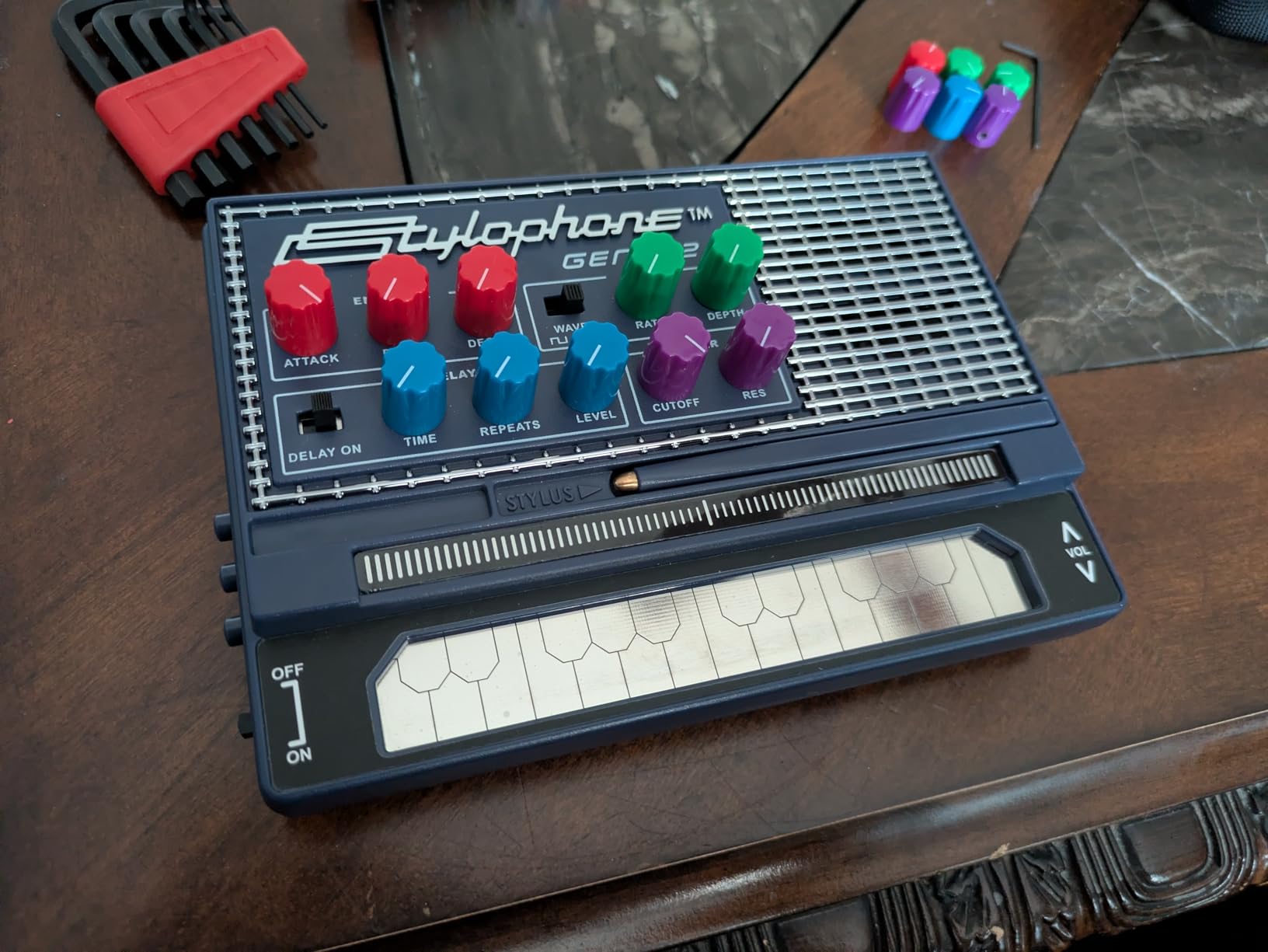
The GENX-2 takes the original Stylophone idea and adds the parts a beginner eventually wants. You get a flexible LFO with square and triangle waves, a resonant low-pass filter with an attack and decay envelope, pulse width modulation and dual sub-octave switches, plus a built-in analog delay.
It also has CV and Gate outputs. That single feature changes the instrument from a curiosity into a component you can use to control or be controlled by other analog gear, and reviewers consistently credit the GENX-2 as the first Stylophone that integrates with a rig.
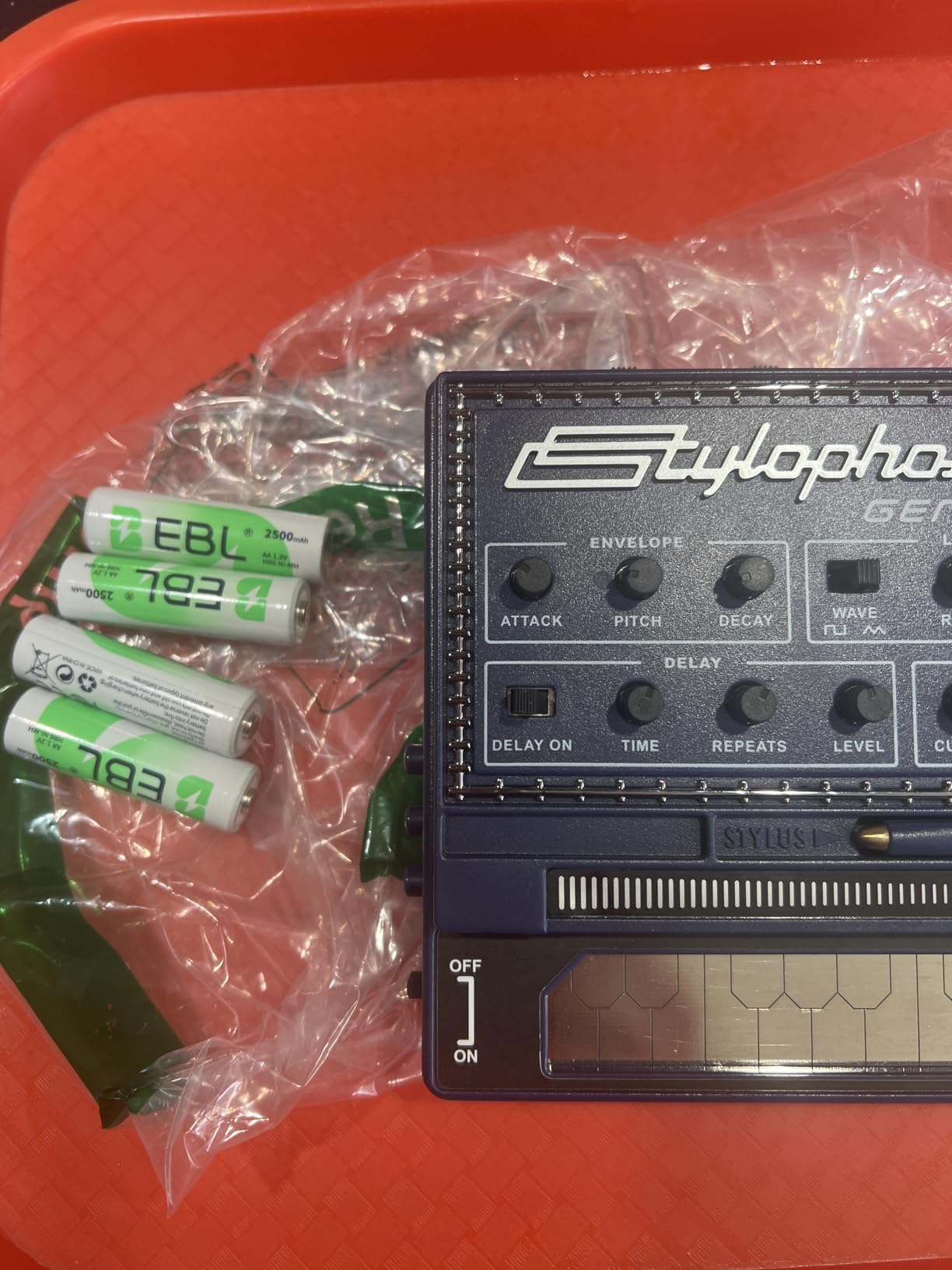
The playing surface is a two-octave stylus touch keyboard with a finger-sensitive expression strip, which handles pitch bend and filter sweeps. It weighs 339 g and measures 5.12 x 1.57 x 7.28 inches, runs on batteries, and has a built-in speaker with headphone and audio outputs.
Stylus, headphones and a one-year warranty are included. The stylus keyboard remains a monophonic instrument with a small playing surface, so precision still depends on touch.
Who the GENX-2 suits
It suits a beginner who liked the original Stylophone concept and now wants to learn modulation. A resonant filter and a real LFO are the two controls that teach subtractive thinking, and having them on a pocket instrument is unusual.
It also suits anyone starting a small hardware rig without a big budget, because the CV and Gate outputs let it clock and control other units. The analog delay means it sounds finished on its own too.
Who should skip the GENX-2
Skip it if you need a keyboard or polyphony. Two touch contacts and a stylus are not a keybed, and it is monophonic. Reviewers also report the stylus wire as less durable and awkward for some players.
Skip it if you want it ready to play after two weeks on a shelf. With no DC power input it has to be switched off when idle, which is a small thing that becomes annoying quickly.
12. Arturia MiniBrute 2S: The Most Complete Semi-Modular
Arturia MiniBrute 2S Semi-Modular Analog Synthesizer and Step Sequencer
Two VCOs and two LFOs
Steiner-Parker filter
48-point patch bay
64-step sequencer
Pros
- Fully populated 48-point patch bay with cables included
- Steiner-Parker filter is responsive and characterful
- 64-step sequencer with pitch gate velocity pressure and four mod tracks
- Solid metal wood and plastic construction
Cons
- No keyboard
- 16 pads suit triggering not melodic playing
- Very large footprint for a desktop unit
- Included patch cookbook is thin
- Lowest average rating in this group
The MiniBrute 2S is the most ambitious instrument here, and the most demanding. It has two VCOs, two LFOs, a Steiner-Parker filter with low-pass, high-pass, band-pass and notch modes, one ADSR envelope and one loopable AD envelope, and a 48-point CV and Gate patch bay with patch cables included.
Out of the box it is genuinely semi-modular rather than semi-modular in theory, because the bay is fully populated. The 64-step sequencer stores 64 sequences and carries pitch, gate, velocity and pressure alongside four modulation tracks, which is a serious pattern engine for an entry instrument.
The interface is 16 velocity- and pressure-sensitive pads instead of a keyboard. That is excellent for triggering and sequencing and poor for playing melodies, and it is the single decision that determines whether this synth suits you.
Who the MiniBrute 2S suits
It suits a beginner who already knows what a patch cable is for, or who wants to learn it as the main event. Having a real patch bay populated from day one removes the usual first barrier in semi-modular synthesis, which is buying cables separately.
It also suits a performer who triggers sequences from pads, because velocity and pressure sensitivity give far more control than a step sequencer alone. The metal, wood and plastic construction is tight rather than sloppy, and it carries a two-year manufacturer warranty.
Who should skip the MiniBrute 2S
Skip it if you intend to play melodies. Sixteen pads are not a keyboard, and you will need a controller to play anything melodic with it.
Skip it if desk space matters. At 23.5 x 13.5 x 4.7 inches and 4.88 kg it is a large desktop unit, and its oscillators produce a familiar Brute-family sound rather than something new. It also carries the lowest average rating in this group at 4.3, with a small share of one-star reviews, and the bundled patch cookbook is thin.
What Else You Need to Buy With Your First Synth
Almost nobody budgets for the accessories, and it is the most common regret we saw across owner reviews of these products.
A MIDI controller keyboard if your synth has mini keys or pads. A full-size 37 or 49 key controller with velocity response will improve the Crave, the MODEL D, the minilogue and the S-1 more than any other single purchase.
A sustain pedal. Most of these instruments have a sustain input, and a cheap one changes how the minilogue and the TD-3-AM feel immediately.
Output cables. Several units here, including the TD-3-AM and the Crave, ship without a full set of patch leads or MIDI leads. Buy a small bundle before you start.
A stand if the synth has a 37-key keybed, plus a strap or table placement for a desktop unit with no case.
An audio interface with a proper headphone output if you plan to record. The Stylophone line output works, but a basic interface gives you monitoring and recording in one box.
A DAW if you will record. Most of these instruments send MIDI over USB, and the Monologue, minilogue and S-1 all connect that way.
If your plan is recording rather than live playing, spend the extra on an interface and a controller before you upgrade the synth. A better keybed and clean monitoring change your experience far more than a fourth voice does. Our broader guide to synthesizers for music producers covers that side in more detail.
New or Used: Buying Your First Synth Safely
Used is where the value is, and also where the first regret happens. The Synth-a-Sette, the Stylophone Original and the monotron DUO hold their value well because of how much review volume they carry, which is one reason the Stylophone is our top pick.
For larger analog units, ask about service history. Filters drift and key contacts get dirty, and a synth that has not been serviced in a decade may need a technician before it sounds right. Test every key, sweep the filter through its full range and listen for noise on quiet passages.
Buy a unit with a power-on self test or a built-in oscilloscope where possible, since it gives you an instant reference for a healthy signal. The Monologue is a good example, and that display is genuinely useful when checking a secondhand unit.
Always confirm the return window and who handles a faulty instrument, and keep the original packaging. A first synth is a big enough decision that buying from a retailer with straightforward returns is worth more than a small saving.
How to Choose Your First Analog Synth
Work through these seven points in order, and the right instrument usually becomes obvious before you reach the end.
Polyphony. One note at a time or chords? Bass and leads point to a monosynth such as the Monologue, the Crave or the TD-3-AM. Chords and pads point to a polyphonic design such as the minilogue.
Signal path honesty. True analog means real VCO, VCF and VCA circuits. The Crave, the MODEL D, the Monologue and the TD-3-AM qualify. The Roland S-1 is analog modeling. The Stylophone units run simple fixed analog circuits. Decide whether that matters to you before anything else.
Keyboard size. Anything under 37 full-size keys is a compromise. The mini keys on the Crave, the MODEL D and the S-1 are fine for learning and awkward for playing, so factor a controller into your plan.
Connectivity. Look for USB MIDI, not just 5-pin DIN, if you record on a laptop. The Monologue, the minilogue and the S-1 cover USB; the Crave has MIDI out, which matters for driving other gear.
Sequencer. An internal sequencer removes the need for a computer. The minilogue and Crave have polyphonic step and motion sequencing, the TD-3-AM and Monologue have 16-step sequencers, and the Subharmonicon has two four-step sequencers with rhythm generators.
Patchability. If you want to grow, buy patch points now. The Crave has six, the GENX-2 has CV and Gate, and the MiniBrute 2S has a fully populated 48-point bay.
Power. Battery operation changes where you can play. The Monologue and the Stylophone units run on batteries, and the S-1 has an internal rechargeable battery, so all three travel.
One more practical point on routing. Several of these instruments send audio to each other, so a signal chain that starts digital tends to stay digital. If you want the warmth of an analog filter, make sure the audio runs through analog outputs at least once, or the benefit largely disappears. Our guide to analog mixing consoles for home studios covers the routing side of that.
Finally, think about what you will buy second. Most owners end up with a monosynth plus a polysynth plus a controller, and the order matters. Start with the instrument that matches how you play now, and treat the second purchase as a deliberate upgrade rather than a replacement.
Frequently Asked Questions
What is the best analog synthesizer for a beginner?
The best analog synthesizers for beginners depend on whether you want chords or single-note lines. For the lowest-risk first instrument, the Stylophone Original is instant and cheap. For learning synthesis properly, the Korg Monologue teaches the most. For chords and pads, the Korg minilogue is the complete answer.
Are analog synths worth it?
Yes, for a specific reason: every knob changes real circuitry, so you hear cause and effect immediately instead of choosing from a menu. The warmth matters, but the learning value is the real return. You only need one, and it can be an inexpensive one.
Should a beginner buy a monophonic or polyphonic synth?
Buy monophonic if you play bass, leads or single-line melodies. Buy polyphonic if you want to hold chords and pads straight away. If you cannot decide, a monosynth teaches faster and cheaper, and a polyphonic synth is a good second purchase.
What is the cheapest good analog synth?
The cheapest genuine option here is the Korg monotron DUO, a ribbon-controlled analog voice with two oscillators. The Stylophone Original is cheaper still and extremely popular, but it has no filter or envelope control, so it teaches less.
What is the difference between analog and analog modeling synthesizers?
A true analog synth generates and filters sound with real circuits, so the VCO, VCF and VCA are physical components. An analog modeling synth uses digital circuitry that imitates the behaviour of those circuits, as the Roland S-1 does with its SH-101 based engine.
Do I need a MIDI controller to play an analog synth?
Only if your synth has mini keys or pads, or no keyboard at all. The Crave, MODEL D, S-1, minilogue and MiniBrute 2S all benefit from a full-size controller, while the Monologue, TD-3-AM, Stylophone and Synth-a-Sette work as standalone instruments.
Is a hybrid synth as good as an analog synth?
A hybrid synth is a good compromise when you want modern oscillators with an analog filter, because it plays more stable and stays in tune. It is not identical in character to a fully analog chain, and beginners who want to study the classic signal path should start with a true analog instrument.
Conclusion: Our Default First Analog Synth
Start with the Stylophone Original if you want the lowest-risk way to discover whether synthesis interests you. It is genuinely analog, playable in seconds and small enough to leave in a drawer between sessions, which is the honest reason it carries a review count in five figures.
Once you know you want to go further, the Korg Monologue is where the learning starts in earnest, with an oscilloscope, a sequencer and a panel where every control has one job. If you need chords rather than bass lines, go straight to the Korg minilogue instead.
Pick the one instrument that matches how you actually play, and leave the rest of the budget for a controller, a sustain pedal and cables. Whatever you choose, the best analog synthesizers for beginners in 2026 are the ones you will still turn on next month, and every option on this list passes that test.