
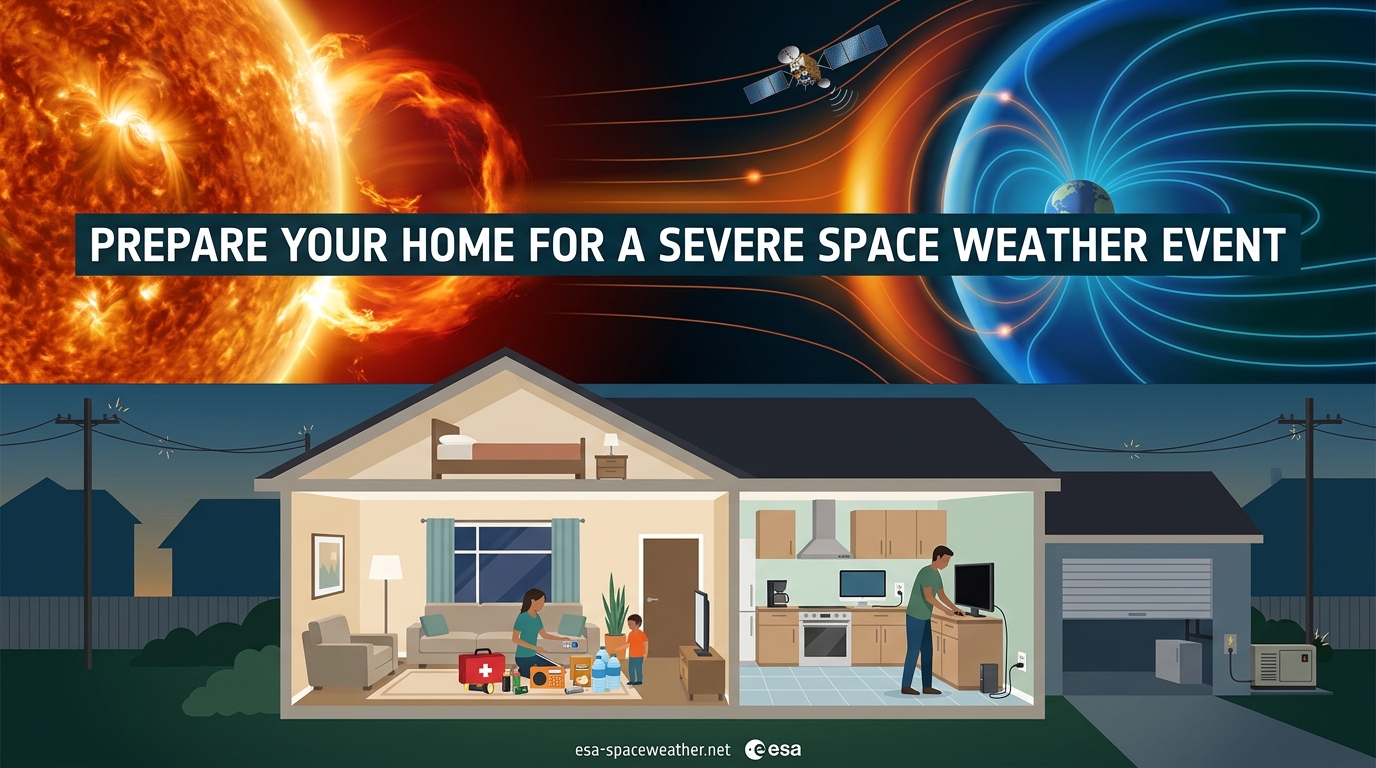
In September 1859, telegraph operators across the world watched in amazement as their equipment sparked, caught fire, and kept working even after being disconnected from their batteries. The aurora was so bright that people in Boston could read newspapers at midnight. That event, known as the Carrington Event, was the most powerful geomagnetic storm in recorded history. If a similar event struck today, experts estimate it could cause trillions of dollars in damage and leave millions without power for weeks, months, or even longer.
We are currently in the peak of Solar Cycle 25, a period of heightened solar activity that began ramping up in 2026. Solar flares, coronal mass ejections (CMEs), and geomagnetic storms are happening more frequently. The May 2026 G5 storm that painted skies with aurora as far south as Florida was a wake-up call for many homeowners. It was the strongest geomagnetic storm since 2003, and it disrupted GPS systems, satellite communications, and even some power grids.
If you are wondering how to prepare your home for a severe space weather event, you are in the right place. This guide walks you through every step, from understanding the science behind space weather to building Faraday cages, choosing backup power solutions, and creating a family communications plan. Our team has compiled advice from NOAA, FEMA, the Red Cross, and real-world prepper communities to give you a single, actionable resource.
The good news is that most preparation steps are simple, affordable, and overlap with general emergency preparedness. Whether you are worried about a moderate G3 storm that knocks out power for a few hours or a catastrophic Carrington-level event, the steps below will help you protect your family, your electronics, and your home.
Table of Contents
Understanding Space Weather Threats
Space weather refers to disturbances in Earth’s upper atmosphere and magnetic field caused by activity on the Sun. To prepare effectively, you need to understand what is coming at you and how it can affect your home. The three main threats are solar flares, coronal mass ejections, and the geomagnetic storms they produce.
Solar Flares vs. Coronal Mass Ejections
Solar flares are intense bursts of radiation that travel at the speed of light, reaching Earth in about eight minutes. They primarily affect radio communications and GPS systems on the daylight side of the planet. Think of them as a sudden flash of energy. They do not directly damage electronics in your home.
Coronal mass ejections are different. A CME is a massive cloud of charged plasma that erupts from the Sun and travels toward Earth at speeds between 500 and 3,000 kilometers per second. When a CME arrives, it compresses Earth’s magnetic field and induces powerful electrical currents in the ground. Those currents travel through power lines, pipelines, and any long conductor, potentially frying transformers, grid infrastructure, and anything plugged into an unprotected circuit.
The key distinction: solar flares cause immediate radio and communication disruptions, while CMEs cause the geomagnetic storms that threaten power grids and electronics. Most preparation focuses on surviving the aftermath of a major CME-induced geomagnetic storm.
The G1 to G5 Geomagnetic Storm Scale
NOAA classifies geomagnetic storms on a five-level scale, similar to hurricane categories. Here is what each level means for homeowners:
- G1 (Minor): Weak power grid fluctuations, minor satellite disruption. Auroras visible at high latitudes. No homeowner action needed.
- G2 (Moderate): Power systems at high latitudes may experience voltage alarms. HF radio communication can fade at higher latitudes.
- G3 (Strong): Power systems may require voltage corrections. GPS and satellite navigation can be degraded. Auroras visible as far south as Illinois and Oregon.
- G4 (Severe): Widespread voltage control problems. Protective systems may trip out key assets from the grid. Auroras visible as far south as Alabama and Northern California.
- G5 (Extreme): Widespread voltage control problems and grid system collapse. Transformers may experience permanent damage. Auroras visible at tropical latitudes. This is the Carrington-level category.
Most space weather events you will experience are G1 to G3. A G4 or G5 event is rare but devastating. The May 2026 storm reached G5, the first since 2003, and it caused minimal damage only because the CME’s magnetic field was not perfectly aligned with Earth’s. A slightly different angle could have produced far more destruction.
The Carrington Event: Why It Matters Today
The Carrington Event of 1859 remains the benchmark for extreme space weather. Named after British astronomer Richard Carrington who observed the solar flare that triggered it, the storm produced auroras visible in Cuba, Hawaii, and even near the equator. Telegraph systems worldwide failed, with some operators receiving electric shocks and papers on their desks catching fire.
If a Carrington-level event hit today, the impact would be orders of magnitude worse. Our modern infrastructure is vastly more dependent on electricity, satellite communications, and interconnected power grids. A 2017 study by Lloyd’s of London estimated that a Carrington-class storm could leave 20 to 40 million Americans without power for up to two years due to transformer damage. The economic cost could reach $2.6 trillion globally.
This is why understanding how to prepare your home for a severe space weather event is not paranoia. It is practical risk management for a threat that government agencies including FEMA, NOAA, and the Department of Homeland Security take seriously.
Solar Maximum in 2026: Why Timing Matters
Solar activity follows an approximately 11-year cycle. During solar maximum, the Sun produces more sunspots, solar flares, and CMEs. We are currently in the maximum phase of Solar Cycle 25, which means the probability of significant space weather events is elevated through 2026 and beyond.
This does not mean a catastrophic event is guaranteed. Most storms during solar maximum are moderate and cause little to no damage. However, the statistical likelihood of a powerful CME striking Earth is higher during this period. The May 2026 G5 storm proved that extreme events can and do happen during this cycle.
Immediate Action Steps: What to Do Before a Storm Hits
When a significant geomagnetic storm is forecast, you typically have 12 to 72 hours of warning before it arrives. That is the time to take immediate protective action. Here are the steps to follow in priority order.
Step 1: Unplug Sensitive Electronics
Unplugging electronics is the single most effective thing you can do to protect them during a geomagnetic storm. When you physically disconnect a device from the wall, you create a break in the circuit that prevents damaging electrical surges from reaching it.
Prioritize these items:
- Computers, laptops, and external hard drives
- Televisions and home theater equipment
- Routers, modems, and network switches
- Gaming consoles and entertainment devices
- Microwaves, air fryers, and other kitchen electronics
- Medical equipment with electronic components (consult your doctor first)
- Smart home hubs and IoT devices (unplug what you can)
Simply turning devices off is not enough. A power strip with a switch does not provide adequate protection either. You need to physically pull the plug from the wall outlet.
One common question from forums like r/preppers is whether you need to disconnect the main breaker. For a typical geomagnetic storm, unplugging individual devices is sufficient. If you are concerned about a worst-case Carrington-level event, turning off your main breaker adds an extra layer of protection by isolating your home’s electrical system from grid surges. However, this also cuts power to anything you might want running, including refrigeration and security systems.
Step 2: Store Water Immediately
Water treatment plants rely on electricity to pump, treat, and distribute water. In a widespread outage, tap water may become unavailable or unsafe within hours. The National Weather Service recommends filling plastic containers with water and storing them in your refrigerator and freezer.
Here is the strategy: fill every available container, including pitchers, water bottles, and even clean plastic bags. Store some in the freezer, because frozen containers help keep food cold longer during an outage. They also double as drinking water as they thaw. Aim for at least one gallon per person per day for a minimum of three days. Two weeks is better if you have the storage space.
If you have advance warning, fill your bathtub as well. A standard bathtub holds approximately 80 gallons. This water is useful for flushing toilets, washing, and cleaning, though it should be purified before drinking.
Step 3: Fuel Up and Prepare Your Vehicle
Gas stations require electricity to pump fuel. During an extended outage, fuel may become scarce within 24 to 48 hours. Keep your vehicle’s gas tank at least half full at all times, especially during solar maximum years.
If you receive a storm warning, fill up immediately. Top off any spare fuel containers you keep for generators or outdoor equipment. Store fuel only in approved containers and never indoors.
If your garage has an electric door opener, locate the manual release cord now. Practice using it so you can get your car out if power is lost. This seems simple, but many people discover the manual release for the first time during an actual emergency.
Step 4: Charge Everything
In the hours before a storm arrives, charge all your devices fully. This includes phones, tablets, laptops, power banks, flashlights, and headlamps. A fully charged laptop can serve as an information hub for hours after the power goes out.
Charge backup battery packs and keep them ready. If you have a portable power station, make sure it is at 100 percent. These devices can keep phones and small electronics running for days.
Step 5: Cash and Documents
ATMs and credit card machines depend on electricity and internet connectivity. In a widespread outage, cash becomes essential for any transactions. Keep a supply of small bills on hand.
Gather important documents including identification, insurance policies, medical records, and emergency contact information. Put them in a waterproof container. If you need to evacuate quickly, these documents should be ready to grab.
Building Your Space Weather Emergency Kit
Every home needs an emergency kit that can sustain your household for at least 72 hours. For space weather scenarios, you should aim for two weeks of supplies, since severe grid damage could take that long to repair. Here is a comprehensive checklist.
Food and Water Supplies
Store non-perishable food that requires no cooking or minimal preparation. Good options include:
- Canned goods (vegetables, fruits, meats, beans, soups)
- Dried fruits, nuts, and trail mix
- Peanut butter and crackers
- Granola bars and protein bars
- Rice, pasta, and dried beans (if you have a way to cook)
- Instant coffee and tea
Stock at least one gallon of water per person per day. For a family of four preparing for two weeks, that is 56 gallons. Rotate stored water every six months to keep it fresh.
Keep manual can openers on hand. Many people stockpile canned food and forget that electric openers will not work during an outage.
Lighting and Communication
Multiple light sources are essential. LED flashlights and headlamps are preferable because they use minimal battery power. Avoid candles, which pose a fire risk. Include a battery-powered or hand-crank NOAA weather radio to receive alerts and news when internet and cell service are disrupted.
Keep a supply of spare batteries in multiple sizes (AA, AAA, C, D). Consider a solar-powered charger for phones and small devices.
First Aid and Medical Supplies
Build a comprehensive first aid kit that includes bandages, antiseptics, pain relievers, and any prescription medications. If anyone in your household depends on powered medical equipment such as oxygen concentrators, CPAP machines, or refrigerated medications like insulin, talk to your doctor about emergency plans.
Keep at least a 30-day supply of prescription medications on hand. Many insurance plans allow emergency overrides for natural disasters. Document all medications, dosages, and prescribing doctors in your emergency paperwork.
Sanitation and Comfort
Stock up on toilet paper, paper towels, garbage bags, and personal hygiene products. Include hand sanitizer and wet wipes for situations where running water is unavailable. If you have infants, store extra formula, diapers, and baby supplies.
For cold weather scenarios, keep extra blankets, sleeping bags rated for your climate, and warm clothing accessible. For hot weather, have battery-operated fans and consider reflective emergency blankets for windows.
Family Communications Plan
One of the most overlooked aspects of emergency preparedness is communication. During a severe space weather event, cell networks may become overloaded, internet service may be disrupted, and power outages could limit your ability to charge devices. Having a plan keeps your family connected.
Designate an Out-of-Town Contact
During regional emergencies, local calls often fail while long-distance calls go through. Choose a friend or relative outside your area as your family’s central contact point. Everyone in your household should know this person’s phone number by heart.
When local lines are jammed, each family member checks in with the out-of-town contact, who then relays information between everyone. This system is recommended by FEMA and the Red Cross for all types of emergencies.
Keep a Corded Landline Phone
The National Weather Service specifically recommends keeping a non-cordless landline telephone. Cordless phones require wall power to operate their base stations, so they are useless during an outage. An old-fashioned corded phone that connects directly to the phone jack draws power from the telephone line itself.
Phone company central offices typically have battery and generator backup systems that can keep landlines operational for days, even when the rest of the grid is down. This makes a corded landline one of the most reliable communication tools during a severe event.
Create a Written Contact List
Write down phone numbers for all family members, your out-of-town contact, doctors, insurance companies, and emergency services. Keep copies in your emergency kit, your car, and your wallet. When your phone dies, you will not be able to look up numbers.
Establish meeting points in case family members are separated. Choose one location near your home and one outside your neighborhood. Make sure everyone, including children, knows where to go and how to get there.
Backup Power Solutions Compared
Power is the first thing you lose during a severe geomagnetic storm, and it may be the last thing restored. Choosing the right backup power solution depends on your budget, your home setup, and how long you need to stay powered. Let us compare the three main options.
Portable Generators
Portable generators are the most common and affordable backup power option. They run on gasoline, propane, or diesel and can power essential appliances for hours or days. A typical 5,000 to 7,500 watt portable generator can run a refrigerator, some lights, and a few small devices simultaneously.
Pros: Relatively inexpensive, portable, widely available, and easy to operate. They provide immediate power for essential needs.
Cons: Require fuel storage, produce carbon monoxide (must always be used outdoors at least 20 feet from the home), are noisy, and need regular maintenance. Fuel may become scarce during extended outages. Most portable generators are not designed for continuous multi-week use.
Standby Home Generators
Standby generators are permanently installed units that connect directly to your home’s electrical panel and run on natural gas or propane. They start automatically when power fails and can run for as long as fuel is available. Models range from 10,000 to over 25,000 watts.
Pros: Seamless automatic operation, higher power output, can run for extended periods with a natural gas connection, and can power an entire home including HVAC systems.
Cons: Significantly more expensive than portable units, require professional installation, and need a gas line or large propane tank. Installation typically requires permits and an electrician.
One important note for space weather scenarios: standby generators connected to a natural gas line are more resilient during extended outages than gasoline-dependent portable generators, because the gas distribution network often continues operating even when electricity is down.
Solar Battery Storage Systems
Solar battery systems like the Tesla Powerwall, Enphase Encharge, and similar products store energy from solar panels or the grid for use during outages. They provide silent, clean backup power that automatically engages when the grid goes down.
Pros: Silent operation, no fuel needed, environmentally friendly, and can recharge daily from solar panels during extended outages. They require zero maintenance and produce no emissions.
Cons: High upfront cost, limited storage capacity (typically 10 to 15 kWh per unit), and may not power heavy loads like air conditioning for long periods. Most systems are sized for essential loads only.
A common concern in prepper forums is whether solar panels and battery systems will survive a major CME. The panels themselves are generally resilient, as they do not contain the long conductors that geomagnetically induced currents affect. However, the inverters and charge controllers that connect solar systems to the grid are vulnerable to surges. Installing a whole-house surge protector and keeping spare inverters in Faraday protection is a smart precaution.
Uninterruptible Power Supplies (UPS)
A UPS is a battery backup device designed for short-term power, typically lasting 5 to 30 minutes. Its primary purpose is to provide enough runtime to safely shut down computers and prevent data loss during sudden power cuts.
For space weather preparation, a UPS is useful for protecting sensitive electronics from power fluctuations during the onset of a storm. However, it is not a long-term power solution. Think of it as a buffer that gives you time to unplug and shut down equipment properly.
Choosing the Right Solution for Your Home
For most homeowners, a layered approach works best. Use a UPS for immediate protection of computers and networking gear. Add a portable generator for essential power during short to medium outages. If budget allows, invest in solar battery storage for clean, silent, long-duration backup power.
Whatever you choose, test your system regularly. Generators that sit unused for months often fail to start when needed. Run yours monthly under load. Check battery charge levels on solar storage and UPS units quarterly.
Electronics Protection: Faraday Cages and Surge Protectors
Protecting your electronics is one of the most frequently discussed topics in space weather preparedness forums. There is a lot of confusion and misinformation out there. Let us break down what actually works.
Whole-House Surge Protectors
A whole-house surge protector installs at your electrical panel and guards your entire home against voltage spikes. It is your first line of defense against the electrical surges that accompany geomagnetic storms.
These devices cost between $200 and $500 plus installation. They protect against external surges coming through the power grid, which is exactly the scenario a CME creates. They do not protect against surges generated inside the home, so you should still use individual plug-in surge protectors for sensitive electronics.
If you already have a whole-house surge protector, verify it is rated for at least 40,000 amps of surge current. Have an electrician inspect it every few years, as the protective components degrade over time after absorbing surges.
Point-of-Use Surge Protectors
Every sensitive electronic device should be connected through a quality surge protector, not a basic power strip. Look for surge protectors rated for at least 2,000 joules with a response time of less than one nanosecond.
Remember that surge protectors wear out. Most have an indicator light that shows whether the protection is still active. Replace them every two to three years, or immediately after any significant surge event.
For maximum protection during a forecast storm, combine a whole-house unit with point-of-use protectors and then physically unplug devices. The unplugging is what guarantees protection, because even the best surge protector cannot handle the extreme currents a Carrington-level event might generate.
Faraday Cage Protection: What It Is and Why You Need One
A Faraday cage is an enclosure made of conductive material that blocks electromagnetic fields. When an electromagnetic pulse or powerful radio wave hits a Faraday cage, the electric field is conducted around the outside of the enclosure, leaving the contents unaffected.
In the context of space weather, a Faraday cage protects backup electronics from extreme electromagnetic disturbances. While a typical geomagnetic storm primarily affects grid infrastructure rather than individual small devices through EMP effects, a worst-case scenario could produce conditions where additional protection is valuable.
The devices worth protecting in a Faraday cage include:
- Spare phones and tablets
- Backup radios and communication equipment
- Solar charge controllers and inverters
- USB drives with important data backups
- Spare GPS units
- LED flashlights and headlamps
How to Build a DIY Faraday Cage
You do not need to spend a fortune on a commercial Faraday cage. The most effective DIY version uses a galvanized steel trash can with a tight-fitting lid. Here is how to build one.
Step 1: Get a 20 to 31 gallon galvanized steel trash can with a lid. These are available at hardware stores for under $40. The metal construction provides the conductive barrier.
Step 2: Line the interior completely with cardboard. This creates a non-conductive layer that prevents your devices from touching the metal, which would create a short circuit and bypass the protection. Make sure the cardboard covers the bottom, sides, and lid completely.
Step 3: Wrap each device in a non-conductive material such as a plastic bag or bubble wrap before placing it inside. This adds a second insulation layer.
Step 4: Place devices inside, ensuring none touch the metal walls or each other directly. Add more cardboard dividers between items if needed.
Step 5: Close the lid tightly. For maximum effectiveness, seal the lid edge with conductive copper tape or aluminum tape. The goal is to eliminate any gaps where electromagnetic energy could enter.
Step 6: Test your Faraday cage by placing a cell phone inside, closing the lid, and calling it from another phone. If the call does not go through, your cage is working. If it rings, you have a gap that needs sealing.
Aluminum Foil: Does It Work?
This is one of the most frequently asked questions in space weather forums. The short answer is yes, aluminum foil can provide some electromagnetic shielding in a pinch, but it is far from ideal.
For aluminum foil to work as a Faraday cage, you need multiple layers wrapped completely around the device with no gaps. The device must be wrapped in a non-conductive layer first, then in foil, then in another non-conductive layer, then more foil. Three to five layers of heavy-duty foil provide reasonable protection for small items.
The problem is consistency. It is very difficult to wrap foil without creating small gaps or tears that compromise the shield. For anything you truly care about protecting, invest in a metal container or purpose-built Faraday bag.
Faraday Bags and Commercial Options
Faraday bags are commercially available and provide reliable, tested electromagnetic protection. They are made from multiple layers of conductive fabric and metallic shielding. Prices range from $15 for small phone-sized bags to $100 or more for large multi-device bags.
Look for bags that are independently tested to military standards (MIL-STD-188-125). These provide documented protection against electromagnetic threats. For most homeowners, a few medium-sized Faraday bags stored inside a galvanized trash can offers excellent layered protection at a reasonable cost.
Home Structural Protection
Beyond electronics, your home’s physical infrastructure can be hardened against the effects of severe space weather. Most of these improvements protect against multiple threats, including lightning strikes and power surges from any source.
Lightning Protection Systems
Lightning rods and conductor systems provide a path for electrical energy to safely travel around your home and into the ground, rather than through your electrical wiring. While lightning rods do not directly protect against geomagnetically induced currents, they are part of a comprehensive approach to electrical resilience.
A professionally installed lightning protection system includes roof-mounted air terminals, down conductors running to ground rods, and bonding to your home’s electrical ground system. Costs range from $1,500 to $4,500 for a typical home.
Solar Panel System Vulnerability
If you have rooftop solar panels, you may be wondering whether they will survive a major geomagnetic storm. The panels themselves are generally safe. Photovoltaic panels do not contain the long conductors that geomagnetically induced currents affect. The solar cells generate direct current at low voltages that are not significantly impacted by magnetic field fluctuations.
The vulnerable components are your inverter and charge controller. These electronic devices convert solar power to grid-compatible electricity, and they can be damaged by surges traveling through your home’s wiring or through grid connections.
To protect your solar investment, install surge protection devices on both the DC side (between panels and inverter) and the AC side (between inverter and your panel). Keep a spare inverter stored in Faraday protection if you depend on solar for emergency power. For grid-tied systems, consider whether you want a system that can island itself from the grid during an outage, so you can continue generating power even when the grid is down.
Professional Electrical Assessment
Having an electrician evaluate your home’s electrical system is a wise investment. They can identify grounding issues, install whole-house surge protection, and ensure your system can safely handle backup power connections. An assessment typically costs $150 to $300 and can prevent thousands of dollars in damage.
Ask your electrician to verify that your home’s grounding system meets current code. Proper grounding gives surge protectors and lightning protection systems a path to safely dissipate excess energy. Without good grounding, these protective devices cannot function effectively.
Planning for Extended Outages
Most emergency preparedness advice focuses on surviving 72 hours. For a severe space weather event, that timeline is dangerously short. The 1989 Quebec blackout, caused by a moderate geomagnetic storm, left six million people without power for nine hours. A Carrington-level event could cause outages lasting weeks to months in affected regions.
The Multi-Week Scenario
Planning for a two-week outage is a reasonable target for most homeowners. This covers all but the most catastrophic scenarios. Planning for one to two months covers even severe events and overlaps with preparations for other disasters like earthquakes or severe winter storms.
For a multi-week outage, your biggest challenges are food, water, sanitation, and heating or cooling. Refrigerated food will spoil within hours without power. Plan your food storage around items that do not require refrigeration. If you have a generator, use it strategically to run the refrigerator a few hours per day rather than continuously.
Water becomes critical after the first few days. Beyond stored water, identify nearby water sources and keep water purification methods on hand. Water filters, purification tablets, and unscented household bleach (8 drops per gallon for clear water) are all viable purification methods.
Heating and Cooking Without Power
If you live in a cold climate, heating is a primary concern during extended winter outages. A wood stove or fireplace provides reliable heat independent of electricity. If you have one, stockpile dry firewood and have your chimney inspected annually.
For cooking, a camp stove powered by propane or butane is an excellent backup. Never use camp stoves, grills, or generators indoors, as they produce carbon monoxide. Always operate them outside, well away from windows and doors.
In hot climates, battery-operated fans and reflective window coverings can help manage heat. Consider staying with friends or family in unaffected areas if temperatures become dangerous.
Medication and Health Planning
For anyone dependent on refrigerated medications like insulin, plan for at least 30 days of cold storage. Small cooler systems with frozen gel packs can maintain refrigerator temperatures for 24 to 48 hours. For longer durations, a small generator dedicated to powering a mini-fridge may be necessary.
Talk to your pharmacist about shelf life and storage requirements for all essential medications. Some medications remain effective at room temperature for longer than their labeled refrigeration requirement suggests. Document this information in your emergency kit.
Community Preparedness
No household survives a major disaster alone. Get to know your neighbors before an emergency happens. Share resources, skills, and equipment. A neighborhood where one person has a generator, another has medical training, and a third has a well-stocked pantry is far more resilient than three isolated households.
Identify community resources including emergency shelters, hospitals, and emergency supply distribution points. Local government websites typically publish this information. Save the addresses and directions in your emergency documents, since you may not have internet access to look them up during a crisis.
Consider taking a CPR and first aid certification course. In a scenario where emergency services are overwhelmed or unreachable, these skills could save a life in your household or neighborhood.
Monitoring Space Weather Alerts
The key to effective preparation is early warning. Geomagnetic storms travel slower than solar flares, giving you 12 to 72 hours of advance notice before a CME arrives. Knowing where to get reliable alerts gives you time to act.
NOAA Space Weather Prediction Center
The NOAA Space Weather Prediction Center (SWPC) is the authoritative US government source for space weather alerts. Their website at swpc.noaa.gov provides real-time data, forecasts, and alerts for geomagnetic storms, solar radiation storms, and radio blackouts.
SWPC uses a three-tier alert system. A Watch means conditions are favorable for a significant event. A Warning means the event is occurring or imminent. An Alert means a specific threshold has been crossed. Sign up for email or SMS alerts to receive notifications directly.
Apps and Alternative Sources
Several smartphone apps provide space weather monitoring, including SpaceWeatherLive, My Aurora Forecast, and the official NOAA app. These apps push notifications when significant solar activity is detected.
For enthusiasts, the community at SpaceWeatherLive.com offers real-time data, forums, and user-reported observations. Reddit communities like r/spaceweather and r/aurora provide crowd-sourced alerts and discussion.
Bookmark the NOAA scales page so you can quickly reference what G1 through G5 means when alerts come in. Understanding the severity level helps you decide which preparation steps to take.
Frequently Asked Questions
Should I unplug electronics during a solar storm?
Yes, unplugging electronics is one of the easiest and most reliable protection methods during a solar storm. Physically disconnecting devices from wall outlets creates a break in the circuit that blocks damaging electrical surges. Prioritize computers, TVs, routers, modems, gaming consoles, and kitchen electronics. Do this before the storm arrives, not during, and do not rely on power strip switches, which do not provide adequate protection.
Does aluminum foil protect against solar flares?
Aluminum foil can provide some electromagnetic shielding in a pinch, but it is far from ideal. For it to work, you need multiple layers wrapped completely around the device with no gaps, and the device must first be wrapped in a non-conductive layer like plastic. For reliable protection, use a galvanized steel trash can, a metal ammo can, or purpose-built Faraday bags that are tested to military standards.
How can people prepare for a geomagnetic storm?
Build an emergency kit with at least two weeks of food and water, make a family communications plan with an out-of-town contact, unplug sensitive electronics before the storm arrives, fill water containers for drinking and sanitation, keep your car tank at least half full, invest in backup power like a generator or solar battery, and monitor alerts from the NOAA Space Weather Prediction Center for early warning.
Can solar flares make you feel sick?
Solar flares do not directly cause illness in humans at ground level. Earth’s atmosphere protects us from the radiation. The main health risks are indirect, resulting from infrastructure disruption: power outages affecting medical equipment, water treatment failures, and communication breakdowns. Radiation exposure may increase slightly at high altitudes, which is why airlines sometimes reroute polar flights during major events.
Conclusion
Learning how to prepare your home for a severe space weather event is about building layers of resilience that protect you against multiple threats. The same emergency kit, backup power system, and family communications plan that sees you through a geomagnetic storm will also serve you during hurricanes, winter storms, and earthquakes.
Start with the basics: build your emergency kit, create your communications plan, and start unplugging electronics when storm alerts come in. Then work toward the more advanced steps: install a whole-house surge protector, build a Faraday cage for backup electronics, and invest in backup power that fits your budget and home.
You do not need to do everything at once. Pick one section from this guide each week and work through it. By the end of a few months, your home will be significantly more resilient to space weather and any other disaster that comes your way. The Sun will do what it does. What matters is how prepared you are when it happens.